In conversation with Robyn Orlin
“I wanted to celebrate the rickshaw drivers whilst looking at the history of the struggle in a more subtle way that considers how we have grown and tried to heal.”
- Robyn Orlin
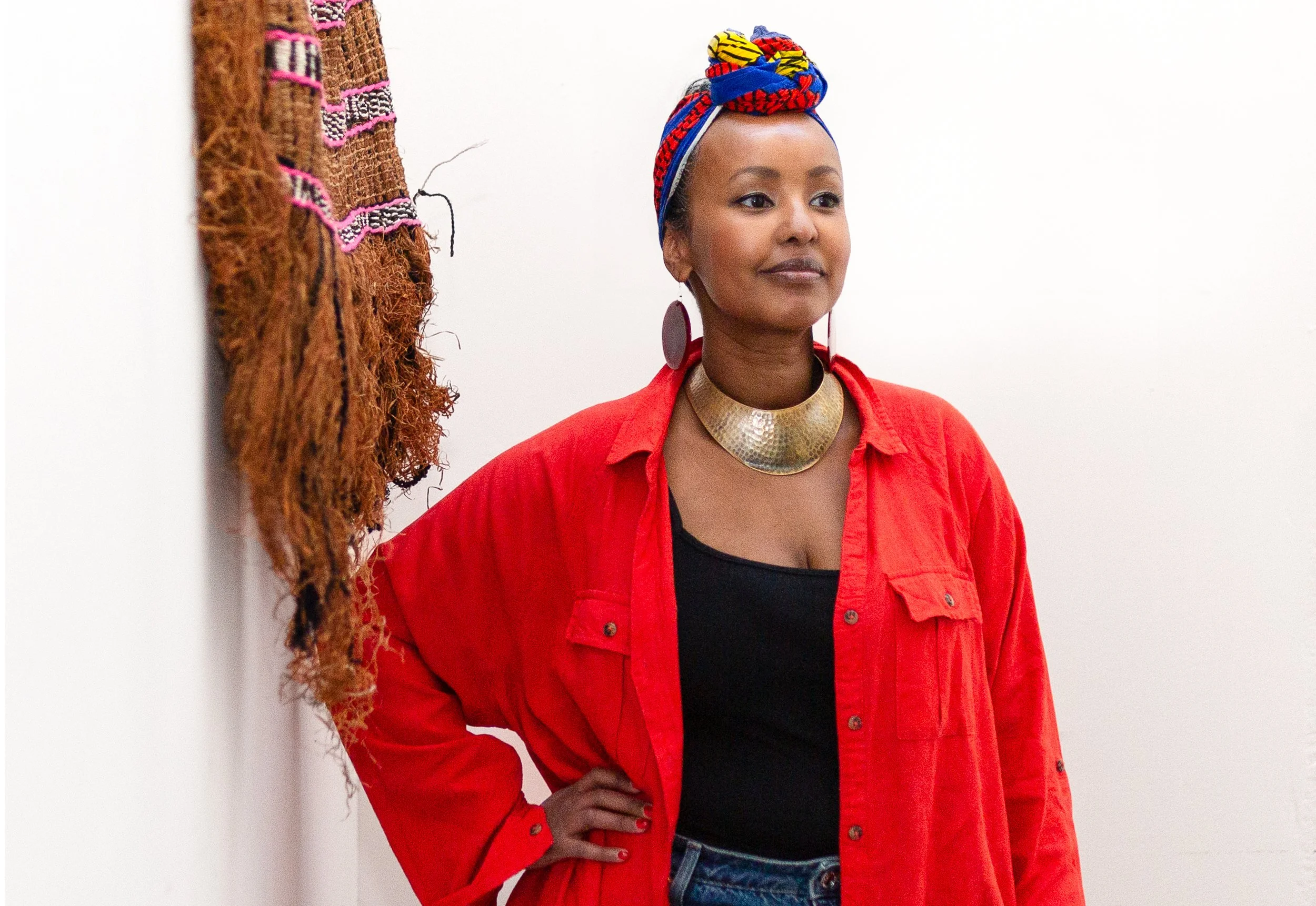
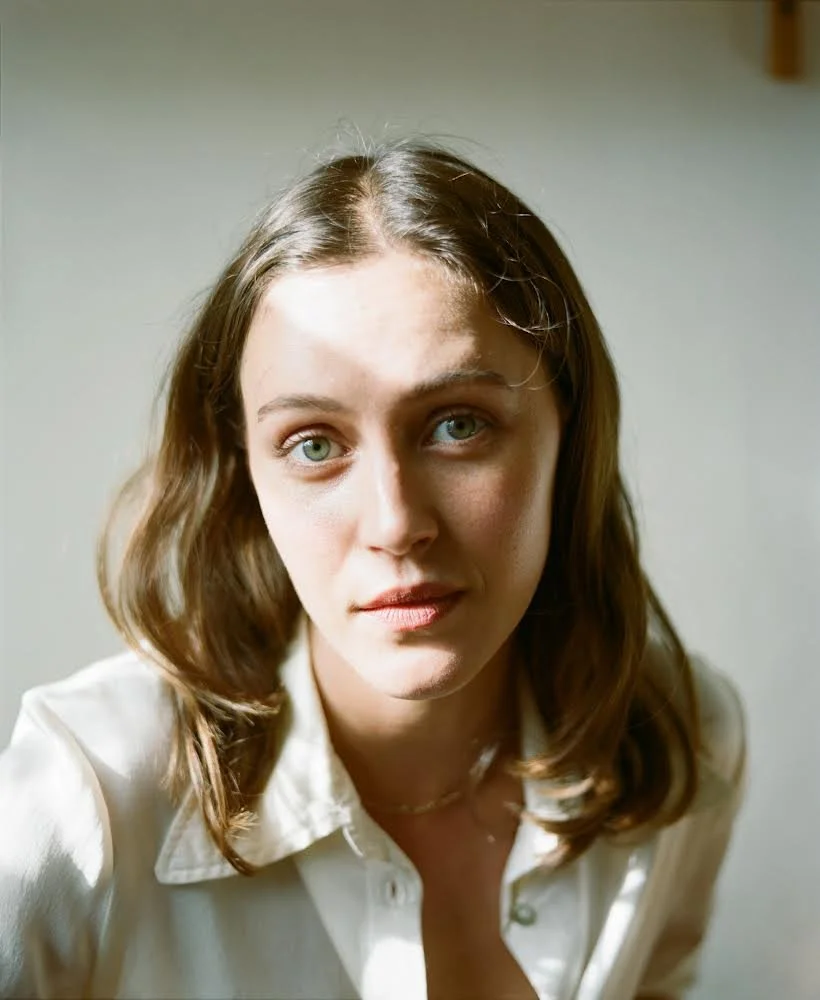
Portrait Robyn ® Maïwenn Rebours.
Robyn Orlin is a South African dancer and choreographer born in Johannesburg. Nicknamed in South Africa "a permanent irritation", she is well known for reflecting the difficult and complex realities in her country. Robyn integrates different media into her work (text, video, plastic arts) to investigate a certain theatrical reality which has enabled her to find her unique choreographic vocabulary.
Her work includes Daddy, I've seen this piece six times before and I still don't know why they're hurting each other (1999), which won the Laurence Olivier Award for the Most Outstanding Achievement of the Year, and Beauty remained for just a moment then returned gently to her starting position... (2012), the opening performance of the South African season in France in 2013.
Orlin’s ‘We wear our wheels with pride’ is showing at the Southbank Centre as part of Dance Reflections by Van Cleef & Arpels festival. The ‘rickshaw dance’ is a homage to the rikshaw drivers of South African’s past and a joyous tribute to the spirit of the Rainbow Nation.
What inspired you to explore the history of rickshaw drivers in We Wear Our Wheels with Pride, and what significance does this narrative hold for you today?
When I was very young one of my first dance encounters was the rickshaws. I was 5 or 6 years old on holiday with my family in Durban and I remember seeing these flying angels in the streets. They took my breath away, I just couldn’t believe the power of the image.
My mother always told me that there was a sad story behind the rickshaws. I was always aware of this, but it was only when I delved into research that I realised they were treated like slaves by the British at the end of the twentieth century.
To me, these men are the unsung heroes of our history. The image of them on their feet pulling people and belongings has always stayed with me. The more I researched, the more I felt that it was important to share their lives and story. These men often didn’t live very long and were given no recognition. I don’t think they were seen as slaves but they were, they were owned by the colonials.
I wanted to celebrate the rickshaw drivers whilst looking at the history of the struggle in a more subtle way that considers how we have grown and tried to heal. We haven’t come to terms with apartheid. I see it more and more not living in South Africa – we haven’t really reckoned with the complexities of what the struggle was about and lived with it.
I do get questions about appropriation and being white, but to me this has nothing to do with being white. I’m not trying to copy the rickshaws but to talk about their importance in the struggle and demonstrate that there’s a lot that we still need to recognise about apartheid.
There was one thing that really struck me when I started talking with the dancers. We’d have Zoom calls – I started making this piece during covid – and talk about the rickshaws. Even though there were four Zulus in the dance group, they didn’t know about the rickshaws. That really made me think ‘wow, I’m definitely making this piece’.
Your work often blends different art forms. How does We Wear Our Wheels with Pride experiment with or expand on the fusion of dance, theatre, and visual elements?
I’ve been working very closely with German designer Birgit Neppl for a couple of years now. We decided that we could never make the headdresses that the rickshaws wore, the dancers wouldn’t survive. I also didn’t want any carts on stage and I didn’t want to copy the rickshaws.
My main memory of the rickshaws is the colour of the carts and their clothing and the sound of their feet hitting the tar of the road. This is what I wanted to recreate.
We took bicycle helmets and crocheted onto them to make them very colourful. We also took cloths, not necessarily Zulu cloths, but cloths from South Africa for the costumes. It’s quite difficult to take Zulu traditional cloths because a lot of them are used in spiritual ceremonies. I was very careful with what I chose.
We incorporated all these elements without trying to deconstruct what a rickshaw was both politically and artistically. It was a very careful, considered journey that we all went on together. This was also taken into the camera work and the dance and music.
I asked the musicians to loop and build all the sounds real time, which the cameras were already doing. The dancers also do this in the second half of the show, when they create our version of a Zulu cloth onstage. Everything is working real time, everything is part of the journey.
For me I have to incorporate all of these different forms, there’s no other way to do it. When I work with live music I feel that it’s really important to include it as part of the performance.
I do the same with the camera work. I’ve been working with French videographer Eric Perroys for a while now and he understands what I want. Everybody I work with has a kind of freedom to find out what they want to do and then we take it and we see if we can use it in the piece. It’s very collaborative.
Moving Into Dance Mophatong is an iconic company—what was it like working with them, and how did they shape the piece?
The piece is shaped by everyone who was involved. I’m the outside eye and I do the final shaping but everybody brings something of themselves into the work. I’ve worked with Moving Into Dance before so they’re used to working with me like this.
They are incredible. They’ve had amazing training, and the company has kept the essential training going even though Sylvia Glasser, who was the Artistic Director and founder, has now retired.
Working with them is really invigorating. They are hungry, they’re curious, they love dancing. I think they like working with me too! I’m planning to make a new piece with them in the next couple of years.
Robyn Orlin: We wear our wheels with pride. Image credit Jérôme Séron.
Your work often plays with humour, even when tackling serious topics. How does that come into play in this show?
I don’t want to spoil it! It happens right at the end. There’s also a bit of humour that is woven throughout the piece. In South Africa we’ve always worked with humour to critique – it’s a dry sense of humour that the British do as well.
It’s a combination of humour and some very hard moments too. People will have to come and find out for themselves!
How has growing up in Johannesburg influenced your artistic vision and the themes you explore?
I’m not living in South Africa at the moment, and so much comes flooding through as I’m getting older. I’m amazed at the younger generations in South Africa now that haven’t lived through apartheid. I’m so curious to know how they digest the whole concept.
Apartheid was a monster. It was a form of fascism. I was quite lucky to be involved in the struggle and to understand more clearly what needed to be undone. Johannesburg as a city was in so much pain.
I had a nanny growing up as my parents both worked. When I was young I used to play with her daughter, who was living with us at the time. Then the laws of apartheid got stronger and she had to send her family back to the countryside. I couldn’t understand why she was going. I thought she was going to come to school with me. My parents did explain it to me but it was very difficult to really try to understand it at that age.
As I got older, it got harder and harder for me to stay. By the time I was 18 I was ready to leave South Africa. I did keep coming back, and lived in Crown Mines for a while, which was a very political community in an old mining village.
I was always very informed, but I don’t know if that’s also because I was Jewish. My father came from Lithuania when he was 12 years old and went back to fight for the British in the second world war in North Africa. There was this constant reminder of where I came from that travelled with me through my formative years.
I notice it even more now living in Germany, where I am having to deal with being Jewish and I suppose also a white south African. I guess I’m just the kind of person that reflects. Maybe that’s why I’m an artist.
What conversation do you hope We Wear Our Wheels with Pride will start, and what do you want audiences to reflect on after seeing it?
I want them to reflect on apartheid and its history, and question what it’s become.
I want them to understand the beauty of survival for the majority of South Africans. As a nation, they have this capacity to make the most out of whatever happens, to try and make it meaningful. We must celebrate the strength of the rickshaws but also acknowledge their role in history.
Dance is often described as a ‘universal language.’ Do you think movement can communicate history in a way words can’t?
I’ve always felt that the body has limitations, unlike the majority of dance and movement people.
That’s why I use talking and text in my pieces. There’s often a moment where you have to say something, and introduce the punctuation of a text. It doesn’t have to be a serious text, but it does what the body can’t.
Of course, the body does most of it. The vocabulary that the Moving into Dance dancers have is afro-fusion, a fusion of contemporary dance and traditional African dance. I think it speaks to international audiences. I just don’t know if the concept of a rickshaw would talk to them without the additional elements we’ve introduced.
The message around how we take transport and workers for granted is in the movement, text, visuals and sound. I don’t want to burst the bubble of the dance discourse, but I think there are limitations. For me, it’s how it works with other elements that’s the most interesting.
Robyn Orlin: We wear our wheels with pride. Image credit Jérôme Séron.
The [Quick] #FLODown:
Best life advice?
I always think of a Crosby, Stills & Nash song - if you can’t be with the one you love, love the one you’re with.
Last book you read?
Zen and the Art of Motorbike Maintenance. When I’m working I have so little time to read, you should see the piles beside by bed! I like to read from books rather than on my phone.
Can't live without…?
Love, sunshine and my plants.
What should the art world be more of and less of?
More of a sense of humour and less of the inability to laugh at themselves.
More humanity – it’s not just about money.
Southbank Centre and Dance Reflections by Van Cleef & Arpels present the UK Premiere of Robyn Orlin’s We Wear Our Wheels with Pride performed by Moving Into Dance Mophatong (Queen Elizabeth Hall, 21 - 22 March) as part of Dance Reflections by Van Cleef & Arpels Festival.
Interview by Ellen Hodgetts
We recently spoke with Dr Georgina Portelli, Vice Chair of Malta International Contemporary Arts Space (MICAS), about the vision and development of Malta’s major new contemporary art institution. Built within the historic 17th-century Floriana bastions on the edge of Valletta…
Narinder Sagoo MBE, Senior Partner at Foster + Partners and renowned architectural artist, has embarked on an ambitious new personal project in support of Life Project 4 Youth (LP4Y), a charity that works towards the upliftment of young adults living in extreme poverty and suffering from exclusion. Narinder has been an ambassador for LP4Y since 2022…
Charlotte Winifred Guérard is a London-based artist and recent graduate of the Royal Academy of Arts School, where she was recognised as a Paul Smith’s Foundation scholar for her artistic achievement. Her work has been exhibited at the Royal Academy, Coleman Project Space, Fitzrovia Gallery, Messums and Palmer Gallery, and she has completed prestigious residencies including…
BBC Radio 1 presenter, DJ, podcaster, and award-winning entrepreneur Jaguar joined us for our In conversation with series to discuss her journey from sneaking out to raves on the tiny island of Alderney to becoming a tastemaker in the UK dance scene, her debut EP flowers…
Annie Frost Nicholson is an artist whose work sits at the electric intersection of personal memory, public ritual and emotional release. Known for transforming private grief into bold, colour-saturated experiences - from stitched paintings to micro-discos - Annie’s practice creates space for collective healing without losing the rawness of its origins…
We spoke to visionary director Łukasz Twarkowski ahead of the UK premiere of ROHTKO, a groundbreaking production that takes inspiration from the infamous Rothko forgery scandal to ask urgent questions about originality, truth and value in art today. Combining theatre, cinema, sound and digital technology, the work challenges…
Iranian-born British curator and producer Tima Jam is the Founder of Art Voyage, a new migrant-led cultural platform committed to building a dynamic, equitable, and globally connected arts ecosystem through novel initiatives comprising exhibitions, public art, summits, residences, and community engagement to create a lasting cultural and social impact…
Betty Ogundipe (b. 2001) is a multidisciplinary artist of Nigerian heritage whose work explores resilience, femininity, and the power of love and resistance. Her debut solo exhibition, LOVE/FIGHT at Tache Gallery…
Absolut Vodka celebrated the launch of its Keith Haring Artist-Edition bottle with a public art takeover, transforming London’s Charing Cross station into “Haring Cross” on 17–18 September. We spoke with Deb Dasgupta, Absolut’s Vice President of Global Marketing…
Maya Gurung-Russell Campbell is an artist working across sculpture, image, and text, exploring personal and collective memory. She is currently studying at the Royal Academy Schools (graduating 2026) and holds a BA in Photography from the London College of Communication…
YARA + DAVINA make social practice artwork, creating ambitious public artworks that respond to site, context and audience. Unfailingly inventive, they use formats from within popular culture to make works which are accessible and playful…
Benni Allan is the Founding Director of EBBA Architects, a London-based studio recognised for its ambitious, cross-disciplinary approach that bridges architecture, culture, fashion and design. Benni founded EBBA to unite his passion for architecture, making and collaborative practice. In this interview, Benni discusses EBBA’s ethos and Pulse, a new installation commissioned for Houghton Festival at Houghton Hall…
Oskar Zięta is an architect, process designer and artist whose work challenges the boundaries between disciplines. His practice brings together design, engineering, art and bionics to create sculptural forms. His latest installation, ‘Whispers’, is currently on display outside One New Ludgate as part of the London Festival of Architecture 2025…
Danny Larsen is a Norwegian artist who has transitioned from a successful career in professional snowboarding to establishing himself as a distinctive painter. His detailed neo-pointillist landscapes reflect a deep connection to nature and a personal journey of transformation. Ahead of his debut London solo exhibition…
Nimrod Vardi and Claudel Goy, directors of arebyte Gallery, discuss how the space is redefining digital art by blending technology, social science, and immersive experiences. From AI and consciousness to the societal impact of tech, arebyte’s bold exhibitions go beyond visual spectacle, focusing on meaningful engagement and innovative presentation…
Varvara Roza is a London-based private art advisor and artist representative. She specialises in promoting contemporary art by both established and emerging international artists. In our conversation, we discussed her unique approach to the art market…
David Ottone is a Founding Member of Award-winning Spanish theatre company Yllana and has been the Artistic Director of the company since 1991. David has created and directed many theatrical productions which have been seen by more than two million spectators across 44 countries…
Akinola Davies Jr. is a BAFTA-nominated British-Nigerian filmmaker, artist, and storyteller whose work explores identity, community, and cultural heritage. Straddling both West Africa and the UK, his films examine the impact of colonial history while championing indigenous narratives. As part of the global diaspora, he seeks to highlight the often overlooked stories of Black life across these two worlds.
Gigi Surel is the founder of Teaspoon Projects, a groundbreaking cultural initiative launching in London with its first exhibition and programme. Dedicated to exploring contemporary storytelling, Teaspoon Projects blends visual arts and literature while encouraging audience participation through carefully curated events.
Dian Joy is a British-Nigerian interdisciplinary artist whose work delves into the intersections of identity, digital culture, and the fluid boundaries between truth and fiction. Her practice is rooted in examining how narratives evolve and shape perceptions, particularly in the digital age.
Youngju Joung is a South Korean artist known for her paintings of shanty village landscapes, illuminated by warm light. Inspired by memories of her childhood in Seoul, she uses crumpled hanji paper to create textured, lived-in spaces that reflect both poverty and affluence.
John-Paul Pryor is a prominent figure in London’s creative scene, known for his work as an arts writer, creative director, editor, and songwriter for the acclaimed art-rock band The Sirens of Titan…
Poet and novelist Hannah Regel’s debut novel, The Last Sane Woman, is a compelling exploration of the emotional lives of two aspiring artists living at different times, yet connected by the discovery of a box of letters in a forgotten feminist archiv…
Daria Blum, a 2023 RA Schools graduate, won the inaugural £30,000 Claridge’s Royal Academy Schools Art Prize in September. Her exhibition, Drip Drip Point Warp Spin Buckle Rot, at Claridge’s ArtSpace...
We recently interviewed Eden Maseyk, co-founder of Helm, Brighton’s largest contemporary art gallery, which has quickly established itself as a thriving cultural hub…
Lina Fitzjames is a Junior Numismatist at Baldwin’s Auction House, located at 399 Strand. She is part of a new generation reshaping the image of numismatics, the study of coinage….
Sam Borkson and Arturo Sandoval III, the acclaimed LA-based artists behind the renowned collective "FriendsWithYou," are the creative minds behind "Little Cloud World," now on display in Covent Garden. During their recent visit to London, we had the privilege of speaking with them about their creative process and the inspiration behind this captivating project.
Paul Robinson, also known as LUAP, is a London-based multimedia artist renowned for his signature character, The Pink Bear. This character has been featured in his paintings, photography, and sculptures, and has travelled globally, experiencing both stunning vistas and extreme conditions…
Koyo Kouoh is the Chief Curator and Executive Director of Zeitz MOCAA…
Matilda Liu is an independent curator and collector based in London, with a collection focusing on Chinese contemporary art in conversation with international emerging artists. Having curated exhibitions for various contemporary art galleries and organisations, she is now launching her own curatorial initiative, Meeting Point Projects.
Carlotta is one of several Italian restaurants from the Paris-based Big Mamma group’s Italian restaurants, of which there now six here in London. The group has a knack of creating spaces that feel like they have always been there…
Le Nusa is a modern Indonesian restaurant on the Strand in London, founded by an Indonesian celebrity couple. Originally launched in Paris before expanding to Jakarta, it brings refined Indonesian cuisine to the capital in an elegant two-floor setting…
Art news to be on your radar the first week of March 2026 comes from both London and across the globe. From Kahlil Joseph’s debut feature at London’s 180 Studios and Ain Bailey’s exhibition at Camden Art Centre, to the announcement of 111 artists for the Venice Biennale…
A review of Rose Wylie: The Picture Comes First at the Royal Academy of Arts, London examines the first solo exhibition by a British female artist in its main galleries, tracing Wylie’s use of memory, wartime imagery and everyday references across large-scale paintings and intimate drawings…
The 61st International Art Exhibition of La Biennale di Venezia, titled In Minor Keys, is set to open on Saturday, 9 May 2026, and run until Sunday, 22 November 2026. Curated by the late Koyo Kouoh, who passed away in May 2025, the exhibition will be staged across Venice’s Giardini, the Arsenale…
As March arrives in London, the city begins to shake off the winter chill with plenty to see and do. Food lovers can enjoy British Pie Week, while families can mark World Book Day at Battersea Power Station. There will be major exhibition openings, including Hurvin Anderson, David Hockney and a celebration of designer Elsa Schiaparelli…Here is our guide to things to do in London in March 2026…
In a digital economy increasingly defined by automation, optimisation, and seamless systems, Xiyan Chen creates worlds that refuse to work alone. Her practice does not ask what technology can do faster or better…
This week in art, there’s plenty to get excited about. The V&A has acquired a historic YouTube watch page, while more details have been revealed about what Lubaina Himid is presenting for the British Pavilion at the Venice Biennale 2026…
This week in London (23 February - 1 March 2026) a Tracey Emin exhibition opens at Tate Modern, with Rose Wylie’s work on show at the Royal Academy. Half Six classical music returns to the Barbican. The Aubrey at the Mandarin Oriental Hyde Park has a weekend brunch menu with a Japanese twist, and Old Spitalfields Market will host a one-day takeover by teenage entrepreneurs…
The British Pavilion has announced the exhibition details and title for Lubaina Himid CBE RA’s solo presentation at the 2026 Venice Biennale. The exhibition, Predicting History: Testing Translation, will showcase a major new body of work exploring the complexities of belonging and the meaning of home…
This week in London (16–22 February 2026), Ryoji Ikeda takes over the Barbican Centre with performances exploring sound and light, while FAC51 The Haçienda comes to Drumsheds for a full day of classic house and techno. New exhibitions open across the city, including Chiharu Shiota’s thread installations at the Hayward Gallery and Christine Kozlov at Raven Row…
With Six Nations 2026 starting on 5 February, London is packed with pubs, bars and restaurants showing every match…
Somerset House Studios returns with Assembly 2026, a three-day festival of experimental sound, music, and performance from 26–28 March. The event features UK premieres, live experiments, and immersive installations by artists including Jasleen Kaur, Laurel Halo & Hanne Lippard, felicita, Onyeka Igwe, Ellen Arkbro, Hannan Jones & Samir Kennedy, and DeForrest Brown, Jr…
This week brings fresh details from some of the UK’s most anticipated exhibitions and events, from Tate Modern’s Ana Mendieta retrospective and David Hockney’s presentation at Serpentine North to the British Museum’s acquisition of a £35 million Tudor pendant…
This week in London (2–8 Feb 2026) enjoy Classical Mixtape at Southbank, Arcadia at The Old Vic, Kew’s Orchid Festival, Dracula at Noël Coward Theatre, free Art After Dark, Chadwick Boseman’s Deep Azure, the Taylor Wessing Portrait Prize, and Michael Clark’s Satie Studs at the Serpentine…
SACHI has launched a limited-edition Matcha Tasting Menu in partnership with ceremonial-grade matcha specialists SAYURI, and we went along to try it…
Croydon is set to make history as the first London borough to host The National Gallery: Art On Your Doorstep, a major free outdoor exhibition bringing life-sized reproductions of world-famous paintings into public spaces…
February in London sets the tone for the year ahead, with landmark exhibitions, major theatre openings, late-night club culture and seasonal festivals taking over the city. From Kew’s 30th Orchid Festival to Tracey Emin at Tate Modern and rooftop walks at Alexandra Palace, here’s what not to miss in February 2026…
Tate Modern has announced that Tarek Atoui will create the next Hyundai Commission for the Turbine Hall. The artist and composer is known for works that explore sound as a physical and spatial experience…
Kicking off the London art calendar, LAF’s 38th edition at Islington showcased a mix of experimental newcomers and established favourites. Here are ten standout artists from London Art Fair 2026…
Discover a guide to some of the artist talks, as well as curator- and architecture-led discussions, to be on your radar in London in early 2026…
This week in London, not-to-miss events include the T.S. Eliot Prize Shortlist Readings, the final performances of David Eldridge’s End, the return of Condo London, new exhibitions, classical concerts, a film release, creative workshops, wellness sessions, and a standout food opening in Covent Garden with Dim Sum Library…
Plant-based cooking gets the Le Cordon Bleu treatment in a new series of London short courses…
January is your final opportunity to catch some of London’s most exciting and talked-about exhibitions of 2025. Spanning fashion, photography, contemporary sculpture and multimedia, a diverse range of shows are drawing to a close across the city…
As the new year begins, London’s cultural calendar quickly gathers momentum, offering a packed programme of exhibitions, festivals, performances and seasonal experiences throughout January. Here is our guide to things you can do in London in January 2026…
Condo London returns in January 2026 as a city‑wide, collaborative art programme unfolding across 50 galleries in 23 venues throughout the capital, from West London and Soho to South and East London. This initiative rethinks how contemporary art is shown and shared, inviting London galleries to host international…
The Southbank Centre has announced Classical Mixtape: A Live Takeover, a one-night-only, multi-venue event taking place in February 2026, bringing together more than 200 musicians from six orchestras across its riverside site…