
Art guide to the South of France: 9 museums, foundations & studios to visit
When you meander through the glittering coastlines and rolling hills of the south of France in the summer, it’s all too easy to understand why so many great artists of the C20th chose to live, work and play there. Today, that’s good news for the culture-loving traveller as the region is replete with artist studios, private foundations, national museums and sculpture parks to visit. The sheer scale of options can be overwhelming, but fear not. Here is the FLODown to the unmissable art stops on any south of France tour:
Fondation Maeght
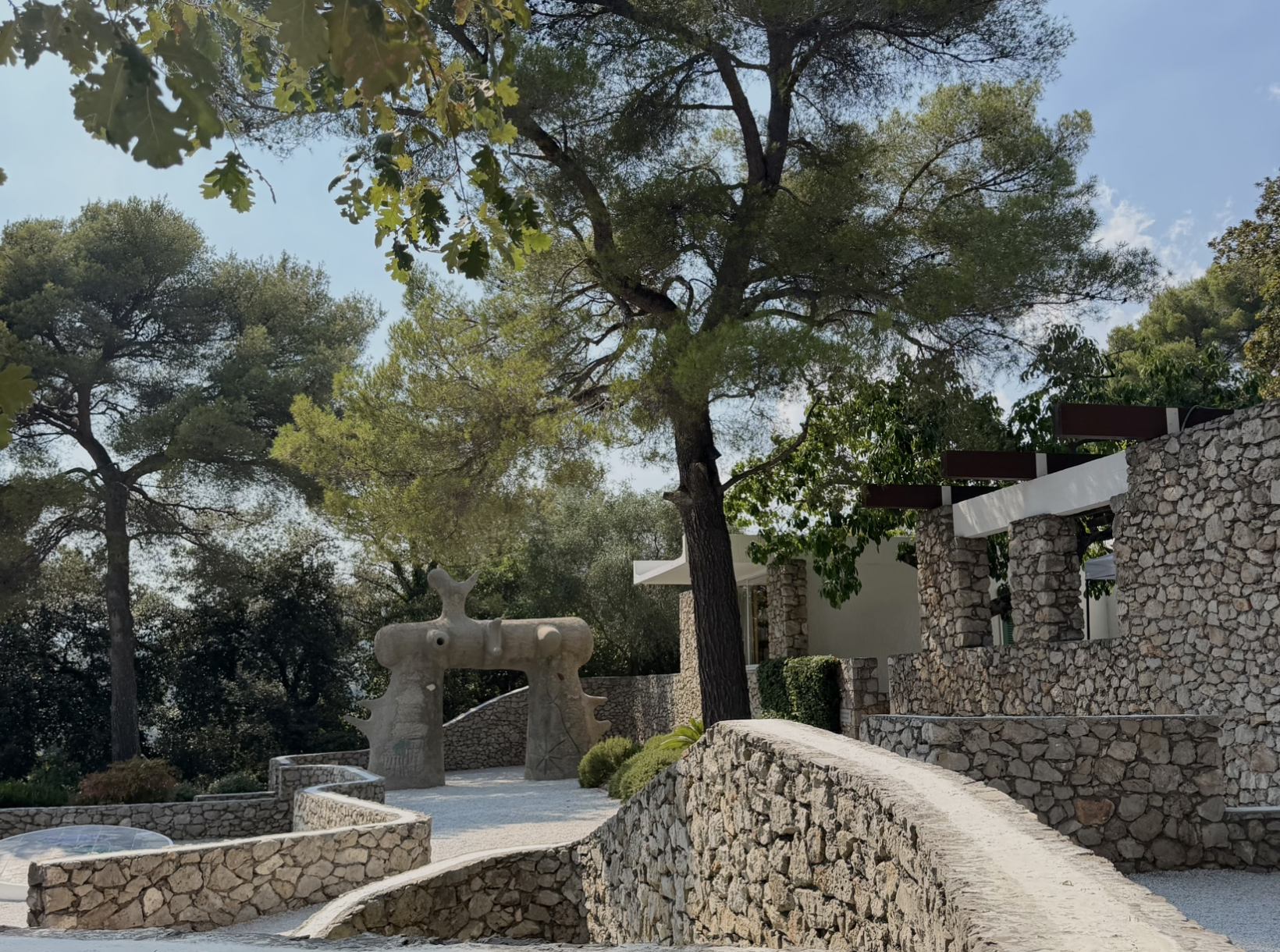
Fondation Maeght, Saint-Paul-de-Vence. South of France. Image credit MTotoe/FLO London.
Entering through the gates of Fondation Maeght feels like stumbling into an alternative universe. Its beautifully landscaped gardens are filled with sculptures by some of the most important artists of the C20th, and they were not just acquired but commissioned and created site-specifically. Opened in 1964 by Aimé and Marguerite Maeght, it is France’s first private art institution and was born from the art dealer couple’s close friendships with Braque, Miró, Giacometti and Alexander Calder, to name a few. Alongside the impressive permanent collection of sculptures, the foundation has a vast space dedicated to temporary exhibitions. On view until 15 November 2026 is a solo show of American artist Ellsworth Kelly. Kelly had a close relationship with the Maeght family, exhibiting at their gallery in Paris and staying often at their Saint-Paul-de-Vence home. The exhibition focuses on the artist’s relationship with water and presents a diverse array of mediums, from paintings and drawings to collages and sculptures.
Website: fondation-maeght.com. Instagram: @fondationmaeght
FAMM (Femmes Artistes du Musée de Mougins)
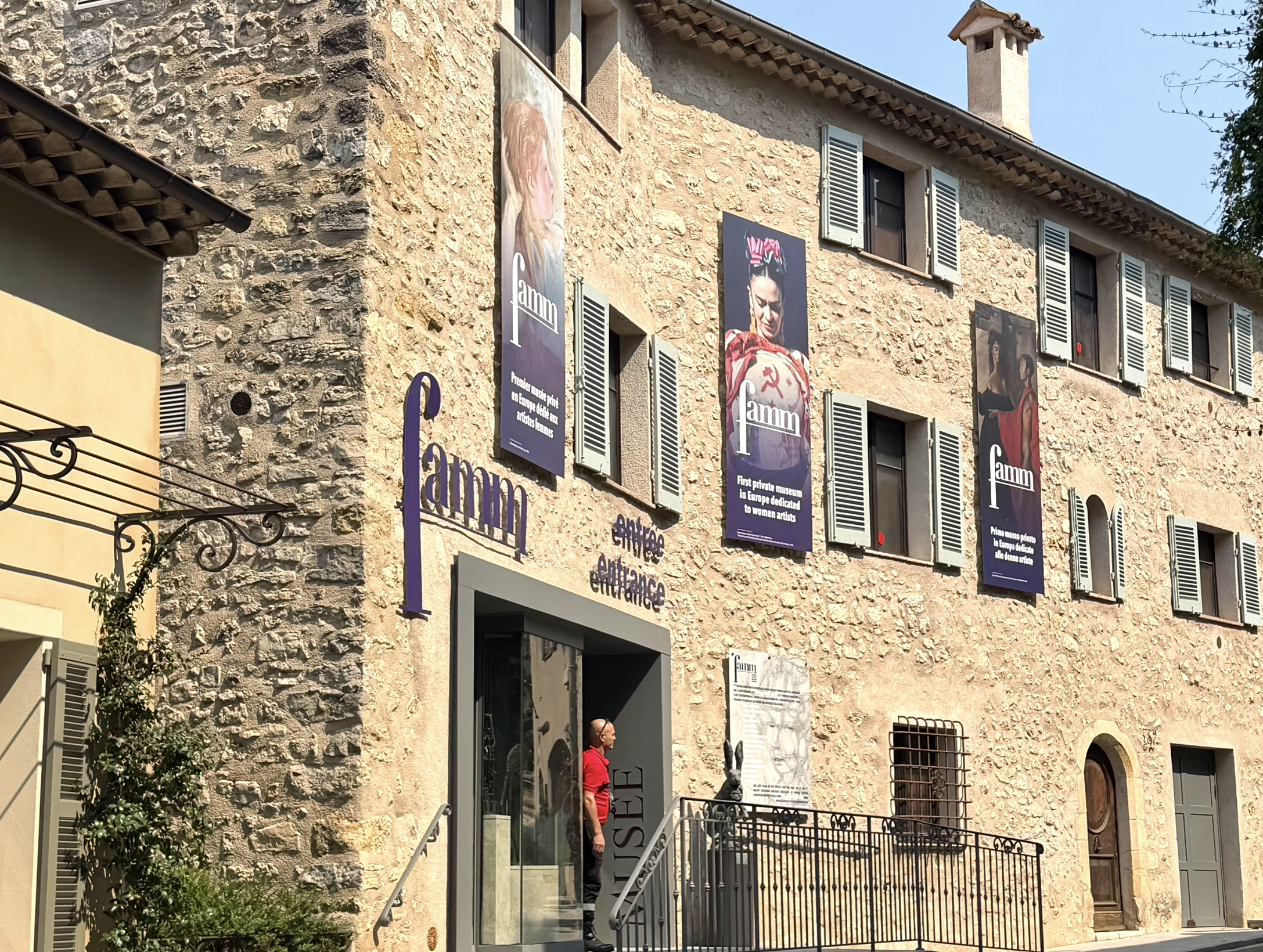
FAMM (Femmes Artistes du Musée de Mougins), Mougins. South of France. Image credit MTotoe/FLO London.
Located in the picturesque mountain town of Mougins, an artist hotspot once home to Picasso and many others, this museum was founded by collector Christian Levett in 2024 and is exclusively dedicated to women artists. It has an intimate atmosphere, with a rotating selection of works from Levett’s vast collection hanging within a converted medieval building. The low ceilings and salon-style curatorial approach enable visitors to enjoy the works from close quarters, with the feel of a private domestic space. A major rehang at FAMM earlier this year shines new light on important artists in the fields of Impressionism, Surrealism, Abstract Expressionism, and Contemporary Art.
Website: famm.com. Instagram: @famm_mougins
Musée national Fernand Léger
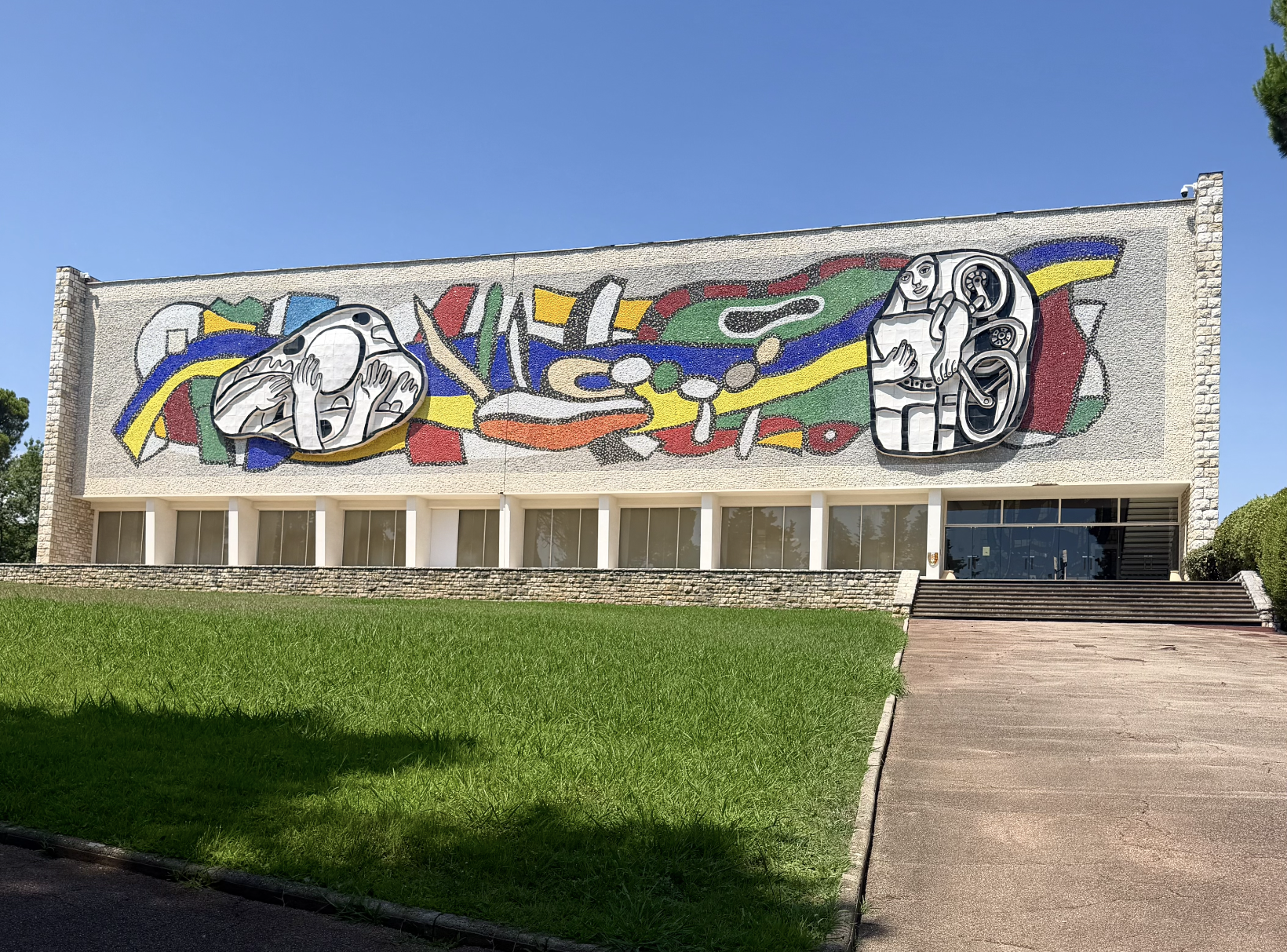
Musée national Fernand Léger, Biot. South of France. Image credit MTotoe/FLO London.
Celebrated French painter, sculptor and filmmaker Fernand Léger purchased the plot of land in Biot that now houses this museum a few months before his death in 1955. Soon after, his widow, Nadia Léger, and close collaborator Georges Bauquier set out to develop the site to preserve his legacy. The project also enabled the posthumous realisation of important works, such as a vast mosaic (measuring 400 square metres) installed across the facade of the museum that Léger had originally designed for Hanover stadium but was never produced. Additional large mosaics, sculptures, paintings and stained glass windows further demonstrate the lesser-known monumental scale of his practice. In addition to the permanent collection, temporary exhibitions seek to shed light on important aspects of the artist’s work and facilitate research.
Website: musees-nationaux-alpesmaritimes.fr. Instagram: @museeschagalllegerpicasso
Musée Picasso
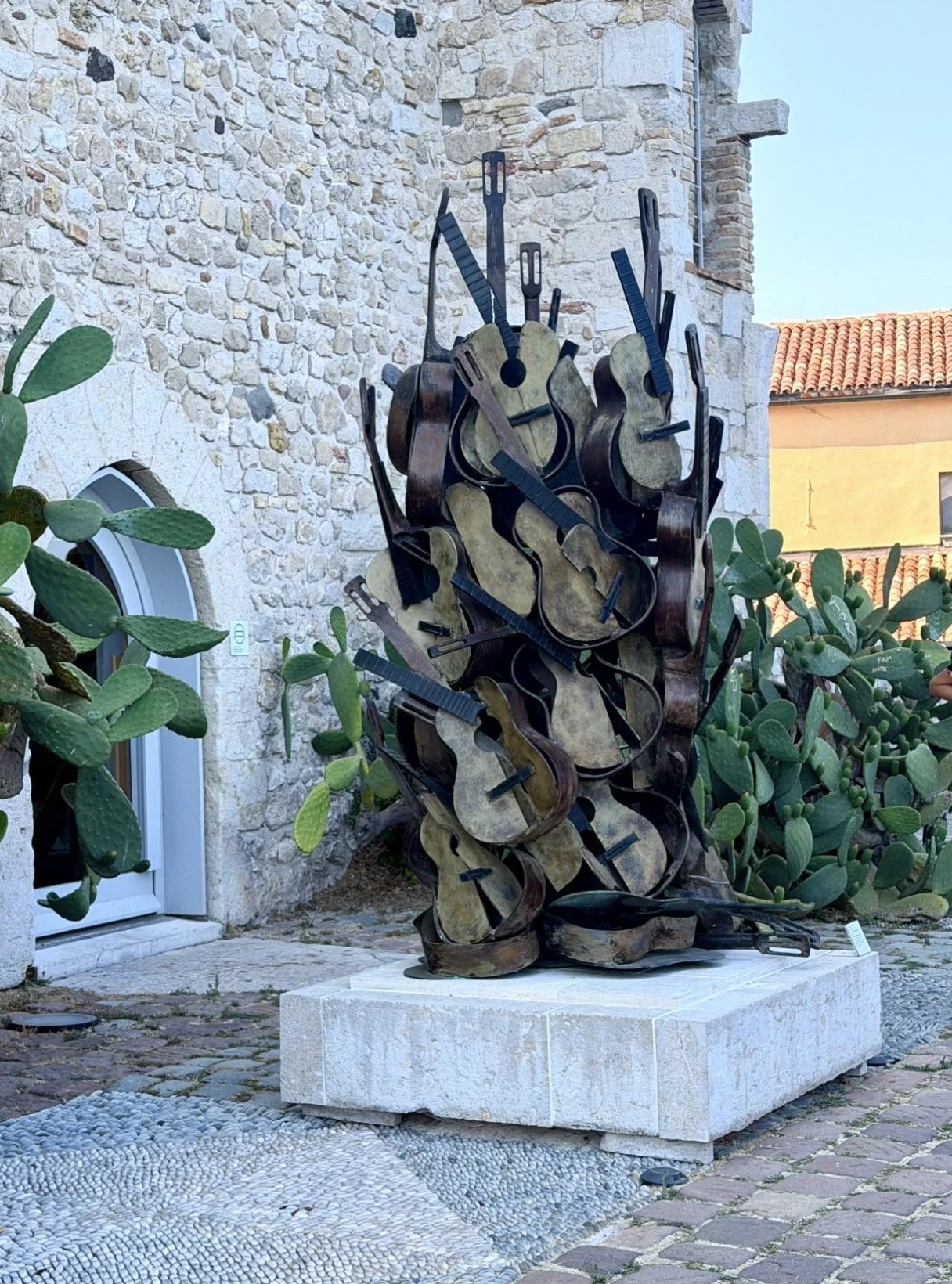
Picasso Museum Antibes, South of France. Image credit MTotoe/ FLO London.
There are plenty of Picasso museums across France and beyond, many with more extensive collections. However, the rich history and stunning seafront setting of this particular museum in Antibes make it a special visit. The site has in turn been an ancient Greek Acropolis, a Roman castrum, a Medieval bishopric, a private château of the Grimaldi family, and, for 6 months in 1946, the residence of Picasso himself. The majority of works on display were personally donated by the artist, and feel deeply rooted in their environment. Other artist’s works are also on show, notably on the museum’s oceanfront terrace which houses sculptures by Joan Miró, Bernard Pagès and Germaine Richier.
Website: antibes-juanlespins.com. Instagram: @fondationhartungbergman
Fondation Hartung Bergman
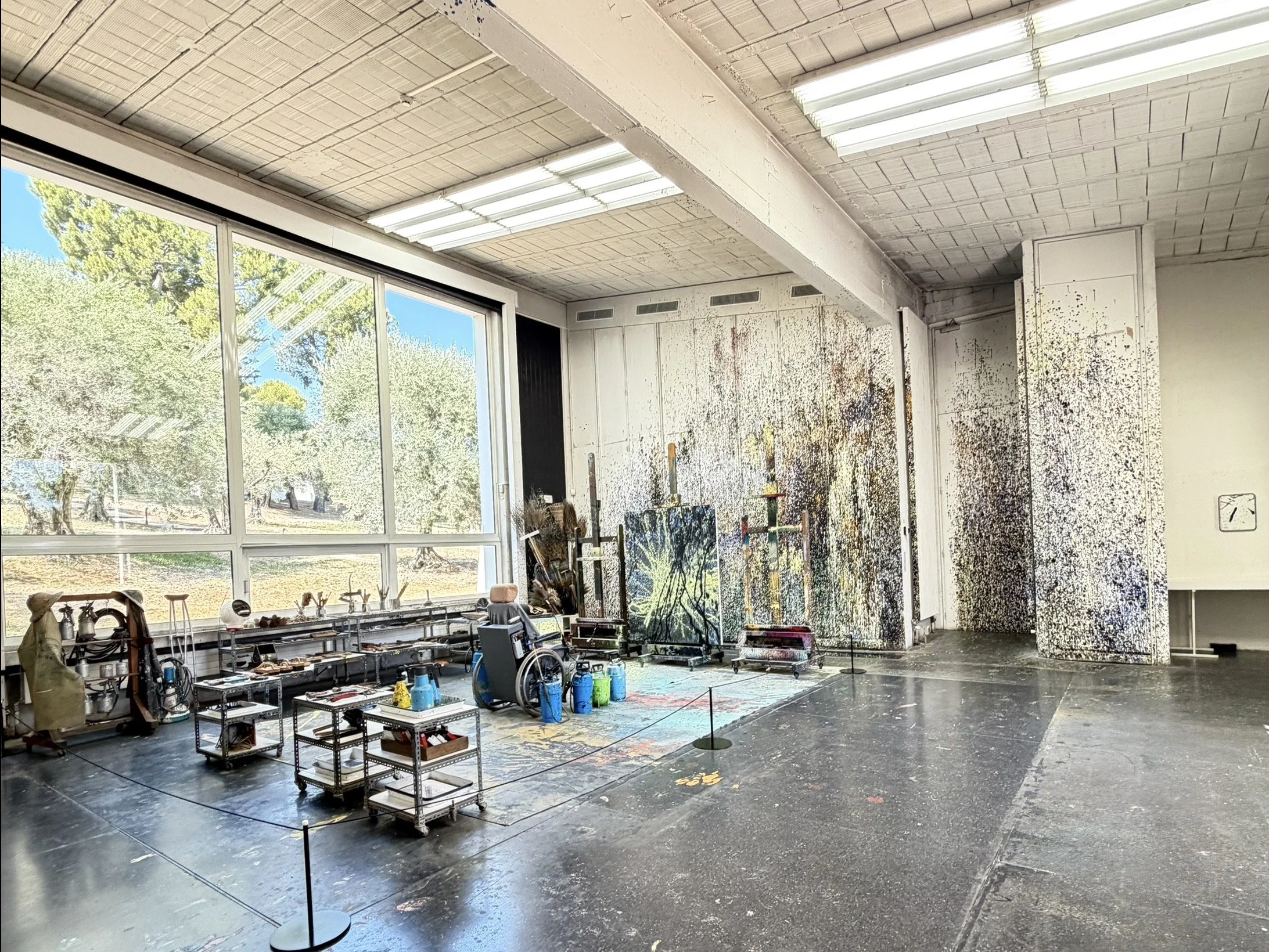
Fondation Hartung Bergman, South of France. Image credit MTotoe/ FLO London.
This is a special foundation which pays homage to two artists: Hans Hartung (1904-1989) and Anna-Eva Bergman (1909-1987). It is set in a beautiful olive grove above Antibes where the artists lived and worked until the end of their lives. Perhaps more than any other foundation in the south of France, you can truly feel the presence of the artists here. In addition to the well-curated selection of works on display by both artists, Hartung’s studio has been thoughtfully preserved with even his chair and painting materials in place. As well as exhibiting works, the foundation is also a research centre which promotes education, hosting regular seminars and conferences. When you visit, make sure you leave time to wander around the grounds and visit the cafe and bookshop.
Website: fondationhartungbergman.fr. Instagram: @fondationhartungbergman
Cézanne's Studio
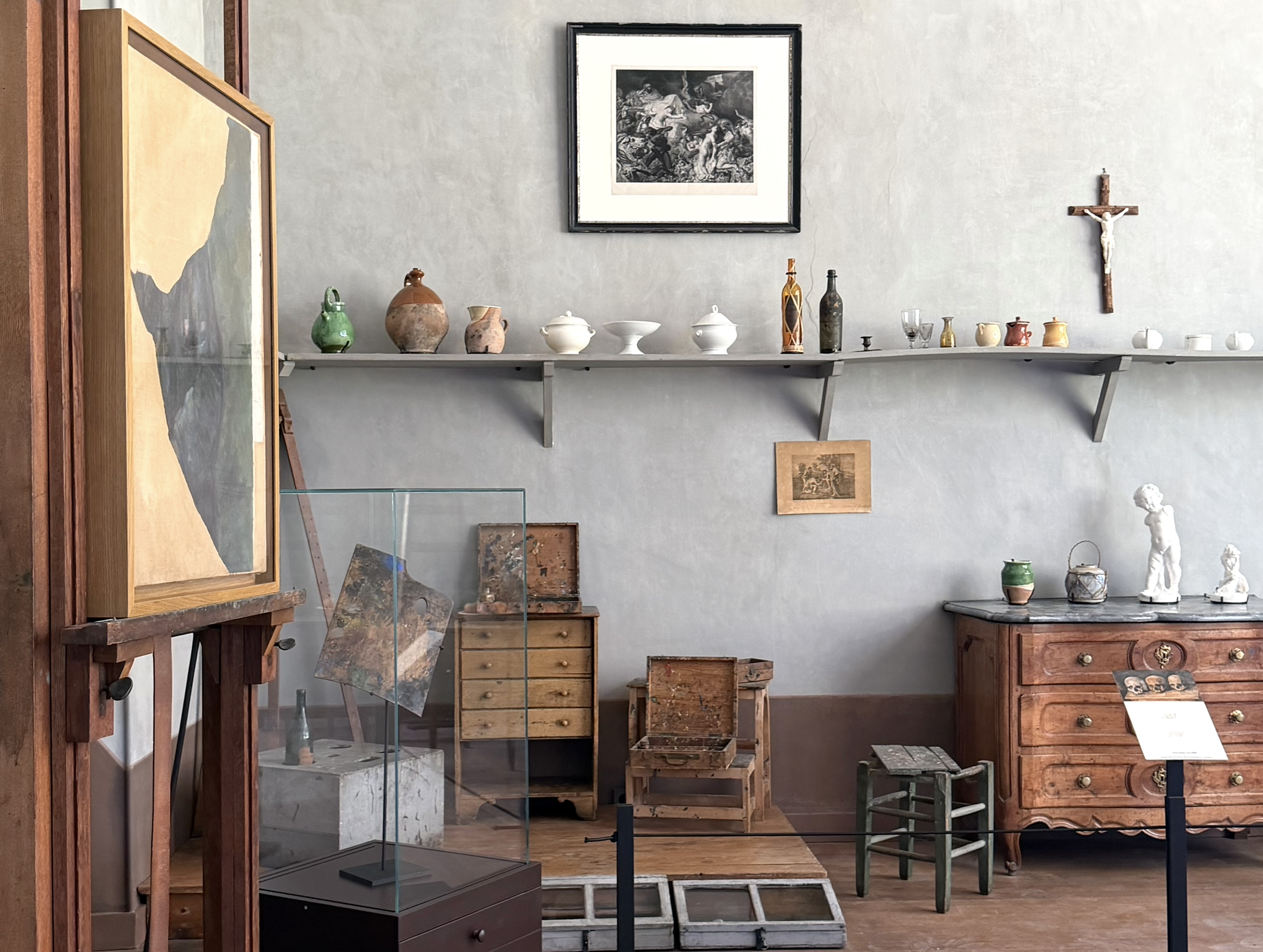
Cézanne's Studio in Aix en Provence, South of France. Image credit MTotoe/ FLO London.
No south of France art tour is complete without visiting the studio of French painter Paul Cézanne (1839-1906). Cezanne bought an old farmhouse just outside the charming town of Aix-en-Provence in 1901 and used the light-filled upper floor as his studio. While there are only a few original works on display by the artist, the studio remains as he left it, including objects that featured in his final still life paintings such as skulls, a plaster cupid and ceramic vases. Since a restoration in 2025 for the “Year of Cezanne”, it is also possible to visit the ground floor with a kitchen, dining room and drawing room. The farmhouse is set among beautiful gardens with views of the Sainte Victoire mountain. These scenes are instantly familiar to Cezanne fans, and it is easy to relate to the inspiration the artist felt in his surroundings.
Website: cezanne-en-provence.com. Instagram: @cezanneenprovence
Fondation Vasarely
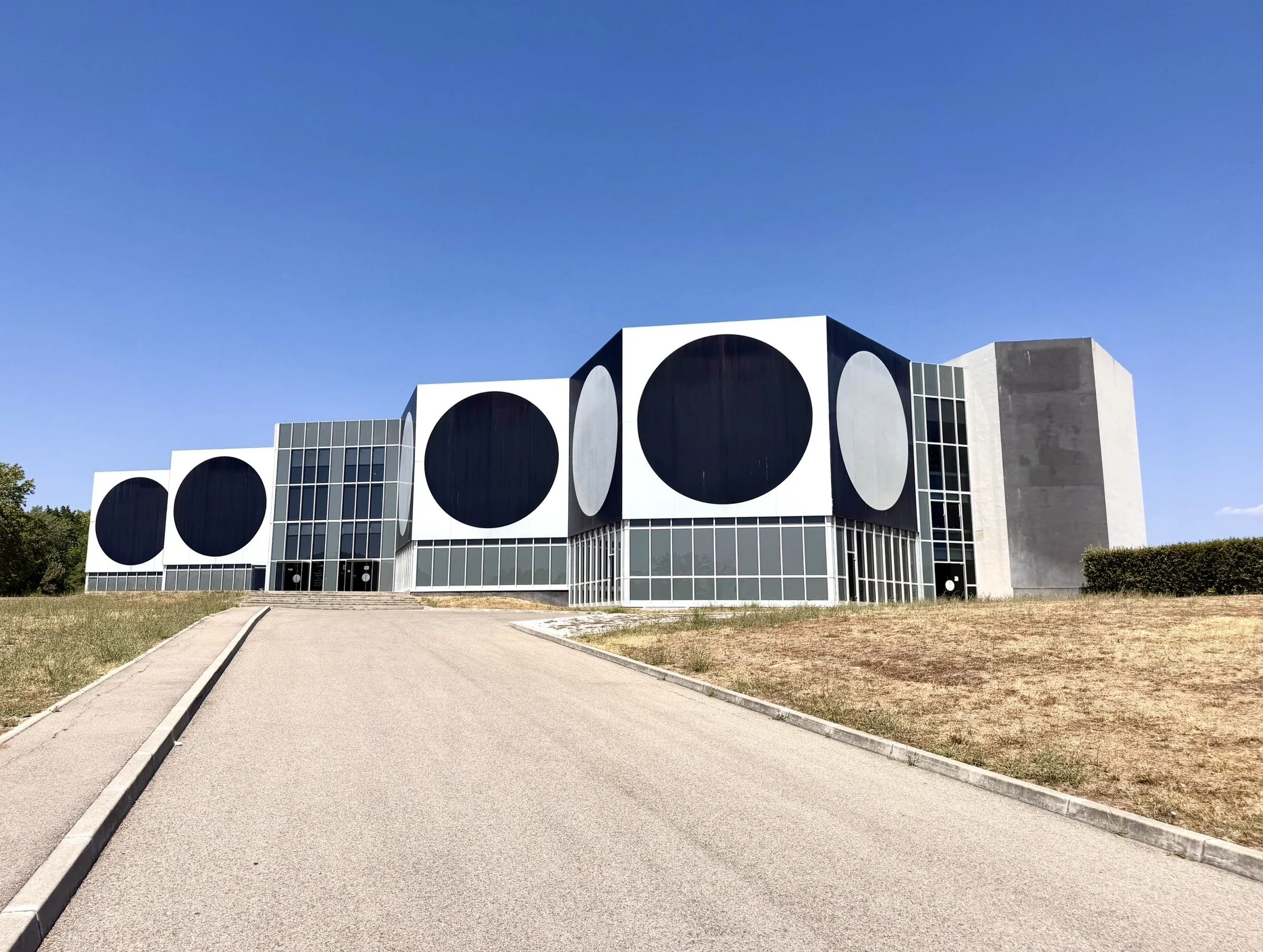
Fondation Vasarely, Aix-en-Provence, South of France. Image credit MTotoe/ FLO London.
Fondation Vasarely is an impressive construction made up of sixteen intersecting hexagons, punctuated by large-scale monochromatic patterns familiar from the artist’s work. The building was designed by Hungarian-French Victor Vasarely himself, who was drawn to Aix-en-Provence in part by his admiration for Cezanne. As a result of the unique construction of the foundation, it is able to house huge paintings in which the artist explores his signature style of geometric abstraction on an awe-inspiring scale. Often nicknamed the “grandfather” of the optical art movement, the full extent of Vasarely’s decades of experimentation is on display here, making it an enriching stop for both existing fans and those who are yet to encounter his work.
Website: fondationvasarely.org. Instagram: @fondation_vasarely
Château La Coste

Louise Bourgeois, Crouching Spider (2003), Château La Coste. © The Easton Foundation New York. ADAGP Paris, 2021 Photo. Richard Haughton.
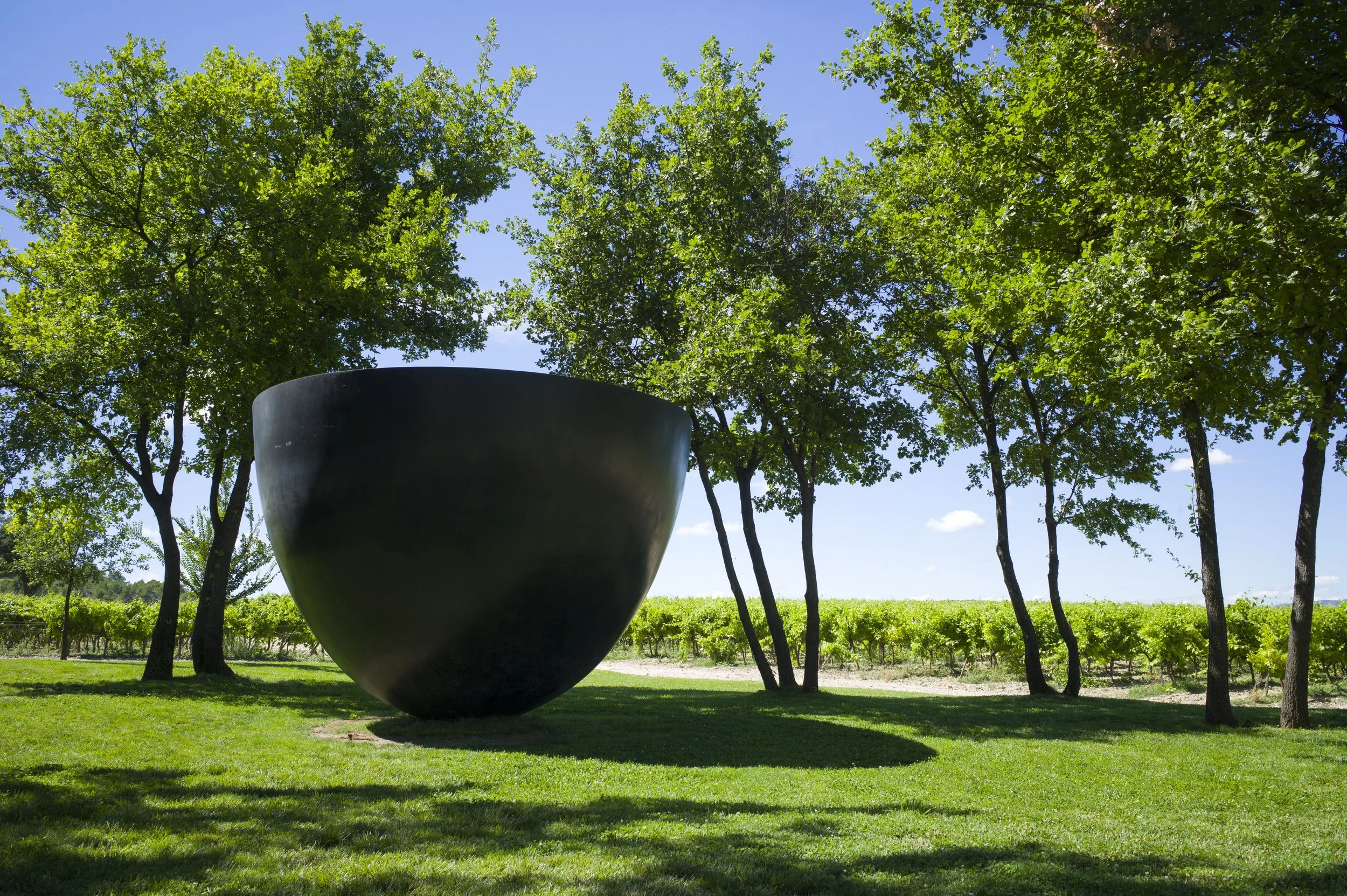
Located a short drive from Aix-en-Provence is Château La Coste, a renowned winery with an impressive collection of sculptures, architectural installations, and temporary exhibition spaces designed by the likes of Richard Rogers and Renzo Piano. The artworks are installed across the 200 hectare estate, which visitors are encouraged to explore with a thoughtfully designed map and guide. There are currently six restaurants catering to all tastes, and, of course, serving the delicious organic wines produced on site. In addition to the permanent sculpture trail, the Château is exhibiting three interconnected exhibitions until 31 January 2027 which bring together the work of Rashid Johnson, Sheree Hovsepian and a group of invited artists. This programming is underpinned by the philosophy that art is a fundamentally communal practice, and has been developed in close dialogue with the unique landscape of the estate.
Click here for our guide to visiting Château La Coste.
Website: chateau-la-coste.com. Instagram: @chateaulacoste
LUMA Arles
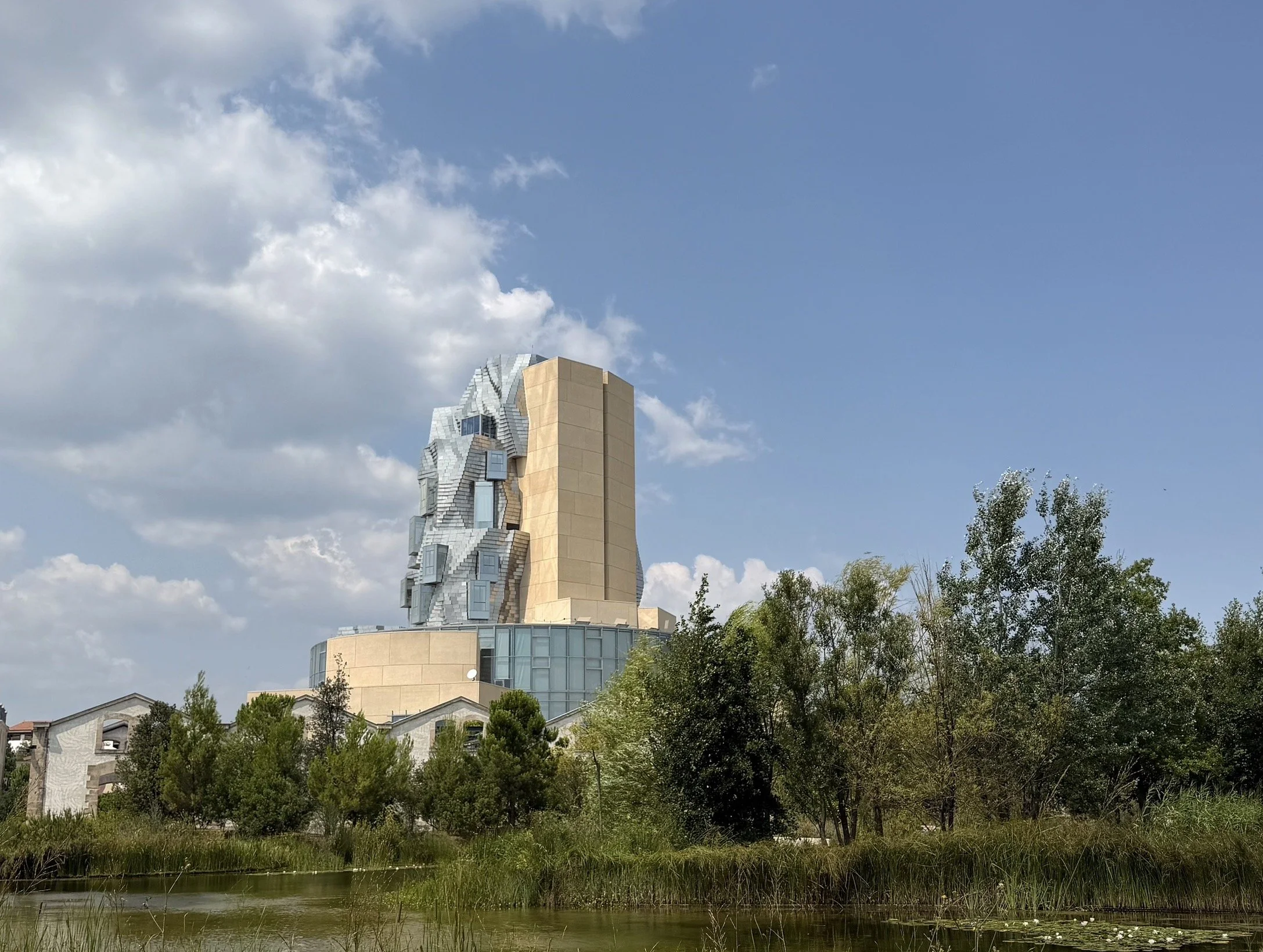
Luma Arles, Arles, South of France. Image credit MTotoe/ FLO London.
Maja Hoffmann’s LUMA has transformed an industrial site in Arles, the Parc des Ateliers, into a vast arts complex with multiple exhibition spaces, a park and the impressive LUMA Tower designed by Frank Gehry. Gehry was inspired by the paintings of Van Gogh in his designs, and indeed the Tower’s silver, undulating facade catches and reflects light in a fitting homage. To do LUMA justice requires at least half a day, and there are plenty of drinking and dining options to fuel your visit. Fresh pizzas are a particular highlight from the outdoor Terrasse des Forges cafe, while Le Réfectoire offers traditional brasserie cuisine around large communal tables. The best time of year to visit is July-October to coincide with the annual photography festival Les Rencontres d’Arles, a historic event that sees over 50 venues across the charming ancient city taken over by exhibitions.
Website: luma.org. Instagram: @luma_arles








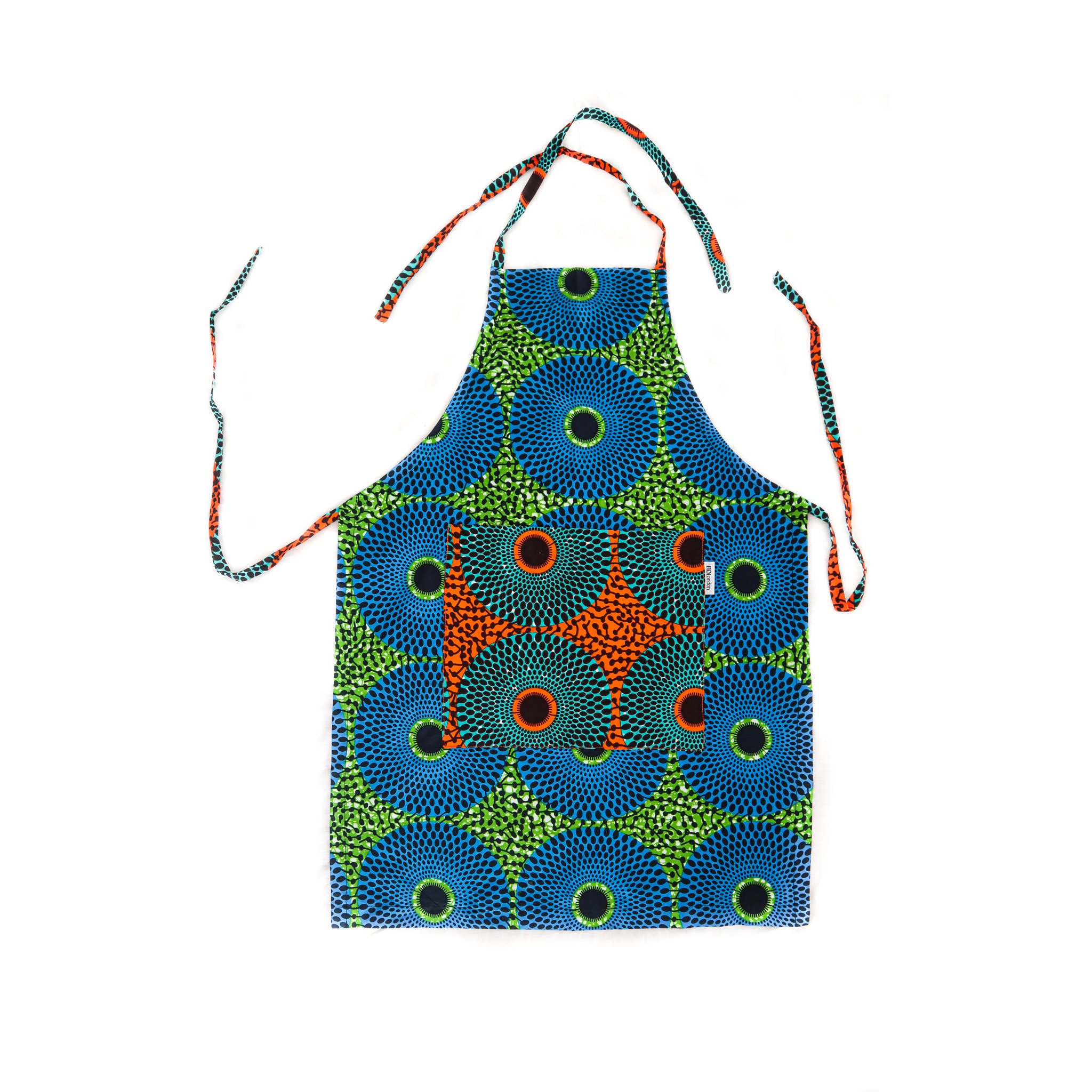


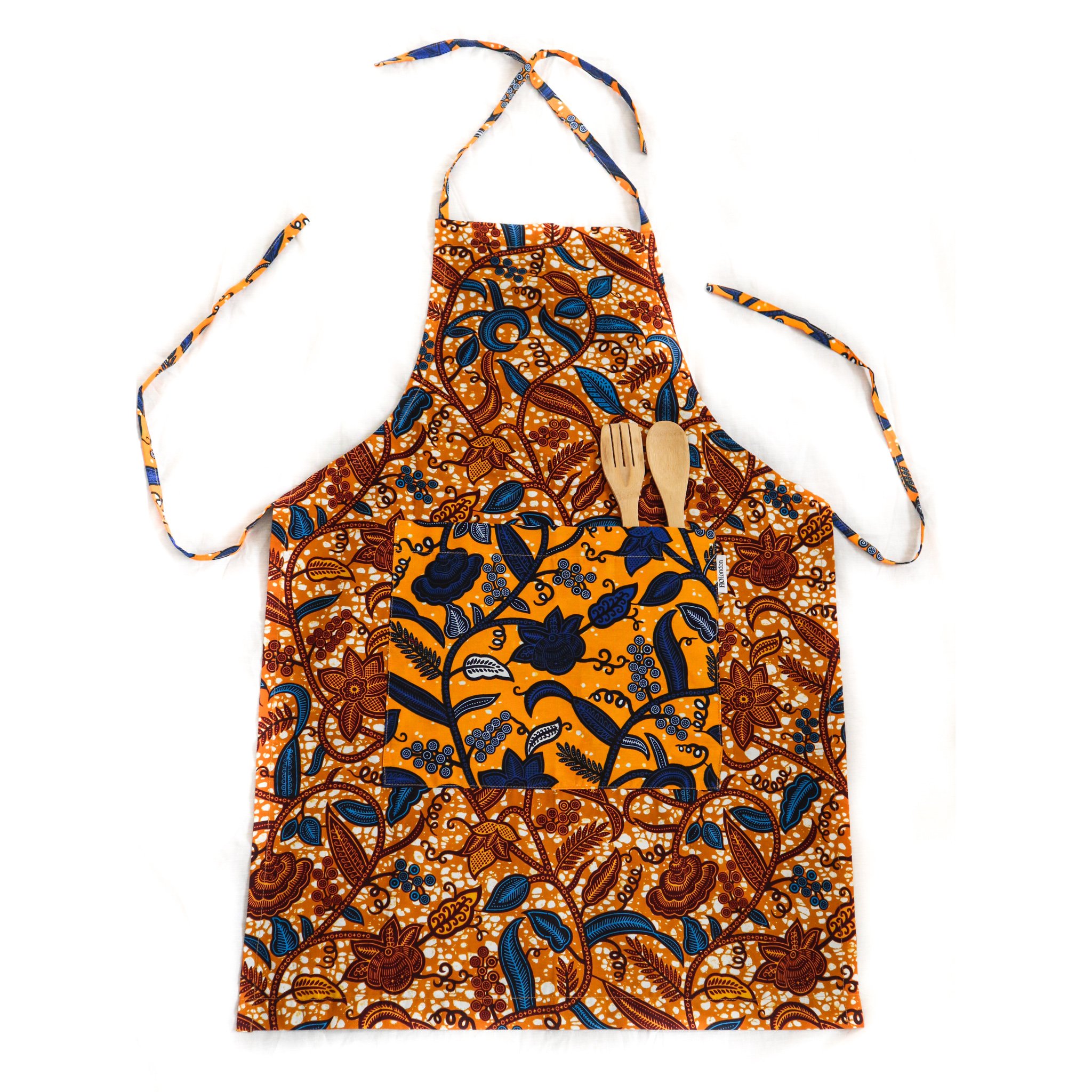


Handmade in Ghana, our aprons offer a unique design with a front pocket perfect for kitchen utensils or your phone and tie neck straps each made from recycled material. The perfect gift for any cooking enthusiasts!
Our aprons have been named after markets in Ghana and London. This apron has been named after street food hub Maltby Street Market.