
In conversation with Kristina and Sadé Alleyne
"It has been beautiful to see how movement can create connections between people who might otherwise not have met."
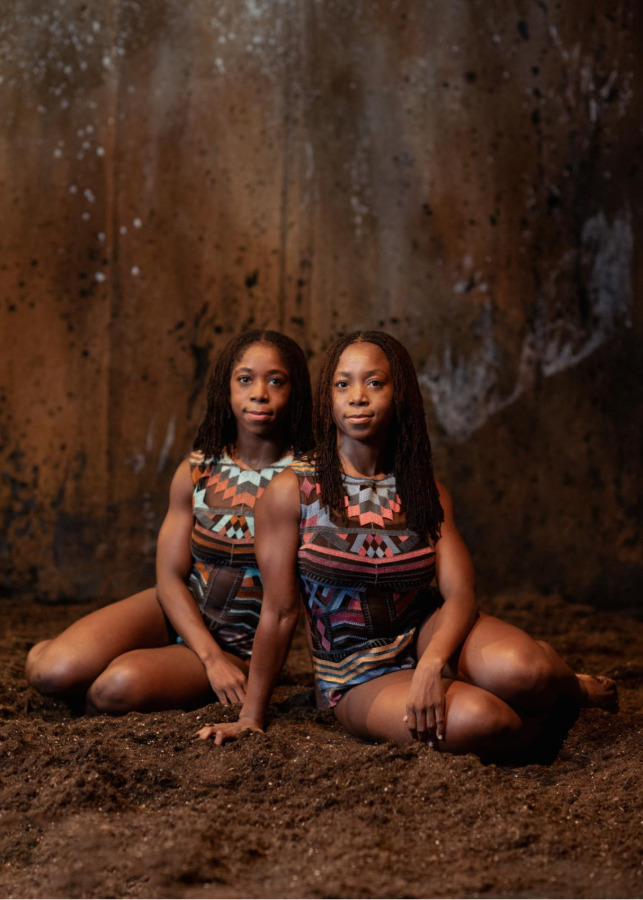
- Sadé and Kristina Alleyne
Sadé and Kristina Alleyne. Image credit Camilla Greenwell
Identical twin sisters Kristina and Sadé Alleyne founded Alleyne Dance in South London in 2014, and have since built the multi-award-winning company into one of the most distinctive voices in British contemporary dance, with a choreographic language that fuses Caribbean, Hip Hop and Kathak influences with contemporary dance. Winners of Best Independent Company at the National Dance Awards and recently appointed Guest Artistic Directors of the National Youth Dance Company by Sadler's Wells, the twins now return to East London with Far From Home, a narrative dance production exploring immigration and the consequences the search for "a better life" can have, featuring an intergenerational community cast.
We spoke to Kristina and Sadé about the family history that sparked the piece, their time volunteering in refugee centres, what it means to bring the show back to the part of London where they once rehearsed on the DLR platform at Stratford, and what being twins and creative partners has taught them.
Your new production Far From Home explores immigration and the consequences of searching for “a better life”. What inspired you to tell this story, and what do you hope audiences take away from it?
For us, Far From Home began with a very human question: what would make someone leave everything they know in the hope of finding something better?
We get inspired by stories and events that happen to people in the world. We were interested in discovering our own story and how our family migrated from Barbados to the UK for a better life. This sparked our curiosity, so we looked into stories of fleeing and arrival of individuals and refugees in the UK due to circumstances such as civil war, for example.
With Far From Home, we want the audience to feel, to be moved and to be entertained. We hope that they see and/or recognise themselves on stage and to feel invited into the work, whether physically or emotionally, or to take a pause and see a different perspective. For this production we have an intergenerational local community cast on stage, which makes this especially important.
We want audiences to become engrossed in the world we are creating; to feel the physicality, the risk-taking, the meetings and connections between people, as well as the beautiful music and scenery present. The questions may arise include: Where do you belong? What feels like home? And how do you welcome people into your home?
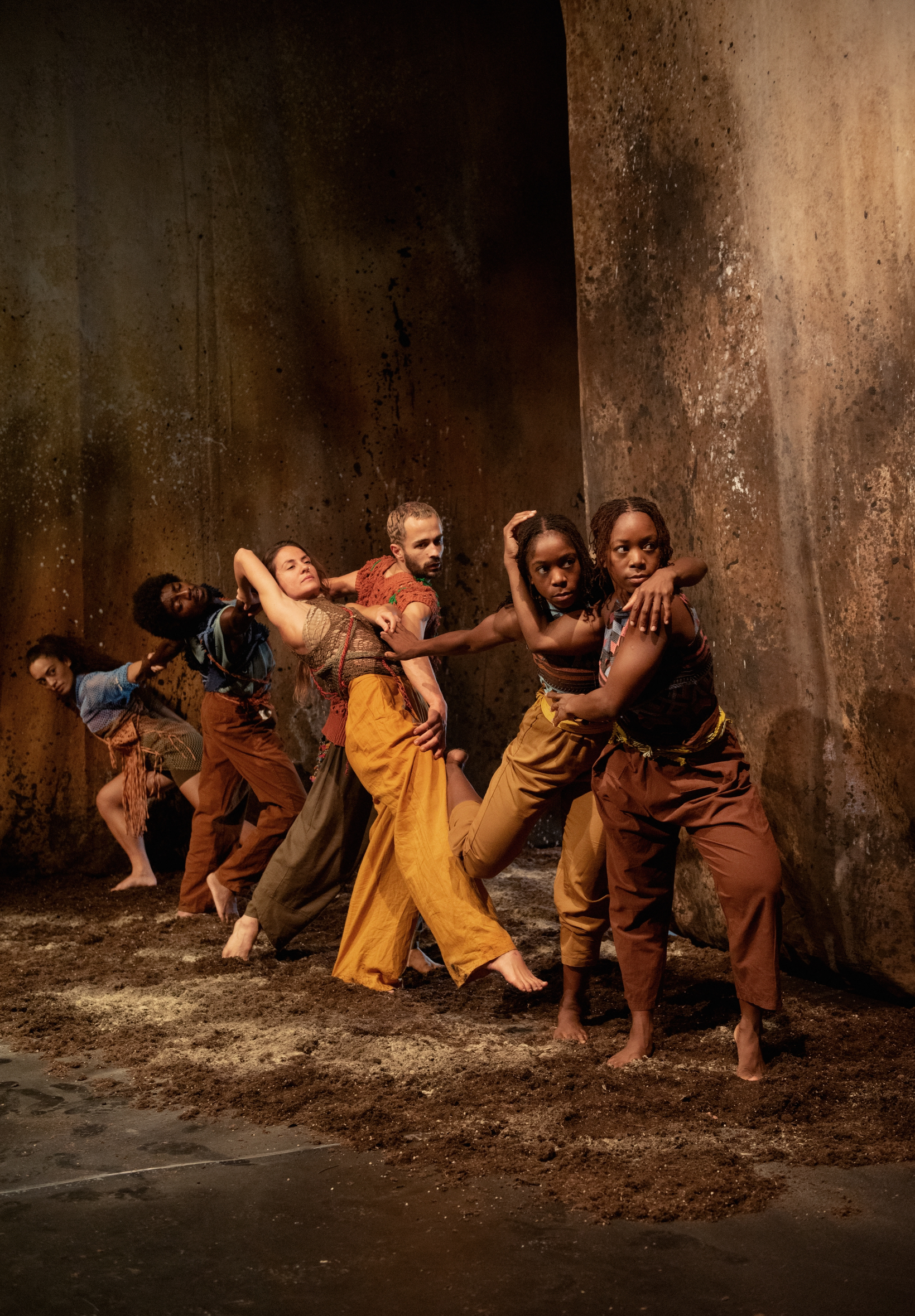
Alleyne Dance, Far From Home, Image Credit Camilla Greenwell
The production features an intergenerational community cast. What did working with people from different generations bring to the piece, and were there any stories or experiences that particularly shaped the work?
Working with an intergenerational community cast has brought a real heartbeat to the piece. You have people on stage with different ages, experiences and relationships to movement, and that makes the world of Far From Home feel much bigger than just us as performers. It has been beautiful to see how movement can create connections between people who might otherwise not have met.
To create this work we have been, and still are, volunteering in refugee centres. At the end of a session some of the participants liked to draw and create images or sketches that reflect how they feel in the moment. One of these responses made us realise that a black box theatre environment would not allow us to create the images that we are trying to portray, so we transformed the space to create a world that moved from night to day and mystery to danger.
Each performance is unique as we re-create with the intergenerational cast, they provide us with the stories, the characters and dynamics that creates possibilities in the scenes.
You both have strong connections to East London, from training with Boy Blue to your relationship with Sadler’s Wells East. What does performing Far From Home in East London mean to you personally?
We are elated to perform not only in East London but also in a Sadler’s Wells Theatre. We have memories of waiting for the DLR at Stratford as young dancers, practising our routines on the platform and not feeling out of the norm or strange.
East London has been an important part of our journey. Training and working around Boy Blue gave us a sense of community and showed us the power of being in a space where different movement languages, cultures and people could meet.
To now bring Far From Home to Sadler’s Wells East feels quite special. There is a sense of coming back, but also of returning as different to who we were. We have grown as artists, created our own company and travelled with our work, so performing in East London is both personal and full-circle.
It is also exciting to bring a work about belonging and community into a part of London that holds so many different communities and stories. It feels like the right place for this piece to land.
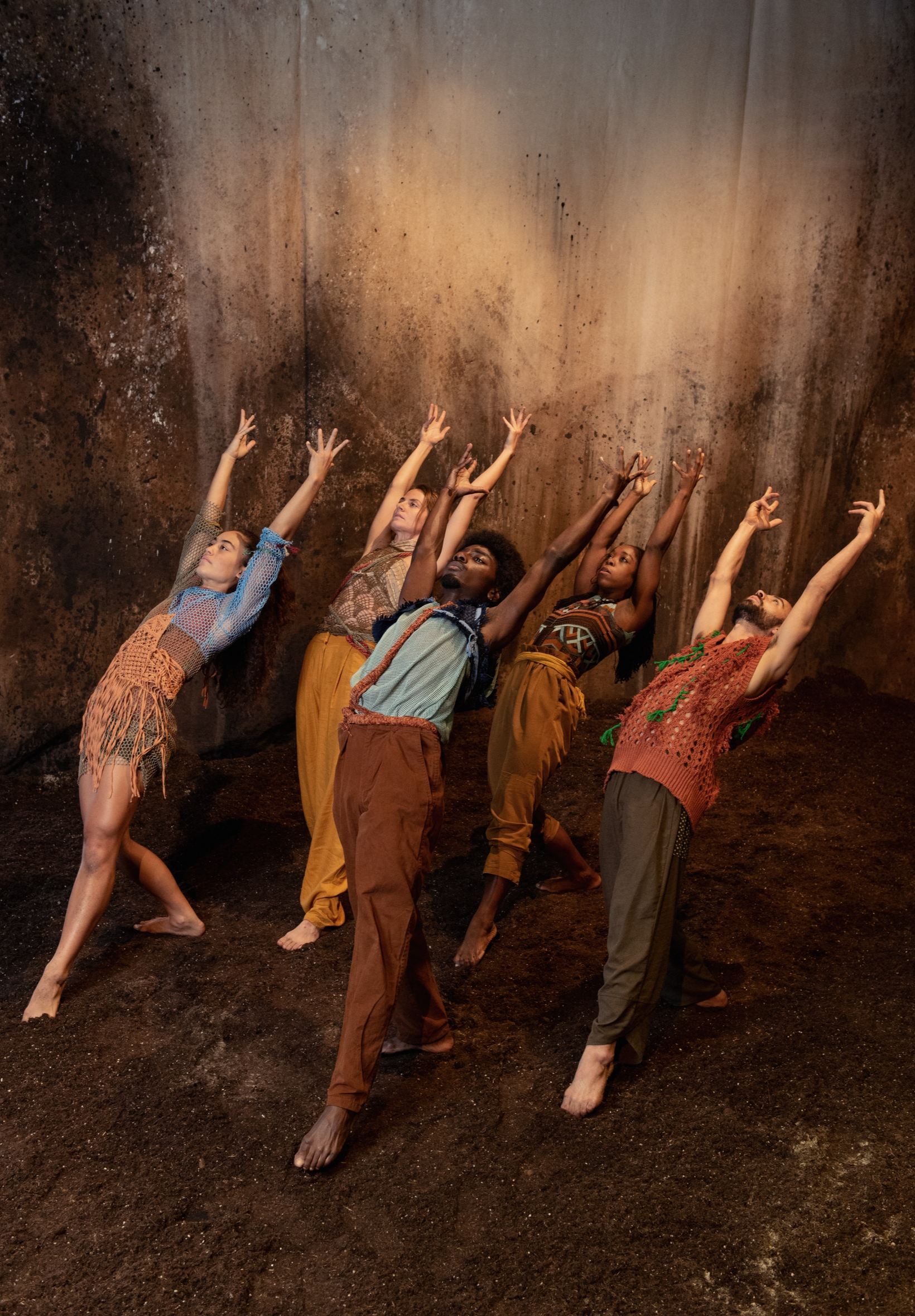
Alleyne Dance, Far From Home, Image Credit Camilla Greenwell
Your choreography brings together Caribbean, Hip Hop, Kathak and contemporary dance. How have your different cultural influences shaped the Alleyne Dance style, and how do you continue to push that language forward?
Our cultural influences are not something we add on top of the work, they are part of how we understand movement, music and rhythm. The Caribbean influences come through in the musicality and sense of connection; Hip Hop has influenced our relationship to groove, dynamics and individuality; Kathak has opened up ideas around rhythm, storytelling and intricate footwork; and contemporary dance gives us space to stretch, question and transform all of those influences.
Over time, these languages have become more embedded in how we naturally move. Rather than putting styles in separate boxes, we use them as sources and through our choreography they meet, clash, blend and, ultimately, evolve. The challenge is to keep listening and stay curious. We continue to push the language forward by asking: what does this body need to say now?
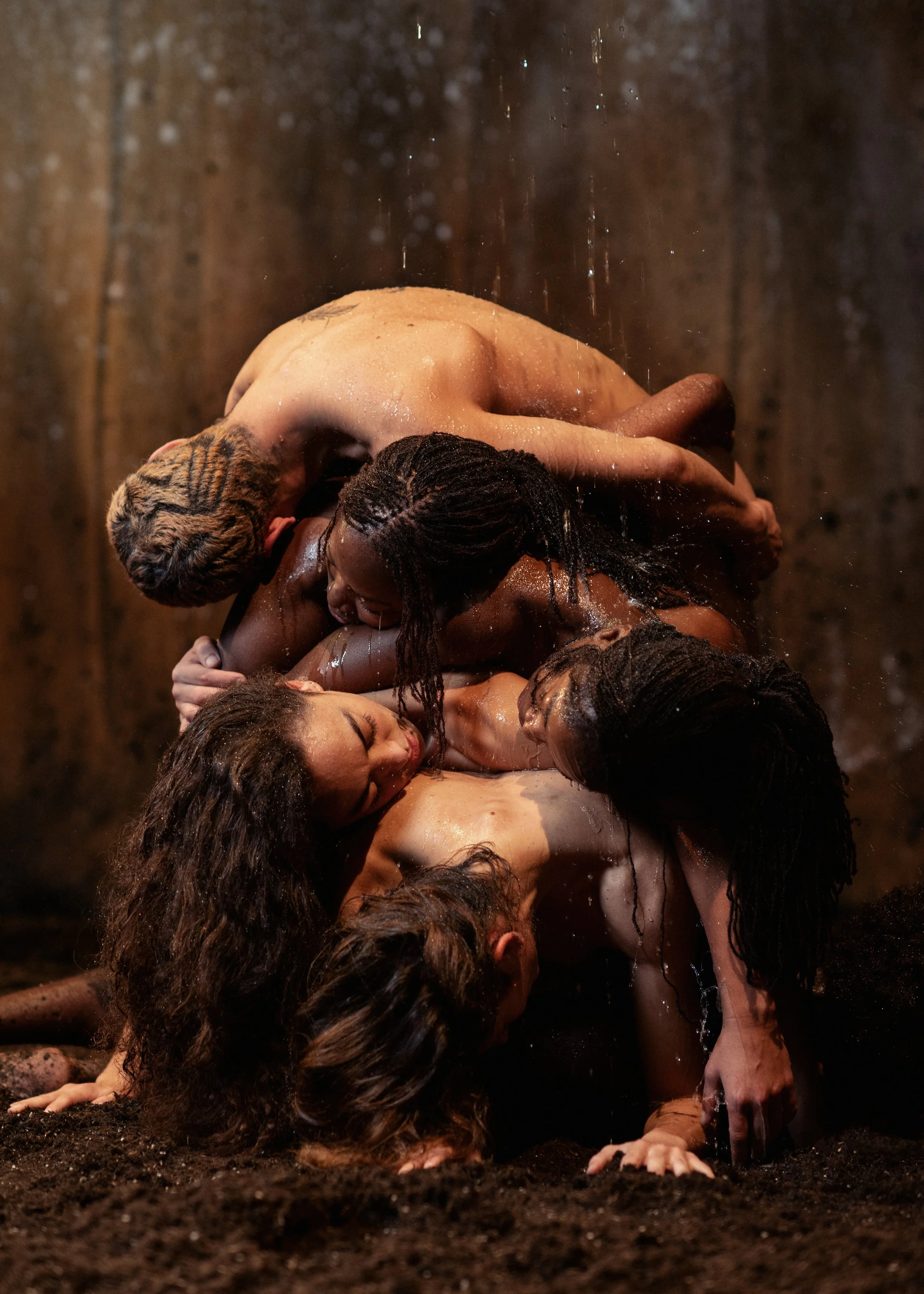
Alleyne Dance, Far From Home, Image Credit Camilla Greenwell
You’ve achieved so much together, from winning Best Independent Company at the National Dance Awards to becoming Guest Artistic Directors of National Youth Dance Company. As identical twins and creative partners, what do you think you bring out in each other that you might not have achieved individually?
Being identical twins means there is a level of trust between us that is very difficult to explain. We know each other’s strengths, weaknesses and habits, sometimes before the other person has even said anything! Being creative partners does also bring its challenges, and it has taught us how to be honest - sometimes brutally so. We have had to learn when one of us should lead, when the other should support, and when we need to challenge each other.
But we also bring different energies into the room. One of us might see the bigger picture while the other notices the detail, or one might push an idea while the other asks the difficult questions. We can divide and conquer, but we also know that we have each other’s backs. That combination of trust, honesty, healthy challenge and shared history has allowed us to go further than we might have individually and have fun doing so. We feel lucky to have each other.
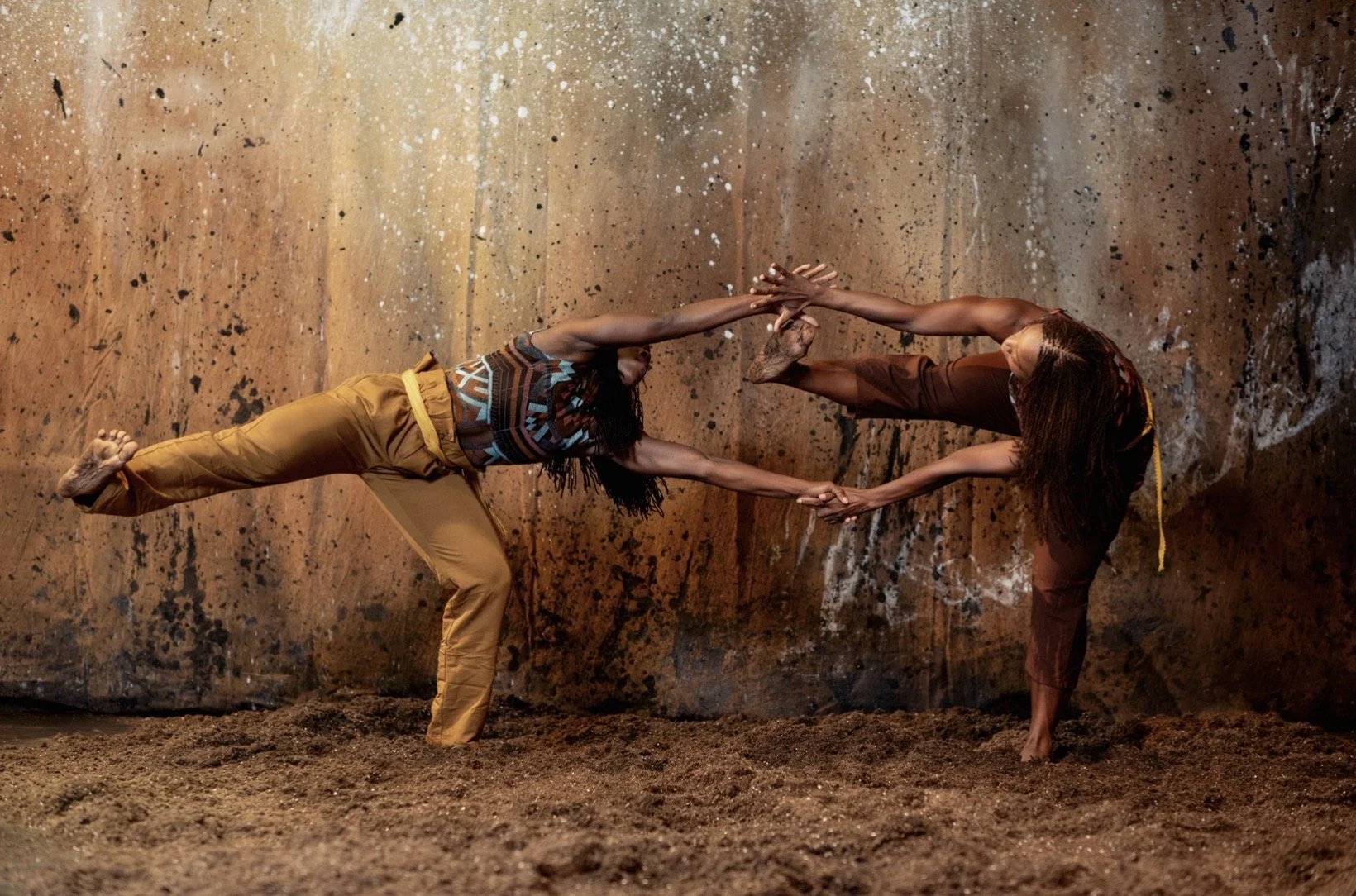
Alleyne Dance, Far From Home, Image Credit Camilla Greenwell
The [Quick] #FLODown:
Best piece of life advice you’ve received, or would now give yourself?
Trust the timing of your journey. You don’t have to have everything figured out to keep moving forward.
Is there a book, text, or piece of writing you return to for inspiration?
Jocko Willink’s book Extreme Ownership. Particularly Chapter 8: Decentralised Command, which talks about empowering young people to believe in your vision which then enables them to lead and make decisions without you.
What is one thing you can’t live or work without?
Music. It can change the energy in a room before a single step has been made.
Which artist, living or dead, would you most like to sit down and have a conversation with, and why?
Tough question! We have a few:
Michael Johnson to hear how he pushed and make it back after a stroke.
Venus Williams and Allyson Felix, what pushed them to return to competing after giving birth.
Yayoi Kusama to learn about about her life journey. She said: “I fight pain, anxiety, and fear every day,” yet she continued to create her art.
Pina Bausch to talk about people and memories of the dance world.
In your view, what should the art world be doing more of right now, and what should it be doing less of?
Another tough one. We feel the art world needs to recognise dance more as a strong and beautiful art form and respect the physical dedication and sacrifice as a sport. Also to be less expecting that everyone fits into one idea of what art, an artist or an audience should look like.
Far From Home runs at Sadler's Wells East, Thursday 15 – Saturday 17 October, 7.30pm. Discover more and book at sadlerswells.com.















Stand out this summer with this gorgeous Nsubra beach bag! Handmade in Ghana, this large tote bag is the perfect size for your sun cream, beach towel, purse and your latest book.