In conversation with Paco Peña
“My aim has always been to project flamenco in what I understand to be its pure, true form, but there is always room to find other ways of following that path…”
- Paco Peña
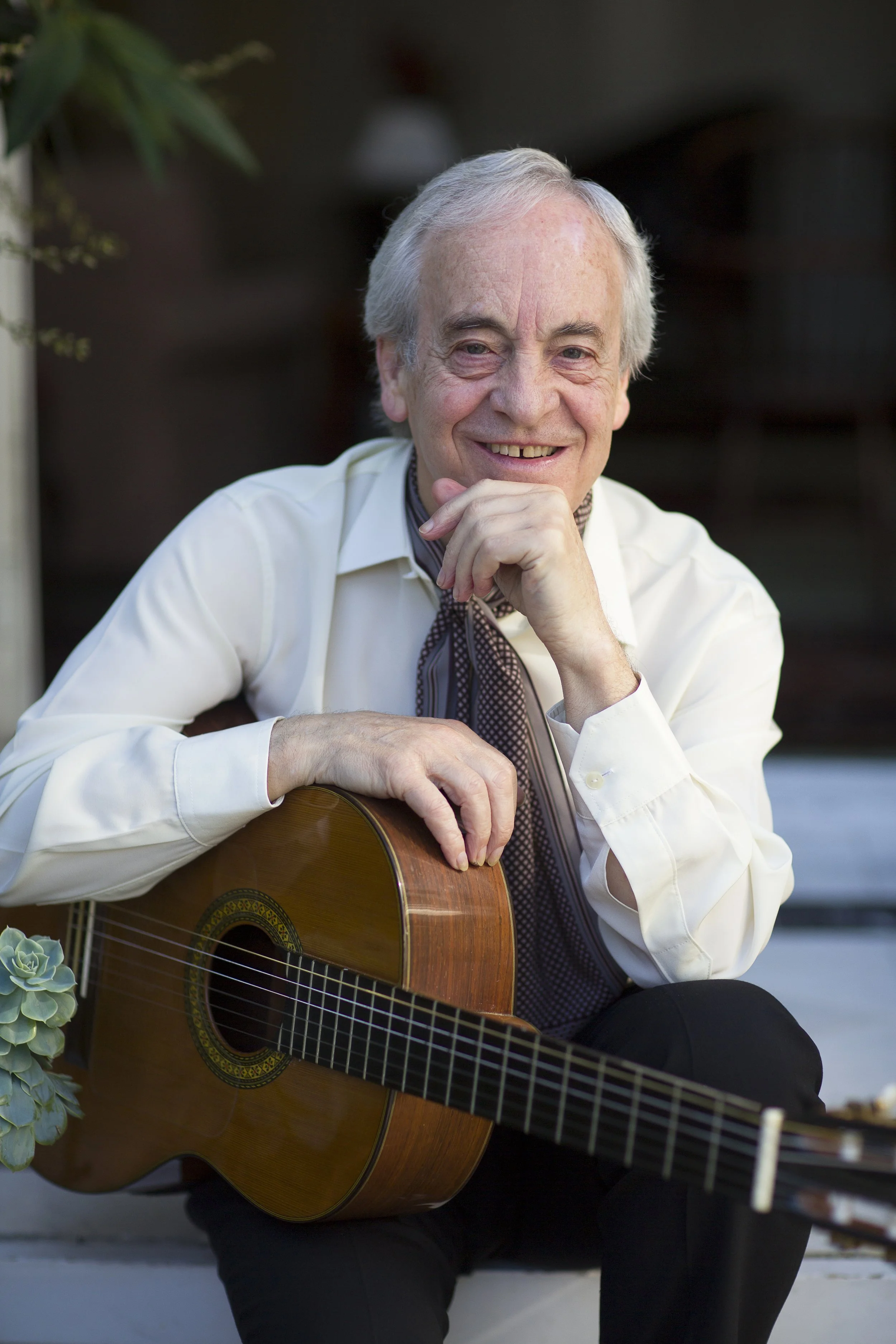
Paco Peña
Paco Peña embodies both authenticity and innovation in flamenco. As guitarist, composer, dramatist, producer and artistic mentor he has transformed perceptions of this archetypal Spanish genre.
Born in the Andalucian city of Córdoba, Paco Peña first played guitar professionally at the age of 12. Having moved to London in the late 1960s he captured the public imagination with his solo recitals at venues from Ronnie Scott’s Jazz Club to the Royal Albert Hall, and from Carnegie Hall in New York to the Concertgebouw in Amsterdam.
Taking flamenco into the realm of music-theatre, in 1970 the Paco Peña Flamenco Dance Company staged the first in its continuing succession of groundbreaking shows, presented regularly in London and at festivals around the world. The company’s most recent show, Solera, premiered in in 2022, embodies the living tradition of flamenco. Its title – taken from a time-honoured process for refining and maturing wine, and derived from the Spanish word for ‘earth’ – evokes provenance and pedigree.
In his native Córdoba, Paco Peña founded both the Centro Flamenco Paco Peña and the Córdoba International Guitar Festival, and in 1985, at Rotterdam Conservatory, he became the world’s first Professor of Flamenco Guitar. Appointed Oficial de la Cruz de la Orden del Mérito Civil by King Juan Carlos of Spain, he has also received the Gold Medal in the Arts from the John F. Kennedy Center for the Performing Arts in Washington D.C.
You have been performing at Sadler’s Wells for decades. What does returning to this stage with Solera mean to you personally at this point in your life and career?
Given the wonderful artists performing by my side, I think personally that a lot of solera inhabits that stage when we put on this show. It makes me feel forever grateful that my company and myself are welcome there over so many years. Career wise, I’m always honoured to perform at Sadler’s; it is a big stage, a great space: imposing and inspiring!

Paco Peña Flamenco Dance Company, Solera, Image Credit Ghassan El Moussa
At 83, you continue to perform with remarkable energy and precision. What keeps your passion for flamenco alive, and how has your relationship with the guitar changed over time?
My aim has always been to project flamenco in what I understand to be its pure, true form, but there is always room to find other ways of following that path (perhaps Solera is an example of that notion?) and I am as committed as I ever was to go on doing it. I think Sadler’s audiences are sensitive to that attitude and they certainly help the process. Regarding my relationship with the guitar, it needs work… always. And it rewards the effort you put in. I hope to learn one day to play it as well as it deserves…
Solera takes inspiration from the Andalusian system of ageing wine, where different vintages are combined to maintain character and quality. How did this idea shape the artistic vision behind the production?
The word ‘solera’ is already commonly used to express recognition of certain qualities that mature persons possess and display.
In much the same way as a marvellous liquid can be decanted, so culture and art and its expression can reach maturity with time. The passage of time undoubtedly makes us not only older but more who we are; it’s an important idea to embrace as an artist, flamenco or otherwise, even if younger practitioners may see this differently, wanting to brake moulds and create something new and different. Yet, even they need to be careful, much as you need to care for the grape juice if you are to achieve the best results. So, this is what we hope to do with our show.

Paco Peña Flamenco Dance Company, Solera, Image Credit Elaine Mayson
The show brings together established performers and younger artists such as Dani de Morón. What does working across generations bring to the rehearsal room and to the stage?
It is wonderful to work with people who love flamenco as much as I do and that was very clear from the start with this great team of artists. The young ones were receptive to all ideas from wherever they came, as indeed the more mature ones loved them all! Not surprisingly, I happen to be the oldest person in the group and I have to say that the youngest guitarist, Dani de Morón just brought a wonderful contribution with stunning ideas and, yes, maturity in his art, which inspired all of us greatly!!
Having moved to London in the 1960s, you have witnessed flamenco grow in international recognition. How has the art form changed, and how has it stayed true to its roots?
Flamenco is changing all the time. Young people want to emulate the artists they admire and they also want, in due course, to do things in their personal way. They learn from everybody. Last month marked the 12th anniversary of the sad, untimely death of Paco de Lucía, a great guitar genius who brough a revolution to flamenco as a young man. Nothing stayed the same after his ideas hit the legion of aficionados and professionals all over, whether singers, dancers or guitarists. Other young artists have come and will continue to come who will face the challenges that Paco laid down. And so it should be!

Paco Peña Flamenco Dance Company, Solera, Image Credit Elliott Franks
The word “solera” suggests depth, grounding, and continuity. What do you hope audiences will understand about flamenco, and about artistic legacy, after experiencing this performance?
Perhaps the fact that someone of advanced age can perform flamenco of beauty, grace and energy, or pathos and joy; someone who, with a simple turn of the hand, the arm, the head or the body, can produce a burst of emotion from deep within which touches and stirs any audience.
The [Quick] #FLODown
Best life advice?
Stay healthy, enjoy nature!
Last song you listened to?
Up until yesterday we have been rehearsing the show and the last number we tried was a dance to a short poem by Antonio Machado, a tragic and beautiful thought. The song goes: “When I can no longer remember, where will my memories go? It is one thing to have memories… quite another is to remember…”
Last book you read?
I was looking a few days ago, after many passed readings, to a small book by Federico García Lorca which includes a wonderful essay by the title: Juego y Teoría del Duende. And it is hugely inspiring.
Can’t live without?
My best guitar and some space…
Pre-show ritual?
Time alone …
Solera in one word?
Rosario… (My mother)
Paco Peña’s show Solera returns to Sadler’s Wells Theatre on 2 – 4 April 2026.
Website: pacopena.net
Instagram: @pacopenaflamenco
Facebook: PacoPenaFlamenco