
A review of Michaelina Wautier at the Royal Academy of Arts, London / Kunsthistorisches Museum, Vienna
Since working in the arts, I have never had the opportunity to see a travelling exhibition in more locations than the one I was already in. So, when the opportunity arose to visit the Michaelina Wautier exhibition at not only the Kunsthistorisches Museum in Vienna where it was first exhibited, but also at the Royal Academy of Arts in London, the prospect of comparing the exhibitions was quite beguiling. Much smaller in scale, the RA has done something incredibly considered in its storytelling with less space, and it feels like both a strength, as well as a missed opportunity at times.
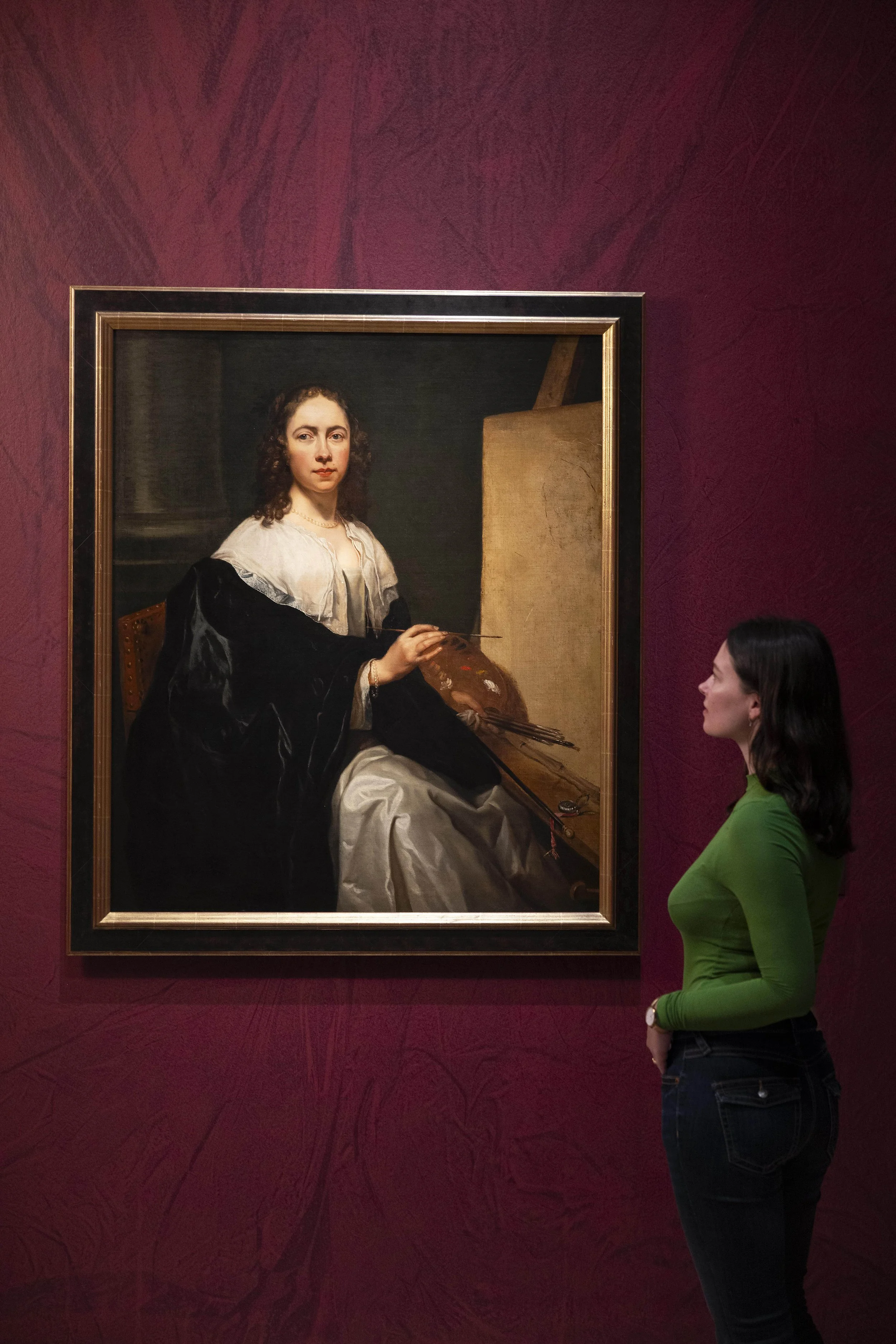
Gallery view of the Michaelina Wautier exhibition at the Royal Academy of Arts, London (27 March -21 June 2026), showing Self-Portrait, about 1650. On loan from a private collection Photo: Royal Academy of Arts, London / David Parry
Michaelina Wautier was a seventeenth-century Flemish painter who was largely erased from - not overlooked, but actively written out of - art history. Her will was lost in a fire and we don’t know the exact date of birth, for example, which meant that the bulk of her life must be read through her paintings. Walking into the RA’s exhibition, you are greeted first by text and her name on the wall rather than a work of art. The show wants you to understand who she was as you look at what she made, which is a thread that pulls through the entire exhibition in the details of the descriptions and curation.
Her identity as an artist is introduced immediately with a self portrait to the left of the entrance doors. It means a lot to see a woman at that time depicting herself as a practising artist, drawing parallels to what we’re familiar with from her better-known contemporary in seventeenth century Italy Artemisia Gentilschi, or later in eighteenth century Paris Élisabeth Vigée Le Brun. Women were the ones who pioneered representing themselves at work as artists, taking pride in the vocation. In direct contrast, Wautier’s self portrait is juxtaposed by a self portrait of Peter Paul Rubens in a courtly style. The deliberate choice to place these portraits next to one another underlines further Wautier’s positioning of herself as an artist, holding her tools at the easel, whereas Rubens includes characteristics of status and nobility with his clothing - gloves, hat, velvet coat, no palette or brushes but instead, holding a sword.
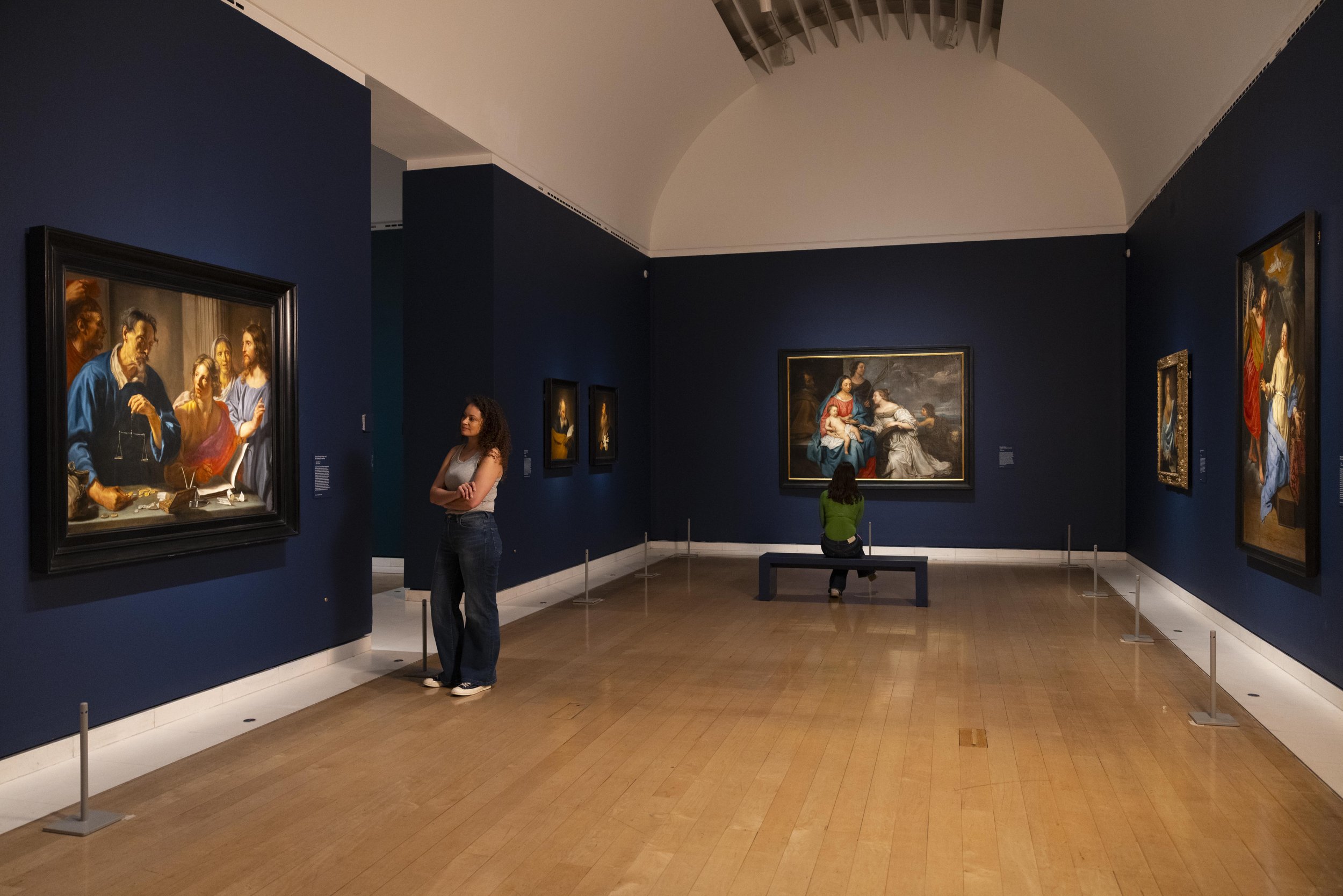
Gallery view of the Michaelina Wautier exhibition at the Royal Academy of Arts, London (27 March - 21 June 2026). Photo: © Royal Academy of Arts, London / David Parry
The first room also introduces Archduke Leopold Wilhelm, who was one of her most significant collectors, and her brother Charles, who was also a practicing artist. In this room in particular, I recalled something I saw in the Kunsthistorisches Museum’s exhibition that I missed in this one: a ledger showing a sale of her work. It was an important object giving evidence that she sold paintings, that she had some form of financial independence. Without it, the question of how she sustained herself goes unanswered. We do still find context on how she lived and worked as an unmarried woman at the time, and we also understand the context her family gives. The siblings’ work is placed side by side, drawing attention to how their styles informed one another. In the exhibition at the Kunsthistorisches Museum, an even deeper explanation is given regarding her brother, Charles. Also an artist, he may have facilitated more opportunities for Michaelina to access spaces not typically available to female artists at the time, such as male nude life drawing. This informs her later practice and, more specifically, the artwork holding the most gravitational weight in the RA exhibition, the Triumph of Bacchus, which I discovered in the final room.
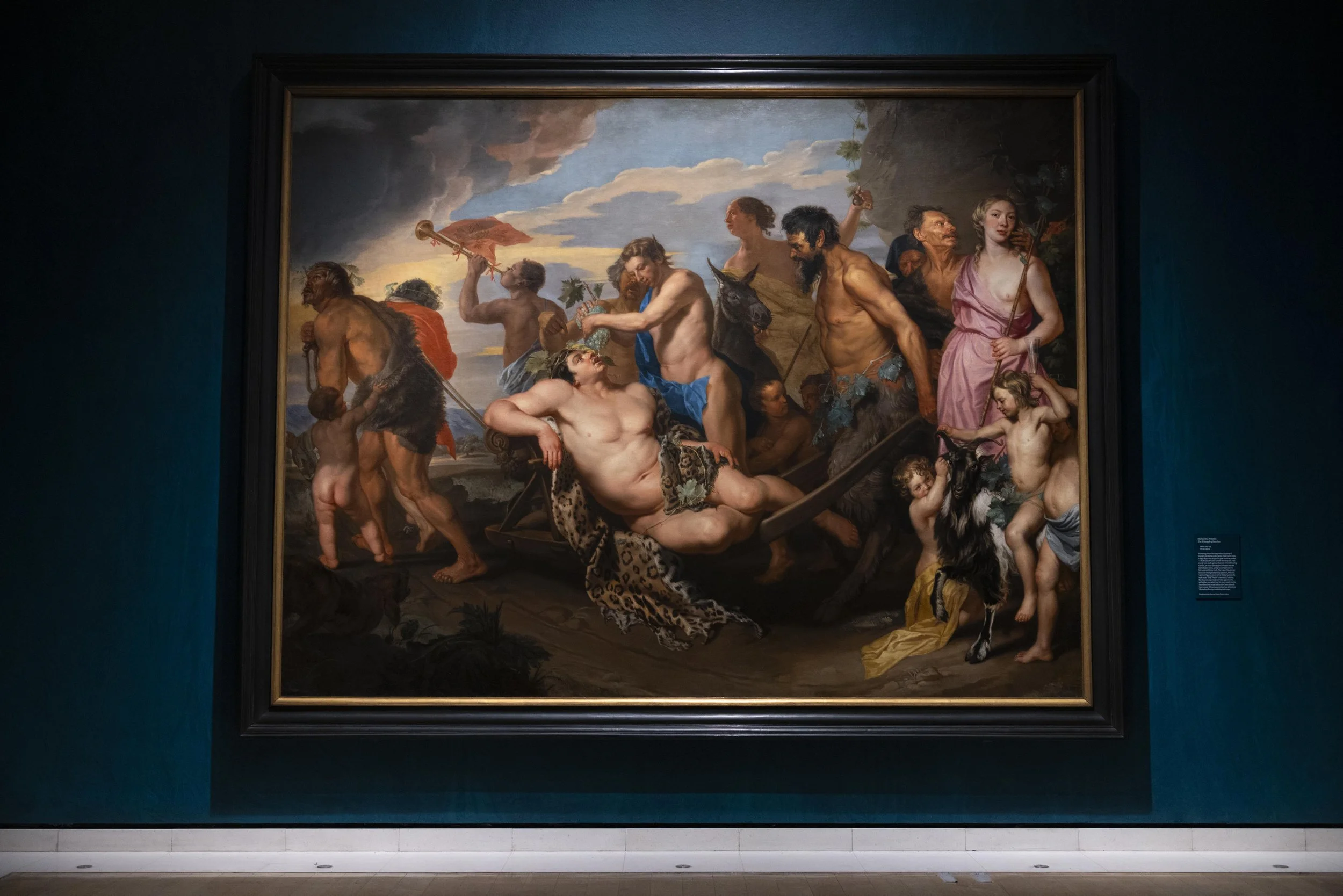
Gallery view of the Michaelina Wautier exhibition at the Royal Academy of Arts, London (27 March - 21 June 2026), showing The Triumph of Bacchus, about 1655-59. On loan from Kunsthistorisches Museum Vienna, Picture Gallery. Photo: © Royal Academy of Arts, London / David Parry
At the Kunsthistorisches Museum, the Triumph of Bacchus was present but not especially centred like it was at the RA - but it is the work that culminates Wautier’s story as a woman and painter, her technical skill, and the feminist undertones of how women artists were perceived at the time, what they were “allowed” to paint. As she did with her self portrait, painting herself confident at the easel at a time that painting was considered “mere craftsmanship”, she gives her own face to a figure positioned around the god of wine. She is looking directly at us, the only figure to do - a daring decision, asserting herself boldly. As a viewer, one is rightly angered at Wautier’s disappearance from art history and, upon her rediscovery, we learn so much about the necessity for women to justify their painterly choices, defending the intellectual properties of their work.
Flanking the Triumph of Bacchus on either side are flower still lifes with ox skulls peering from the corners, offering a slightly macabre memento mori amongst the motifs “approved” for women to paint. They are a reminder that flower painting was one of the few genres women were considered acceptable for, and that Wautier, who painted religious works, portraits, and genre scenes, had to justify those choices and defend the intellectual seriousness of her decisions in ways her male contemporaries didn’t. Seeing these next to her extraordinary Bacchus, the still lifes hanging there feel like a nod towards the box Wautier was expected to stay within but repeatedly chose to break out of.
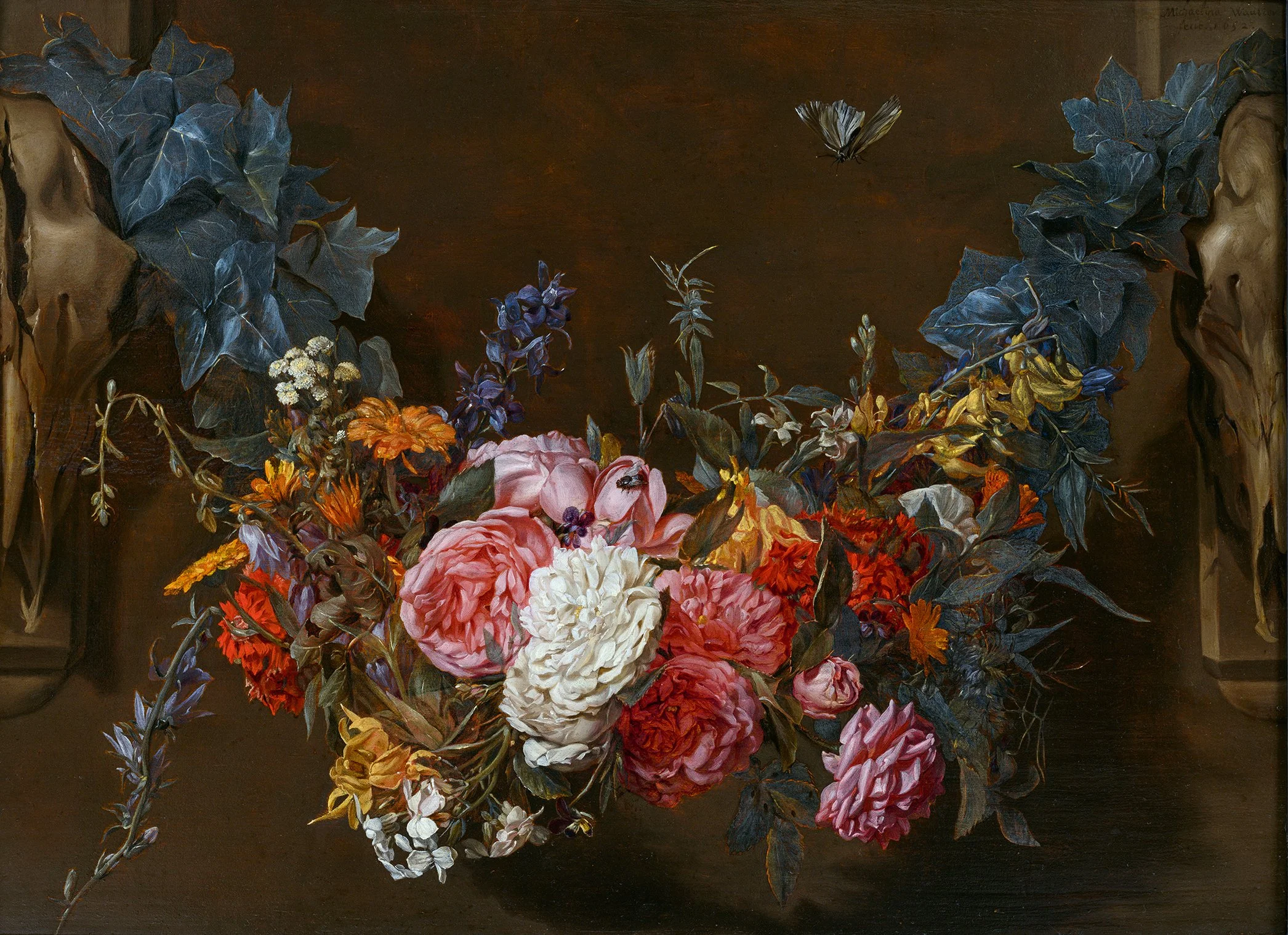
Michaelina Wautier, Flower Garland with a Butterfly, 1652. Oil on panel, 41.1 x 57.4 cm. Het Noordbrabants Museum, 's-Hertogenbosch (The Netherlands), Longterm loan of private collection. Photo: Peter Cox
The weight of the exhibition at the Royal Academy was thought out and well placed to highlight some of the more significant parts of Wautier’s practice, however the RA couldn’t give Wautier the full archival breadth that the Kunsthistorisches Museum did. The exhibition works as a circuit, you exit where you entered, so it is ideal for walking through more than once. It’s the perfect exhibition to learn about Michaelina Wautier as a painter, but it is also an exhibition incorporating a multitude of artistic movements and contexts within art history, a woman’s position in art historical discourse, and technical processes like pigment usage and theories of colour. It is well worth visiting, and even more worth staying a while, going around a second (or third) time, and choosing a few works to sit with.
Date: 27 March - 21 June 2026. Location: Royal Academy, The Jillian and Arthur M. Sackler Wing of Galleries, Burlington House, Piccadilly, London W1J 0BD. Price: £15. Concessions available. Book now
Review by Alexandra Steinacker-Clark






Handmade in Ghana, this beautiful green apron offers a unique design with a front pocket perfect for kitchen utensils or your phone and tie neck straps each made from recycled material. The perfect gift for any cooking enthusiasts!
Our aprons have been named after markets in Ghana. This apron has been named after Kintampo Market located in the Bono region of Ghana it is noted for their sales of yam tubers.