
Tate unveils plans for its first garden at RHS Chelsea Flower Show
Tate has announced the full details of its inaugural show garden at the prestigious RHS Chelsea Flower Show. Named The Tate Britain Garden, the installation promises to present an innovative vision for the intersection of art, nature, and community. Designed by nine-time Chelsea gold medallist Tom Stuart-Smith, the garden aims to showcase how museums can provide public spaces that encourage both relaxation and creative engagement. Generously funded by the Clore Duffield Foundation and Project Giving Back, the initiative reflects Tate’s commitment to combining culture with social and environmental benefit.
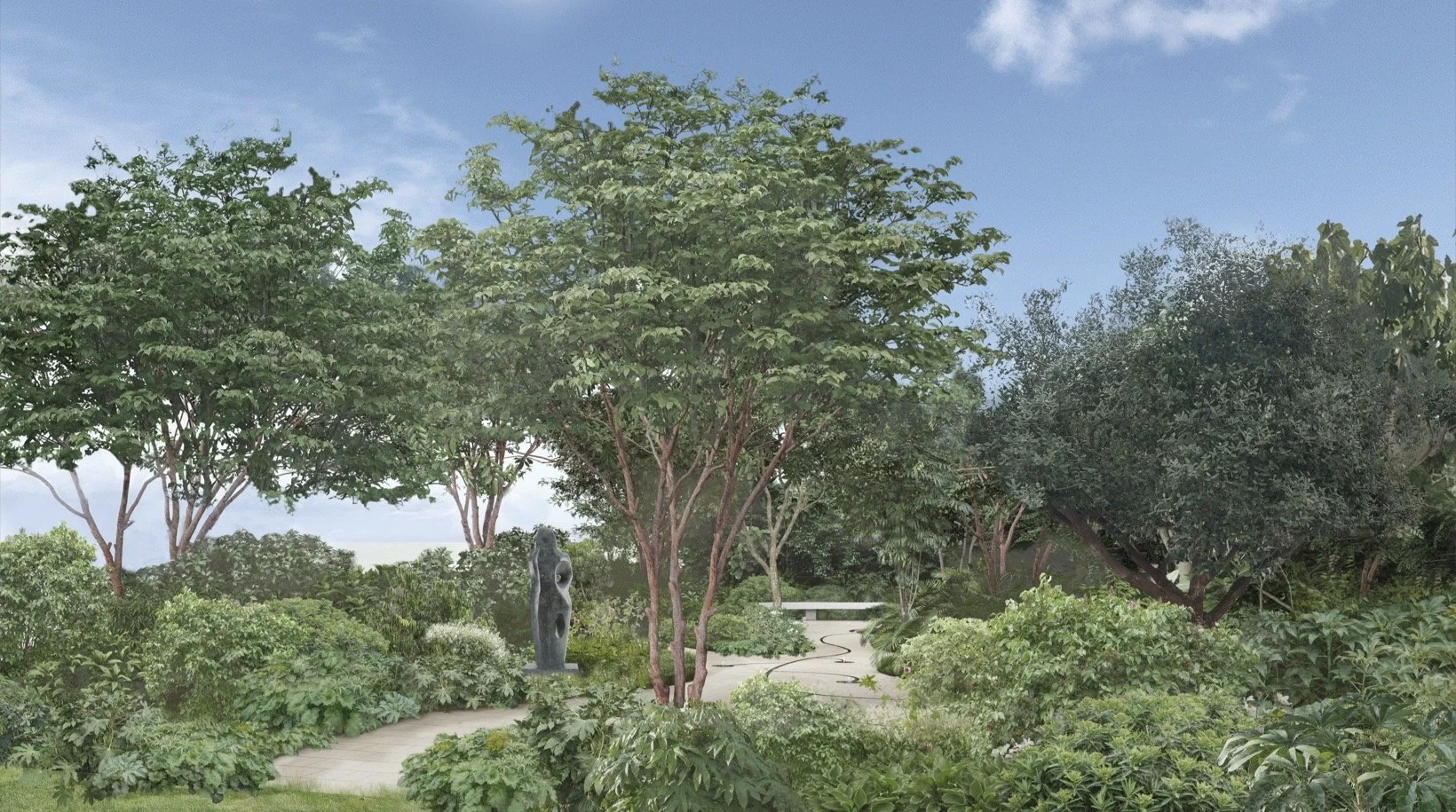
Tate Britain Garden design for Chelsea 2026. Courtesy Tom Stuart-Smith Studio
A key feature of the garden is its inspiration from Tate Britain’s rich art collection, particularly Victor Pasmore’s The Green Earth (1979–80). Serving as a preview of the upcoming Clore Garden at Tate Britain, the show garden offers a tranquil retreat amid vibrant planting and innovative design. Central to this vision is Dame Barbara Hepworth’s Bicentric Form (1949), marking the first time a work from the national collection has been displayed in a Chelsea Flower Show garden. This iconic limestone sculpture underscores Tate’s longstanding relationship with Hepworth, whose studio and garden in St Ives are now preserved by the gallery.
The garden features thoughtful design elements that will be echoed in the Clore Garden. Stone from Tate Britain’s Millbank site has been repurposed as paving, winding through biodiverse plantings, while a golden water rill 3D printed with mycorrhizal inspired patterns contributes sound and visual texture. At the centre, a bench crafted from recycled materials including cockleshells from the Thames Estuary forms a learning circle, fostering dialogue and engagement among visitors, families, and school groups.

Dame Barbara Hepworth, Bicentric Form, 1949. Barbara Hepworth © Bowness. Photo © Tate Photography (Sonal Bakrania and Matt Greenwood).
Planting choices prioritise sustainability and resilience, featuring species well suited to London’s warming climate. Mediterranean fig trees, Himalayan Schefflera, and Japanese sago palms combine with pomegranate and pineapple guava trees to create shade and structure. Seasonal blooms, including velvet groundsel, leopard plant, and great honey flower, reflect Tate’s commitment to biodiversity.
Following the show, the garden will be relocated to Tate Britain’s Millbank site and integrated into the Clore Garden project, due to open in 2027. Alex Farquharson, Director of Tate Britain, described the initiative as “a unique and bold reimagining of museum space,” while Tom Stuart-Smith praised the opportunity to display Hepworth’s work in a garden context.
The RHS Chelsea Flower Show 2026 will take place from 19 - 23 May 2026 at the Royal Hospital Chelsea.
Click here to discover more Tate projects.


















Stand out this summer with this gorgeous Nsubra beach bag! Handmade in Ghana, this large tote bag is the perfect size for your sun cream, beach towel, purse and your latest book.