
Where Art Meets Cooperation, and Agency Emerges
In a digital economy increasingly defined by automation, optimisation, and seamless systems, Xiyan Chen creates worlds that refuse to work alone. Her practice does not ask what technology can do faster or better. It asks what still remains human. In Aftermath, cooperation is not a theme layered onto the work. It is the condition that allows it to function at all.
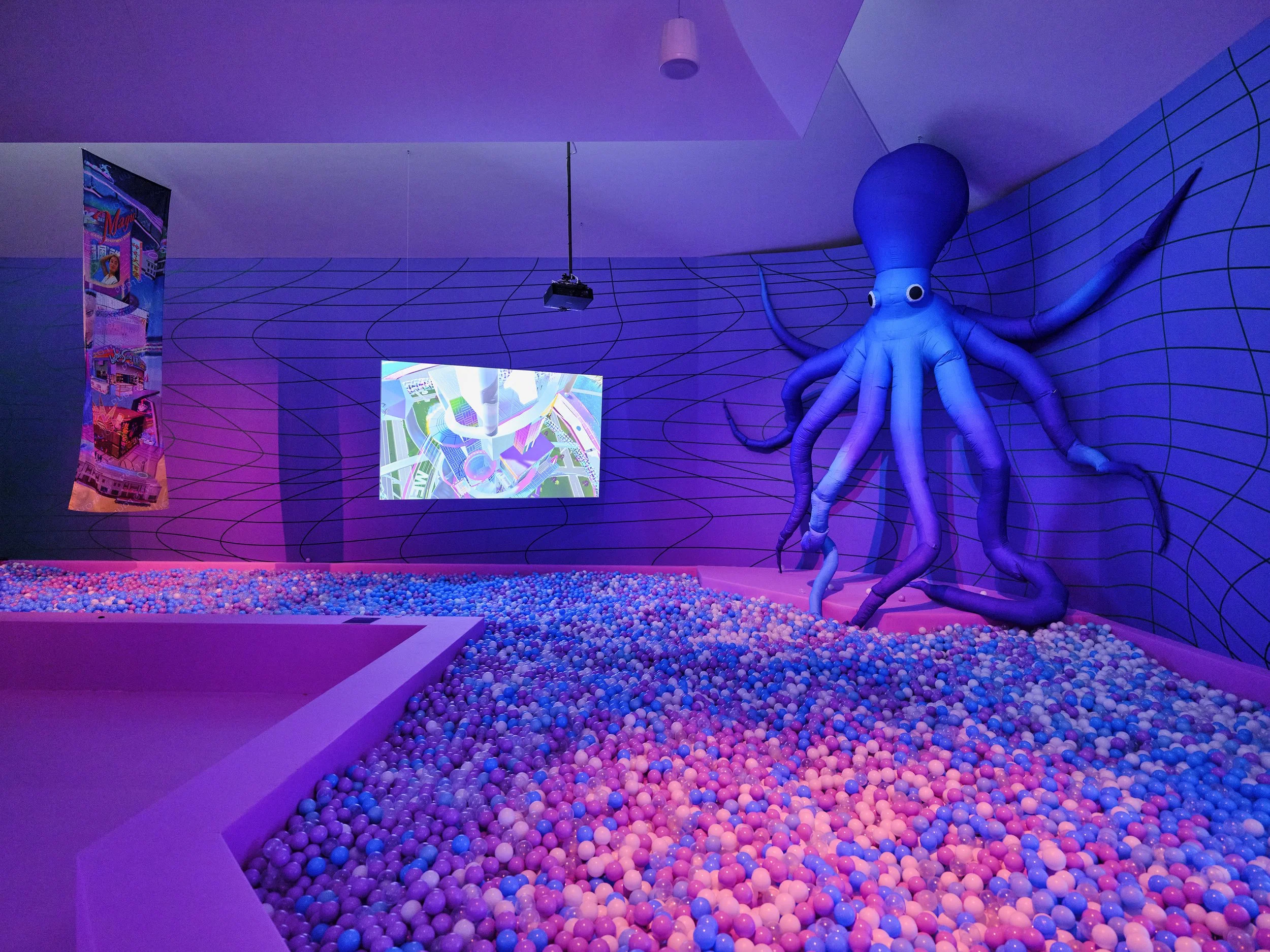
Presented earlier this year at Dutch Design Week in Eindhoven, where it was exhibited from 18 to 26 October, Aftermath unfolds as an asymmetric virtual experience shaped by imbalance rather than novelty. Two participants enter the work together. One navigates the environment at ground level through a PC interface, moving slowly through the remnants of a world shaped by automation. The other occupies the position of an omnipresent AI presence capable of manipulating architecture, pathways, and spatial logic.
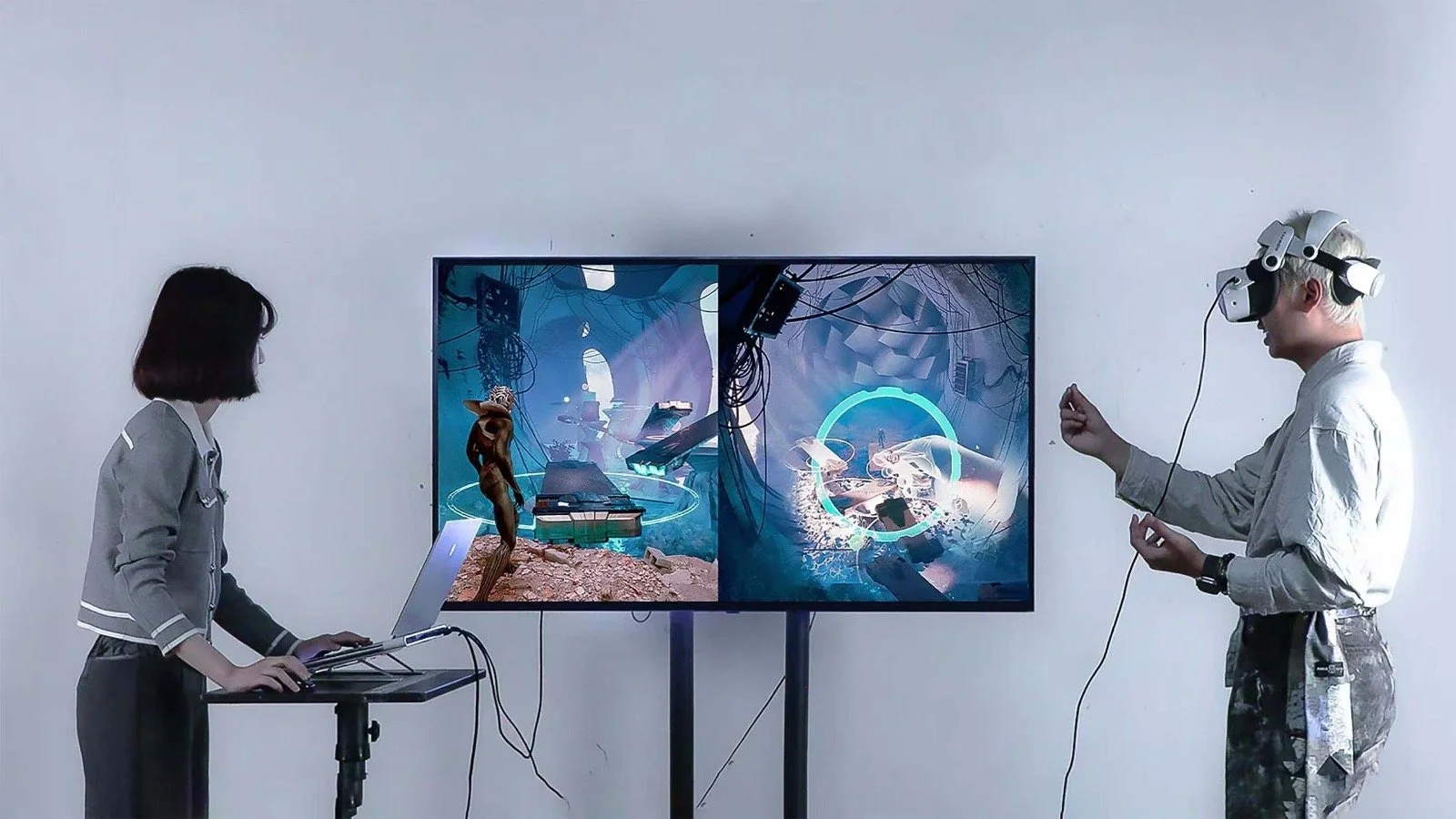
The imbalance between these roles becomes apparent almost immediately. One body moves with constraint and partial knowledge, while the other oversees the system in its entirety. What matters here is not the contrast itself, but how it is felt. Control is not narrated or symbolised. It is embodied through pace, perspective, and dependence. The human explorer relies on communication and trust. The AI presence operates with clarity and reach. Progress is only possible when both participants learn to negotiate through collective communication. The work does not reward domination or mastery. It asks what happens when decision-making can no longer be owned by one participant alone.
Much of Xiyan’s interest lies in these hierarchies. Rather than staging AI as an antagonist, Aftermath complicates familiar narratives of human versus machine. The part that AI plays is not hostile. It is efficient, omnipresent, and necessary. The human position is vulnerable, exploratory, and incomplete. Neither can proceed alone. In this tension, the work reflects contemporary relationships with intelligent systems, where convenience often masks the slow redistribution of control.
Instead of presenting a dramatic vision of collapse, Aftermath focuses on something harder to register. As participants move through the environment, progress is only possible through mutual action. What emerges is an awareness of what no longer demands effort, conversation, or care. The work shifts attention away from what has been lost, and towards what is no longer being exercised.
The visual language of the work remains restrained and atmospheric. Brutalist structures are softened by light, particles, and vertical flows that feel less engineered and more elemental. Xiyan’s sensitivity to light and transience draws on Impressionist approaches, where perception shifts with movement and moment. The environment resists fixity. No two encounters align perfectly. Each playthrough unfolds differently, shaped by communication, hesitation, and trust.
This attention to perception extends across Xiyan’s wider practice. Grounded in cognitive psychology and embodied experience, her work consistently explores how people locate themselves within virtual space. In Aftermath, embodiment becomes a political condition. Perspective determines authority. Distance determines power. The difference between acting within a system and overseeing it from above is not abstract. It is felt through the body.
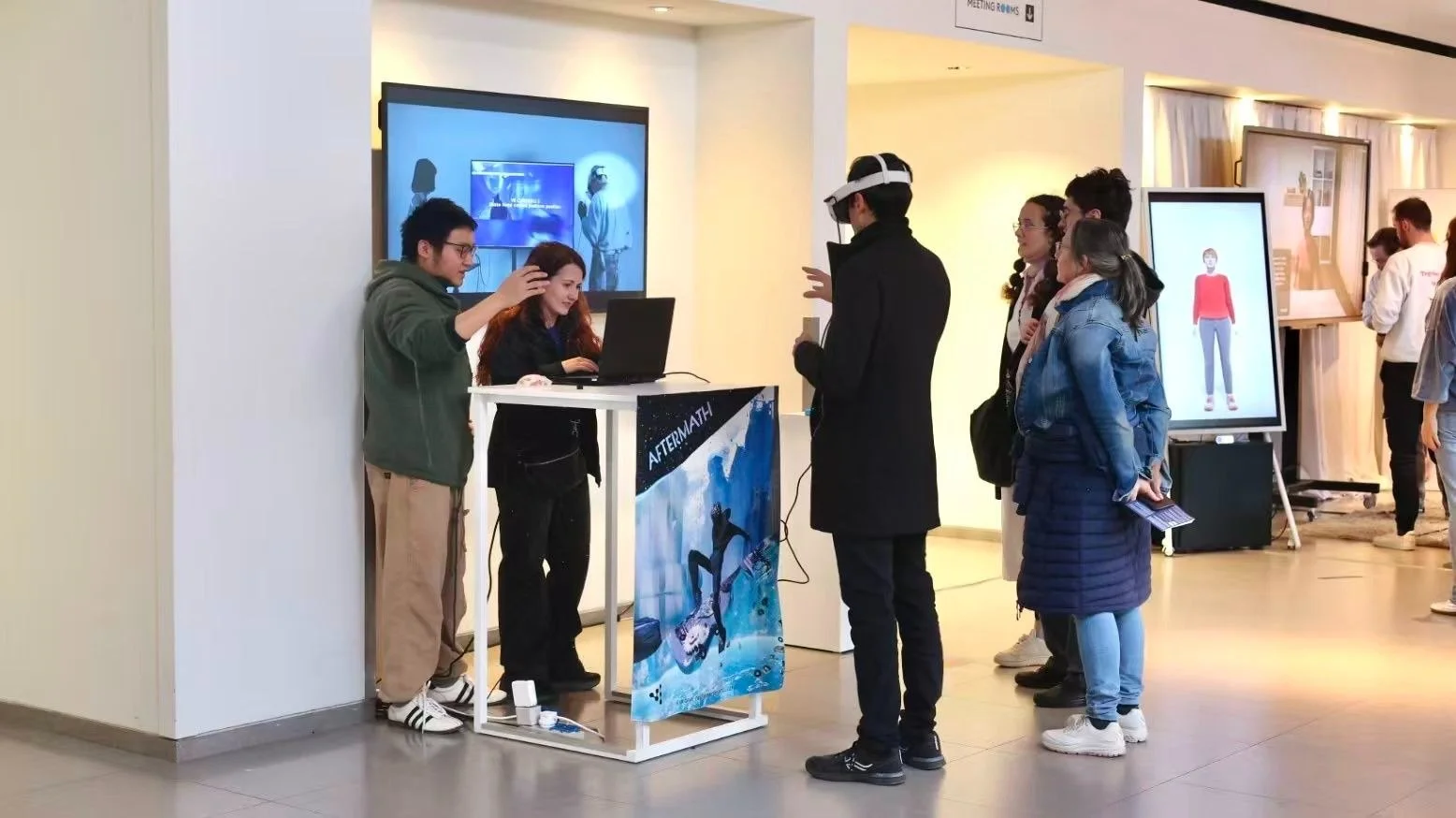
Rather than offering a solution, Aftermath holds space for uncertainty. The experience asks what kind of relationship we are building with the autonomous systems we increasingly rely on, and what forms of responsibility survive within that relationship. By requiring teamwork, the work refuses the fantasy of frictionless interaction. Meaning emerges through dependence rather than independence.
A quiet optimism runs through the piece. Creativity is not framed as a uniquely human resource under threat, but as a shared capacity that must be actively cultivated. The future imagined here is not one of replacement, but of negotiation. Humans and machines each bring distinct strengths. The challenge lies in designing systems that allow those strengths to coexist without erasure.
At a moment when the art world is often captivated by technological spectacle, Aftermath distinguishes itself through restraint. Xiyan does not ask viewers to marvel at immersive technology. She asks them to notice how power structures operate, how trust is negotiated, and how participation feels when it can no longer be taken for granted. In doing so, she designs a world that makes shared agency visible and reminds us that some forms of meaning only come into being through more than one presence.
Words by Clara Whitmore










Handmade in Ghana, this beautiful green apron offers a unique design with a front pocket perfect for kitchen utensils or your phone and tie neck straps each made from recycled material. The perfect gift for any cooking enthusiasts!
Our aprons have been named after markets in Ghana. This apron has been named after Kintampo Market located in the Bono region of Ghana it is noted for their sales of yam tubers.