
Painting the French Riviera at the Royal Academy of Arts, review
If you want a brief history of Western modern art, Painting the French Riviera at the Royal Academy of Arts is unexpectedly good for that. Featuring all your favourite names from Claude Monet to Pablo Picasso, the exhibition examines why artists were lured by the Côte d'Azur and its brilliant blue seas in the South of France.
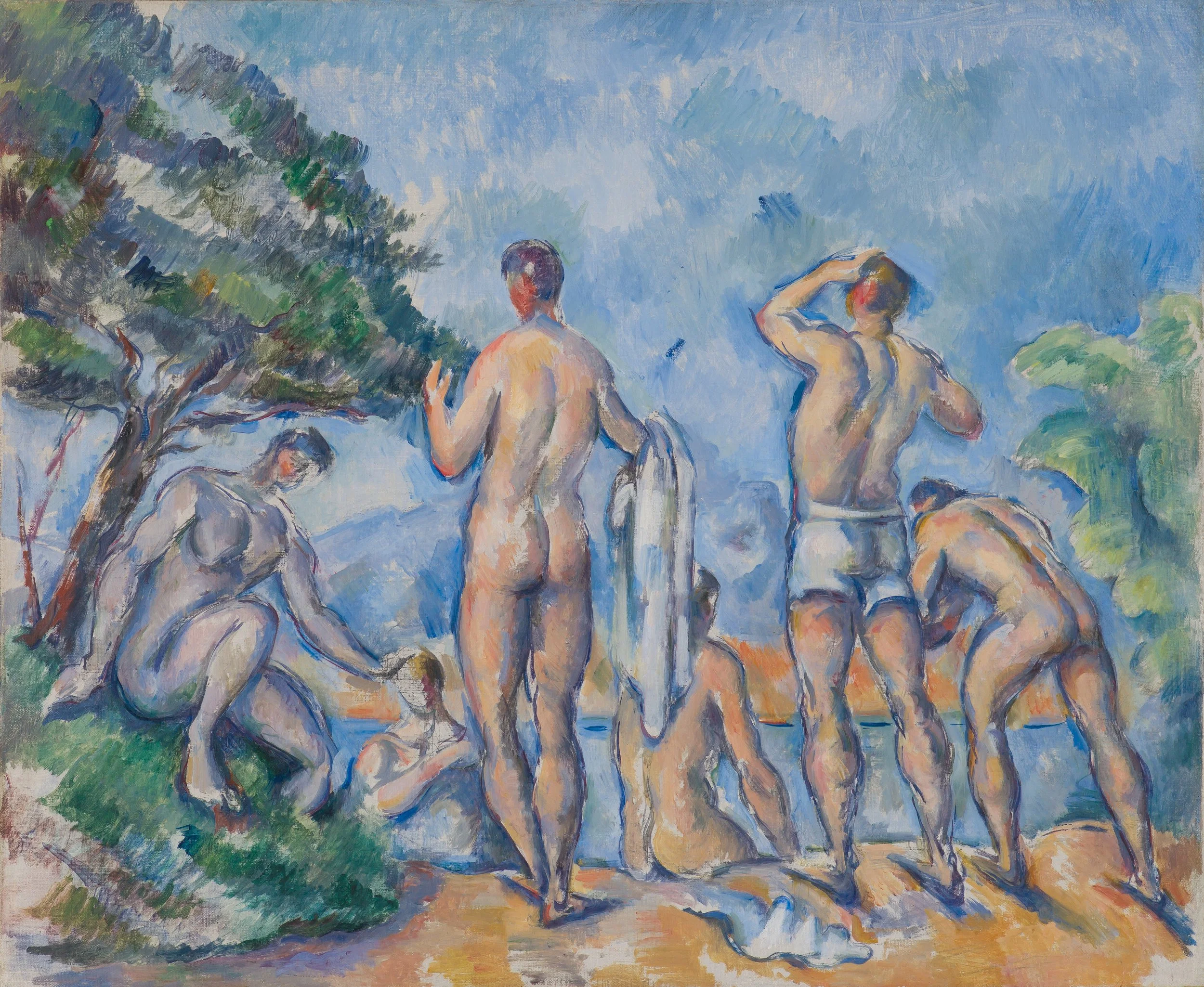
Paul Cézanne, Bathers, 1890-92. Oil on canvas, 54.3 x 66 cm. Saint Louis Art Museum, Funds given by Mrs. Mark C. Steinberg
Almost every room revolves around a prominent artist from the 1870s to the 1960s. The first looks at Paul Cézanne and the Impressionists, highlighting his connections to the fishing village of L'Estaque. It also features a sweet pairing of works by Julie Manet and Berthe Morisot, alongside Pierre-Auguste Renoir who settled in Cagnes-sur-Mer, near Nice. In the second room, we find Claude Monet’s paintings of Bordighera, Menton, and Antibes where he would occasionally paint the same scene under different light conditions.
Georges Braque, Seascape, L'Estaque, 1906. Oil on canvas, 59 x 72.4 cm. Museo National Thyssen-Bornemisza; Carmen Thyssen Collection. © 2026 ADAGP, Paris and DACS, London
The third room is where it gets interesting. Bisected into areas exploring the Neo-Impressionists and the Fauves, we find a fascinating a mix of famous and lesser-known artists that provide an excellent overview of these artistic movements. At the expense of including works by Neo-Impressionist pioneer Georges Seurat, this section highlights Paul Signac’s connections with a range of artists, bringing along mesmerising Pointillist paintings by Henri-Edmond Cross, Théo van Rysselberghe, and Maximilien Luce who had a major retrospective last year at the Musée de Montmartre, Paris. An unusual addition to the roster was Francis Picabia, whose Impressionist roots are easy to forget; Saint-Tropez, View of the Citadel (1909) is strategically hung beside works by Georges Braque in the next section, hinting at his later trajectory into Cubism.
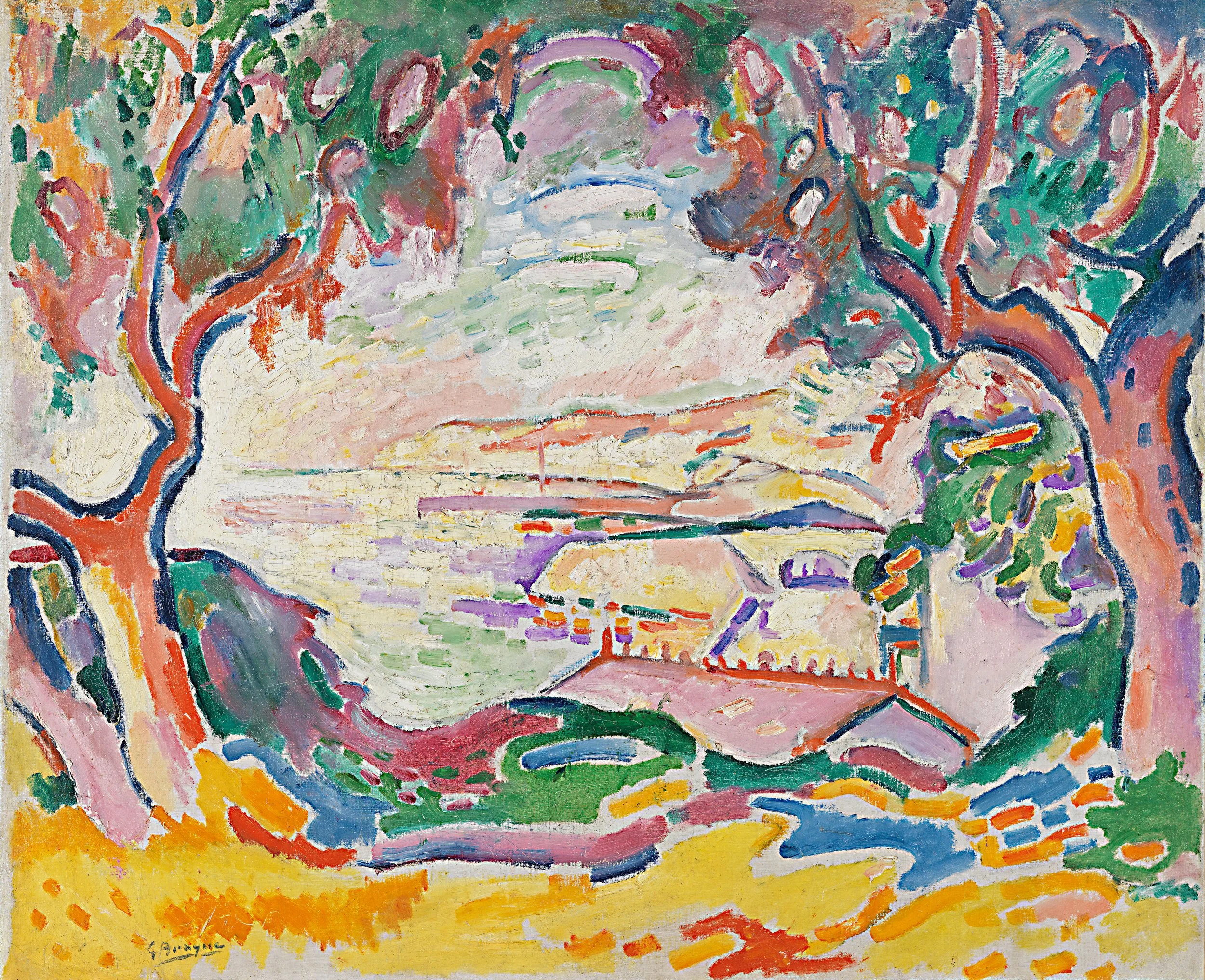
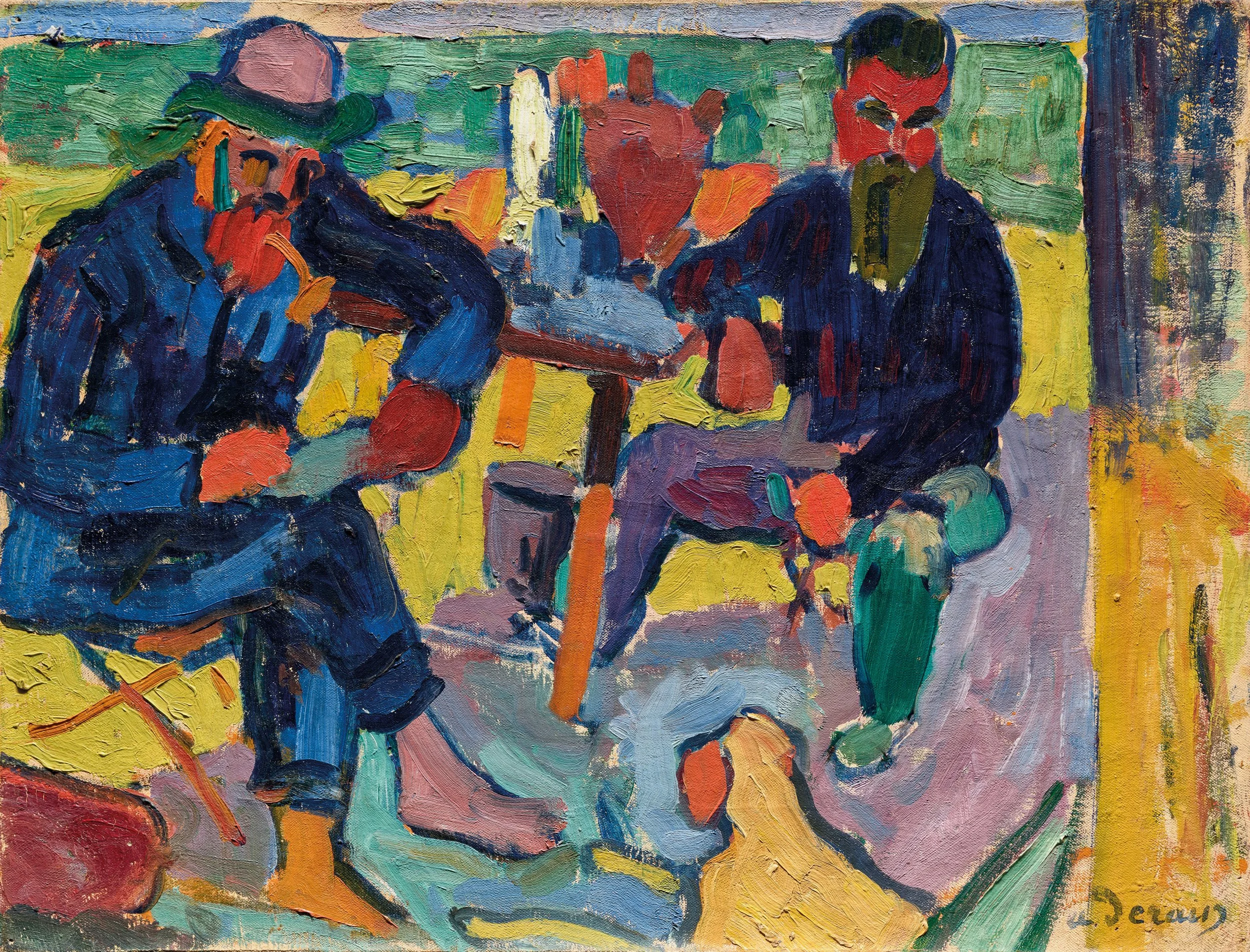
For the Fauves, we find an eclectic mix that begins with Henri Matisse’s introduction to Pointillism in the summer of 1904 by Signac, and his intense experimental period with AndréDerain at Collioure, which resulted in a series of paintingsthat were featured in the 1905 Salon d’Automne in Paris. One of the critics at this exhibition coined the term les fauves (wild beasts) to describe the artists, and it was here that Braquefound his modernist language, travelling in 1906 to paint a series of angular landscapes of L’Estaque and La Ciotat.Deeply inspired by Cézanne – who died on 22 October 1906 –Braque’s truly Fauvist period was short-lived as his geometric compositions gradually consisted of ‘cubes’, as the critic Louis Vauxcelles noted in his description of the L’Estaque paintings in 1908. Braque proudly accepted this and became a key founder of Cubism, eventually working with Picasso from 1909 to 1914.
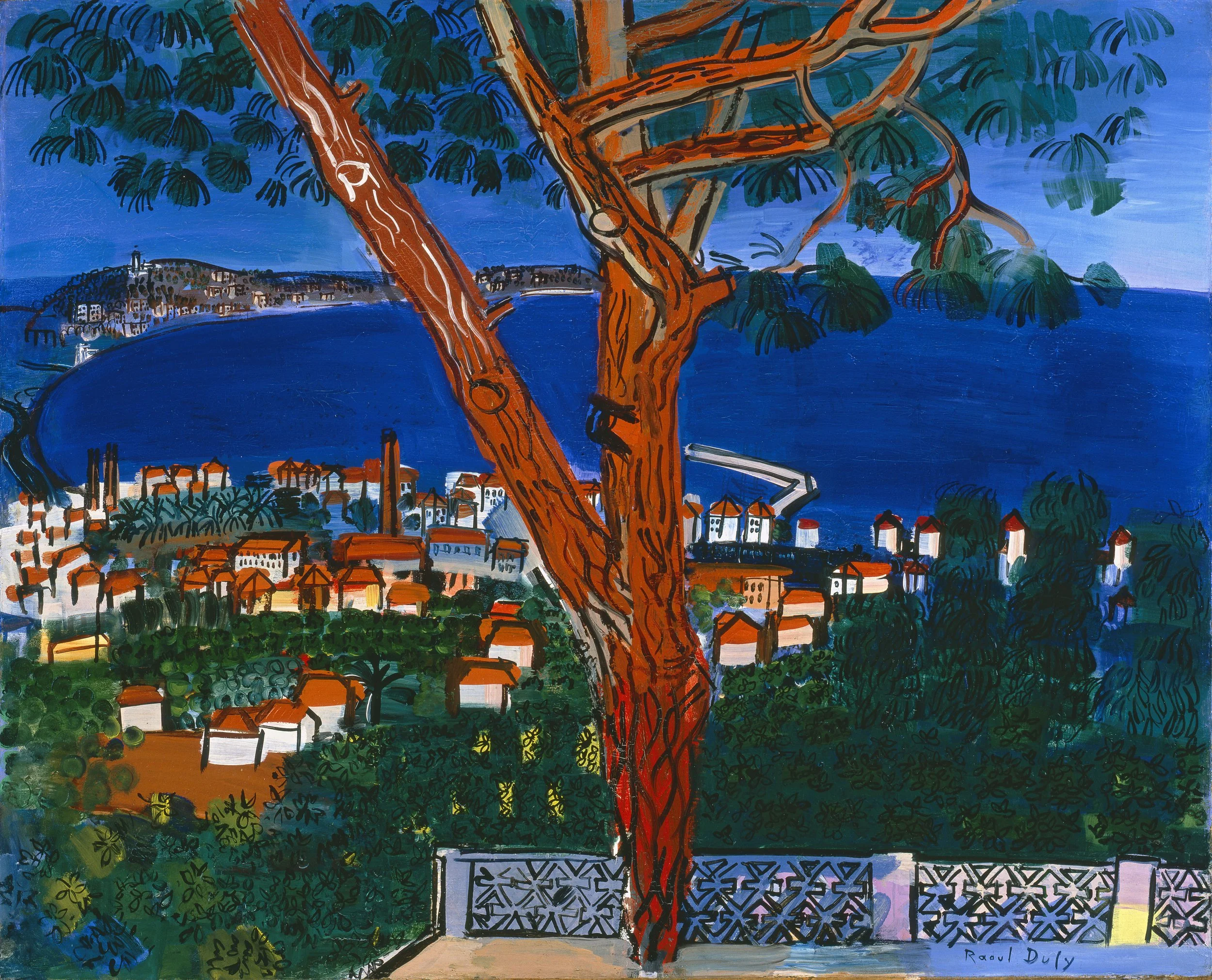
Raoul Dufy, Golfe Juan, 1927. Oil on canvas, mounted on board, 81.8 x 100.6 cm. Collection of the McNay Art Museum, Bequest of Marion Koogler McNay, 1950.38
But this section also sheds light on figurative art, drawing attention to Aristide Maillol, whose large, modernist sculptures of classicising nudes can be spotted around the Jardin des Tuileries near the Musée du Louvre. This exhibition beautifully juxtaposes Matisse’s paintings of female nudes and bathers with Maillol’s Mediterranée (1895)and the bronze it inspired, modelled after his wife. The small terracotta Crouching Girl (1905) is an underrated gem among this group.
Going forward with the theme of figuration, room 4 is devoted to Pierre Bonnard, who became friends with Signac in Saint-Tropez in 1909. Focusing on his explorations of light at Le Cannet, he described it as ‘an experience akin to the thousand and one nights; the sea, the yellow walls, the reflections which are as coloured as the light effects.’
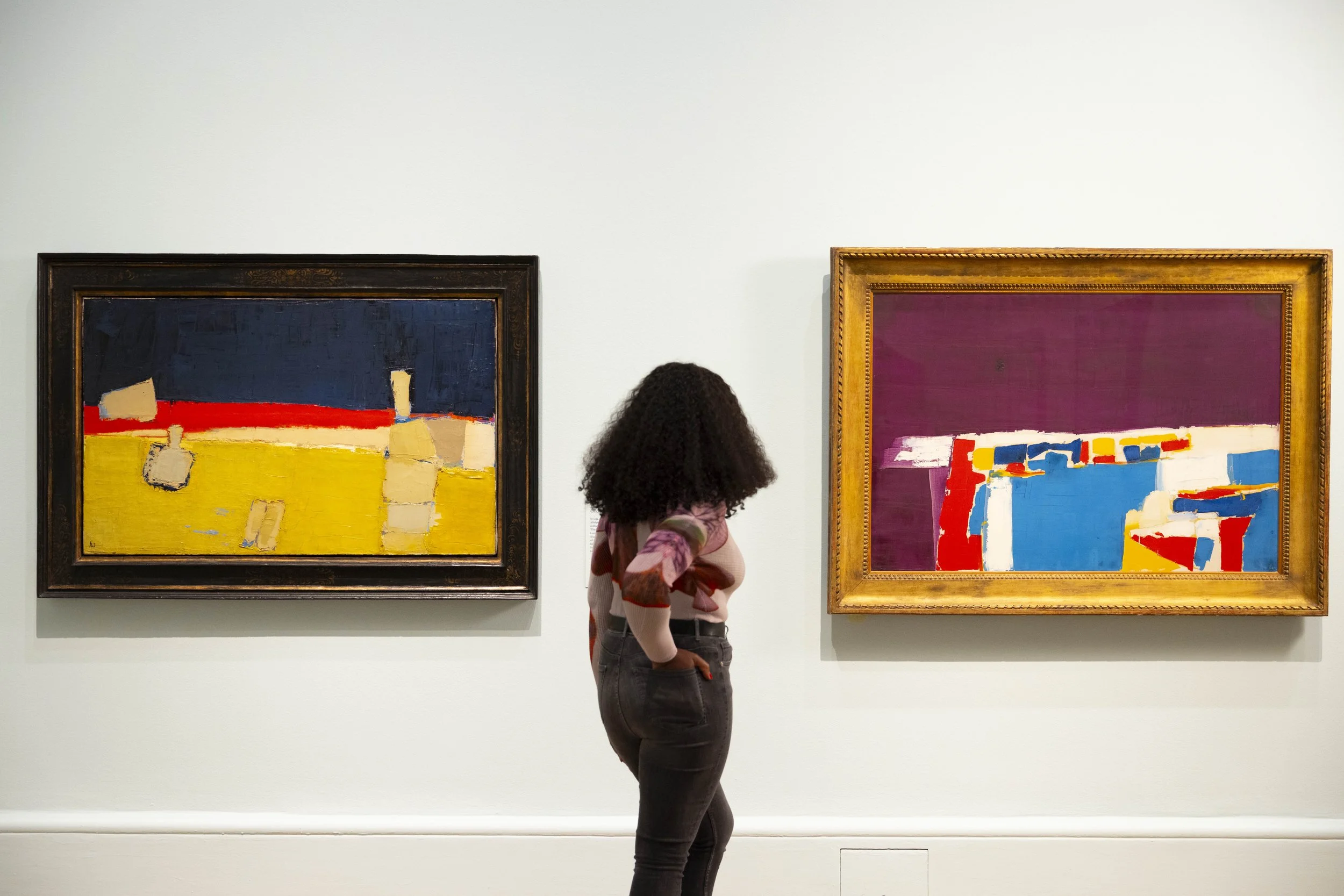
Gallery view of 'Painting the French Riviera' at the Royal Academy of Arts, London (2 October 2026 - 31 January 2027). Photo: © Royal Academy of Arts, London / David Parry
The interiors Bonnard depicted elegantly feed into those by Matisse at Nice in the next room, focusing on the 1920s and the paradisical charm of the Côte d'Azur following the First World War. Here we find a diverse selection of names from the virtually unknown Charles Camoin to Kees van Dongen and Raoul Dufy, whose ceramic vases eloquently complement the nude bronzes by Matisse.
As a point of transition between predominantly French artists and international artists visiting the South, Picasso dominates three rooms in the exhibition and covers his first visit to Saint-Raphaël in 1919, followed by holidays in the 1920s and 1930s, with longer stays after the Second World War from 1945 onwards. In 1955, he acquired the Villa La Californienear Cannes.
These three rooms introduce us to Picasso’s creative output across a plethora of mediums, including tempera painting, ink drawings, Faun and Goat linocuts (November 1959) shown in successive proof state impressions, and ceramics produced at the Madoura pottery studio in Vallauris. His Classical periodis represented by a gritty oil-and-sand Portrait of a Woman(1923) depicting his first wife Olga Khokhlova, whose background as a ballerina with Sergei Diaghilev’s BalletsRusses led to Picasso designing theatre sets and costumes for the impresario.
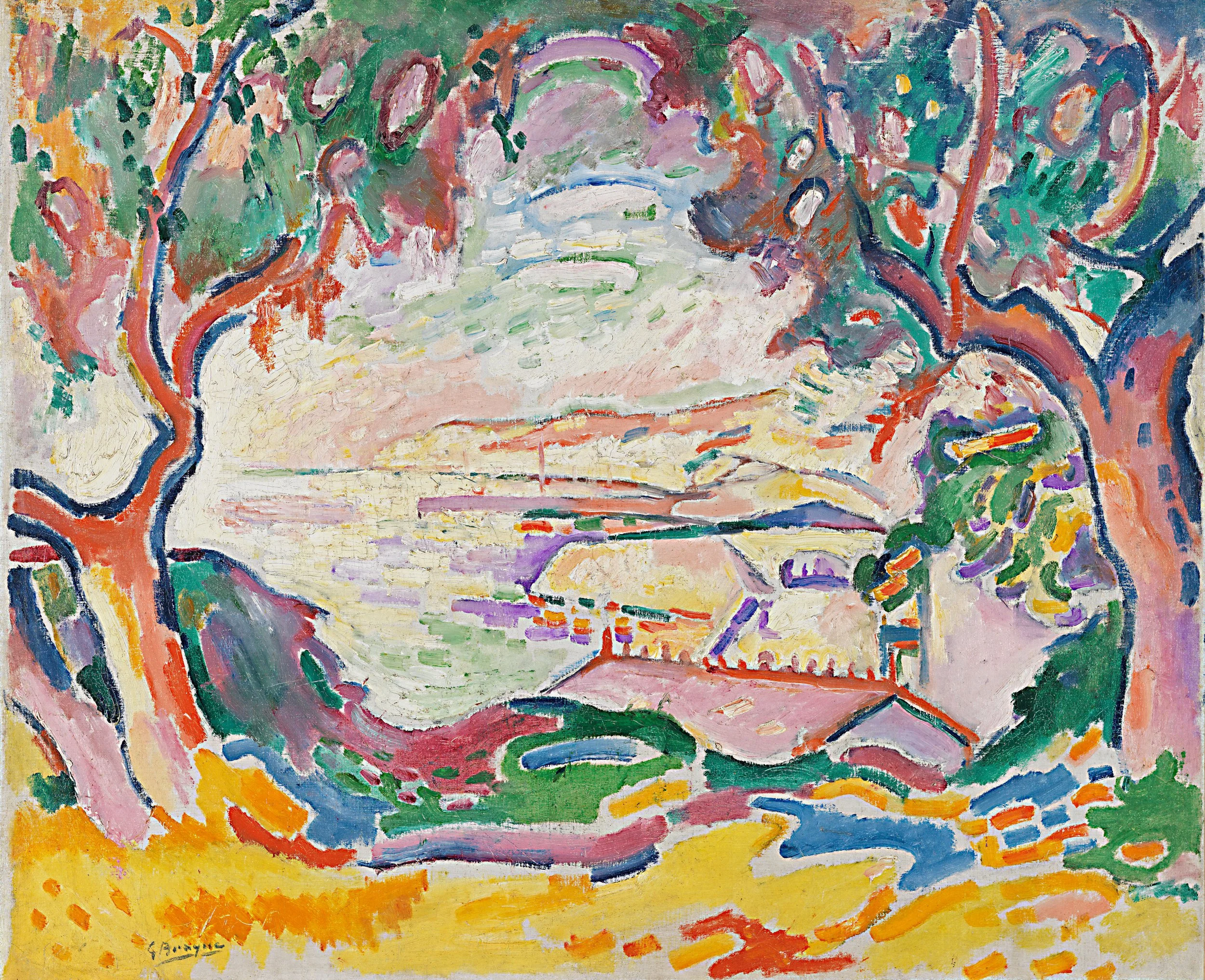
Georges Braque, Seascape, L'Estaque, 1906. Oil on canvas, 59 x 72.4 cm. Museo National Thyssen-Bornemisza; Carmen Thyssen Collection. © 2026 ADAGP, Paris and DACS, London
His last contribution was for the drop curtain of the one-act ballet Le Train Bleu (1924), represented in the exhibition by a roughly half-sized projection of the original, normally on view at the V&A East Storehouse. The cloth was painted by Prince Aleksandr Sharvashidze based on Picasso’s small gouache Two Women Running on the Beach (The Race)(1922) in the Musée Picasso, Paris, which was painted in Dinard on the Brittany coast. Picasso was so impressed he even signed, dated, and inscribed the curtain to Diaghilev. The projection is joined by two of the swimsuit and sporty costumes designed by Coco Chanel for the production, which can also be viewed as excerpts.
The final rooms focus on the Côte d'Azur’s international appeal, attracting artists like Max Beckmann, and Marc Chagall. But we are also introduced to others like the Cubist sculptures of Alexander Archipenko, the playful cityscapes of his friend Léopold Survage – Nice (1917) is a masterpiece –and the Scottish colourist John Duncan Fergusson. Meanwhile, the African American William H. Johnson finds solace among a parade of Chaïm Soutine paintings, whose exaggerated landscapes of Cagnes-sur-Mar were a major source of inspiration for his own take on the town.
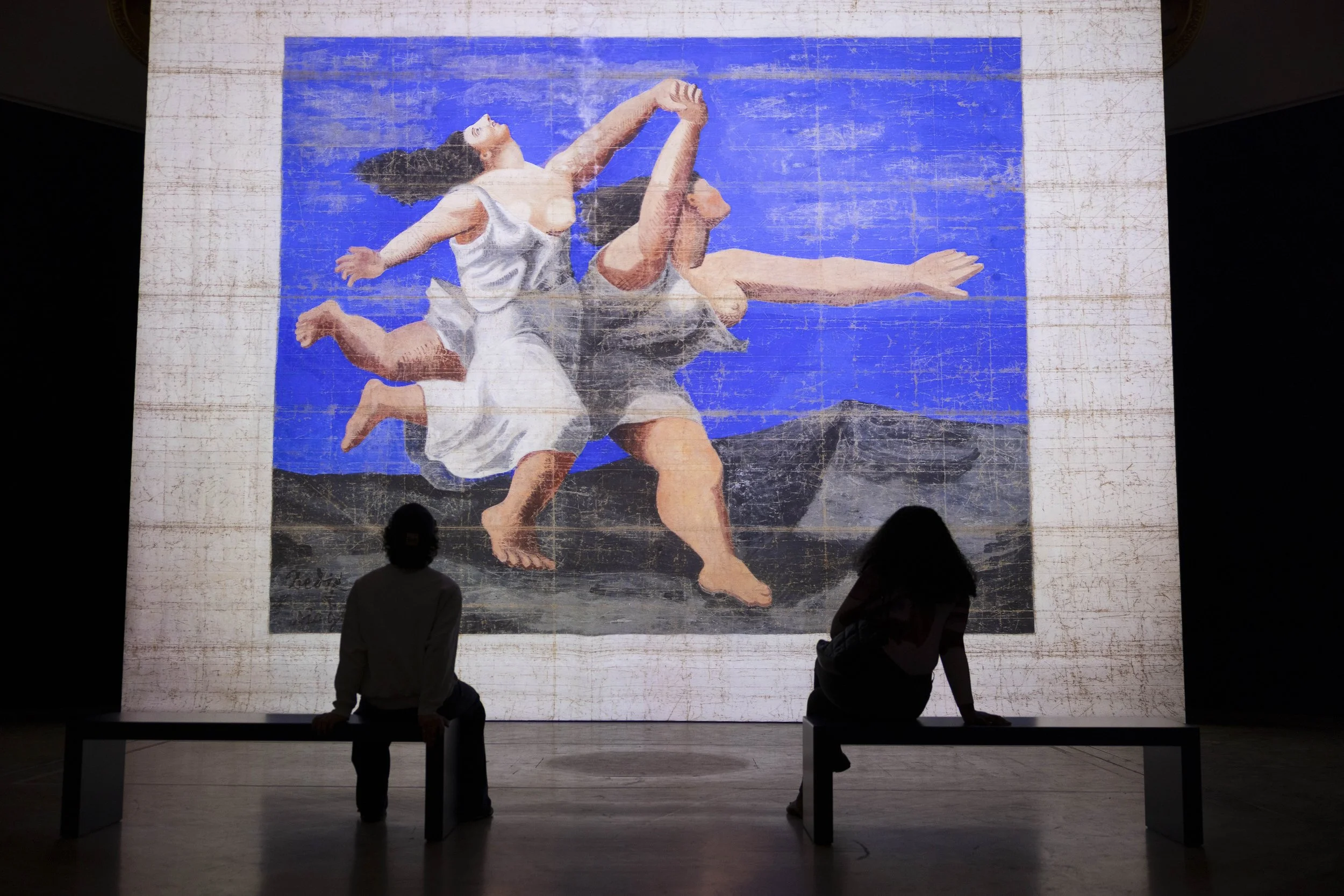
Gallery view of 'Painting the French Riviera' at the Royal Academy of Arts, London (2 October 2026 - 31 January 2027), showing the Front cloth for Bronislava Nijinska’s ballet Le Train Bleu, staged by Sergei Diaghilev’s Ballets Russes, painted by Prince Alexander Schervashidze from a gouache by Pablo Picasso. Courtesy the Victoria and Albert Museum, London. © 2026 Succession Picasso/DACS, London. Photo: © Royal Academy of Arts, London / David Parry.
The exhibition officially closes with solo presentations devoted to Nicolas de Staël and Yves Klein, although one passes the underrated exiting room exploring the transformational image of the French Riviera in travel literature and assorted travel posters designed by artists like Matisse and Picasso. For de Staël, we see how the painter’s abstractions quickly devolved from richly coloured slabs in 1952 to a muted colour palette of blues and greys with representational elements by 1955, the year he threw himself from the balcony of his studio in Antibes.
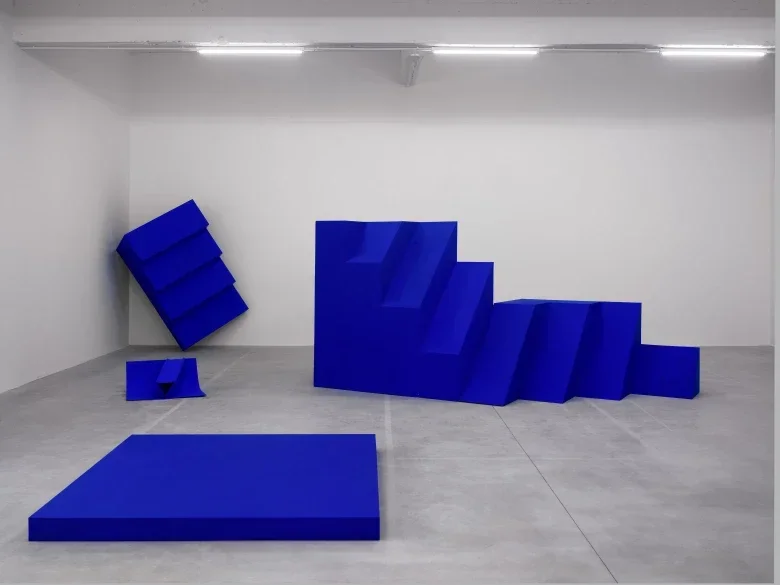
As for Klein, the Nice-born artist claimed the blue Mediterranean sky as his first important work of art at the age of 20: ‘That day, as I lay on the beach in Nice, I began to hate the birds which occasionally flew in my pure, unclouded blue sky, because they tried to bore holes in my greatest and most beautiful work of art.’ This decisive moment led to his obsession with the colour blue and the patenting of International Klein Blue (IKB), a colour formula intended to rival the blue of the sky.
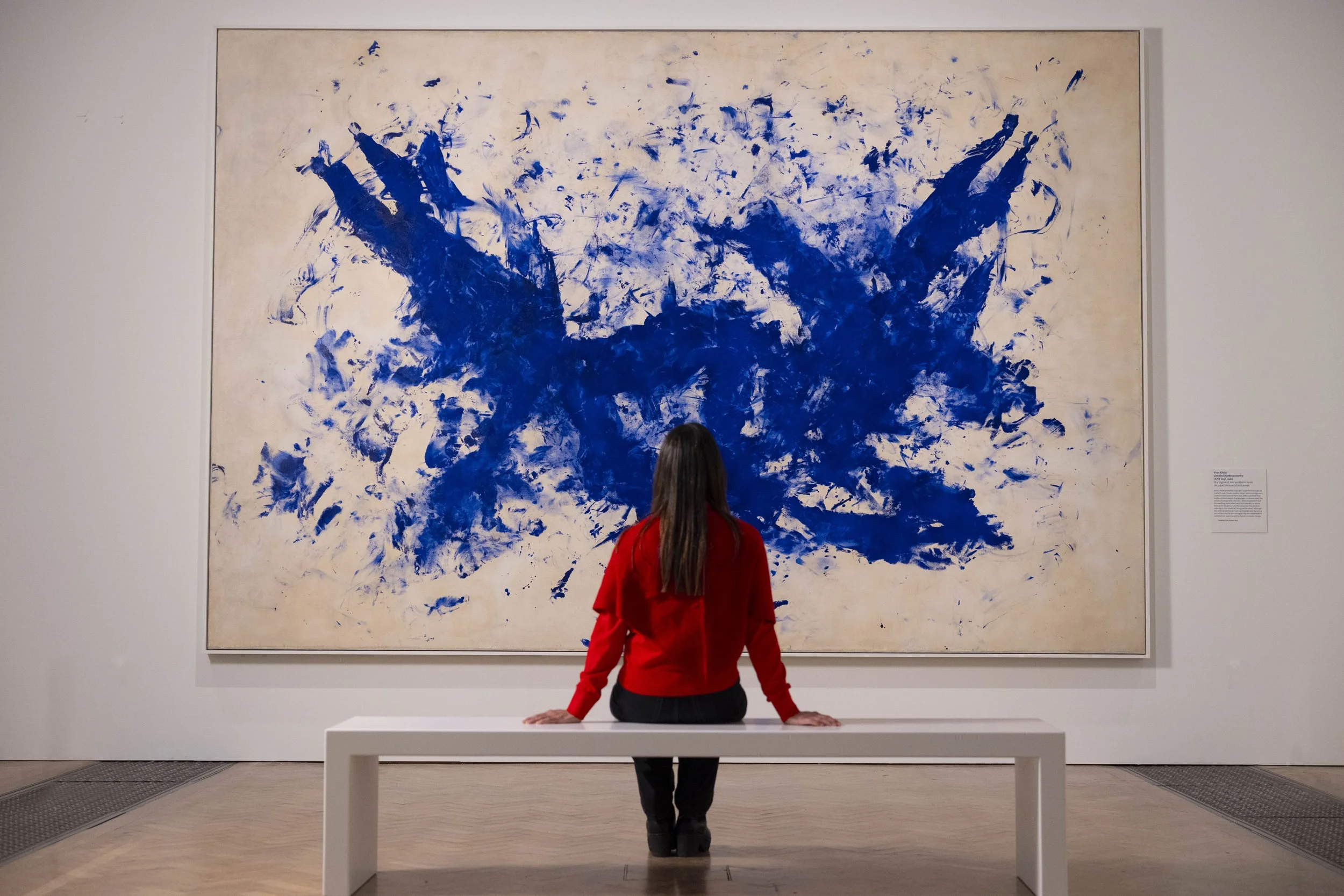
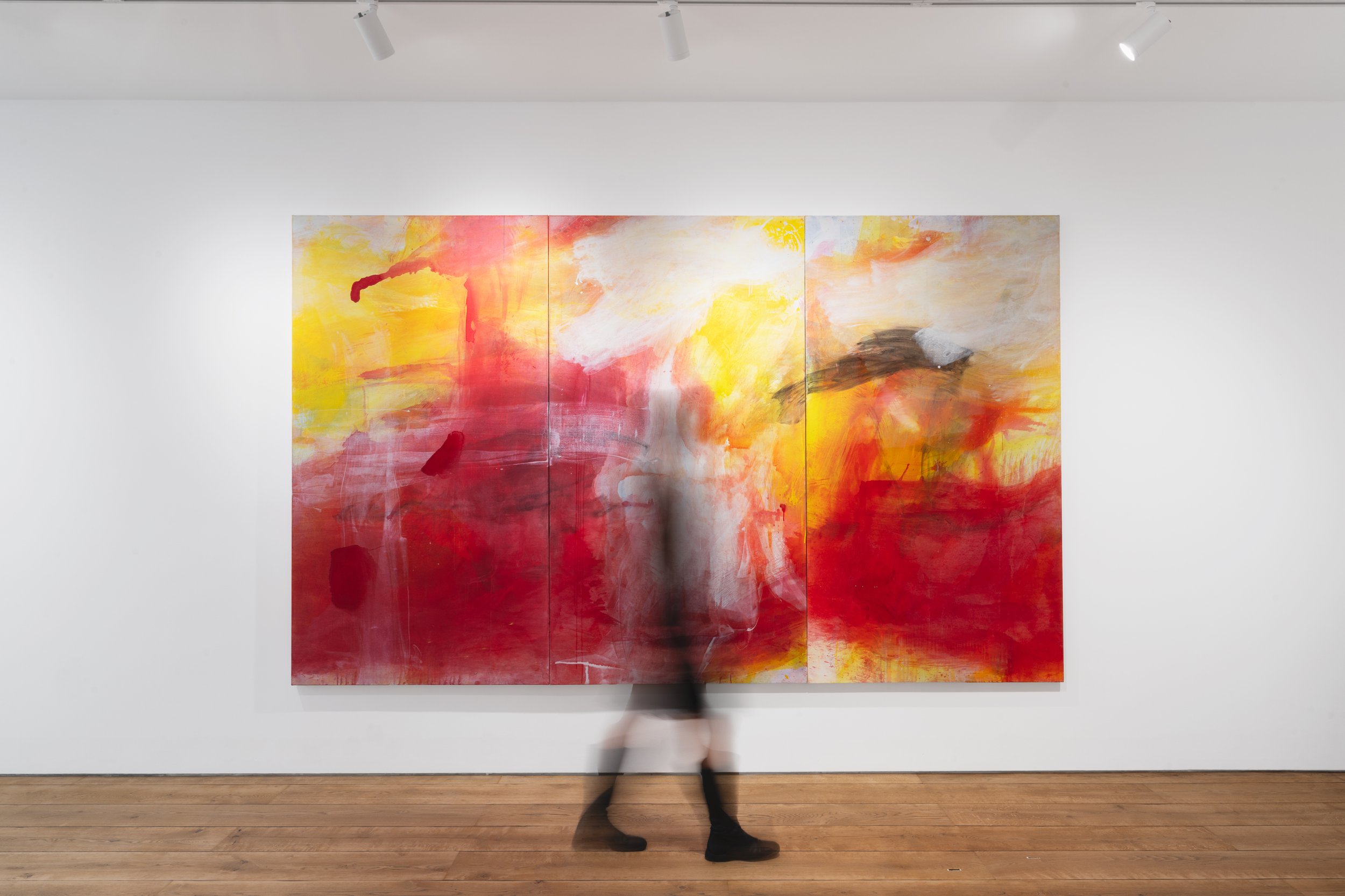
Gallery view of 'Painting the French Riviera at the Royal Academy of Arts, London (2 October 2026 - 31 January 2027), showing Yves Klein, ANT 104, 1960. On loan from Fondation Louis Vuitton,Paris. © 2026 Succession Yves Klein c/o ADAGP, Paris and DACS, London. Photo: © Royal Academy of Arts, London / David Parry
Yet despite its origins in the wild blue yonder, the works exhibited show Klein’s connection with the material world.The Wave (c.1952) is an obvious reference to the sea, while Fa Mineur (RE 24) (1960) incorporates dry pigments, sponges, and pebbles. Finally, the imprints of female models in the Anthropométries recall Klein’s childhood fascination with creating impressions in the sand with his own body in Nice.
For an exhibition covering so much ground, the curators have done a phenomenal job weaving in the intricate social contexts of each artist and their disparate connections to the French Riviera. While captions and texts have been kept a little too minimal, the visual feast that awaits visitors in each room is worth its weight in seafood. Repeat visits are highly encouraged.
Painting the French Riviera is on show at the Royal Academy of Arts from 2 October 2026 to 31 January 2027. Tickets are from £24, with Friends of the RA going free. Tickets are bookable at royalacademy.org.uk.
By Nigel lp







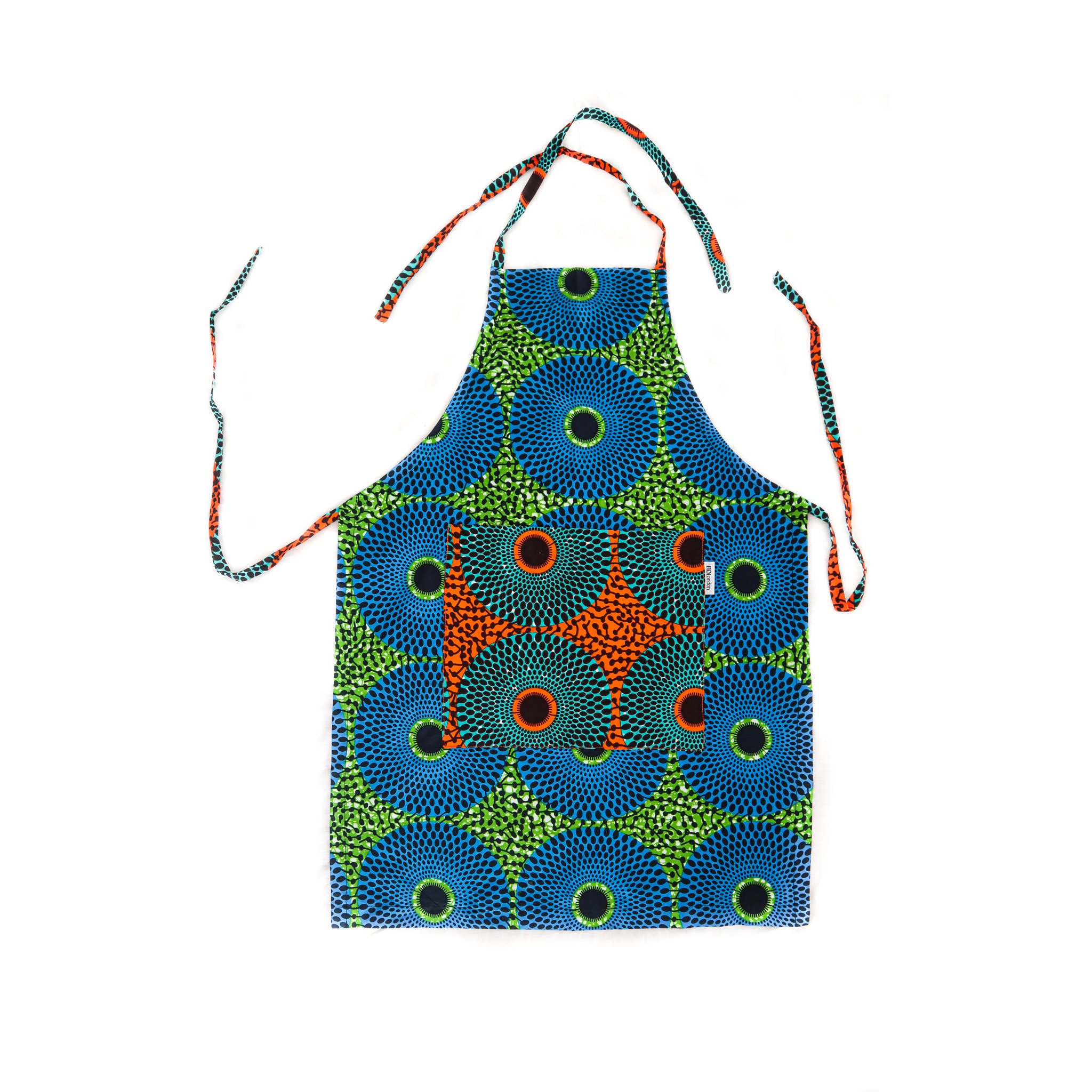


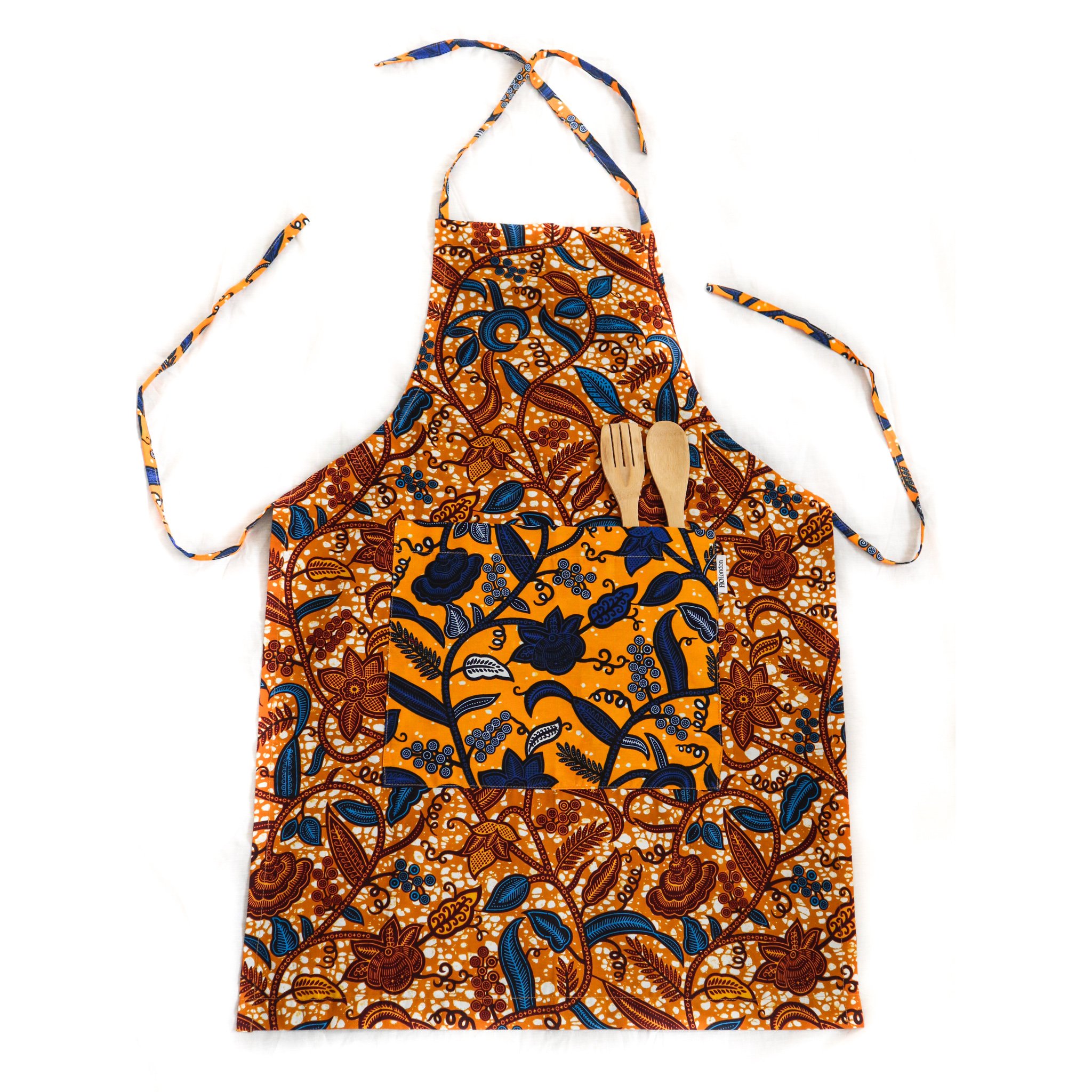


Handmade in Ghana, our aprons offer a unique design with a front pocket perfect for kitchen utensils or your phone and tie neck straps each made from recycled material. The perfect gift for any cooking enthusiasts!
Our aprons have been named after markets in Ghana and London. This apron has been named after street food hub Maltby Street Market.