
Inside the eighth edition of Jaou Tunis
“Jaou”, a young lady at the book stand explained to a browser eyeing up a tote bag on the opening weekend, means “vibes”, like “good vibes Tunis”. It is a fair description of a biennale that has spent thirteen years refusing to behave like an institution, and a useful thing to know before taking on three days of art, music, performance and talks.
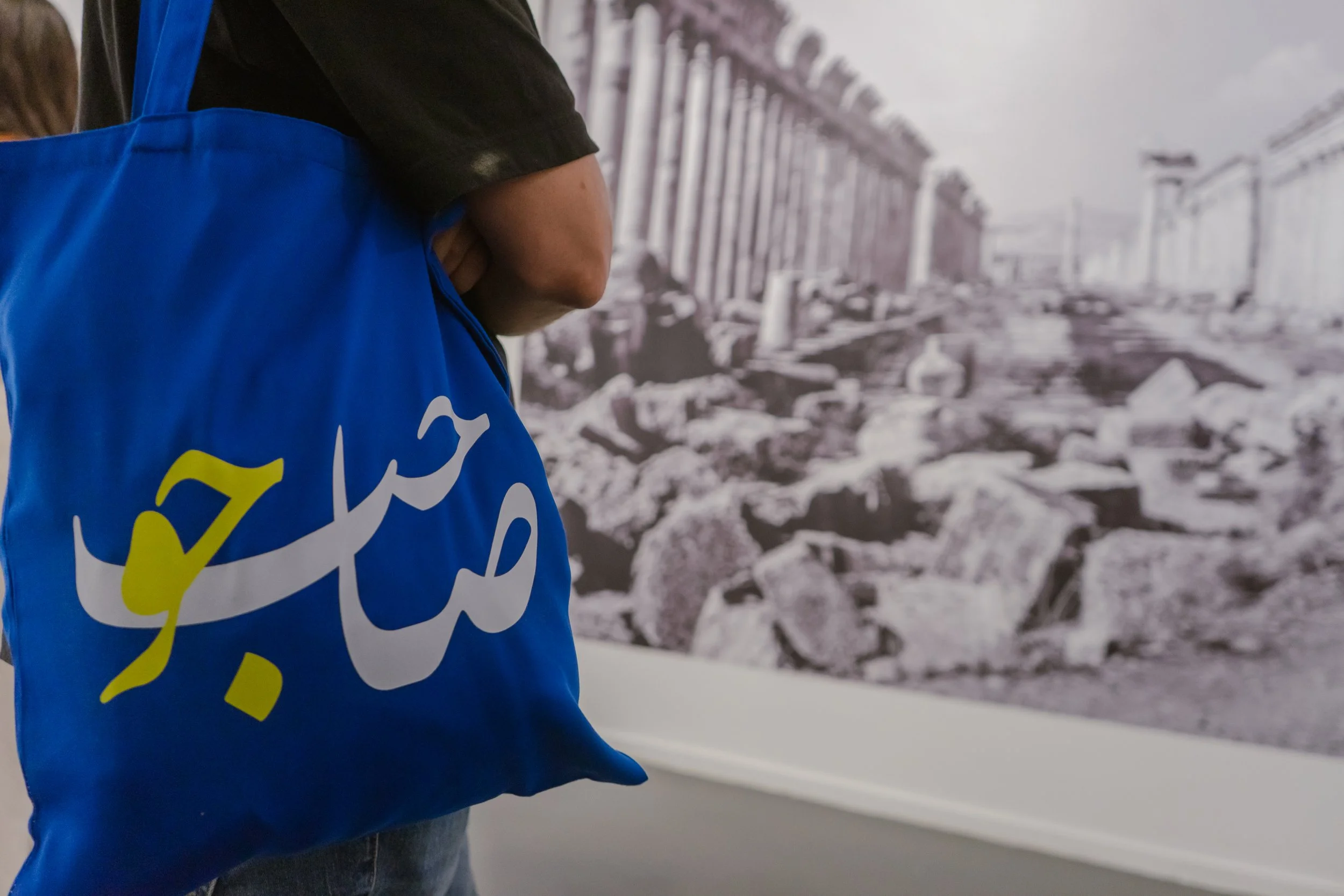
Jaou Tunis tote bag. Jaou Tunis 2026 © Dorsaf Bedoui.
The eighth edition of Jaou Tunis is open across the Tunisian capital until 22 November, at ten venues, from a nineteenth-century barracks in the Medina to a rooftop bar downtown, with more than 140 artists and contributors from over 24 countries taking part. It is organised by the Kamel Lazaar Foundation in collaboration with the Centre d'Art Contemporain Genève and the Art Explora Foundation.
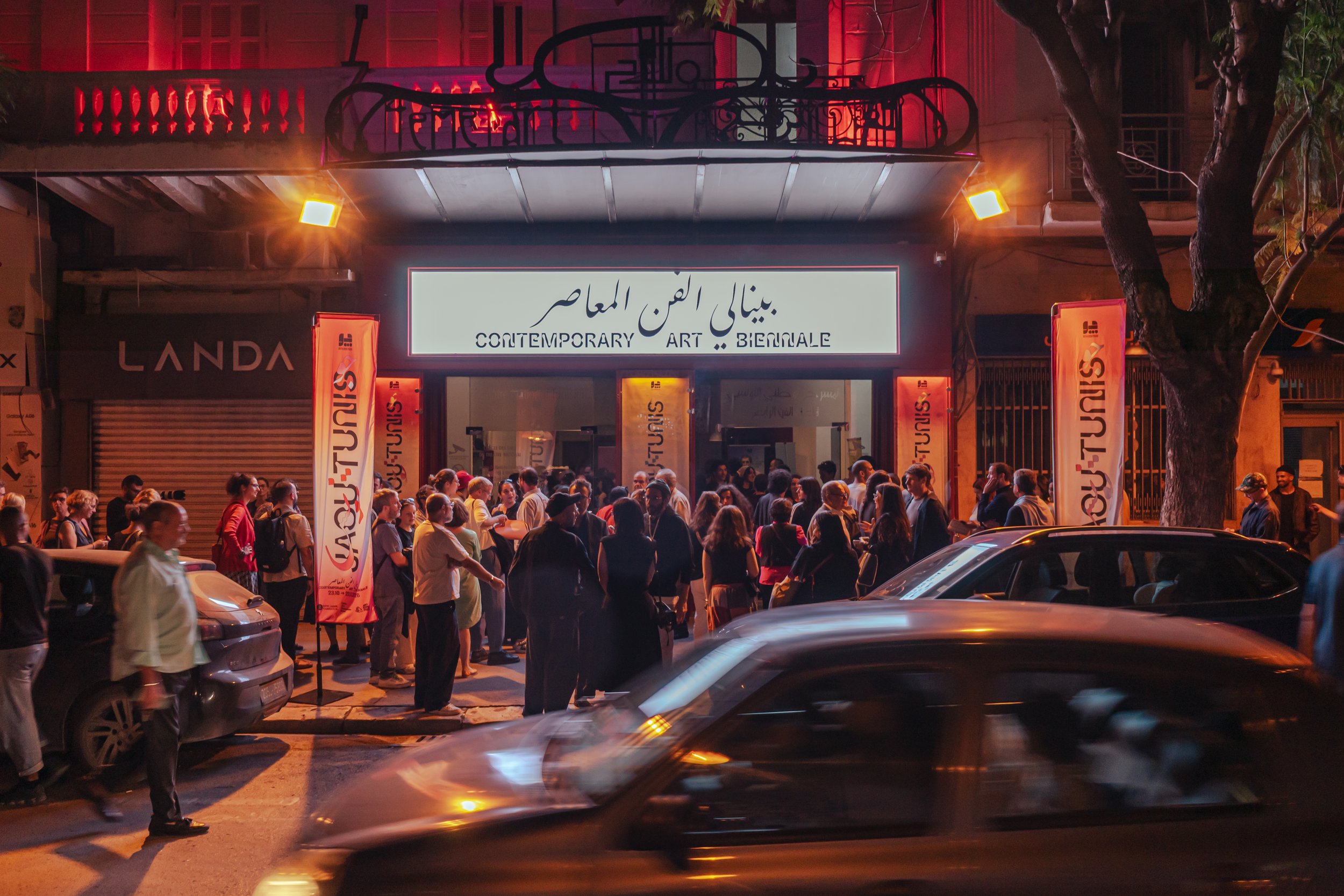
Audiences after Gathering, Samar Haddad King, YSDT. Jaou Tunis 2026.
There are three exhibitions. Becoming the Ocean is in the Medina, bringing Geneva's moving image biennale outside Switzerland for the first time. Undertow / Contre-courant is at B7L9, in collaboration with Art Explora and brought to Tunis as part of the Art Explora festival. Images de Syrie, Palmyre, Alep, Damas is at the Institut français de Tunisie, and brings together black and white photographs taken in Syria in 2002. Alongside the exhibitions is a programme of performances, concerts, Jaou Nights, the Jaou Encounters talks and free workshops through the month.
Thirteen years in
Jaou was started in 2013 by Lina Lazaar, vice president of the Kamel Lazaar Foundation, the Geneva-based institution with its roots in Tunisia that her father, the Tunisian-Swiss collector Kamel Lazaar, established in 2005. The first edition arrived two years after the revolution, when the question of what Tunisian and Arab art could be in public was being asked openly for the first time in decades. The name they chose, ‘Jaou’, translates from Arabic as atmosphere, or, as the woman in the shop said, vibes, which gives a sense of what the biennale aims for.
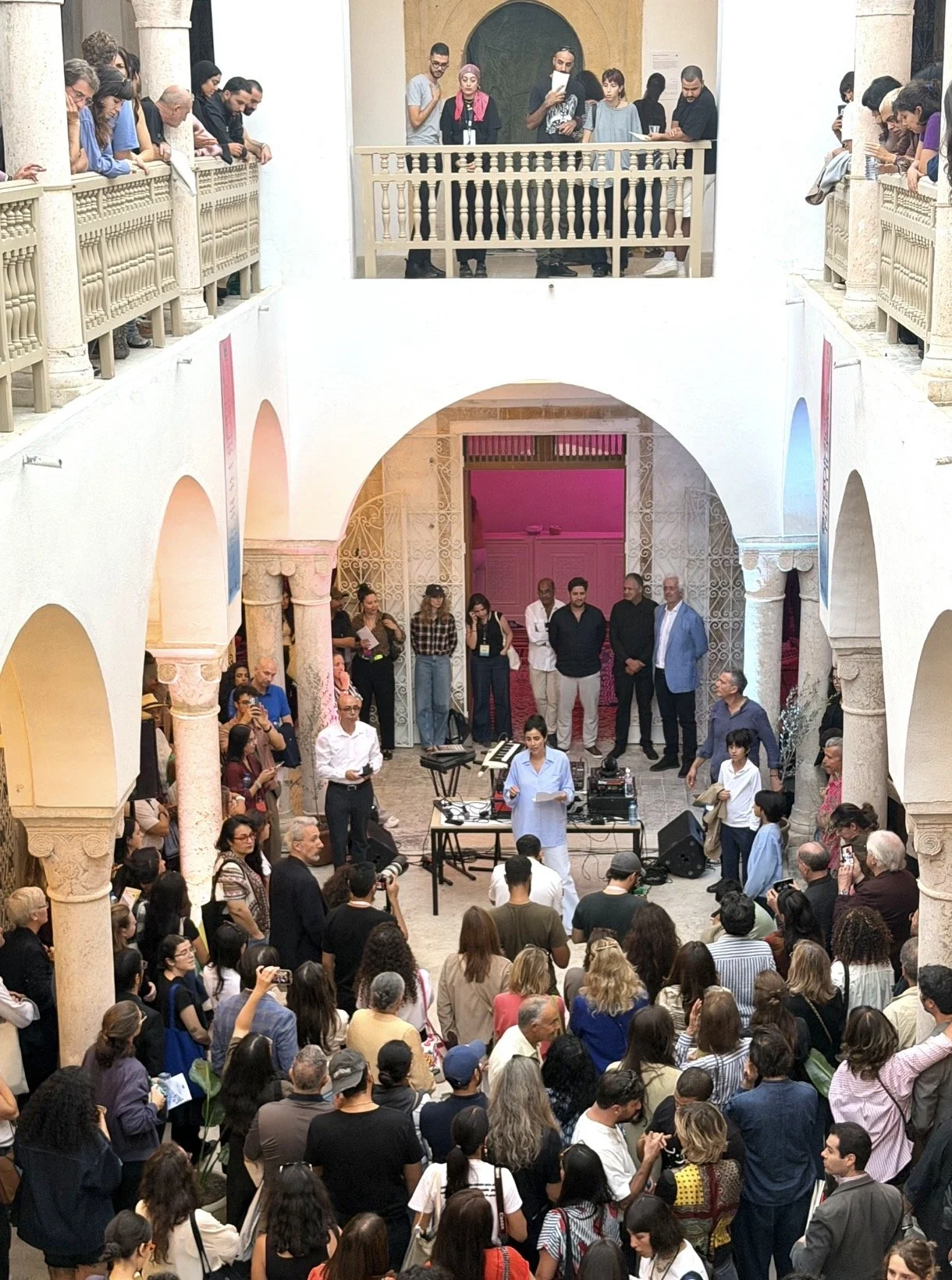
Opening of Becoming the Ocean. Quechlet El Attarine. Jaou Tunis, 2026. Image credit MTotoe/ FLO London.
Each edition has had a clear focus. In 2015 the theme was Visual Culture in an Age of Global Conflict, with a symposium at the Bardo National Museum. In 2017 the theme was migration, and Lazaar carried the same argument into the Tunisian pavilion at the Venice Biennale that year, where the work issued symbolic travel documents to those who applied. It was annual in those early years, and since 2022 it has been biennial. In 2022 the theme was the body and the edition was given over to photography, the first of its kind in Tunisia. In 2024 the theme was resistance, with more than sixty artists including Gabrielle Goliath, Rima Hassan, and Basel Abbas and Ruanne Abou-Rahme.

Ibraaz at 93 Mortimer Street, central London. Photograph by Vipul Sangoi, courtesy of Ibraaz
That same thinking now has a home in London. Lina Lazaar also founded Ibraaz, which began in 2011 as an online publishing platform for visual culture in North Africa and the Middle East and opened a physical space in October 2025, six floors at 93 Mortimer Street in London, dedicated to art and ideas from the Global Majority.
Among the continent's biennales
Africa has a long biennale history. Dak'Art in Dakar has been held as a visual arts biennale since 1992 and the Bamako Encounters began in 1994, while the Cairo Biennale goes back to 1984. Within Tunisia, Dream City has taken over the medina every two years since 2007. Jaou arrived after all of them and, eight editions on, is one of the significant dates on that calendar.
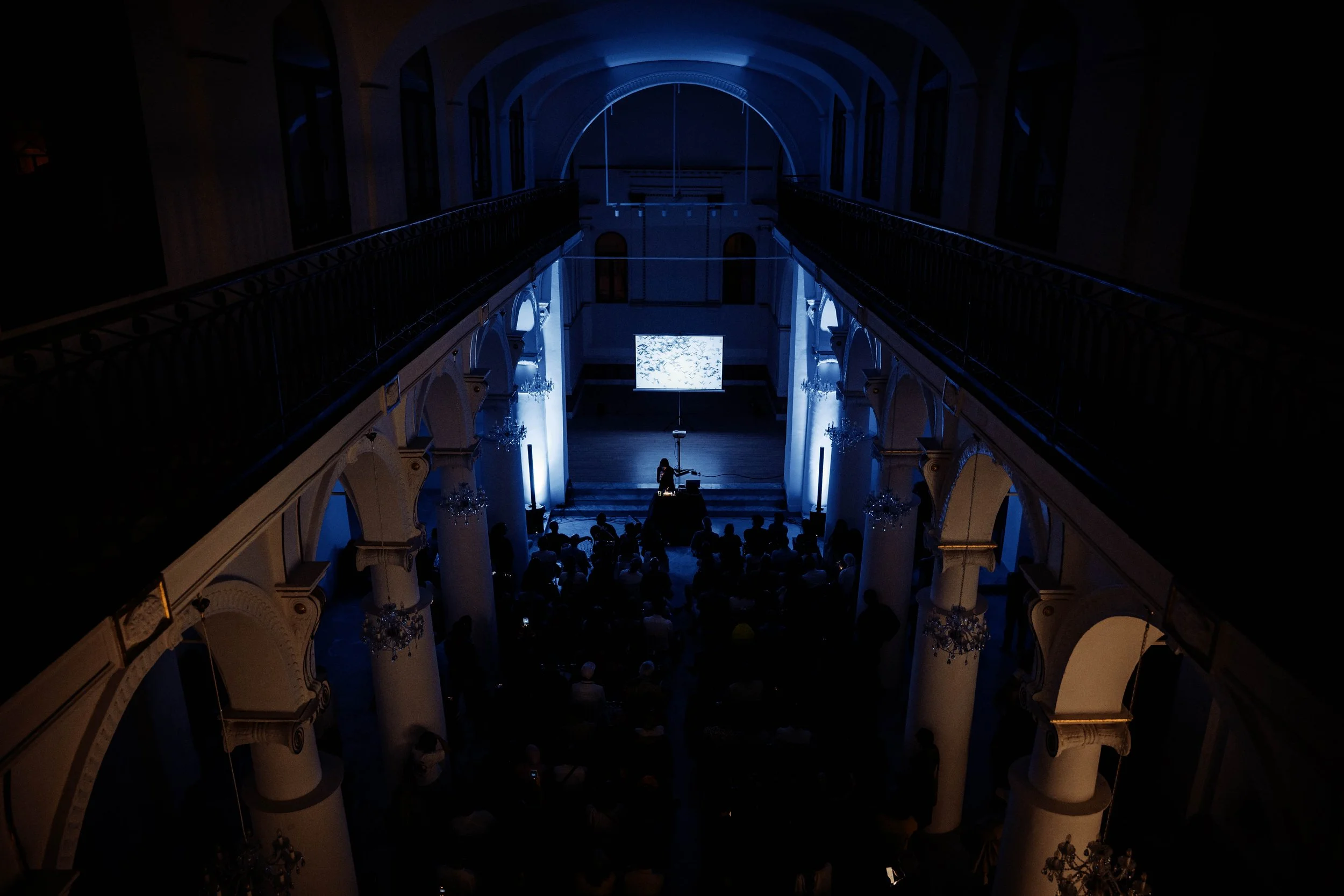
BIM'26. Opening Performance. Eglise Sainte Croix, Zein Majali Jaou Tunis 2026. © Asma Barhoumi.
What is particular to Jaou is how the programme is put together. Moving image, performance, music, talks and workshops are given equal standing and held at the same time across the city. They are not a public programme attached to an exhibition here, they are the structure of the biennale.
The 8th edition of Jaou Tunis
The archipelago is the theme and the organising principle. Islands that are separate but belong to the same body of water, which is also a way of describing how movement works for some people and not for others. That idea sits behind everything on the programme.
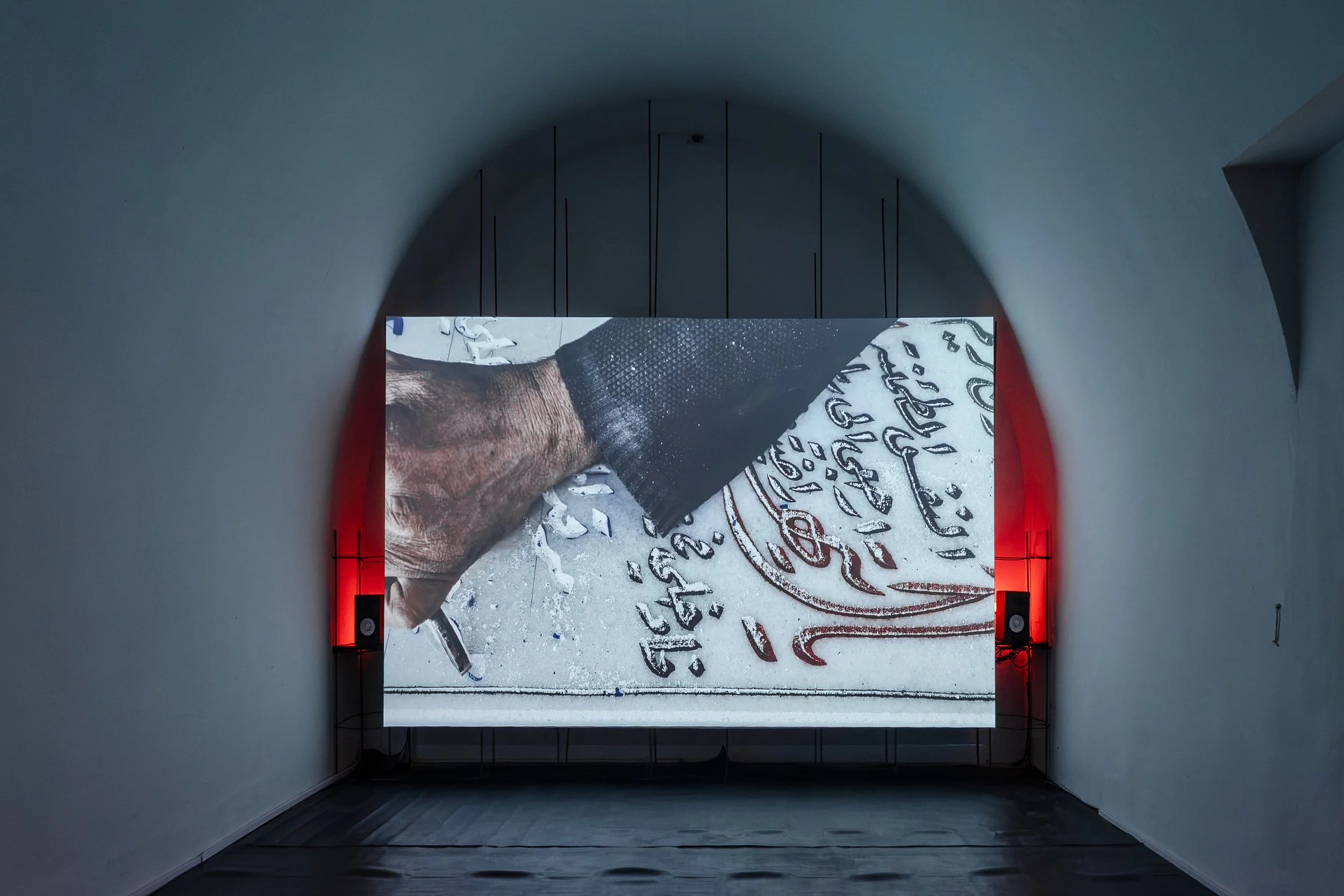
Sarah Zeryab - Quechlet El Attarine - Jaou 2026 © Mehdi Ben Temessek.
The curatorial premise is that systems in decline do not fade but intensify, with borders closing to those fleeing disaster, terror and violence, surveillance expanding, ecological collapse speeding up and colonial ways of thinking returning in new forms, and that what looks like stability may be an attempt to hold on to a world already going. The title comes from a text attributed to Gibran Khalil Gibrant, in which a river fears disappearing into the sea, when what is really happening is that it is joining it.
Biennale de l'Image en Mouvement 2026, Becoming the Ocean
Becoming the Ocean opened on 24 October at Caserne El Attarine, a nineteenth-century barracks in the heart of the Medina, one of a set put up across Tunis in the first half of the nineteenth century and the grandest of them, surrounded by mosques, madrasas, funduqs, baths, markets and palaces. It is the first presentation of the Biennale de l’Image en Mouvement outside Switzerland, co-curated by Lina Lazaar and Andrea Bellini, director of the Centre d’Art Contemporain Genève. Founded in Geneva in 1985, which at the time was the first festival in Europe devoted to artists’ film and video.
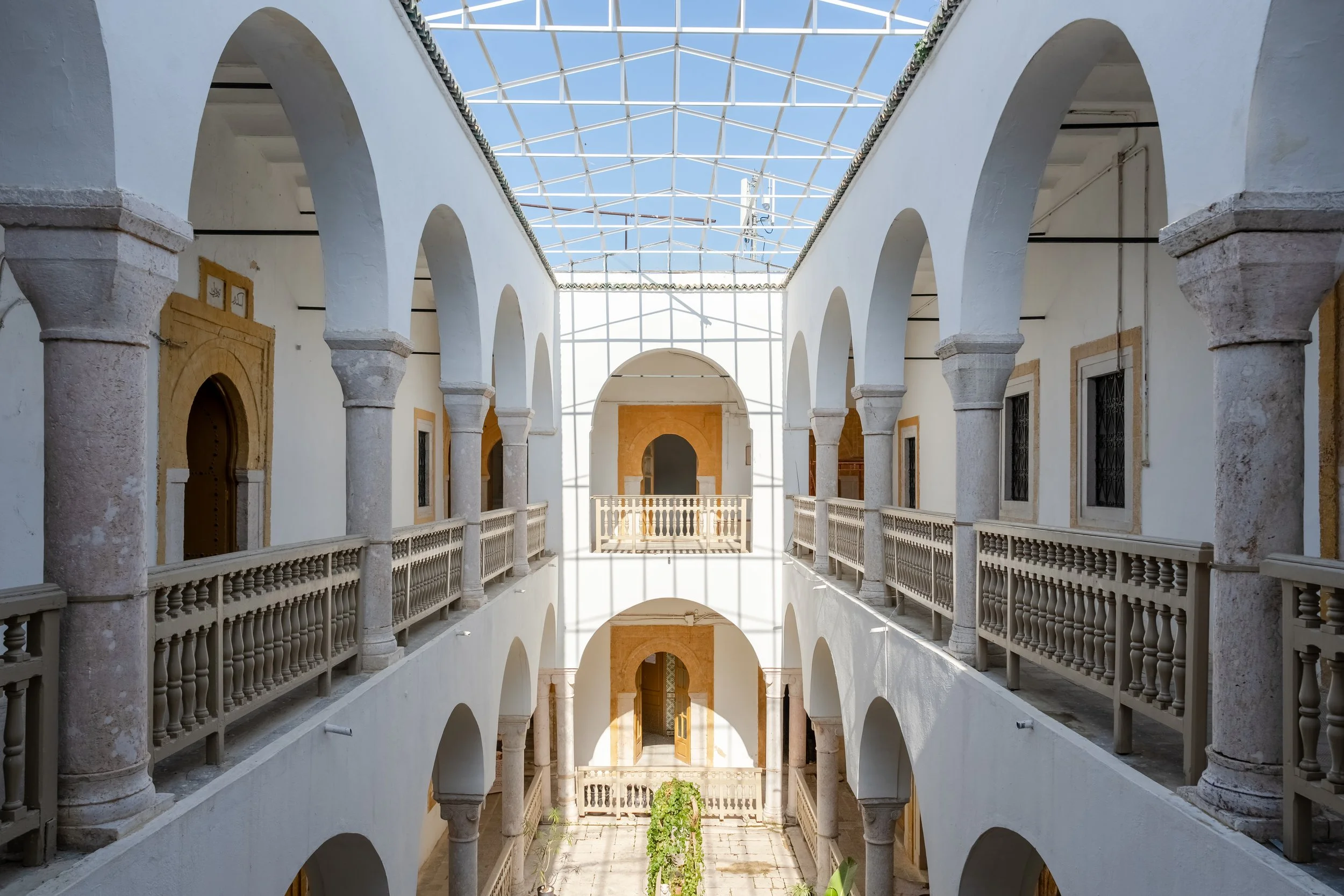
Caserne El Attarine, the location for Becoming the Ocean at Jaou Tunis. © Mehdi Ben Temessek.
Sixteen artists were commissioned for this edition, co-produced by the Kamel Lazaar Foundation and the Centre d'Art Contemporain Genève. They are Tabarak Allah Abbas, Younès Ben Slimane, Mona Benyamin, S.A. Chavarría, Leena Habiballa, Roman Selim Khereddine, Zein Majali, Alaa Mansour, Paulo Nazareth, Liv Schulman, Diane Severin Nguyen, Hildegard Titus, Natasha Tontey, Castiel Vitorino Brasileiro, Hajra Waheed and Sarah Zeryab. All are from Africa, the Arab world, Asia, Latin America and their diasporas, artists the foundation describes as the Global Majority, the voices it puts at the heart of its Tunis and London programming.
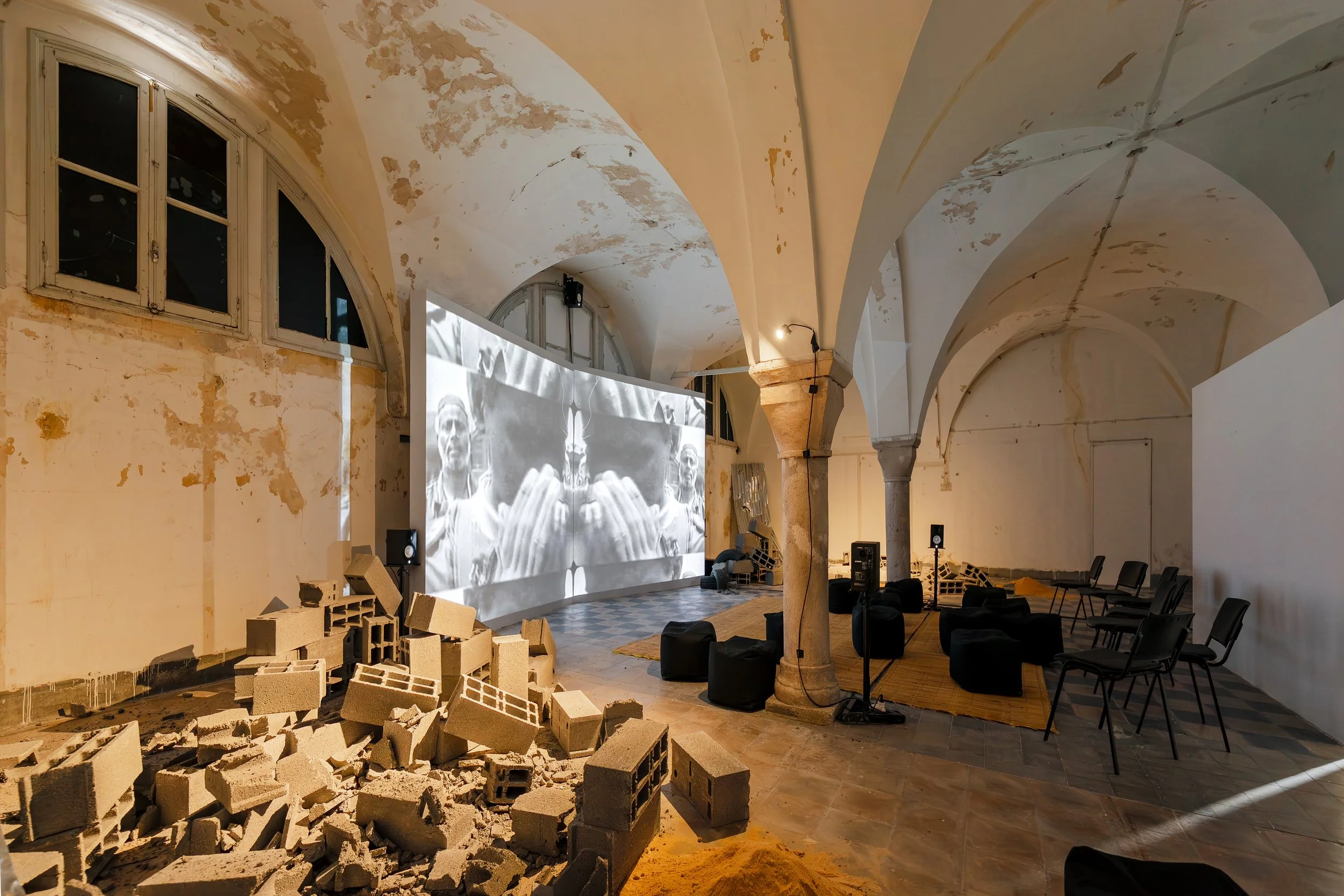
Leena Habiballa, Quechlet El Attarine, Jaou Tunis 2026 © Mehdi Ben Temessek.
The sixteen commissions vary in subject. Some are light, others take on subjects that call for deeper reflection. Sarah Zeryab's Notes on Camp assembles footage and archive from the Yarmouk refugee camp around the killing of a man named Ali in 2023, Leena Habiballa's Unstrung / أحتاجُ دوزنة is a 16mm film about the war in Sudan, made from television archive and videos posted by soldiers on social media, and in Diane Severin Nguyen's Powerless (prelude), a house comes apart beneath a circling helicopter, seen only through surveillance and body-worn cameras.
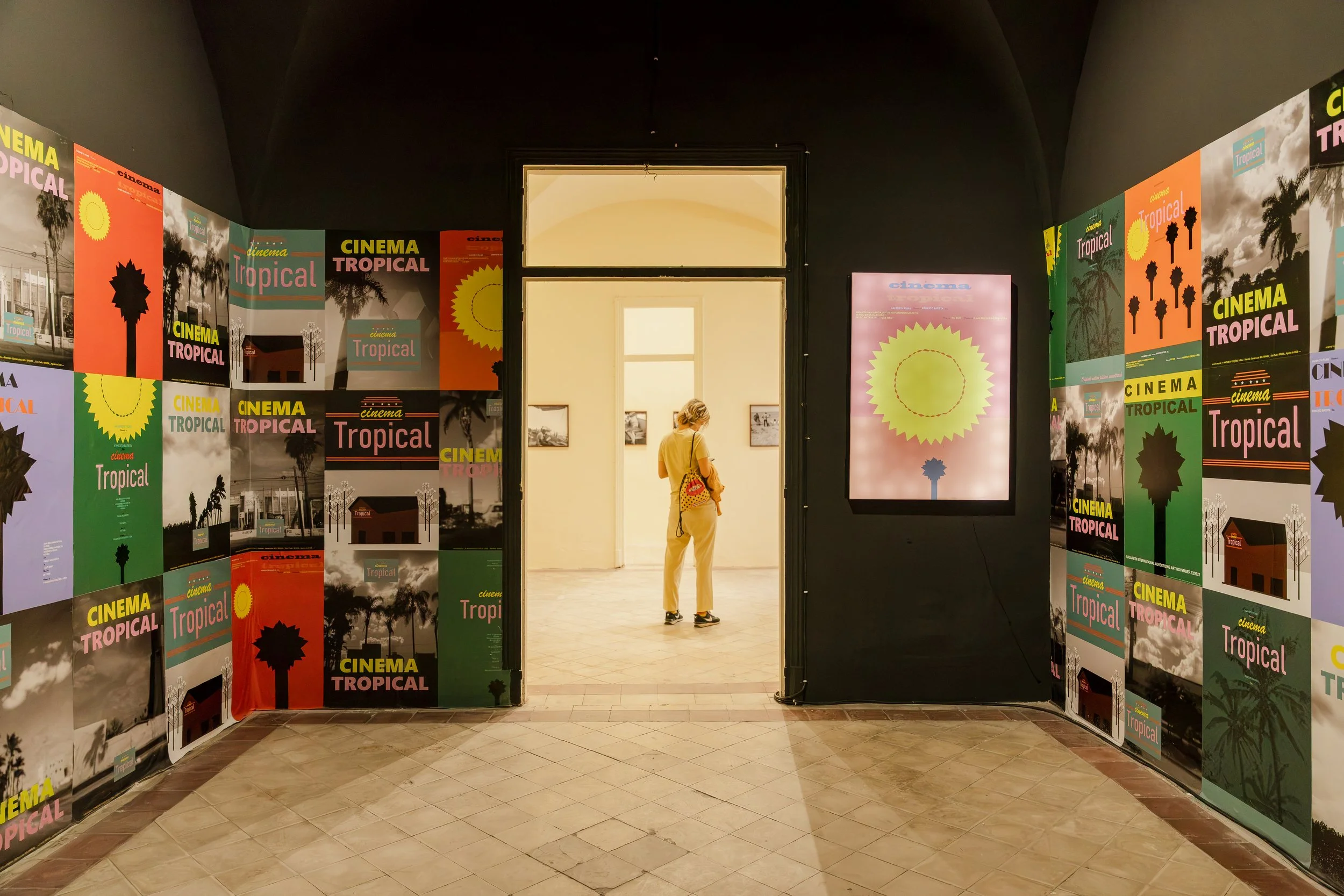
Paulo Nazareth, Quechlet El Attarine. Jaou Tunis 2026 © Mehdi Ben Temessek.
Other works shift the mood. Castiel Vitorino Brasileiro’s BYEBYEBORI draws on celebration and ritual, Roman Selim Khereddine's Breeder tracks down a dog breeder descended from Italy's royal family, and Paulo Nazareth's The Wale Man follows a man as he keeps watch beside a dying whale.
Click here for our pick of the artists not to miss at the 8th edition of Jaou Tunis.
Undertow / Contre ; Courant
At B7L9 Art Centre in Bhar Lazreg, is Undertow / Contre ; Courant, curated by Amanda Abi Khalil and Danielle Makhoul with Art Explora. B7L9 is the Kamel Lazaar Foundation's own art centre, opened in 2019 in a working neighbourhood on the northern edge of Tunis, well away from the usual gallery district, and free to enter. Around twenty artists take the Mediterranean as their subject, from trade routes, colonisation and exile, down to what a crossing is like, and what it means to wait, to be taken, and to remember.
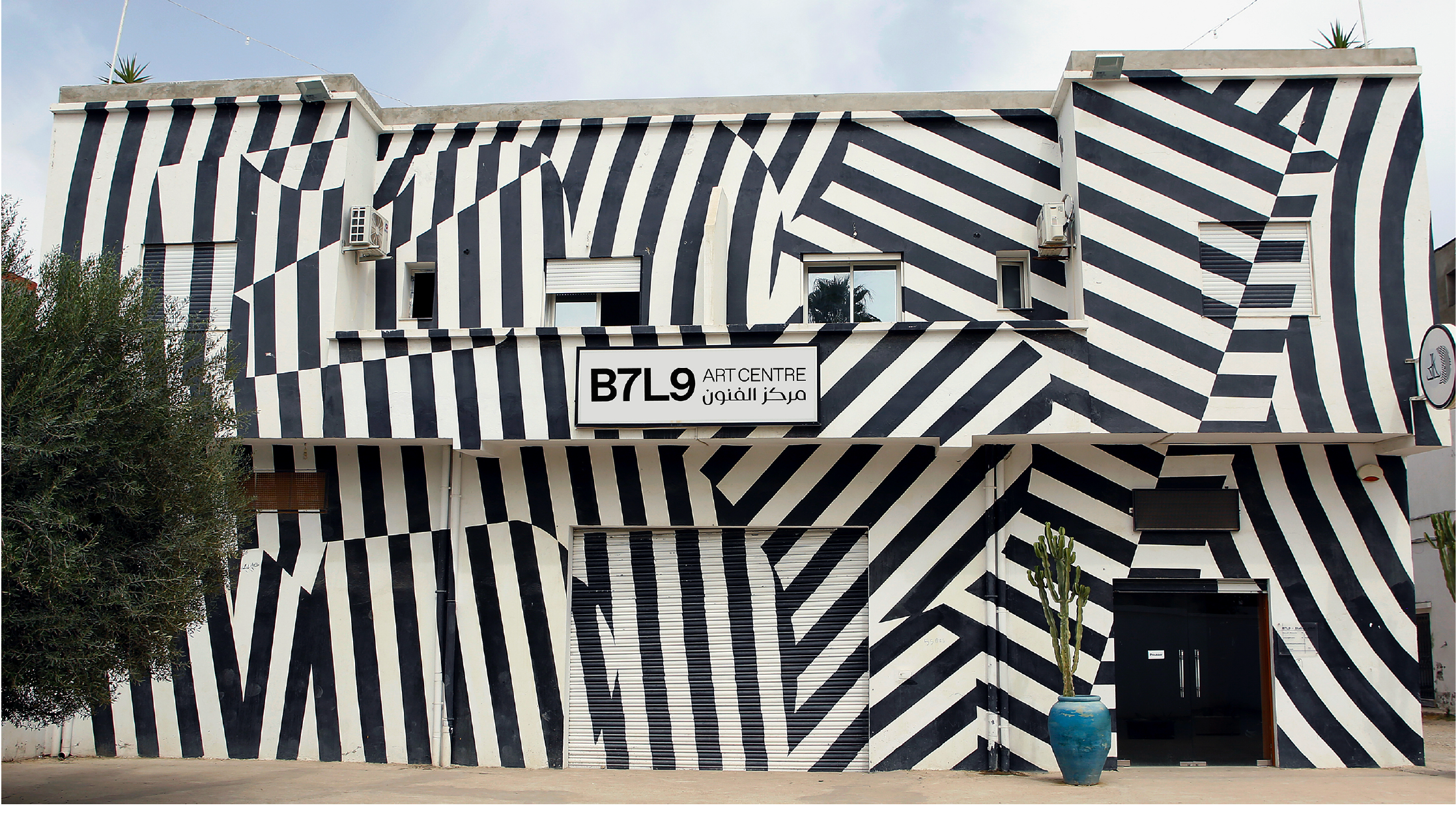
Undertow / Contre ; courant, B7L9 Art Centre in Bhar Lazreg. Image courtesy of B7L9 Art Centre
The names here will be familiar to anyone who has followed the subject, and the stories behind the works lead to difficult reflection. Nabila Halim’s How Deep Is Your Love (2020) brings together ten photographs of the parcels that families send to relatives who have emigrated, the colis du bled, which carry both the tie to home and a reminder of where the recipient came from. In Bouchra Khalili’s Anya (Straight Stories, Part 2) (2008), a young Iraqi woman describes her journey out of her country while the camera travels across Istanbul and the Bosphorus. She is heard throughout but never seen. Randa Maroufi’s Bab Sebta (2023) is named after the gate of Ceuta, the Spanish enclave in Morocco, and records the daily trade in books, clothing and food carried across that border by people who depend on it to live. The film is shown with the print Liberation, printed on fabric in a way that alludes to a flag, casting the female smugglers as rap stars, a use of humour that releases them from the
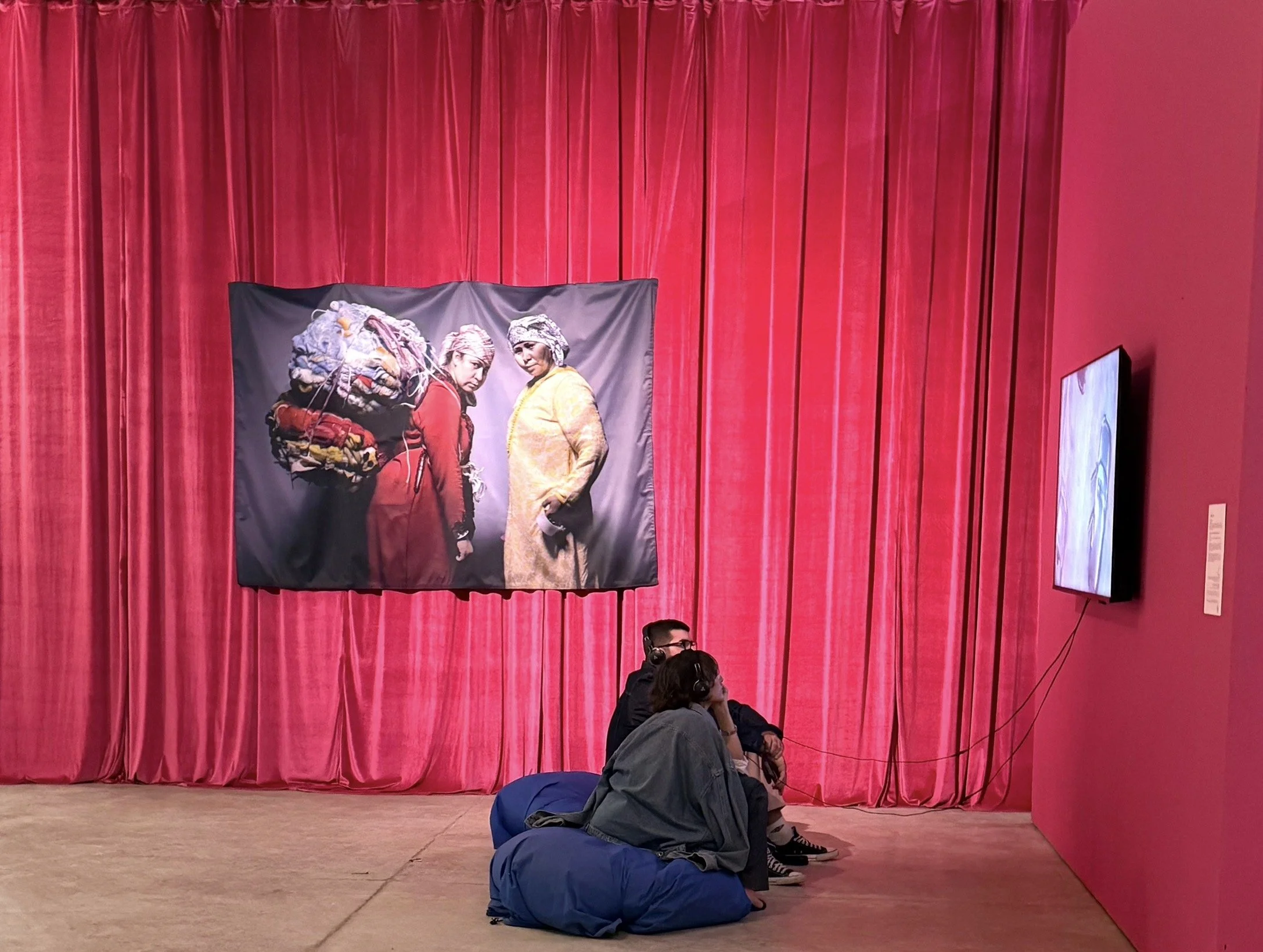
Randa Maroufi's Bab Sebta, Art Explora Festival. Undertow / Contre; courant at B7L9 Art Centre in Bhar Lazreg. Image credit MTotoe/FLO London.
The most compelling of the works, and the most disturbing, is Forensic Oceanography's Liquid Traces: The Left-to-Die Boat Case. Seventy-two people left Tripoli by boat in the early hours of 27 March 2011. The boat ran out of fuel and drifted for fourteen days before returning to the Libyan coast. A helicopter came close enough for those on board to wave, hold up their babies and show their empty fuel cans, then left without helping. A military ship passed. Sixty-three of them died. The work reconstructs the drift in full, using satellite radar imagery, mapping data and the testimony of the survivors. The report behind it became the basis for legal cases brought against NATO member states. Forensic Oceanography was founded in 2011 by Lorenzo Pezzani and Charles Heller within Forensic Architecture, and the pair have run the Border Forensics agency together since 2021.

Forensic Oceanography's Liquid Traces: The Left-to-Die Boat, Art Explora Festival. Undertow / Contre; courant at B7L9 Art Centre in Bhar Lazreg. Jaou Tunis 2026. Image credit MTotoe/FLO London.
The exhibition has a travel history of its own. It was made for a shipping container pavilion that accompanied the Art Explora museum boat and has been to fifteen port cities in eleven countries since 2024, among them Marseille, Barcelona, Tangier, Durrës and Piraeus. Tunis is the first time it has been shown inside a permanent institution.
Images de Syrie, Palmyre, Alep, Damas
The third exhibition featured at the biennale opened at the Institut français de Tunisie on 27 October, with black and white photographs by Michel Eisenlohr. Eisenlohr drove to Syria from Marseille with an analogue camera in 2002, invited to the Aleppo photography festival, and photographed Palmyra, Aleppo and Damascus, their architecture and their streets, years before most of the world began seeing those names in a different context. Poetry by the Franco-Iranian poet Parviz Abolgassemi accompanies the images.
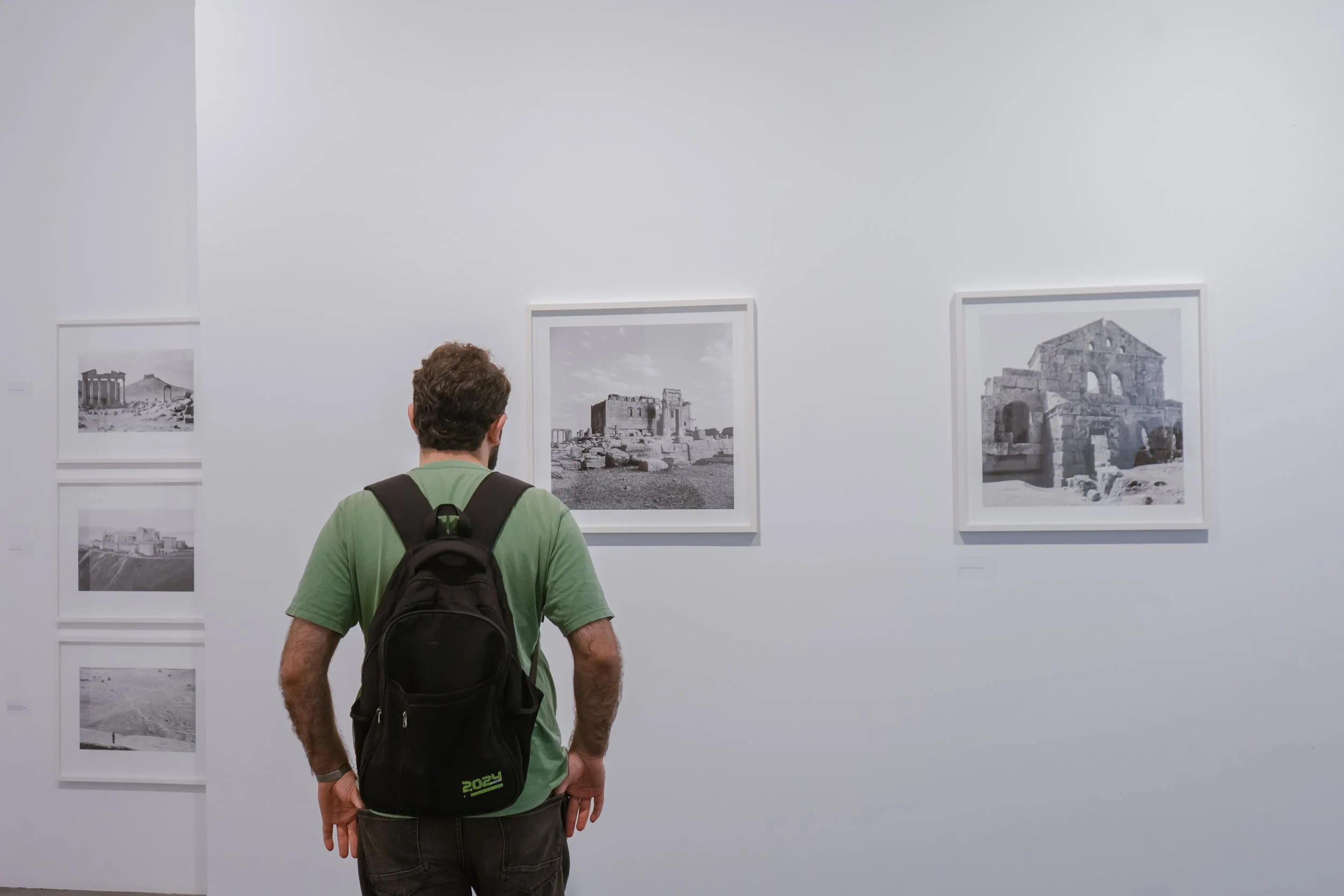
Images de Syrie IFT Jaou Tunis 2026. © Dorsaf Bedoui
Music and performance
Music and performance are a large part of how Jaou is built, and this year more so than before. The live programme is substantial, with concerts and performances across the month and a late programme at Habibi Downtown. The rooftop bar on the tenth floor of the Hôtel International El Hana on Avenue Habib Bourguiba, with a view over the centre of the city, becomes the home for Jaou Nights with Tunisian DJs and live acts.

Cheb Mimo Jaou Nights Habibi downtown. Jaou Tunis 2026 © Dorsaf Bedoui
The biennale opened on 23 October at Le 4ème Art with Gathering, a performance by Samar Haddad King, in which a wedding is interrupted by war and the audience becomes part of the gathering. Haddad King is a Palestinian American choreographer who founded Yaa Samar! Dance Theatre in New York in 2005. The company brought several works to the opening days, among them Shabaab, which follows two Palestinian friends growing up under occupation, and Losing It, a solo by Samaa Wakim on the fear that came with growing up under occupation, with a live score by Haddad King built from field recordings collected across Palestine since 2010.
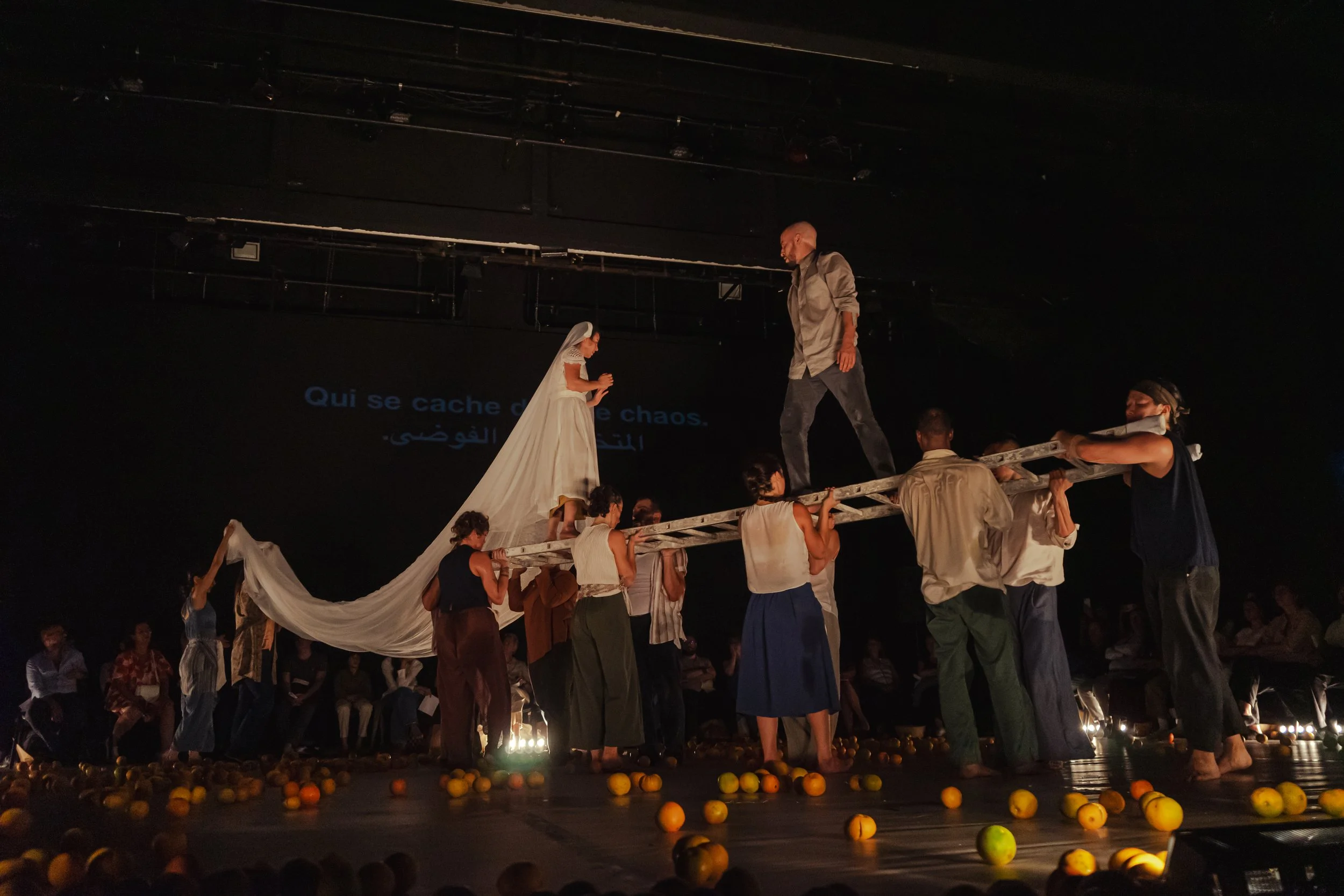
Gathering Samar Haddad King YSDT Jaou Tunis 2026.
The concerts began the same weekend. Yasmine Hamdan, the Lebanese singer who has been a figure in Arab independent music since the late 1990s, played with the Tunisian singer Soudeni on 25 October, and Shabaka Hutchings, a leading figure in British jazz, played the night after on a bill with the Tunisian rapper VIPA and his project OBOS, One Band One Sound, which brings twenty artists together so that the rap works alongside brass, a rhythm section, voices and a choir. They were hugely popular, and often felt like a fitting way to end a day of talks and art.
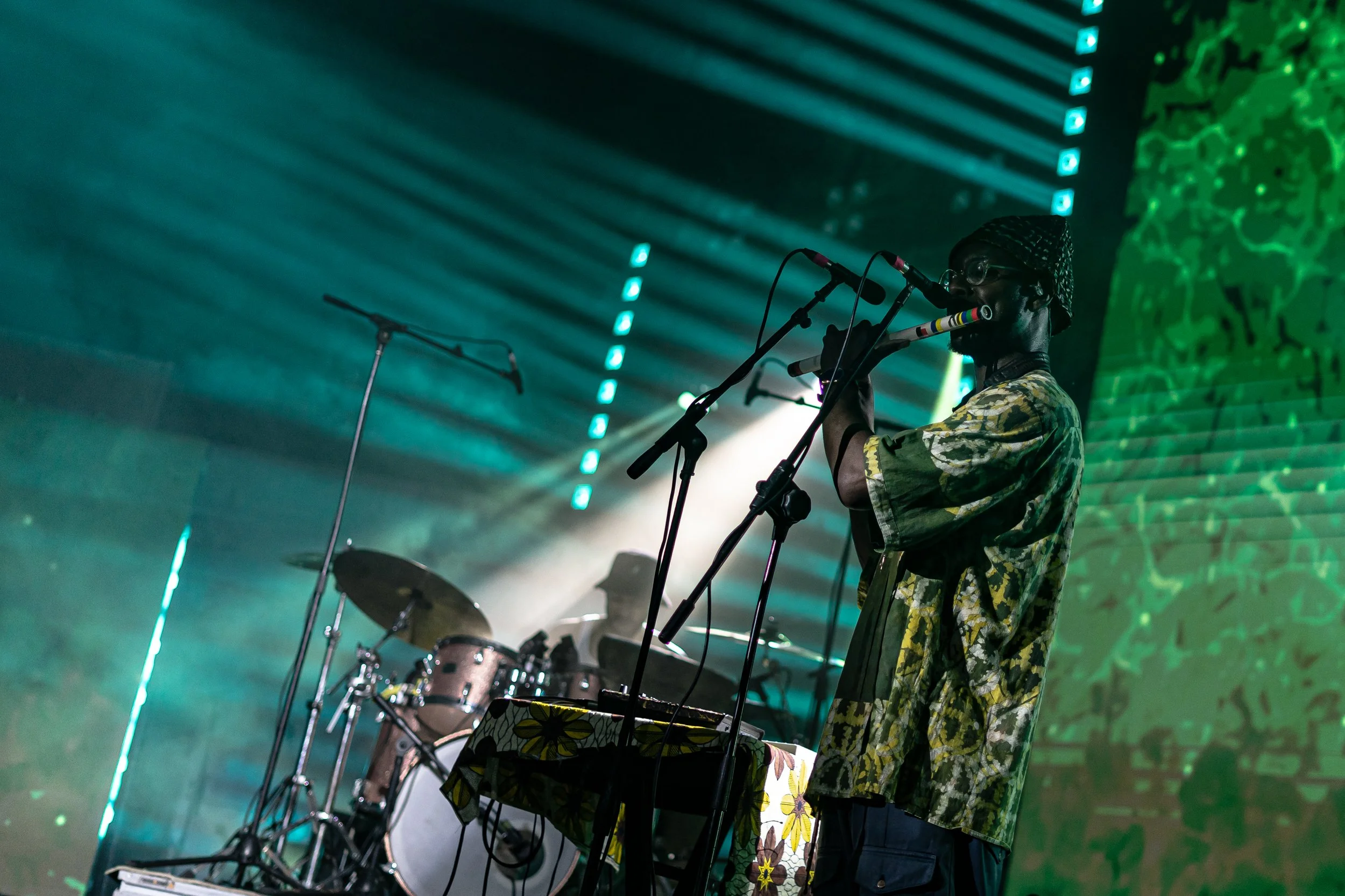
Shabaka Jaou Tunis 2026 ©Dorsaf Bedoui
The music programme continues until the biennale ends, with Nadah El Shazly at B7L9 on 20 November and the Geneva duo Hyperculte closing it there on 22 November, and the Jaou Nights at Habibi Downtown go on almost nightly until then.
The talks
Jaou Encounters brought together writers, artists, researchers and political thinkers at Le 4ème Art in the opening days, on what happens when inherited structures stop holding, and on the forms of knowledge, relation and political imagination that have to be built in response. The artists showing in the biennale spoke on the panels too.
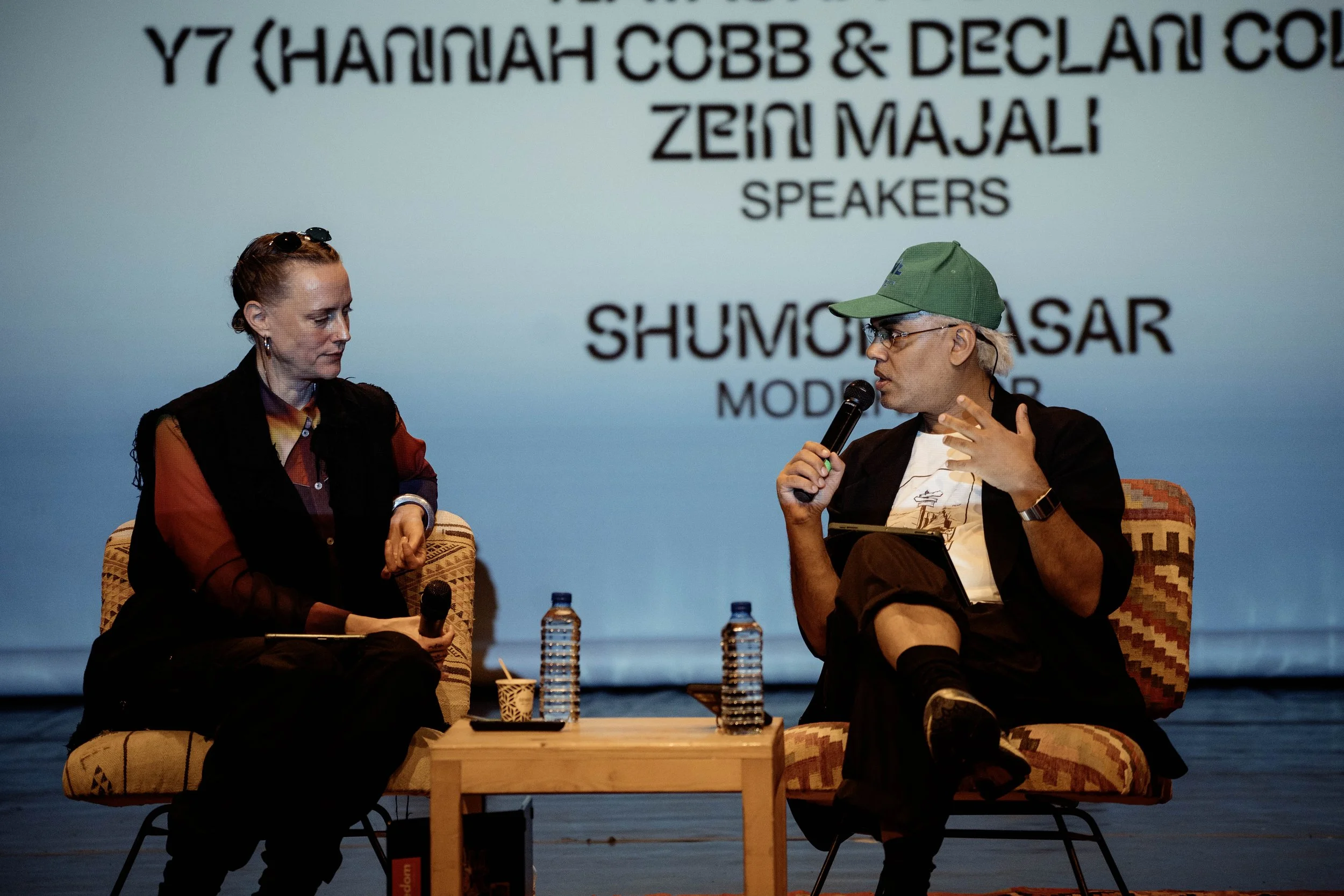
Jaou Encounters Becoming the Ocean Le 4ème Art 2026 ©Asma Barhoumi
The Palestinian writer Mohammed El-Kurd opened it with the researcher and critic Anthony Downey, the founding editor of Ibraaz, in a discussion of his book Perfect Victims, a winner of the 2025 Palestine Book Award. El-Kurd co-founded the #SaveSheikhJarrah campaign and is the first Palestinian correspondent for The Nation, and he spoke about how Palestinians are represented in Western media and what that representation is used for. The session was in English with simultaneous translation into Arabic and French.
Elias and Yousef Anastas also spoke. The brothers run the architecture practice AAU Anastas between Bethlehem and Paris, and they have spent a decade building places for other people to work in, including Local Industries, the online station Radio alHara, and the Wonder Cabinet, a three-floor cultural space on the edge of Bethlehem that won the Aga Khan Award for Architecture in 2025.
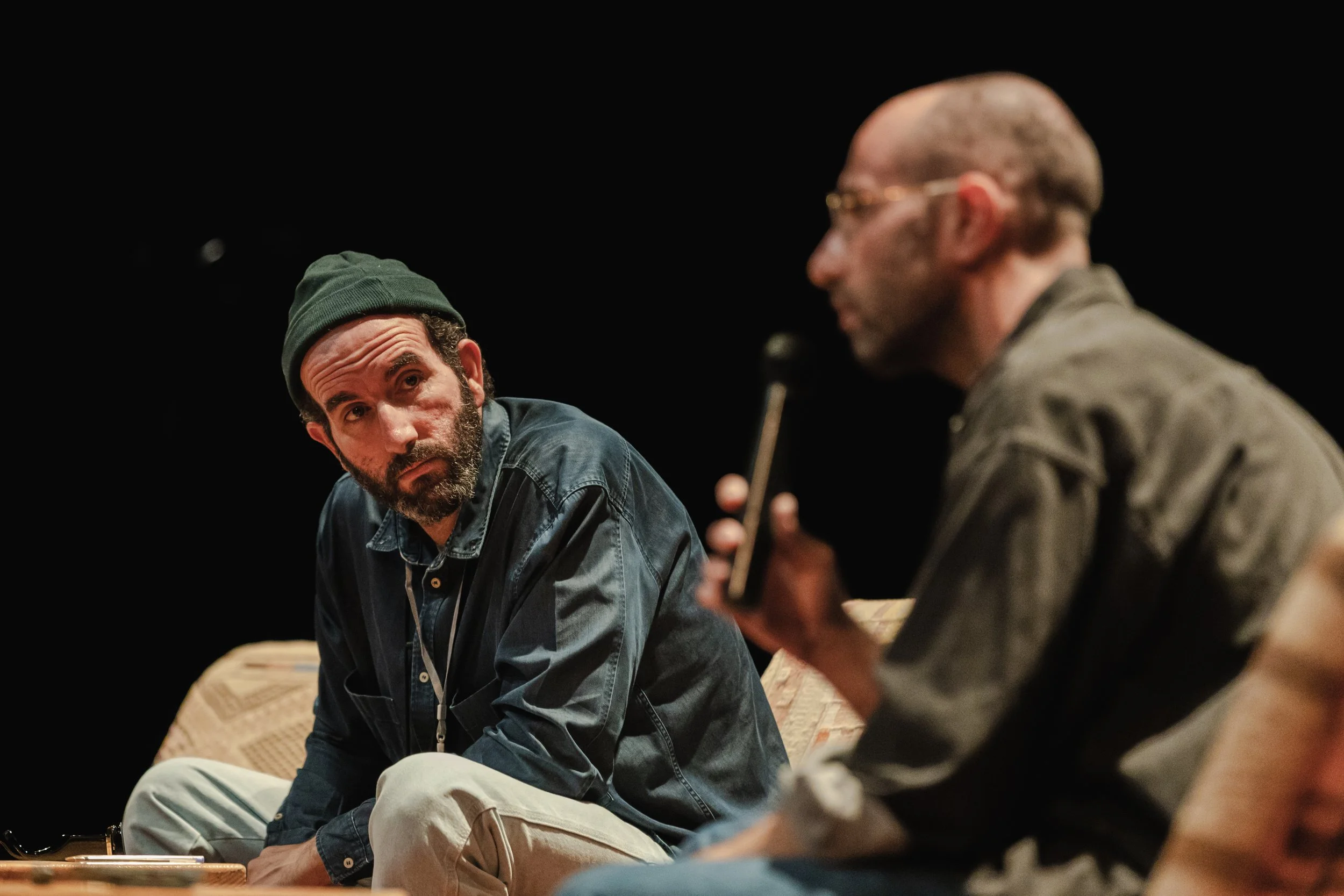
Jaou Encounters Day1 Panel 3 © Asma Barhoumi
Free workshops continue through the month at both main sites, in stop motion, video making, zine making, embroidery and dance, most of them for people who live in the neighbourhoods the biennale has moved into. Moving Images, Still Frames with Lilia Ben Achour is at the barracks on 14 November.
Good vibes, in the end
Nothing in this edition is light. Borders, surveillance, exile, drowning, occupation, the archives of things people would prefer forgotten. A day of it leaves you with a lot to think about, and the talks programme was designed to make sure of that.
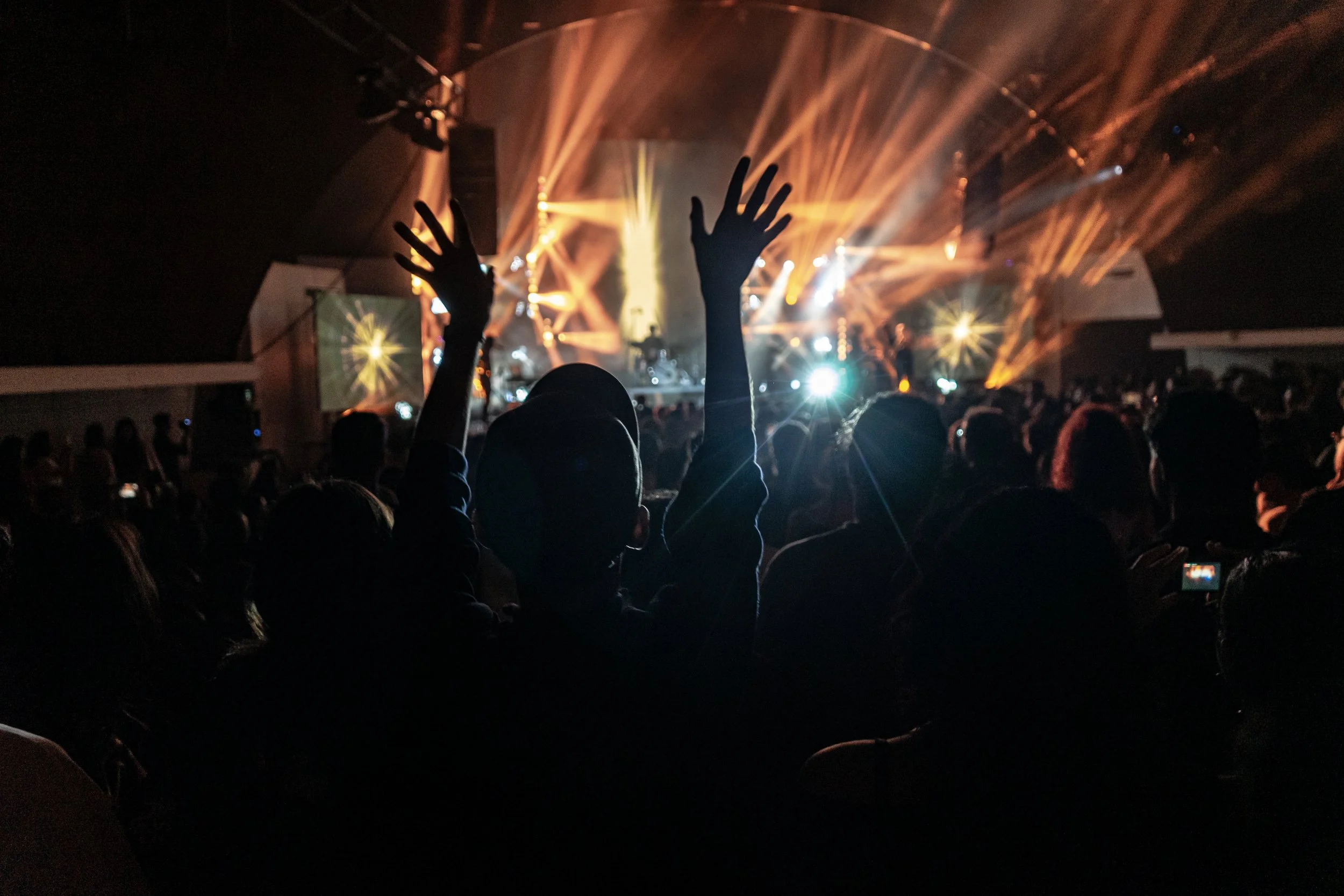
OBOS and VIPA. Jaou Tunis 2026 © Dorsaf Bedoui.
And yet the phrase from the woman in the book room at Quechlet El Attarine, held true throughout. From the barracks screening films packed with people sitting on the floor in the dark, to the Palais des Congrès when Yasmine Hamdan played, and certainly at two in the morning on a rooftop downtown with Tunisian DJs playing to the same crowds who had visited the exhibitions that day. The biennale takes the world seriously, presents these urgent issues through a myriad of artistic perspectives, and then puts you in a city that refuses to be miserable about it. Good vibes, Tunis. She was right.
Where it goes next
Becoming the Ocean is on show at Caserne El Attarine until 22 November, then travels on. It is to be shown in Venice from 19 to 22 November, Brussels from 18 to 20 December, Geneva from 14 January to 30 April 2027, and London in winter 2027. Undertow remains at B7L9 until 31 December 2026.
Planning a visit
The biennale is a compelling reason to go, and can lead to discovering many of the key tourist sites in Tunisia. The barracks is in the Medina, a UNESCO site of covered souks and courtyard houses that people still live and trade in. The late programme is downtown, among French colonial avenues and cafés. B7L9 is further out at Bhar Lazreg, on the coast road that carries on to Carthage, La Marsa and Sidi Bou Said. The biennale can therefore easily be a trip in itself, or an opportunity to explore more widely.
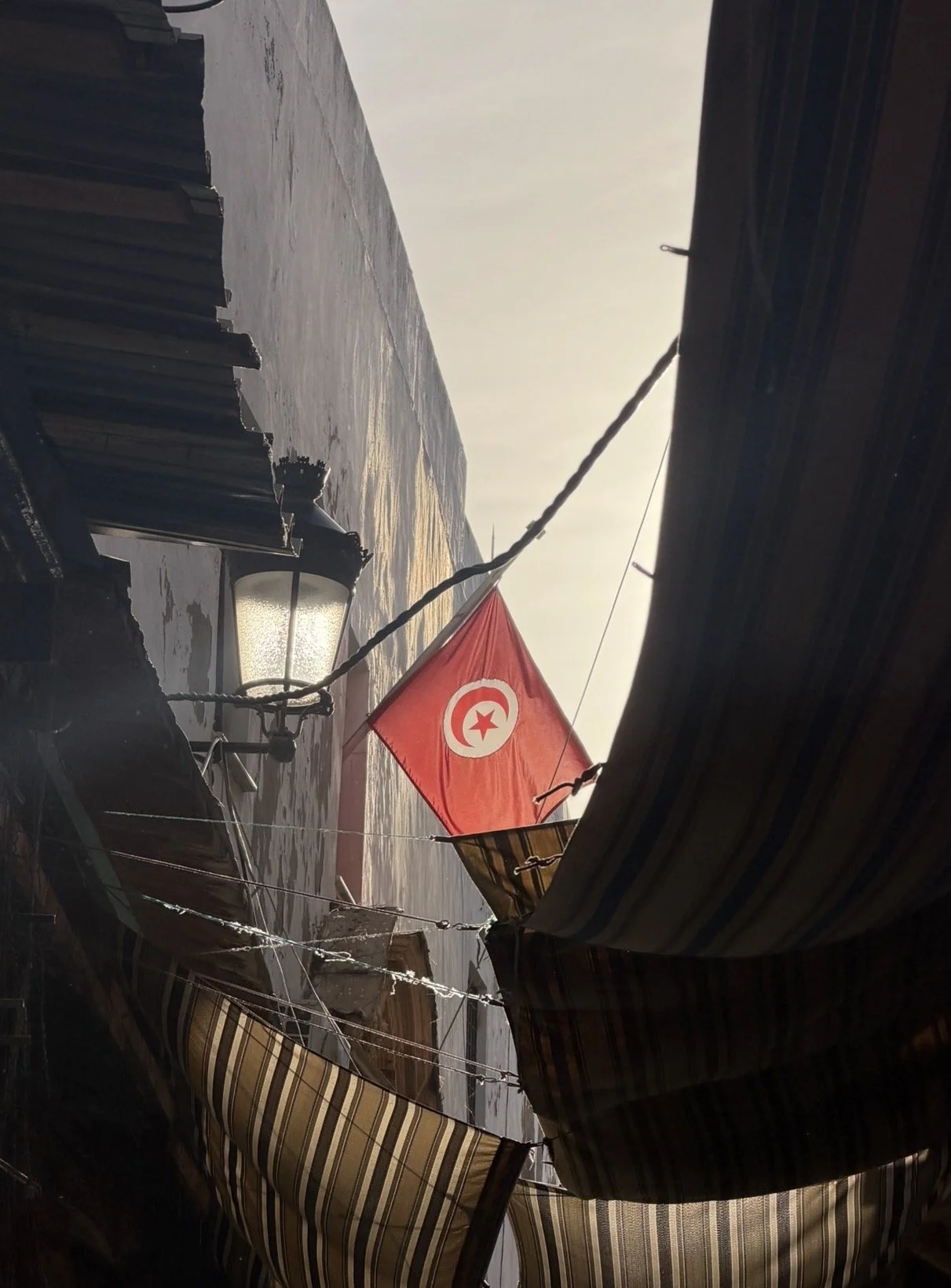
Tunis, Tunisia. Image credit MTotoe/FLO London.
The flight from London is a little over three hours, November is mild, prices are low, and British passport holders need no visa. The exhibitions are free, as are the Jaou Nights, performances are 5 TND and concerts 20 to 30 TND, and a full festival pass is 100 TND, around £26. The biennale is open until 22 November.
For the full programme visit jaou.tn and @jaoutunis.



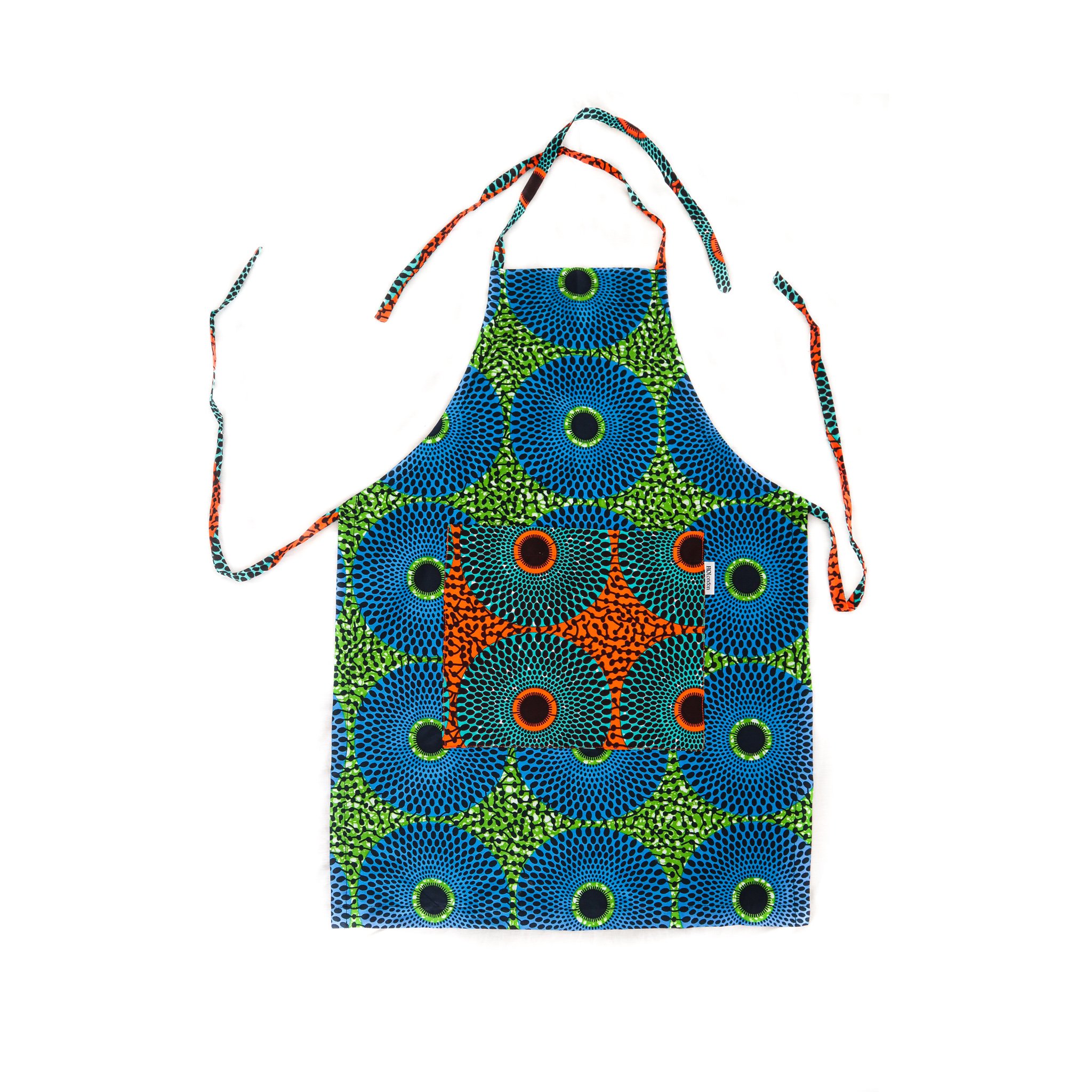


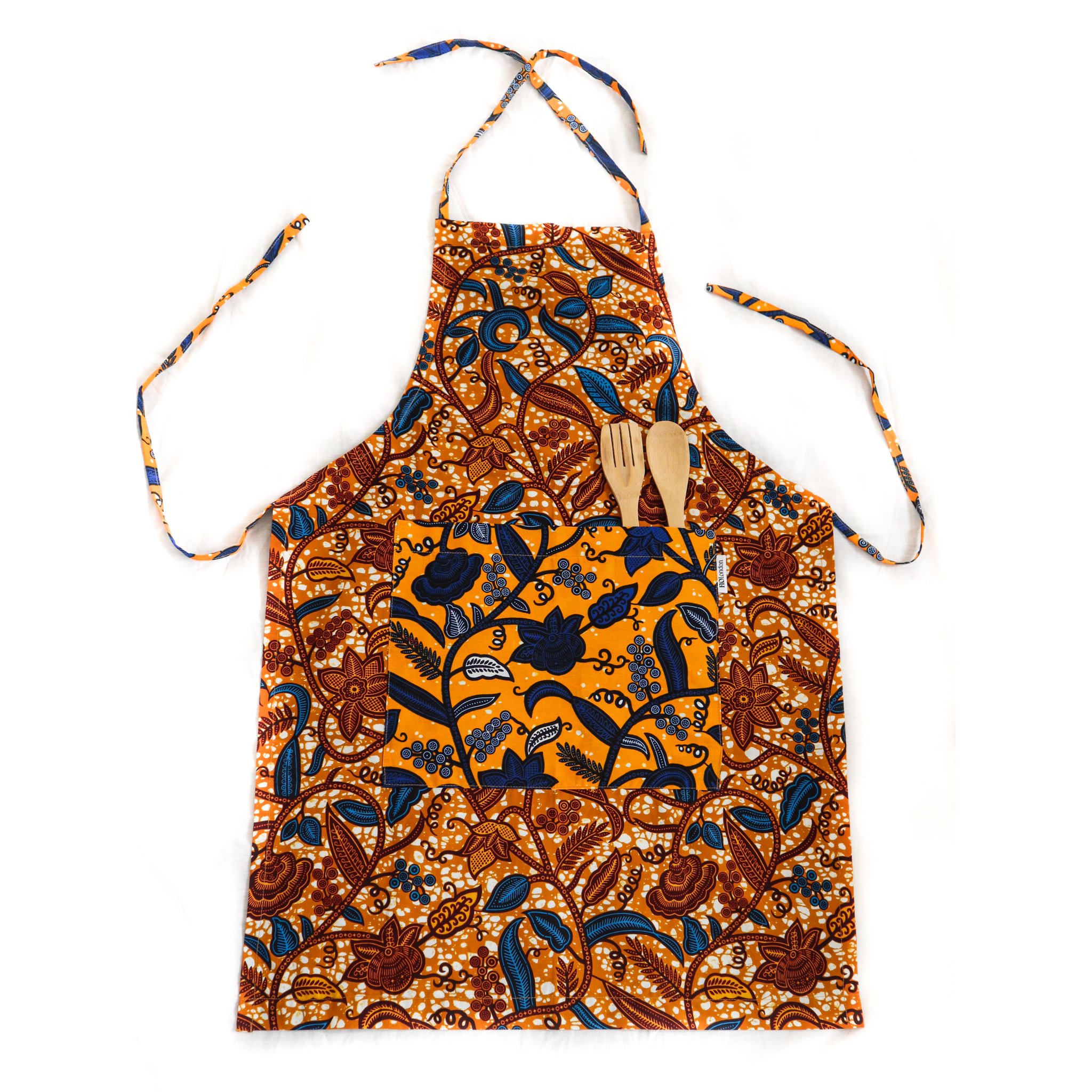


Handmade in Ghana, our aprons offer a unique design with a front pocket perfect for kitchen utensils or your phone and tie neck straps each made from recycled material. The perfect gift for any cooking enthusiasts!
Our aprons have been named after markets in Ghana and London. This apron has been named after street food hub Maltby Street Market.