
Renoir and Love at the National Gallery, review
Pierre-Auguste Renoir is a bit of a Marmite artist. There are some who really love the style of his work, and there are those who practically worship the Renoir Sucks at Painting movement. Regardless of one’s allegiance, Renoir and Love at the National Gallery provides an opportunity for the French artist to redeem himself more than 100 years later.
Following its debut at the Musée d’Orsay in Paris, the exhibition is the first of its kind to explore Renoir’s multifigure compositions, looking more closely at his depictions of romantic love, familial relationships, and affection between colleagues and strangers. Exclusively featuring his oil paintings, it will then travel to the Museum of Fine Arts, Boston (20 February – 13 June 2027), although the Paris iteration did contain two drypoint portraits of the artist by Marcellin Desboutin.
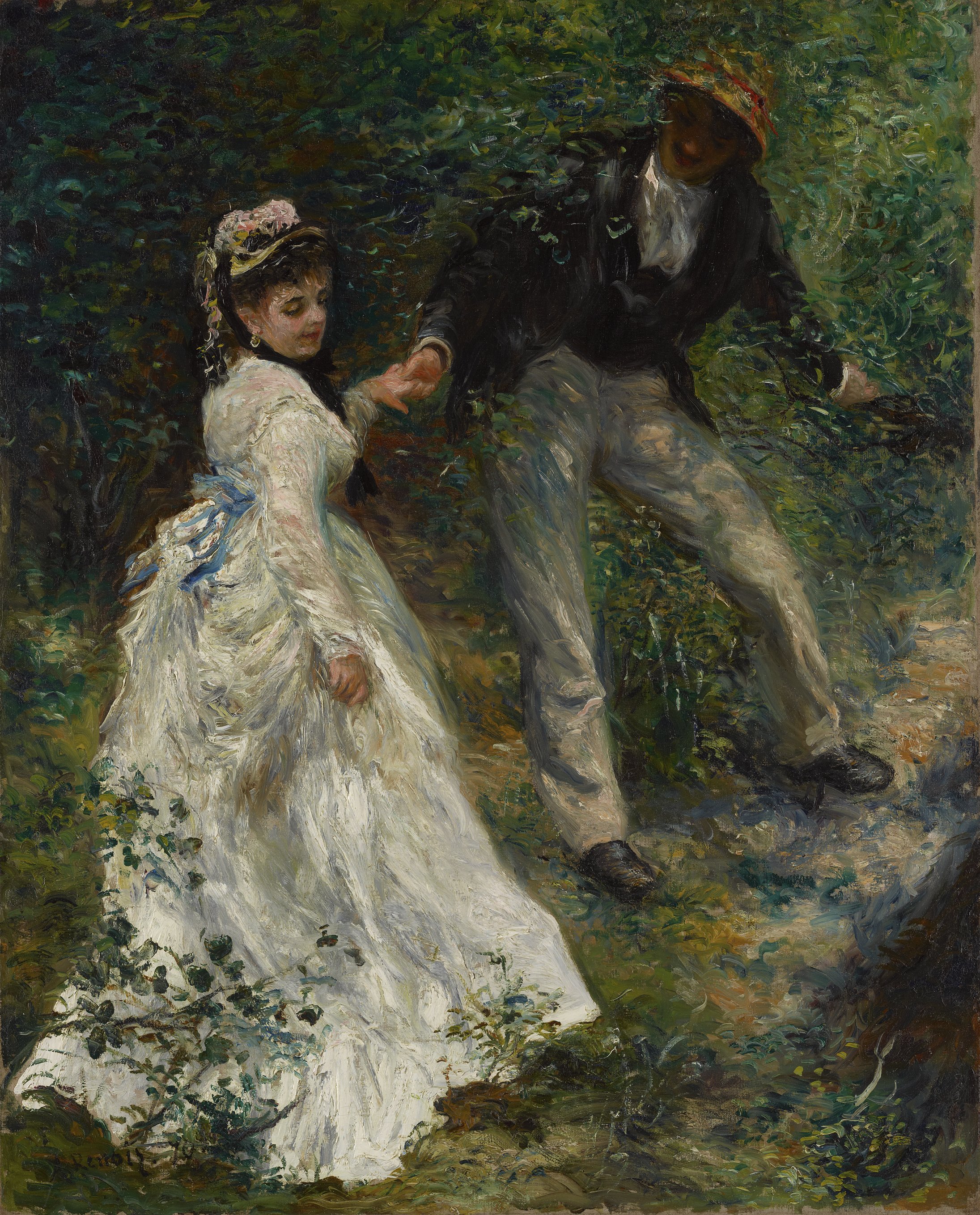
Pierre-Auguste Renoir, The promenade, 1870. Oil on canvas, 81.3 x 64.8 cm. The J. Paul Getty Museum, Los Angeles. Digital image courtesy of the Getty's Open Content Program.
About a week before his death, the artist reportedly remarked: ‘For me, a painting must be something amiable, joyful and pretty, yes, pretty!...I know it’s hard to get people to admit that a painting can be great painting and still be happy.’
He does, indeed, have a point. Growing up at a time when history painting continued to be the gold standard for young artists to emulate and be successful, anything that didn't tick the boxes of serious subject matter was considered frivolous. This exhibition sets that record straight by emphasising Renoir’s connections to artistic traditions of the past, notably the fêtes galantes (courtship parties) championed by Antoine Watteau, François Boucher, and Jean-Honoré Fragonard in 18th-century France. One of the highlights is Dance at the Moulin de la Galette (1876), the first time it has ever been shown in the UK.
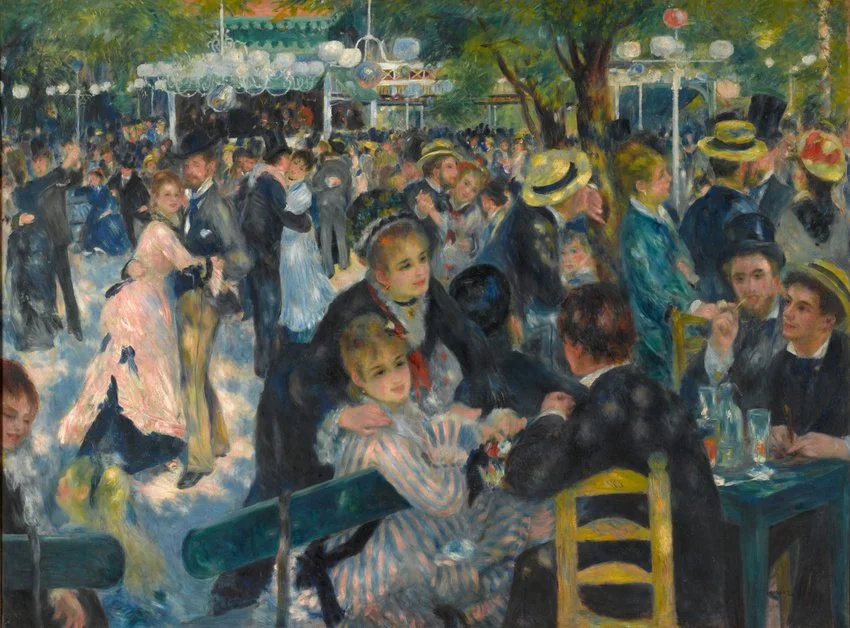
Pierre-Auguste Renoir, Dance at the Moulin de la Galette, 1876. Oil on canvas, 131.5 cm x 176.5 cm. Musée d'Orsay, Paris (RF 2739). Gustave Caillebotte Bequest, 1896 © photo Grand Palais RMN (Musée d'Orsay) / Mathieu Rabeau
As with any touring exhibition, it is always worth paying attention to the unique contributions of each host venue. Before the show opened, La Grenouillère (1869) made an early visit to be reunited with Claude Monet’s Bathers at La Grenouillère (1869), painted side by side at the restaurant along the Seine.
The London iteration features three exclusive loans not available in the Paris and Boston shows: Place Clichy (about 1880), The Children’s Afternoon in Wargemont (1884), and The Great Bathers (1884-87).
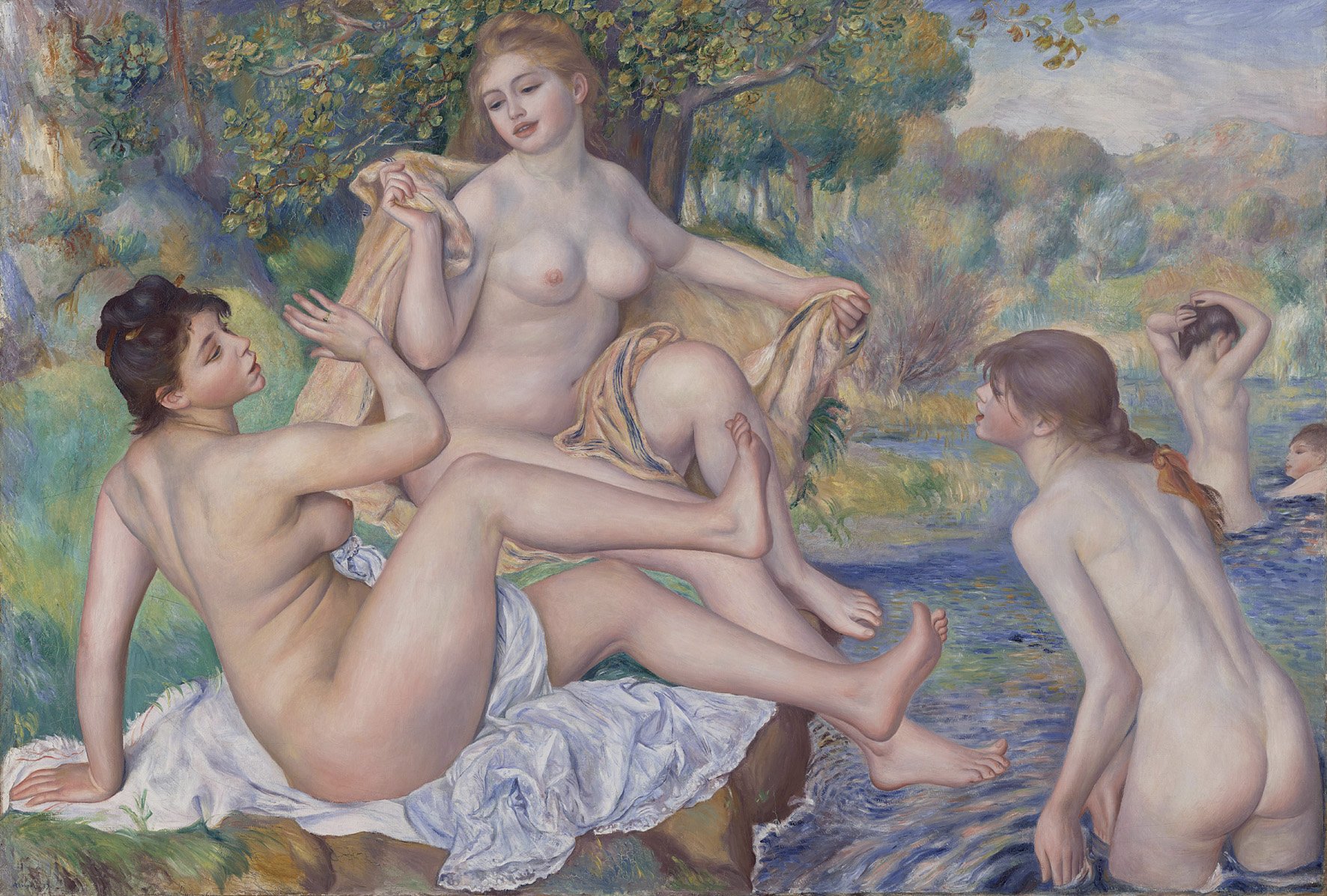
Pierre-Auguste Renoir, The Great Bathers, 1884-87. Oil on canvas, 117.5 171 cm. Philadelphia Museum of Art: The Mr. and Mrs. Carroll S. Tyson, Jr., Collection, 1963-116-13. © Philadelphia Museum of Art
The latter is one of the stars of the show and a brilliant conclusion demonstrating Renoir’s long-standing allegiance to the classical tradition championed by the French art academies; he probably painted more female nudes than any other artist in his circle. There is also a stylistic refinement in The Great Bathers that recalls his early work inspired by Gustave Courbet, while the composition responds to François Girardon’s relief at Versailles of Nymphs Bathing (1669-71).
Renoir’s engagement with Italian Renaissance art is also well documented, having made a long trip visiting Venice, Florence, Rome, Naples, and Sicily in late 1881. During this trip, he painted Young Mother (1881), which has been linked to his impressive reaction to Raphael’s Madonna della Seggiola (1512-14): ‘I expected to have a good laugh; but I found the freest, the most solid, the most marvellously simple and living kind of painting that it is possible to imagine. The arms and legs were of real flesh! And what a touching expression of maternal tenderness!’
Similarly, his depiction of his wife Aline Charigot and their son Pierre in Motherhood (1885) has been connected to Andrea Solario’s Madonna with the Green Cushion (1507-10), which Renoir may have seen in the Musée du Louvre. These associations with Madonna and Child imagery help to reframe our understanding of Renoir, and it might be interesting to compare them with similar works by Mary Cassatt and Berthe Morisot.
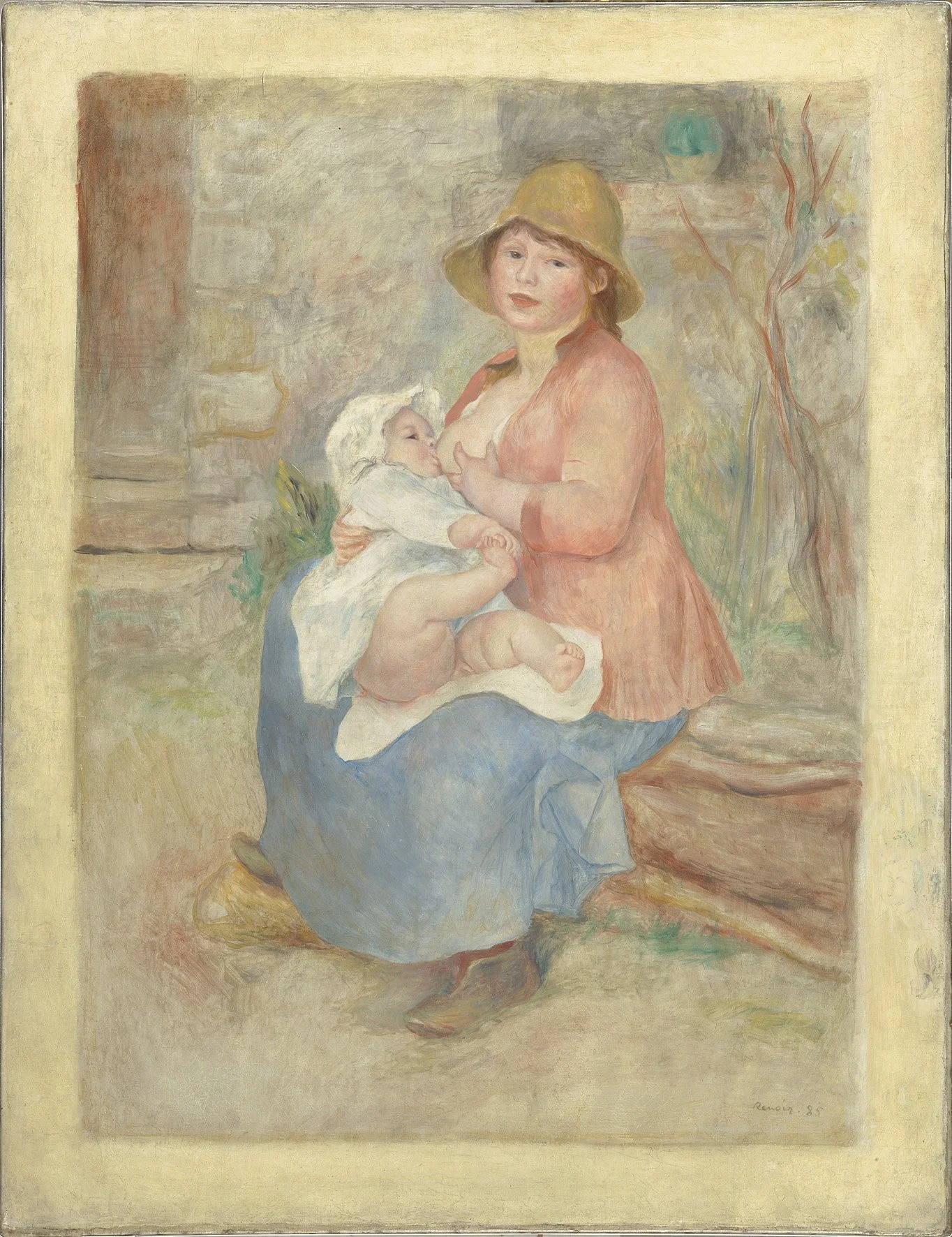
Pierre-Auguste Renoir, Motherhood, 1885, Oil on canvas, 92 × 72 cm. Musée d'Orsay, gift in lieu of taxes, 1998, RF 1998 35 © photo Grand Palais Rmn (musée d'Orsay)
The London edition also has a couple compromises. Of the three life-sized Dances Renoir painted in 1883, only two are present – Dance in the Country and Dance at Bougival – while Paris completed the set with their Dance in the City. Additionally, one of the loveliest groupings featuring At the Theatre (A Première Sortie) (1876-77), Bouquet in a Theatre Box (about 1880), and A Box at the Theatre (At the Concert) (1880) from the Clark Art Institute, Williamstown, is missing the Courtauld’s The Theatre Box (La Loge) (1874) which will in fact feature in Boston.
Through Renoir, these slice of life images of strangers and couples frolicking and having a good time have been airbrushed with a contemporary Parisian aesthetic. Therefore, some rooms are devoted to various types of locations, from interiors and the city centre to the idyllic countryside. As a result, we find in each section a blend of the artist’s figurative work and landscapes from different times in his life, heightening the disparity between his changing artistic styles, from his gritty early period to the overly soft manner of later years.
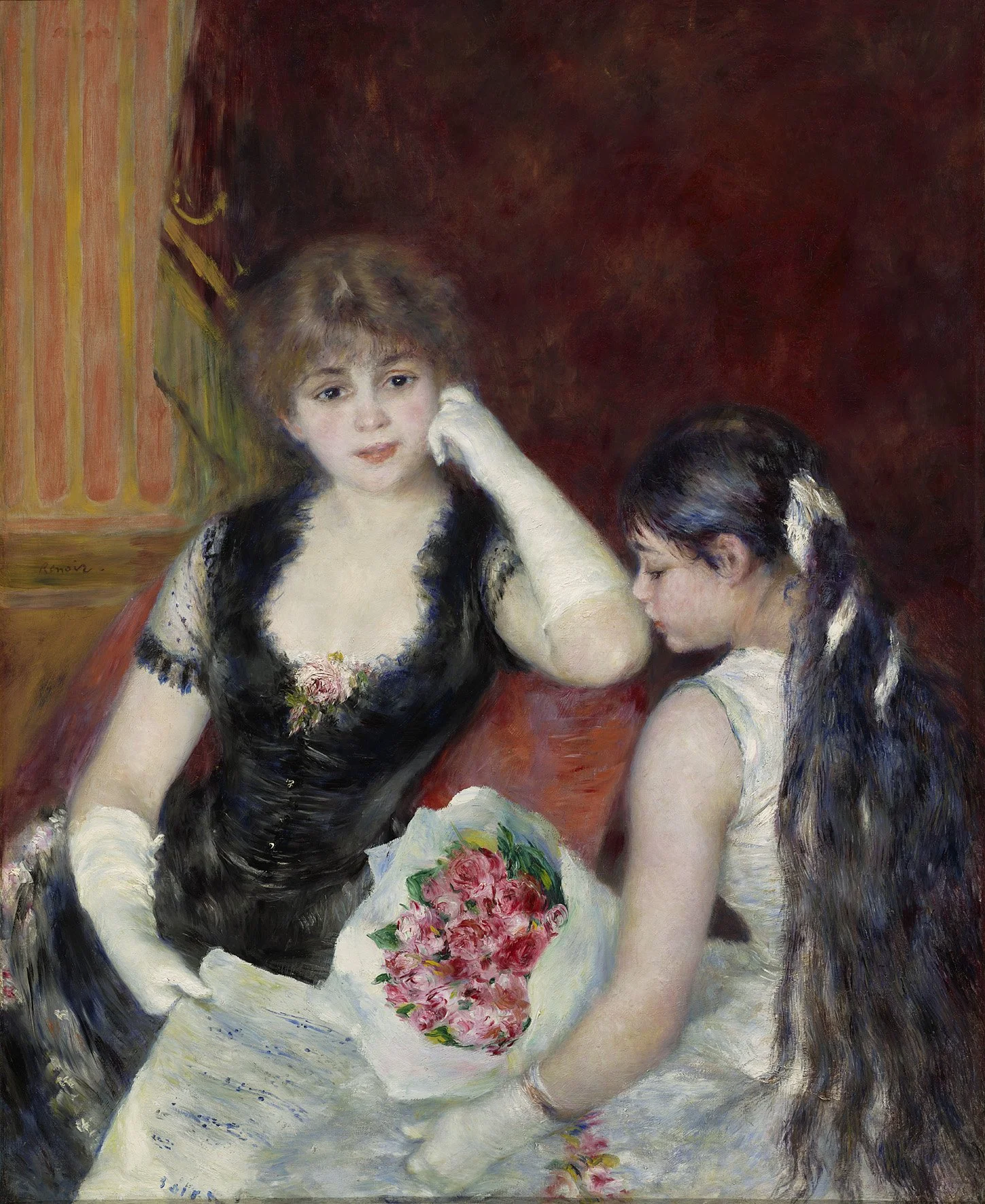
Pierre-Auguste Renoir, A Box at the Theater (At the Concert),1880. Oil on canvas 99.4 × 80.7 cm. Clark Art Institute, Williamstown, Massachusetts, USA. Image courtesy Clark Art Institute, clarkart.edu
To this reviewer, Renoir’s impressionist landscapes were clearly superior, demonstrating his strengths in creating visual depth and movement using textured brushstrokes and fine layers of colour. One can always feel a breeze running through works like Woman with a Parasol in a Garden (1875) and The Seine at Chatou (1881).
But what about his pictures of people? As examples of portraiture, most of them are terrible. Portrait of a Young Man and Young Woman (1876) is one of the worst, appearing doll-like and shoddy, while Madame Monet and Her Son (1874) look like characters in a horror film. However, this sloppiness predominantly seems to apply to paintings done after 26 August 1870, when Renoir was drafted to participate in the Franco-Prussian War for nearly a year until 10 March 1871. One of the strongest portraits in the exhibition is of his close friend and painter Frédéric Bazille at an easel in 1867, with whom Renoir lived and shared studios with for a few years. Bazille was subsequently killed in action on 28 November 1970. Suddenly, it makes sense that Renoir wanted to paint happy things going forward. His favourite model Lise Tréhotal so suddenly stopped modelling for him in 1872 for reasons unknown.
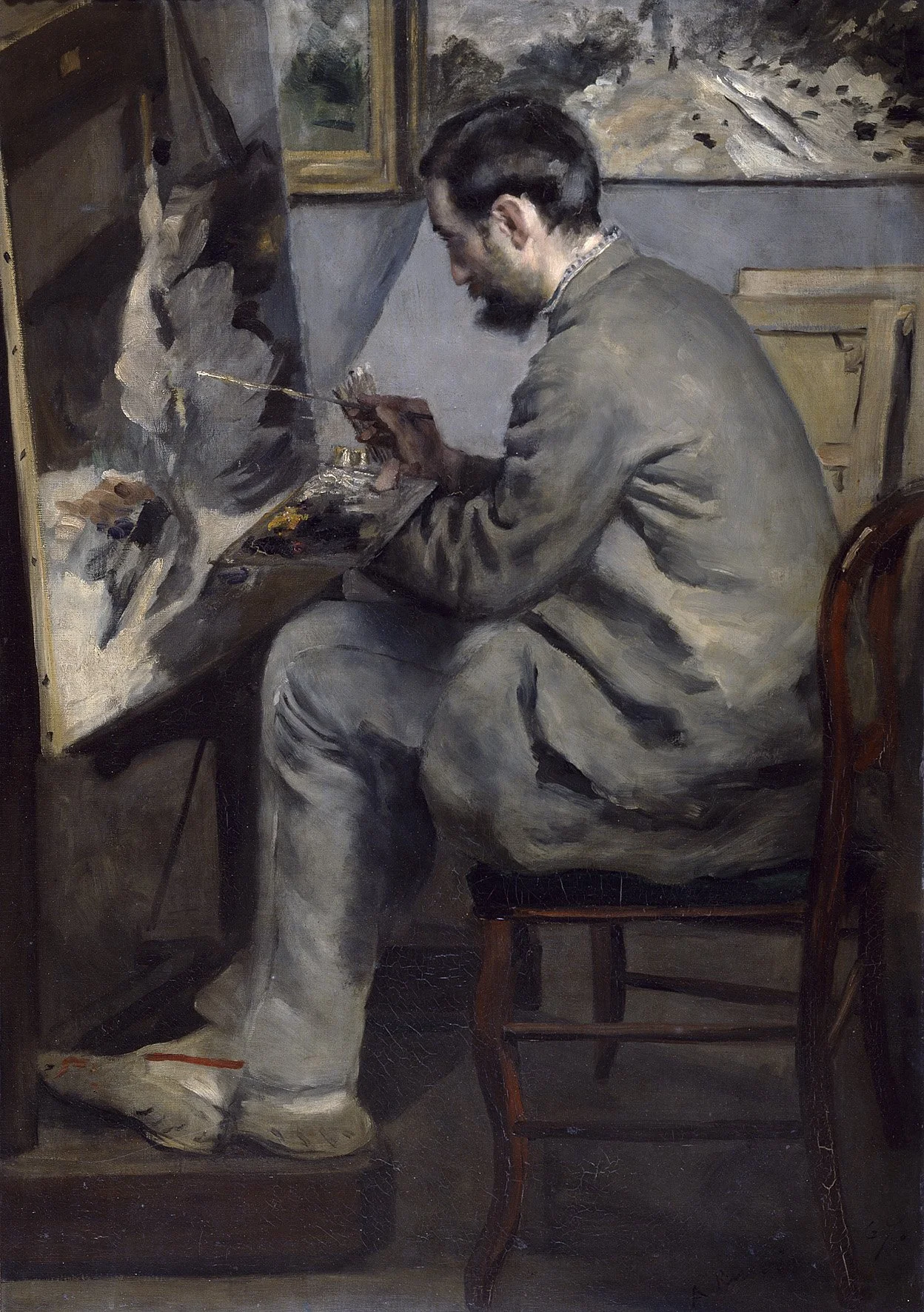
Pierre-Auguste Renoir, Frédéric Bazille,1867. Oil on canvas. 105 x 73.5 cm. Musée d'Orsay, Paris, bequest of Marc Bazille, 1924, RF 2448. © photo Musée d’Orsay, Dist. RMN-Grand Palais / Patrice Schmidt
While his controversial style may divide and distract audiences, within it is an admirable sensitivity to the effects of sunlight. Study (Torso, Sunlight Effect) (about 1875) is a typical example of Renoir’s attempts to capture sunlight filtering through the trees, resulting in sudden areas of patchy highlights and chromatic colour. On clothing, it’s very noticeable on the woman’s white dress in Secrets (about 1875). So perhaps Renoir’s overly soft aesthetic can partly be attributed to the movements of filtered sunlight, which in real life are indeed very mesmerising and beautiful.
Curatorially, this exhibition is delightful, educating audiences to notice the nuances of his paintings featuring young romantics. In fact, one might not even have detected that At Renoir’s Home, Rue Saint-Georges (1876) is the only group picture of exclusively male sociability, a rare instance in his extensive oeuvre. The additional mention of a previously undetected male figure beneath the surface of A Box at the Theatre (At the Concert) is also a nice touch.
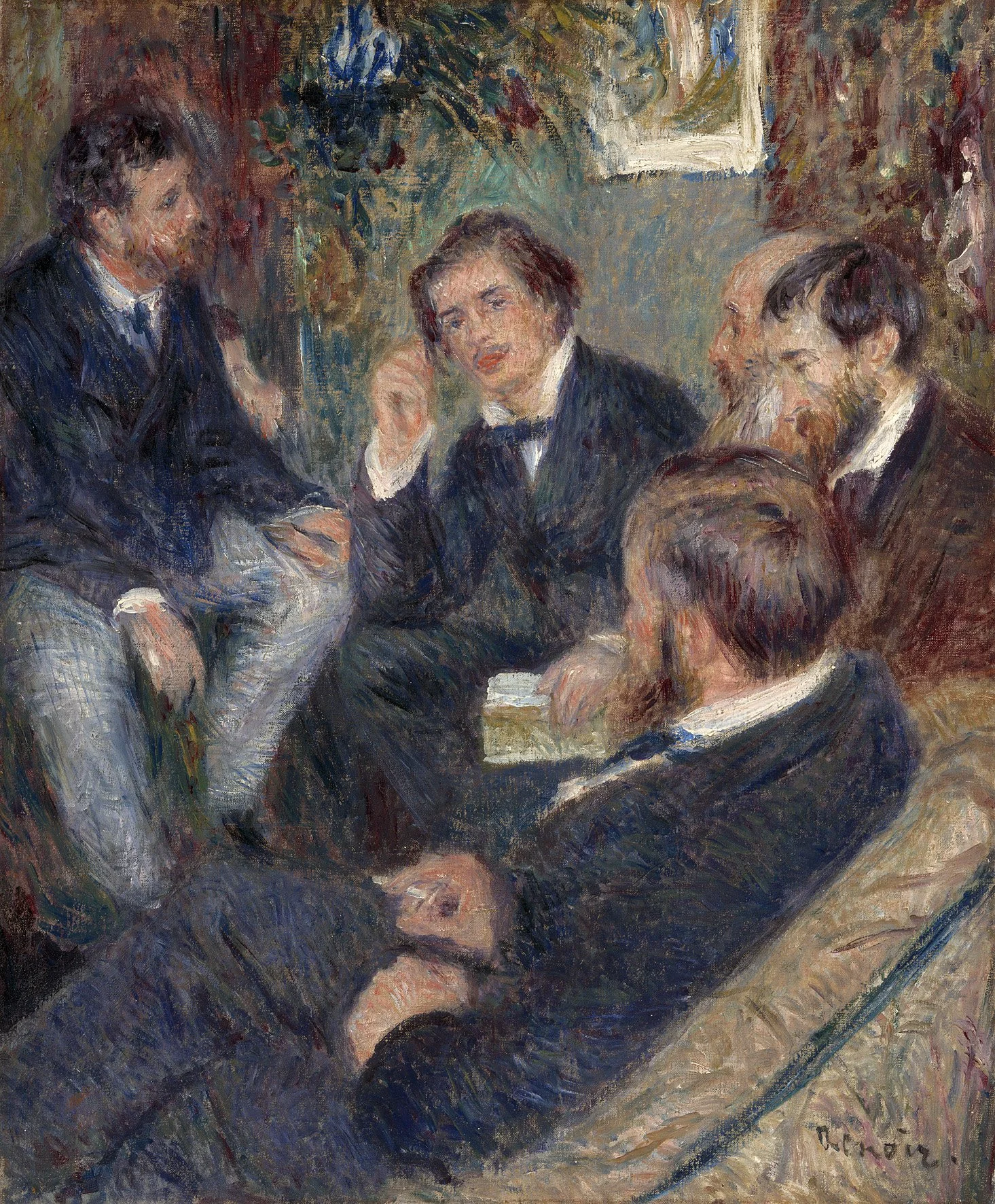
Pierre-Auguste Renoir, At Renoir's Home, rue St-Georges, 1876. Oil on canvas 46 × 38.1 cm. Norton Simon Art Foundation, © Norton Simon Art Foundation.
Overall, Renoir deserves a reassessment and this exhibition managed to do that for this reviewer. One cannot expect to like everything an artist produces, but it certainly helps to understand where those faults are coming from. It may not be the best exhibition this season, but it certainly is one of the most enlightening.
Renoir and Love is on show at the National Gallery from 3 October 2026 to 31 January 2027, with tickets at £20 off peak (Sunday to Thursday) and £25 peak (Friday and Saturday), free for under 18s and members, bookable at nationalgallery.org.uk
By Nigel lp















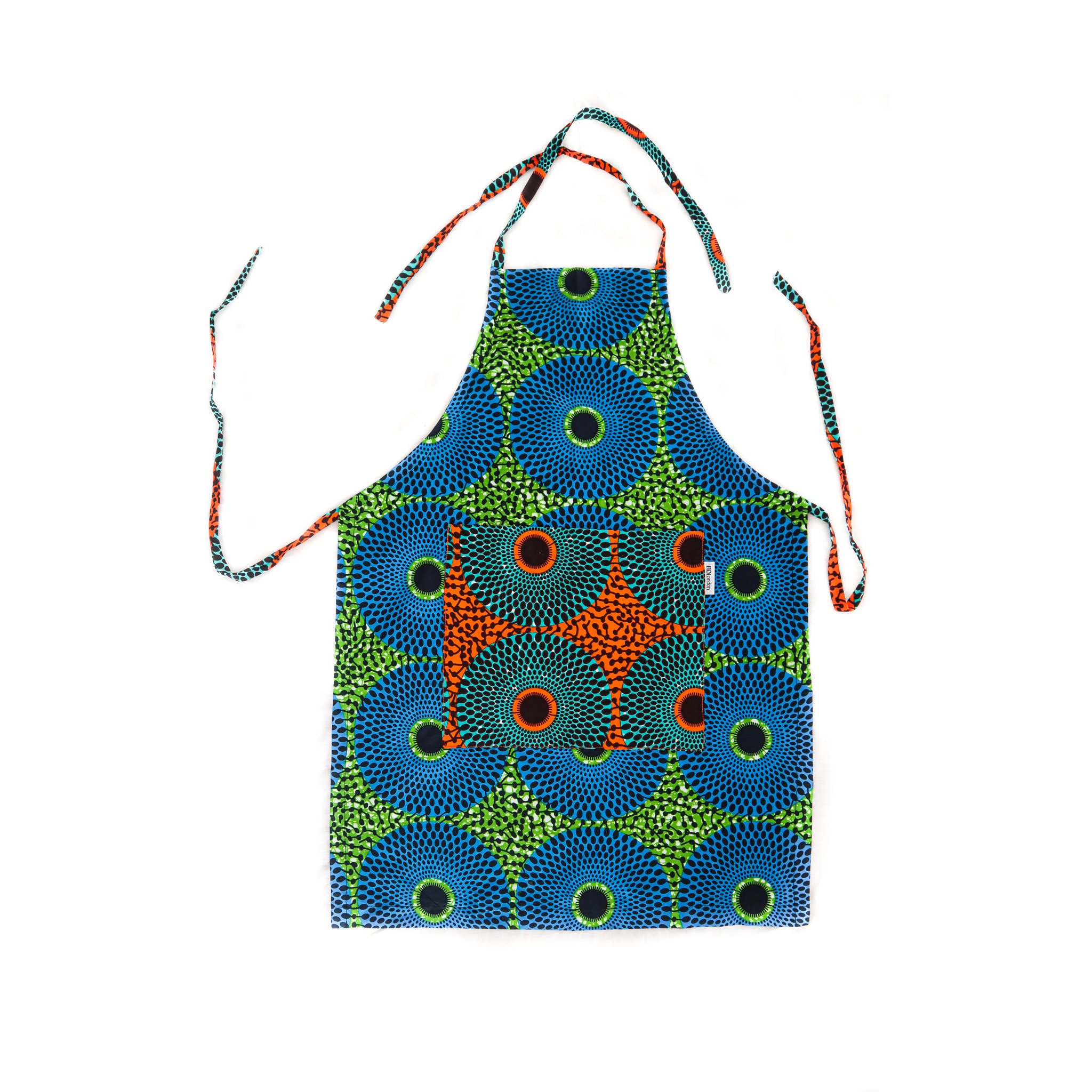


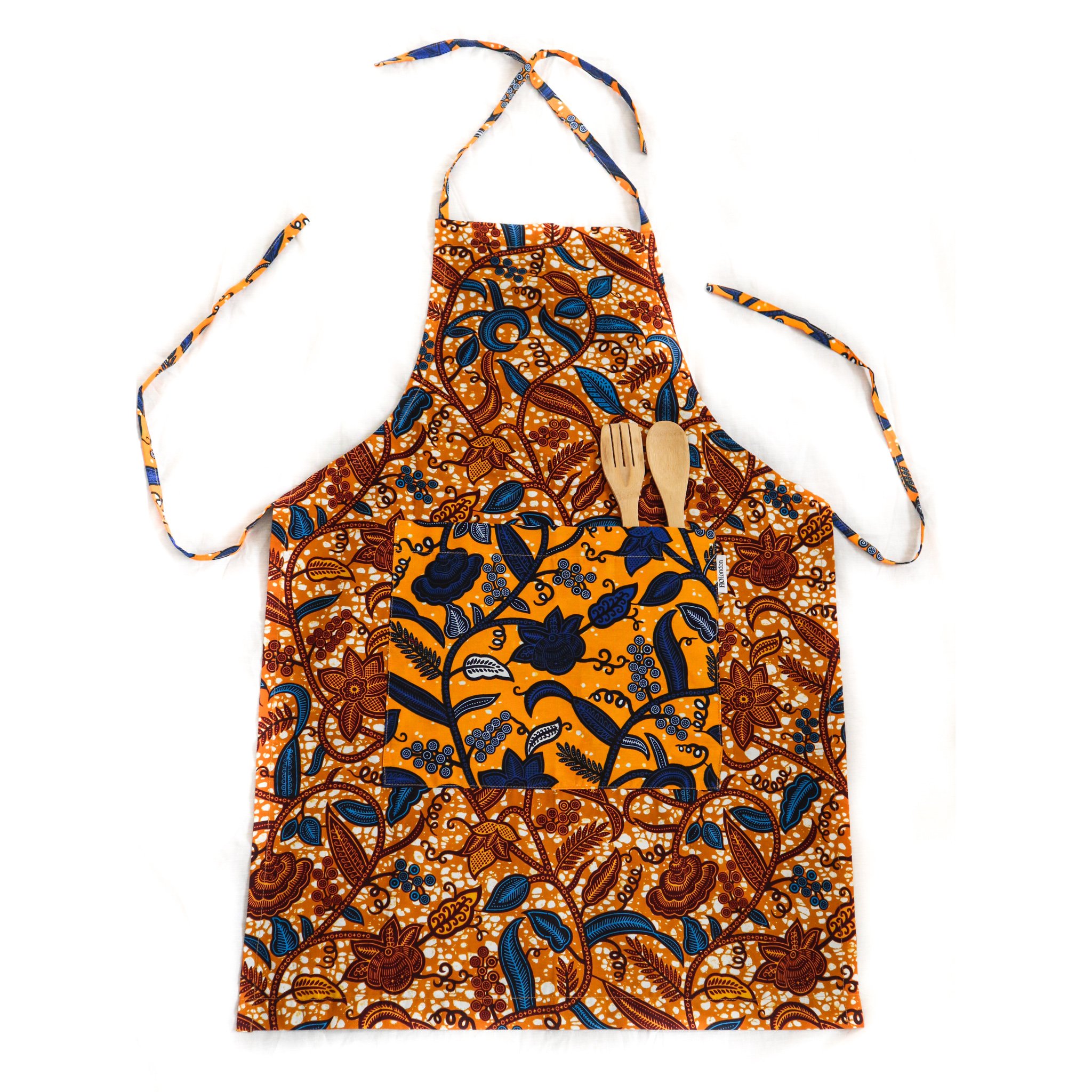


Handmade in Ghana, our aprons offer a unique design with a front pocket perfect for kitchen utensils or your phone and tie neck straps each made from recycled material. The perfect gift for any cooking enthusiasts!
Our aprons have been named after markets in Ghana and London. This apron has been named after street food hub Maltby Street Market.