
Constantinople to Istanbul at V&A South Kensington review
So much of history gets lost to time, leaving us with few options but to piece together traditions and rituals from the few artefacts that remain long after the collapse of such civilisations. More often than not, these artefacts are shrouded in mystery, with little context for who made them or even why. Fortunately, the V&A’s latest exhibition Constantinople to Istanbul skips vague retellings and dubious reconstructions in favour of illuminating the Turkish city’s victoriously rich history.

Constantinople to Istanbul at V&A South Kensington, London © Victoria and Albert Museum
Presenting a vast collection of 200 objects that trace Istanbul’s history across 1600 years and two of the world’s most powerful empires, the exhibition features an abundance of mosaics, scriptures, marbles, artworks, jewels and even incense holders from the Byzantine period (330 AD to 1453 AD) as well as Ottoman relics counting an opulent array of tapestries, paintings, embellished Qur’ans, coffee pots, bathing towels, silks and even an eight-metre procession scroll depicting the sultan with some 200 participants.

(Detail) Ottoman processional scroll, 17th century. © The John Rylands Research Institute and Library, The University of Manchester, Turkish MS4.
Offering a dazzling showcase of immaculate splendour by placing these two empires side by side for all the world (or in this case, paying V&A visitors) to see, the exhibition begins with Constantine, the emperor who oversaw the city’s embrace of Christianity. To address the problem of governing an unwieldy empire, he established New Rome, later known as Constantinople, bridging together the European and Asian continent. His influence greets us from the get-go with a sprawling 6th-century floor mosaic fragment, planting us in his early Roman Byzantine palace. Although not in pristine condition, its grandeur cannot be overlooked, nor can the fact that this is the mosaic’s first time away from its native city since its 1935 excavation.

Ivory relief panel with the arrival of relics, possibly 5th century. Treasury, Trier Cathedral, Germany. Photograph by Markus Groß-Morgen.
Opposite sits one of the show’s more obscure Byzantine artefacts: a 4th-century ivory labyrinthine carving thought to show a procession of some kind relating to either Constantine the Great or Justinian II. It is arguably one of the most intricate carvings in the exhibition and among those currently held in the V&A. Despite being over 1,500 years old, it barely features so much of a scratch on its intricately carved cream surface.

Constantinople to Istanbul at V&A South Kensington, London © Victoria and Albert Museum
Intricately carved surfaces, be it metal or marble, steal the show throughout. Towards the end of the Byzantine section is an incense burner crafted in gilt silver, resembling a domed Eastern church (Incense was used by both empires to cultivate a sanctified environment). We’re told the object’s resting place is Venice, where it’s been for the last thousand years or so before travelling to the V&A. So the story goes, it was actually the former Doge of Venice, Enrico Dandolo, who took the incense burner from Constantinople to Italy, where new life was breathed into the ancient relic by being used to house a fragment of the Blood of Christ. Another piece from Italy is the Pallium of St Lawrence, an extraordinary four-metre silk textile from the 13th century, originally gifted to the Republic of Genoa by the future Byzantine Emperor Michael VIII Palaiologos in 1261, standing as a testament to the political and cultural alliances that shaped the medieval Mediterranean.
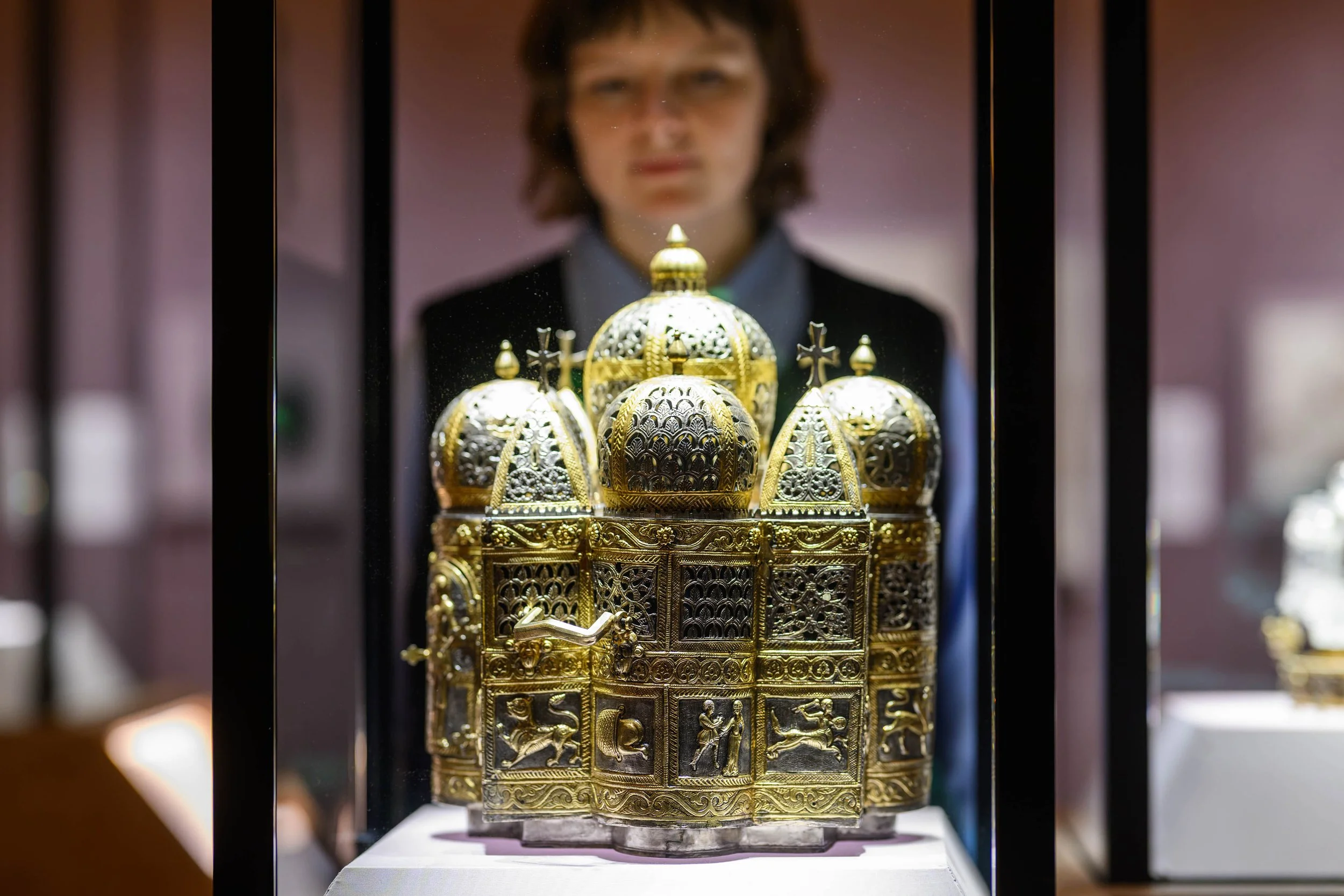
Constantinople to Istanbul at V&A South Kensington, London. Photo by Jas Lehal Assignments Press Association
Other objects carved to reflect notable city landmarks include a wooden chest that appears later in the Ottoman section of the show, originally commissioned in the late 16th century as a luxurious case for a distinguished copy of the Qur’an. Hundreds of years on, it acts as a document of Istanbul’s skyline, its shape a nod to the UNESCO World Heritage Site of Hagia Sophia, best known for its immensely cavernous interior and the majestic dome that crowns it.

Aya Sofia Constantinople', hand-coloured lithograph, by Gaspare Fossati, published by P. & D. Colnaghi, 1852, London. © Victoria and Albert Museum, London.
Ignoring the illustrious silks (many of which were temporarily sent to Mecca to absorb the city’s holiness), variety of kaftans (the most sumptuous of them being a shimmering 16th century woven piece, once worn by Sultan Selim II, made with the most expensive type of Ottoman silk textile zerbaft) and even a Ucetek entari, (featuring a laid cord technique and supposedly belonging to the wife of famous painter Osman Hamdi Bey), you’d be right to question what business the V&A has dedicating its latest exhibition to a city and its customs rather than a fashion house and its collections. Surely, this is a show for the British Museum? Truthfully, no. When the V&A excels (unfortunately a proven rarity in today’s staid museum landscape), the institution reminds us just how essential exhibitions are in shaping cultural taste and perspective, indulging us in worlds and histories that perpetually captivate and inspire.
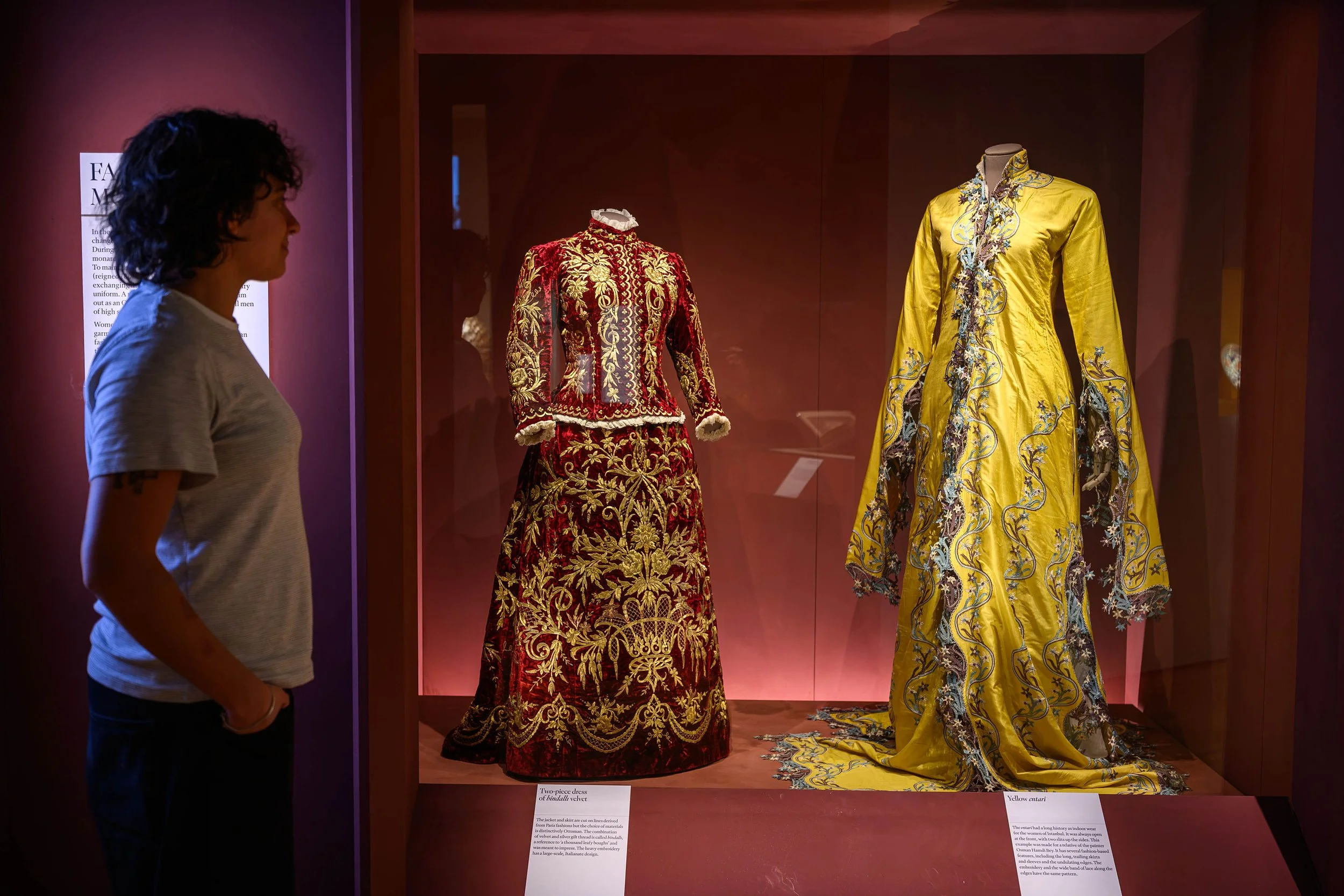
Constantinople to Istanbul at V&A South Kensington, London. Photo by Jas Lehal Assignments Press Association.
Constantinople to Istanbul may be over 1000 miles away from home. Still, for a moment, you’ll feel as though you've time-travelled through 1,600 years of history encased within one of Europe’s most prestigious cultural capitals, all while never leaving South Kensington’s Cromwell Road.
Constantinople to Istanbul at the V&A is open to the public until 9 May 2027. For more information, click here.













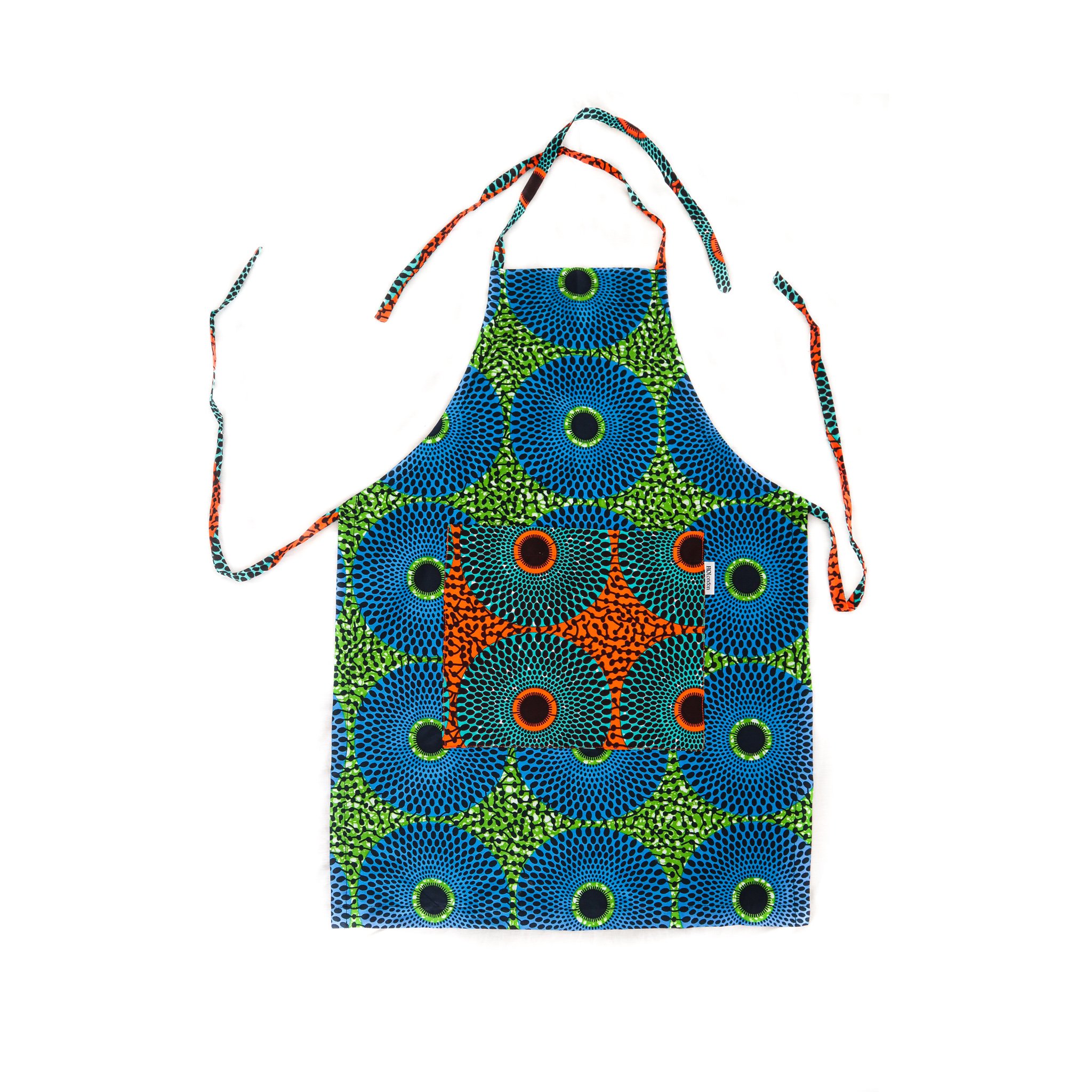


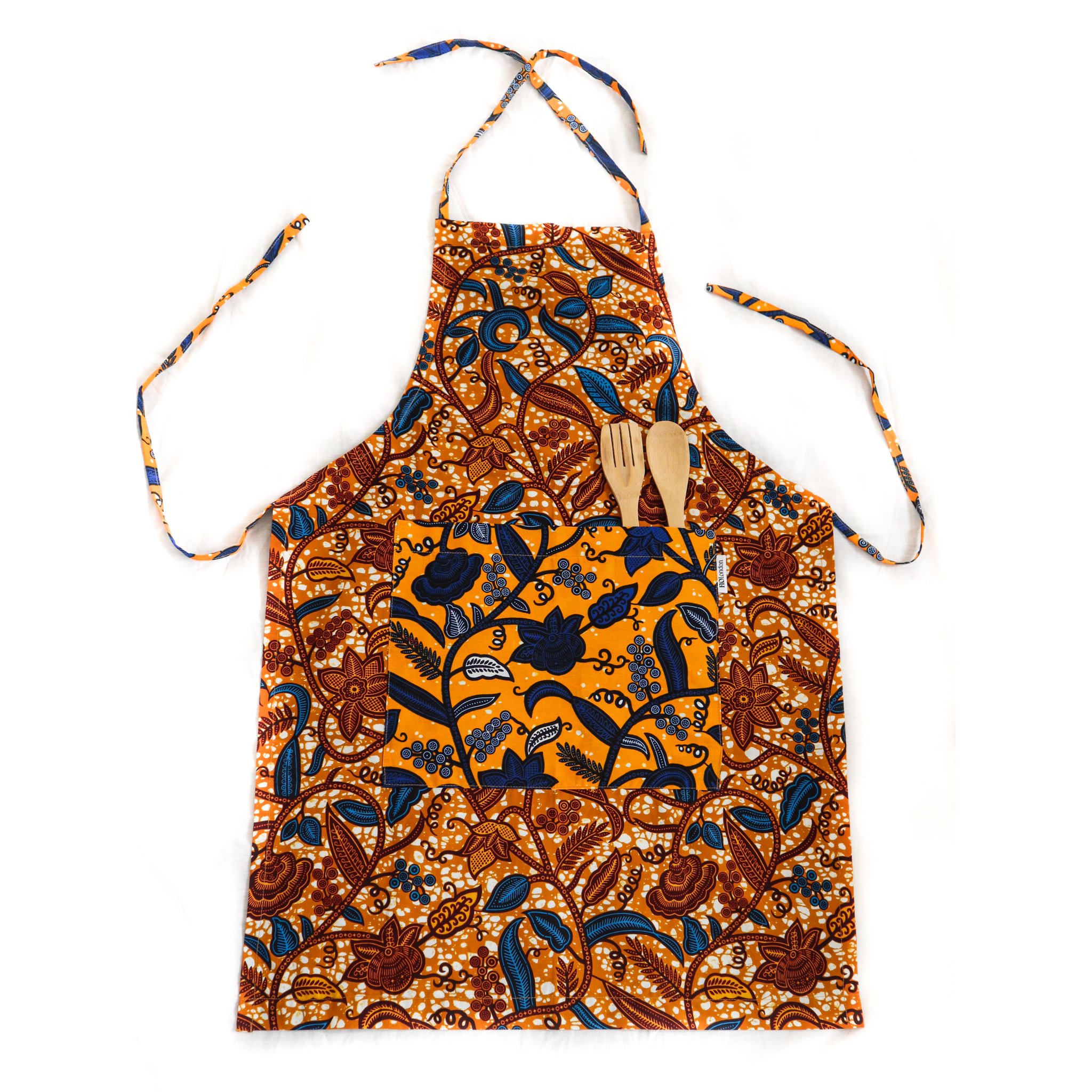


Handmade in Ghana, our aprons offer a unique design with a front pocket perfect for kitchen utensils or your phone and tie neck straps each made from recycled material. The perfect gift for any cooking enthusiasts!
Our aprons have been named after markets in Ghana and London. This apron has been named after street food hub Maltby Street Market.