
In conversation with Monya Riachi
"I like to think that I listen to the materials and allow them to shape the direction of the work."
- Monya Riachi
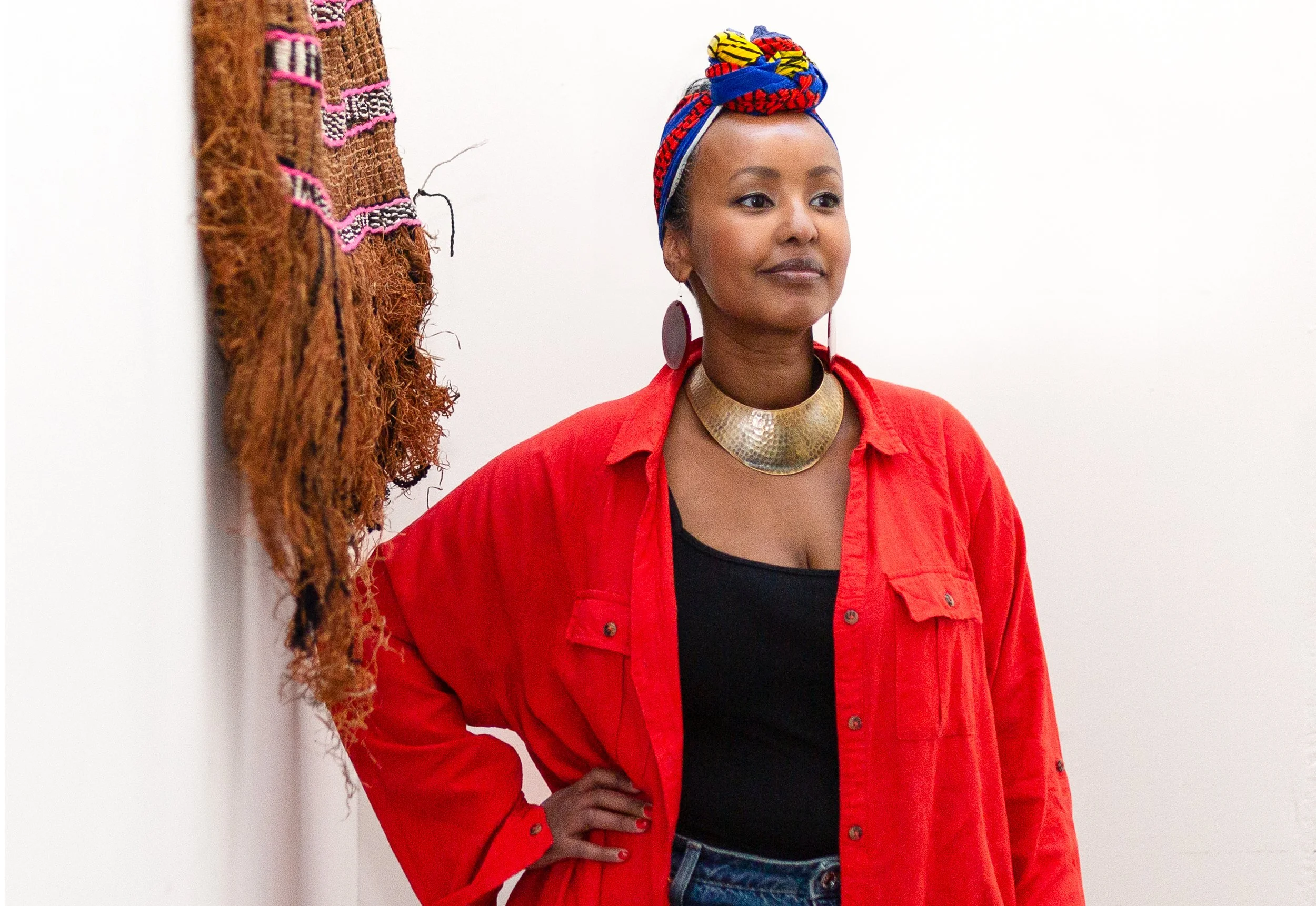
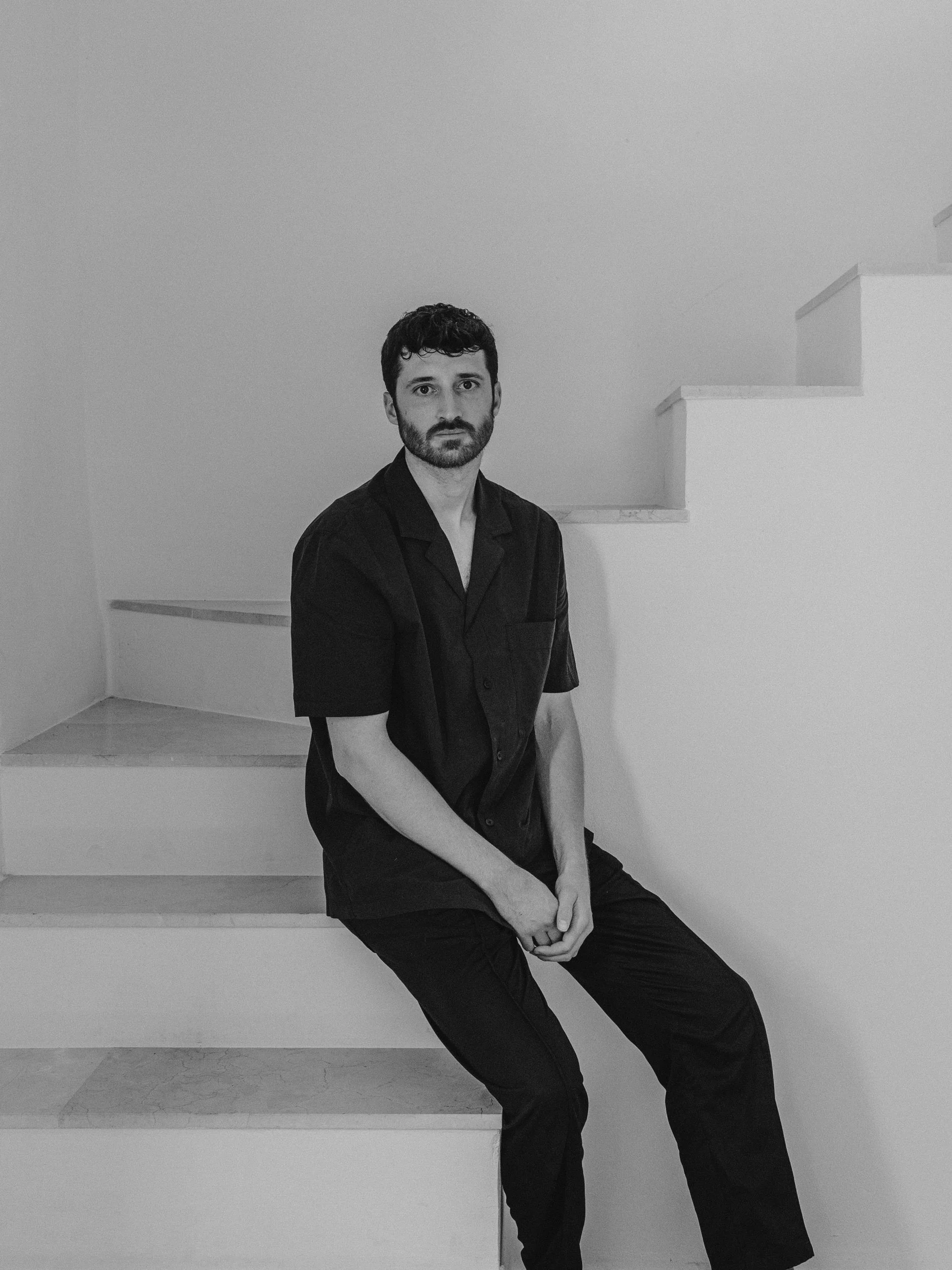
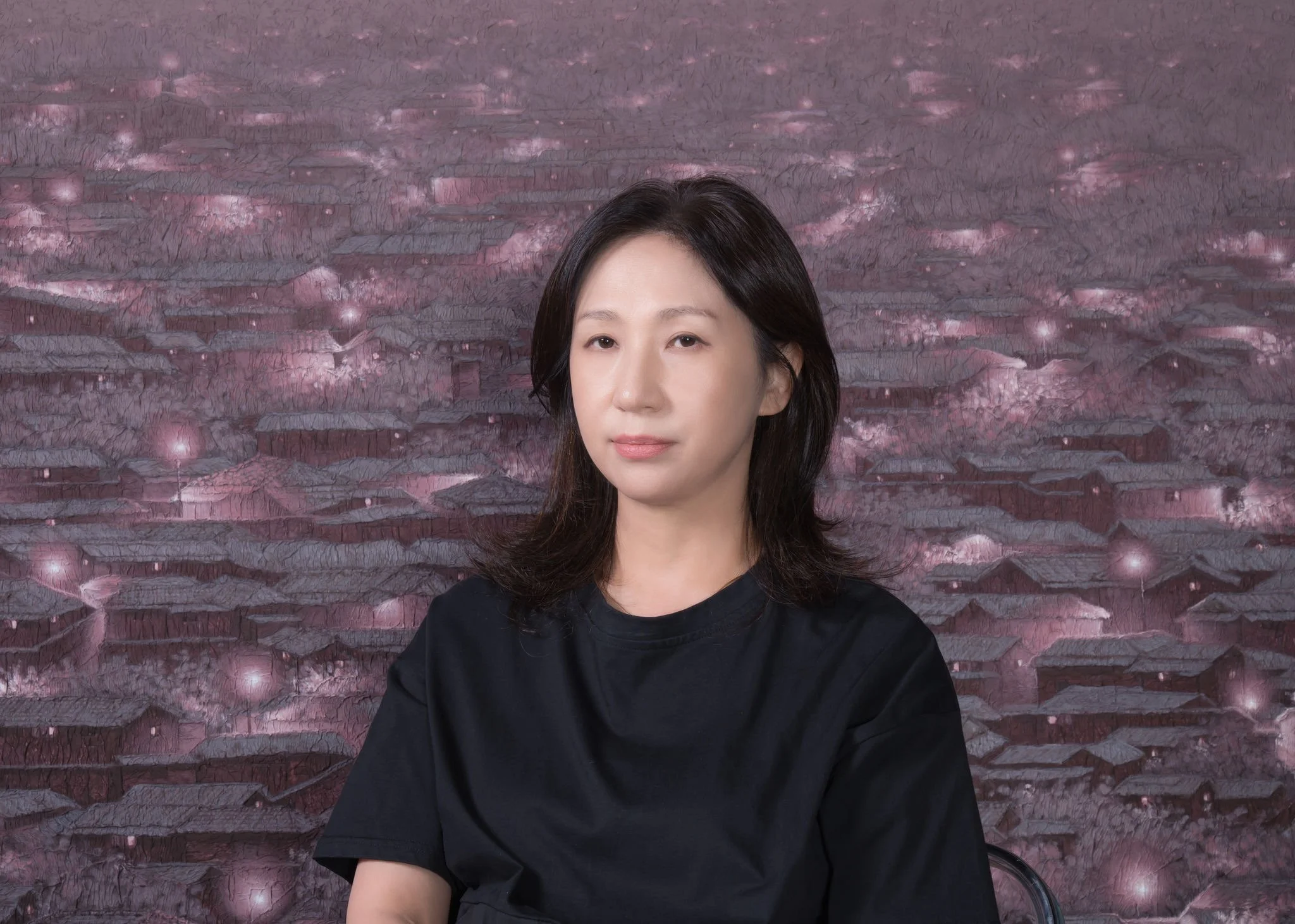
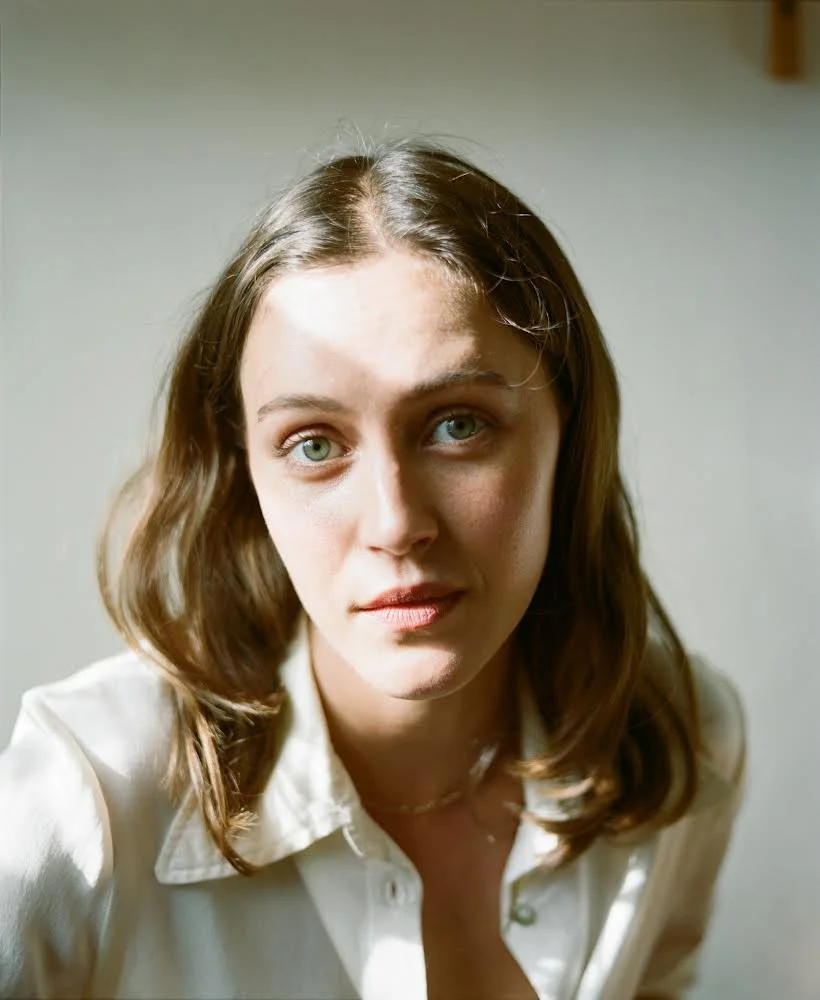
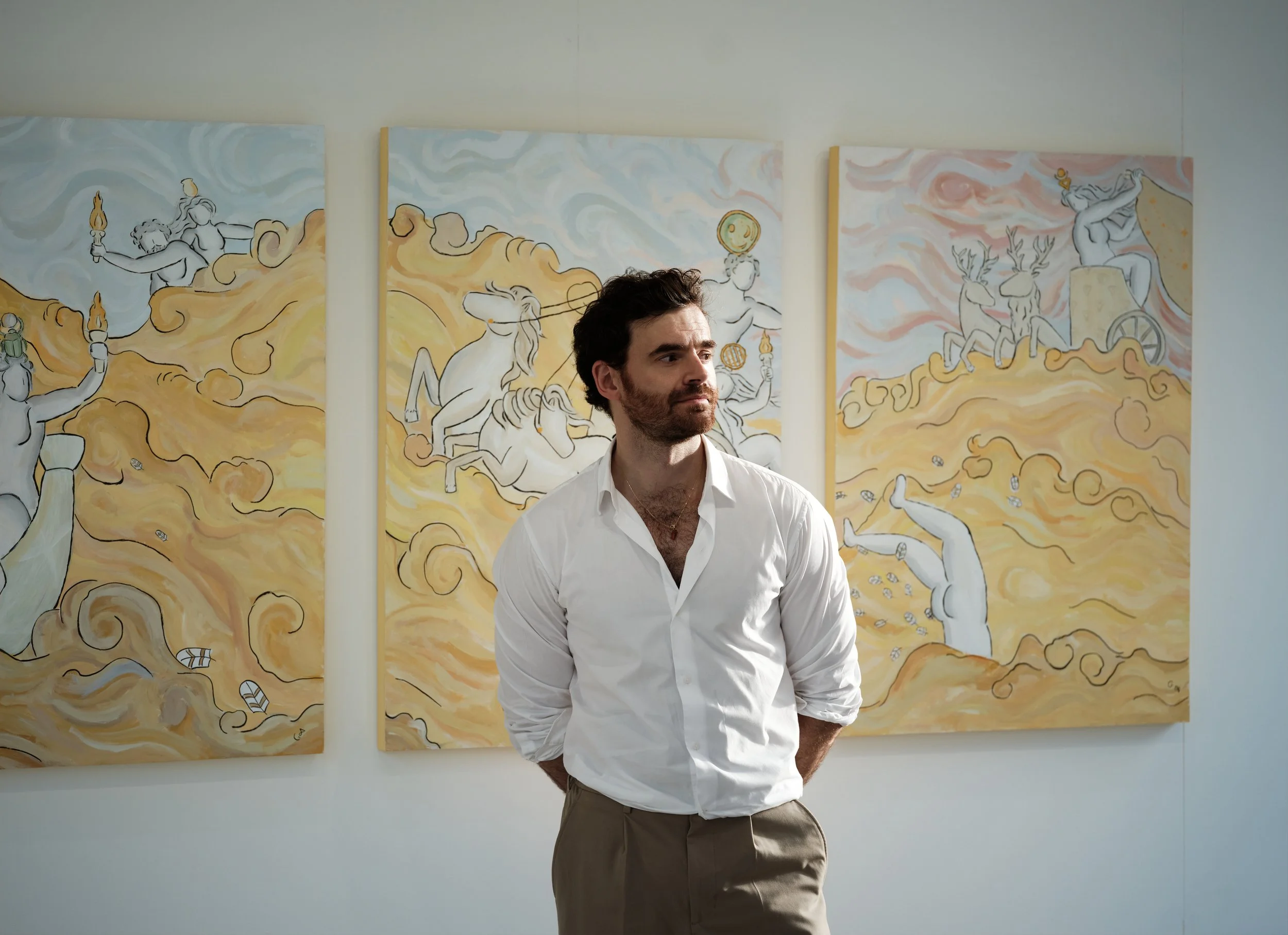
Portrait Monya Riachi. Courtesy Fitzrovia Quarter
Monya Riachi is one of six emerging artists in What Holds Us Together, the group exhibition at Radiant House that closes Fitzrovia Quarter’s inaugural four-month studio residency. Born in Lebanon and now based in London, Riachi trained as an architect before turning to sculpture, installation, sound and performance. Her research-led practice treats matter, particularly salt, as a carrier of memory and history. She spoke to FLO London about her residency and the work on show.
Your practice is research-led and material-driven, moving between sculpture, installation, sound and performance. For those encountering your work for the first time, can you tell us a bit about the ideas and materials you are drawn to?
I’m drawn to materials as carriers of stories and histories, and to their transformative potential. I work with natural materials in particular – salt, clay, rocks, certain flowers. I’m drawn to both their fragility and their strength, and I like to think that I listen to the materials and allow them to shape the direction of the work. I’m interested in what materials can reveal - the histories they hold, the relationships they establish with their surroundings, and the ways they might help us think differently about the world. These materials unfold in different ways in my artworks – into casts, carvings, prints, they even become a voice in a writing piece. I work with specialists - from craftspeople, geologists, material scientists, poets, musicians, to better understand and respond to my materials and their stories.
There is a narrative side to my work, and I find myself interlacing historical and factual with the speculative. This is a way for me to create connections between the place I’m in (usually London, or on residency abroad), and the place I’m from (Lebanon), across time - present, past and future. My work often begins with a period of research, and the output moves between sculpture, installation, writing, sound or performance.
Ultimately, I’m interested in creating situations in which materials and artworks, space and the people encountering them can come together to tell a story.
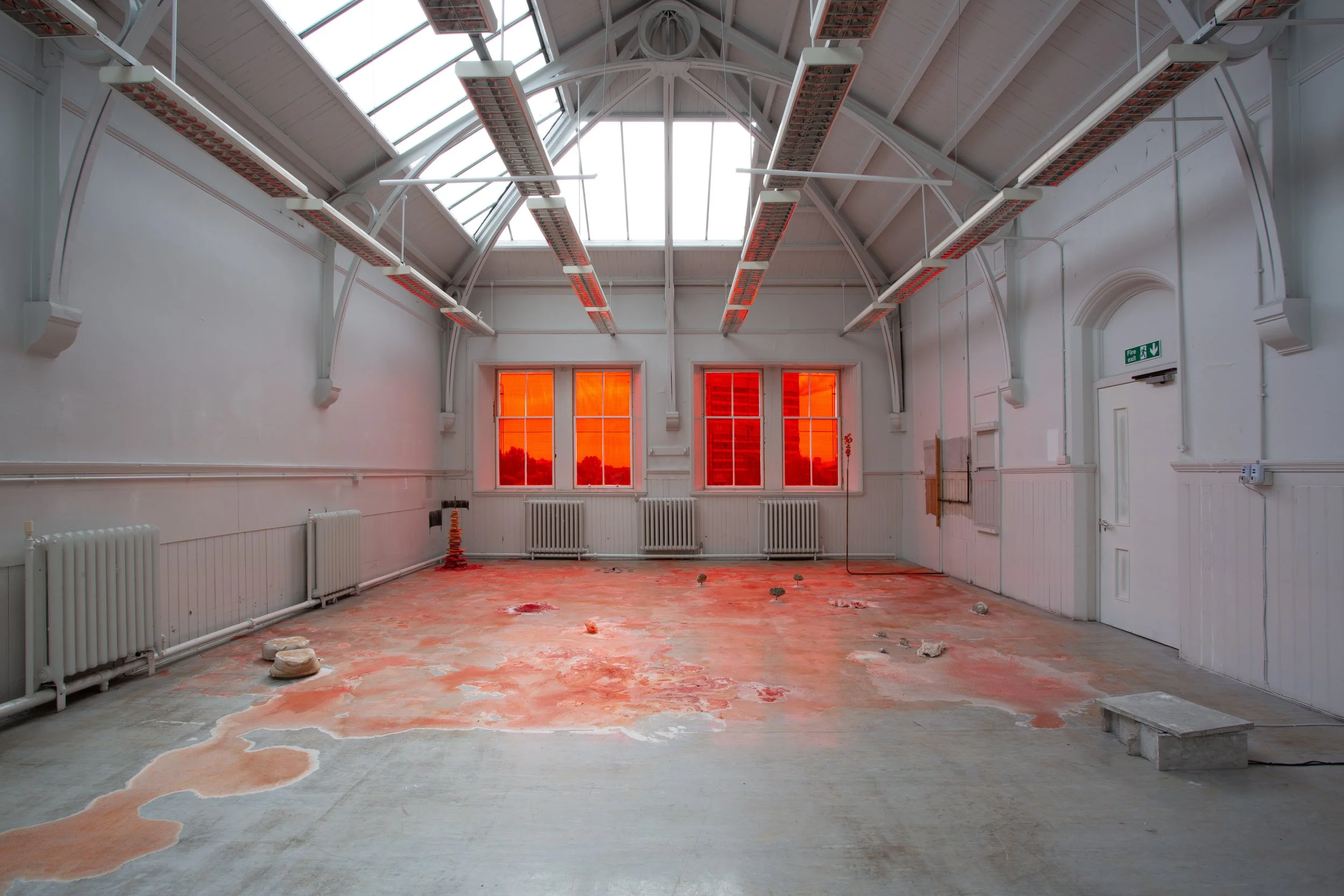
Monya Riachi, Where Bougainvilleas Bloom Ceaselessly. Image credit Matt Barnes
You trained as an architect before studying for your MFA at Glasgow School of Art. How does that background still shape the way you think about space, structure and site?
My background in architecture shaped my attentiveness to context and research methodology. Researching a site is an important starting point for me, particularly during residencies, where the environment’s history, natural qualities, or material culture can shape the direction of a new body of work.
When I’m creating an installation, I need to form a relationship with the exhibition space in advance, as it becomes part of the work, and helps shape how the sculptures within it will be formalised. So I try to visit the place several times, sometimes just to sit in it and contemplate.
In art and particularly in installation, I’ve found the freedom to create open work - a place for different encounters and interpretations - rather than a fixed experience. This is probably why I shifted away from ‘traditional’ architecture.
Salt has been a recurring material in your work. What is it about salt that keeps drawing you back, and what does it allow you to say that other materials don’t?
Growing up in Lebanon, the Mediterranean Sea is your friend. I would cross the coast daily from home to school or university. Even from a distance, you would feel its presence, its salt hanging in the air. I was first drawn to salt as a material in my work, due its defining role in Lebanon’s history. Salt has been harvested from the sea in the region for thousands of years, dating back at least to the Phoenician era when Lebanon was known for its ‘white gold’. Meanwhile, the Beirut blast in 2020 that destroyed half the city was caused by ammonium nitrate, which is classified as a salt. I’m interested in the extreme power this material holds - to give life and take it away. I’m also interested in salt's relationship with time and how it can trick time, by extending the life of things.
My relationship with salt has developed through working with it and observing its behaviour, particularly its relationship with water: how it dissolves, then crystallises and returns. I like to think of salt and water as existing in harmony and dynamism: salt will capture water’s trace when water evaporates. Both materials are present at all times, even when one is no longer visible… which makes it a way of thinking about time as well. Salt and water are constantly in becoming, and this maybe offers a way of relating ourselves to the world.
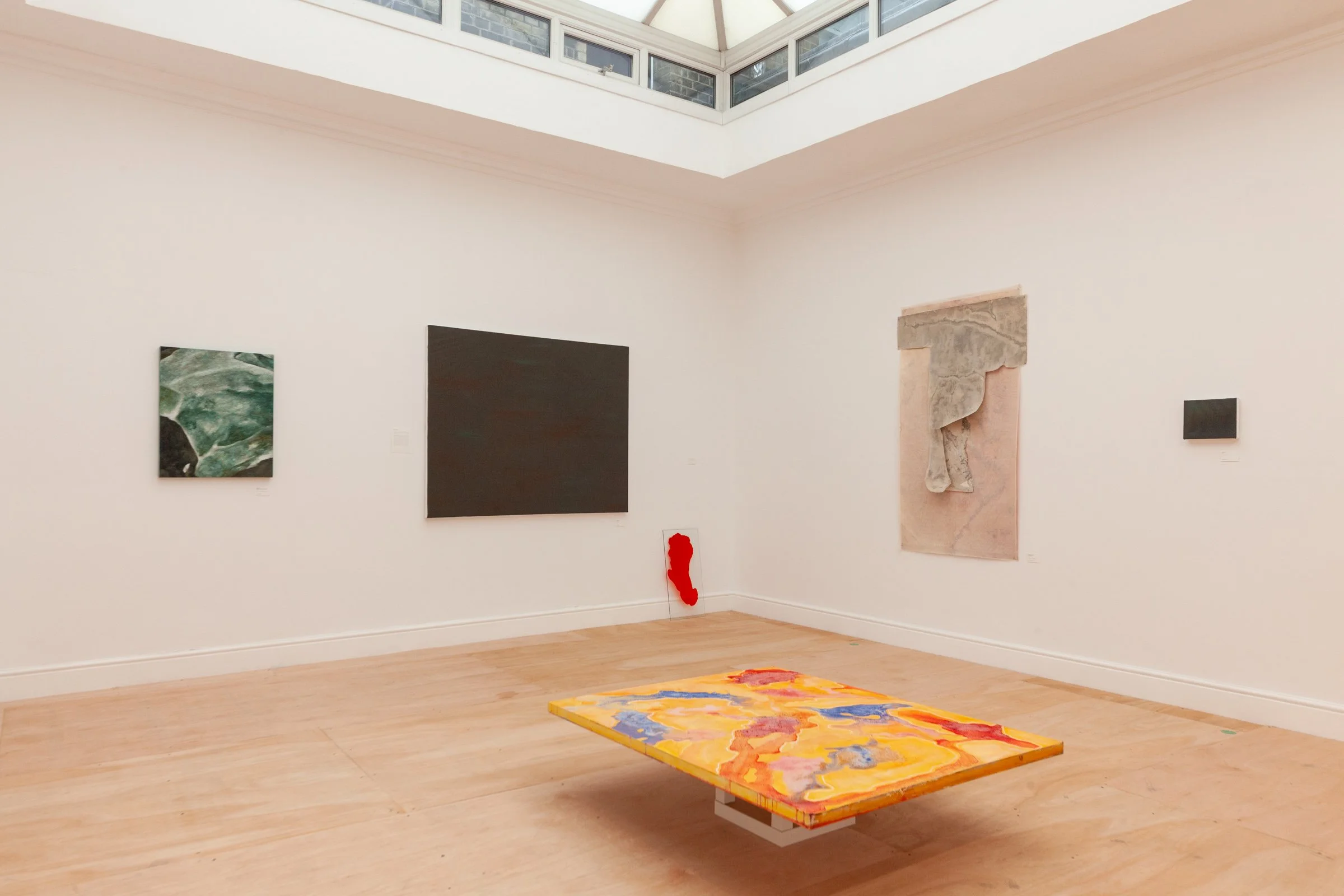
Installation view What Holds Us Together at Radiant House, October 2026 (Monya Riachi artwork horizonal yellow in centre). Image credit Simone Morciano / Courtesy of Fitzrovia Quarter
The Fitzrovia Quarter residency asked six artists to take the neighbourhood as a starting point. What was your first impression of Fitzrovia, and what did you find yourself responding to?
I’ve long been drawn to Fitzrovia’s architectural heritage and its history as a neighbourhood of craft. I find the decorative friezes and stone reliefs on building façades quite stunning, a marker of a past time, yet also somehow eternal. They have made me think about how we leave traces of ourselves, and how we choose to mark time in the present.
Throughout the residency, I’ve gotten to know Fitzrovia Chapel more intimately. Its history is fascinating because it was the only building to remain when the surrounding site was cleared in the 2010s. Built in the early 1900s, it went from memorial chapel to Grade II listed cultural and reflection space, and it stands as a marker of time, but also as a witness to transformation: a building that has outlasted the context in which it was originally created. I found myself drawing parallels between the chapel and the poppy flower, a significant element in a recent body of work of mine, which is currently on view at Gallery44 London in the group show ‘The House Has a Body’. In British culture, the poppy has been designated as a symbol for remembrance, for looking back at the past; yet watching its evolution tells me of stories and potentials for the future. I’ve considered the chapel in a similar way - a piece of heritage that holds the weight of carrying the past into the present, yet could also, or instead, invite reflections towards the future.
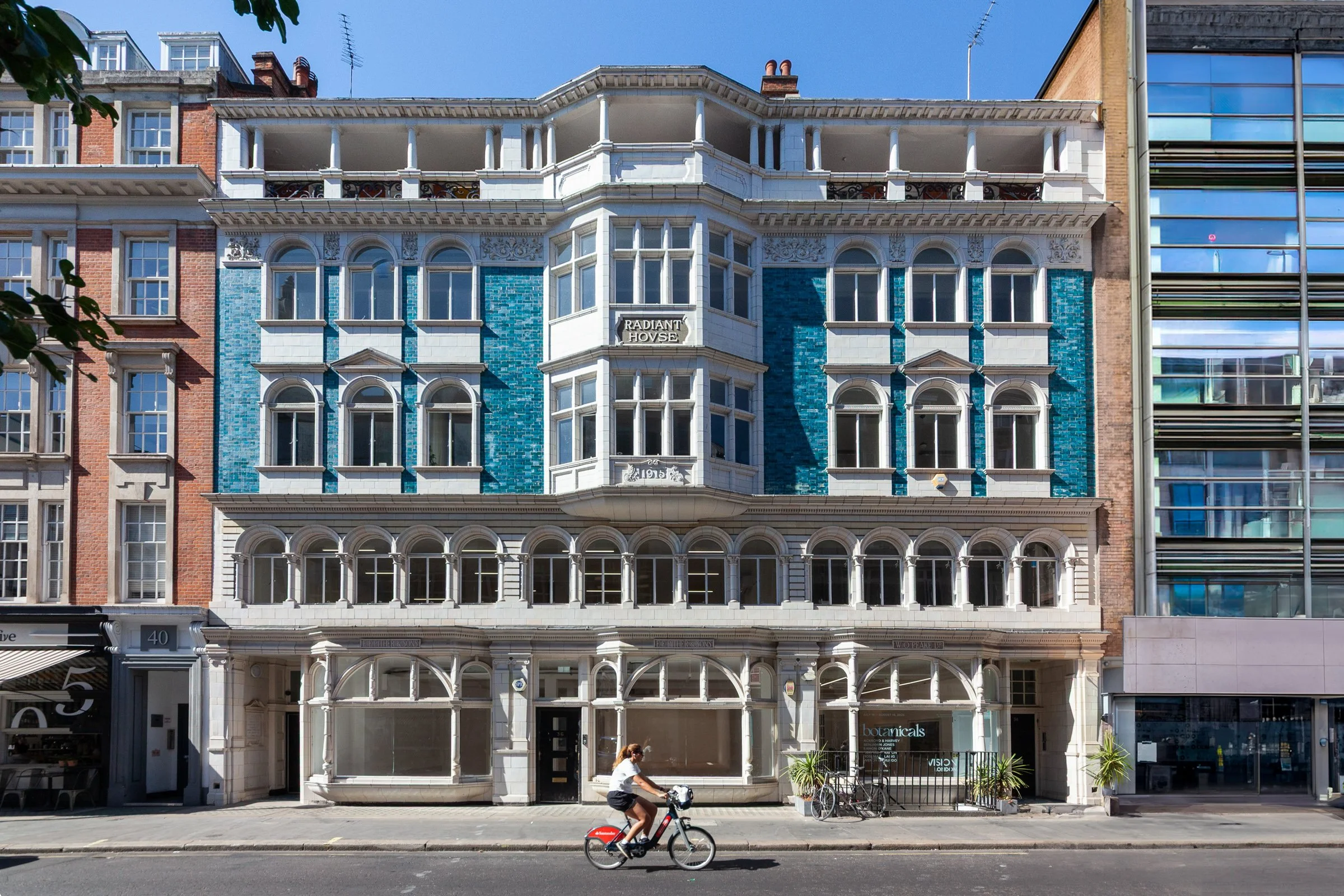
Radiant House exterior view. Courtesy Fitzrovia Quarter
Could you tell us about the work you are presenting in What Holds Us Together? What materials and processes went into making it?
I’m presenting work made with salt, continuing my research into the relationship between salt and water as a way of exploring time and states of flux. Titled ‘Every Time Dissolved is Found’, the work is made through time and with time as a material, as I need to wait for water to evaporate before returning to continue. I don’t control the forms that come out, instead I think of it as the work making itself. This is the most fascinating, and terrifying part of working with salt and water in this way – I cannot determine what forms and effects they will create. I can only decide how to respond.
There are three works in the show, one is a larger piece on wood board, and two are smaller works on aluminium. I’m excited that they are all shown horizontally, in the way they were conceived. It’s been great working with the curator Lydia Allain Chapman and exchanging ideas on this, including what meanings are created, retained or lost, when the work is hung on a wall.

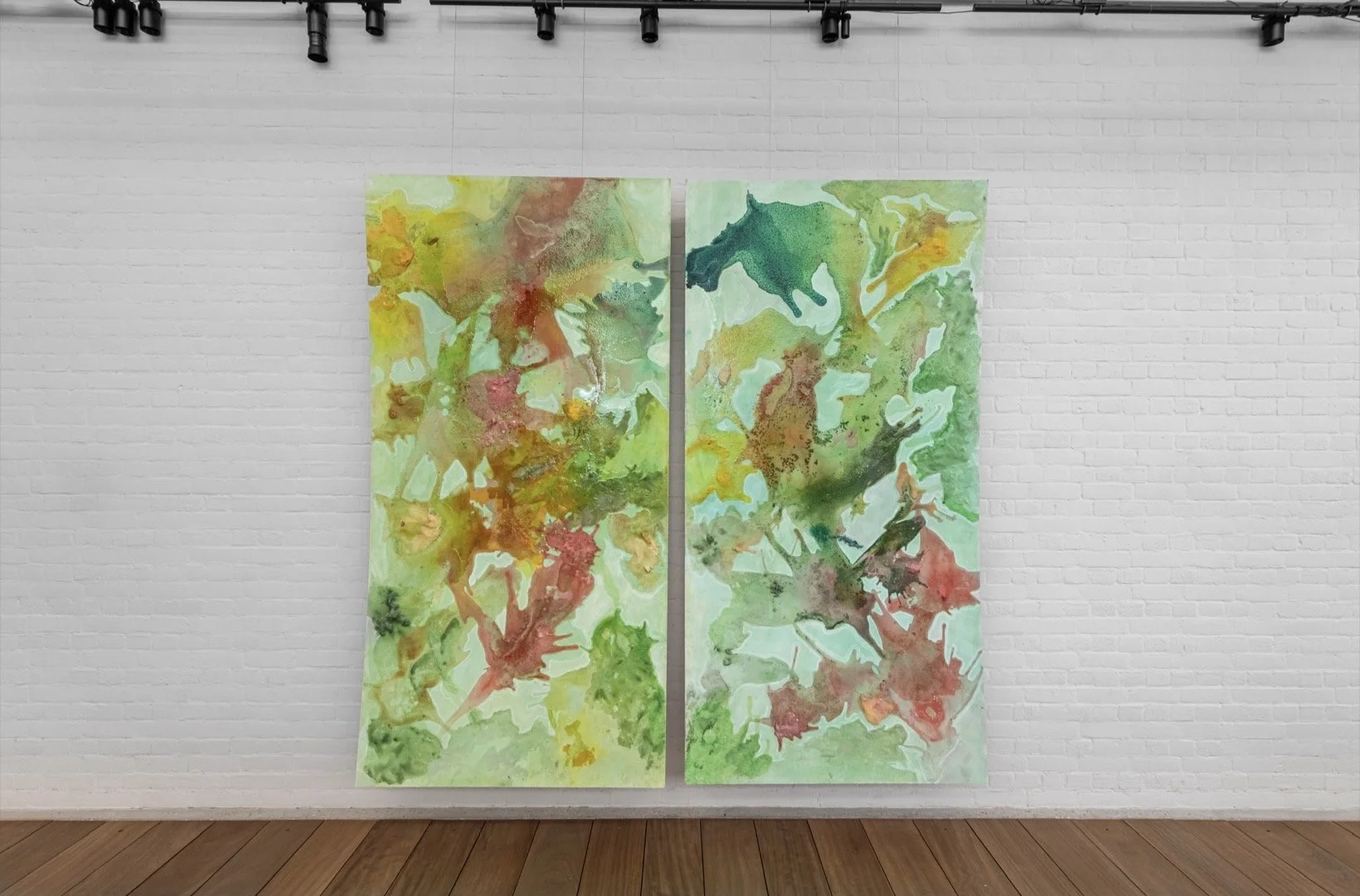
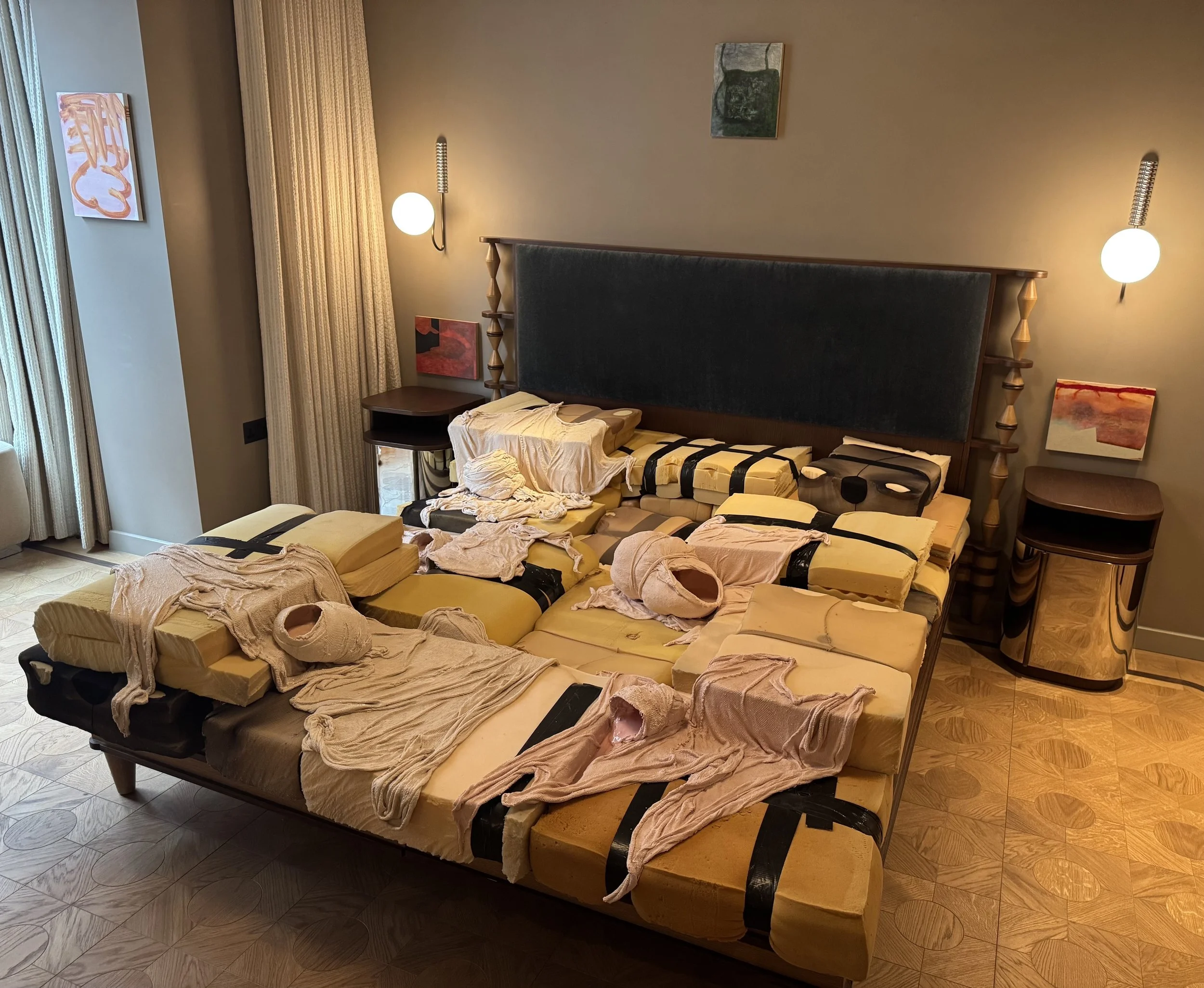
Monya Riachi, We speak unseen, tongues winding. Image credit Devika Bilimoria. Courtesy of The Arab British Centre, A.MAL Projects and Takafes
The exhibition title touches on community, memory and belonging. How did you interpret that question, and does it have a particular resonance given that you work between the UK and Lebanon?
I’ve moved around quite a lot over the past five years, from studying in Glasgow to undertaking residencies in different places, and this year I spent two months in Sharjah developing new work. Living and working across different places has made me think about belonging differently, and I’ve started to see that belonging doesn’t have to be fixed to one location. It can move with us, take different forms and emerge through the relationships we build. People create community, and community creates a sense of belonging. As artists, we are often passing through places, yet even fleeting and short-lived encounters can be so rich and intense and meaningful. For me, this is what holds us together, the homes we create between each other.
You were selected from 253 applications for six months of rent-free studio space in central London. What did having that time and space make possible that wasn’t before, and how does it feel to show the results at Radiant House?
Having six months of dedicated studio space in central London has been incredibly valuable for the time and continuity to develop new work, but also the opportunity to become part of the Fitzrovia creative community.
I studied my MFA in Glasgow before moving back to London, where I hardly knew any artists. I was very fortunate to be selected for the Lewisham Arthouse Graduate Award residency in 2024 and build an artistic community in South London. To be able to grow this in a new area of London now feels invaluable.
I started the Fitzrovia Quarter Residency while working on a commission for YDP’s Summer Festival in Bedford Square, a fifteen-minute walk away from the studio. It couldn’t have been better – rehearsing in the studio before walking over to YDP! During the residency I’ve been able to host gallerists and visitors (undoubtedly, scheduling studio visits in central London is much easier) and I’m very grateful for that. Meeting five new artists with very diverse and rich practices has been great, as well as seeing the different ways we have each responded to the residency.
Showing the work at Radiant House feels so special, it’s such a beautiful building (those tiles!). The way the window is hugged by the street and the way people have been pulled into the exhibition… I think that’s also a testament to the wonderful work Lydia and Luke have done in realising the show.
Are there any exhibitions or artworks that you have recently experienced in London that have inspired you recently?
Not in London, oops, but one exhibition that really stayed with me was Emii Alrai’s Lures at Carl Freedman Gallery in Margate. Powerful sculptures and landscapes that really transport you in time, place and realm.
And in London… Joana Galego’s paintings in Different Ways of Staying at Soho Revue also carried me – to somewhere tender and soothing. Tarek Atoui’s installation at the Tate Modern Turbine Hall, which opened last week, is spellbinding, and I’m already eager to return. And I also really enjoyed the Magritte exhibition at Gagosian in London, and the conversation of his work with contemporary artists, many of whom I admire.
And finally, what are you hoping to take forward from this residency into your next body of work?
I would love to develop a site-specific work in Fitzrovia in response to one of the building façades, or perhaps even to Fitzrovia Chapel! The residency has made me connect with the neighbourhood more closely, and has brought architecture to the forefront of my artistic practice in new ways. The Chapel especially has stayed with me as a building that bears witness to transformation, and I think there’s so much to respond to in its history and beautiful interiors…. So I hope I’ll be back in Fitzrovia soon.
What Holds Us Together is at Radiant House, 36–38 Mortimer Street, W1W 7RG, from 19 to 25 October 2026. For more information head to fitzroviaquarter.co.uk














Stand out this summer with this gorgeous Nsubra beach bag! Handmade in Ghana, this large tote bag is the perfect size for your sun cream, beach towel, purse and your latest book.