
Five booths to see at Paris Photo 2026
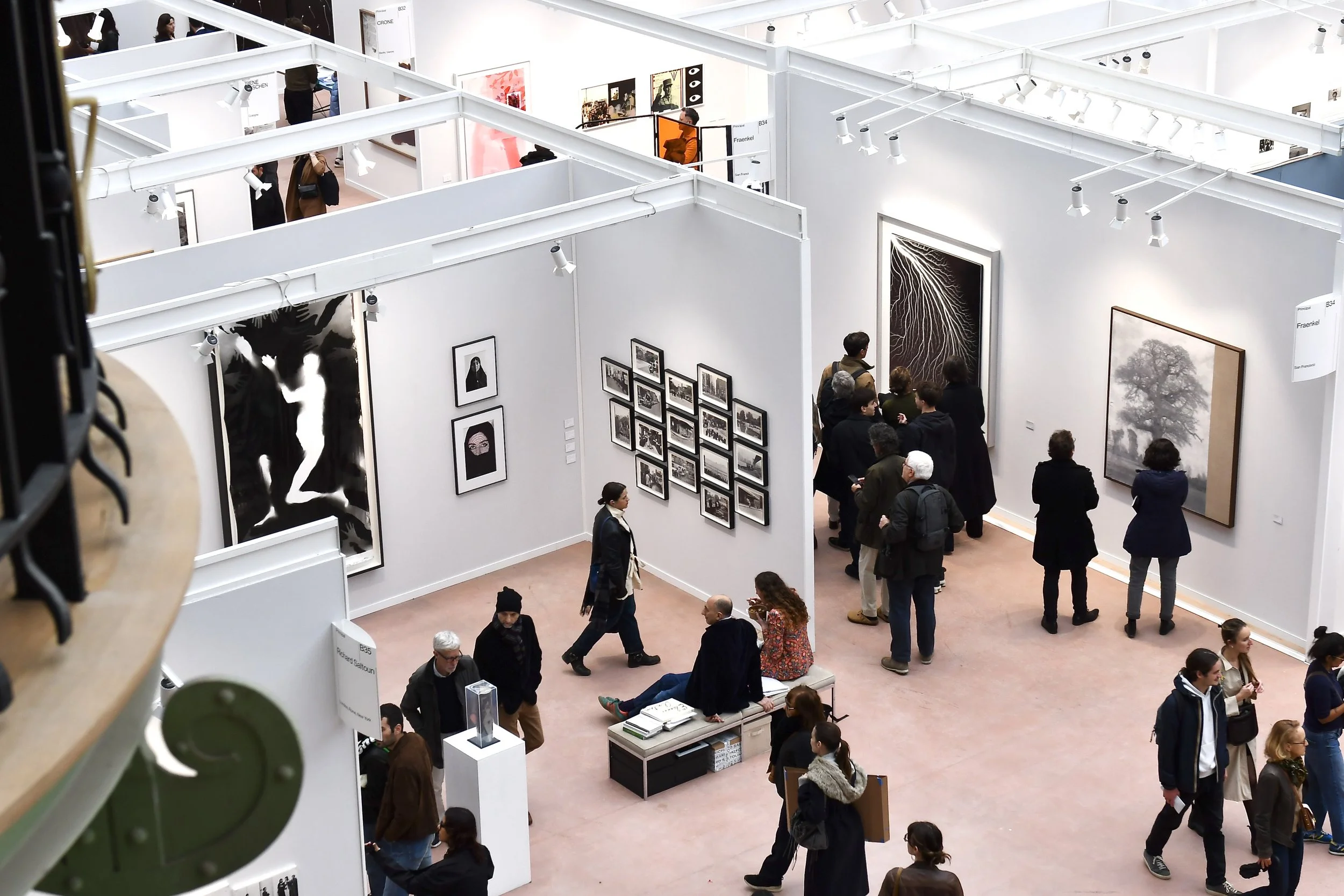
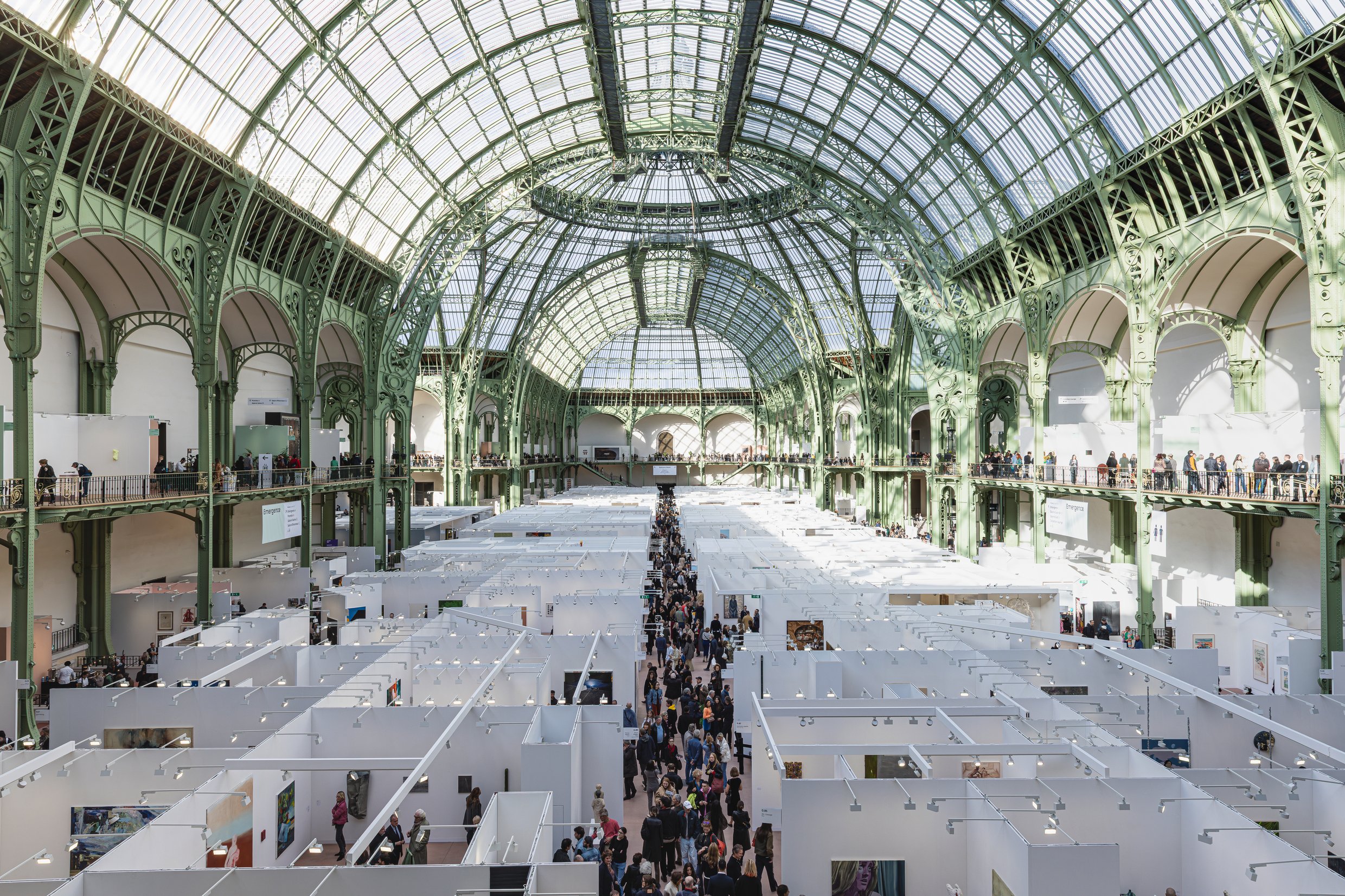
Paris Photo, the annual photography fair held at the Grand Palais in Paris, has once again brought together taste-making galleries, artists, publishers and collectors from around the world. Now in its 29th edition, this is a particularly special year for the fair as it coincides with the bicentennial of the invention of photography, for which the celebrations began throughout France in September 2026.
Among the 246 exhibitors from 38 countries, 5 booths stood out for the strength of their presentations, showing vital, well-curated artistic perspectives. Here’s why:
Miguel Ángel Rojas at Galeria La Cometa (Bogotá, Miami, Madrid, México)
Booth A12 | Main Sector

Miguel Ángel Rojas at Galeria La Cometa. Photo by Sofia Carreira Wham.
Three series, Faenza, Mogador and Imperio, by Colombian photographer Miguel Ángel Rojas (b. 1946, Bogotá) are exhibited. These titles refer to the downtown cinemas, which served as clandestine meeting points in the 1970s, in which the images were shot. Homosexuality was legally criminalised and shunned by society during this period, forcing men such as Rojas into the shadows. These shadows are a point of departure for the artist, whose intentionally grainy, black and white photographs capture fleeting encounters and the desire for connection. The intimate quality of these images comes not from the subject matter but from Rojas’ own position and perspective within this community. His lens is a humanising one, drawing us in as viewers and rendering us wholeheartedly complicit.
This presentation also coincides with a major retrospective of the artist’s work, La noche, which opened at the Museo Reina Sofía in Madrid on 11 November and runs until 15 March 2027.
More information here.
Patrick Waterhouse & Mikhael Subotzky at IN-DEPENDANCE by IBASHO
(Antwerp)
Booth C19 | Main Sector
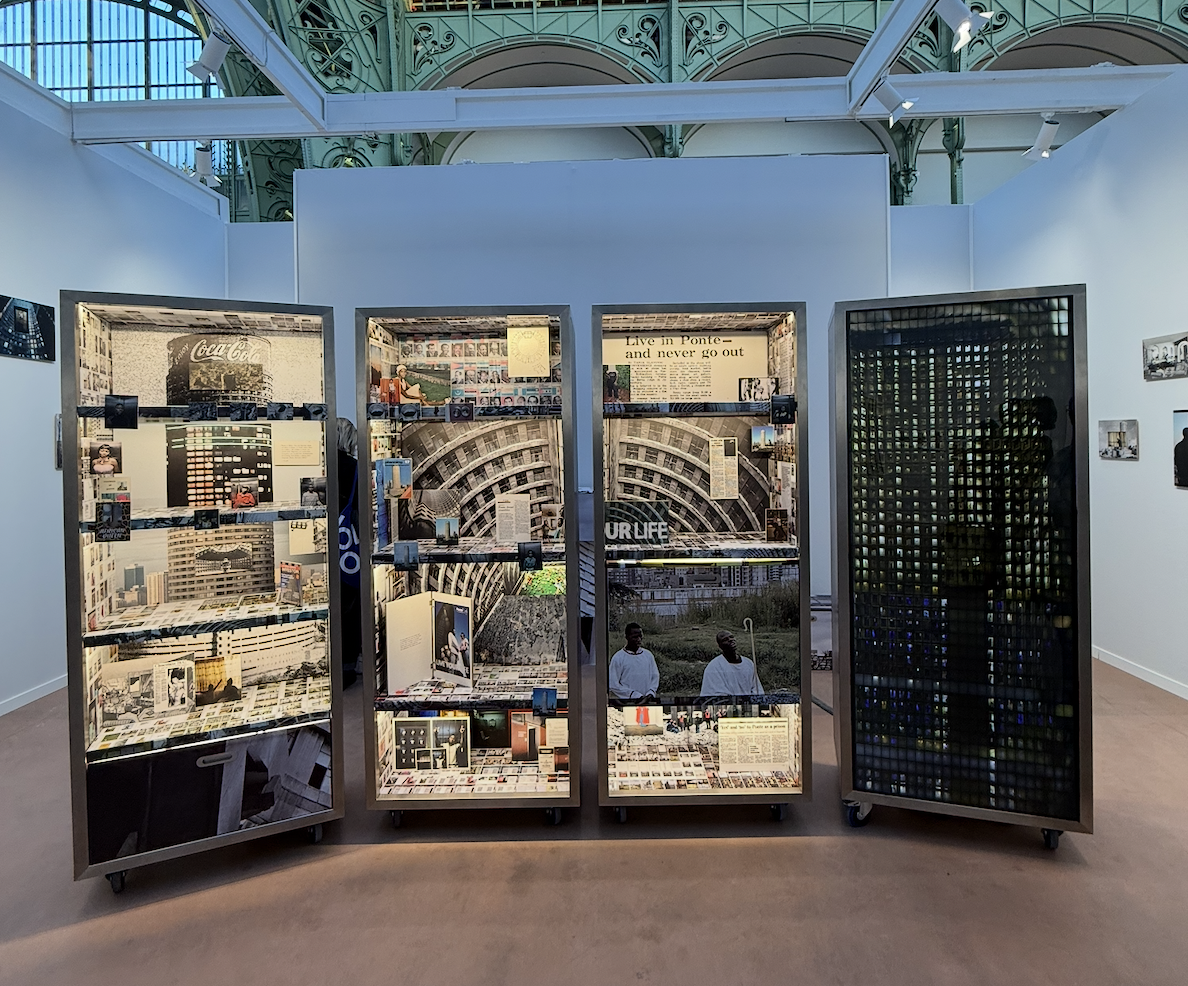
Ponte City Book Box by Patrick Waterhouse & Mikhael Subotzky. Photo by Sofia Carreira Wham.
Waterhouse and Subotzky have been developing this ambitious project about the Ponte City apartment building in Johannesburg for nearly two decades. An ever-growing archive of images, documents, objects and stories from the building’s past and present is presented here in the form of the Ponte City Book Box, a four-part installation that can be rotated and reconfigured. Alongside this installation are digital prints taken between 2008 and 2026 that show many sides of this iconic building and its inhabitants, from apartment interiors to supply rooms, servants quarters, washing lines, and families moving in or out. Through the lens of Ponte City, broader narratives and histories can be traced, from the gradual dismantling of structures of apartheid to modernist ambitions.
Next door, IBASHO’s main booth presents a thematic curation of Japanese artists who are either living or have lived outside of Japan, considering how the act of relocation has informed their creative practices.
More information here.
Yumna Al-Arashi at Homecoming Gallery (Amsterdam)
Booth H05 | Emerging Sector
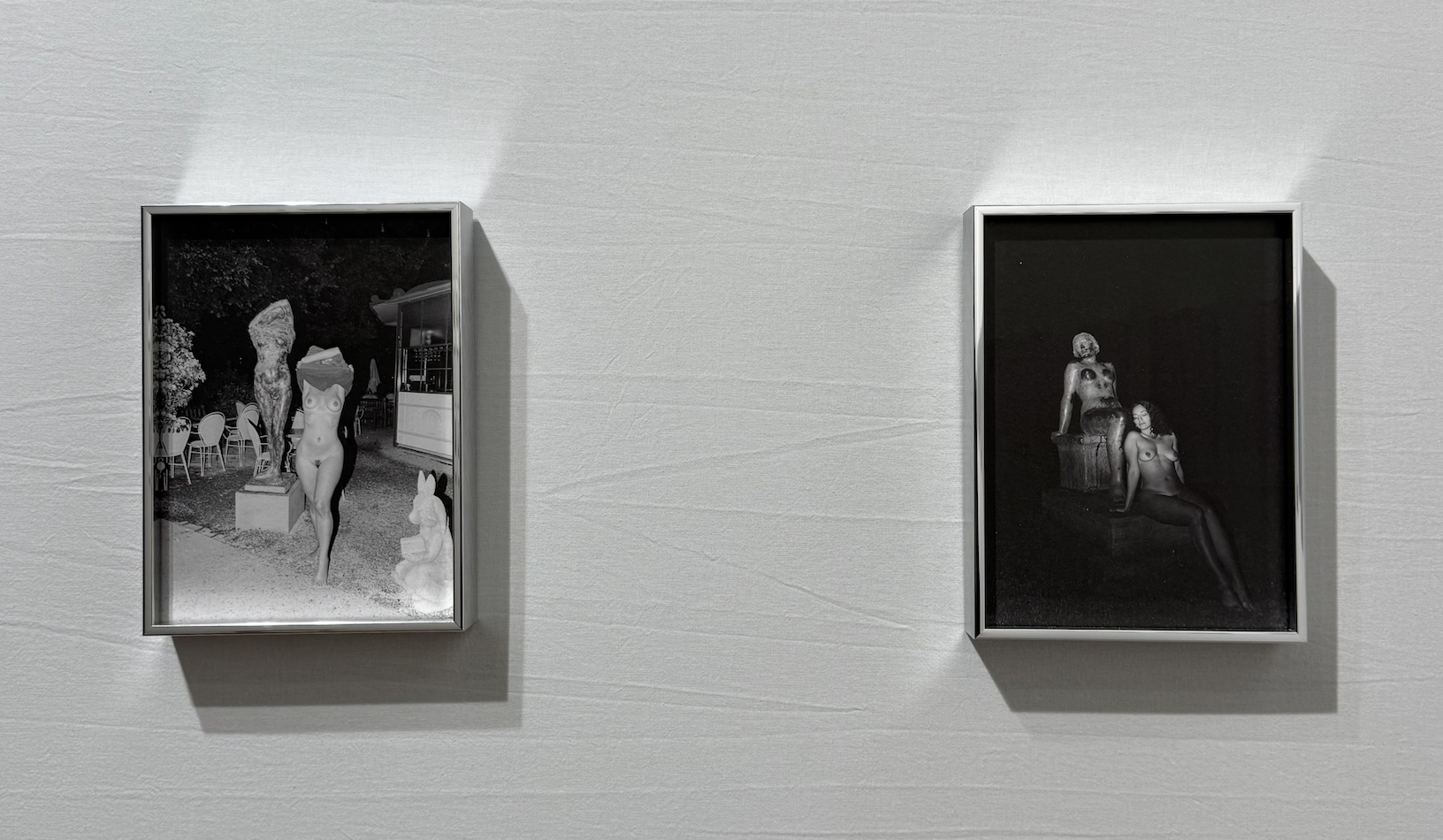
Let Me In 06 and Let Me In 07 by Yumna Al-Arashi at Homecoming Gallery. Photo by Sofia Carreira Wham.
Homecoming Gallery presents two key series: Let Me In and Big Dick Energy by photographer and filmmaker Yumna Al-Arashi. Let Me In, which featured in a recent solo exhibition at Huis Marseille in Amsterdam, sees the artist stage images that are simultaneously photographs, performances and protests, capturing her own naked body in relation to nude public statues of women in Zurich. Her interactions with the statues vary, often mirroring their poses and at other times hugging them, conversing with them, draping herself in their arms, or simply sitting alongside them. Each engagement is at once bold and tender, reactivating forgotten histories while exploring the body’s potential as a site of resistance.
In Big Dick Energy, Al-Arashi turns her sights to phallic architectural landmarks such as the Eiffel Tower and Big Ben. She captures these omnipresent masculine monuments and emblems of power through the filter of her own body, reconditioning their interpretation. While the settings and monuments change, the framing is carefully replicated around the world. Reflecting on the importance of replication in her practice, Al-Arashi commented, “I feel protected by repetition - as if the act of portraying myself repeatedly protects me from a selective gaze, as though the me in the photographs eventually becomes we.”
More information here.
Mari Katayama at Galerie Suzanne Tarasieve (Paris)
Booth C38 | Main section

Mari Katayama at Galerie Suzanne Tarasieve. Photo by Sofia Carreira Wham.
Tree of Life is an ongoing series of self-portraits by Japanese artist Mari Katayama, in which her own body becomes a form of living sculpture. At first glance, Katayama’s works resemble photo-collages, but the assemblage process in fact takes place in real life. The artist learnt how to sew at a young age from her mother and grandmother and sewing remains a core part of her creative process. Tree of Life contains the largest hand-sewn objects she has made to date, staged within a mirrored studio environment with herself at the centre. As viewers, we enter all-encompassing, multilayered worlds in which reality itself begins to dissolve. In the artist’s own words, “Points of orientation are lost, endless reflections continue to emerge, and it becomes impossible to tell where the ground ends and where the space above begins.” Katayama’s work offers a particularly interesting inflection point amongst photography’s bicentennial celebrations, presenting a singular perspective on the nature and purpose of image-making.
More information here.
Sander Coers, Anthony Ngoya and Mounir Raji at Galerie Caroline O’Breen (Amsterdam)
Booth D14 | Main Sector
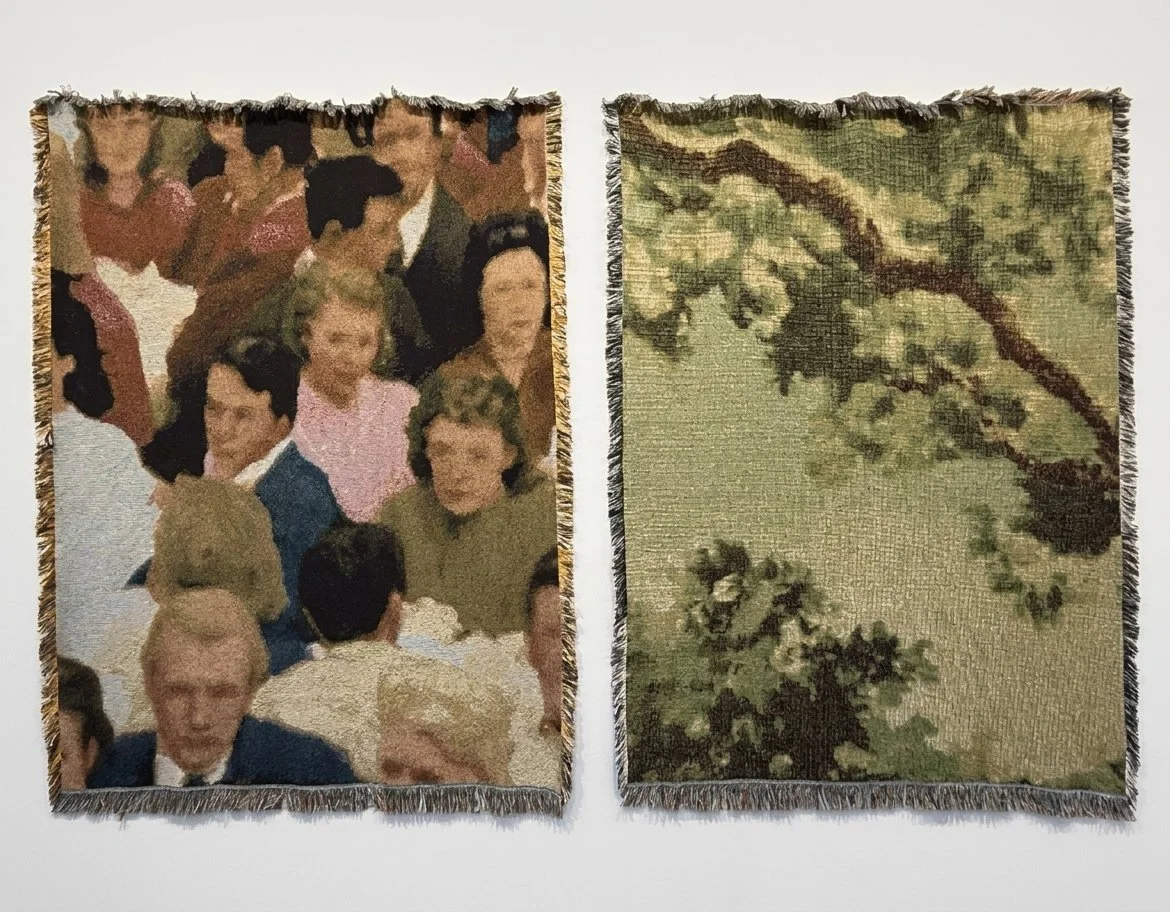
March no. 01 and And Spring Before That by Sander Coers. Photo by Sofia Carreira Wham.
At Galerie Caroline O’Breen, three artists are shown together whose practices consider memory and the speculative possibilities of archives, often experimenting with unconventional materials and methods. The work of Anthony Ngoya, a French artist of Congolese descent, explores the circulation and proliferation of family photographs and videos across generations and through digital platforms. Removing images from their original context, he engages in new forms of identity (re)construction, emphasising the fundamental subjectivity at the heart of photography. This detachment of photography from the idea of “truth” is pushed even further by Dutch artist Sander Coers, whose woven photo tapestries blur and abstract individual images into broader compositions, pulling from disparate sources, both fact and fiction. Meanwhile, intimate works by Mounir Raji, whose parents were Moroccan immigrants to the Netherlands, explore the hybridity of heritage and the idealisation of a homeland.
More information here.
Paris Photo 2026 is open from 12 - 15 November 2026 at Le Grand Palais, 25 Avenue du Général Eisenhower, 75008 Paris. For tickets, visit parisphoto.com.





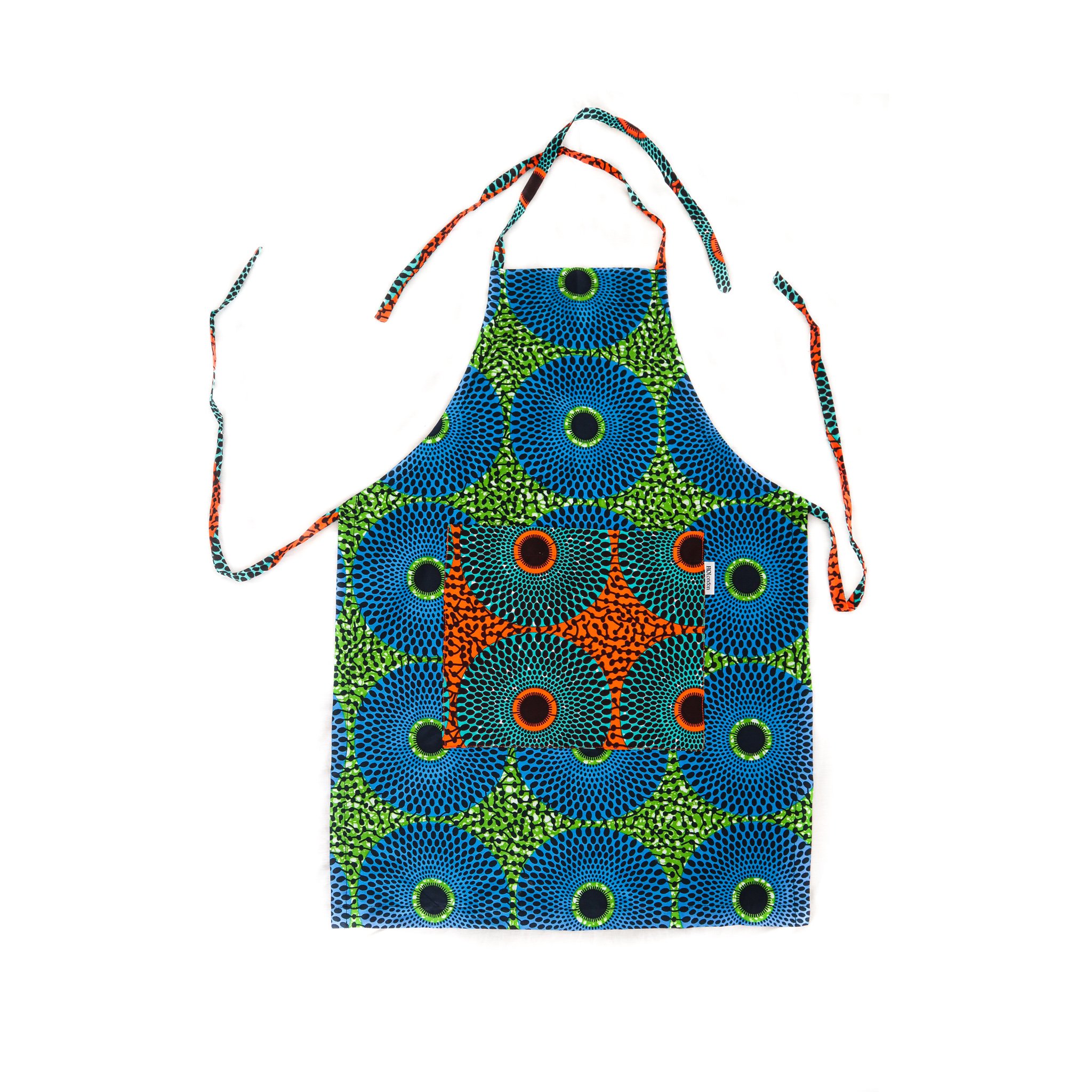


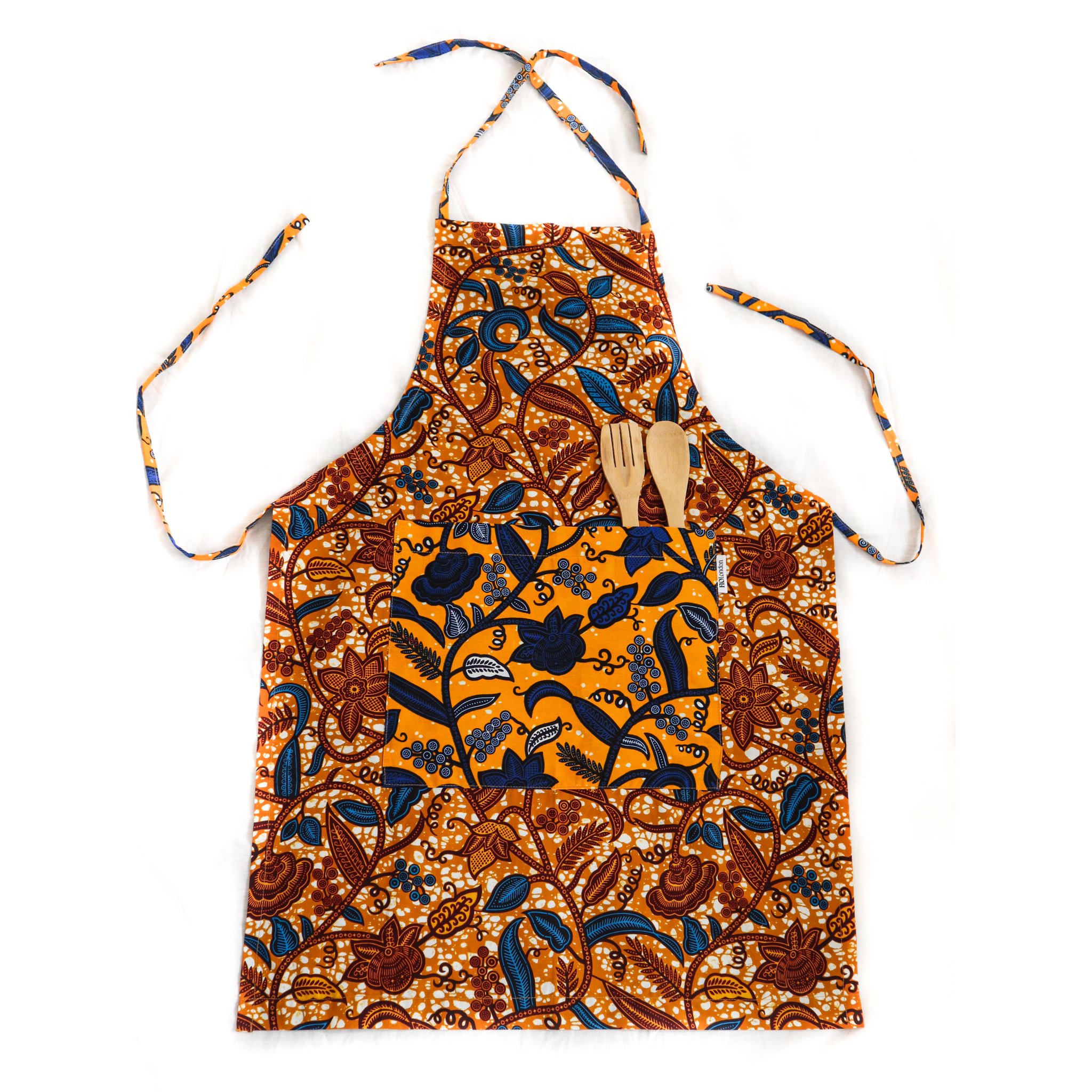


Handmade in Ghana, our aprons offer a unique design with a front pocket perfect for kitchen utensils or your phone and tie neck straps each made from recycled material. The perfect gift for any cooking enthusiasts!
Our aprons have been named after markets in Ghana and London. This apron has been named after street food hub Maltby Street Market.