
In conversation with Amida Deen
"I want my paintings to feel as though you could almost hear them."
- Amida Deen
Amida Deen
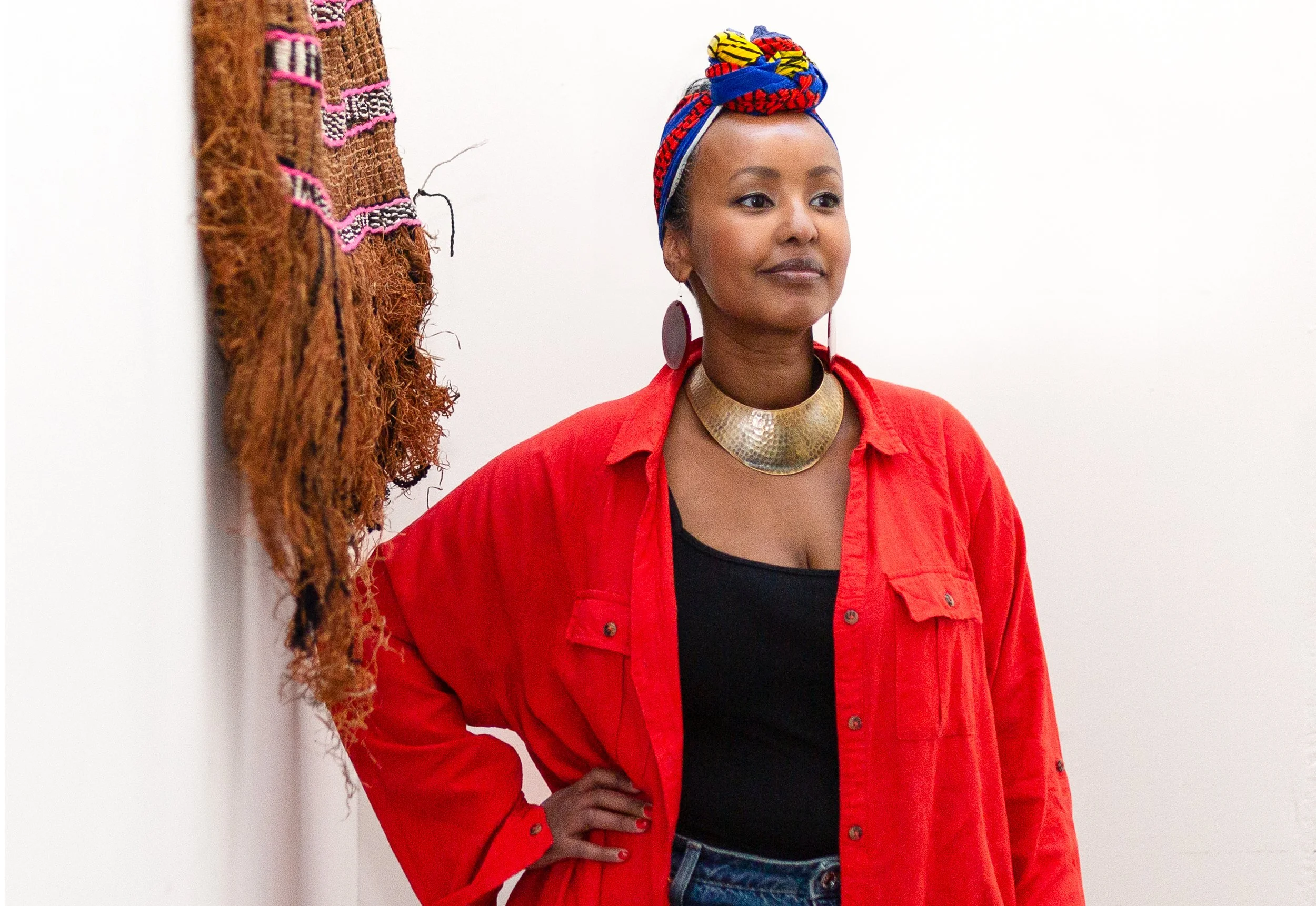
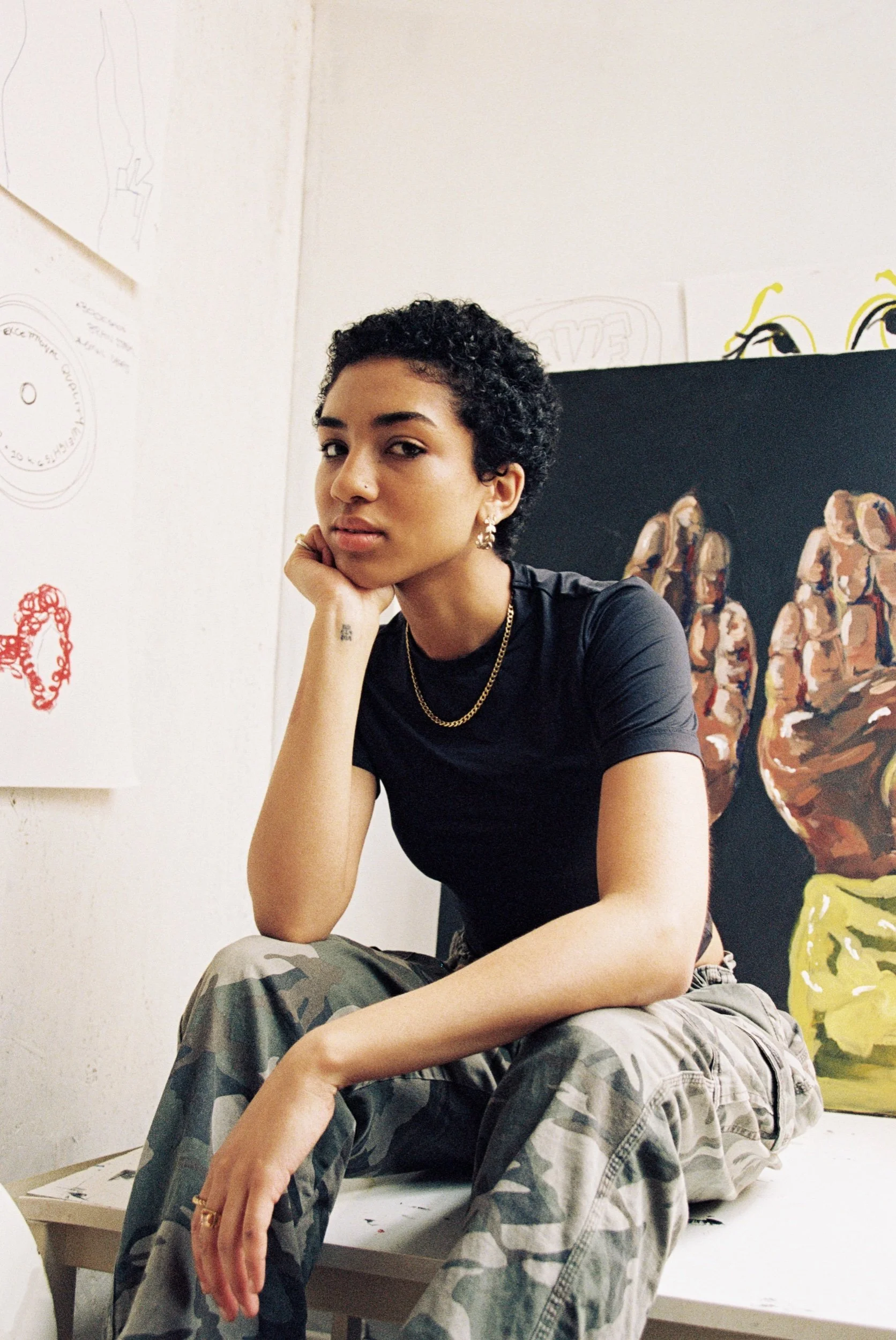
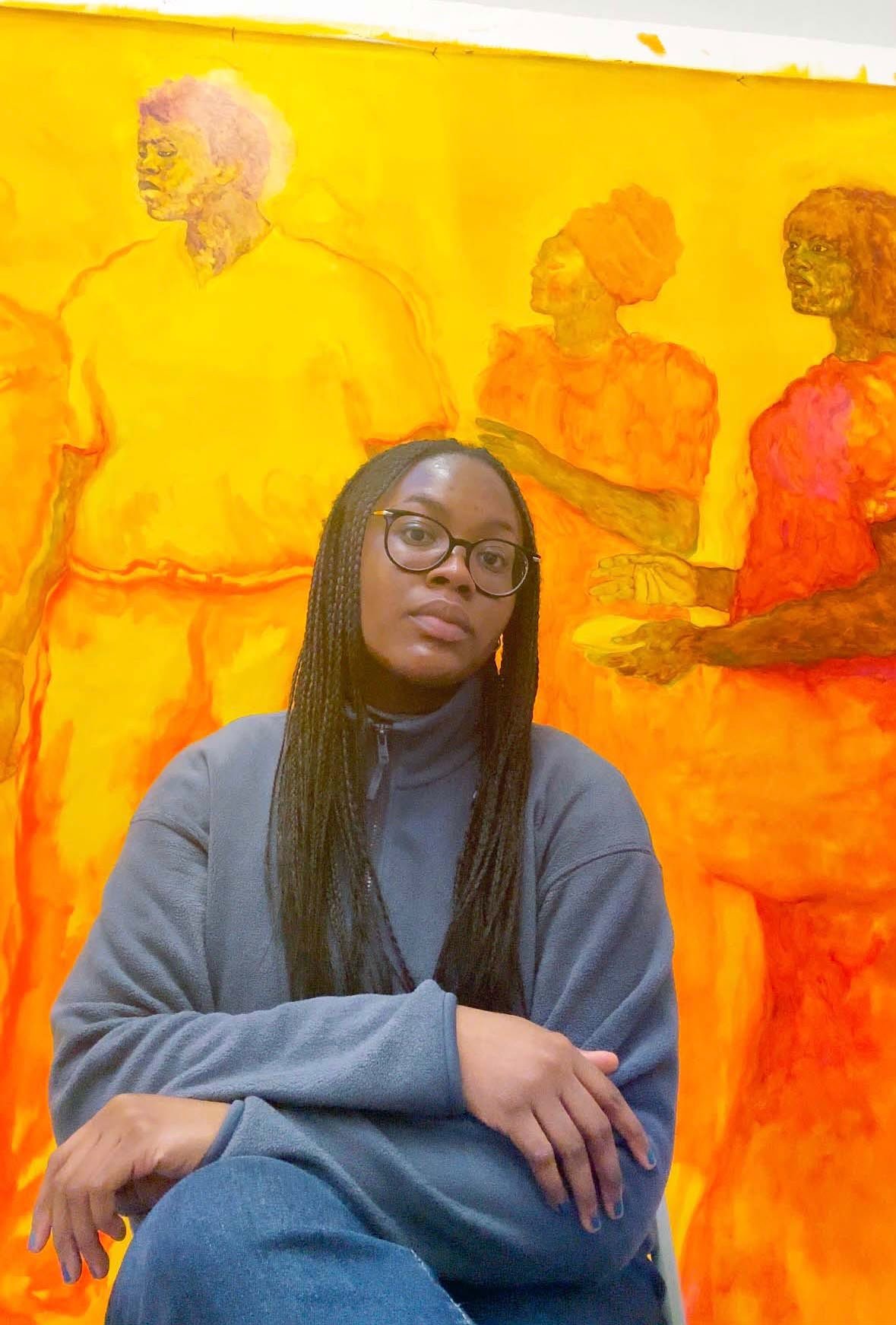
Amida Deen is a British-Sierra Leonean artist whose work is rooted in the Black British experience and her Sierra Leonean heritage. She paints fictional characters in oil, taken from everyday life and shaped by her own memories and by the films she watches. She graduated from the Slade last year.
Her painting Lovers Rock (Steady) is in 'Sunset Club', a group show presented by Studio/Chapple focused on the history of 50 Carnaby Street, where six music venues from the 1930s to the 1980s became hubs for Pan-African activism and helped shape jazz, steel band, ska and sound system culture. Deen painted it from the reggae and lovers rock she grew up with in a Sierra Leonean household and from the parties she knows firsthand.
We spoke to her about how memory, music and her own experience go into a painting, what a sound system adds to the work once it is in the room, and her first year of working outside an institution.
How did you come to be part of Sunset Club, and what did you know about 50 Carnaby Street before you started?
Studio Chapple and I have had a close relationship for a few years now, so collaborating on a show with them felt like a natural next step. I think it’s really important to work with people with whom you have a genuine relationship, and when Louis approached me with the idea for Sunset Club, it was a no-brainer. I think they’re fantastic, and I was really excited to be involved.
Before creating work for the exhibition, I did some research into 50 Carnaby Street and its history. I found it really interesting and it gave me another layer of context to consider when approaching the show.
The works in ‘Sunset Club’ draw on nightlife scenes from the different periods of 50 Carnaby Street. How did you connect your own experiences to this legacy through your piece Lovers Rock (Steady)?
My work is rooted in film and lived experience. I've watched a lot of films and grow up going to parties, and now my friends organise raves that carry a similar kind of energy. I'm interested in the movement within these spaces: the people you encounter, the different personalities, the interactions and the various energies that come together in one room.
These are things I've experienced firsthand. When people recognise something familiar in the painting, I understand why. They might associate it with a particular period or remember the atmosphere of a space like Columbo's in the 1970s, but the energies they're responding to are ones I've encountered myself. I'm translating those experiences onto canvas. I think that's where the connection lies.
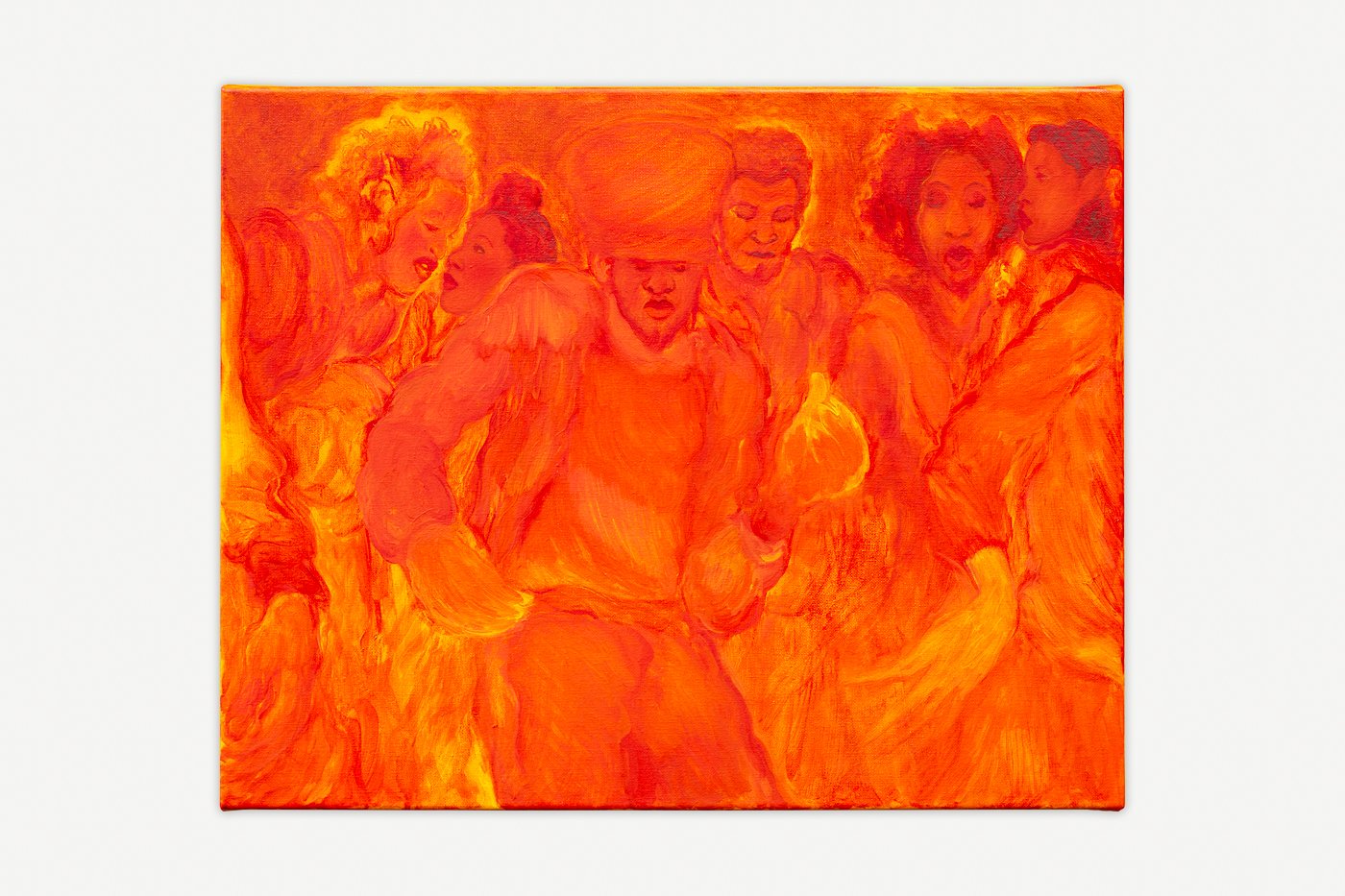
Amida Deen, Lovers Rock (Steady), 2026, Oil on canvas, 50.8 cm x 40.6cm. Image credit Damian Griffith.
There is not much record of those nights and you were not there. How much of Lovers Rock (Steady) is research and how much did you have to invent?
For me, the painting comes less from historical research and more from memory, music and lived experience. Growing up in a Sierra Leonean household, I was surrounded by a lot of music including a lot of reggae, lovers rock and all sorts of music. I also spent a lot of time at different parties, so those environments and the energies within them are things I know firsthand.
I'm often drawn to particular moments: the heat and intensity of a room, the dynamics between people, a fleeting interaction or a particular feeling that stays with you. Sometimes a scene in a film, a song or even a particular bassline will trigger a memory or bring back a feeling I've experienced before. I use those triggers to build imagery that evokes those moments rather than illustrating them literally.
Music is also a big part of how I paint. I'll often listen to the music that remind me of a particular atmosphere or energy while I'm working. I want my paintings to feel as though you could almost hear them. Colour and movement are really important in achieving that.
I suppose I don't think of it as inventing something from nothing. I'm drawing on things I've felt, remembered and encountered, then allowing those fragments to come together on the canvas. I don't think I could paint something convincingly if I hadn't felt something of it myself, or if it didn't remind me of something.
For this show the gallery has been made to feel like a club, with dimmed lights, a disco ball and Maya Ramnarine's sound system playing throughout. What does your painting do in a room like that which it would not do on a white wall?
I think it's a really interesting and brilliant way of contextualising the work. My degree show at the Slade also incorporated sound installation, so I'm interested in how sound can activate a space and create another layer of experience around the paintings.
Maya’s sound system adds another incredible dimension to the exhibition. It brings a sense of movement and energy to a space that already feels so alive, and I think that extends beyond the work itself to the audience. The movement and energy within the paintings can almost be reflected in the way people move through and interact with the space.
That said, I don’t think the work is entirely dependent on its environment. Those qualities of movement and feeling are already inherent in the paintings, regardless of the setting. My degree show was in a traditional white-walled space, and those same qualities were still present. I think the club environment offers another way into the work, rather than something it needs in order to function. But it still adds to that energy of it. There’s also something quite personal about the music in the space. Some of the records being played are ones I grew up listening to, including Bunny Mack, so there’s a lovely sense of familiarity and nostalgia for me and everyone else, including the audience. It’s a wonderful environment, and I feel really lucky to be showing alongside such incredible artists.
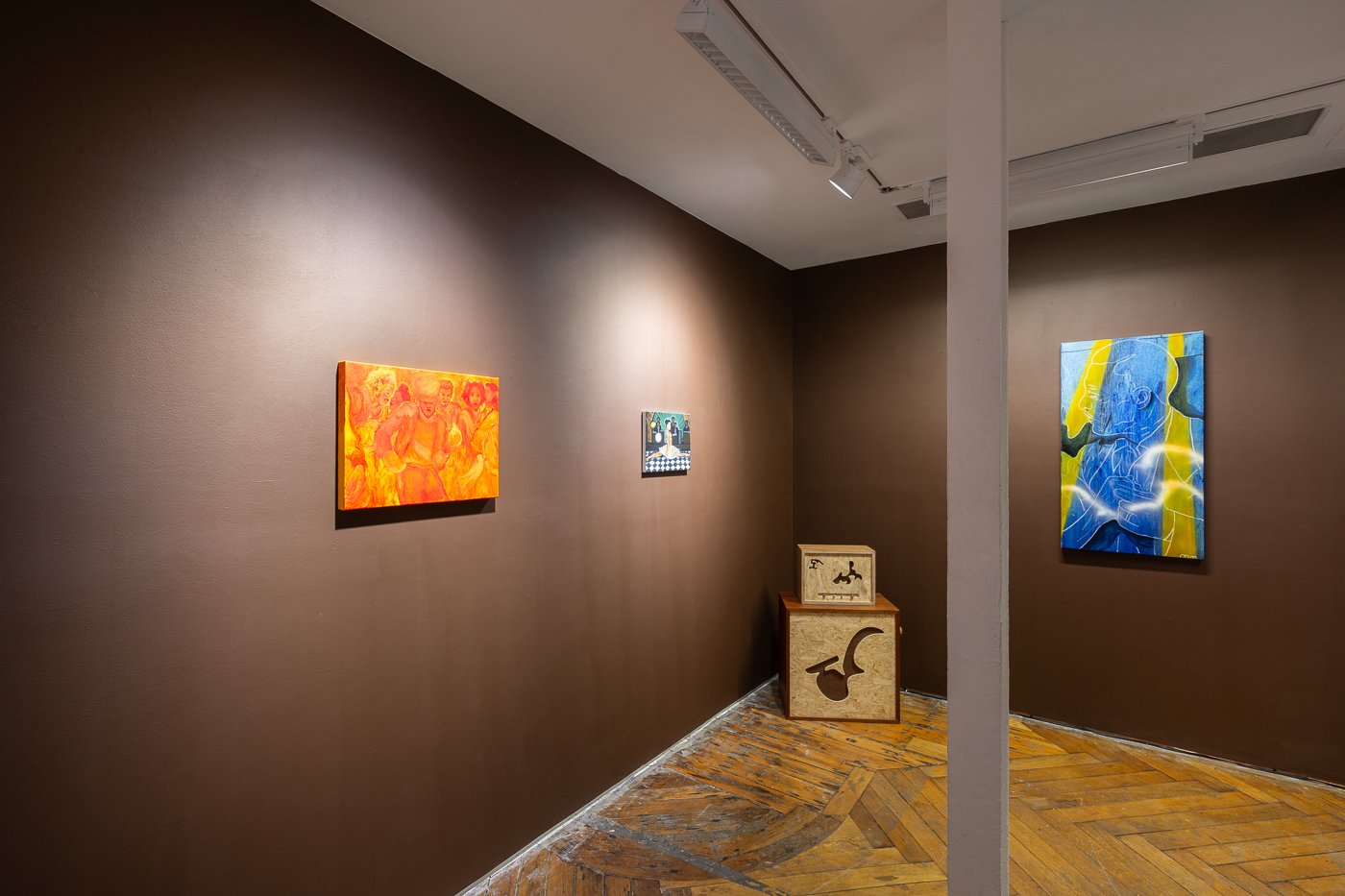
Installation view, Sunset Club, a group show presented by Studio/Chapple. Image credit Damian Griffiths
You graduated from the Slade last year and your work is already in the Slade and Africa Centre archives. What has this first year out of art school actually been like?
It's been good, actually. I've got a studio where I'm constantly working, so it's been really nice to establish a practice and exist outside of an institution. There's something quite different about having that independence and being able to develop your own rhythm without the structure of art school. I've enjoyed having the space to just get on with things.
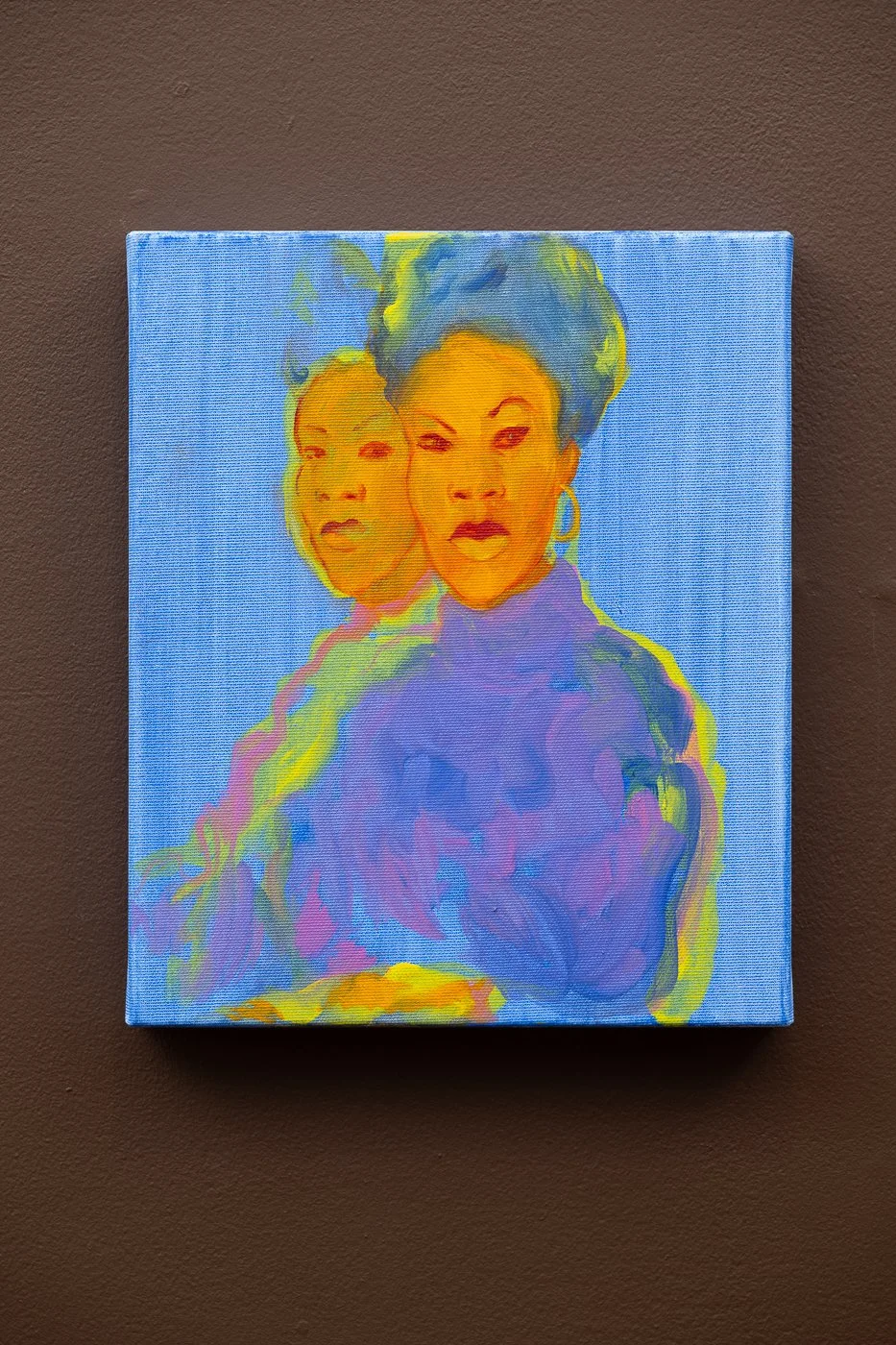
Amida Deen, In Shadow, 2026. Oil on canvas. 30.5 × 25.5 cm. Image credit Damian Griffith.
The [Quick] #FLODown
Best piece of life advice you've received, or would now give yourself?
Pace yourself. Everyone moves differently, so find your own rhythm. I think that's allowed me to become more comfortable with myself and my own timeline, rather than constantly measuring it against other people's.
Is there a book, text, or piece of writing you return to for inspiration?
The Lonely Londoners by Sam Selvon. It's influenced my own writing in many ways.
What is one thing you can't live or work without?
Heat! I run really cold and my body doesn't particularly agree with cold environments. It's actually influenced the way I work. Colour is a way of warming myself up, particularly when I'm working in cold spaces.
Which person, living or dead, would you most like to sit down and have a conversation with, and why?
Not necessarily one person, but I'd love to sit down with the members of Massive Attack. I really love their music and would be interested in hearing about their creative process and how they think about sound, atmosphere and collaboration.
In your view, what should the art world be doing more of right now, and what should it be doing less of?
Honestly, I don't know. lol
'Sunset Club' is on show at The Shop, Sadie Coles HQ, until 21 November 2026.
Website: amidadeen.com
Instagram: @whoodeenie






















Stand out this summer with this gorgeous Nsubra beach bag! Handmade in Ghana, this large tote bag is the perfect size for your sun cream, beach towel, purse and your latest book.