
A guide to Château La Coste, Provence’s wine estate for art and architecture
In Provence, there are wine estates, hotels and places you visit simply for the landscape. Château La Coste manages to be all three, and considerably more. Set among vineyards and woodland just outside Aix-en-Provence, the sprawling estate combines organic winemaking with contemporary art, remarkable architecture, restaurants and a place to stay.

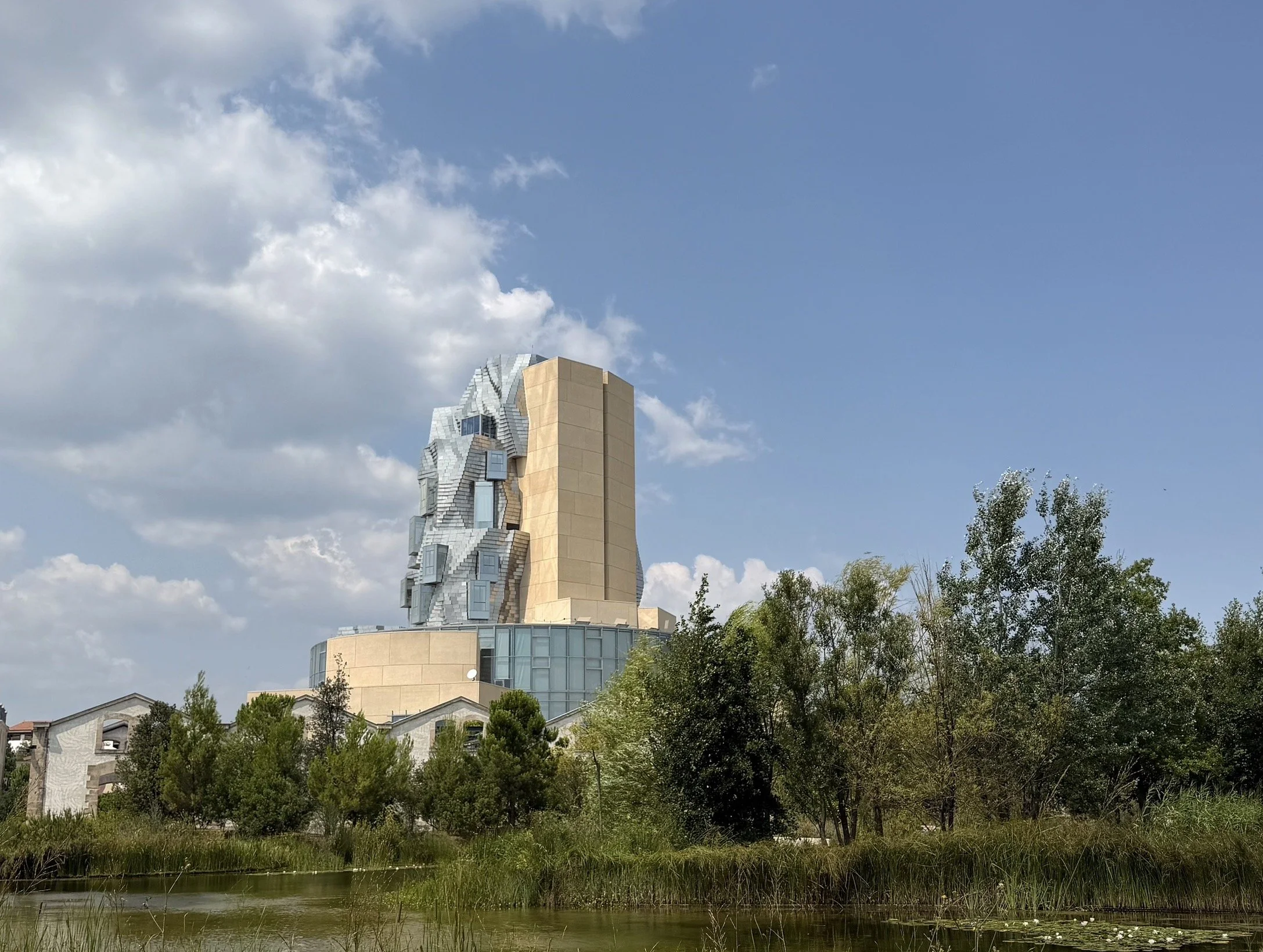
Château La Coste. © Vincent Agnes.
What began as a historic wine estate has been transformed into an extraordinary cultural destination. Irish property developer and art collector Patrick McKillen acquired Château La Coste in 2002 and began inviting leading artists and architects to respond to the land, creating works specifically for their chosen locations. The result is an estate where art and architecture are not simply attractions added to a vineyard, but part of the landscape itself. Today, more than 40 works can be discovered across the grounds, alongside buildings by architects including Tadao Ando, Jean Nouvel, Frank Gehry, Renzo Piano, Richard Rogers and Oscar Niemeyer. Temporary exhibitions are displayed in multiple venues, while highlights of the sculpture trail include works by Louise Bourgeois, Richard Serra, Andy Goldsworthy, Ai Weiwei, Alexander Calder and many others.
Wine remains fundamental to Château La Coste’s identity. The estate produces organic and biodynamic wines, and visitors can tour the winery, taste the wines and explore how its agricultural heritage sits alongside its contemporary cultural programme. There are also six restaurants, from the relaxed La Terrasse to more ambitious dining, as well as Villa La Coste, the estate’s luxury hotel and spa, and Auberge La Coste for a more informal stay.
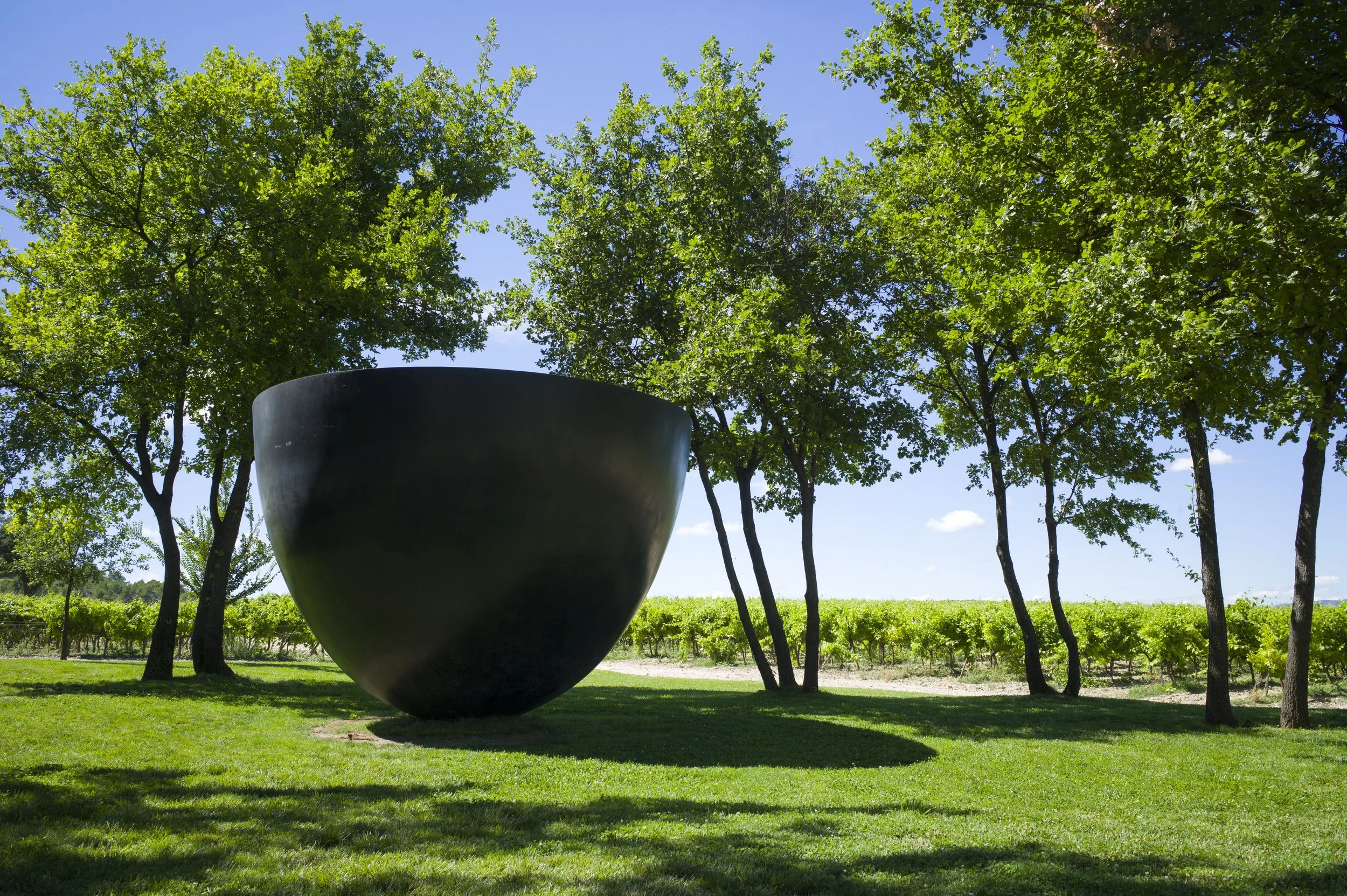
Guggi, Calix Meus Inebrians (2009), Château La Coste. © Andrew Pattmann.
The best way to experience Château La Coste is to explore it at a leisurely pace, delighting in each new discovery. Follow the well-designed art and architecture trail through the vineyards and woodland, visit the galleries and temporary exhibitions, stop for a long lunch, taste the estate’s wines and allow the architecture to reveal itself as you explore. Whether visiting for the day or staying overnight, Château La Coste offers something increasingly rare, a place where art, architecture, wine, food and the Provençal landscape come together in one experience.
Architecture
Architecture gives Château La Coste much of its personality. The estate has brought together an extraordinary roll call of architects, including Tadao Ando, Jean Nouvel, Frank Gehry, Renzo Piano, Richard Rogers and Oscar Niemeyer, architects responsible for some of the most recognisable buildings of the modern era.
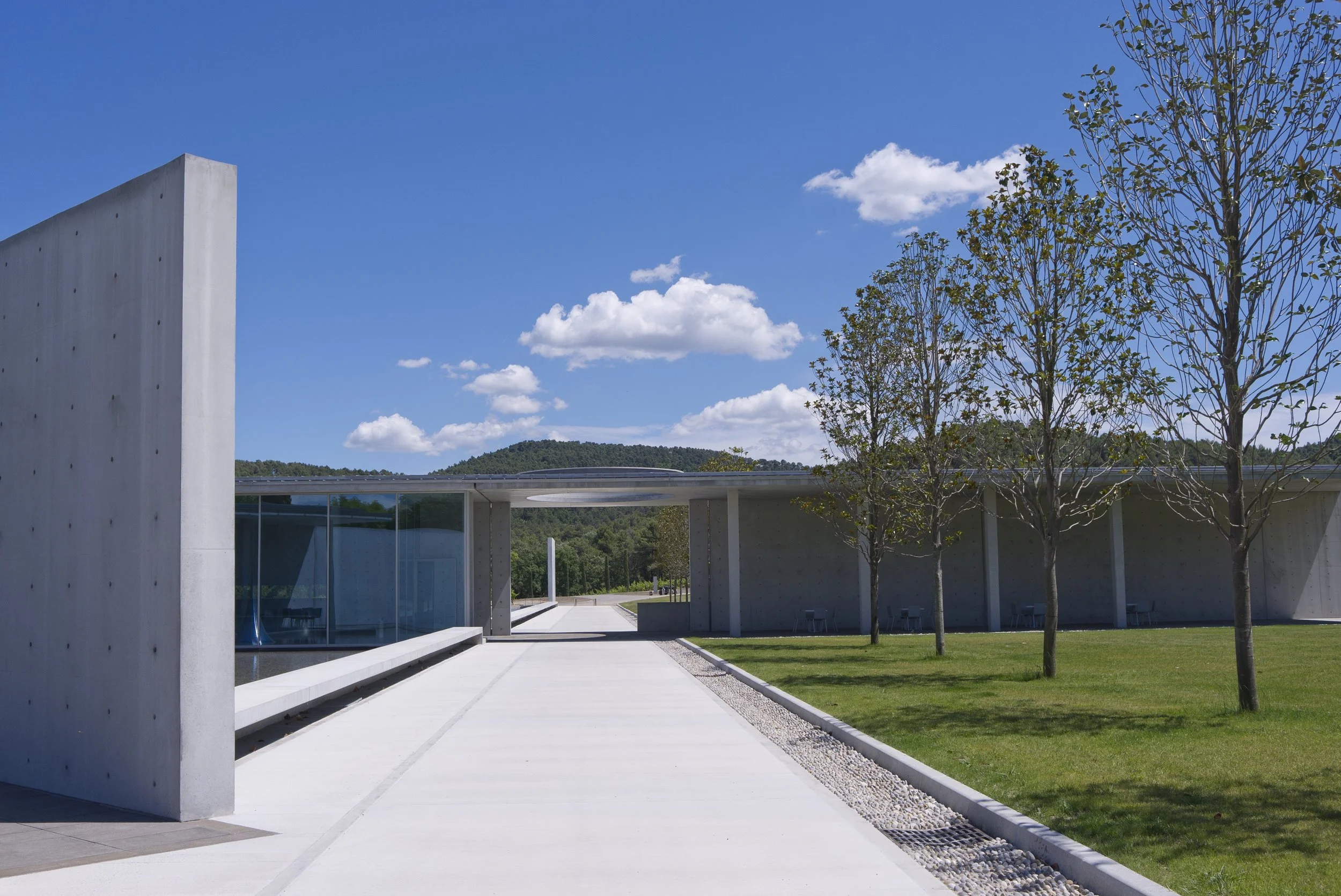
Art centre by Tadao Ando. Château La Coste. © Andrew Pattmann
The vision for Château La Coste’s transformation was established early, with Jean Nouvel commissioned to design the winery and Tadao Ando tasked with developing the masterplan and creating the Art Centre. Nouvel’s winery, completed in 2008, extends above and below ground, with its aluminium exterior helping regulate light and temperature within the vast gravity-flow facility. Ando’s Art Centre, completed in 2011, became the cultural heart of the estate, its concrete and glass geometry set against a reflecting pool and the surrounding landscape. He also designed the chapel at the highest point of the vineyard, as well as the small concrete gate marking the entrance to the domain.
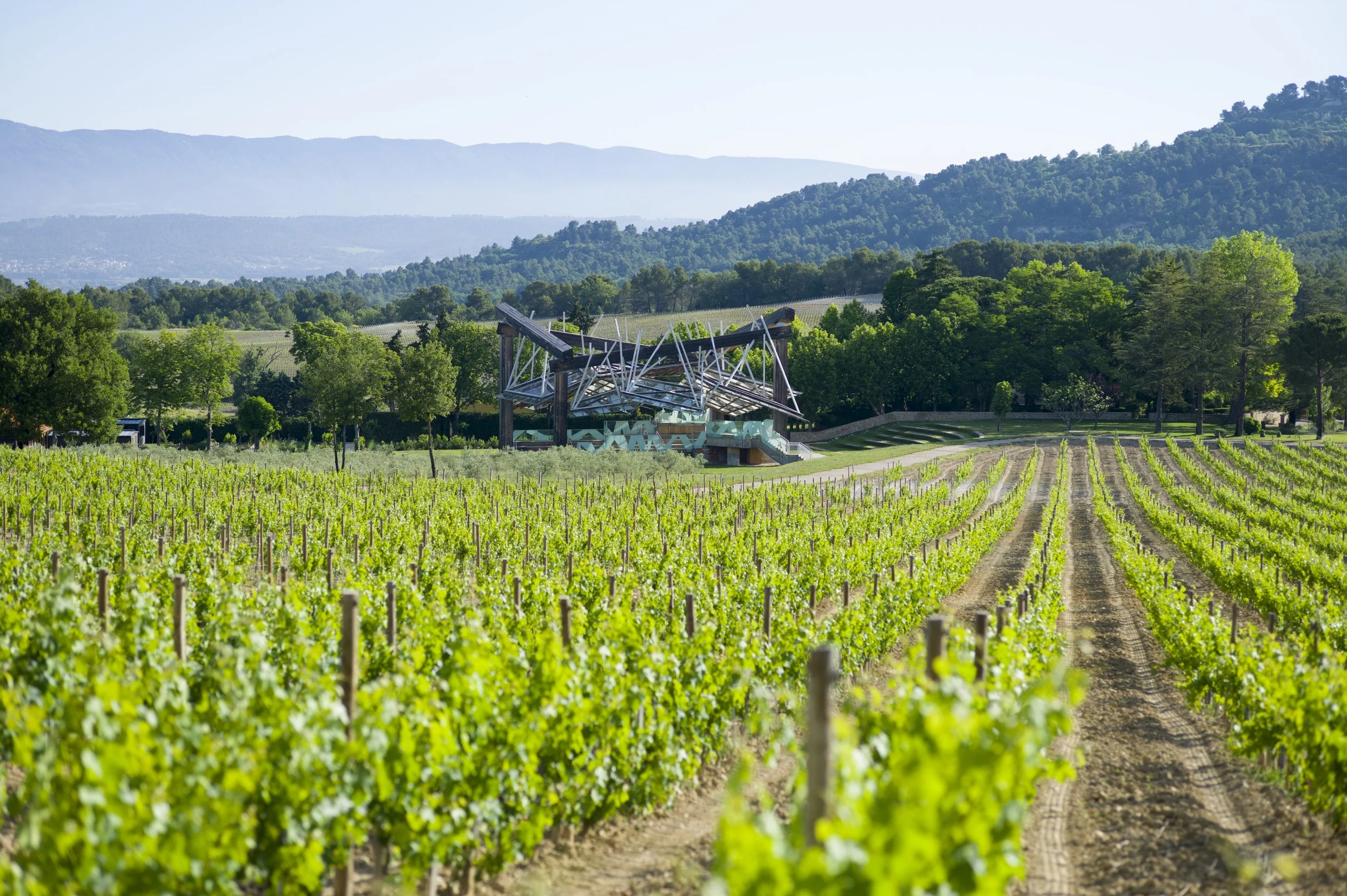
Frank Gehry. Pavillon de Musique. Château La Coste. © Andrew Pattmann
The estate’s architectural programme has continued to grow through work by other major figures. Frank Gehry’s timber-and-glass structure, originally created for the 2008 Serpentine Gallery Pavilion, was later relocated permanently to Château La Coste. Renzo Piano’s pavilion adds another light-filled exhibition space, while Richard Rogers’ final architectural project takes the form of a dramatic box-like gallery wrapped in orange steel and cantilevered 27 metres over the hillside and treetops.
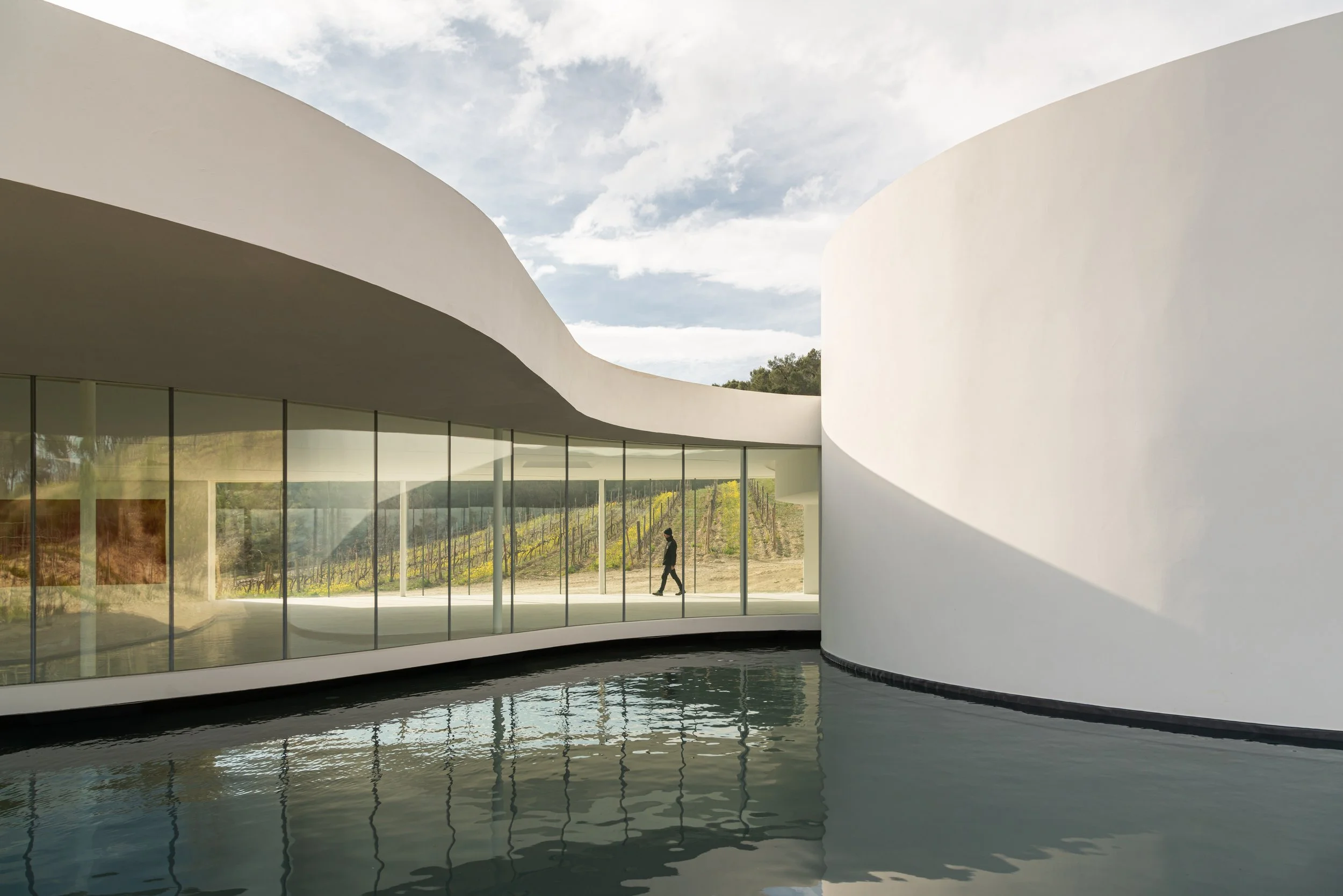
Oscar Niemeyer Pavilion, Château La Coste. © Stéphane Aboudaram l Wearecontent(s).
The Oscar Niemeyer Pavilion, designed by the Brazilian architect in 2010 and opened in 2022, was completed almost a decade after his death and became his final project in France. Its curved white form houses an exhibition space and an 80-seat auditorium, contrasting with the angular structures elsewhere on the estate.
Click here to discover more about the architects and their work at Château La Coste.
The Art
The Sculpture Trail
Château La Coste’s Art and Architecture Trail is spread across the vast estate, with more than 40 permanent works of sculpture, installation and architecture set among its vineyards, olive groves and oak woodland. Artists and architects are invited to visit the estate, choose a setting that speaks to them and create a permanent work specifically for the site. This is a point of real distinction for Château La Coste even among sculpture parks.

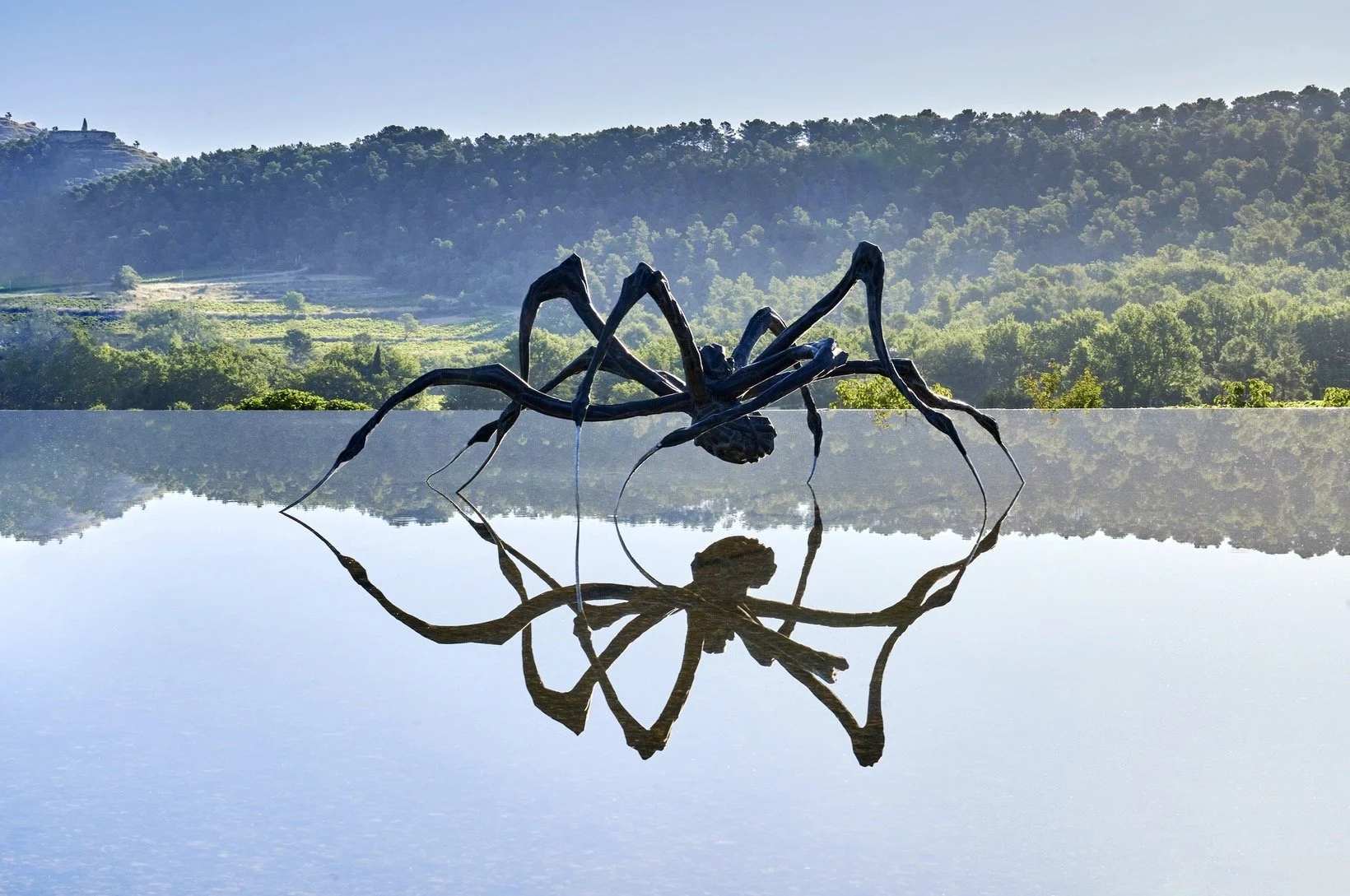
Louise Bourgeois, Crouching Spider (2003), Château La Coste. © The Easton Foundation New York. ADAGP Paris, 2021 Photo. Richard Haughton.
The trail includes some of the most significant names in modern and contemporary art, among them Louise Bourgeois, Richard Serra, Andy Goldsworthy, Alexander Calder and Ai Weiwei. Bourgeois’s monumental Crouching Spider (2003) is one of its most recognisable works, its silhouette reflecting in the rippling water outside Tadao Ando’s Art Centre. Part of her celebrated series of spider sculptures, the bronze and stainless-steel work reflects recurring themes of motherhood, protection and vulnerability. Serra’s A I X (2008), meanwhile, sets enormous Corten steel plates into the hillside, using the slope of the land to enhance the visitor’s experience of the work.
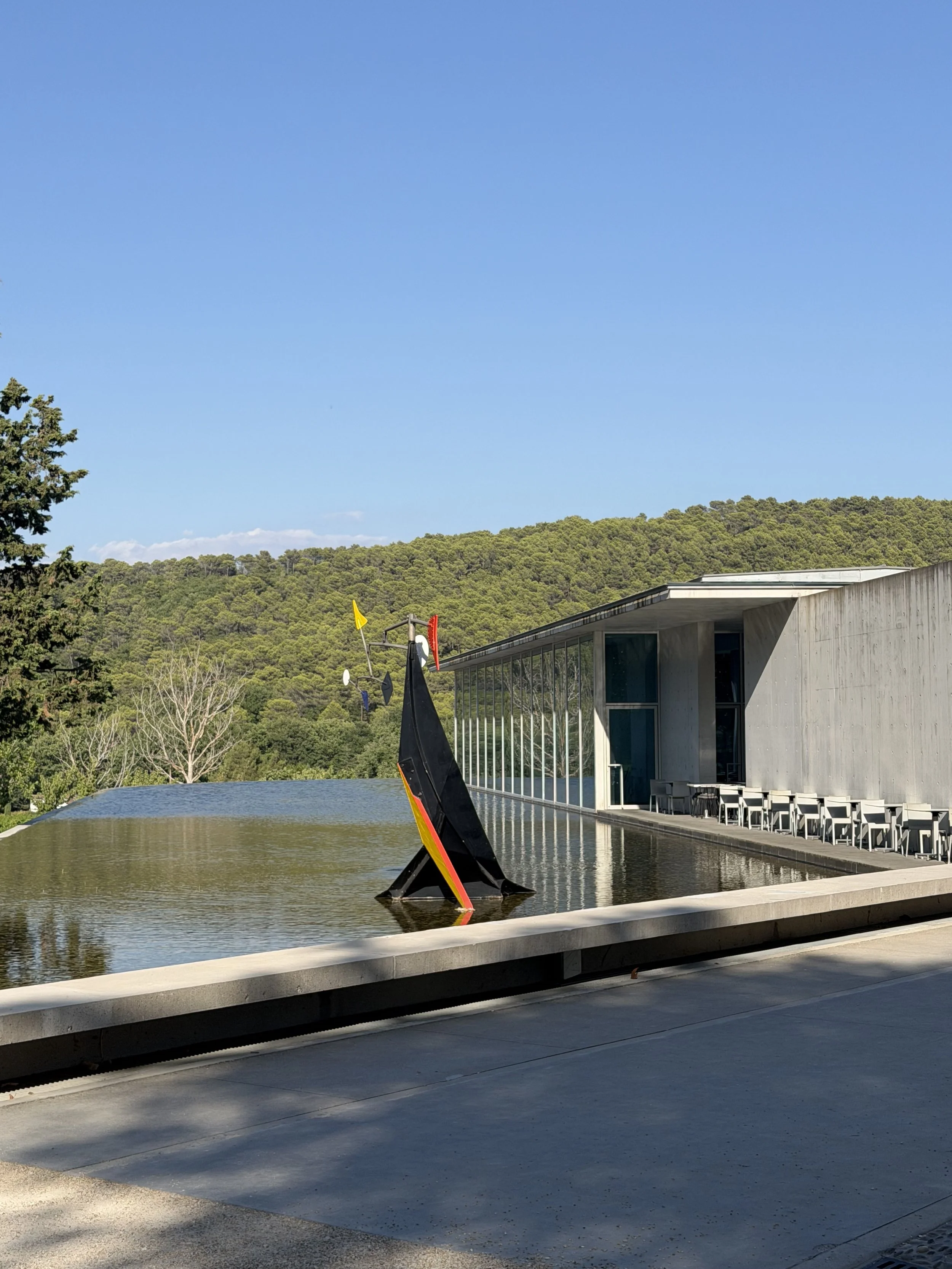
Alexander Calder’s Small Crinkly (1976). Château La Coste. Image credit MTotoe/FLO London
Alexander Calder’s Small Crinkly (1976) was the first artwork purchased by Château La Coste. The painted-steel mobile sits in the water basin in front of Ando’s Art Centre, where its movement in the wind is reflected in the water. This work is characteristic of Calder’s pioneering approach to kinetic sculpture and the estate’s thoughtful juxtapositions between art and landscape.
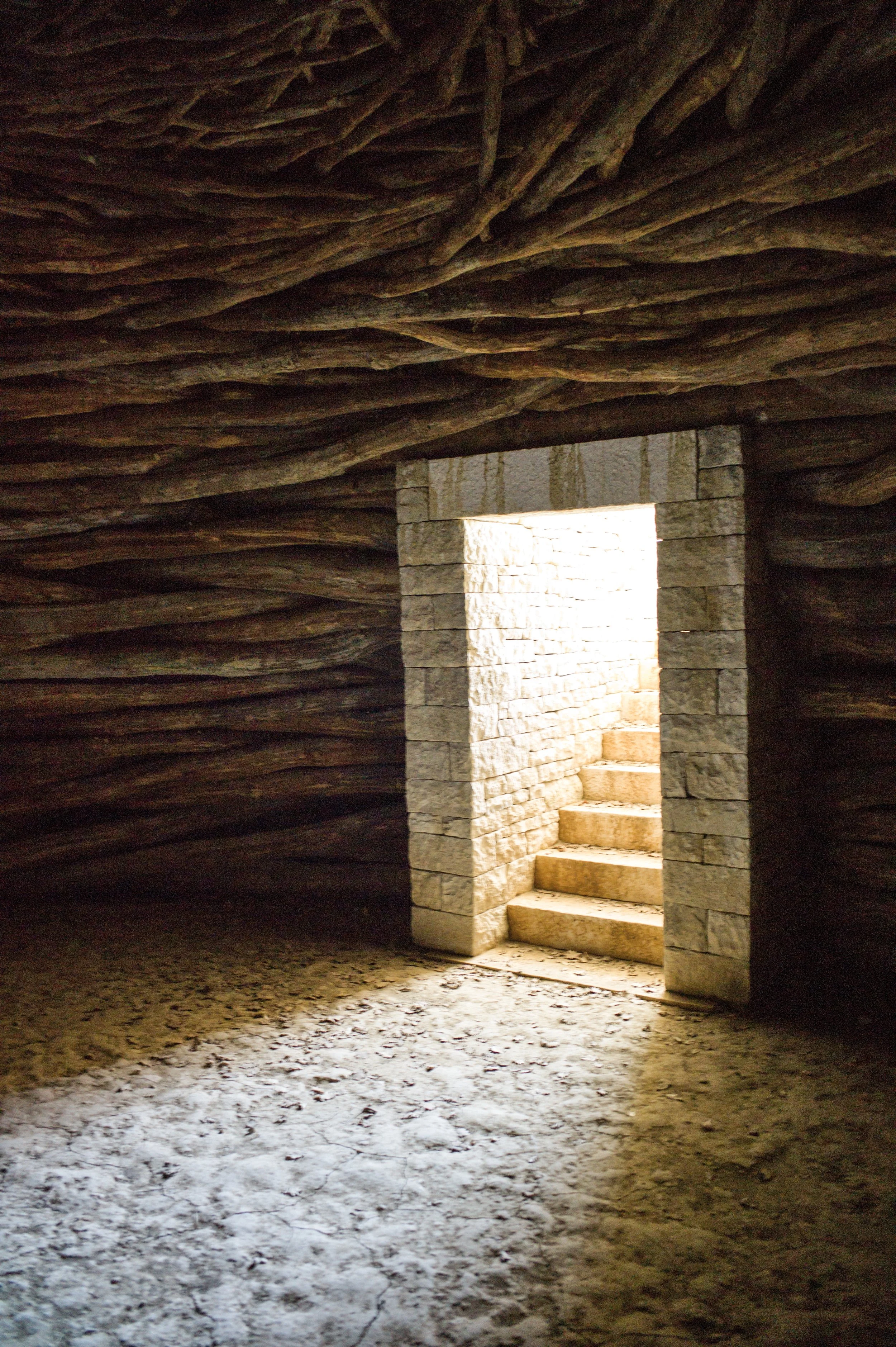
Andy Goldsworthy’s Oak Room (2009), Château La Coste. © Andrew Pattman.
Andy Goldsworthy’s Oak Room (2009) offers a very different encounter. Built into an ancient Roman stone wall from almost 1,200 pieces of Burgundy oak, the circular structure was constructed without additional supports. Visitors can step inside the work, whose use of oak also recalls the barrels associated with the estate’s wine production. Per Kirkeby’s Brick Labyrinth (2018) similarly sits between art and architecture. Made from 24,000 handmade bricks produced in Salernes, Provence, its geometry draws on ancient ruins, Danish churches and Mayan temples. The labyrinth deliberately leads nowhere, inviting visitors to consider the relationship between architecture, history and time.
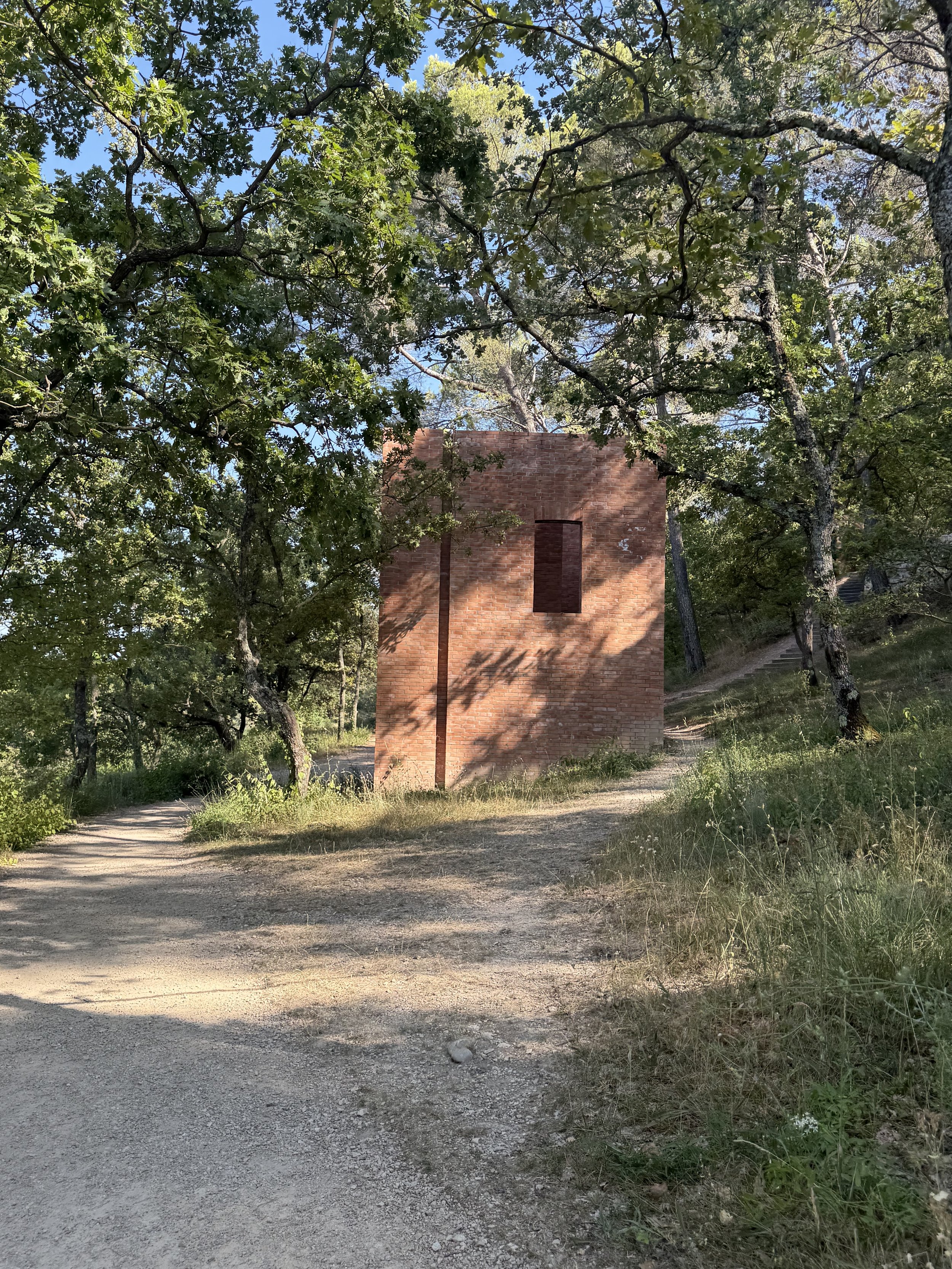
Per Kirkeby, Brick Labyrinth (2018). Château La Coste. Image credit MTotoe/ FLO London
Ai Weiwei’s Ruyi Path follows the shape of the traditional Chinese ruyi sceptre, a symbol of power and good fortune, to form a pathway through the trees using historic cobbles salvaged from the ports of Marseille. Bob Dylan’s Rail Car (2022), positioned along the ancient Via Romana, draws on the musician’s lifelong fascination with trains and his childhood in Minnesota. The wrought-iron structure transforms a railway carriage structure into a place to rest and observe the surrounding landscape.
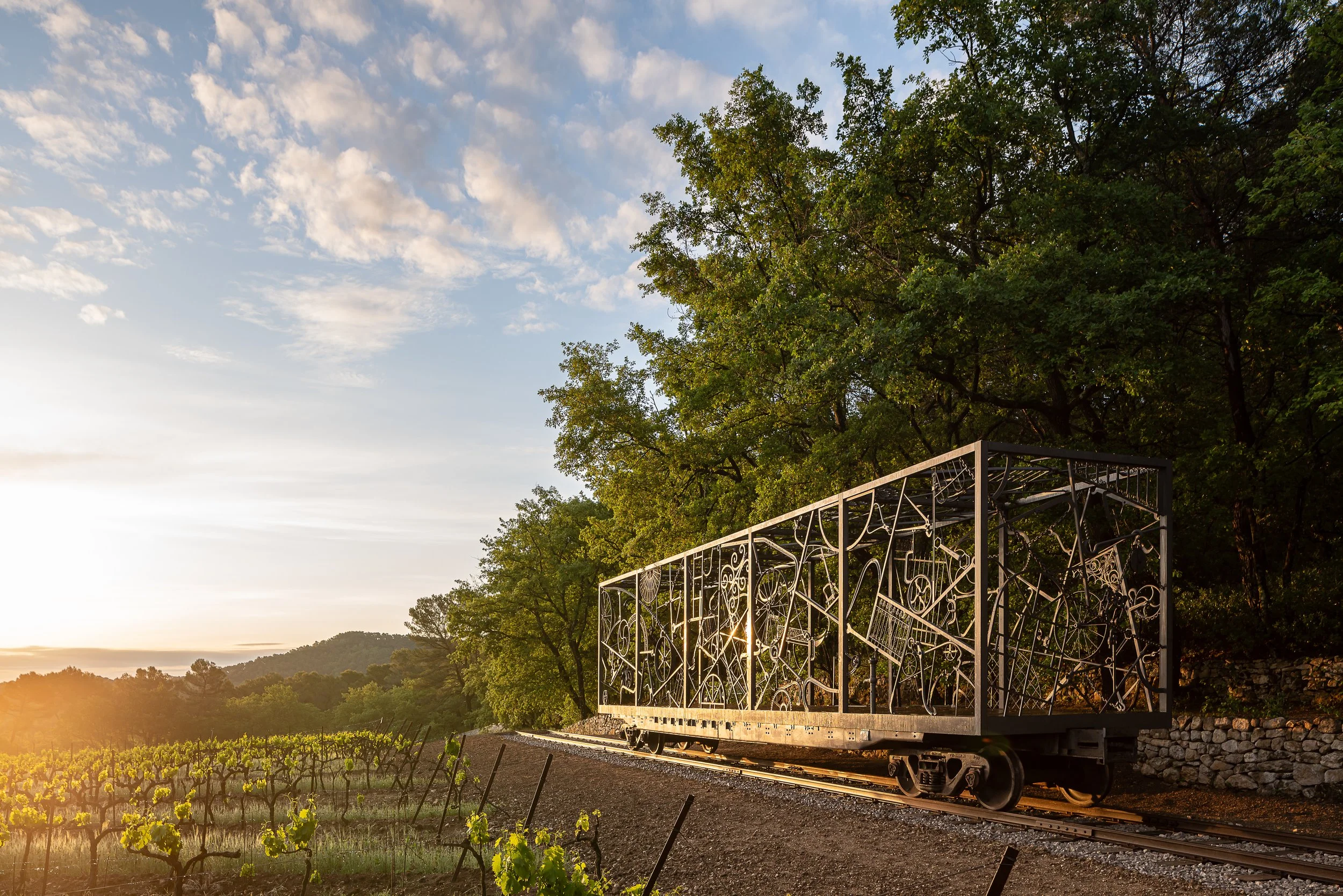
Bob Dylan, Rail Car (2022), Château La Coste. © Stéphane Aboudrama l WEARECONTENT(s).
The trail also includes Tunga’s Psicopompos (2011), a three-part installation created specifically for Château La Coste. Combining wrought iron, local stone, Brazilian quartz, glass prisms and magnets, the work takes the form of portals and explores transformation, alchemy and the boundary between the physical and spiritual worlds. Its title refers to the mythical guides believed to lead souls from the world of the living to the afterlife.
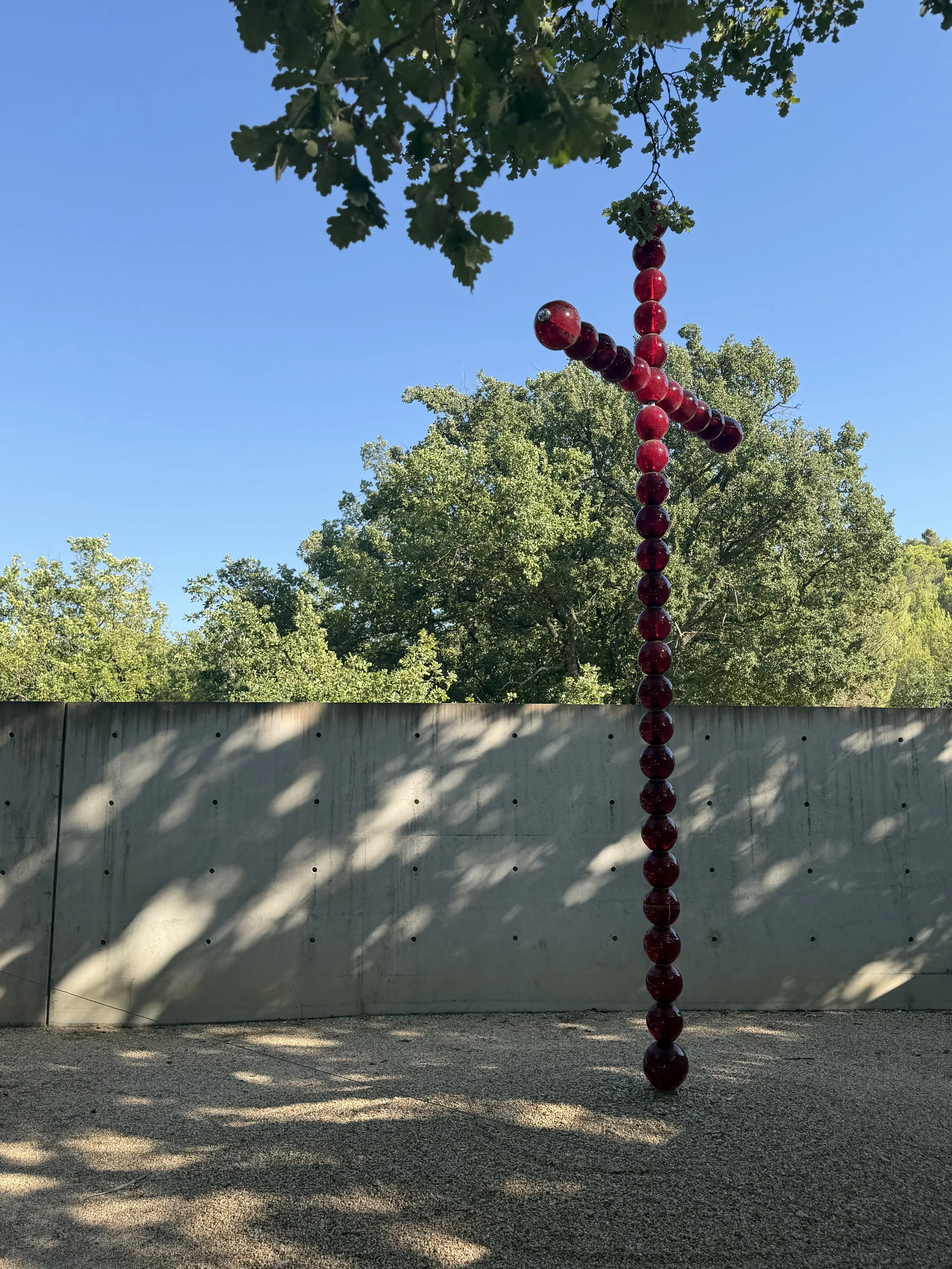
Jean-Michel Othoniel, La Grande Croix Rouge (2007–08), Château La Coste. Image credit MTotoe/FLO London
At Tadao Ando’s chapel, Jean-Michel Othoniel’s La Grande Croix Rouge (2007–08) provides a curious contrast to the building’s minimalist concrete interior. The four-metre-high cross is made from red Murano glass beads resembling a rosary, drawing on Catholic symbolism and the idea of transubstantiation. Set within the vineyard, the work establishes connections between faith and wine, nature and transformation.
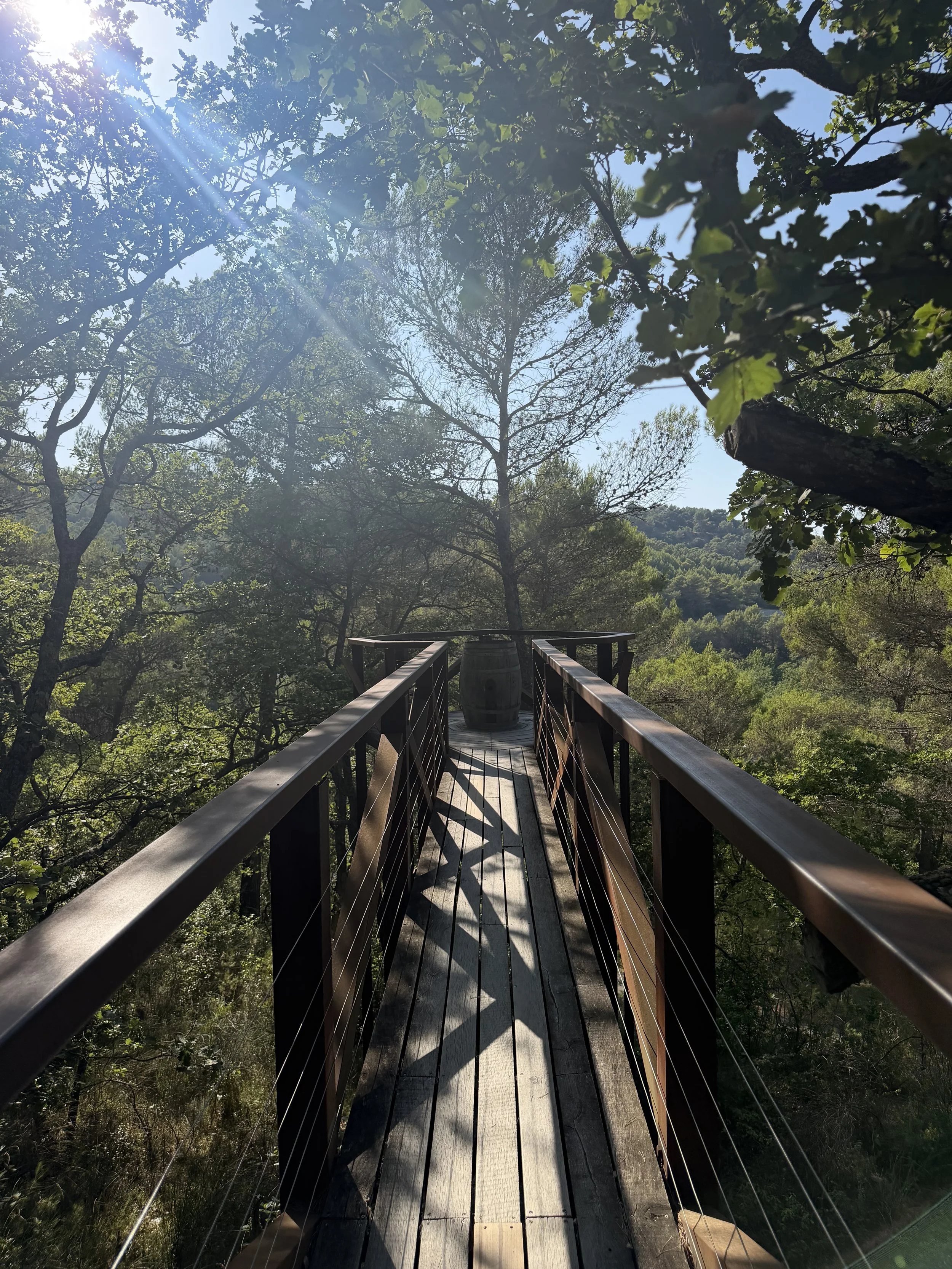
Tracey Emin, Self-Portrait: Cat Inside a Barrel (2013), Château La Coste. Image credit MTotoe/FLO London.
Other works encourage a particularly intimate encounter. Tracey Emin’s Self-Portrait: Cat Inside a Barrel (2013) places a tiny porcelain cat inside a salvaged wine barrel, hidden within a steel viewing platform overlooking the Luberon. Sean Scully’s Boxes Full of Air (2015) is a vast Corten steel structure that visitors can walk through, its geometric openings providing changing views of the estate.
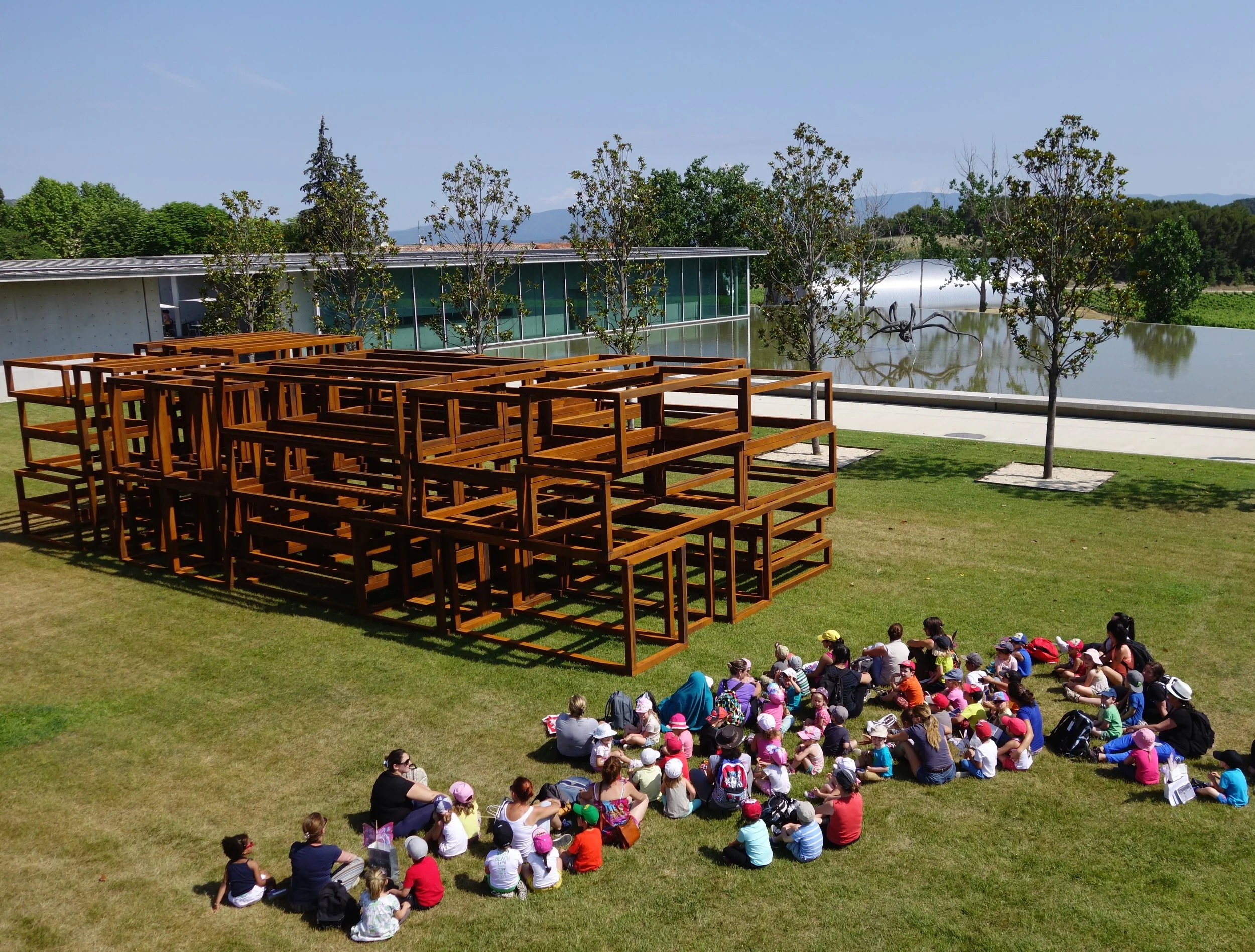
Sean Scully, Boxes Full of Air (2015). Château La Coste. Image courtesy of Château La Coste.
Susumu Shingu is also represented on the trail with a sculpture that responds to the natural movement of wind and water. In September 2026, Château La Coste will present further works by the Japanese artist from his Genki-nobori series, colourful fabric sculptures inspired by traditional Japanese carp-shaped windsocks and associated with hope, strength and good fortune.
The trail is not a short gallery visit. The self-guided route takes well over two hours, particularly for visitors who stop to explore the temporary exhibitions and galleries along the route, as well as Tadao Ando’s chapel at the highest point of the vineyard. Guided tours are also available in English and French.
Click here for our guide to sculptures not to miss on the trail.
Exhibitions
Château La Coste has five exhibition spaces, the Galerie des Anciens Chais, Galerie Bastide, Galerie Jean Prouvé, Richard Rogers Gallery and Renzo Piano Pavilion, which form part of the wider Art and Architecture Trail.
Temporary exhibitions
Château La Coste’s summer programme places the work of Rashid Johnson and Sheree Hovsepian across three of the estate’s galleries, exploring friendship, collaboration and community. The exhibitions opened on 5 July 2026, with Johnson’s presentation continuing until 31 January 2027 and Hovsepian’s exhibition and the group show Rashid, Sheree and Friends… continuing until 6 September 2026. The three exhibitions occupy the Oscar Niemeyer Auditorium, Renzo Piano Pavilion and Richard Rogers Gallery, with each responding to the estate’s architecture and landscape.
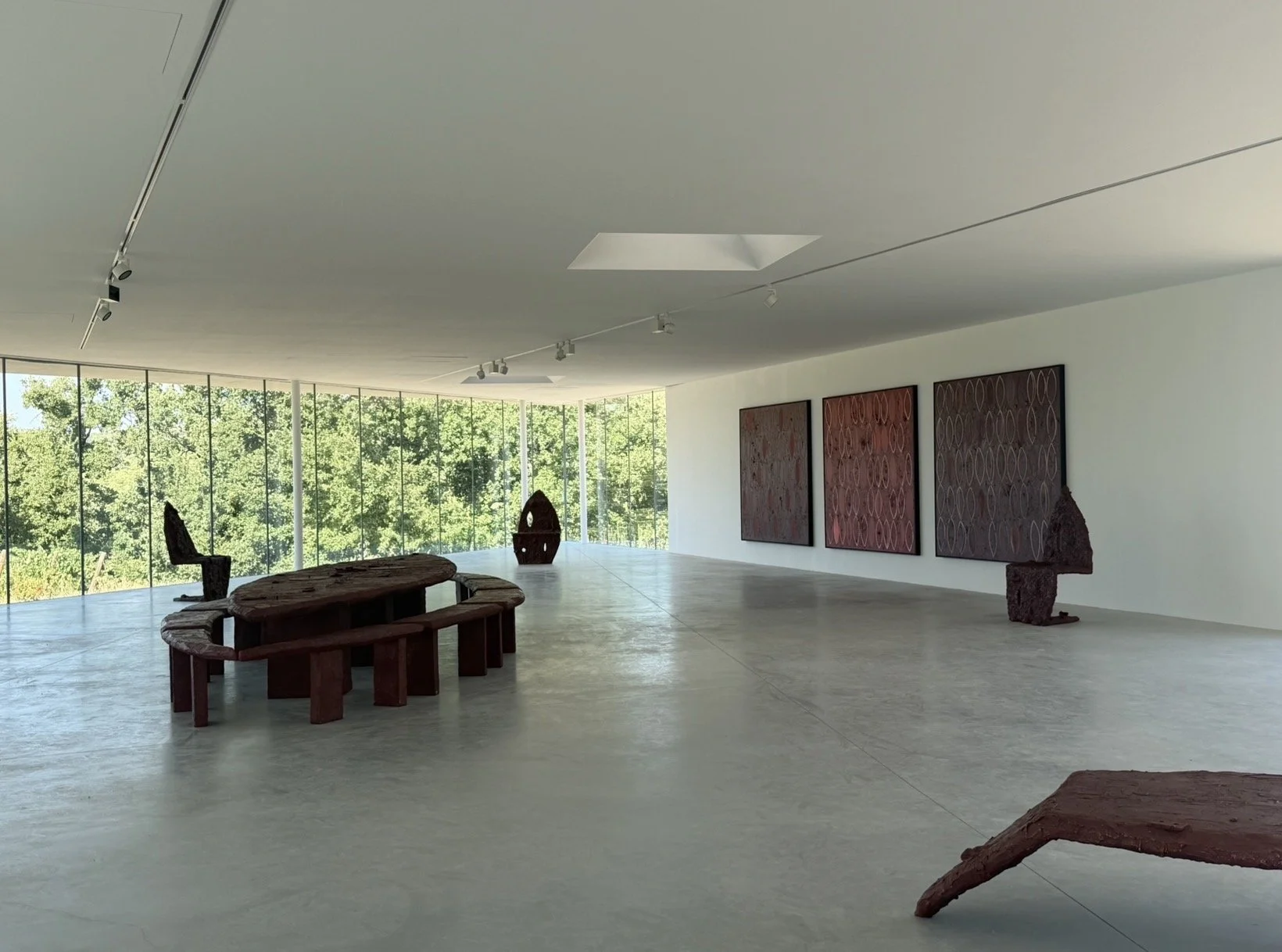
Rashid Johnson, Oscar Niemeyer Auditorium. Image credit MTotoe/FLO London
At the Oscar Niemeyer Auditorium, Johnson presents paintings, sculpture and film, including works from his God Paintings series and new bronze sculptures made specifically for Château La Coste. Also on display is Sanguine, his 2024 film following three generations of his family and examining ideas of care, attention and shared experience. The exhibition follows Johnson’s major retrospective at New York’s Solomon R. Guggenheim Museum.

Rashid Johnson, Oscar Niemeyer Auditorium. Image credit MTotoe/FLO London
At the Renzo Piano Pavilion, Sheree Hovsepian presents a new body of work examining the female form through photography, sculpture and assemblage. Three large-scale bronze sculptures stand alongside mixed-media works combining photographs, ceramics and string, where fragmented forms and areas of negative space create an uneasy tension between presence and absence. The sculptures develop these ideas further in three dimensions, their tactile surfaces recording the physical process of their making. The works reflect Hovsepian’s broader interest in identity, perception, memory and the ways the body can be represented, obscured and reimagined.
The programme continues at the Richard Rogers Gallery with Rashid, Sheree and Friends…, a group exhibition co-curated by Johnson and Hovsepian. Featuring more than 16 artists from their circle, the exhibition considers friendship and artistic exchange as essential parts of creative practice. The invited artists include George Condo, Sanford Biggers, Lorna Simpson, Sarah Sze, Nicolas Party and Henry Taylor.
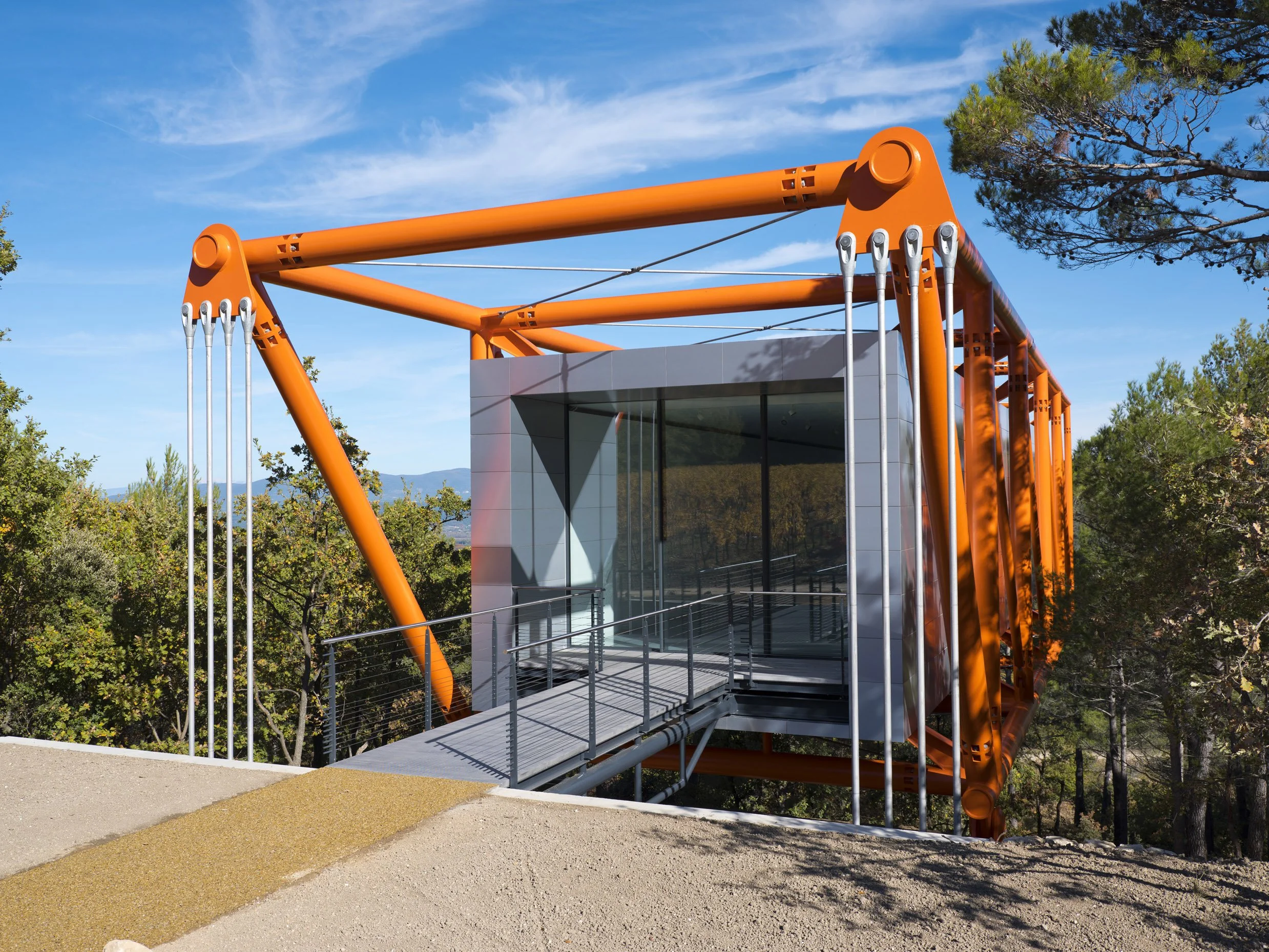
Renzo Piano © Stéphane Aboudrama l WEARECONTENT(s).
At the Galerie Jean Prouvé, Irish artist GUGGI presents an exhibition marking a new direction in his practice, replacing his familiar use of oil, acrylic and bronze with traditional Japanese materials and techniques. His paintings are made with Sumi ink on handmade washi paper from Nara, while his sculptures are carved from wood in Yamanaka Onsen and finished with urushi lacquer, gold and platinum powder. The works explore light, shadow, emptiness and the passage of time, reflecting on the tension between permanence and impermanence and opening a new chapter in GUGGI’s practice.
Upcoming exhibitions
Among the forthcoming exhibitions at Château La Coste, Sean Scully returns to the Galerie des Anciens Chais with Stack, presenting his new series alongside Cactus and a selection of recent drawings. At the Galerie Bastide, Dance and Eye, curated by Morleigh Steinberg, focuses on Japanese dancer and choreographer Oguri through photographs by five artists, including Andrew Macpherson and Tali Maranges.
The Wine
For all the attention Château La Coste receives for its art and architecture, it is, first and foremost, a working vineyard. Thus, a visit feels incomplete without tasting the special wines that are produced there. Its 130 hectares of vines are farmed organically and biodynamically, producing a broad range of Provençal whites, rosés and reds, as well as its own sparkling wine, La Bulle de La Coste. The estate’s wines are distributed internationally, with Château La Coste bottles available across Europe and international markets including the United States, Australia and Asia. In London, they can be found at notable establishments such as Philglas & Swiggot in Marylebone and Battersea, Marlo Wines, Sketch, The Aubrey, Dorian, Raffles at The OWO and Petersham Nurseries.
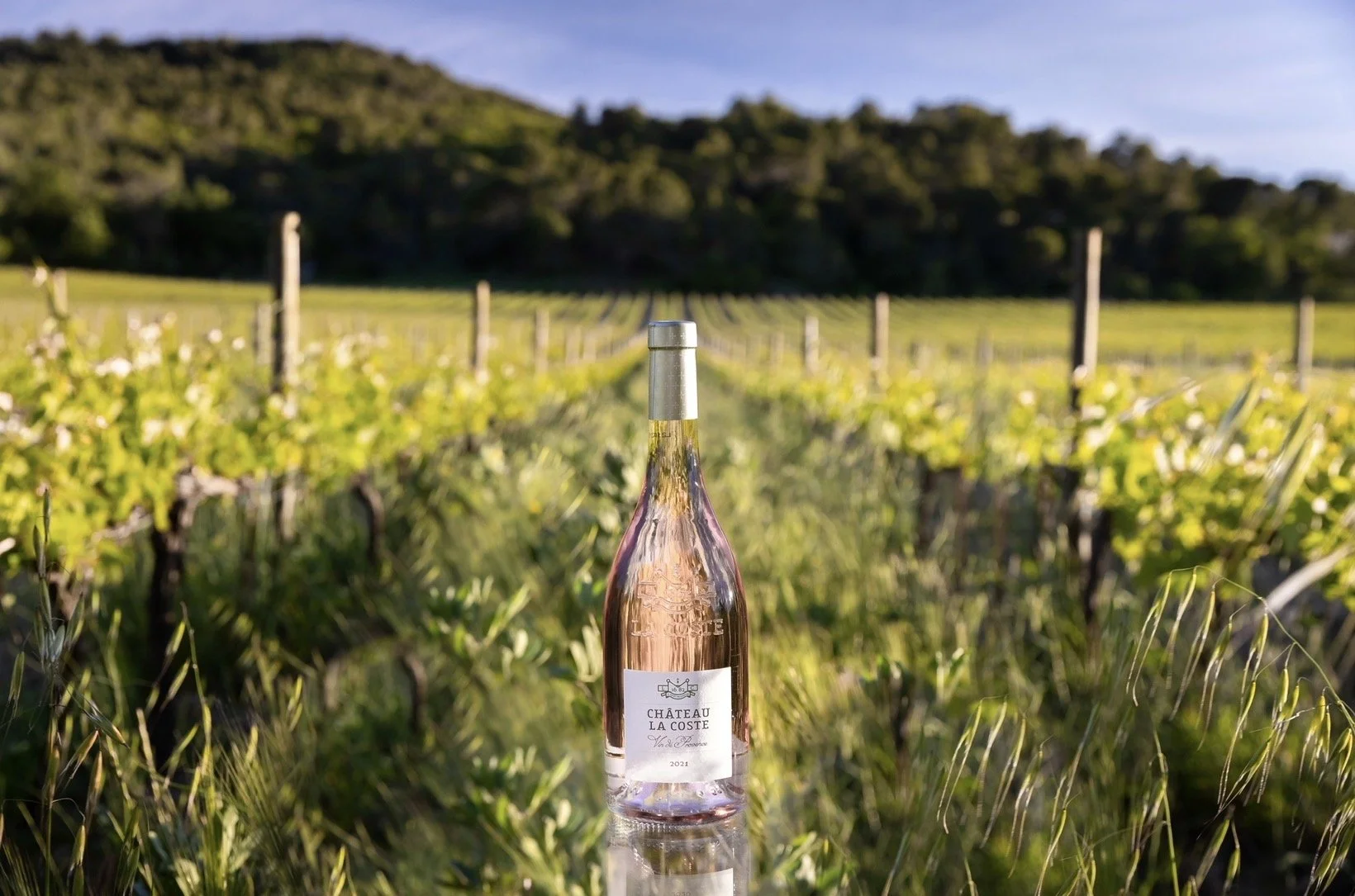
Château La Coste wine. Image courtesy of Château La Coste.
We were fortunate enough to join a tour and tasting in the Jean Nouvel-designed wine cellar, which offered a fascinating glimpse behind the bottle. The two curved, corrugated-steel structures house the different stages of production, from grape sorting and pressing through to bottling and storage. Then comes the more dramatic part of the tour, a descent of around 17 metres underground, where huge maturation vats sit beneath a network of steel walkways. It is here that the wines are matured, giving a fascinating insight into the journey from vineyard to bottle.
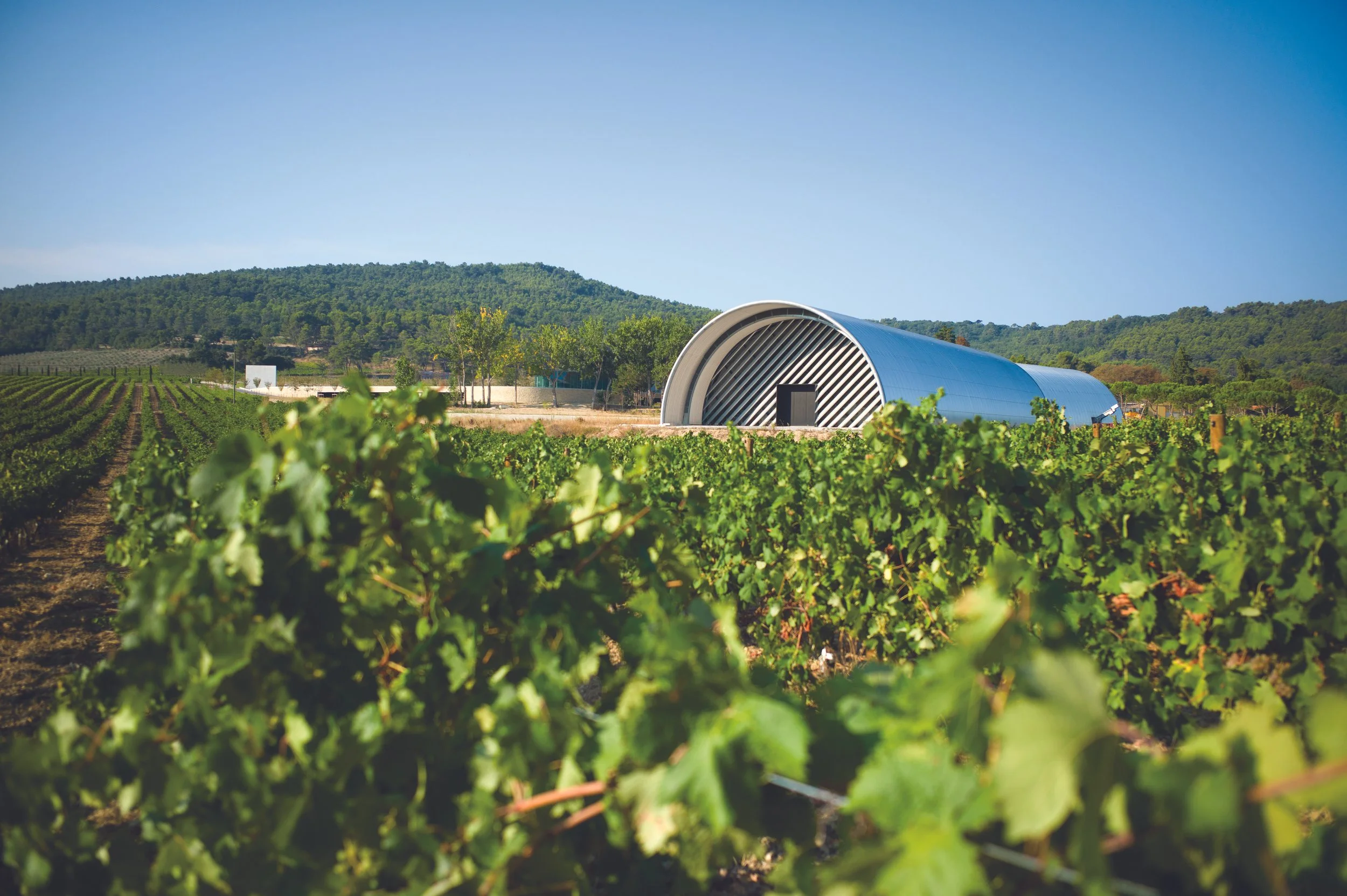
Jean Nouvel-designed wine cellar. © Adrew Pattman.
The tour culminates, naturally, with a tasting. We sampled a curated selection of rosé, white and red wines, with the Grand Vin Rosé a particular favourite. The tasting offers an informative introduction to the character of the estate’s wines, not just an excuse to drink them, with expert guides explaining the production methods, the influence of the terroir and the principles behind tasting.
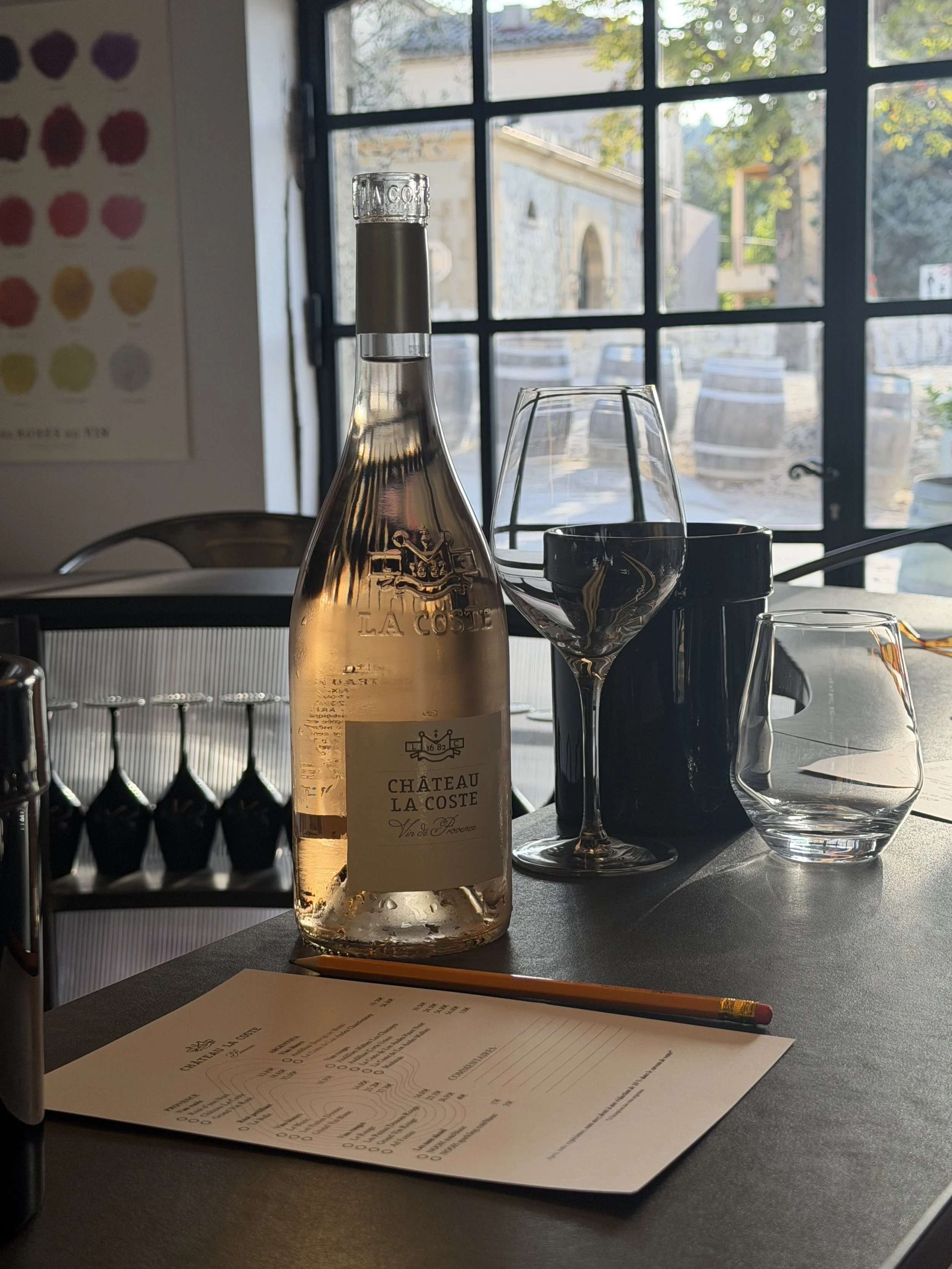
Wine tasting at Château La Coste. Image credit MTotoe/FLO London.
There is plenty to explore beyond the bottles we tried. Château La Coste’s range includes rosés such as Rosé d’une Nuit, Château Rosé and Grand Vin Rosé; whites including Le Blanc, Les Pentes Douces Blanc and Grand Vin Blanc; and reds ranging from Le Rouge to Grand Vin Rouge, Grande Cuvée and Ad Fontes. Alongside these, the estate produces La Bulle de La Coste, its sparkling wine, as well as NOOH, a range of increasingly popular non-alcoholic wines.
For those wanting to go further, Château La Coste offers a range of wine experiences. The Wine Tasting & Pairing includes four estate wines accompanied by either chocolate or cheese, while the two-hour Wine Tasting Workshop covers everything from aromas, colours, flavours and tannins to choosing the right glass, opening a bottle, understanding corks and the effects of ageing.
Dining
Château La Coste’s six restaurants offer a broad choice of styles, from relaxed Provençal food to more ambitious gastronomic cooking. The current line-up includes Tadao Ando Café Restaurant, La Terrasse, Francis Mallmann, L’Italien, La Rôtisserie and Louison by Florent Pietravalle.
For a casual lunch, La Terrasse has a distinctly elegant, unpretentious South of France feel. After a day exploring Château La Coste’s art and architecture and taking part in a wine tasting, this is where we stopped for lunch, with an excellent selection of cheeses and charcuterie paired with Château La Coste wines. Inside Tadao Ando’s Art Centre, the Tadao Ando Café Restaurant offers another casual option, with indoor and outdoor seating and an à la carte menu. The restaurant focuses on seasonal cooking and fresh produce, including ingredients from the estate’s kitchen garden.
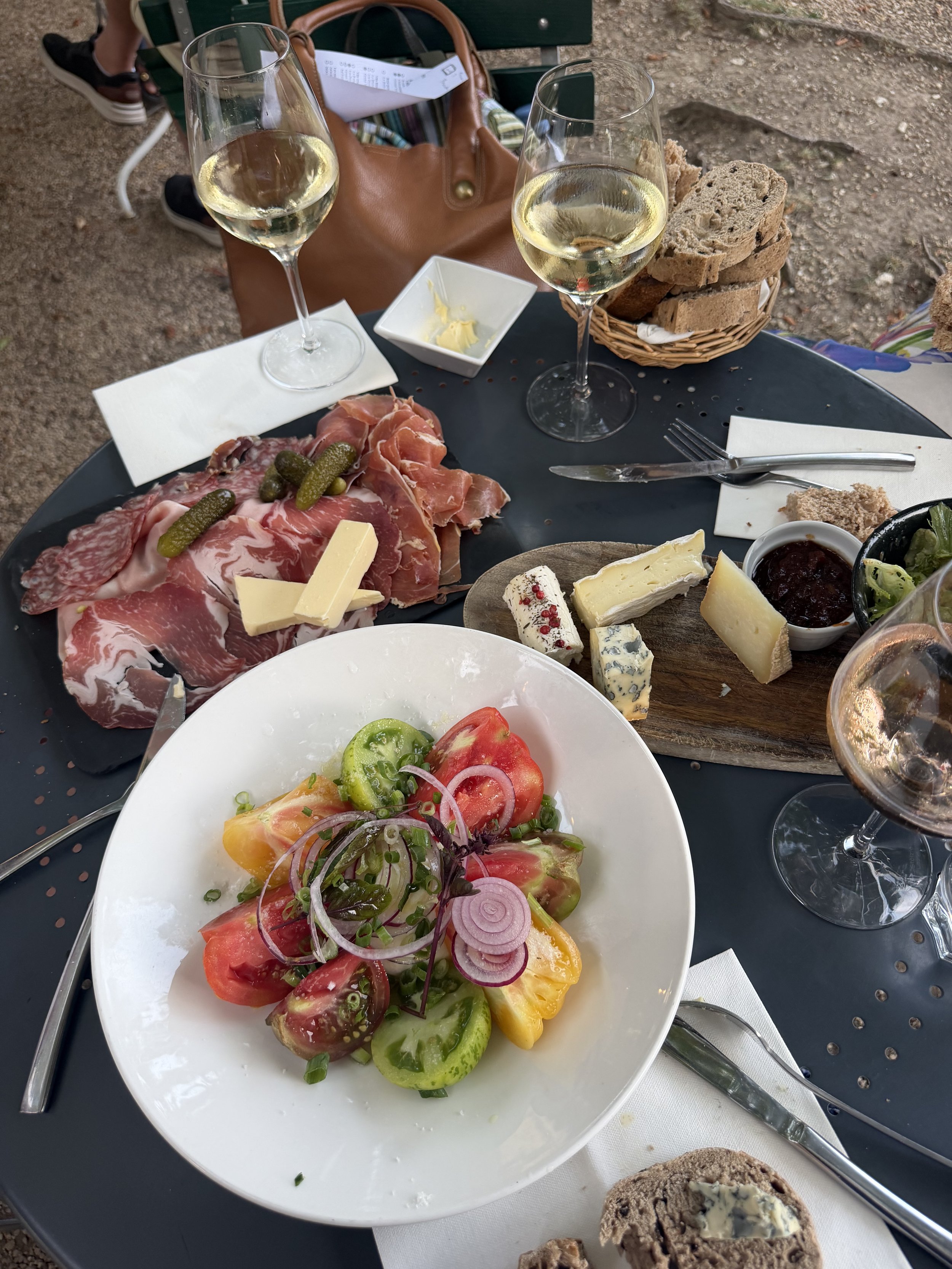
Dining at La Terrasse. Image creidt MTotoe/FLO London.
L’Italien takes a more informal Italian approach, serving dishes including wood-fired pizzas in a former 17th-century outbuilding of the Bastide. La Rôtisserie offers another relaxed option, while Louison at Villa La Coste offers a more fine dining experience, led by chef Florent Pietravalle.
The dining programme is never static and often features guest-chef residencies and special collaborations. Recent events have included Argentine chef Javier Rodriguez, who brought his El Papagayo concept to Château La Coste for a limited run.
Click here to discover more dining options at Chateau La Coste.
Planning your visit
Château La Coste is best approached as a half-day or full-day outing, particularly if you want to see the sculpture trail, visit the exhibitions and galleries, and stop for lunch or a wine tasting. The estate can be explored independently, or you can join the Art and Architecture Walk, a guided tour in English or French that takes around two hours. The self-guided route gives you more freedom to set your own pace. The price of admission and the tour range from 15 - 25 EUR.
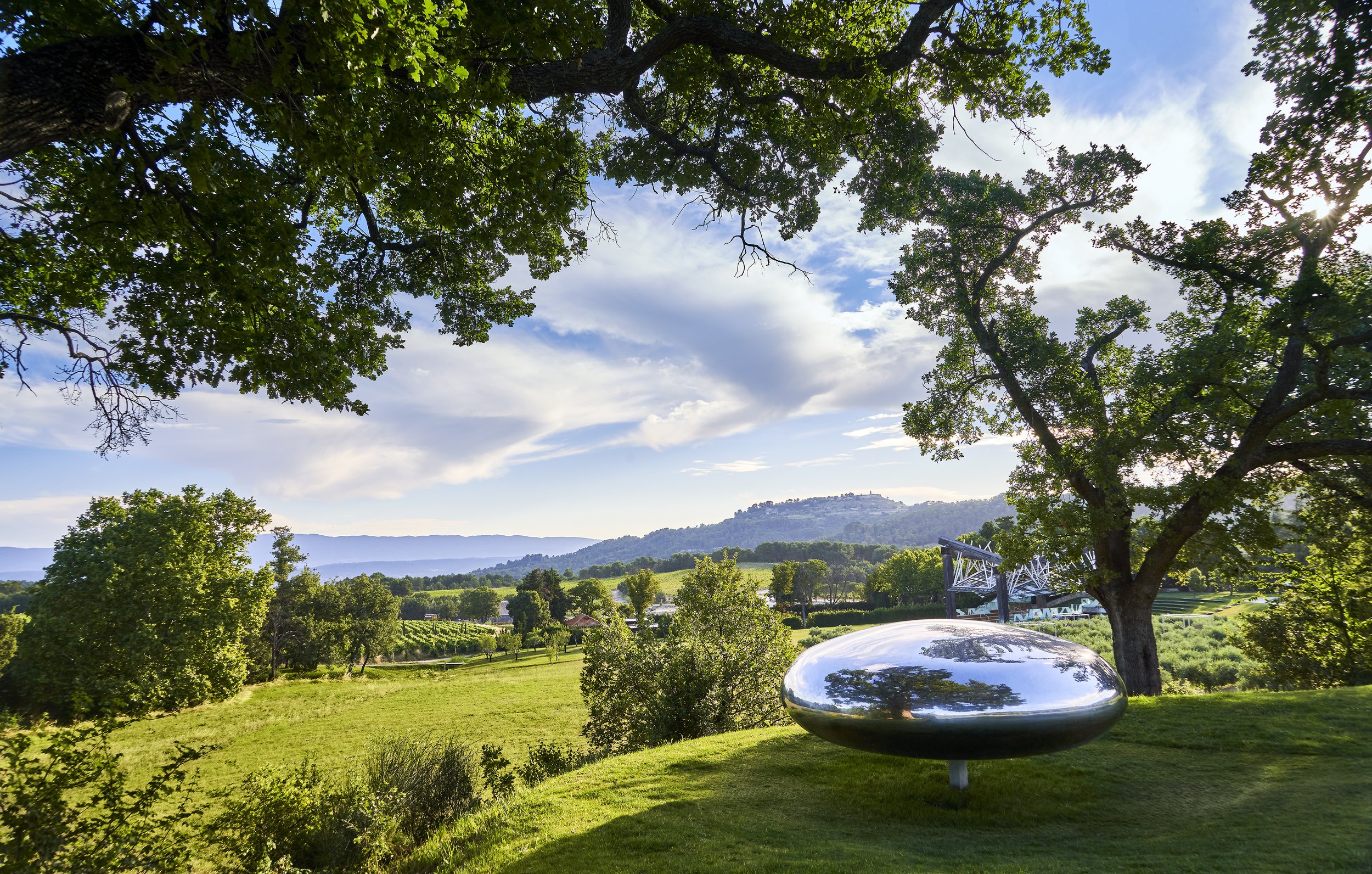
Tom Shannon, Drop (2009), Château La Coste. © Richard Haughton.
Whichever option you choose, allow plenty of time and wear comfortable shoes, as the estate’s paths lead through vineyards, woodland and uneven terrain. In summer, water, a hat and sun protection are also sensible. Château La Coste is in Le Puy-Sainte-Réparade, around 30 minutes by car from Aix-en-Provence TGV station and roughly an hour from Marseille. If you are making the journey from one of these nearby cities, it is an easy day trip, but there is enough to see and do to justify staying longer.
For more information, to book visits and check the latest exhibitions, restaurants and opening times, visit chateau-la-coste.com








Stand out this summer with this gorgeous Nsubra beach bag! Handmade in Ghana, this large tote bag is the perfect size for your sun cream, beach towel, purse and your latest book.