
Seven architects to discover at Château La Coste
Château La Coste is a place where architecture is woven into every part of the experience. Across the estate, some of the most celebrated architects of the past century have designed buildings that work in close relationship with the art, vineyards and surrounding landscape. Here is your guide to these architects and their work at Château La Coste, from Tadao Ando’s concrete minimalism to Frank Gehry’s expressive structures and Oscar Niemeyer’s final project in France.
Tadao Ando
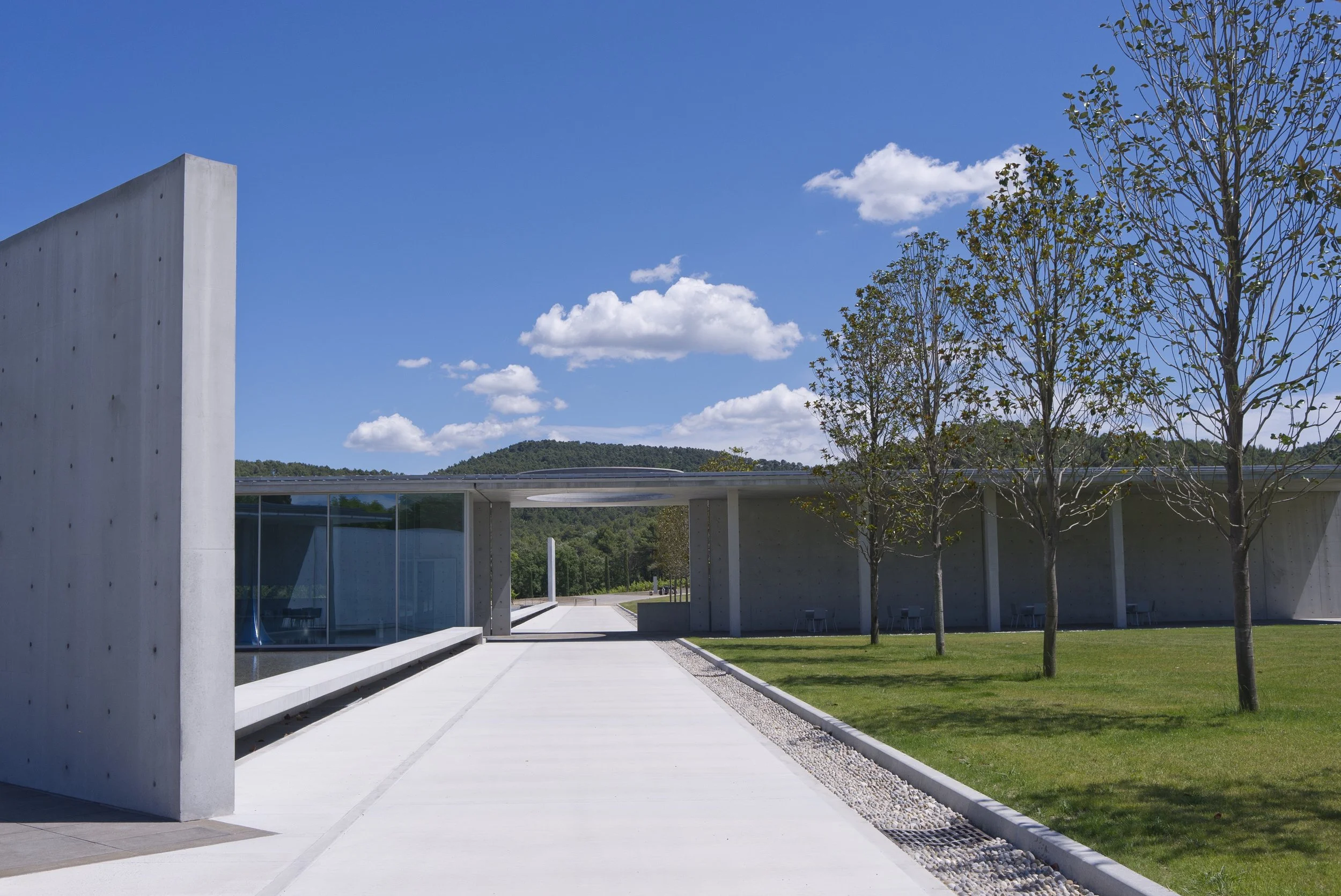
Art centre by Tadao Ando. © Andrew Pattmann
Japanese architect Tadao Ando, born in Osaka in 1941, is one of the most influential architects of his generation. Largely self-taught, he became known for his rigorous use of concrete, geometric forms and carefully controlled natural light, and was awarded the Pritzker Prize in 1995. At Château La Coste, Ando’s contribution is extensive, with the Gate, Art Centre, Chapel and Origami Benches, all dating from 2011, as well as the pavilion for Four Cubes to Contemplate Our Environment. The Art Centre, where concrete, glass and water frame views of the Provençal landscape, is one of the estate’s defining buildings. His Chapel is also particularly notable: Ando built around a ruined historic chapel, creating a contemporary concrete, steel and glass structure while retaining the original building.
Discover more at tadaoandoo.tilda.ws
Jean Nouvel
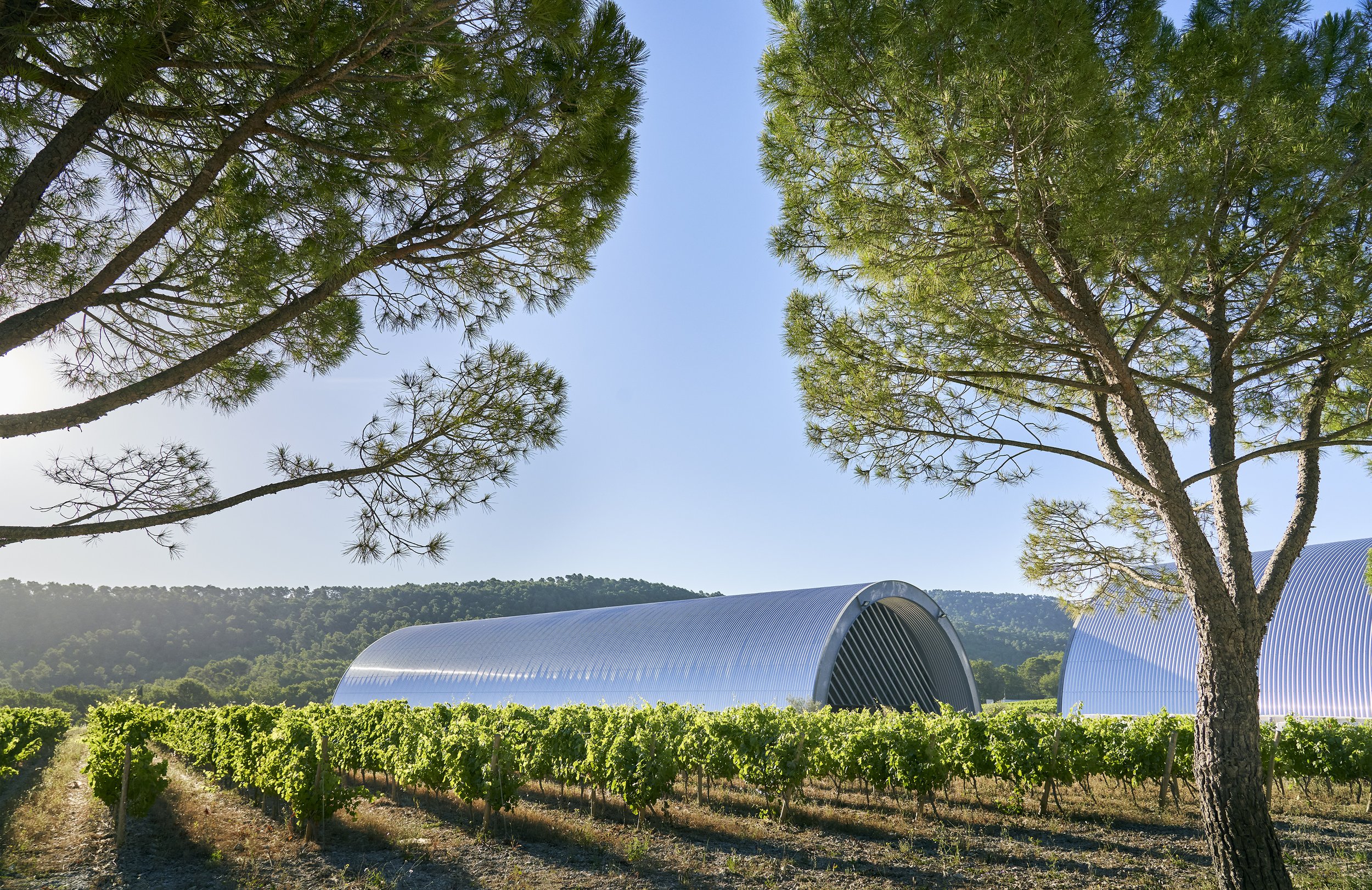
Winery by Jean Nouvel © Richard Haughton
Jean Nouvel is a French architect known for his use of light, colour, transparency and modern materials. Born in 1945, he studied architecture at the École des Beaux-Arts in Paris and became internationally recognised for his innovative approach to design. He received the Pritzker Prize in 2008 and has designed notable buildings including the Institut du Monde Arabe in Paris, the Louvre Abu Dhabi and the Philharmonie de Paris. At Château La Coste, Nouvel designed the winery in 2008, creating a building that extends both above and below ground. Its aluminium exterior helps control light and temperature within the gravity-flow facility, while its simple, modern design fits naturally into the estate’s landscape.
Discover more @ateliersjeannouvel
Frank Gehry
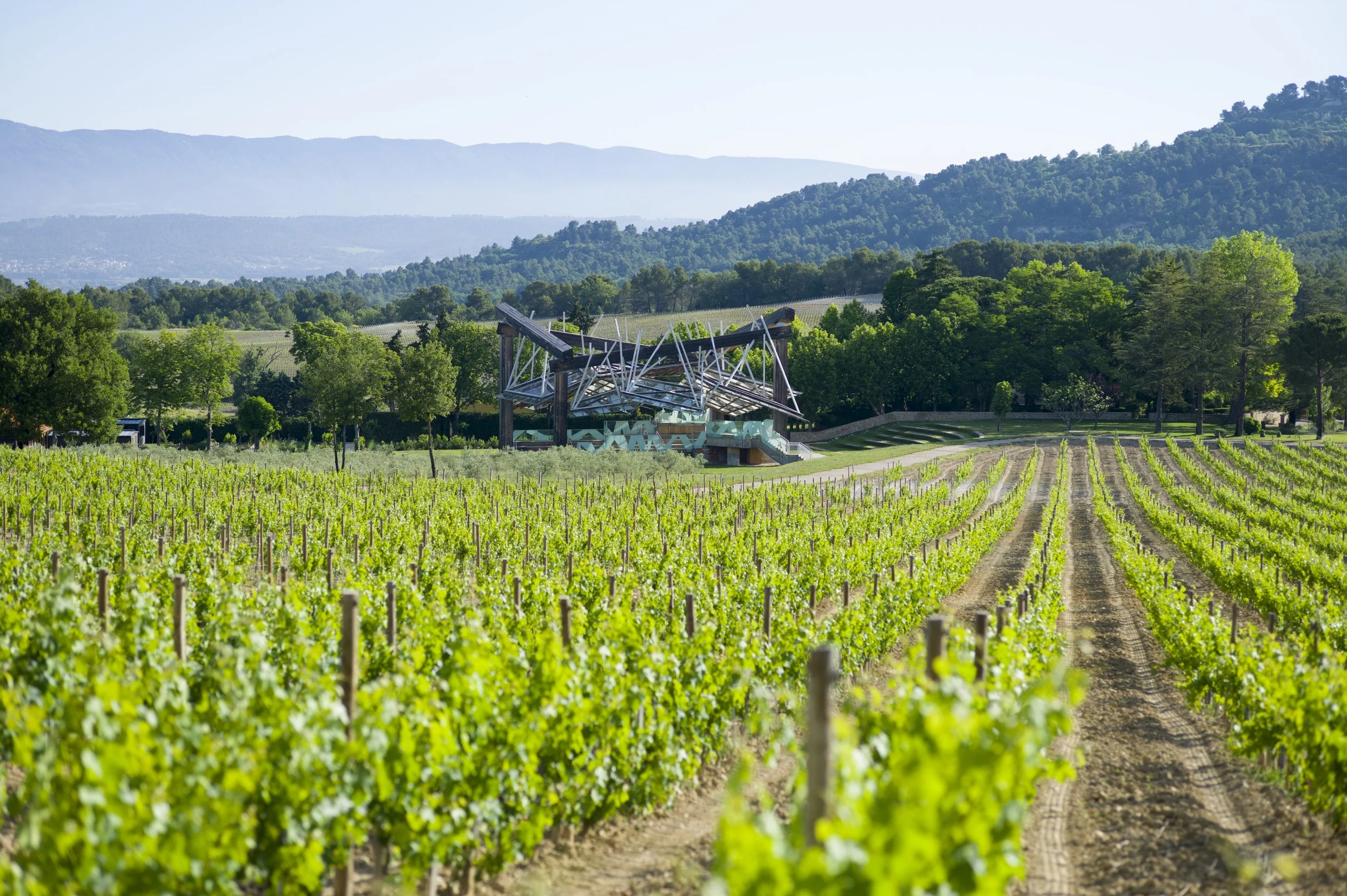
Frank Gehry. Pavillon de Musique © Andrew Pattmann
Frank Gehry, born in Toronto in 1929, is one of the world’s best-known architects and a 1989 Pritzker Prize winner. His sculptural buildings, including the Guggenheim Museum Bilbao and Walt Disney Concert Hall, helped establish a new approach to contemporary architecture in which structure and form become part of the visual experience. At Château La Coste, his Pavillon de Musique (2008) was originally created for London’s Serpentine Gallery before being permanently installed at the estate. Its timber structure and suspended glass panels create distinctive acoustics, making it particularly suited to musical performances.
Gehry also designed the pavilion for The Marriage of New York and Athens, housing three sculptures by American artist Tony Berlant that combine references to New York skyscrapers and ancient Greek temples. The installation reflects the long-standing friendship and creative exchange between the two artists.
Discover more at foga.com
Oscar Niemeyer
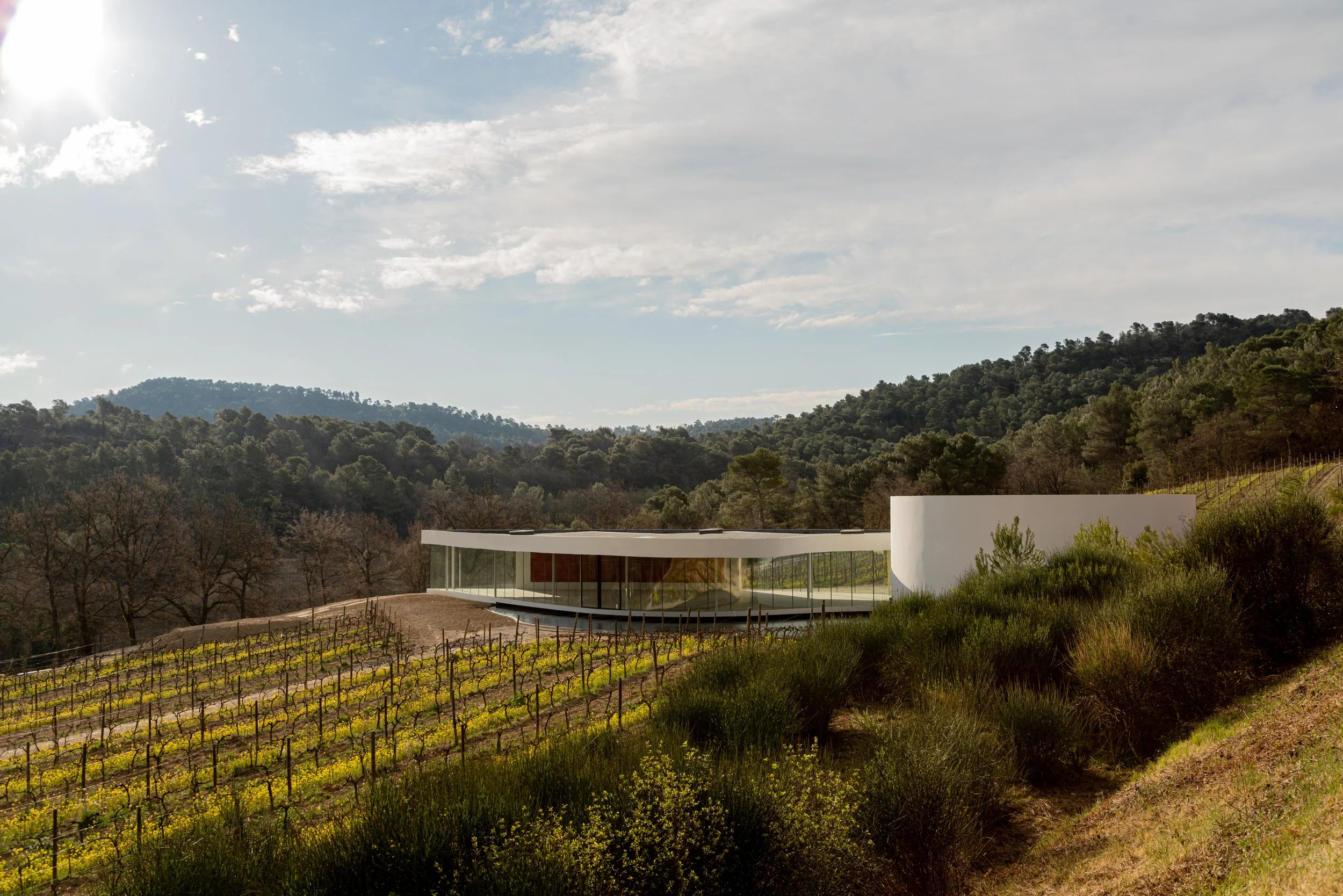
Auditorium Oscar Niemeyer © Stéphane Aboudaram l Wearecontent(s)
Few architects shaped 20th-century modernism as distinctly as Oscar Niemeyer, whose expressive use of curves and influential role in the development of Brasília made him a defining figure of the movement. Born in Rio de Janeiro in 1907, he designed some of Brazil’s most iconic buildings, including the Cathedral of Brasília, the National Congress and the Copan Building in São Paulo. He received the Pritzker Prize in 1988 and designed more than 600 buildings during his career. At Château La Coste, Niemeyer’s Pavilion and Auditorium was designed in the final years of his life and opened in 2022, becoming his final architectural project in France. A white, comma-like form curves around the circular auditorium, creating a noticeable contrast with the more geometric architecture elsewhere on the estate.
Discover more at oscarniemeyer.org.br
Richard Rogers
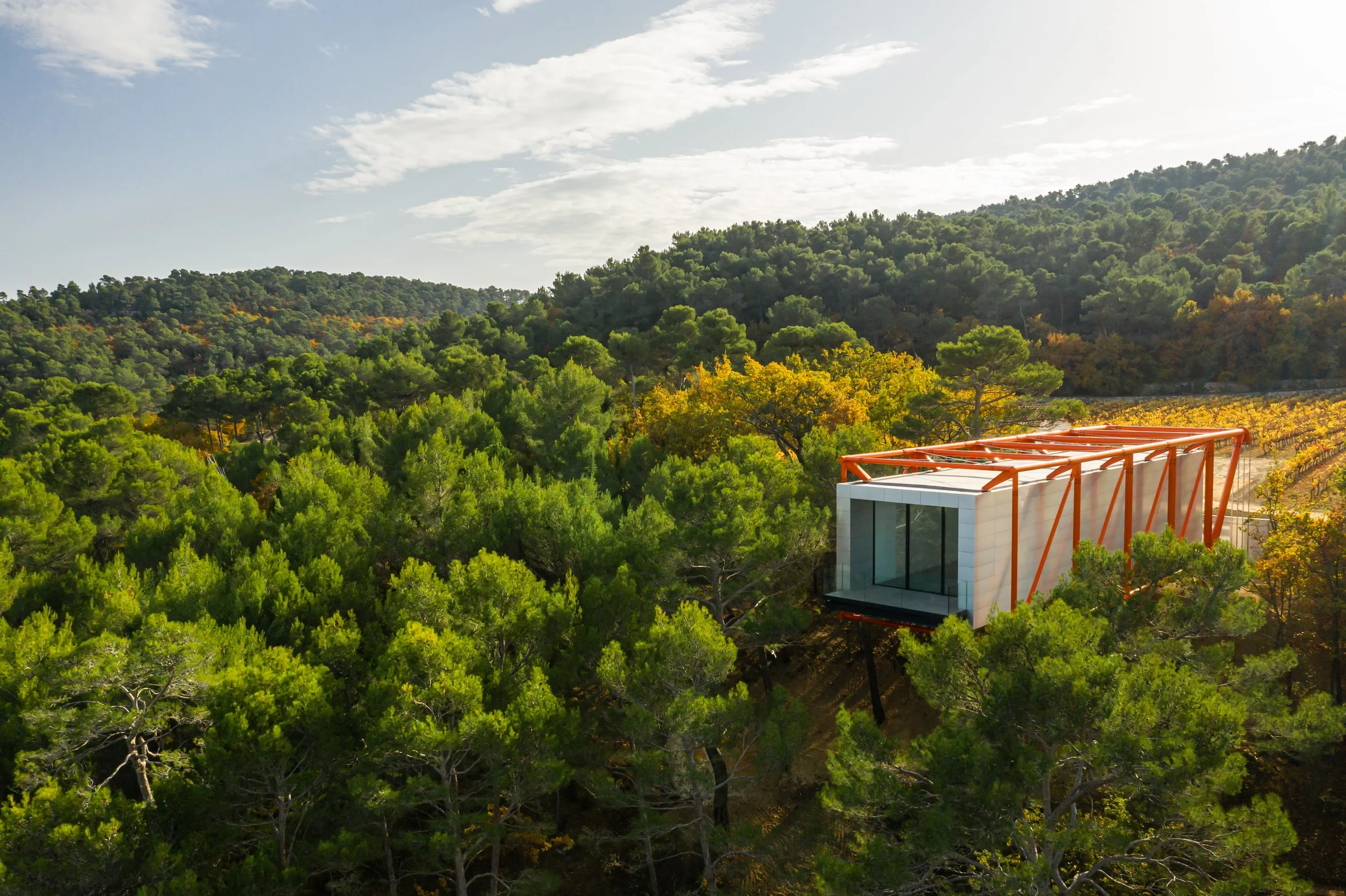
La Galerie Chateau la Coste by Richard Rogers. © Stéphane Aboudaram l Wearecontent(s)
Richard Rogers was one of Britain’s most influential architects and a leading figure in High-Tech architecture. Born in Florence in 1933, he went on to create some of the most recognisable buildings of the modern era. Alongside Renzo Piano, he designed the Centre Pompidou in Paris, while his other landmark projects include London’s Lloyd’s building. He was awarded the Pritzker Prize in 2007. At Château La Coste, La Galerie became his final architectural project, a cantilevered structure extending from the hillside above the trees. Its exposed steelwork and vivid orange elements reflect Rogers’ belief that a building’s structure should be expressed rather than concealed.
Discover more at rshp.com
Renzo Piano
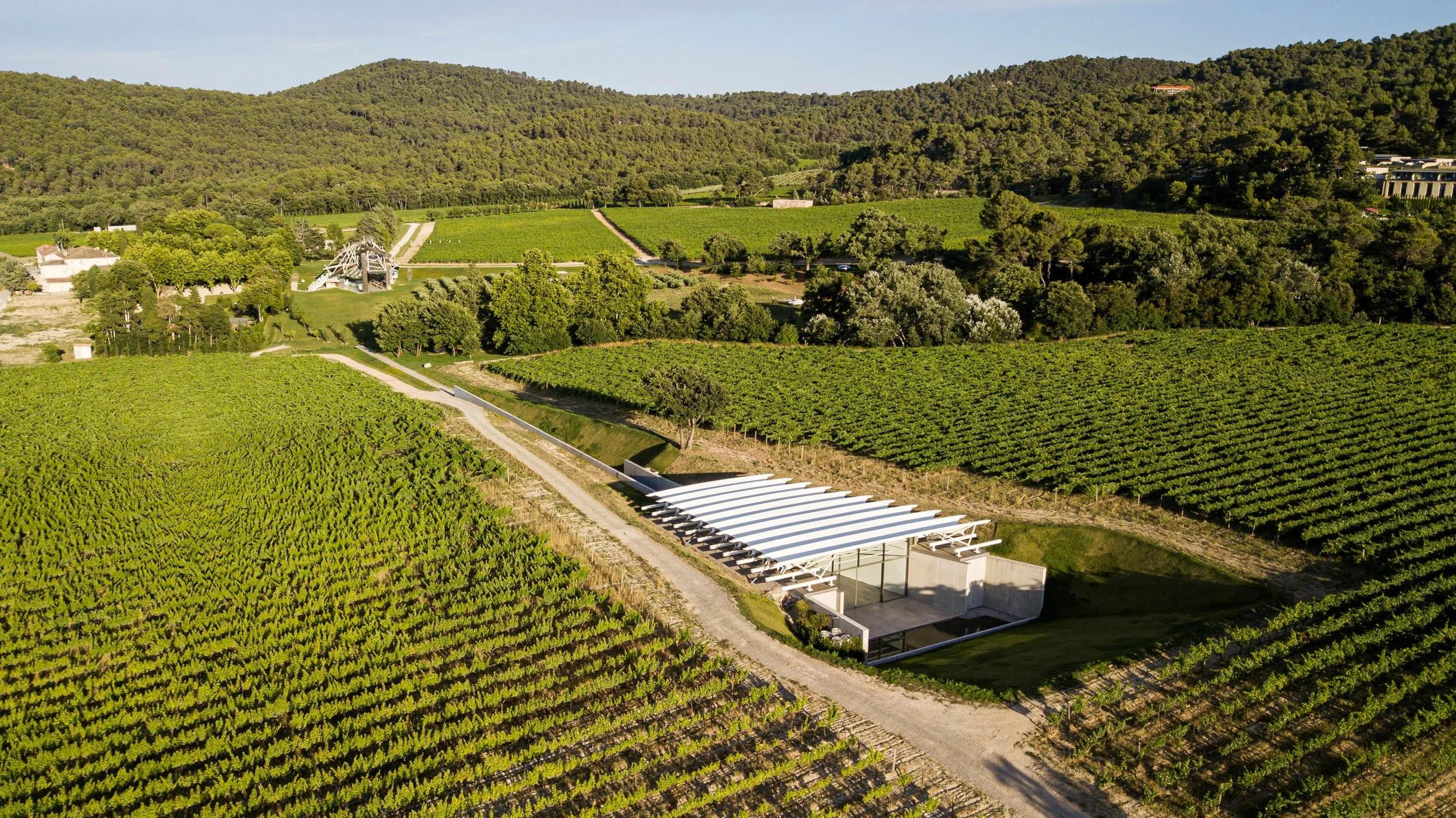
Renzo Piano © Stéphane Aboudaram l Wearecontent(s)
Italian architect Renzo Piano, born in Genoa in 1937, became internationally recognised after designing the Centre Pompidou with Richard Rogers. He has since created major buildings including The Shard in London, the Whitney Museum in New York and Kansai International Airport, and received the Pritzker Prize in 1998. His Exhibition Pavilion at Château La Coste, completed in 2017, is built into the vineyard, with Piano excavating six metres into the land rather than imposing a large structure above it. Glass façades fill the exhibition space with natural light, while the roof’s metal arches echo the rhythm of the surrounding vines.
Discover more at rpbw.com
Kengo Kuma
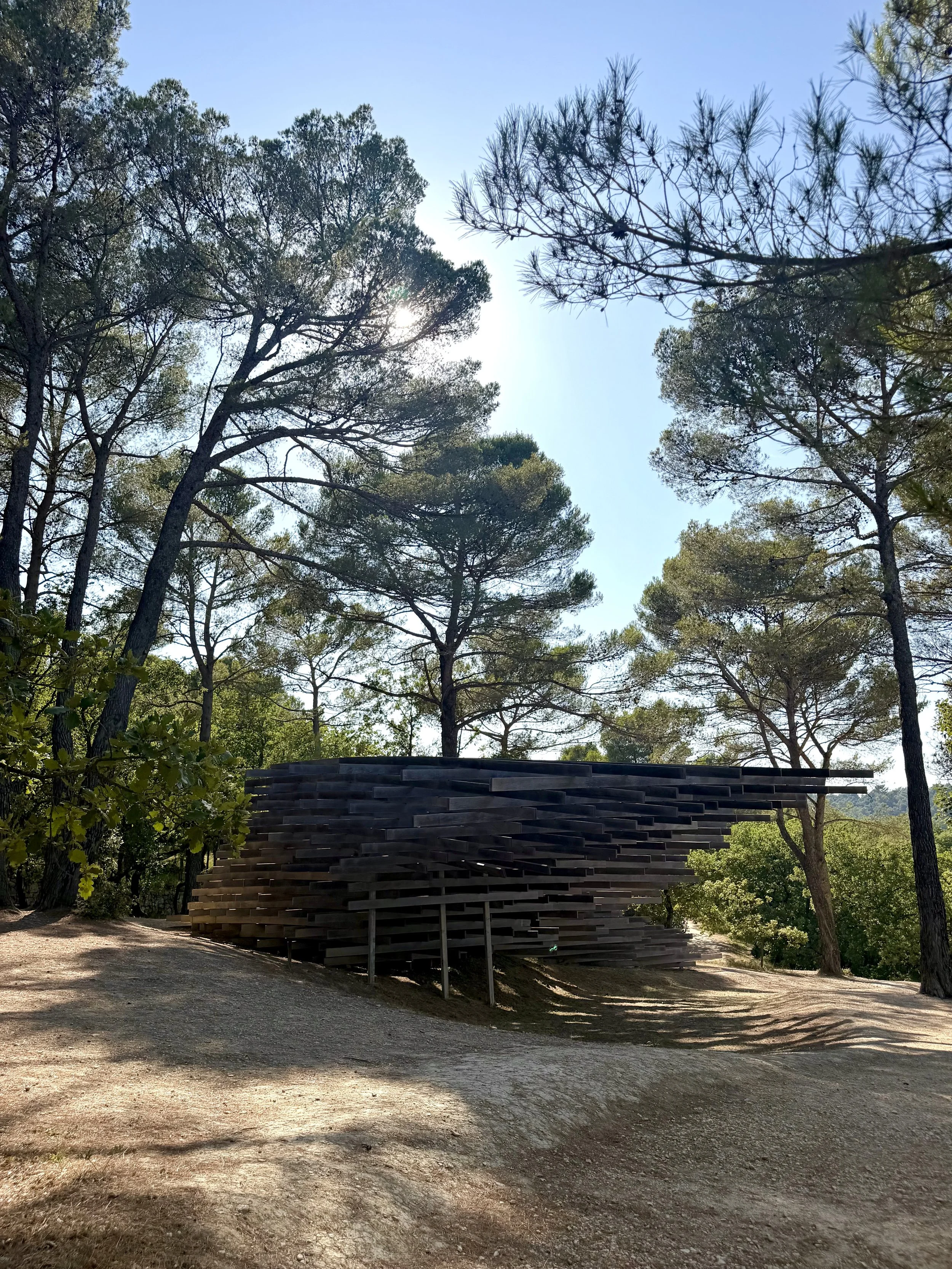
Kengo Kuma, Komorebi (2018). Château La Coste/ Image credit MTotoe/FLO London
Japanese architect Kengo Kuma, born in 1954, has built an international reputation for architecture that works with natural materials, light and landscape. His projects include the V&A Dundee and Tokyo’s Olympic Stadium. At Château La Coste, Komorebi (2018) takes its name from the Japanese word for sunlight filtering through leaves. Made from approximately 12 tonnes of ipé wood and 1.5 tonnes of stainless steel, the structure has a surprisingly light appearance despite its considerable weight. Its layers of timber create constantly changing patterns of light and shadow.
Discover more at kkaa.co.jp
The architecture and art can be discovered along the estate’s trail, either independently or with a guided tour in English or French. Click here for our guide to visiting Château La Coste, including practical information and tips for making the most of your visit, and visit chateau-la-coste.com for further information and to book your experience.















Stand out this summer with this gorgeous Nsubra beach bag! Handmade in Ghana, this large tote bag is the perfect size for your sun cream, beach towel, purse and your latest book.