
Six artworks to discover on Château La Coste’s art & architecture walk
Set among vineyards, olive groves and woodland, Château La Coste’s Art & Architecture Walk features more than 40 works by leading artists and architects across a four-kilometre trail. From Louise Bourgeois’ iconic spider to Sophie Calle’s mysterious woodland tomb, these are six works worth seeking out along the way.
Louise Bourgeois
Crouching Spider, 2003
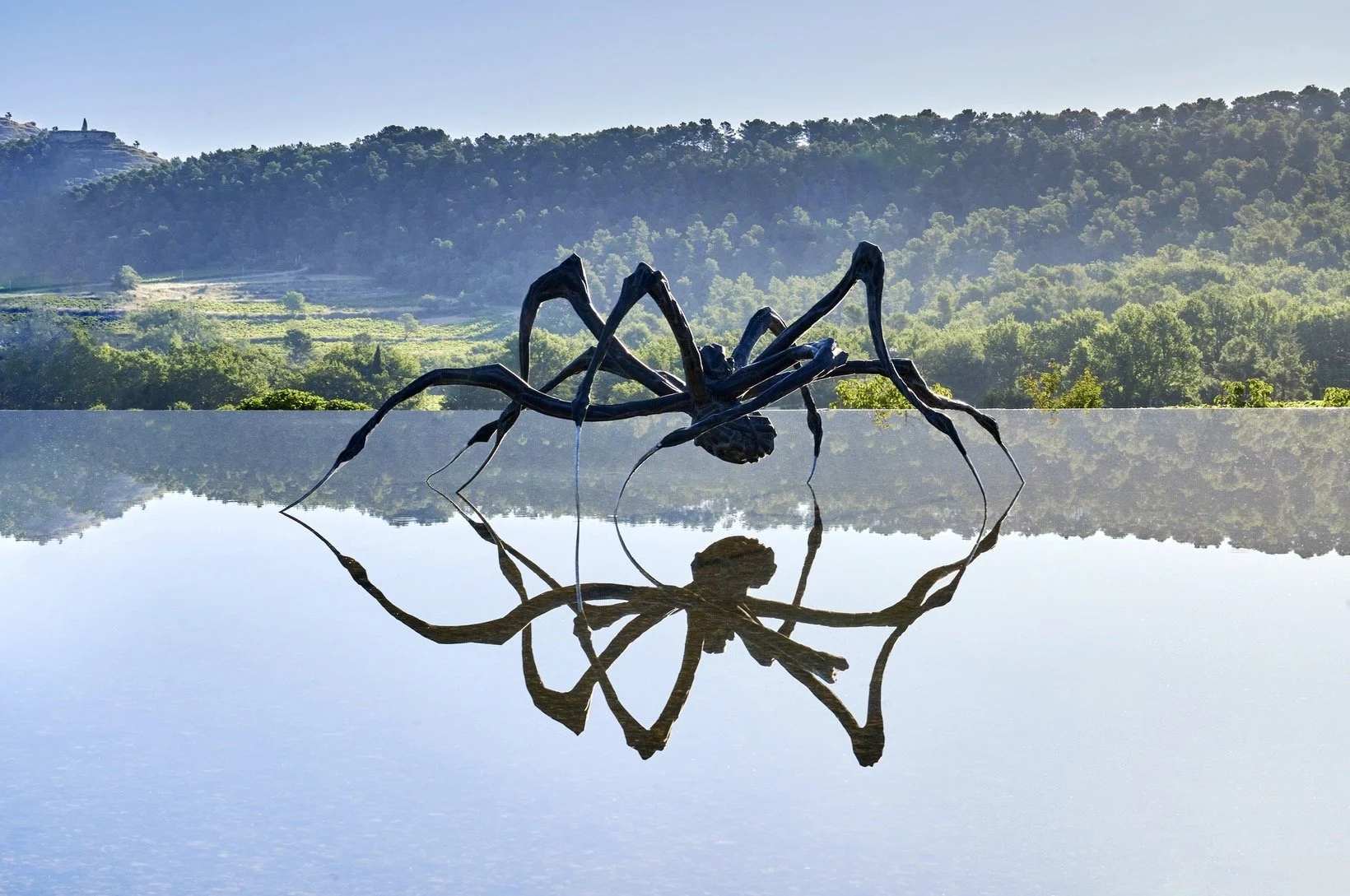
Crouching Spider © The Easton Foundation, New York - ADAGP, Paris - Richard Haughton.
Bourgeois’ Crouching Spider is the first artwork most visitors will encounter on arrival, her elongated legs spreading gracefully (or ominously depending on your preference towards arachnids) over the ice-blue waters of the serene pool. One of the first artworks to be installed at the vineyard, she has become synonymous with Chateau La Coste. The spider’s legs embody a contradiction at the heart of Bourgeois’ practice, wherein delicate subjects are treated with hard materials. While they may appear thin and fragile, they are cast in bronze and span, protectively, from the central body. The spider is in fact a recurring symbol representing the artist’s own mother, exploring the nature of the complex, protective role mothers play.
Liam Gillick
Multiplied Resistance Screened, 2010
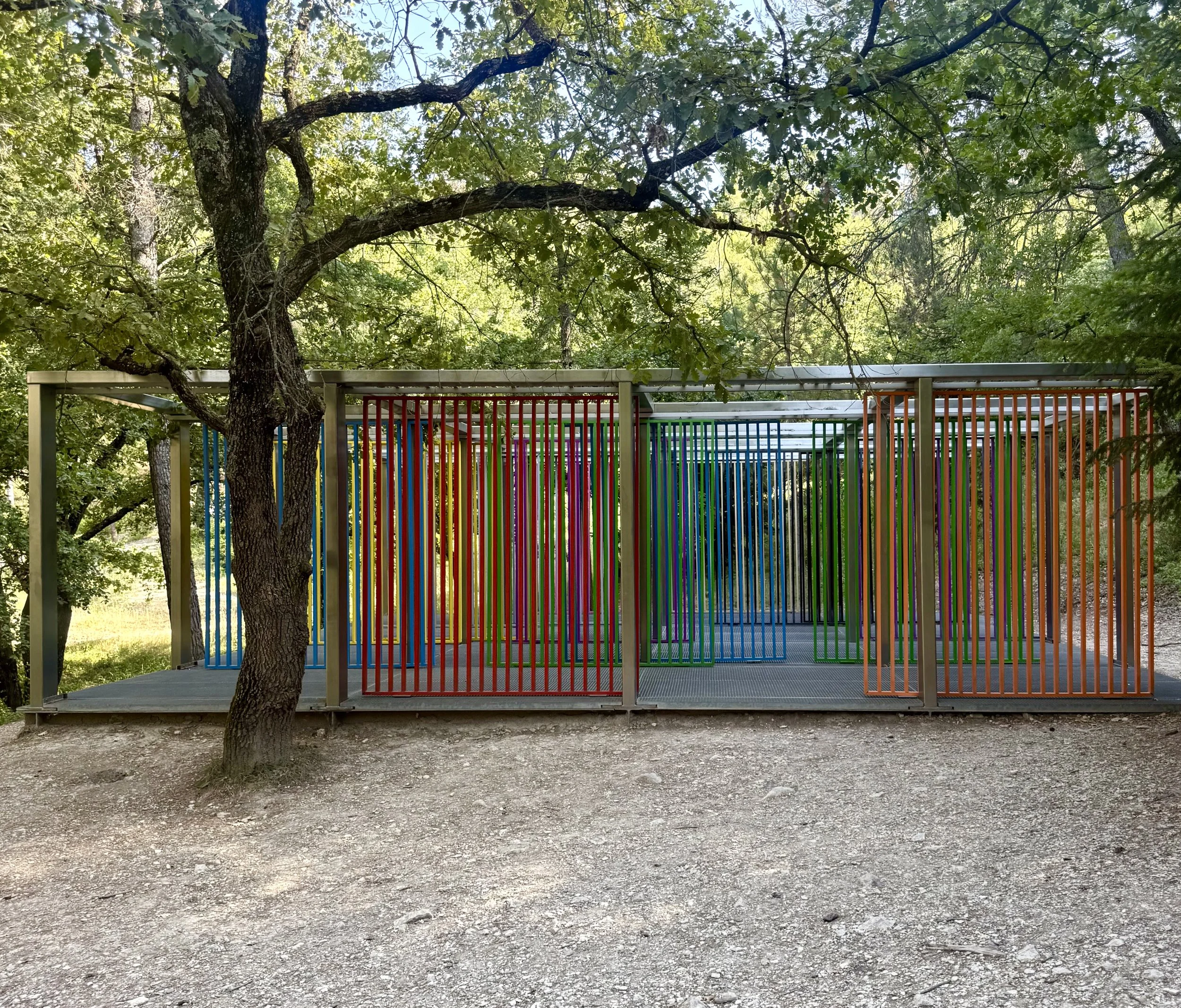
Liam Gillick, Multiplied Resistance Screened, 2010. Image credit Sofia Carreira-Wham.
Multiplied Resistance Screened is immediately enchanting. Nestled in a shady corner of the forest, Gillick has created a pavilion of sorts, punctuated by panels of brightly coloured, powder-coloured metal strips that allow light to spill through. British artist Liam Gillick is well known for installations at the intersection of architecture, sculpture and design, and which not only invite but require participation. As you walk through the installation, the colours meld and mesh together, creating thousands of potential perspectives that echo the dynamic nature of the forest itself. With nods to minimalism and op art, this is an art historically rooted yet highly contemporary work that playfully questions space.
Tunga
Psicopompos, 2011
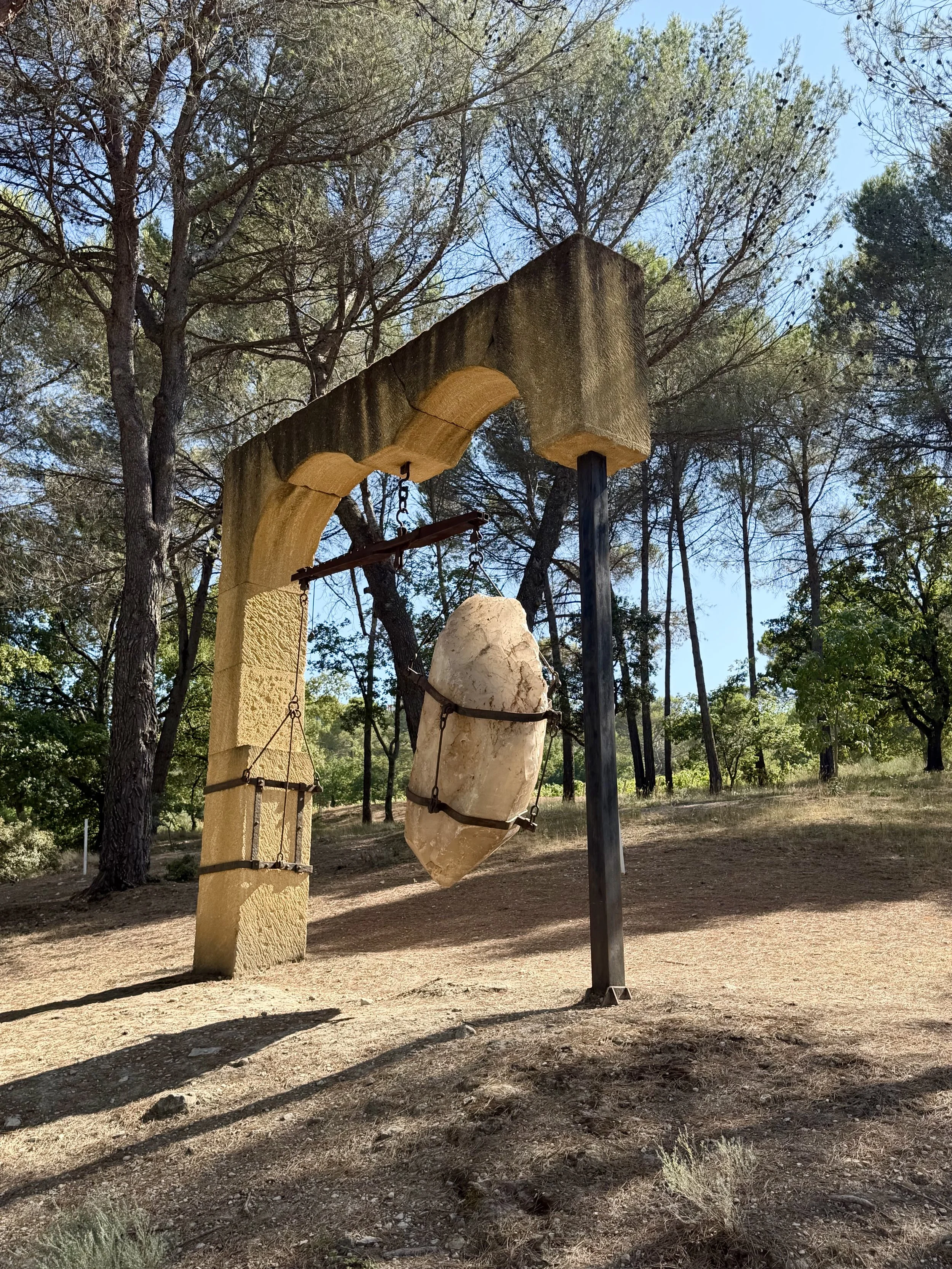
Tunga, Psicopompos, 2011. Image credit MTotoe/FLO London
Tunga developed his monumental sculptures after a month spent on site at the Château, exploring the region, its materials and its legacies of craftsmanship. The title Psicopompos refers to the “ferryman of souls” in Greek mythology who guides souls to the afterlife. Tunga created overarching structures from which weights and counterweights hang. Installed in open areas of landscape, visitors are encouraged to place themselves in close relation to the sculptures. Local materials are contrasted with Amazonian quartz, Czech glass and Chinese magnets, making the artist’s vision of the afterlife a global one which suggests a return to the earth. The works could be considered confronting or comforting, with no explicit value judgement drawn.
Sophie Calle
Dead End, 2018
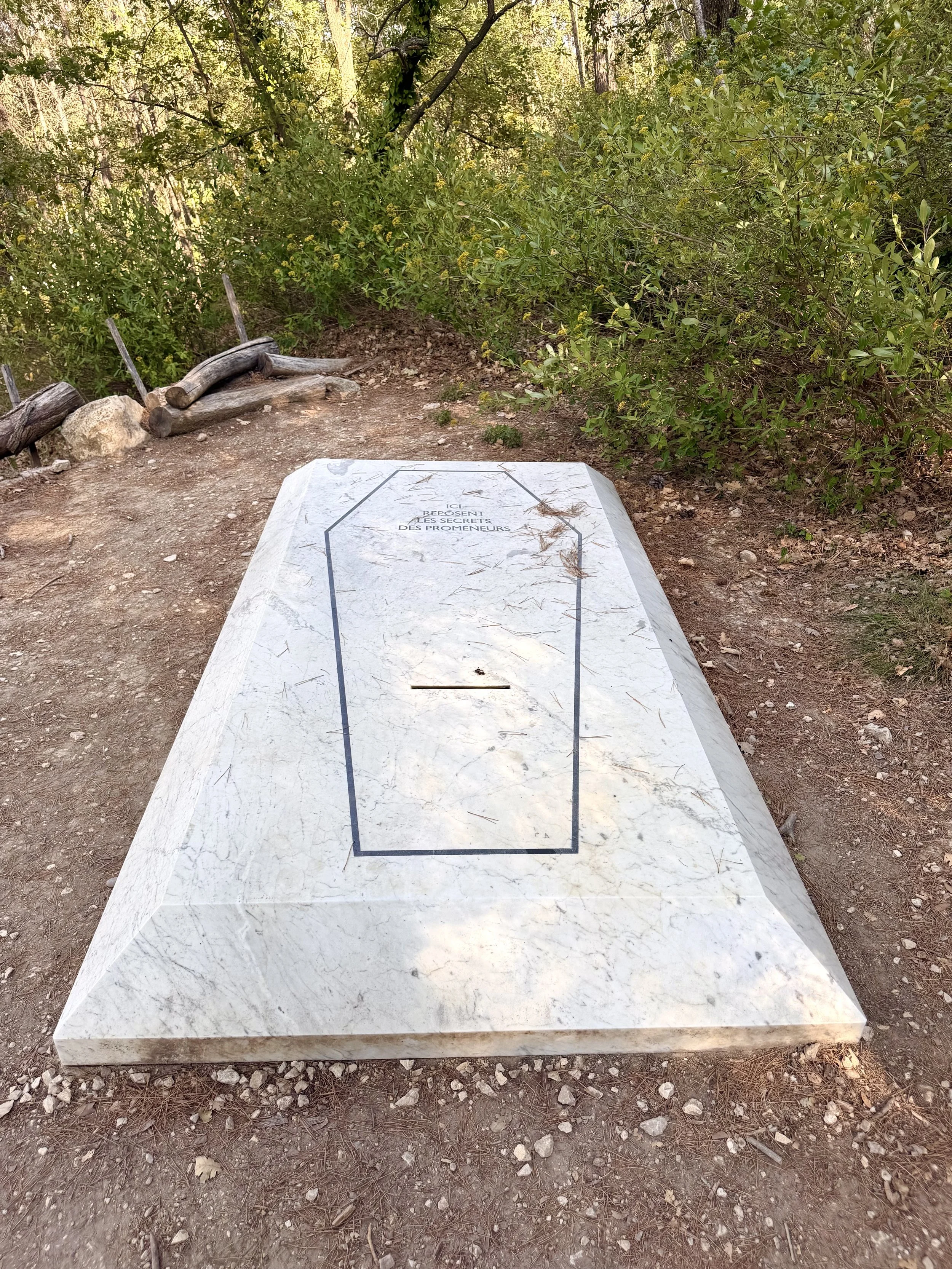
Sophie Calle. Dead End, 2018. Image credit MTotoe/FLO London.
French conceptual artist Sophie Calle has created one of the most mysterious works at Château La Coste, fittingly titled Dead End. Calle chose a secluded area of the estate to install a tomb on which is written “Here lie the secrets of the walkers”. As part of the creative process, Calle staged a performance at the vineyard in which she collected live confessions from visitors. The work explores themes central to her practice: death, loss, anonymity and love. It is subtly activated by each new visitor who finds their way there and unburdens themself, adding to the collective monument.
Richard Rogers
La Galerie, 2021
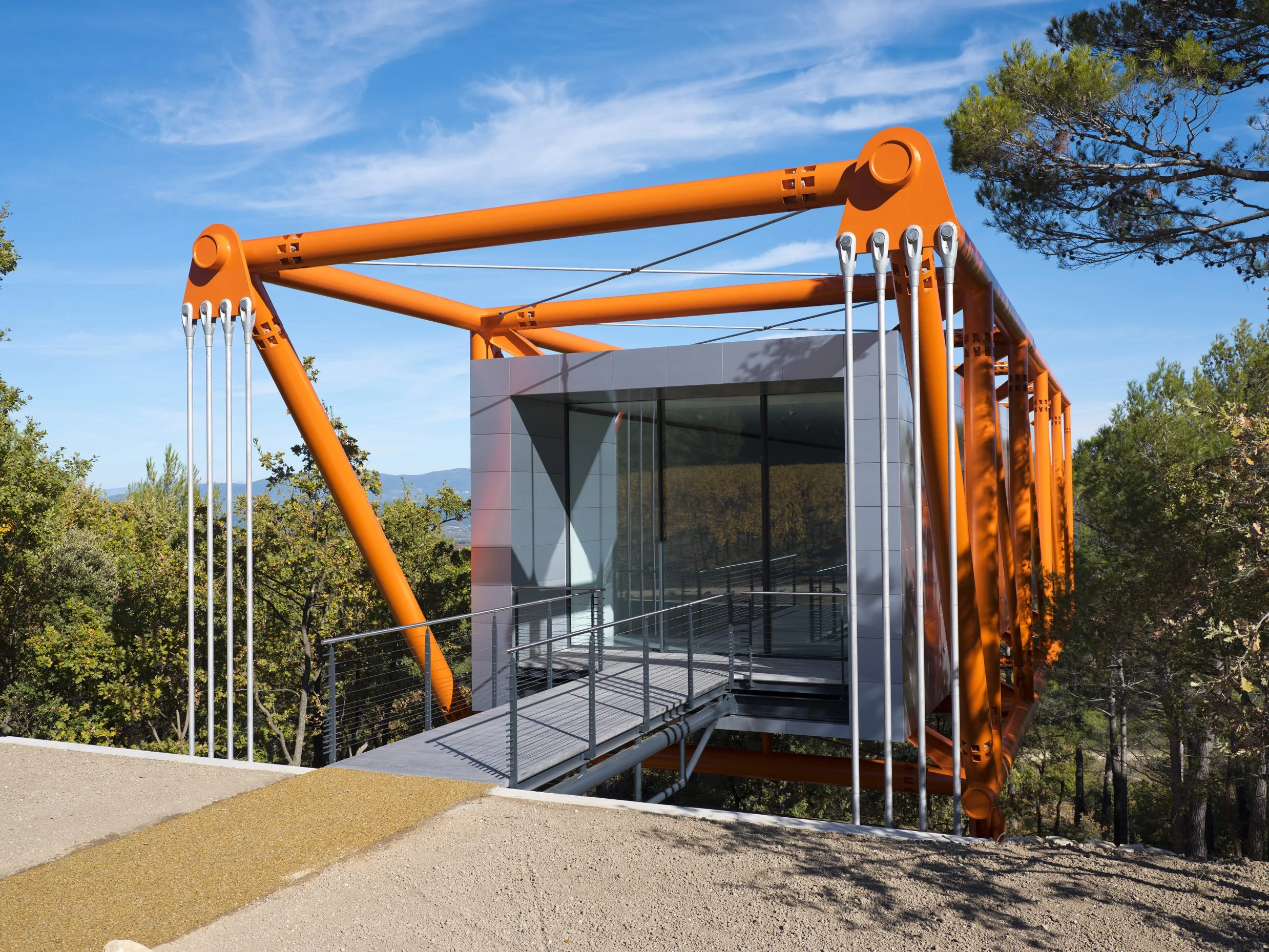
Richard Rodgers pavillion in Chateau La Coste, Provence, France. © Stéphane Aboudaram. Wearecontent(s)
Both a gallery and an architectural installation in its own right, Richard Rogers’ La Galerie is a long, elevated structure that seems to hover through the trees, offering stunning views over the estate. Rogers foregrounded the support beams of his construction into an intentionally exposed, bright orange framework that wraps the gallery. Simultaneously functional and playful, it embodies the architect’s signature approach to modernism. Walking through the long, tubular gallery, the hillside view at the end becomes a work of art in itself.
Prune Nourry
Mater Earth, 2023
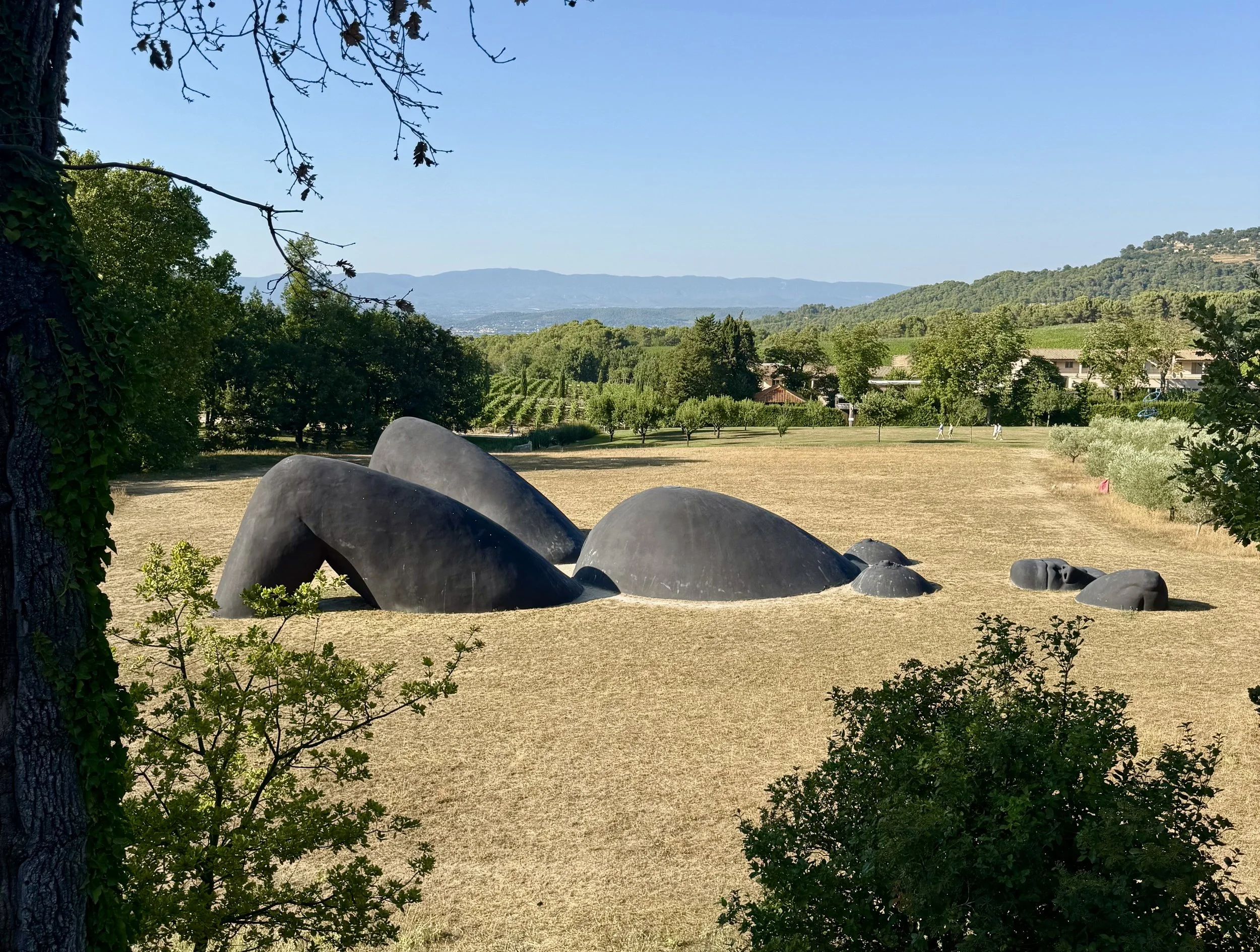
Prune Nourry, Mater Earth, 2023. Image credit Sofia Carreira-Wham.
Nourry’s Mater Earth sees the body parts of a pregnant female rise from the earth, a project that began when the artist photographed a pregnant friend immersed in a bathtub filled with milk. With only some body parts visible, it is both recognisable and abstracted, resembling the undulations of a mountainous landscape. The work is made from sustainable and ecological materials, such as sun-baked clay bricks, lime mortar and forest fire ashes for waterproofing. Mater Earth prompts a reconsideration of our relationship to the natural world, rooted in mythologies of the origins of humankind.
Click here for our guide to visiting Château La Coste.






Stand out this summer with this gorgeous Nsubra beach bag! Handmade in Ghana, this large tote bag is the perfect size for your sun cream, beach towel, purse and your latest book.