
Roskilde 2026 Festival Diary
FLO London’s Festival Correspondent Sofia Carreira Wham reports on the 2026 edition of Roskilde Festival, held from 27 June - 4 July in Roskilde, Denmark.
Roskilde is the greatest festival you have probably never heard of (if you live outside of Scandinavia). It is, in fact, the largest festival in northern Europe and has been running since 1971. Founded one year after Glastonbury, the two festivals are often compared on account of their impressive musical heritage, vast scale, and non-profit, volunteer-run status. The stats speak for themselves: Roskilde has generated over £54 million for charities since its inception.
I was in the early stages of recovery from another festival when I received the invitation to join a group of international journalists covering Roskilde. Intrigued by the headline role that art and activism plays at the festival, and spotting some of my bucket-list acts on the lineup, I signed up. Two weeks later, I was entering the sprawling festival site which occupies a beautiful area of countryside around 30 minutes west from Copenhagen, at the head of a historically significant fjord that was a popular trading route in Viking times.
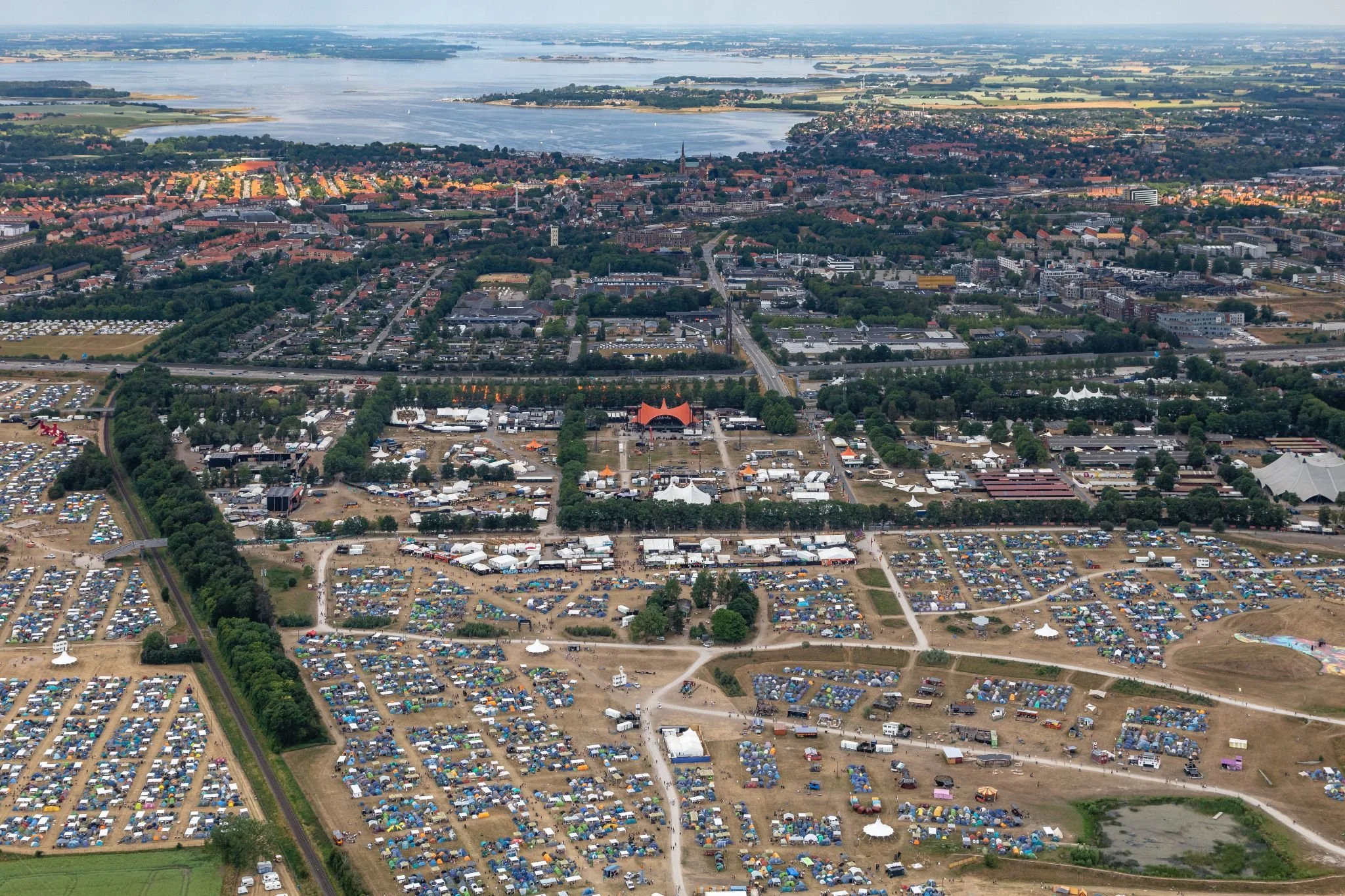
Image credit: Roskilde aerial photo by Stiig Hougesen
Each year, the entire festival site is built from scratch by a mighty 27,000 volunteers and is filled with enticing spots, from organic wine bars to the iconic “Orange” main stage. Now in its fourth iteration, the original Orange Stage was constructed for the Rolling Stones’ European tour and found abandoned in a warehouse in England in the 1970s before being transported to Denmark. In a full circle moment, The Rolling Stones headlined Roskilde in 2014. Countless great acts have graced the stage, including Bob Marley, U2, Lou Reed, Leonard Cohen, Metallica, Ray Charles, Nirvana, David Bowie, Radiohead and Patti Smith, to name a few.
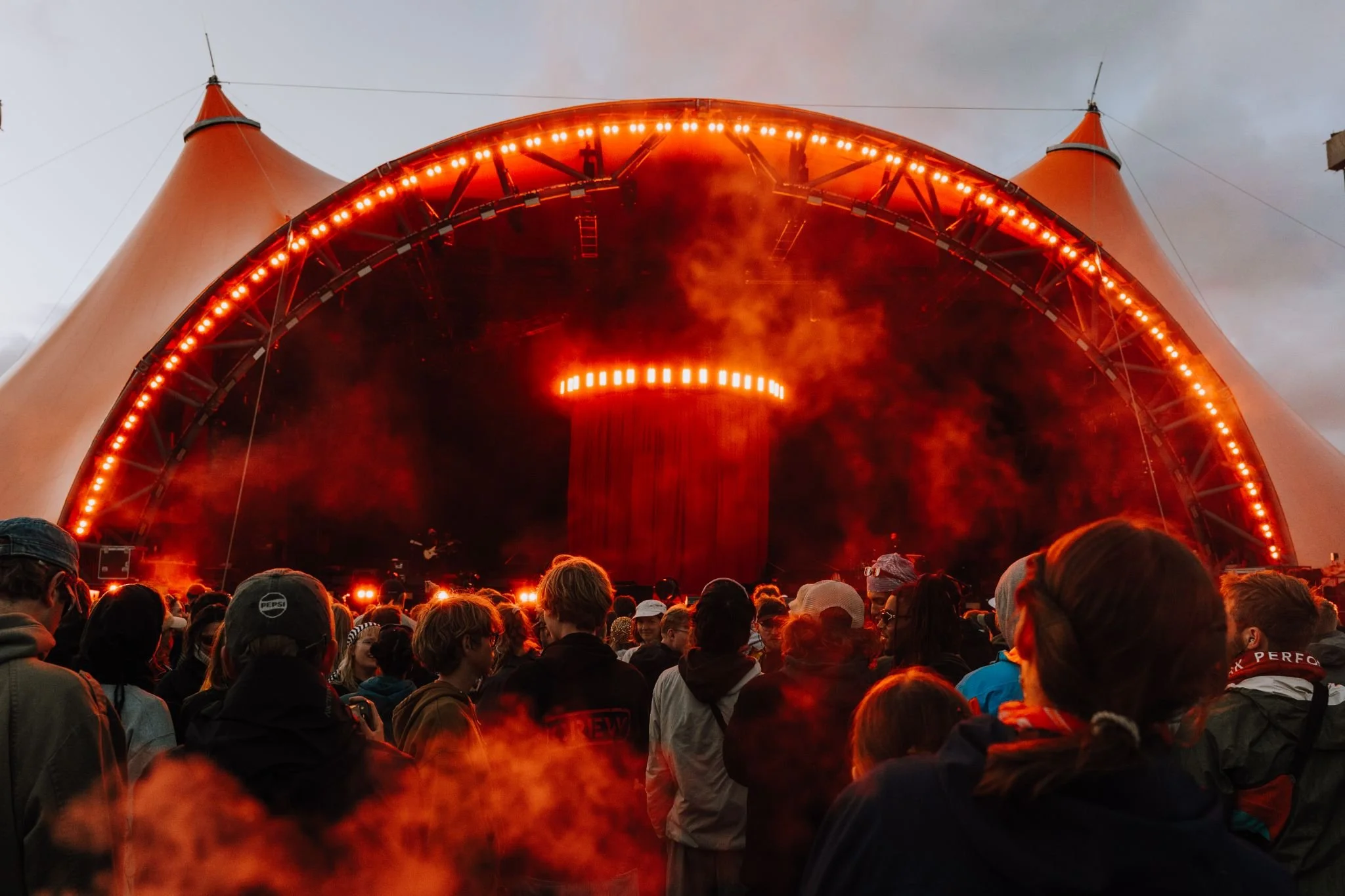
Image credit: Orange Stage during Jennie by @annnlies @codaphotos (Annelies Vollmuller)
The 2026 lineup was well stacked, and the FLO team found themselves bouncing from old school rock to Danish pop to experimental techno in the space of a few hours…
Day 1
Upon arrival, we made a beeline for Palestinian DJ and producer Sama’ Abdulhadi at the outdoor Eos stage. This was an unexpected piece of daylight techno programming, but it worked. The crowd was vast, and supportive, with many Palestinian flags waving defiantly. Next up were official headliners The Cure, whose legions of fans clearly extend to Scandinavia. Switching up the genres, we were excited to catch Sherelle, a British artist carving out a unique style of experimental, high-speed dance music. Her performance at the intimate Fauna stage was a welcome slap in the face.
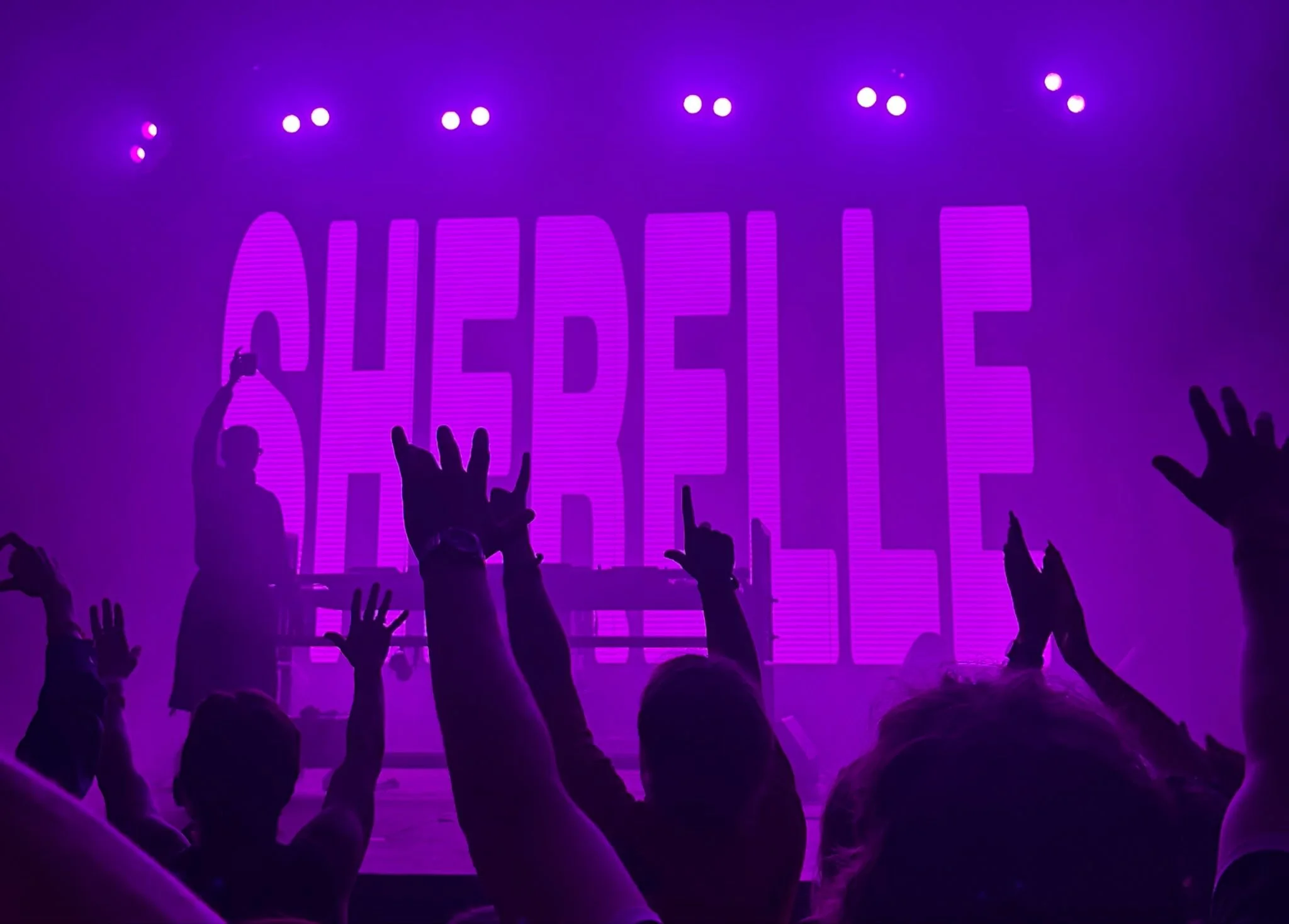
Image credit: Sherelle by Sofia Carreira Wham
Closing the night, and often hitting a similar tempo, was the legendary Japanese DJ ¥ØU$UK€ ¥UK1MAT$U. As a ¥ØU$UK€ veteran, I was prepared for the relentless beats. I was not, however, prepared for the relentless onslaught of Danish teenagers. The crowds far outsized the Arena stage, which was already an upgraded venue from his original booking, and they were seriously ready to party.
As the final synths of the official lineup faded away, I couldn’t help but wonder: where will these legions of hyped up youths go next? I decided to apply some investigative journalism to this topic in the pizza queue. The answer was swift and unanimous: Dream City. Our attention was piqued and, unaware that Dream City was marked quite clearly on the map, we coerced a reluctant group of older Danes to lead us there.
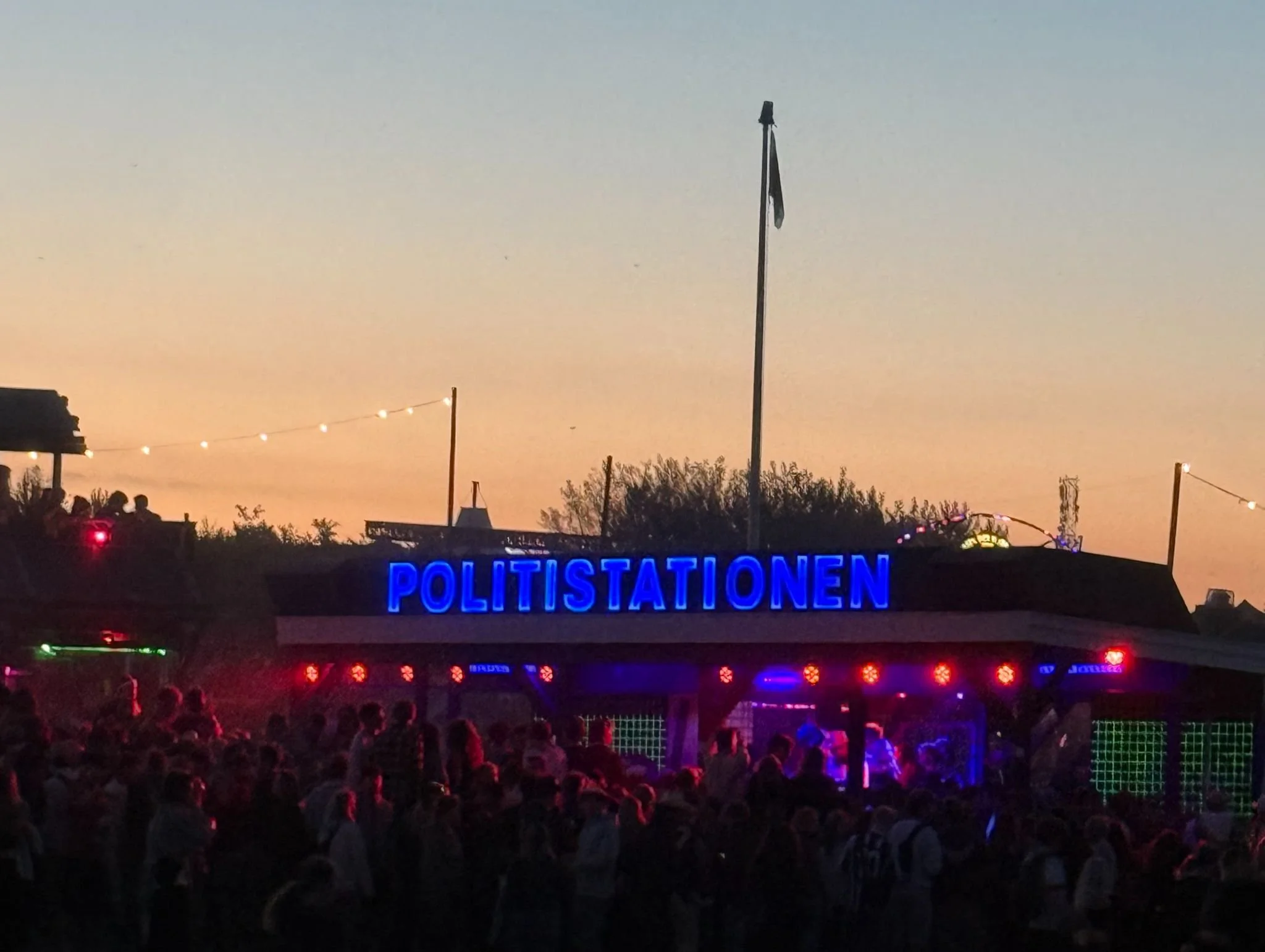
Image credit: Dream City by Sofia Carreira Wham
As we descended a hill in the general camping area, the letters of DREAM CITY were clearly silhouetted against the night sky. As soon as we crossed this magical threshold, we encountered one pop-up soundsystem after another, each one more inventive than the last. We hopped from a police station to a medieval castle to a beach hut to a zoo. I had to reevaluate the Danish teens at this point and simply admire their ambition, creativity, and dedication to the rave.
Day 2
We kicked off Day 2 back at the Arena stage for Australian duo Royel Otis. They immediately blew away any camping-induced cobwebs with their upbeat, lilting surf-rock. Headliners Gorillaz were up next on the Orange Stage. In the midst of a major tour to support their latest album, The Mountain, Damon Albarn et co. were at the height of their powers. This opinion was co-signed by our new friend Sam, who informed us that he had reviewed Gorillaz live upwards of 10 times.
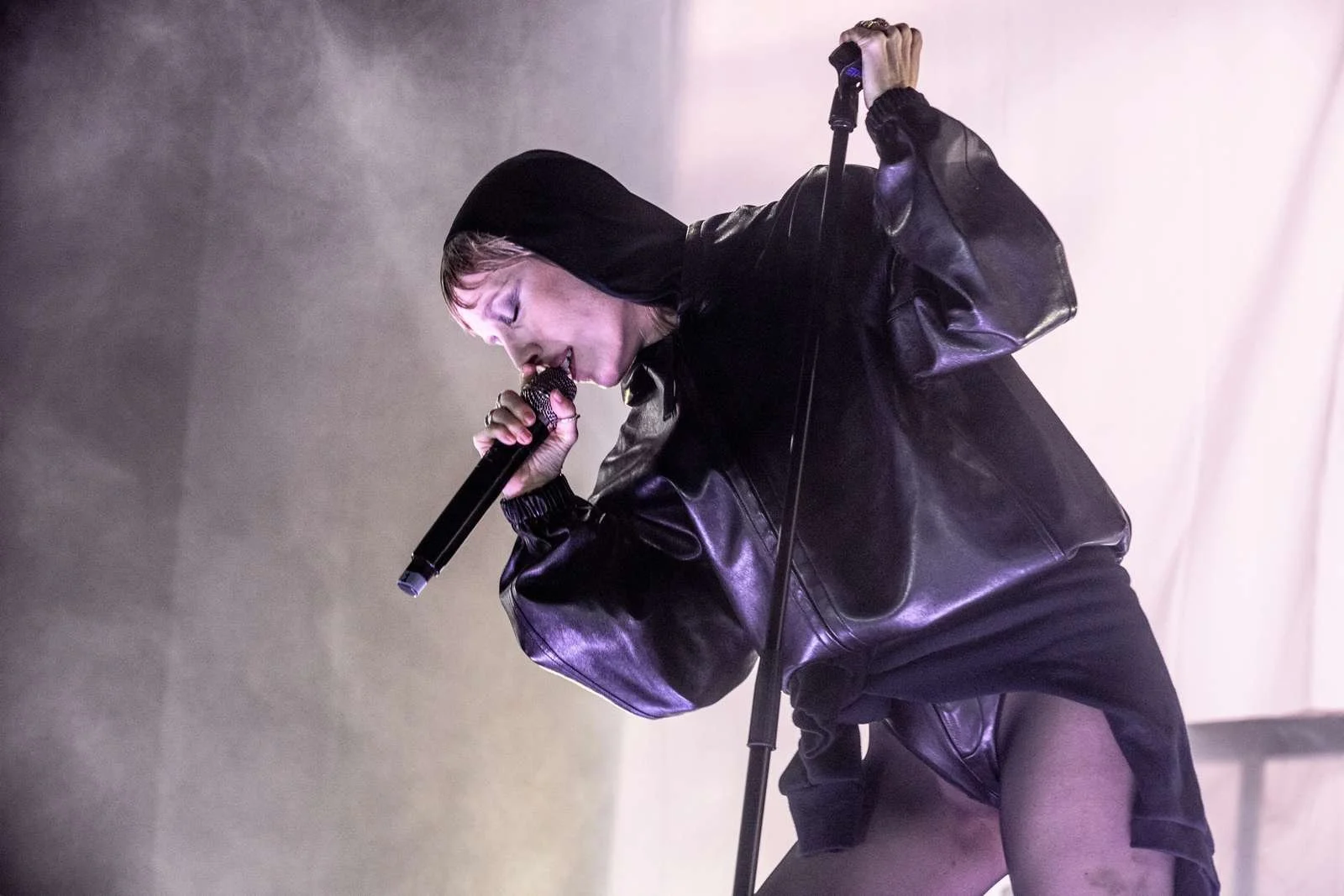
Image credit: Lykke Li by Kristian Gade
Taking a Scandi turn, we headed to see Swedish singer Lykke Li at Eos, who gave a fantastic performance, followed by Danish pop star Tobias Rahim back at the main stage. While Rahim’s lyrics were a mystery to us, the crowd’s energy carried us through and we enjoyed his shirtless, oily aesthetic.
Concluding the night were the epically-named Brutalismus 3000. Berlin-based electronic duo Victoria Vassiliki Daldas and Theo Zeitner are ones to watch right now. They are in the midst of touring their second studio album, Harmony, which takes their unrelenting beats in unexpected and melodic directions. It’s crazy, creative and unlike anyone else's sound.
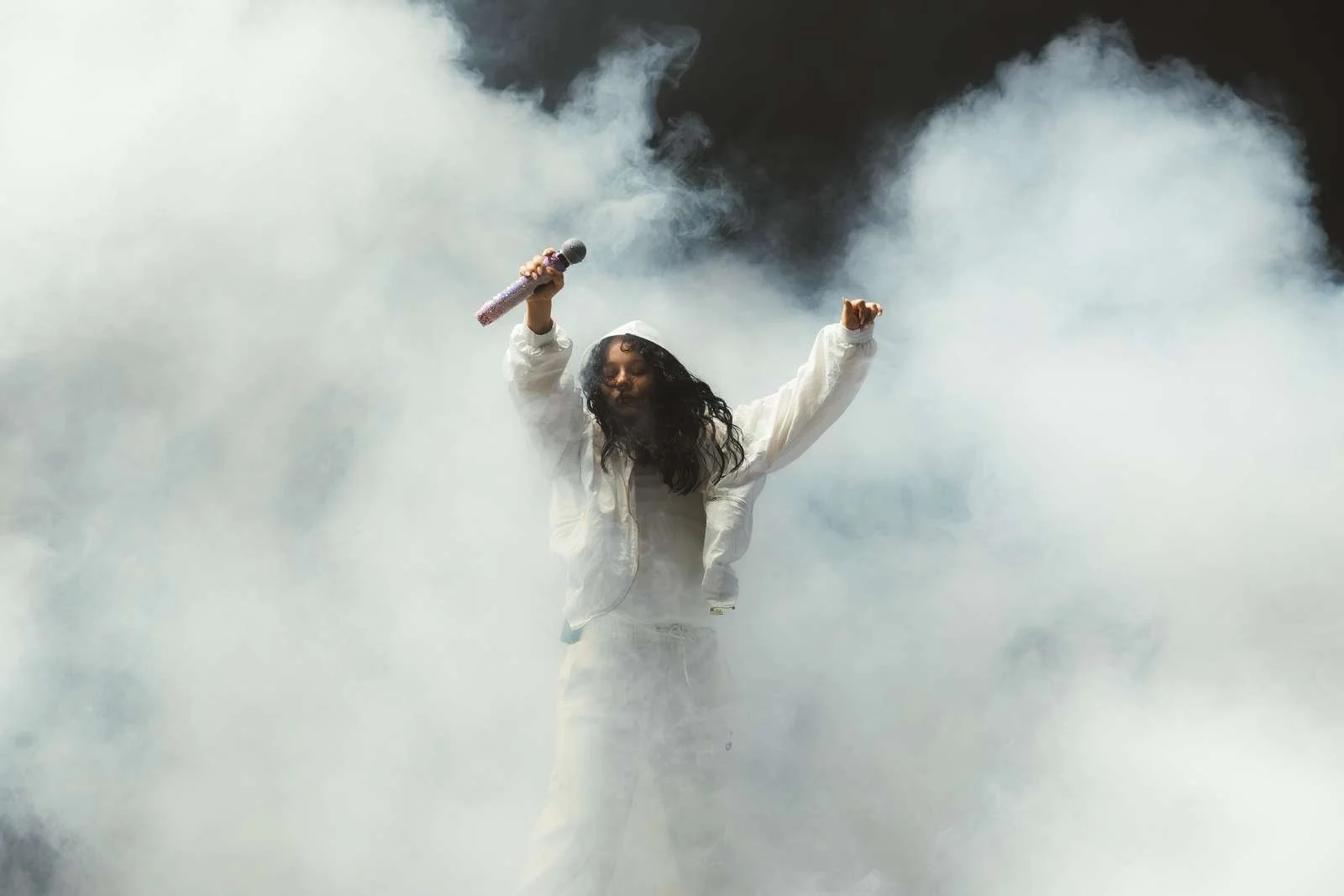
Image credit: Brutalismus 3000 by Ece Nur Kilic
Days 3 & 4
For us, Day 3 was a bit of a wobble in an otherwise top notch agenda. After disappointing performances from Addison Rae and Jennie, we enjoyed some pop classics courtesy of Vegyn and a bit of amapiano from DBN Gogo before heading to the final set of the night: Sammy Virji. Virji played an uncompromising and exhilarating set that confirmed his recent dance-world ascendancy. That ascendancy was embraced by the Danish teens around us, who were launching each other (literally) into the air.
On Day 4, the sun came out and infused our pores with that Roskilde magic. We were making new friends left, right and centre, and had also discovered the proximity of a ginormous Lidl, ideal to prepare for Saturday’s superstar lineup: Clipse, Lily Allen and Zara Larsson.
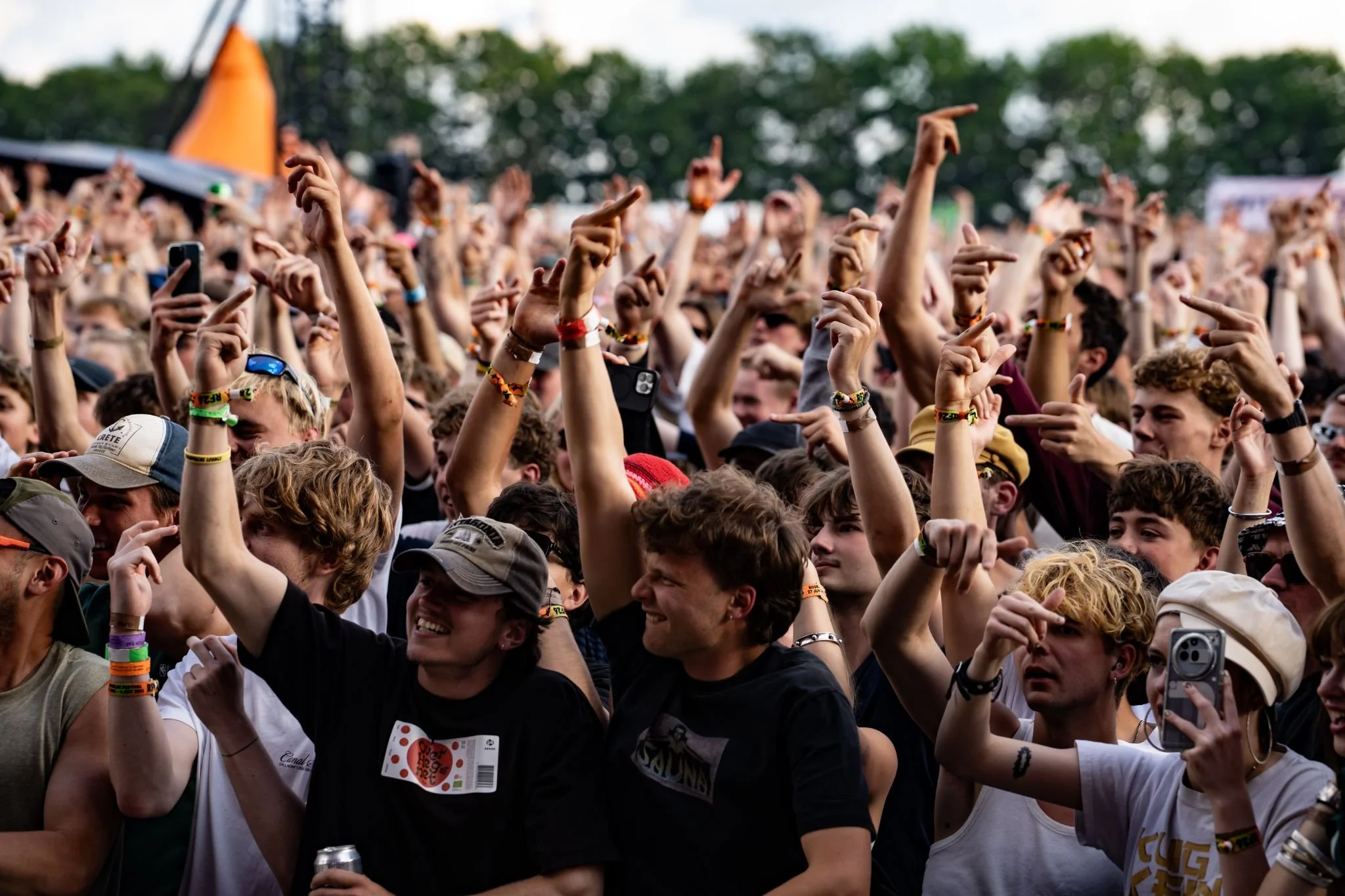
Image credit: Atmosphere at Clipse by @annnlies @codaphotos (Annelies Vollmuller)
Clipse, the hip-hop duo made up of brothers Gene “Malice” and Terrence “Pusha T” Thornton played a raucous afternoon set, making full use of the stage and determined to engage the entire crowd. It was the kind of feel-good moment that Sunday festival dreams are made of.
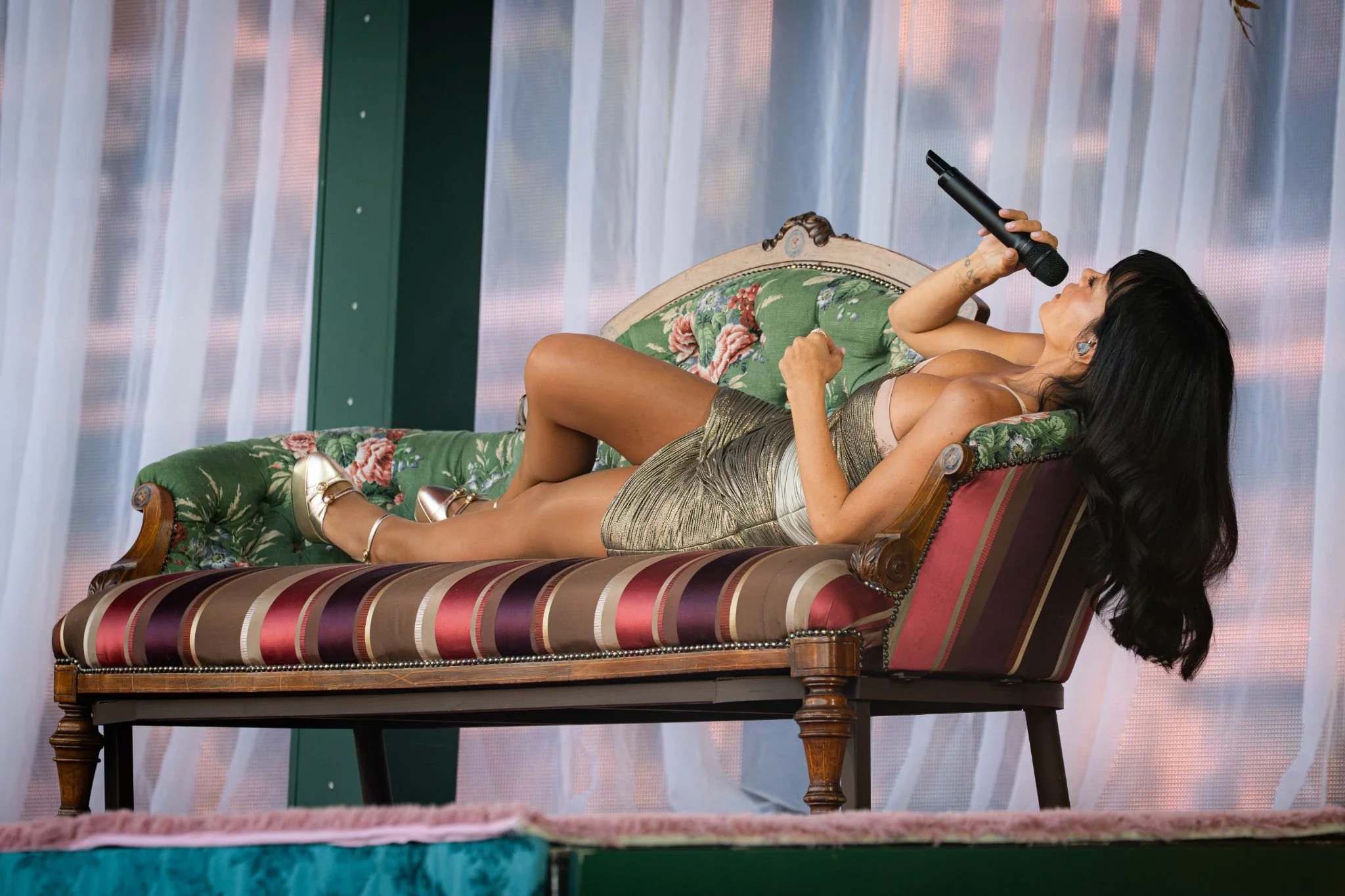
Image credit: Lily Allen by @colindarbyshir3 @codaphotos (Colin Darbyshire)
I was an immediate convert to the Lily Allen fan club when she released the devastatingly honest West End Girl last year. At Roskilde, she treated the audience to the album in its entirety, including the impressive theatrical staging of her current world tour. Having arrived 45 minutes early for the set (armed with spaghetti bolognese for the night ahead), we had secured a spot close to the front. The set was a perfectly executed emotional rollercoaster, and the British singer brought us all along for the ride.
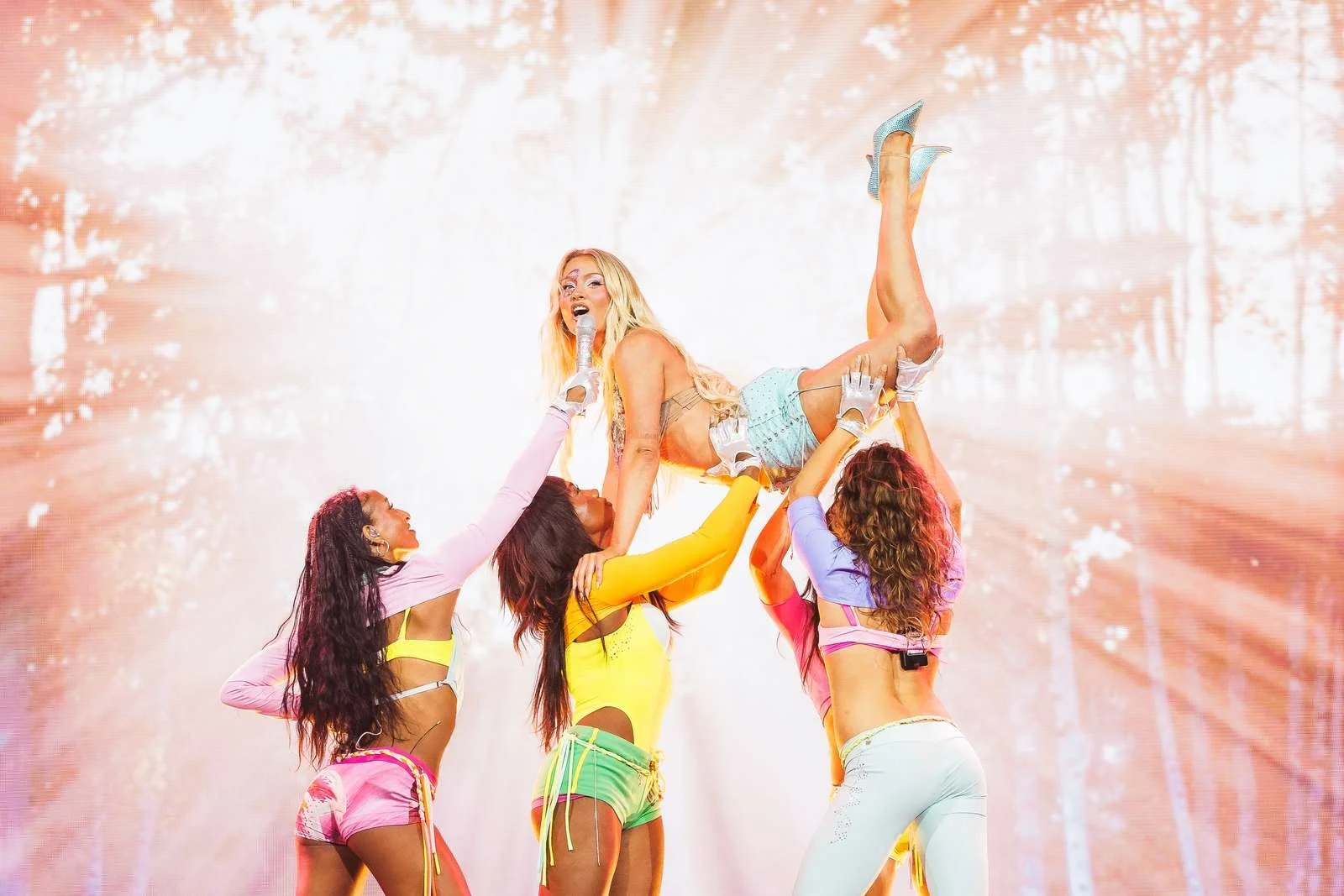
Image credit: Zara Larsson by Peter Troest
Zara Larsson was the perfect closer for this festival, and it was a privilege to see the Swedish star in a more-or-less home crowd. She exuded a dazzling confidence reminiscent of peak Britney Spears, and, certainly in Scandinavia, it confirmed her pop royalty status. You could tell this was a special performance for Larsson and the vibes were extremely high throughout.
Beyond the music
Roskilde is a feast for the eyes and ears, but also in the traditional sense. The festival prides itself on a diverse, healthy, and climate-conscious food culture. Don’t worry - the usual festival fare of pizzas and burgers are on offer (although I heard rumours of a previous year when they were off the menu, inciting a minor meltdown in my international journalist forebears), but there are hundreds of nutritious options, each with a maximum cap of 2kg CO₂e. This policy is one of many that define the Roskilde ethos, and activism has always been at the festival’s core.
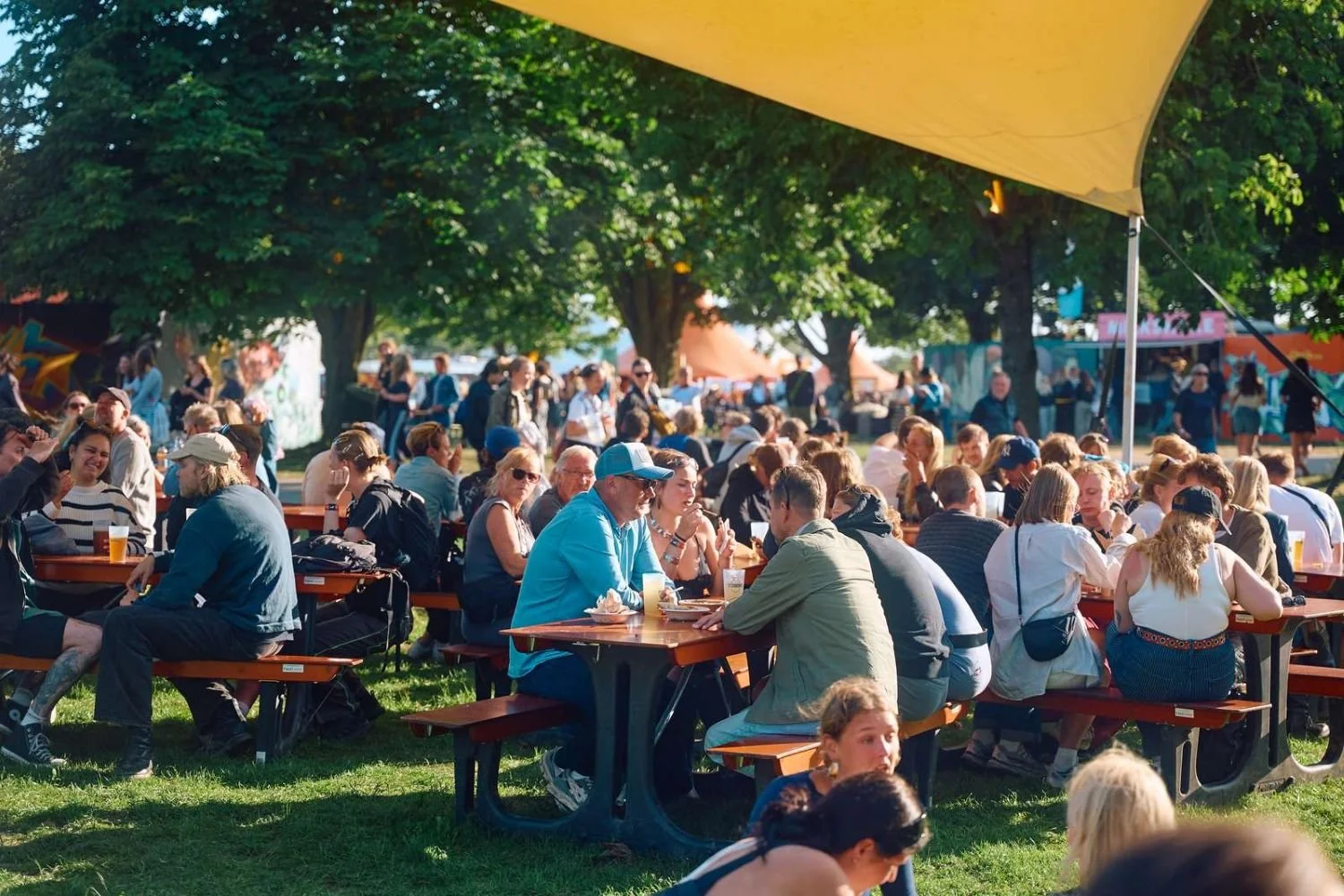
Image credit: Foodcourt by Christian Solgaard
I spoke to Signe Brink Wehl, Roskilde’s Head of Arts & Activism, to learn more about this year’s programme and how the festival supports artists and activists all year round:
“It is quite precarious to be an artist, so we strive towards creating partnerships that allow the artists to be shown or do performances on more platforms... We take responsibility for creating a sustainable infrastructure.”
This holistic, community-driven vision for the arts is also reflected in the participatory nature of many of the art and activism projects at Roskilde, most of which take place in the first five days of the festival before the main music programme commences but often have a lasting impact. Signe highlighted one such project that embodies this:
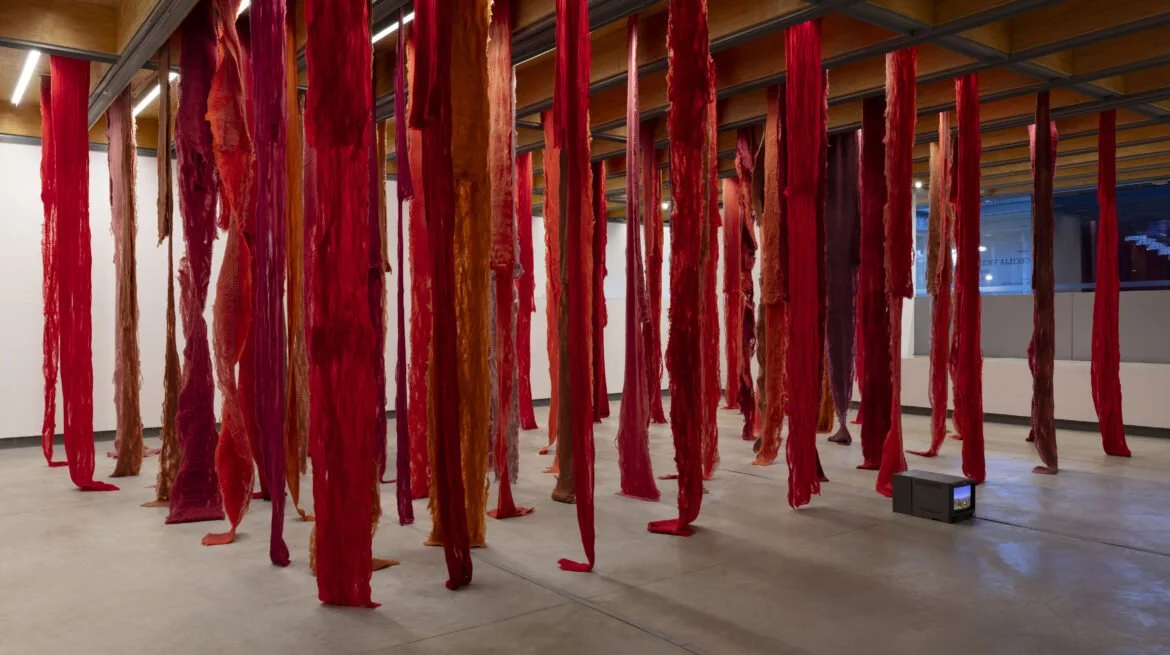
“Hedestrik and Nordisk Dans worked directly with raw wool from the sheep, not yet made into yarn, which is a kind of soft climate activism because the whole process of dyeing and preparing the wool is removed. Around 150 people danced together on a huge piece of it (you have to press it a lot to felt it) and those carpets are now on the facade here. It was co-created with the audiences, then put up for the final days."
It struck me how bold Roskilde’s commissioning approach is, as so many projects cannot be prepared in advance, require live participation and unfold in constantly-changing surroundings. Reflecting on this, Signe commented:
“Some artists love this, and for others it is very challenging. Many of the artists we present come from a white cube or theatre context, but here you have to be part of something much bigger. What I find so special about Roskilde is that it feels almost like we have a contract with the audience. Many are young and for others it is their twentieth time here, and there is a culture that gets passed on: that you come also for the unexpected. One of our responsibilities is to make sure that something new becomes a new favourite.”
Alongside the new and unexpected, some projects become integral to the Roskilde experience. A 2025 favourite which returned for the 2026 edition was Turner-Prize winning artist Jesse Darling’s monumental circular installation The Long Way Around. The installation consists of a long, spiralling ramp which functions as a viewing platform, meeting point, and place of shelter, while also challenging social constructs of accessibility.
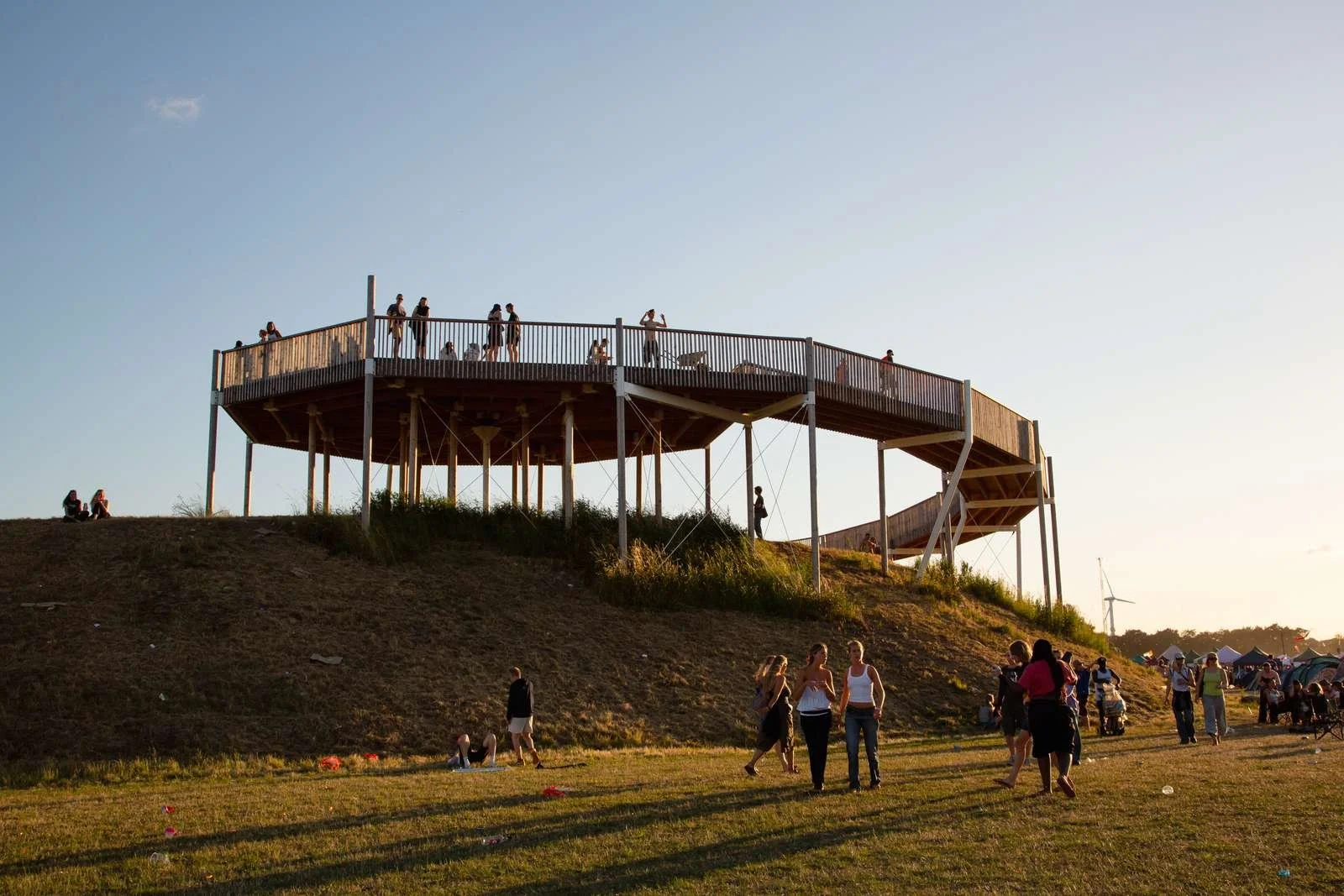
Image credit: The Long Way Around by Jesse Darling. Photo by Sofija Ninesa.
After four days spent enjoying great bands and enriched by conversations with young volunteers, attendees in their 20th consecutive year, and the deeply dedicated programming team, it was abundantly clear that Roskilde is far more than a festival. It’s a movement, a celebration, a protest, and each edition continues to entrench an ethos of community, sustainability and philanthropy that is few and far between in today’s hyper-commercial music scene.









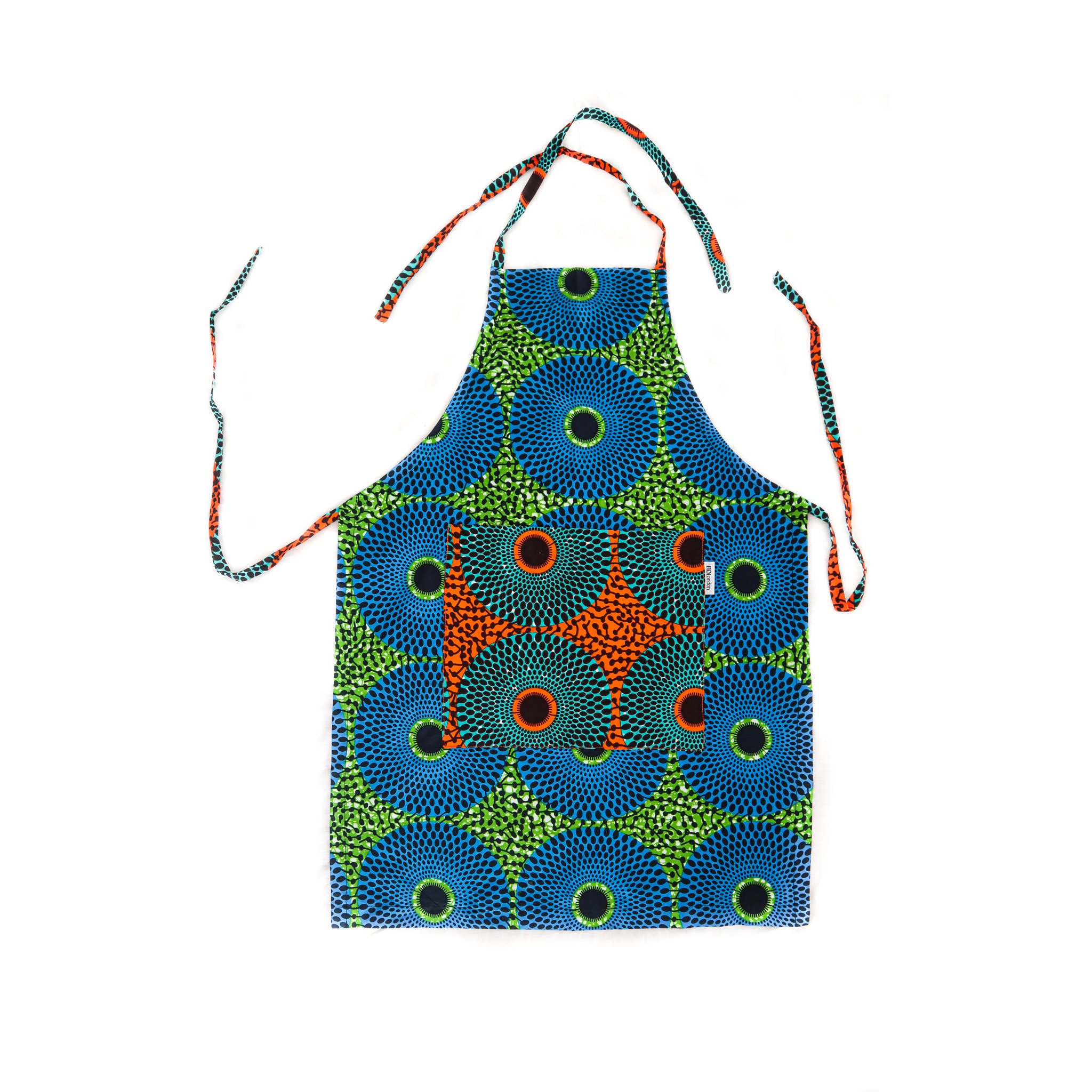


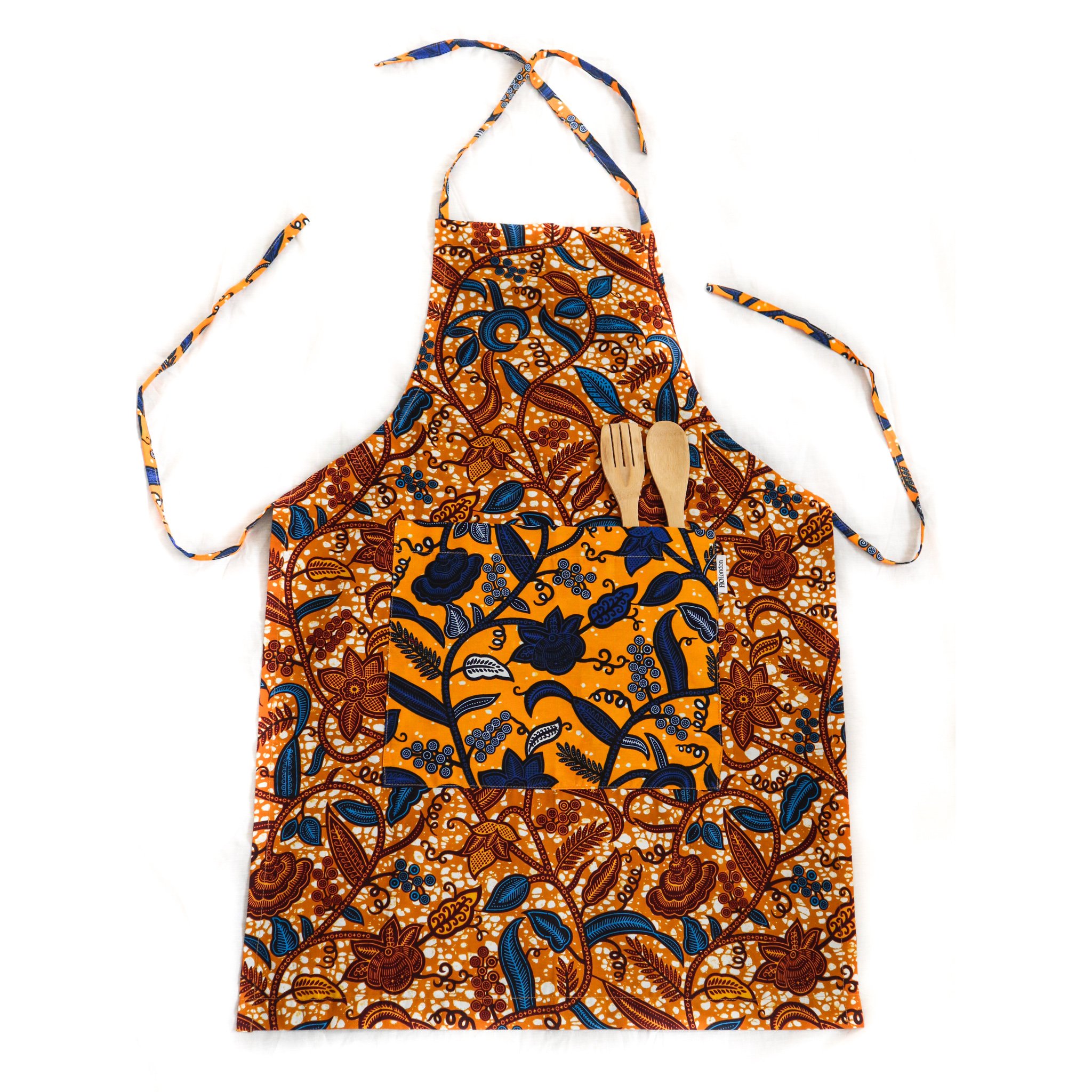


Handmade in Ghana, our aprons offer a unique design with a front pocket perfect for kitchen utensils or your phone and tie neck straps each made from recycled material. The perfect gift for any cooking enthusiasts!
Our aprons have been named after markets in Ghana and London. This apron has been named after street food hub Maltby Street Market.