
10 best booths to see at Frieze London 2026
It’s mid-October, and that means just one thing: Regent’s Park is transformed once more into the art world’s most glamorous marquee village. With 172 exhibitors at Frieze London alone, that’s a lot of booths, and you only have so many hours to spend time in them all. So, we’ve done the legwork, but urge you to visit and find your own favourites. This year, the fair seems to have put discovery first, so expect fresh voices and international newcomers. Our top ten ranges from the heavyweight blue chips to younger galleries, and from big-ticket showstoppers to the stands that literally made us stop mid-sentence.
Frieze Artist Award, Theo Triantafyllidis
Booth P1
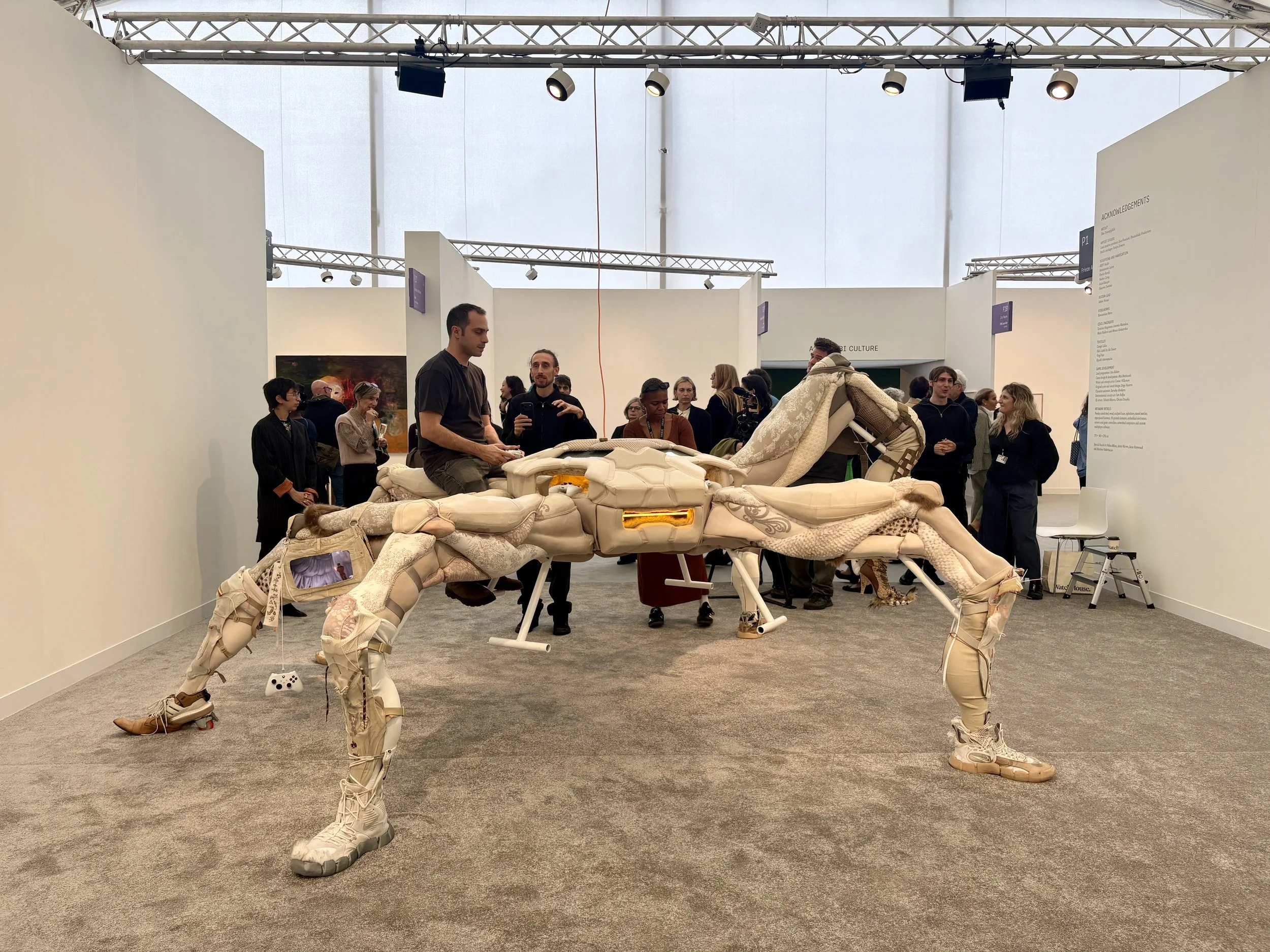
Installation view, Feral Metaverse (Spider), 2026, Theo Triantafyllidis. Image credit Tani Burns.
From afar, Triantafyllidis’ new commission - Feral Metaverse (Spider), 2026 - is a huge, soft, sculptural spider. On second look, and perhaps interaction, it is a participatory installation that also functions as an extension of his ongoing multiplayer game. Climbable, players can sit astride one of its legs, entry points into a shared digital environment in which they have to cooperate with one another to move, connect and form temporary group bodies that emerge through collaborations, expanding from the screen into the space and from the virtual into the real. Theo Triantafyllidis is the winner of the 2026 Frieze London Artist Award, for the first time in collaboration with Google Arts & Culture, and co-commissioned and co-produced with Forma.
Fort Gansevoort
Booth A10
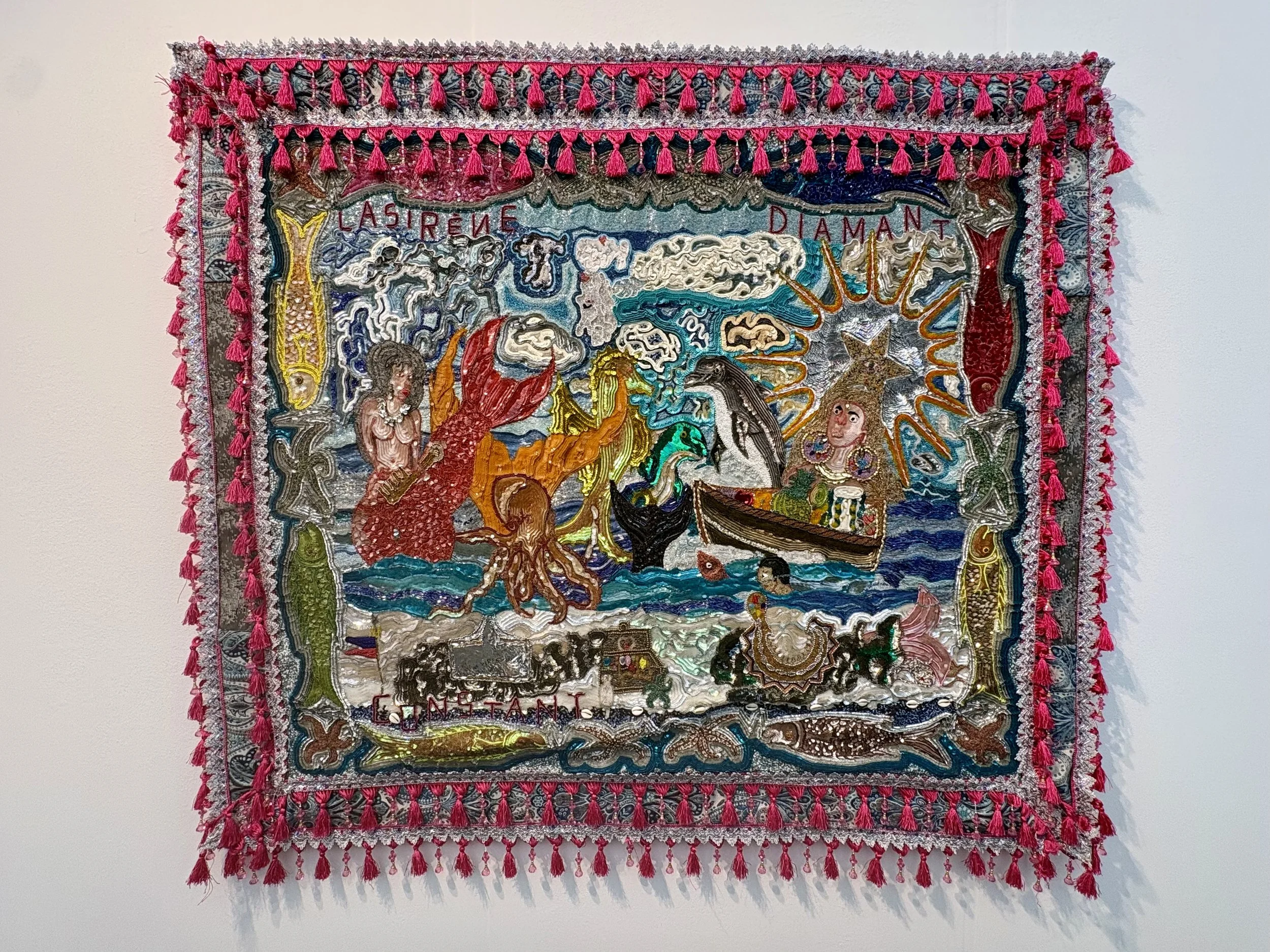
Installation view, Myrlande Constant, Fort Gansevoort. Image credit Tani Burns.
For its debut stand at Frieze London, Fort Gansevoort presents a solo presentation of new large-scale beaded textile works by Haitian artist Myrlande Constant. Rooted in Vodou spirituality and its African lineage, Constant’s critically acclaimed, optically dazzling compositions confront histories of colonization, liberation, and political unrest while asserting enduring Haitian pride and resilience. Since the 1990s, Constant has transformed the traditionally male-dominated practice of drapo (Vodou flags) through her mastery of sequin embroidery and introduction of the tambour stitch beading technique, a skill first developed as a teenager while working alongside her mother in a wedding dress factory in Port-au-Prince. Expanding the scale, complexity, and painterly ambition of the form, she brings drapo into the realm of contemporary art while highlighting the overlooked labor and virtuosic artistry of Haitian women. Though grounded in spirituality, her works also stand as acts of cultural affirmation, resistance, and perseverance amid Haiti’s ongoing humanitarian and political crises.
Ehrlich Steinberg
Booth F30
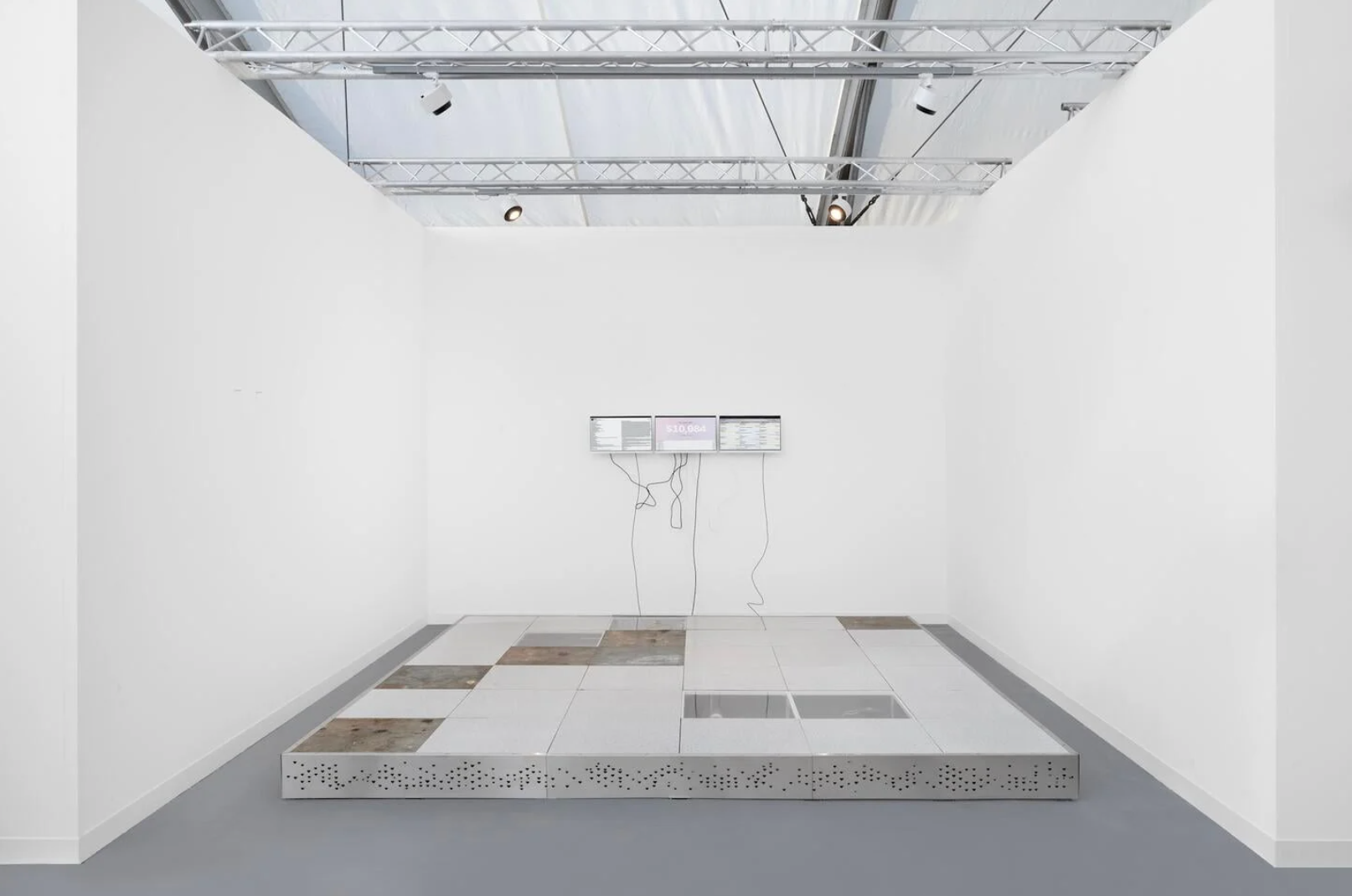
Ella Fleck, training material (aria), 2026, installation view at Frieze London 2026 with Ehrlich Steinberg, Los Angeles. Courtesy: the artist and Ehrlich Steinberg, Los Angeles. Photo: Dominique Croshaw
Focus section artist Ella Fleck has just been announced as the winner of the 2026 Camden Art Centre Emerging Artist Award for this solo presentation with LA-based gallery Ehrlich Steinberg, entitled training material (aria) (2026).Fleck’s work looks at systems, ideologies and identities, employing infiltration, sound, architecture, language, scent and chemical-signalling in her complex installations. training material (aria) is a new sculptural installation, featuring a platform floor - made of a 20 cm-high modular raised-floor tiles used in data-server facilities - that emits directional audio, vibration, and scent. The presentation developed from a sustained period of embedded research in which Fleck trained as a “chatter” named “Eliott” in an OnlyFans “parasite company,” a third-party agency that manages creators’ subscriber communications. The installation centers around a continual stream of male voices performing versions of chatter scripts and conversations that emanate from the platform floor, investigating how heterosexual male fantasies are produced and consumed today. Alongside this, a tryptic monitor piece displays a continuously streaming, custom-programmed live feed designed by the artist.
Goodman Gallery
Booth AA6
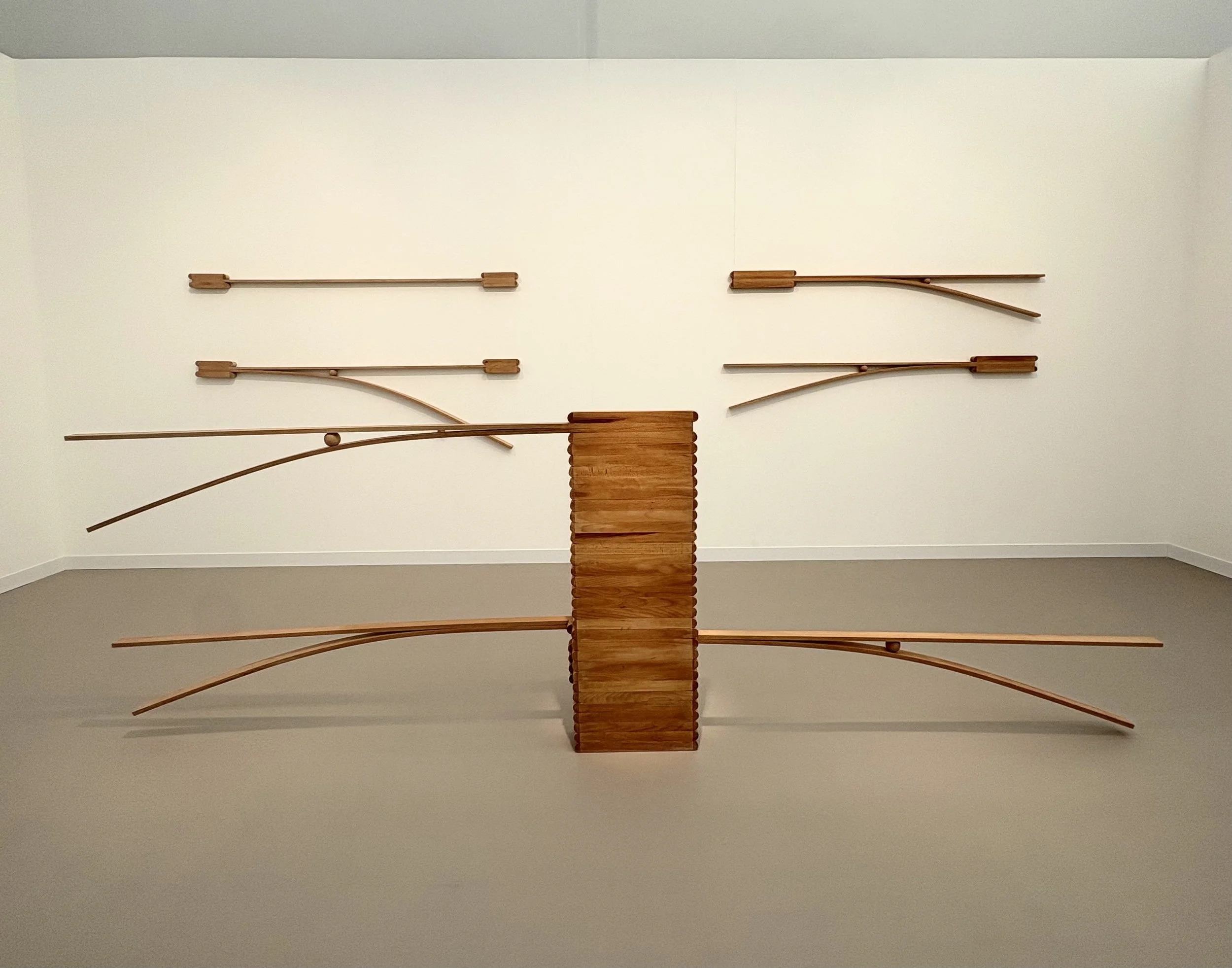
Installation view, Unathi Mkonto, Goodman Gallery. Image credit Tani Burns.
Part of Frieze London’s Artist-to-Artist peer-selected section, which highlights artists championed by internationally acclaimed practitioners, Goodman Gallery features a solo presentation by Cape Town-based artist Unathi Mkonto, nominated by Yinka Shonibare. In this new body of sculptural work, architecture is reimagined as a living, mutable condition rather than a fixed structure. Developed through abstraction, the beechwood works extend Mkonto’s ongoing enquiry into still life and portraiture as spatial propositions, here resolved into a series of inhabitable forms. Rooted in a South African context shaped by apartheid spatial legacies, this body of work seeks to humanise and destabilise inherited structures through a language of adaptability and possibility.
Carlos / Ishikawa
Booth A17
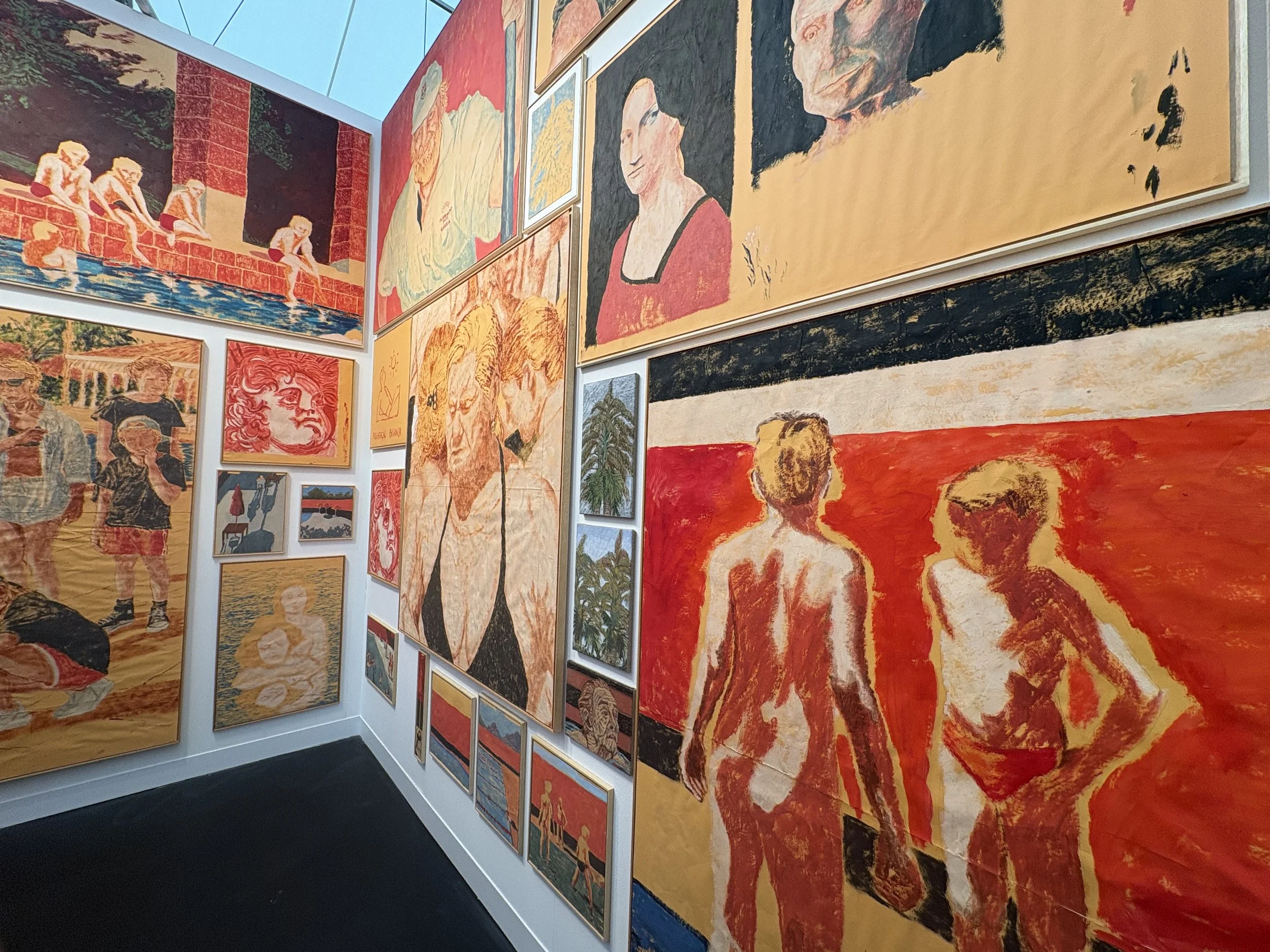
Installation view, Carlos / Ishikawa, Maxwell Alexandre. Image credit Tani Burns.
Bringing fair presence to Brazilian artist Maxwell Alexandre current solo show black painter, white figuration (pintorpreto, figuração branca), which is now showing in their permanent gallery space, Carlos / Ishikawa presents works by from the same Clube (Club) series. Hardly any of the white booth walls are left visible in this intense curation of figurative paintings, which instead surrounds you with the red walls of the Clube de Regatas do Flamengo, a sports club located in Gávea, an affluent Rio de Janeiro neighbourhoodadjoining Rocinha, the favela where the artist was born and raised. On the club grounds, Maxwell turned his attention to white bodies, a turning point in his career - previously notable by the exclusive portrayal of Black people - culminating in the notion of “white figuration”. This genreemerges as a conceptual operation in Maxwell’s painting that makes visible the whiteness in the art field. “If there is Black figuration, then there must be white figuration,” he says.
David Zwirner
Booth D15
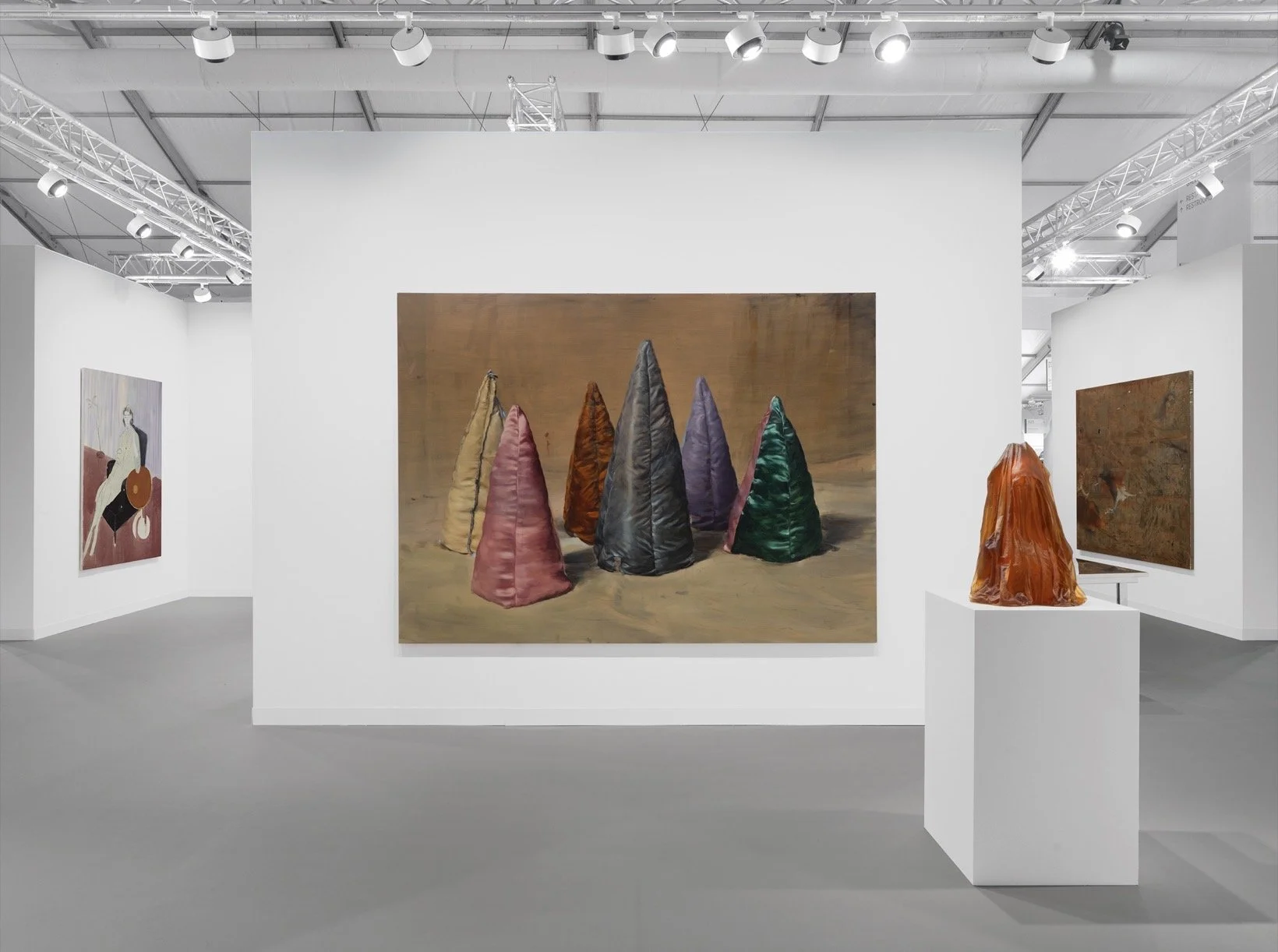
Installation Images of David Zwirner Booth at Frieze London 2026. Courtesy the artists and David Zwirner
A broad and impressive showcase for Frieze London, the gallery presents new works from across its roster, including Katherine Bernhardt, Elisheva Biernoff, Michaël Borremans, Marcel Dzama, Louis Fratino, Sasha Gordon, Nate Lowman, Emma McIntyre, Yu Nishimura, Jem Perucchini, Walter Price, Dana Schutz, Wolfgang Tillmans, Rirkrit Tiravanija, and Lisa Yuskavage, as well as Recent work by Francis Alÿs, Joe Bradley, Steven Shearer, Luc Tuymans, Andra Ursuța, Rose Wylie, and Portia Zvavahera. Highlights include the performative robot work untitled 2026 (a bitter pill) by Tiravanija whose solo show (situational awareness) is simultaneously on now at Pilar Corrias.
Nature Morte
Booth A12
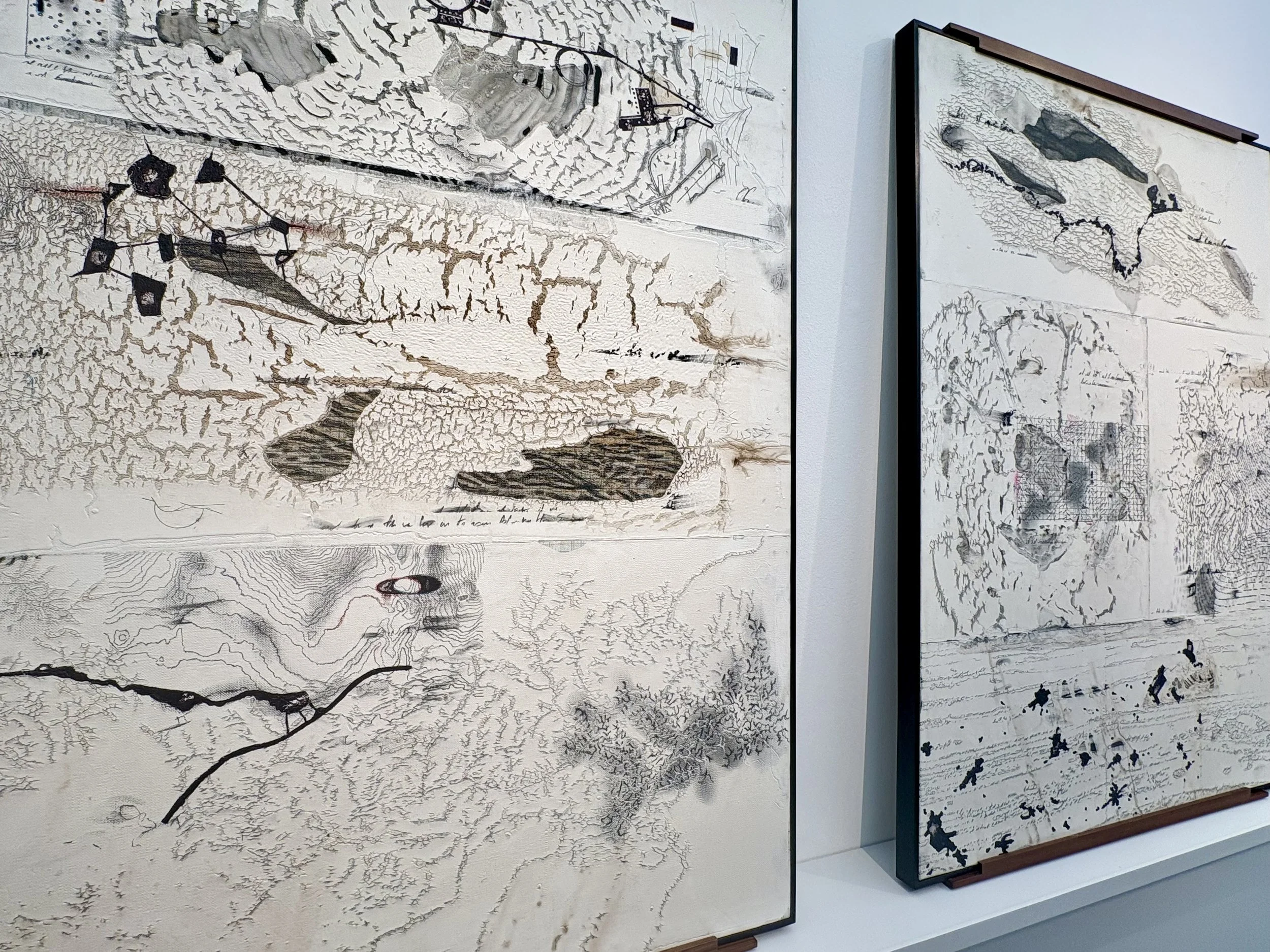
Nature Morte’s booth includes several intriguing works by Jitish Kallat, from the series Albedo (Point of Incidence), 2026. Created by building the surface using water-based road-marking paint (normally used to direct people around streets), paired with thermochromic pigment, charcoal, and organic gum, Kallat allows the surfaces to shift, fracture, and evolve over time. This functional line-painting material is therefore repurposed to form fluid, fragmented maps of planetary shifts (like melting glaciers, drought, and geological flux). The title references albedo, which measures how much light a celestial body reflects, acting as an undercurrent for Earth's shifting energy balance, melting glaciers, and geological flux - the works explore our relationship to the universe and the ways humankind has sought to inhabit and shape it.
Timothy Taylor
Booth C15
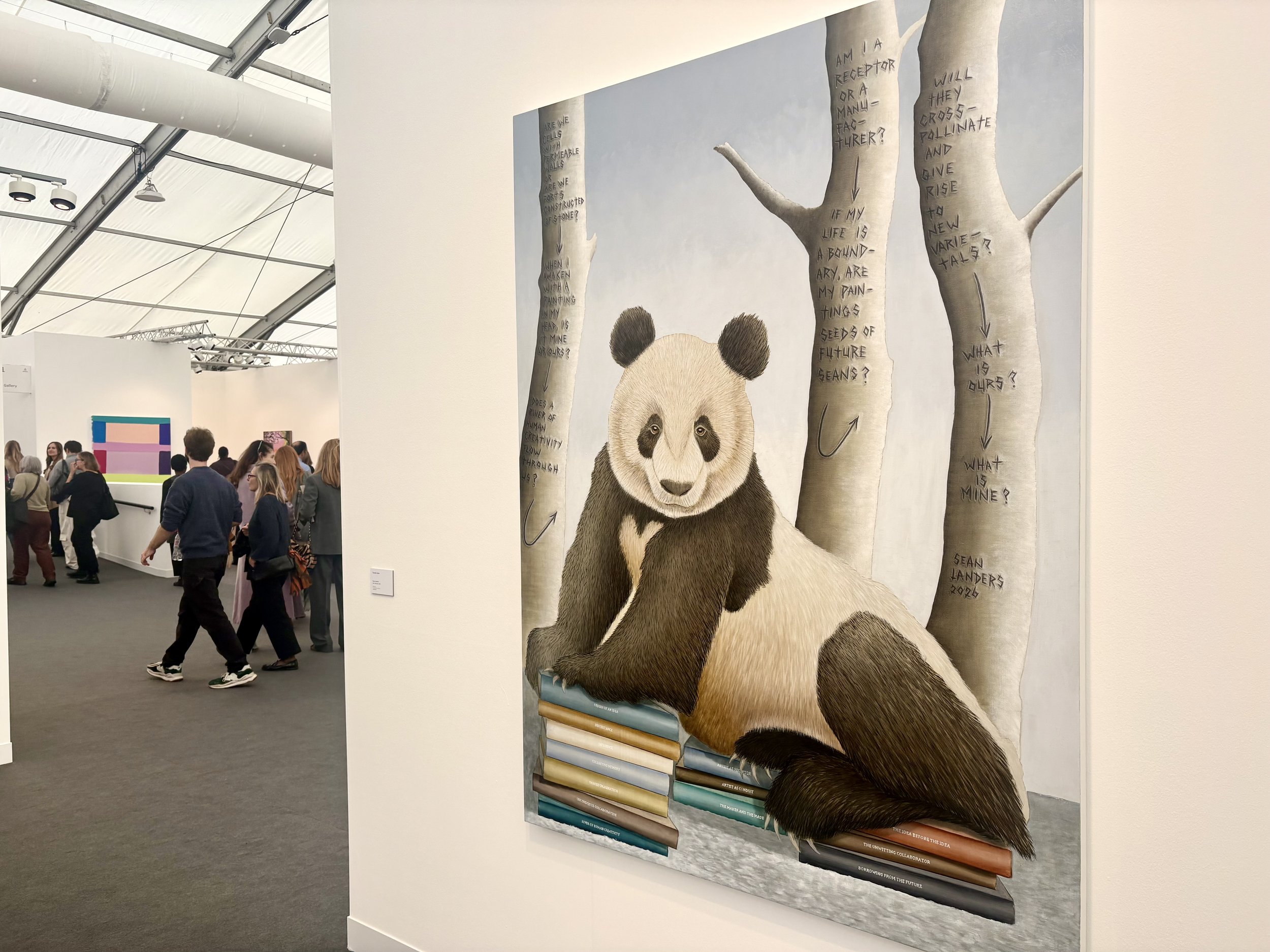
Installation view, Timothy Taylor booth. Image credit Tani Burns.
Nine new paintings by Sean Landers debut at the fair with the gallery. Extending the artist’s longstanding engagement with personal reflection, existentialism, text, and narrative, while continuing his expansive redefinition of self-portraiture. The protagonists of the paintings include a baby deer, a panda, and often a bear, all lent a human quality in their gaze. Together with the recurring motifs of the inscribed Aspen tree or stacks of books with their revealing titles - such as “Dreamer Distrusts the Dream,” “Reaching for Transcendence,” “‘Not’ Anti-Romantic,” and “The Romanticism of Ego Collapse” - Landers considers the shifting boundaries between the individual and the collective, the inner life and the external world, and the artist and his work. His characteristic combination of vulnerability, introspection, and self-deprecating humour remains central, as does his tendency to locate the personal within larger questions of mortality, artistic ambition, and the nature of the self.
Xxijra Hii
Booth F10
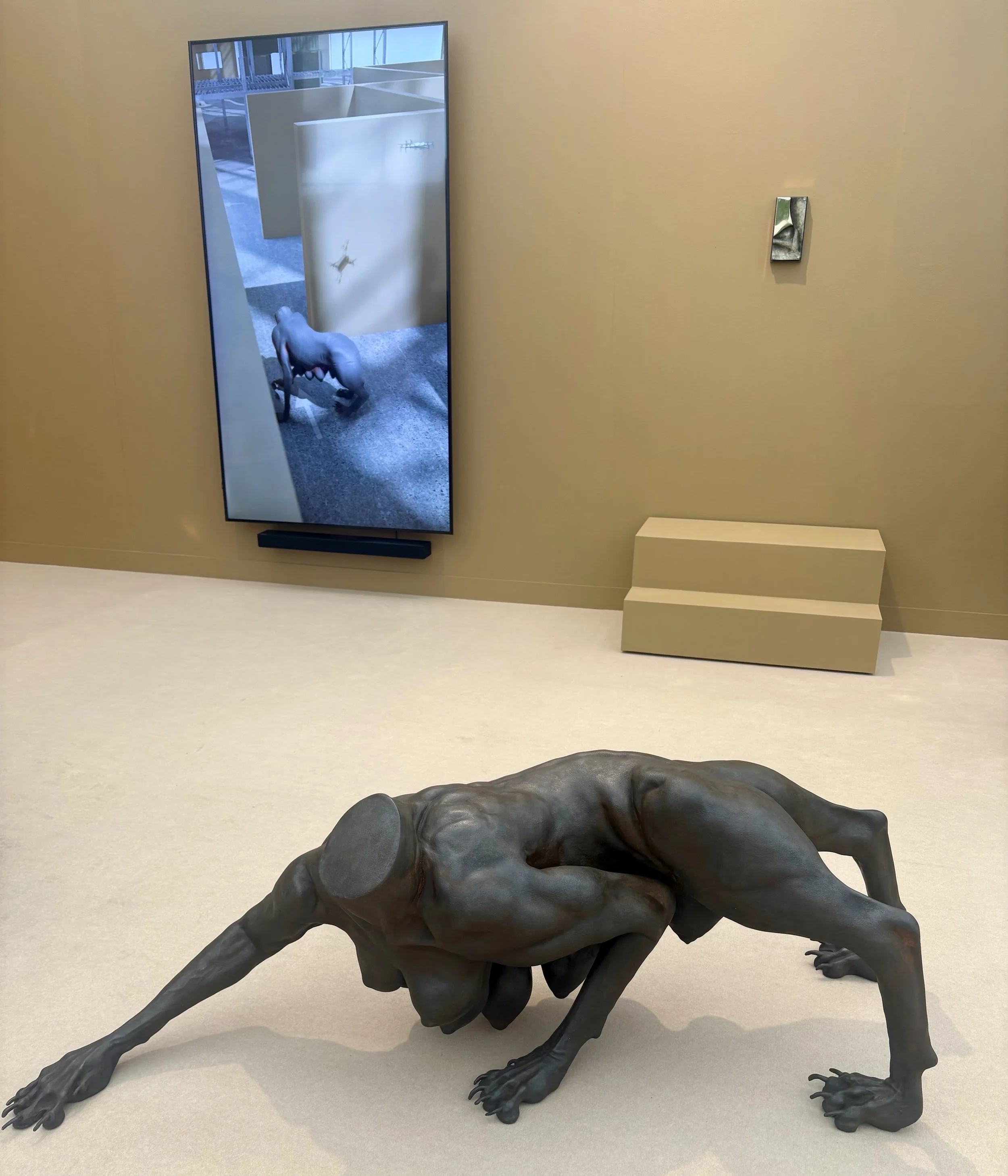
Installation view, Who’s a Good Girl, Yuli Serfaty. Xxijra Hii. Image credit Tani Burns.
For Frieze Focus 2026, Xxijra Hii presents Who’s a Good Girl, a solo booth of new work by Yuli Serfaty that stages the gallery stand as a speculative training environment: part behavioural laboratory, part mythic threshold, part malfunctioning architecture of control. Across CGI film, sculpture, sound and wall-based reliefs, Serfaty asks what happens when systems designed to produce obedience begin to generate their own forms of agency. At the centre of the presentation is a new single-channel CGI film with sound, following a headless and multi-breasted hybrid dog figurearound what appears to be a labyrinthine warehouse building. It is part service animal, part robot and part fertility deity. She is vulnerable yet powerful, suggesting a body made to nurture, protect, guide and obey, yet also to track, perform, optimiseand absorb command. But in the film, this script begins to break down. The Dog does not just fail; she mutates. Glitch becomes a condition of self-authorship.
Gagosian
Booth D14
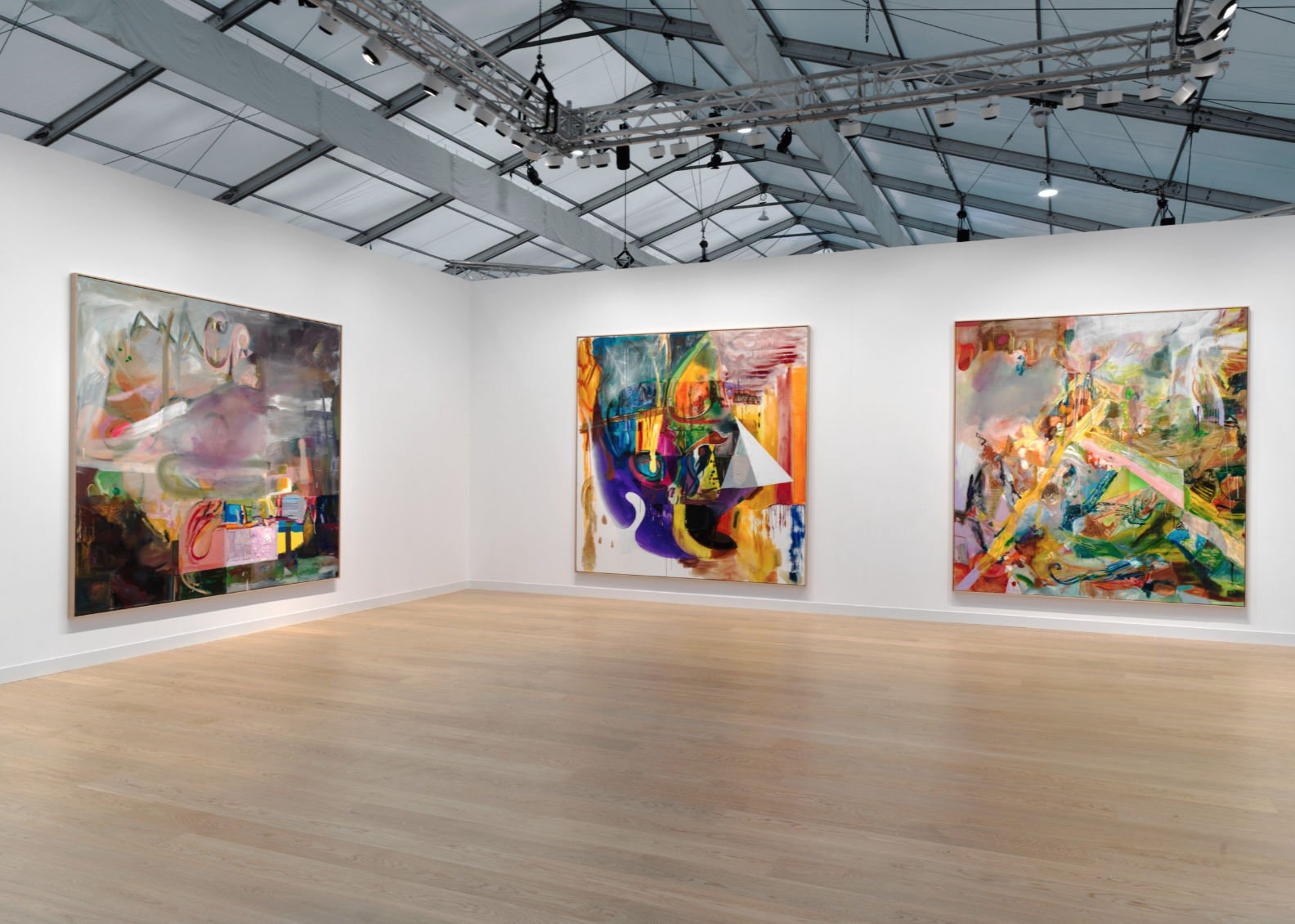
Gagosian’s booth at Frieze London 2026, featuring artwork by Albert Oehlen. Artwork © Albert Oehlen. Image credit Maris Hutchinson.
Gagosian presents six major new, large-scale paintings by Albert Oehlen as he continues to explore the still-richpossibilities of a long-established medium and format, riffing on varied fragments, forms, and motifs. Combining graphic brushstrokes and painterly drips with unexpected chromatic and textural juxtapositions, he tests the limits of coherence. A champion of self-consciously amateurish “bad” painting, he infuses his work with mischievous, destabilizing attitude. The paintings on view here incorporate abstractions of the image of a man with an extravagant mustache - an art historical reference that Oehlen has made repeatedly - but they are also immersed in the present. They are filled with twists and turns, and with myriad different shapes and endings that resist conceptual resolution. Oehlen has declared: “I’m not interested in meaning at all. I especially can’t stand it if it’s like encoding and decoding.”
Frieze London continues until 18 October 2025, at The Regent’s Park.
For more information head to frieze.com
By Tani Burns






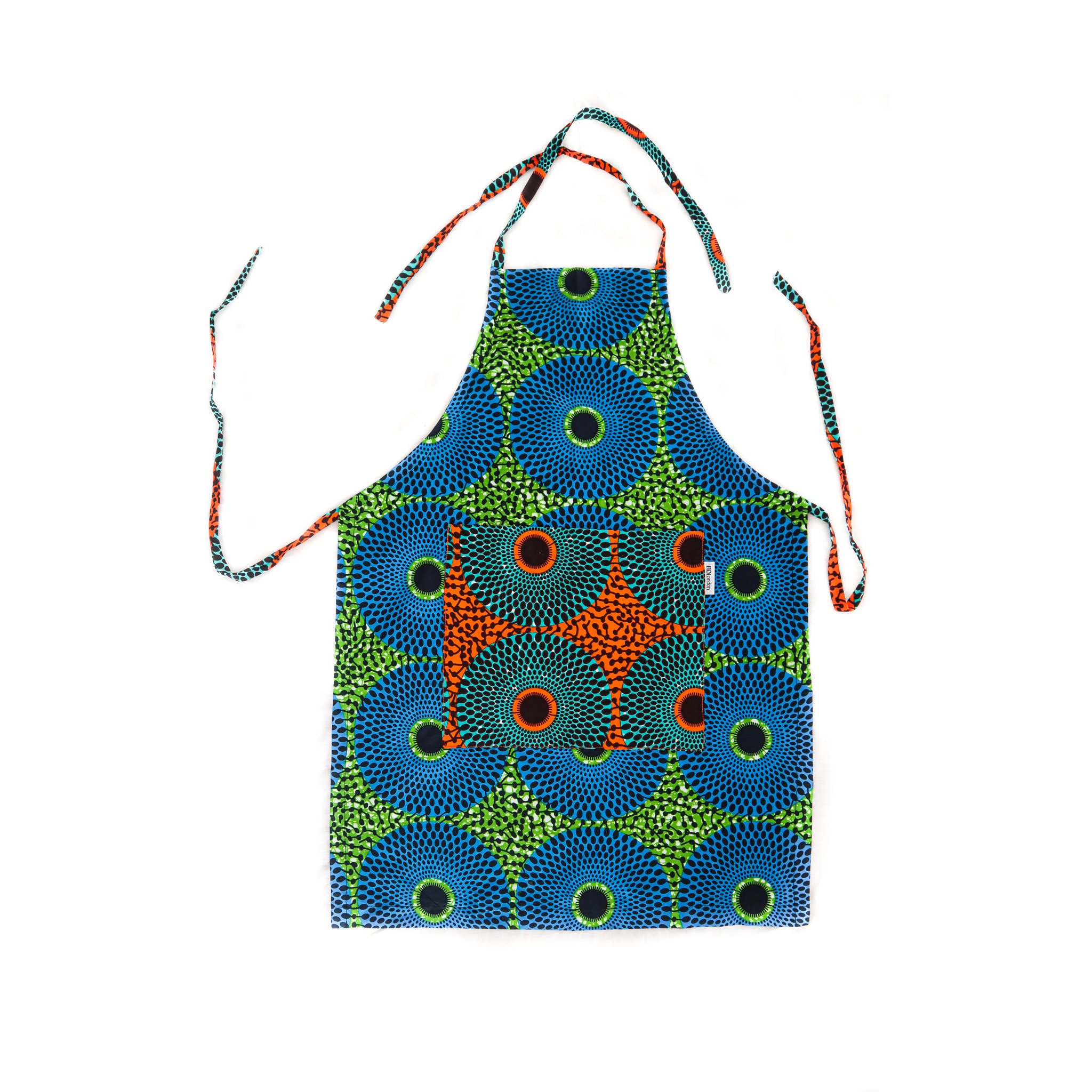


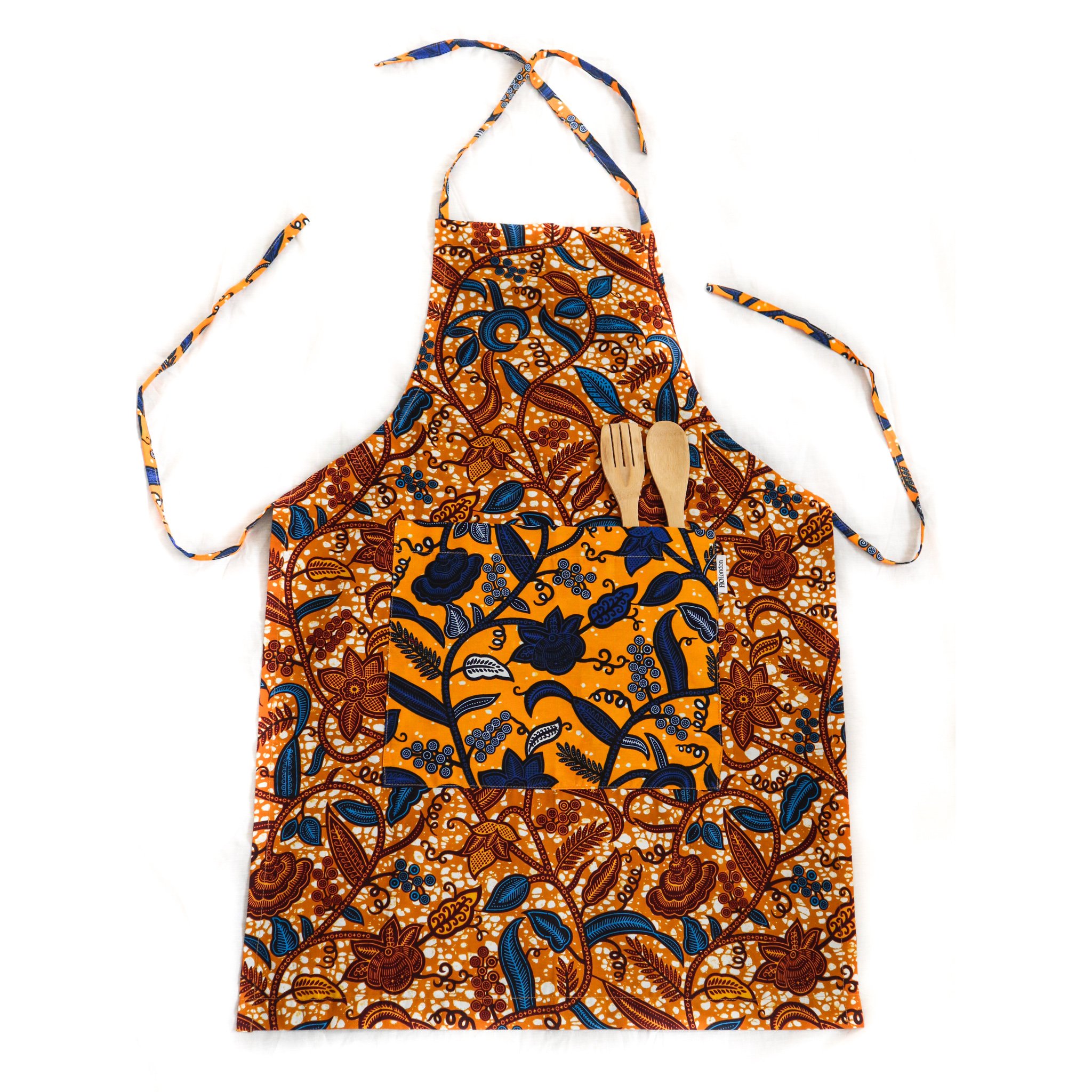


Handmade in Ghana, our aprons offer a unique design with a front pocket perfect for kitchen utensils or your phone and tie neck straps each made from recycled material. The perfect gift for any cooking enthusiasts!
Our aprons have been named after markets in Ghana and London. This apron has been named after street food hub Maltby Street Market.