
5 top pavilion picks at the Venice Biennale 2026
In the lead up to the opening week of this year’s Venice Biennale Arte, I kept hearing the sentiment echoing from my friends and colleagues that this week is like the “Olympics of the art world”. I was given advice: comfortable shoes, always carry water, leave room for spontaneity and - perhaps most importantly - don’t try to see everything because it just isn’t possible. With this in mind, it is important to know what is worth making the time to see, so here is my round up of the top 5 pavilions you absolutely should not miss when in Venice.
Estonian Pavilion
The House of the Leaking Sky by Merike Estna
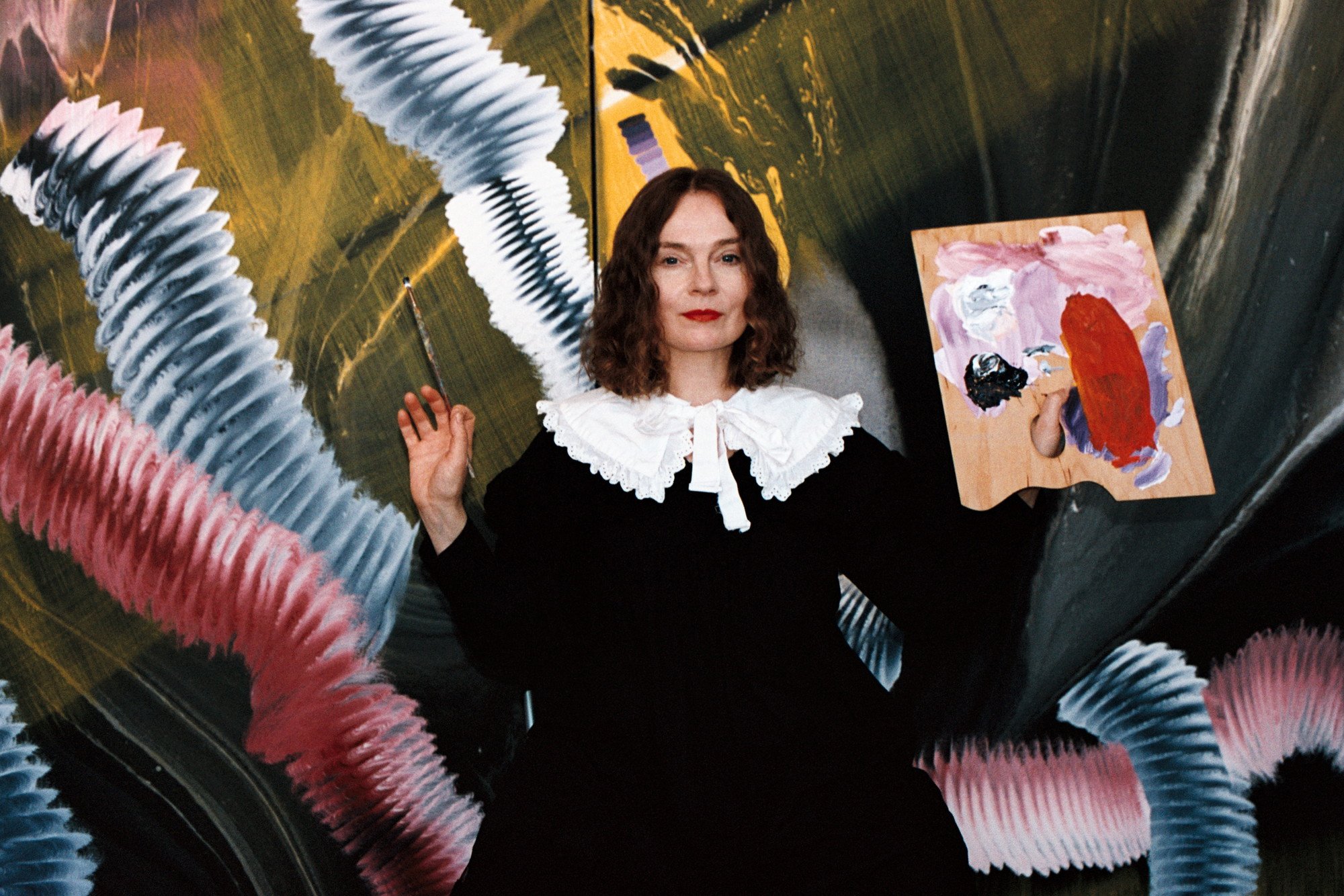
Merike Estna. Photo: Marta Vaarik / Estonian Centre for Contemporary Art
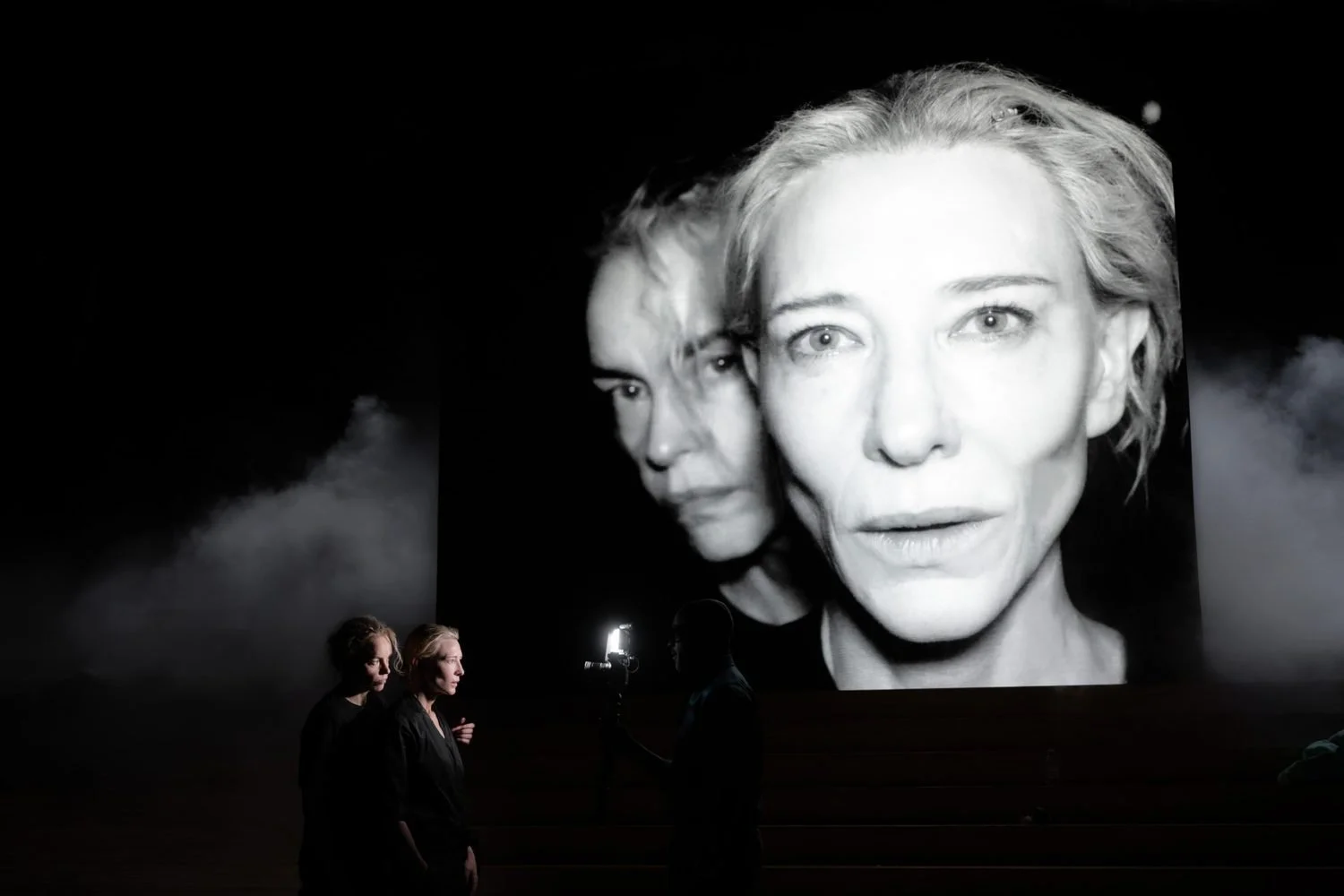
I think it says a lot that, in such a busy week, I went back twice. Merike Estna has transformed a former church with a frescoed ceiling and a basketball court floor into something of an open studio. Estna is staying in Venice for the duration of the Biennale, with her partner and two young children, working in the pavilion to create the final painting during the exhibition months. Her pavilion is a performance, a studio, and a statement about artistic labor all at once. As she paints, she stands on over 25,000 glazed ceramic tiles covering the floor, woven through with references to art history, Estonian folk culture and the overlooked women artists whose names never made it into the canon. When I went for the first time, she had not yet started painting. The second time around, paint was already covering some of the canvases - and now, I’m already thinking about going back in the autumn to see how far the paintings have come.
Location: Calle S. Domenico, 1285 Patronato Salesiano Leone XIII Venice Italy. Website: estonianpavilion.com. Instagram: @estonianpavilion ; @merikeestna
Bahamas Pavilion
In Another Man’s Yard by John Beadle & Lavar Munroe
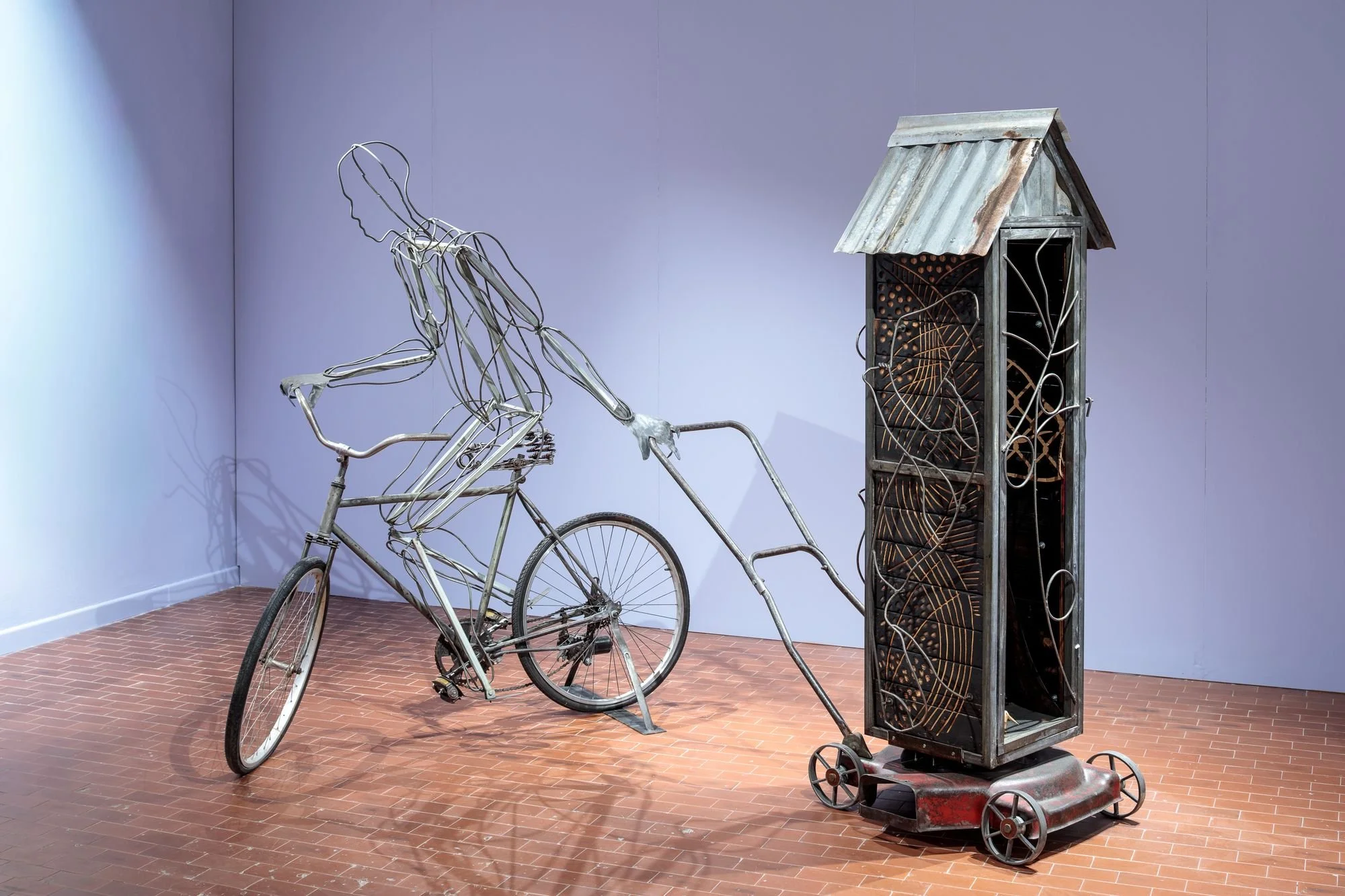
John Beadle, One Thousand Small Mercies, 2016, wood, cardboard, metal, objects, 72 × 24 × 182 in, Courtesy National Art Gallery of The Bahamas. Photo: Francesco Allegretto
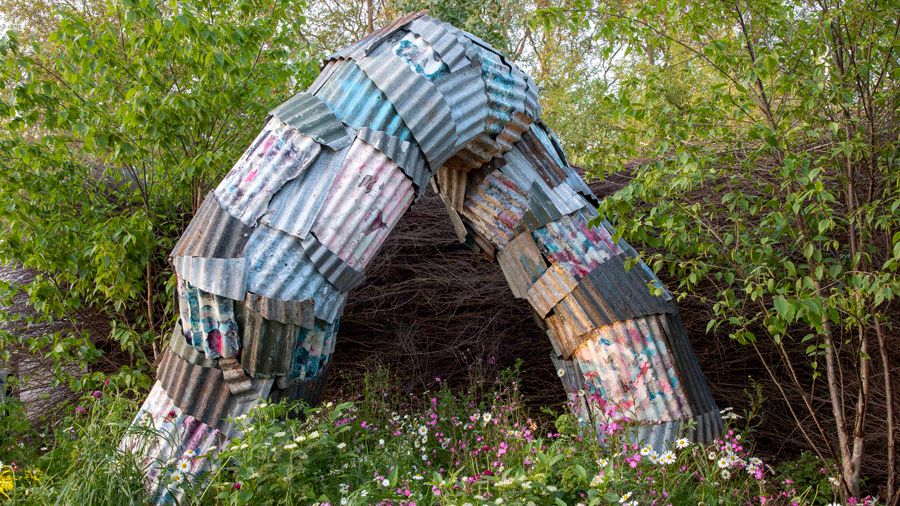
Often, when there is a duo show with one living and one deceased artist, I am wary that it will feel like a ping-pong between the works, or a “response” of the living artist to the one who has passed. However, the Bahamas pavilion did not feel like that. John Beadle, who passed away in 2024, and Lavar Munroe are brought together here through what the pavilion describes as “posthumous collaboration”. Both artists are rooted in Junkanoo, the centuries-old Bahamian masquerade tradition, and both have built studio practices that draw on its energy, its discarded materials and its relationship with community. Cardboard - the hidden inner structure of Junkanoo costumes, usually concealed beneath layers of embellishment - becomes a central material for Beadle. Munroe works with strips of abandoned Junkanoo costumes, building elaborate sculptural forms from what was left behind after the parade ended. I found that what makes the pavilion work so well is its curation. Some rooms give each artist space entirely of their own, so you come to know their work separately; others bring their work together without forcing a dialogue or making you do a compare-and-contrast - so that it does truly feel like a collaboration.
Location: San Trovaso Art Space, Dorsoduro 947, 30123 Venice, Italy. Website: bahamasvenicebiennale.org. Instagram: @thebahamasinvenice
Austrian Pavilion
SEAWORLD VENICE by Florentina Holzinger
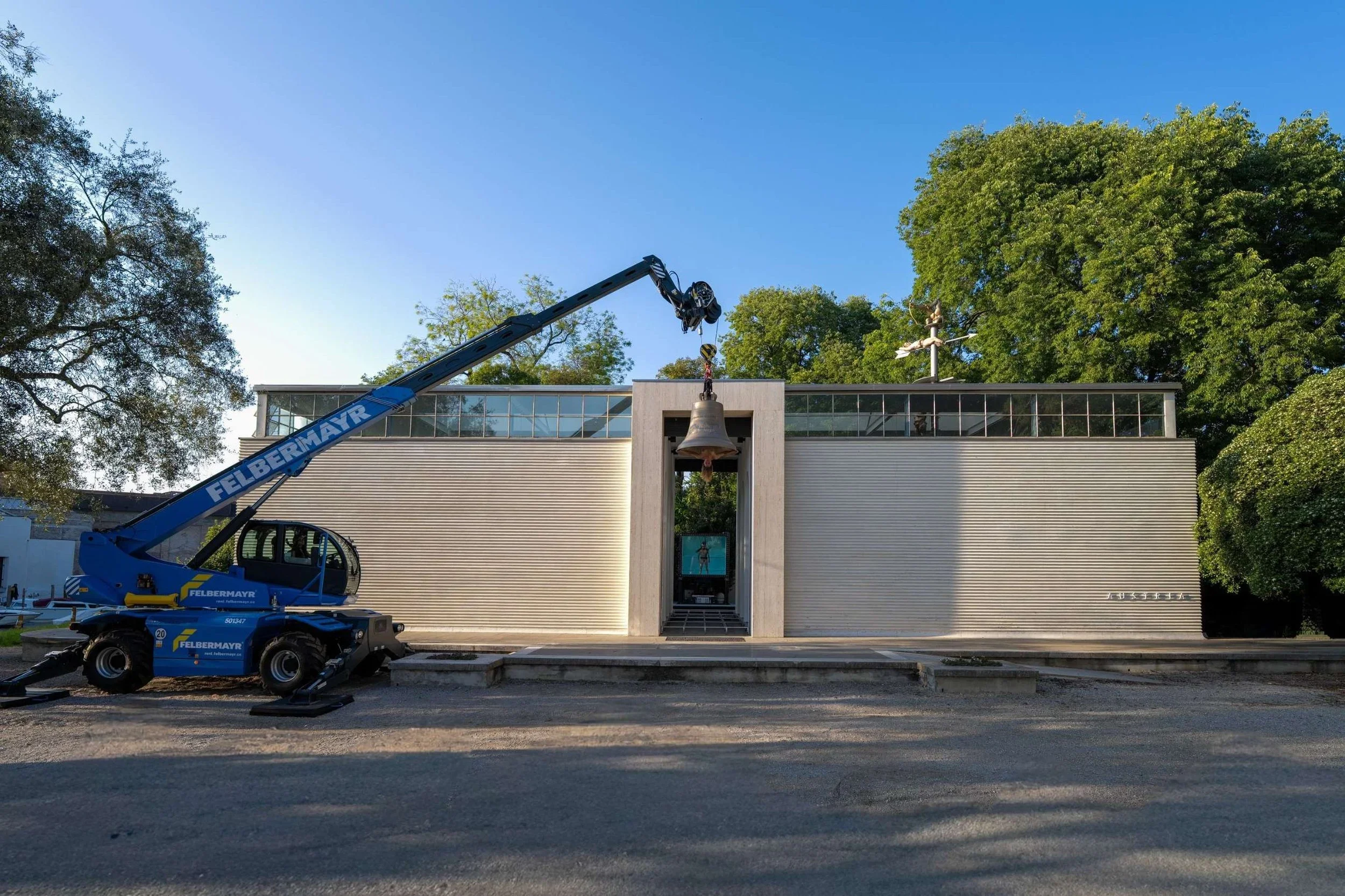
Florentina Holzinger, SEAWORLD VENICE, Austrian Pavilion, 61st Biennale di Venezia, Italy, 2026. Photo: © Nicole Marianna Wytyczak
I’m sure you’ve seen this pavilion on social media already - and you probably have seen the long queues of people waiting to get in. I need to be completely honest: I wasn’t one of them. I spent one and a half hours in the queue on one visit, then did the math that it would be a nearly three-hour wait before I got inside, so I had to throw in the towel to make it to my next meeting. I then arrived early on Friday morning to try and get in line first thing, only to find the pavilion closed for the day in solidarity with the protests against Israel’s participation in the Biennale (rightfully so). BUT! What I did catch was the bell performance, which happens on the hour, every hour, right outside the pavilion. A nude performer climbs up a rope, attaches themselves to the bell so as to act as the clapper (yes, I did need to google what the swinging bit in a bell is called), hangs upside down and swings themselves side to side, clanging the bell with their body. This performance, as well as the entire exhibition, uses shock and spectacle to address very real and very serious concerns about climate change and the future of our world. If you can get in, go see it - I feel I may need to take a trip back to Venice to experience it for myself.
Location: Giardini. Website: seaworldvenice.at. Instagram: @austrianpavilion; @floholzinger
Japanese Pavilion
Grass Babies, Moon Babies by Ei Arakawa-Nash
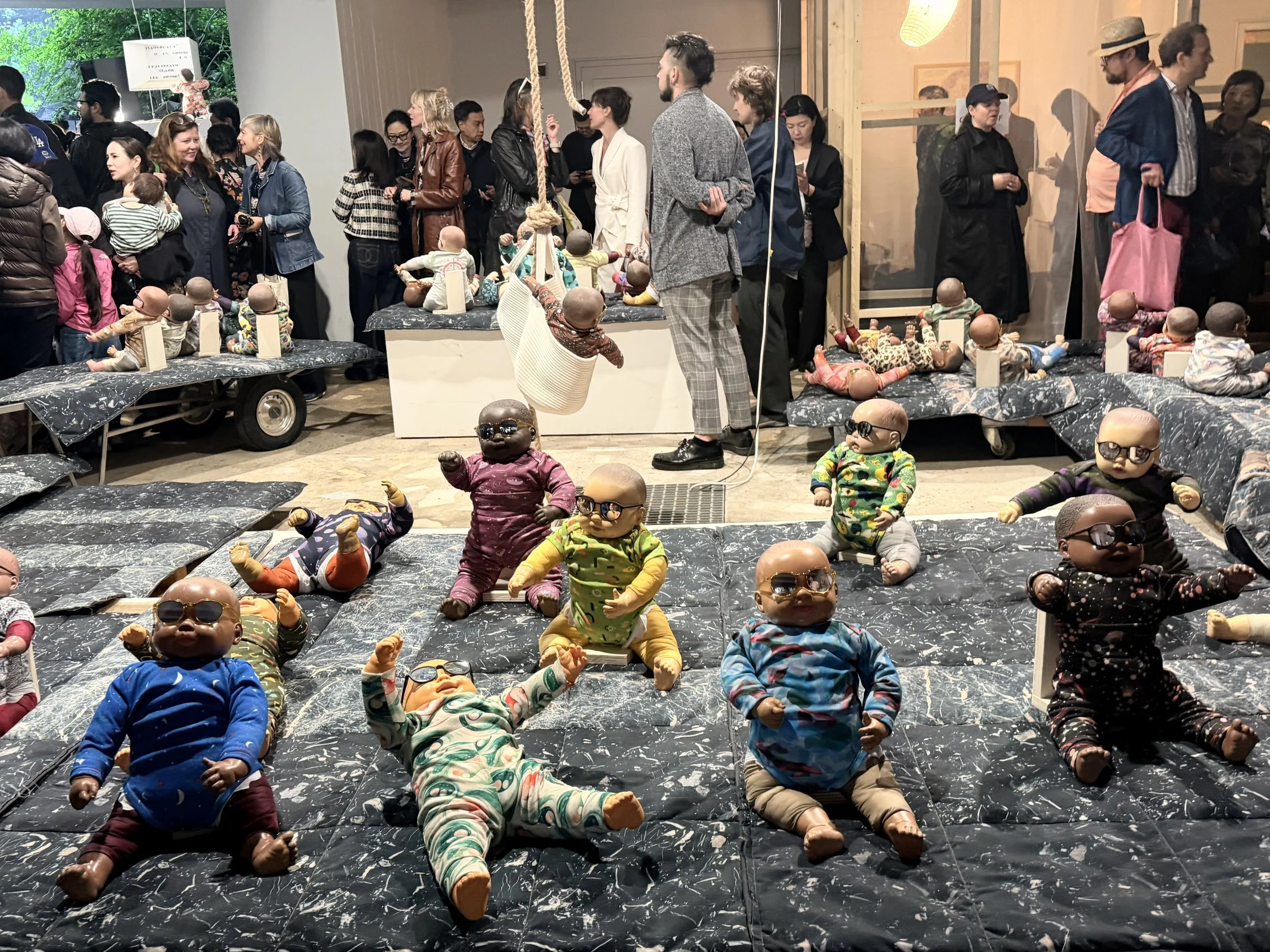
Japanese Pavilion, Venice Biennale, 2026, Grass Babies, Moon Babies by Ei Arakawa-Nash. Image credit MTotoe/ FLO London
I picked up one of the toy babies, and was surprised that it weighs roughly the same as a six-month-old (quite heavy!) - and I was also surprised that I didn’t want to put it down. One of my friends who came with me to the pavilion felt a surge of awkwardness and mild discomfort in holding one of the babies, and another started unconsciously rocking back and forth as if holding a real baby. As women in this pavilion, we all had different reactions to these “children”, which I felt was one of the most intriguing parts of the experience. Artist Ei Arakawa-Nash has filled the Japanese pavilion with over two hundred baby dolls, inviting visitors to adopt and carry them through the space. This exhibition places focus on diaspora, queer parenting, and collective care, as each doll’s assigned birthday (which you can find via scanning a QR code when changing their diaper - an act fraught with its own layered connotations) corresponds to a historically significant date linked to minority communities in and beyond Japan. I think this pavilion is especially resonant for people with uteruses, but it makes everyone reckon with parenthood, with what care actually asks of a body, with what we choose to value, and how we honour it.
Location: Giardini. Website: venezia-biennale-japan.jpf.go.jp. Instagram: @ei.arakawa.nash
Danish Pavilion
Things to Come by Maja Malou Lyse
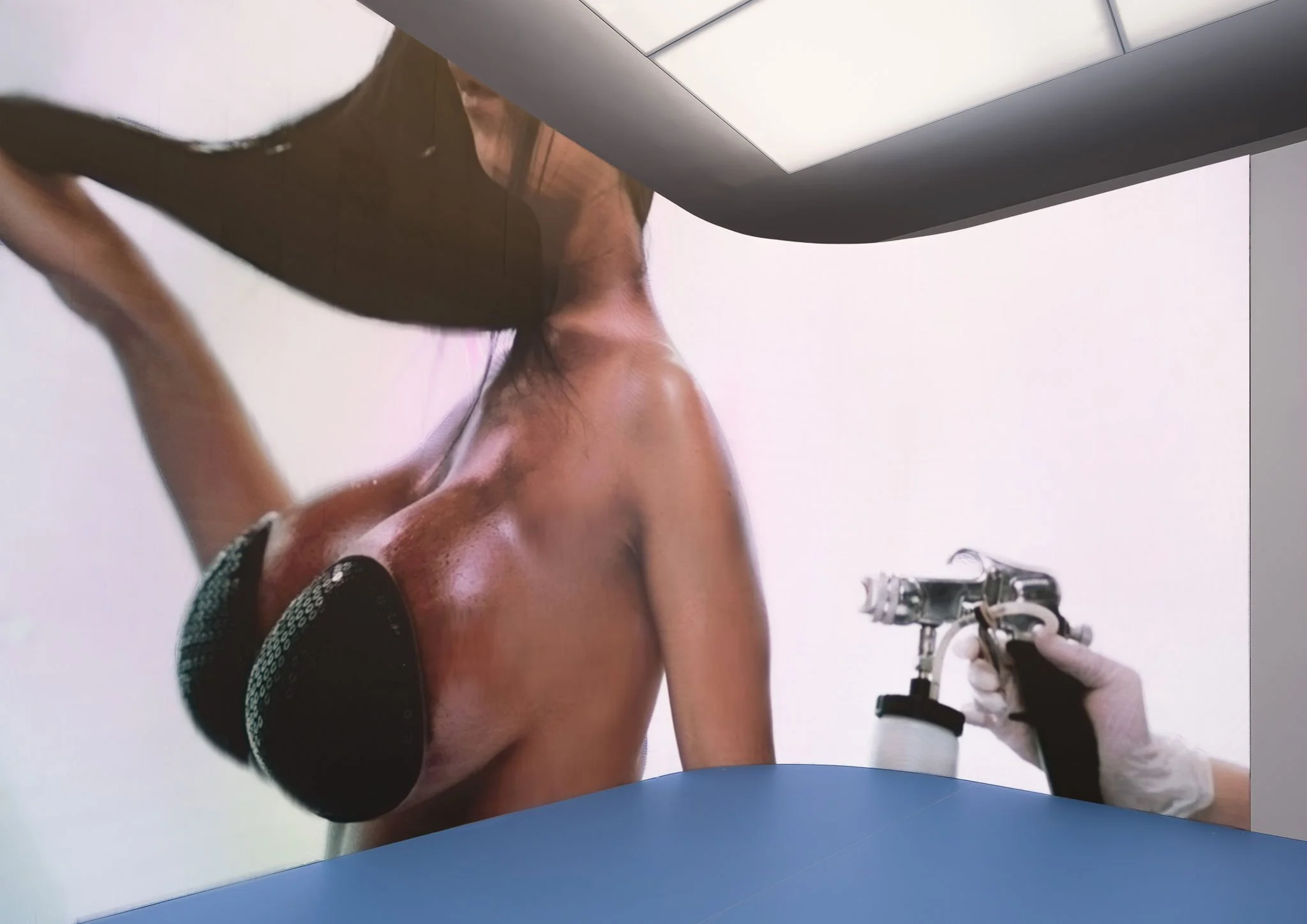
Things to Come. Danish Pavilion at the Venice Biennale of Art, by Maja Malou Lyse and the collective Common Accounts. Image credit Ugo Carmeni.
I walked in expecting not to enjoy it. I caught myself having a pre-determined idea that a show grappling with fertility and VR pornography would frustrate me (which, in a way, also means it’s really good). Things to Come is built around a scientific observation from a Danish spermbank suggesting that exposure to virtual sexual stimuli can enhance sperm motility. There are two rooms within the pavilion, and one contains a sculptural installation in the form of a “sperm altar” in which cryogenic containers used for transporting sperm have small screens embedded, documenting “sperm racing”. In the other room, a huge video installation shows porn performers acting as lab scientists in an imaginary sperm bank. It felt like something oscillating between soft pornography, science fiction and corporate satire. It’s funny (because it is sometimes so ridiculous), then uncomfortable, then funny again, and I left the pavilion thinking more deeply about male fertility and the connections to environmental toxicity, screen addiction, the erosion of intimacy. (but… maybe don’t go in with your parents if watching sex scenes during movie night makes you uncomfortable).
Location: Giardini. Instagram: @danishpavilion; @habitual_body_monitoring2
The Venice Biennale Arte 2026 is open until 22 November 2026, so there is plenty of time to get yourself to Venice and see these pavilions for yourself. Whether you make it for the summer, catch it in the autumn, or use it as an excuse to plan a long weekend before it closes its doors, I hope you catch these five must-see pavilions when there and enjoy them as much as I did.
Disocver more on tickets and opening times at labiennale.org








Handmade in Ghana, this beautiful green apron offers a unique design with a front pocket perfect for kitchen utensils or your phone and tie neck straps each made from recycled material. The perfect gift for any cooking enthusiasts!
Our aprons have been named after markets in Ghana. This apron has been named after Kintampo Market located in the Bono region of Ghana it is noted for their sales of yam tubers.