
Your guide to navigating Gallery Weekend Berlin like a pro
Gallery Weekend Berlin is Europe’s first gallery weekend, launched in 2005 as a gallery-led initiative with a clear ambition to draw international collectors, curators, and museum professionals out of the fair circuit and into the city’s galleries, where so much of the real conversation takes place. It was a smart move for Berlin, a city that never really had an art fair on the scale of Art Basel or Frieze, but instead built its reputation on something more dispersed, more studio-led, and more embedded in the fabric of the city.
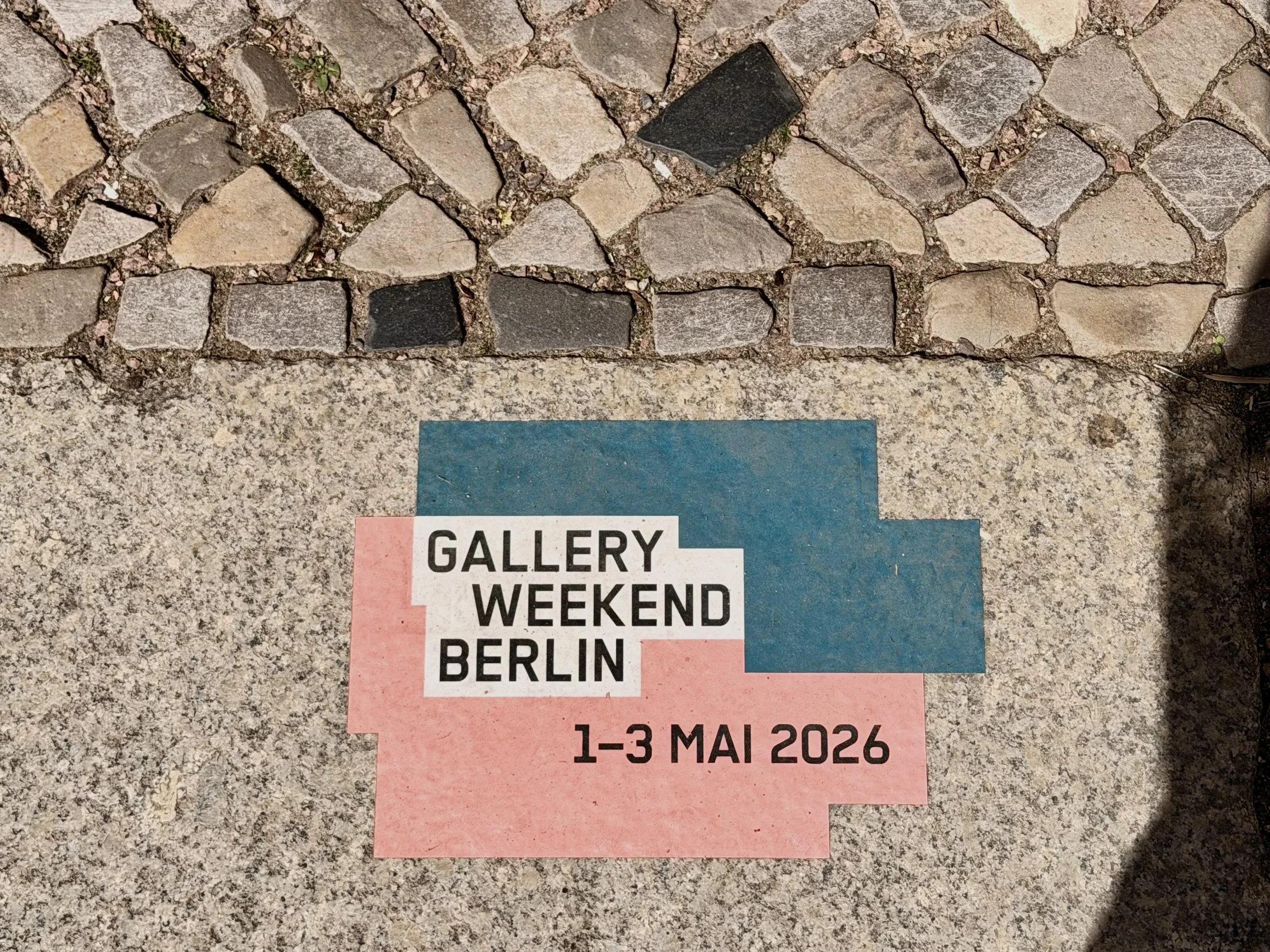
Gallery Weekend Berlin 2026. Image credit MTotoe. Courtesy of FLO London.
Now in its 21st edition, most recently held in May 2026, Gallery Weekend Berlin has firmly established itself in the international art calendar and attracts visitors from around the world. Its format has since been echoed in cities from London to Paris, Vienna and Barcelona. This year’s edition was a testament to the strength of its commercial scene, bringing together 52 galleries across 61 venues over three days, presenting a wide range of international and Berlin-based artists working across painting, photography, video, sculpture and large-scale installation. The result was a weekend that felt less like a scheduled event and more like a city-wide creative drift through exhibitions, openings, talks, performances and late-night conversations. This guide, shaped by this year’s Berlin experience, will help you navigate future editions like a pro.
When to arrive
We would recommend arriving on Thursday before Gallery Weekend officially begins, giving you time to take in some of Berlin’s major museums, institutions, and early openings. It’s also the ideal moment to plan your routes across the city and get a feel for the galleries you want to prioritise, before the main programme of gallery shows kicks off on Friday evening.
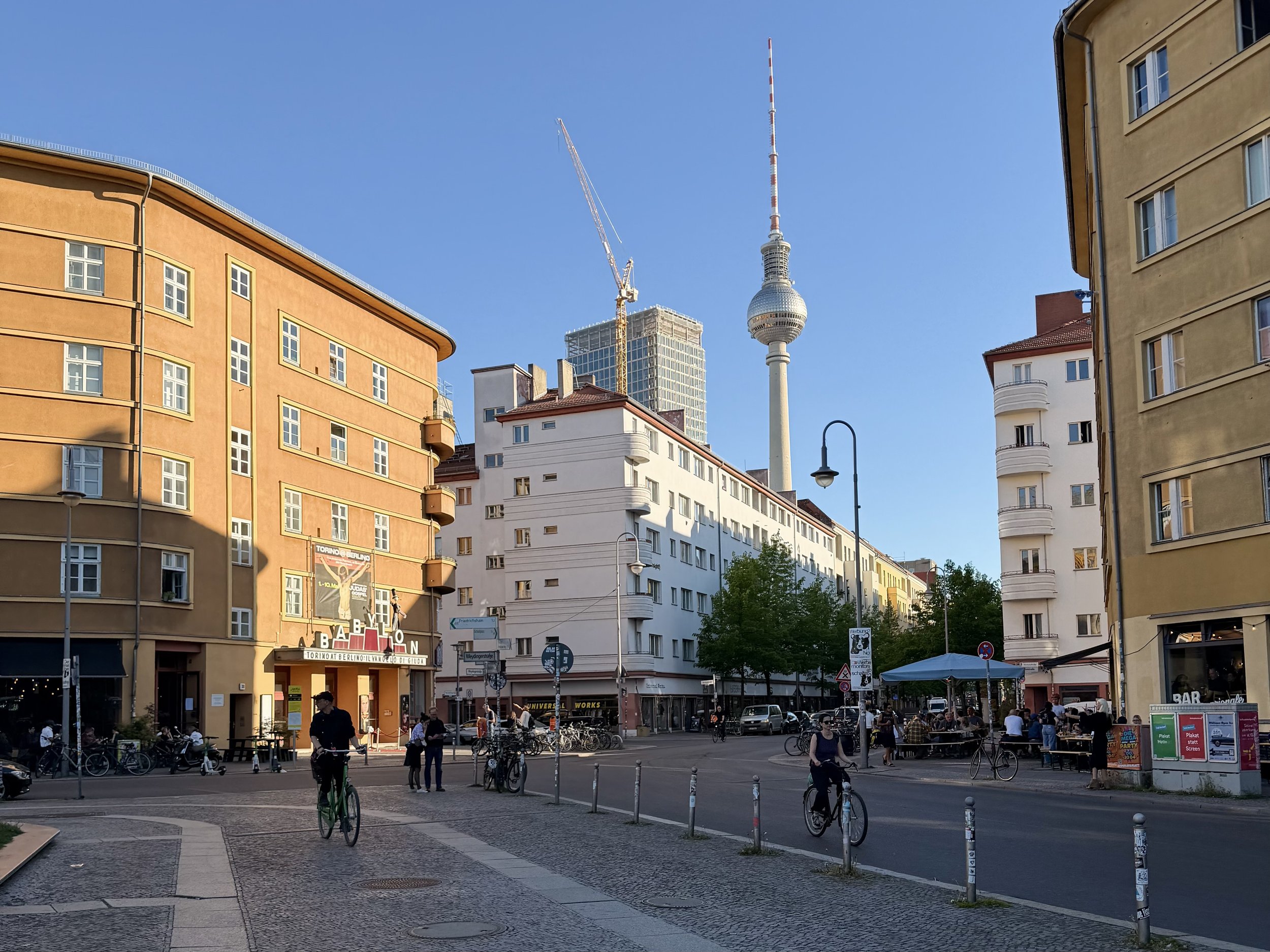
Berlin, 2026. Image credit MTotoe. Courtesy of FLO London.
The galleries
Berlin’s art scene is full of polished, internationally established institutions, but what makes the city especially compelling is the way these exist alongside hundreds of independent spaces, as well as an intensely experimental, grassroots and underground culture. It’s this collision of worlds that continues to make Berlin such an attractive creative hub.
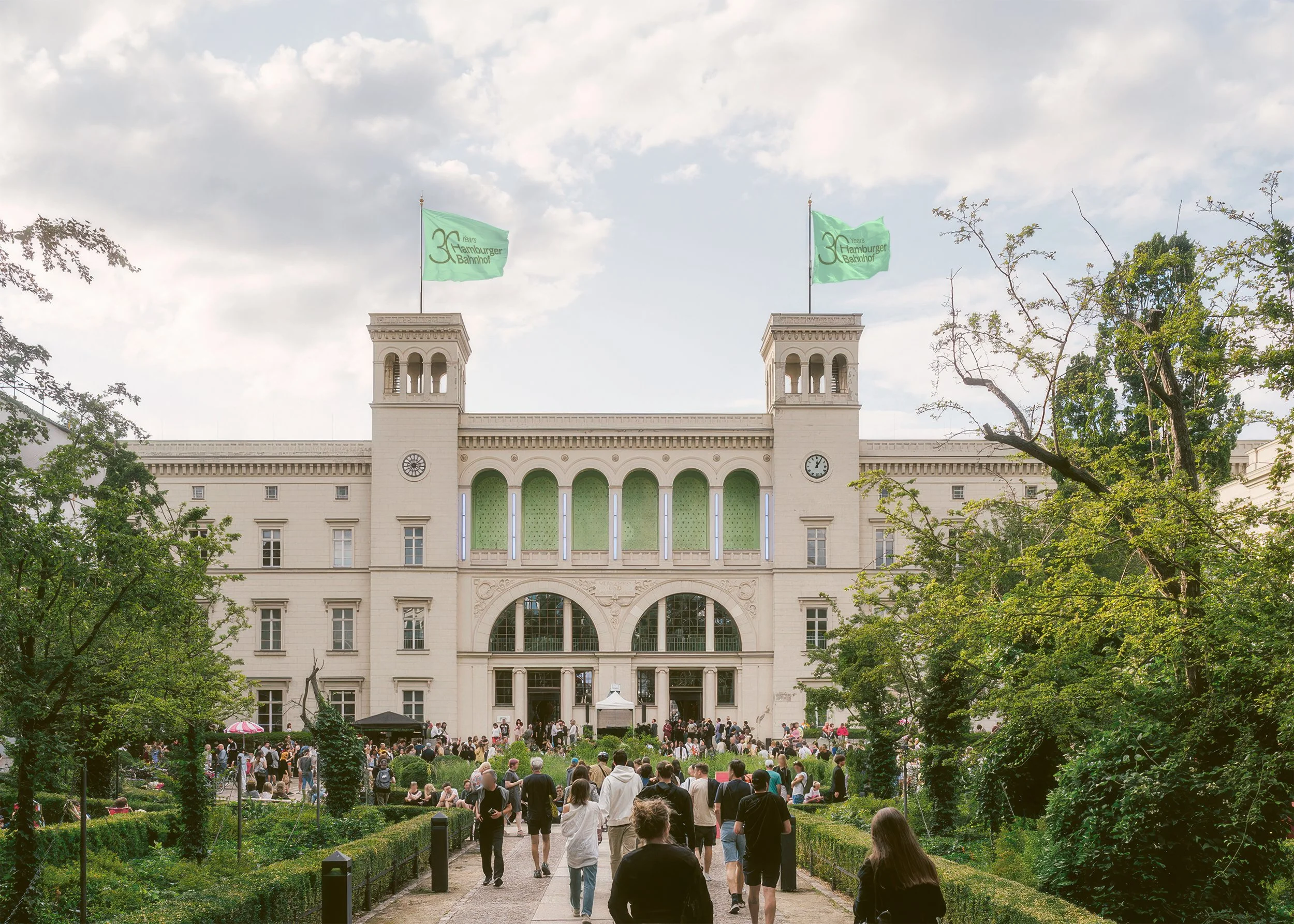
Hamburger Bahnhof – Nationalgalerie der Gegenwart © Staatliche Museen zu Berlin / Foto: Kulturprojekte, Alexander Rentsch
Unlike many other art capitals, Berlin doesn’t really have a single centre, and much of the Gallery Weekend programme is spread across different neighbourhoods. We recommend picking up an official Gallery Weekend map which helpfully divides the city into clusters including Charlottenburg/Wilmersdorf, Mitte Nord, Schöneberg/Tiergarten and Mitte Süd/Kreuzberg, making it far easier to navigate while encouraging visitors to venture further afield and experience the distinct atmosphere of each area.
If you arrive in Berlin on Thursday, it’s worth using the slower pace before Gallery Weekend officially begins to visit some of the city’s institutions and museums, such as Hamburger Bahnhof or Neue Nationalgalerie. It’s a good way to ease into the weekend before the intensity of the openings begins, while also giving some wider context to Berlin’s contemporary art scene.
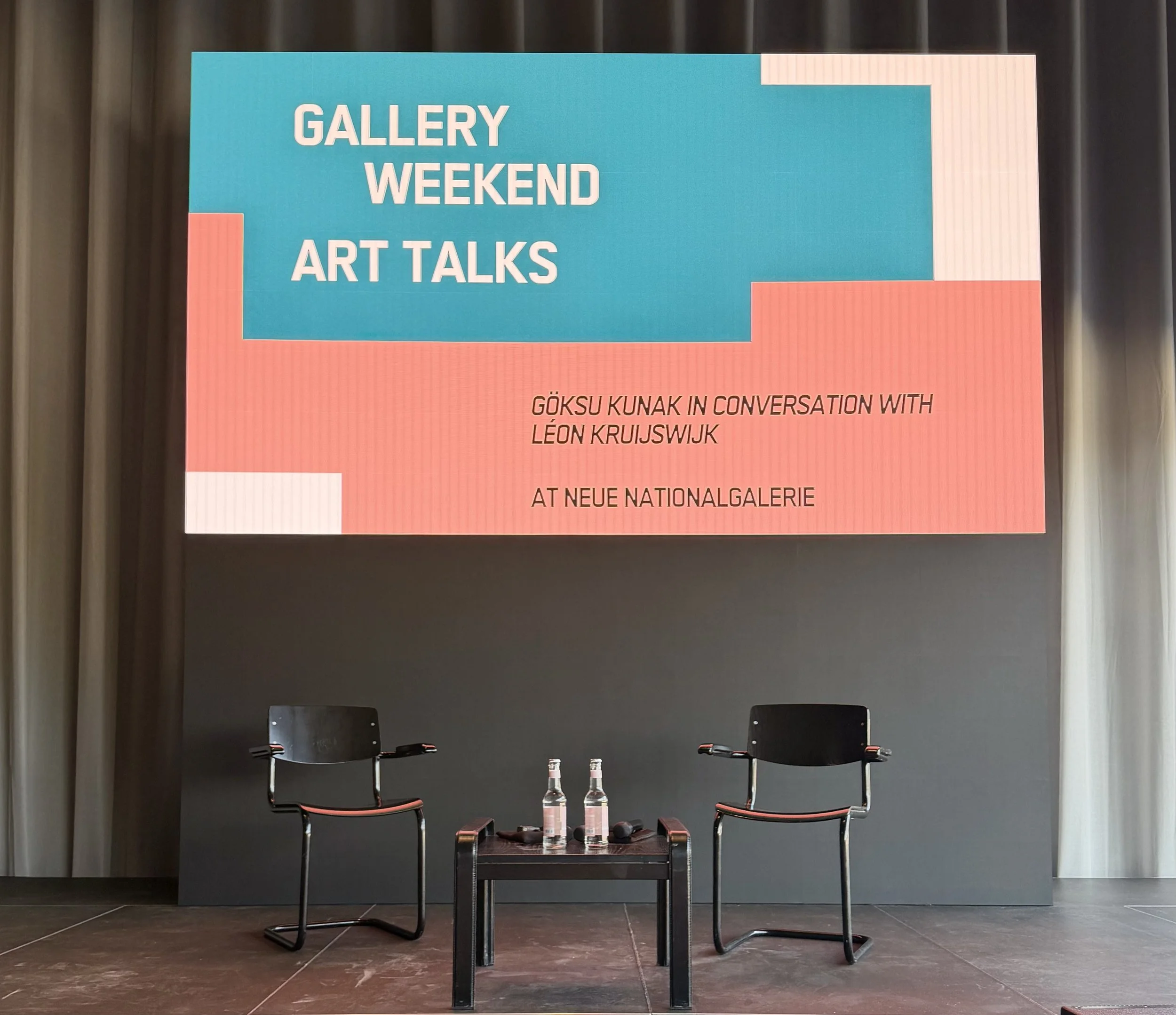
Art Talks at Neue Nationalgalerie. Gallery Weekend Berlin 2026. Image credit MTotoe/ FLO London
Many openings take place on Friday evening, making the morning and afternoon an ideal time to explore the Gallery Weekend talks programme, which this year primarily took place at the Neue Nationalgalerie and Hamburger Bahnhof. They offered an enriching opportunity to hear directly from artists and curators before encountering many of the exhibitions later in the weekend. A highlight of the 2026 programme was a talk at the Neue Nationalgalerie between Göksu Kunak and Léon Kruijswijk. Kunak spoke about the significance of cars within their work and personal history, describing them as symbols tied to movement, identity and place. Hearing the artist speak earlier in the day gave real context to the performance we later experienced that evening.
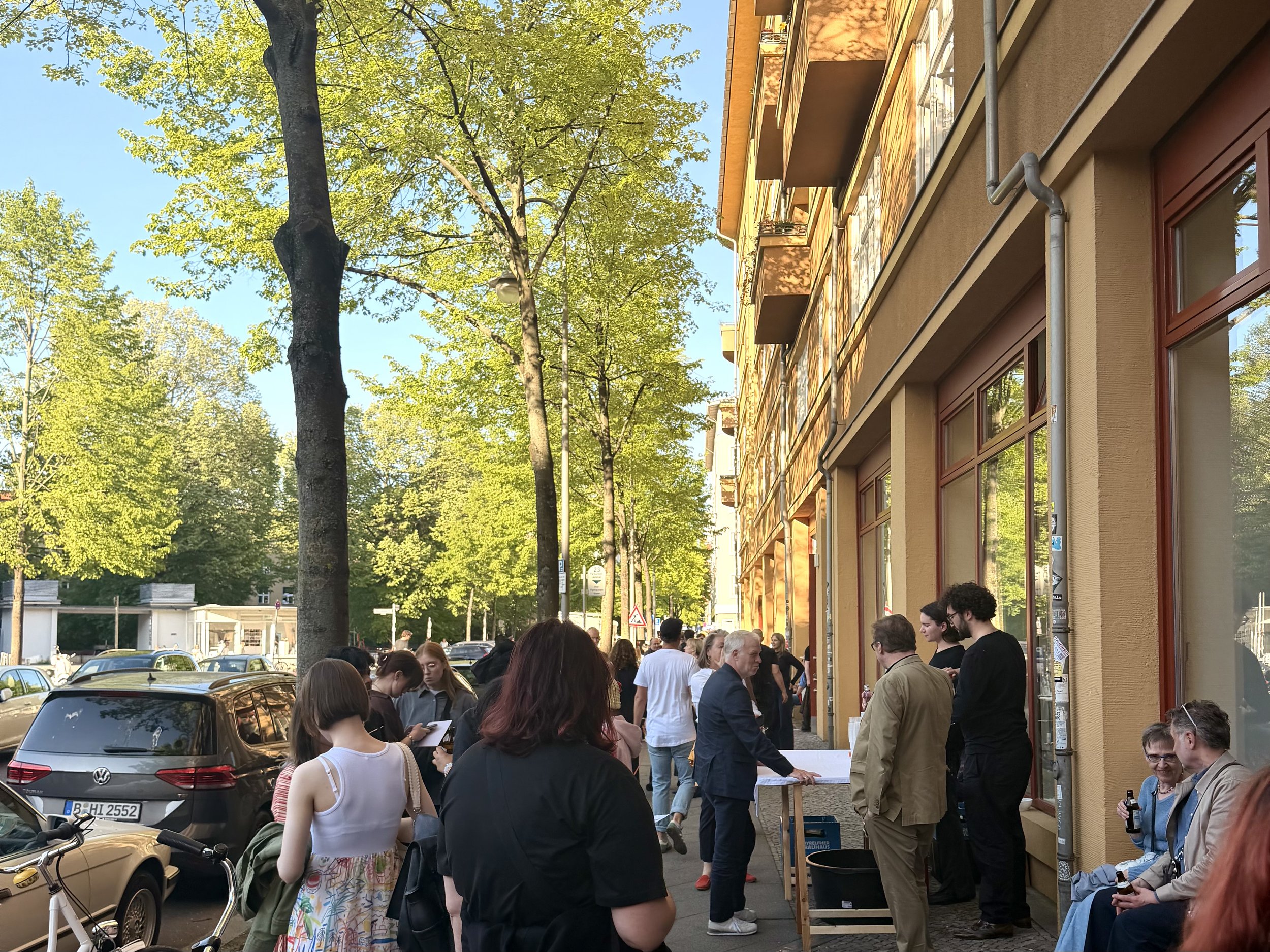
Galleries along Linienstraße, Gallery Weekend Berlin 2026, Image credit MTotoe/FLO London
By around 6pm, the city shifts into opening mode, and Friday evening is best spent gallery-hopping in Mitte. We started the evening exploring the cluster of galleries along Linienstraße, where a group of spaces sit almost door-to-door. This included BQ, Galerie Nagel Draxler, Galerie Neu, as well as the Perspectives programme participants Mountains and Anton Janizewski. Perspectives is a new initiative introduced this year, presenting a rotating selection of younger or emerging galleries that will change with each edition of Gallery Weekend, adding a more experimental layer to the programme. This pocket of Mitte has a particularly concentrated energy during openings. As soon as you step out of one gallery, you are drawn into the next, with the street itself buzzing with people, drinks, and plenty of conversation.
A short walk away, DITTRICH & SCHLECHTRIEM and Galerie EIGEN + ART formed a must-see secondary cluster. Also in the area, Sprüth Magers occupies an almost institution-sized complex, presenting several ambitious exhibitions across its spaces. This year, Martine Syms transformed part of the gallery into a pop-up boutique.
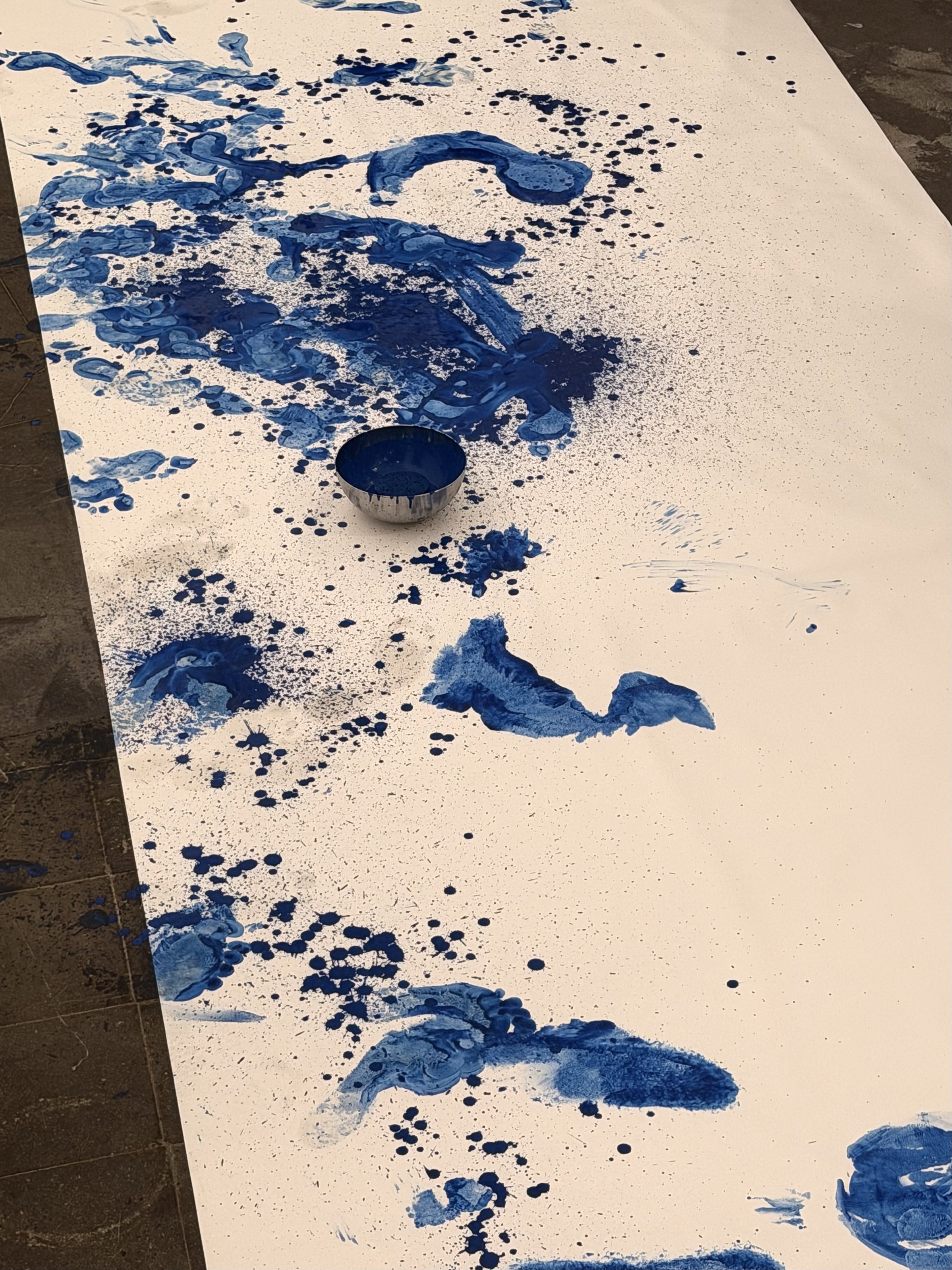
REMAINS by Göksu Kunak at EBENSPERGER, performed during Gallery Weekend Berlin 2026. Image credit MTotoe. Courtesy of FLO London.
Next, we headed to Kreuzberg to see REMAINS by Göksu Kunak at EBENSPERGER, staged inside the atmospheric Fichtebunker on Fichtestraße. Experiencing the work only a few hours after hearing Kunak speak earlier that day made the performance feel especially resonant. Rather than a static exhibition, REMAINS unfolded gradually through choreography, sound and audience participation, beginning deep within the bunker before slowly spilling out onto the street. The rawness of the space, combined with the physical intensity of the performance, made it one of the most memorable experiences of the entire weekend. Where possible, prioritise live performances taking place across the programme, including during busy evenings, as they are often what we consider unmissable moments.
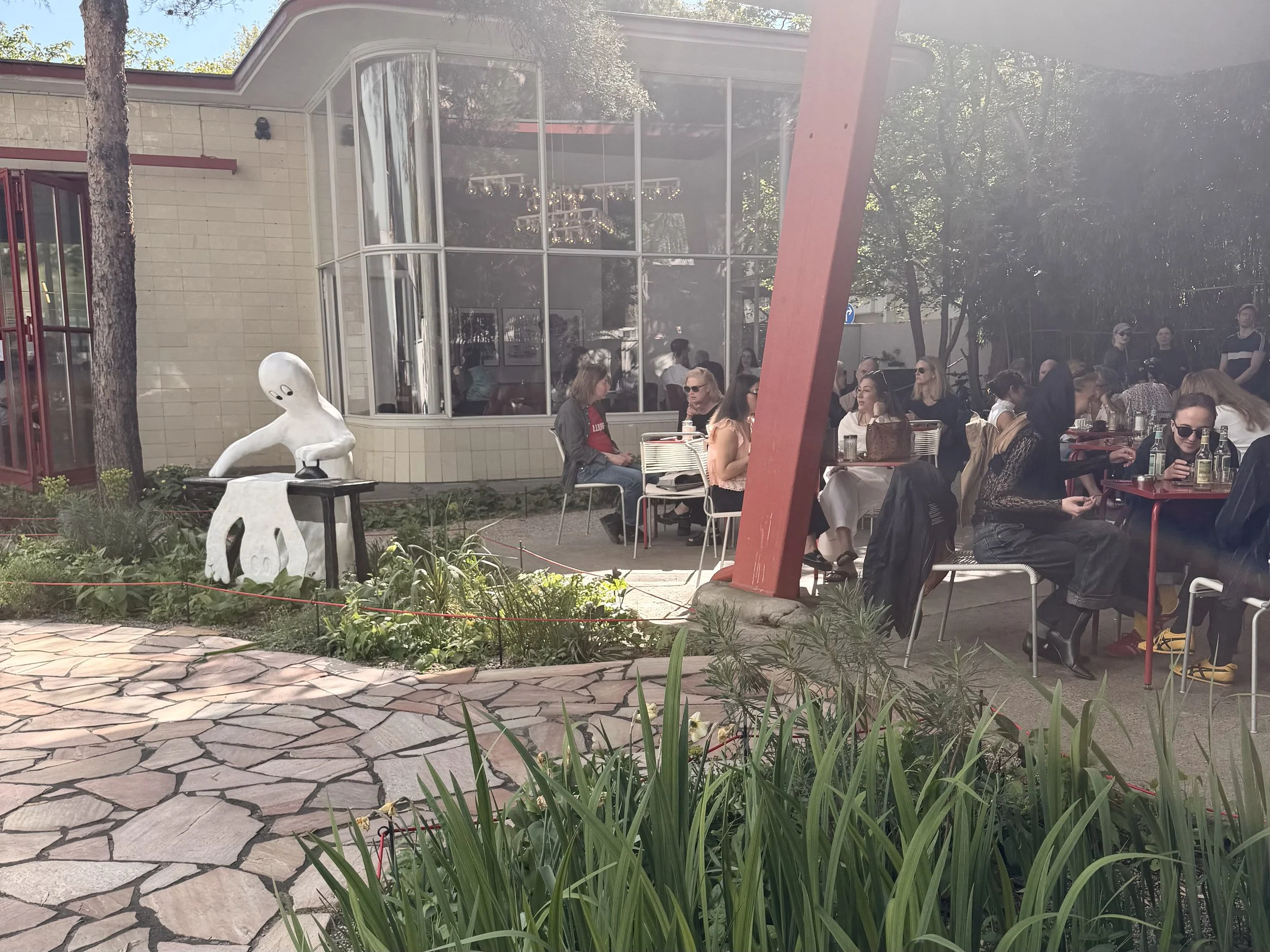
Galerie Judin’s Die Tankstelle space with this courtyard café. Image credit MTotoe. Courtesy of FLO London.
Saturday is ideal for exploring the galleries around Schöneberg and Tiergarten before heading towards Potsdamer Straße, one of Berlin’s densest gallery corridors. A good starting point is Galerie Judin, which operates two locations, including the Die Tankstelle space shared with Pace Gallery, a converted petrol station with a courtyard café that becomes a natural meeting point to start the day.
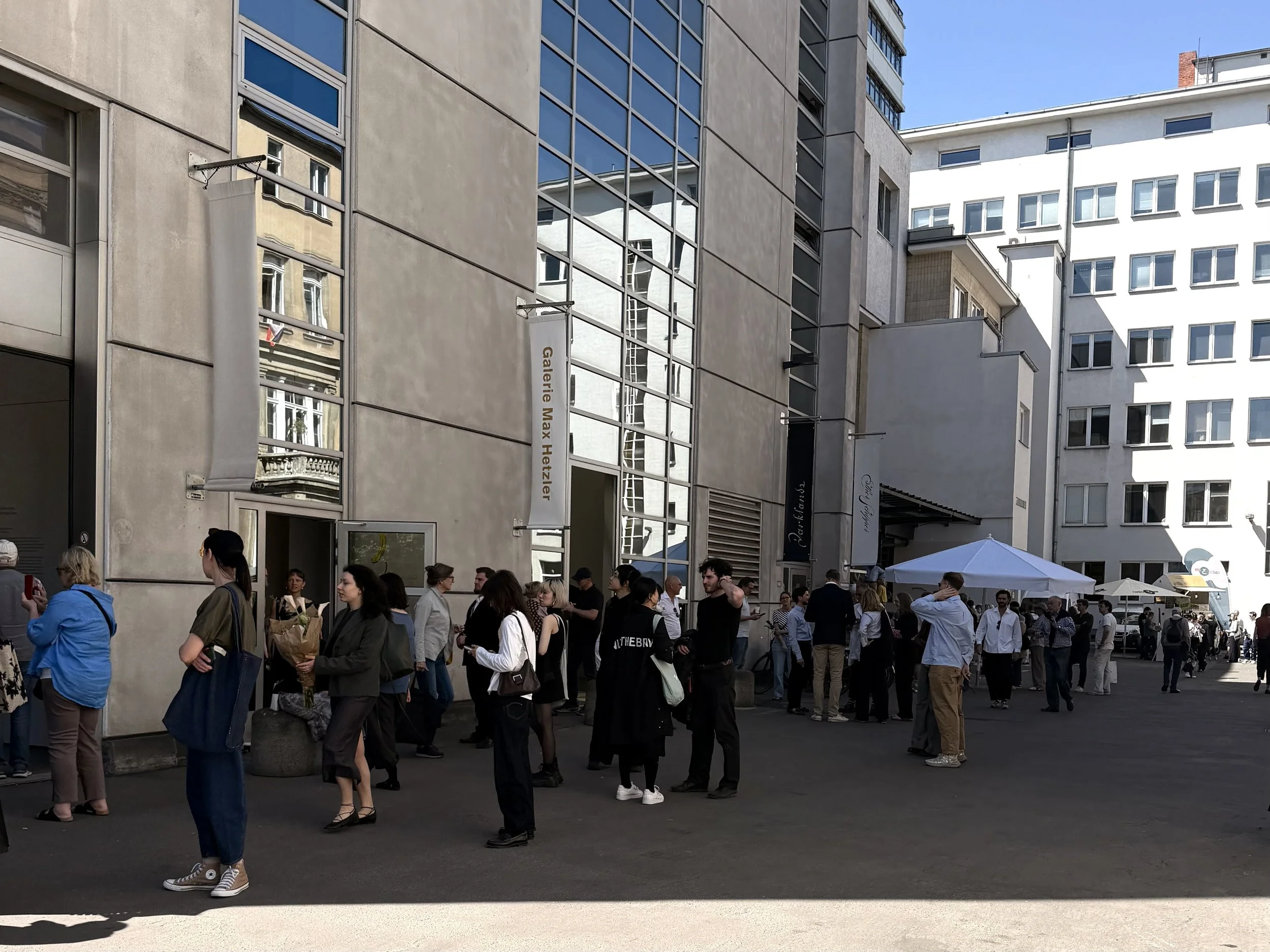
Potsdamer Straße district. Gallery Weekend Berlin 2026. Image credit MTotoe. Courtesy of FLO London.
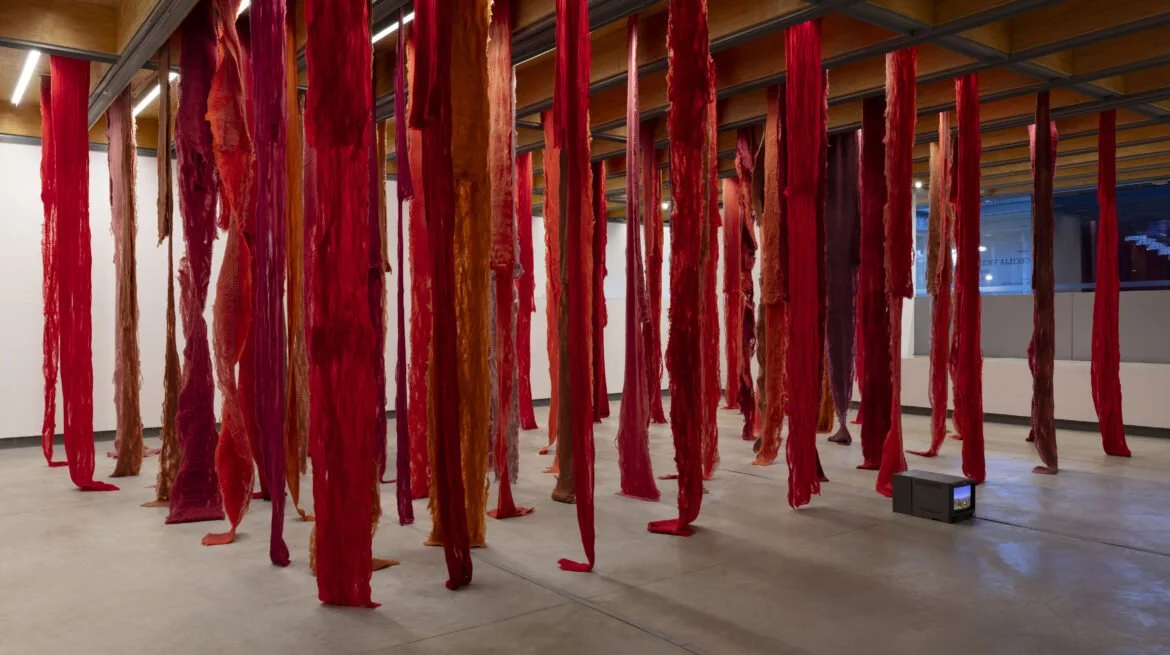
From there, it’s worth spending time walking through the wider Potsdamer Straße district, where many major galleries sit within close proximity of one another. Including Esther Schipper, Galerie Judin’s second location, Galerie Max Hetzler, PSM and another outpost of Galerie Thomas Schulte. KOW is also nearby and particularly worth visiting.
Not far away, galleries including Noah Klink and ChertLüdde are also well worth the trip, the latter continuing its interesting programme of politically and emotionally charged exhibitions.
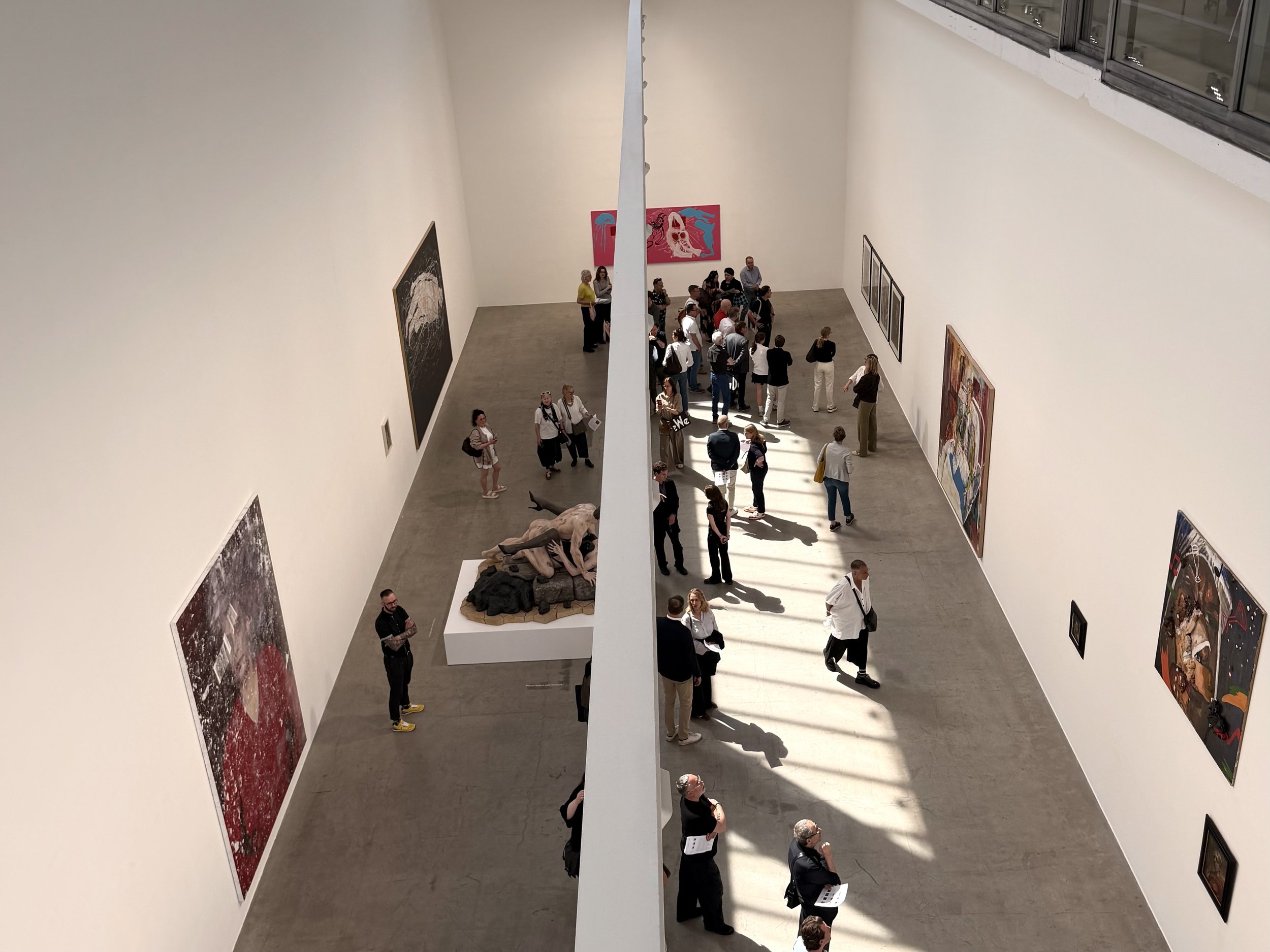
Galerie Max Hetzler, Gallery Weekend Berlin 2026. Image credit MTotoe. Courtesy of FLO London
By Sunday, the pace naturally slows, making it the perfect time to head west and explore the remaining galleries across Charlottenburg/Wilmersdorf. Highlights included Lars Friedrich, Wentrup, Société, Meyer Riegger, Galerie Buchholz and Galerie Michael Werner. Compared with the intensity and energy of Mitte on Friday night, Sunday in Charlottenburg is a calmer final chapter to the weekend
Museums and art institutions
Gallery Weekend Berlin is defined by its galleries, but the city’s museums and institutions are just as essential to the experience.
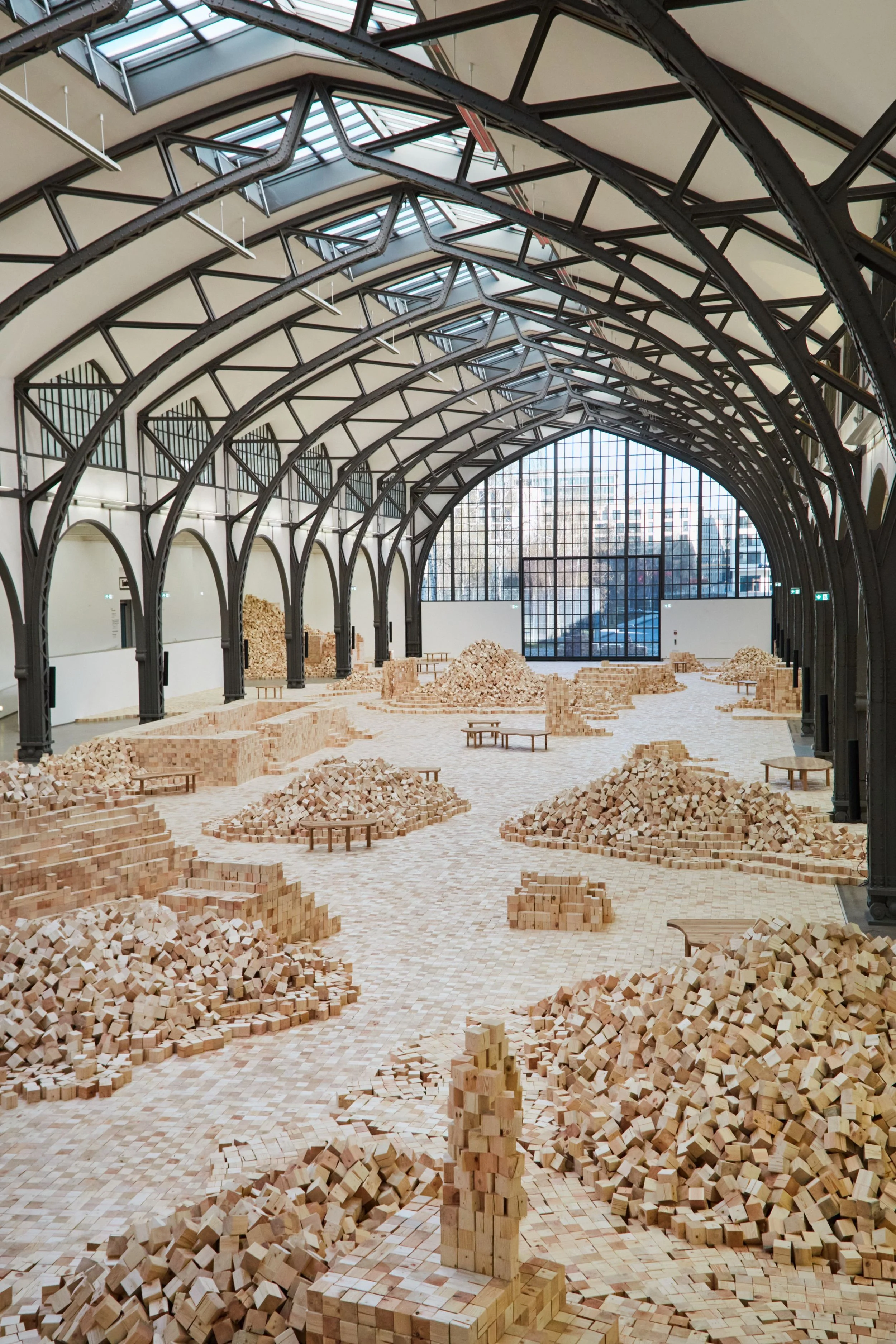
Lina Lapelyte. We Make Years Out of Hours, exhibition view Hamburger Bahnhof - Nationalgalerie der Gegenwart, Berlin, 2026 © Lina Lapelyté. VG Bild-Kunst, Bonn 2026. photo: Staatliche Museen zu Berlin, Nationalgalerie / art/beats, Florian Mag
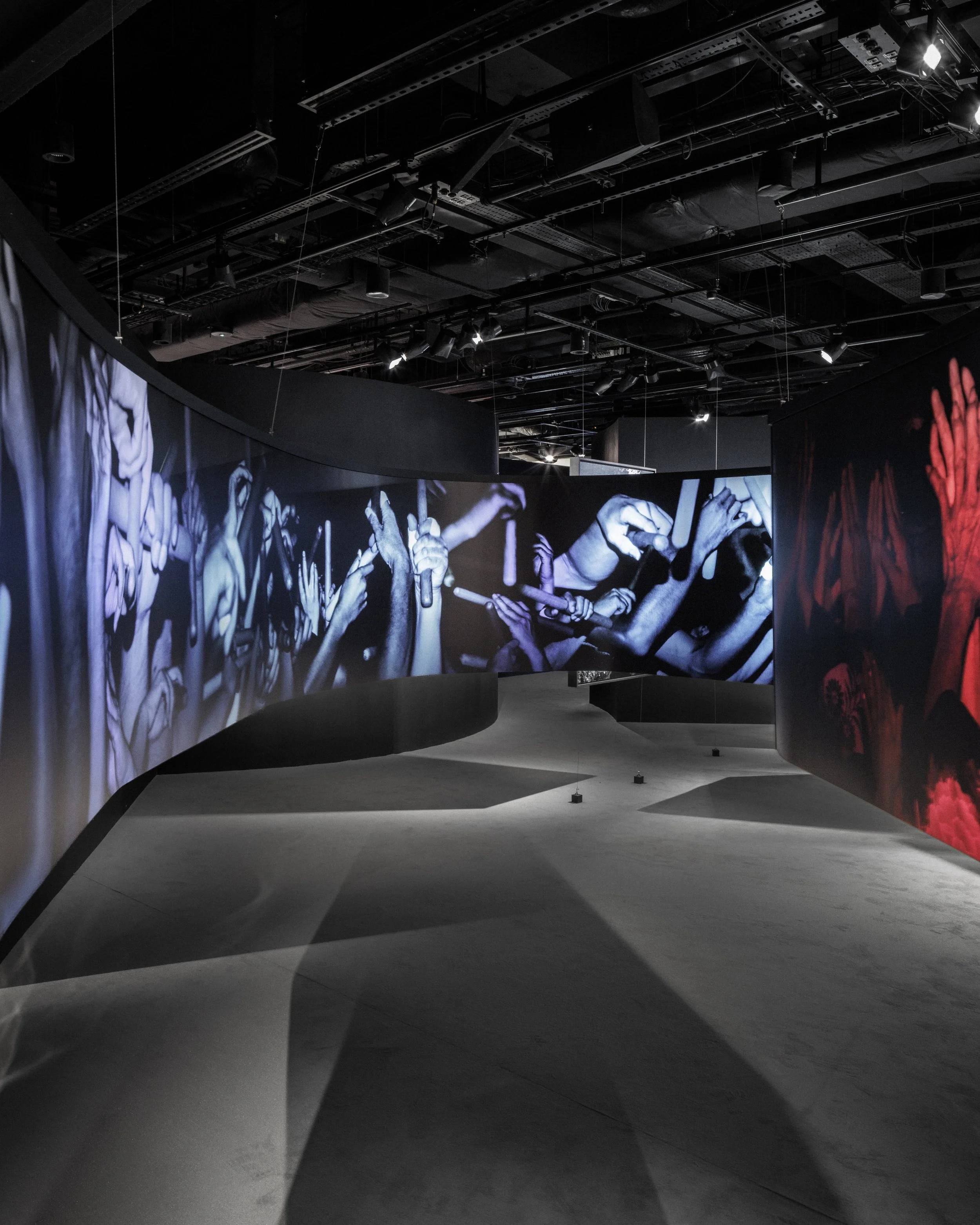
We arrived in Berlin on Thursday evening specifically for the opening at Hamburger Bahnhof, which marked our first stop of the weekend. The museum was open with free admission for the launch of the Chanel Commission, which this year presented We Make Years Out of Hours by Lina Lapelytė, the Lithuanian artist and composer known for working at the intersection of performance, voice, and collective time. Presented within the museum’s vast industrial halls, it was a durational, sound-led experience with an excellent, energetic atmosphere. As you can imagine, it was hugely popular, so it is worth arriving early for such openings to avoid long queues at the entrance.
A necessary stop in the institutional programme during Gallery Weekend is the Neue Nationalgalerie. Across the weekend, its glass hall hosts the Gallery Weekend Art Talks programme, bringing together artists, curators, and thinkers to reflect on the wider conditions shaping contemporary art today. Key topics this year included digital culture and AI, performance, the role of institutions, and collective practice. Beyond the talks, the Neue Nationalgalerie was also presenting Beeple’s widely discussed installation Regular Animals, first shown at Art Basel Miami Beach before being brought to Berlin. This institutional presentation proves the independent nature of Berlin’s museum scene, which does not shy away from risk or provocation.
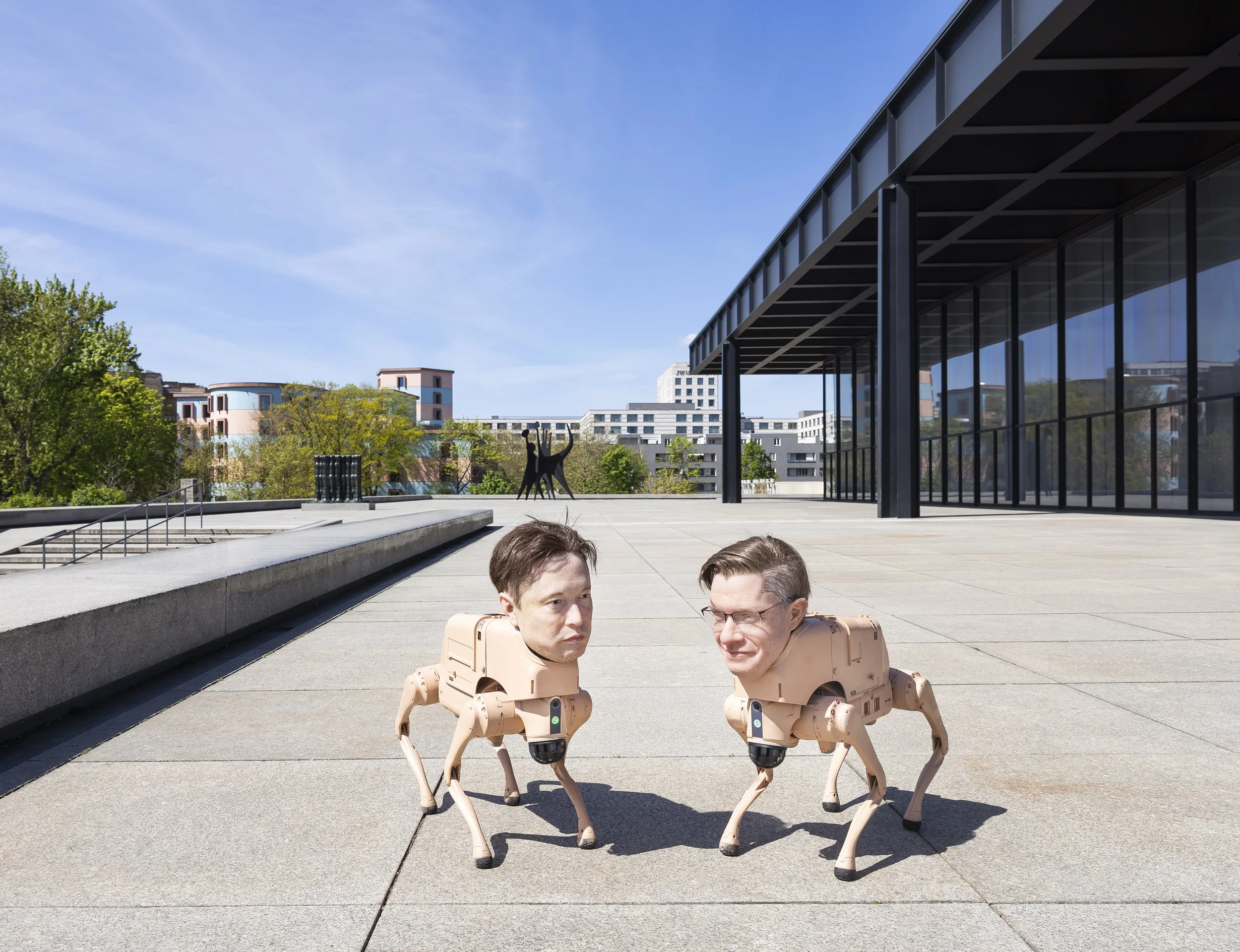
Beeple. Regular Animals, Neue Nationalgalerie, 2026 Foto: Neue Nationalgalerie / David von Becker
Berlin’s institutions consistently absorb and reframe internationally significant works and exhibitions, often bringing them into large-scale museum contexts shortly after their debut. Another recent example is Florentina Holzinger’s much-discussed presentation at the Austrian Pavilion at the 61st Venice Biennale in 2026, which opened only last week and has already been announced for presentation at Gropius Bau, another of Berlin’s major institutions well worth a visit.
Equally important is KW Institute for Contemporary Art, which presents more experimental, process-led and discursive work, often platforming emerging artists and critical practices. It remains one of the clearest expressions of Berlin’s research-driven contemporary art ecosystem.
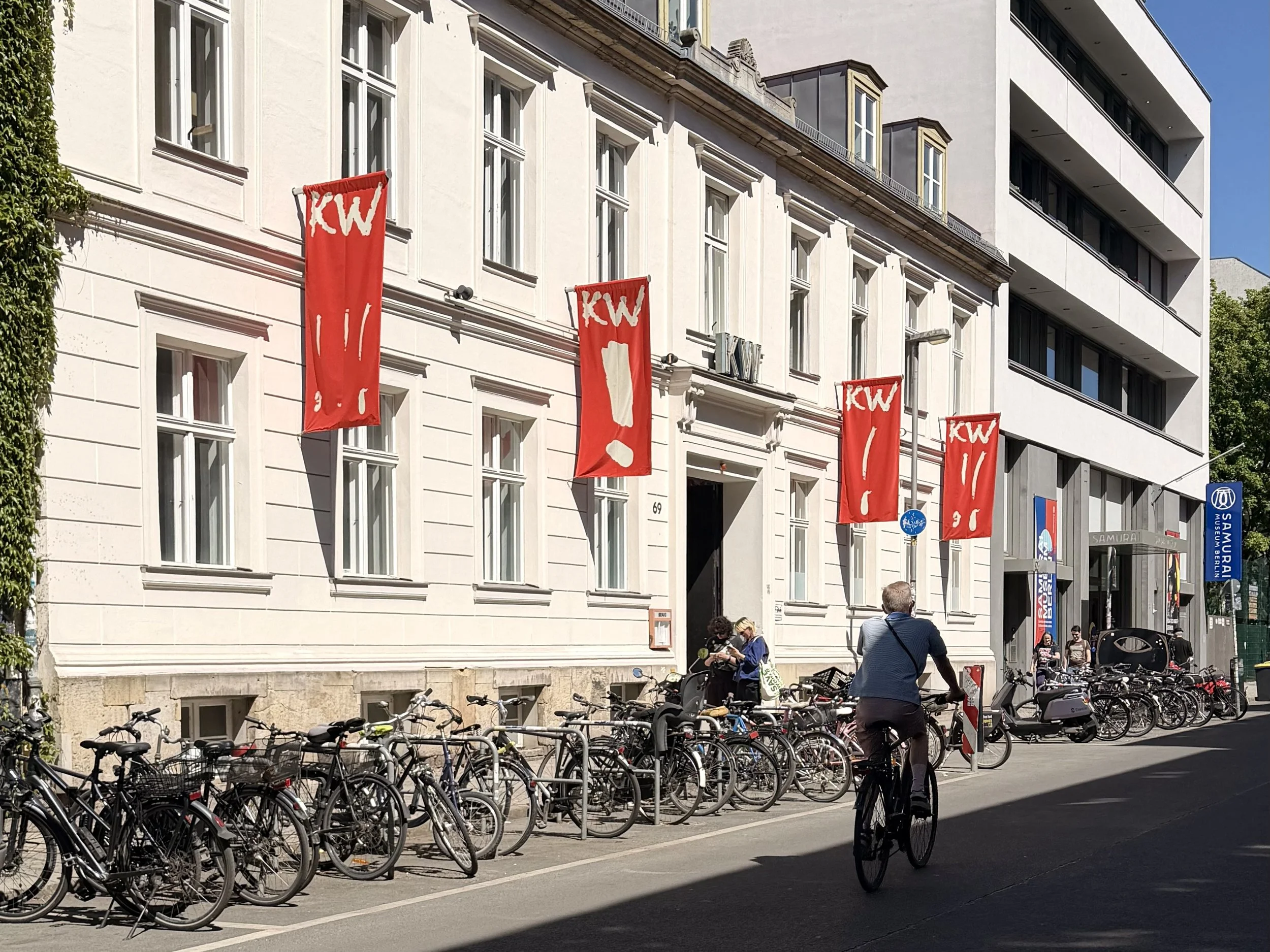
KW Institute for Contemporary Art. Image credit MTotoe. Courtesy of FLO London
The Boros Collection offers a completely different mode of viewing. Housed in a converted WWII bunker in Mitte, it is a private collection founded by Christian and Karen Boros, focusing on contemporary art from the 1990s to today. Visits are strictly by timed appointment, and the experience is both intimate and architecturally led. Works are installed throughout the bunker’s rooms and corridors, it is considered one of Berlin’s most distinctive contemporary art encounters.
Alongside these major institutions, newer spaces such as CCA Berlin are also a must, typically presenting strong contemporary exhibitions alongside a wider focus on research and public programming. Its location within the former Kaiser Wilhelm Memorial Church complex also makes it one of the city’s more unusual exhibition spaces.
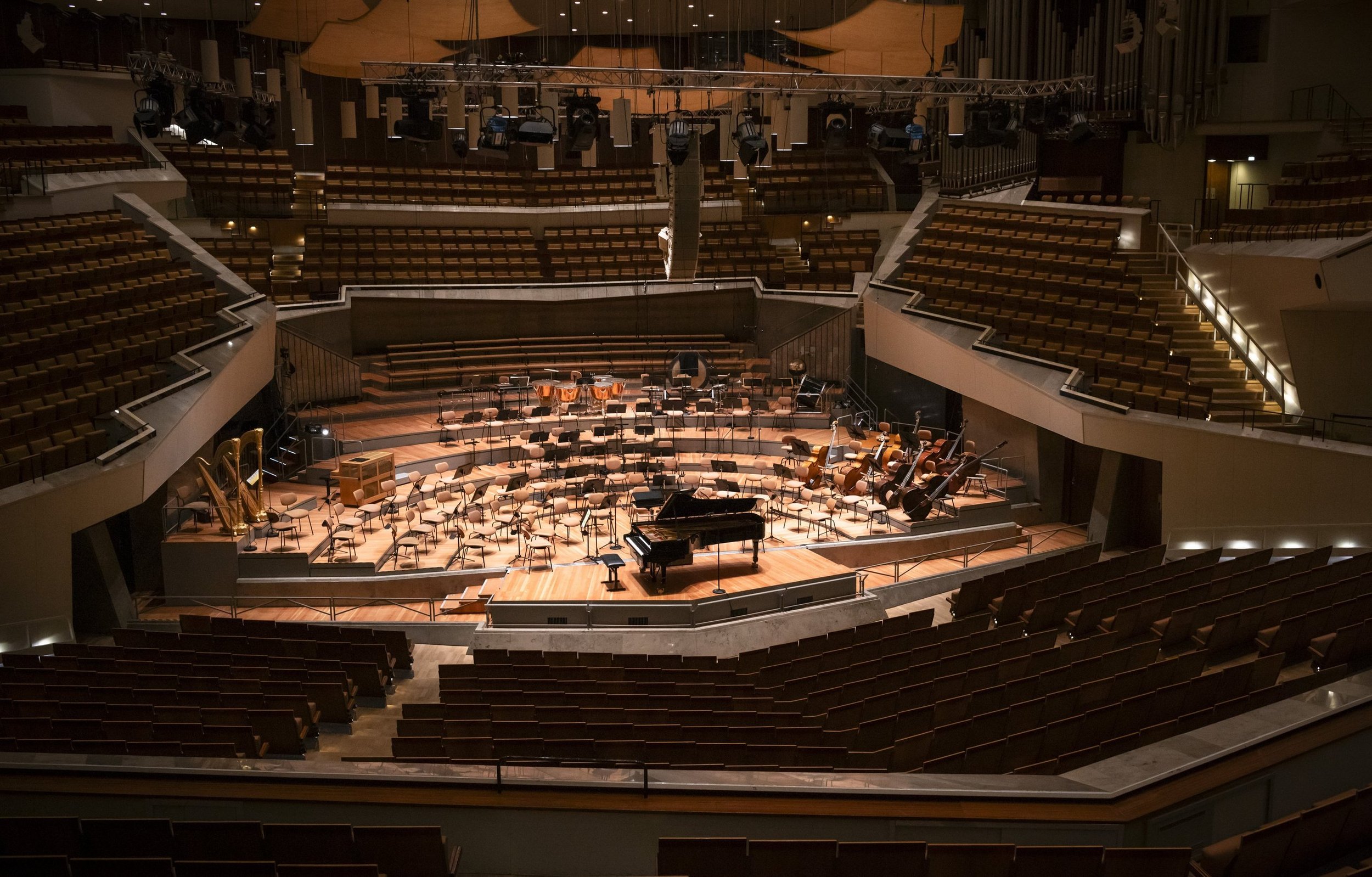
Berliner Philharmonie. Image credit Stephan Rabold. Courtesy of Berliner Philharmonie
For something more experimental, Halle am Berghain, the art space behind the infamous club Berghain, typically presents a dedicated exhibition during Gallery Weekend, this year Gravity Ease by Juliet Kothe, curated by David Douard. It’s definitely one worth checking out, and can easily be combined with a visit to the club either before or after.
If you’re looking to add one more cultural stop outside the visual arts, keep the Berliner Philharmoniker at the Berliner Philharmonie on your radar. Beyond the quality of the music, what makes it especially interesting is the building itself. Designed by Hans Scharoun and opened in 1963, it’s known for its distinctive tent-like form and “vineyard” seating, which places the orchestra at the centre of the audience.
Where to stay
An ideal base for Gallery Weekend is the Hotel Adlon Kempinski Berlin, one of the city’s most iconic historic hotels, located directly opposite the Brandenburg Gate.
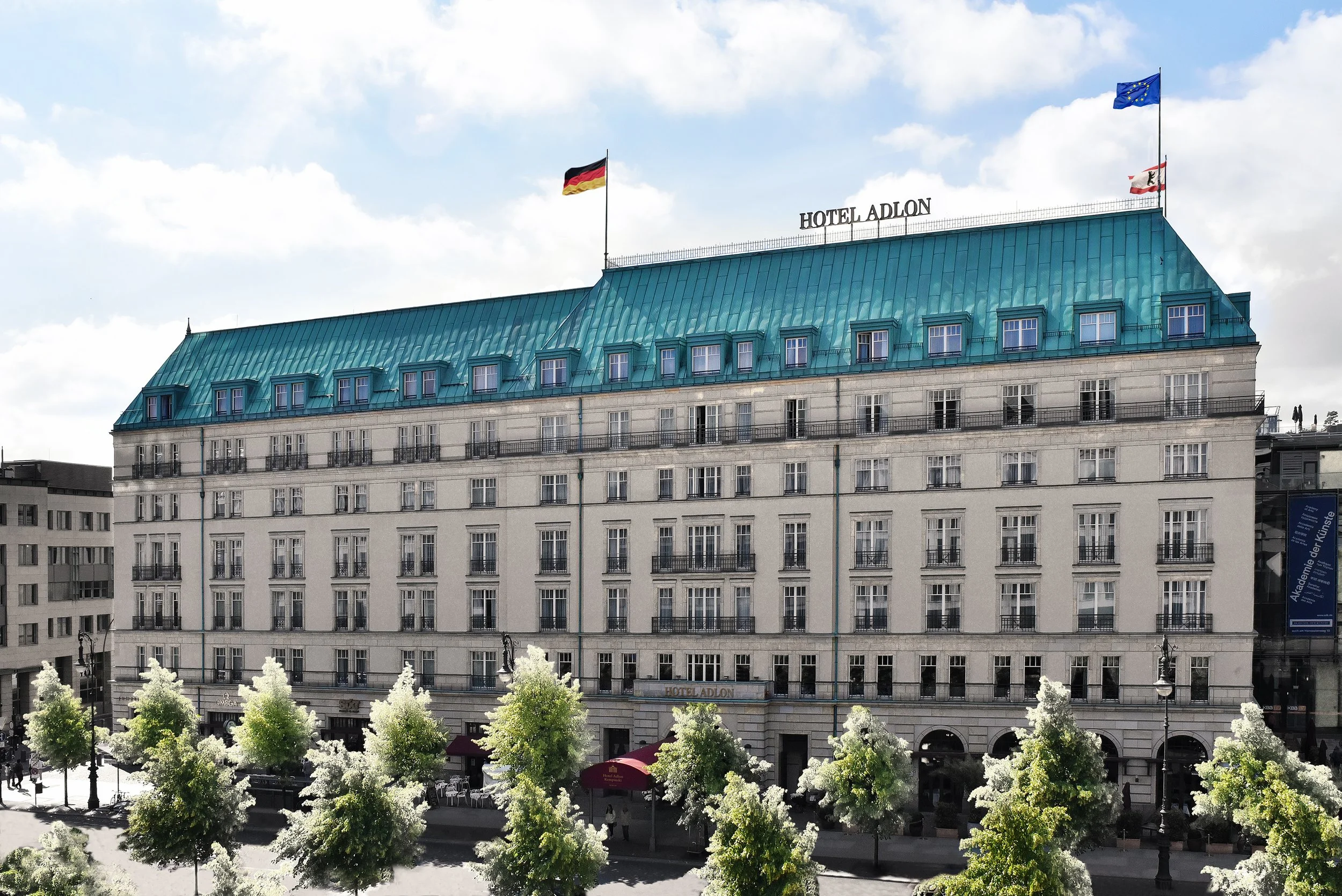
Hotel Adlon Kempinski Berlin. @Hotel Adlon Kempinski Berlin.
The hotel was itself a highlight of the weekend, with spacious rooms, excellent service, and a highly efficient concierge team to help navigate a packed Gallery Weekend schedule. Breakfast was a standout, generous, well-executed, and a great way to fuel up for the day before heading out into the city.
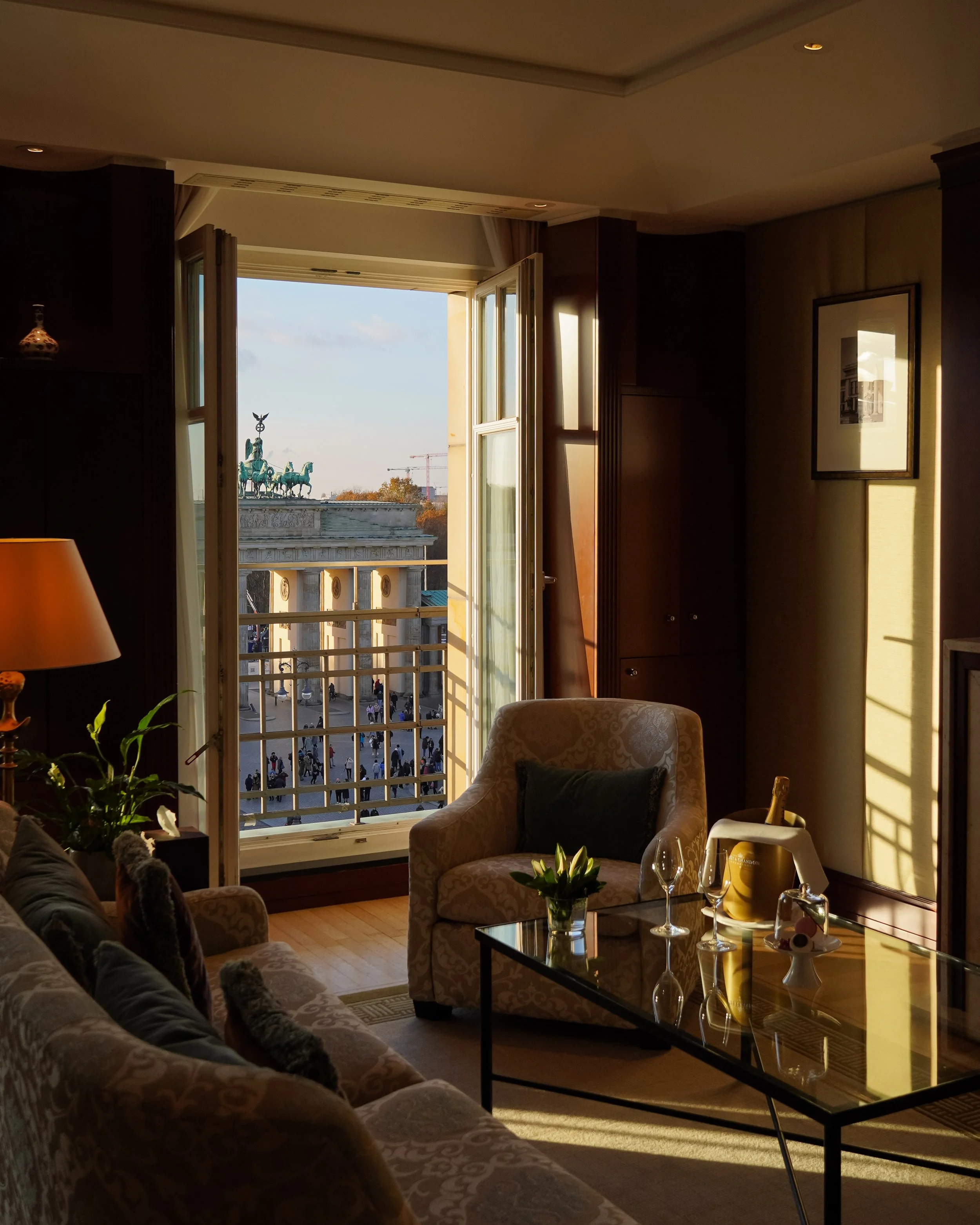
Suite, Hotel Adlon Kempinski Berlin©Gerard Alvarez/ Hotel Adlon Kempinski Berlin
In terms of Gallery Weekend, its location makes an especially convenient base for moving between gallery districts and key institutional spaces across the city. During our stay, early morning walks in the near-empty streets around the Brandenburg Gate were a welcome contrast, offering a rare sense of calm to balance out intense days of gallery-hopping. Click here for our full review of Hotel Adlon Kempinski Berlin.
Where to eat
If you’re in Berlin for Gallery Weekend, eating becomes less about “where should we go?” and more about “where can we land between openings without falling apart without compromising on taste and aesthetics”.
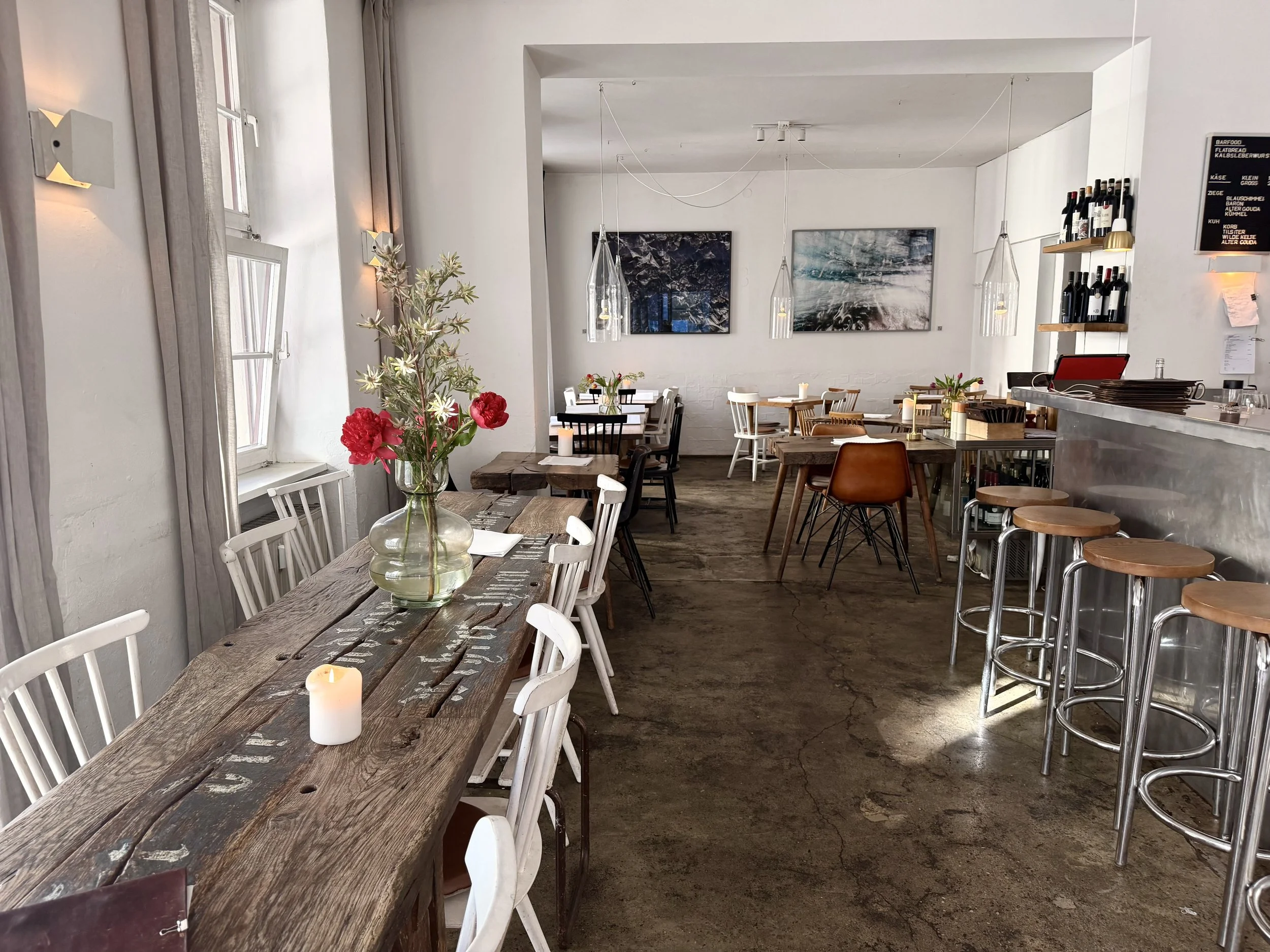
Lokal Interiors. Image credit MTotoe. Courtesy of FLO London
For a laid back dinner that is still quite chic, try Lokal. It’s a cosy neighbourhood restaurant with a daily-changing menu, which makes for the perfect excuse to return. If you’re just in the mood for a snack, order their beautifully composed cheese board with rhubarb, mustard and radish. This is the kind of place where you sit down for “just a quick bite” and do not want to leave.
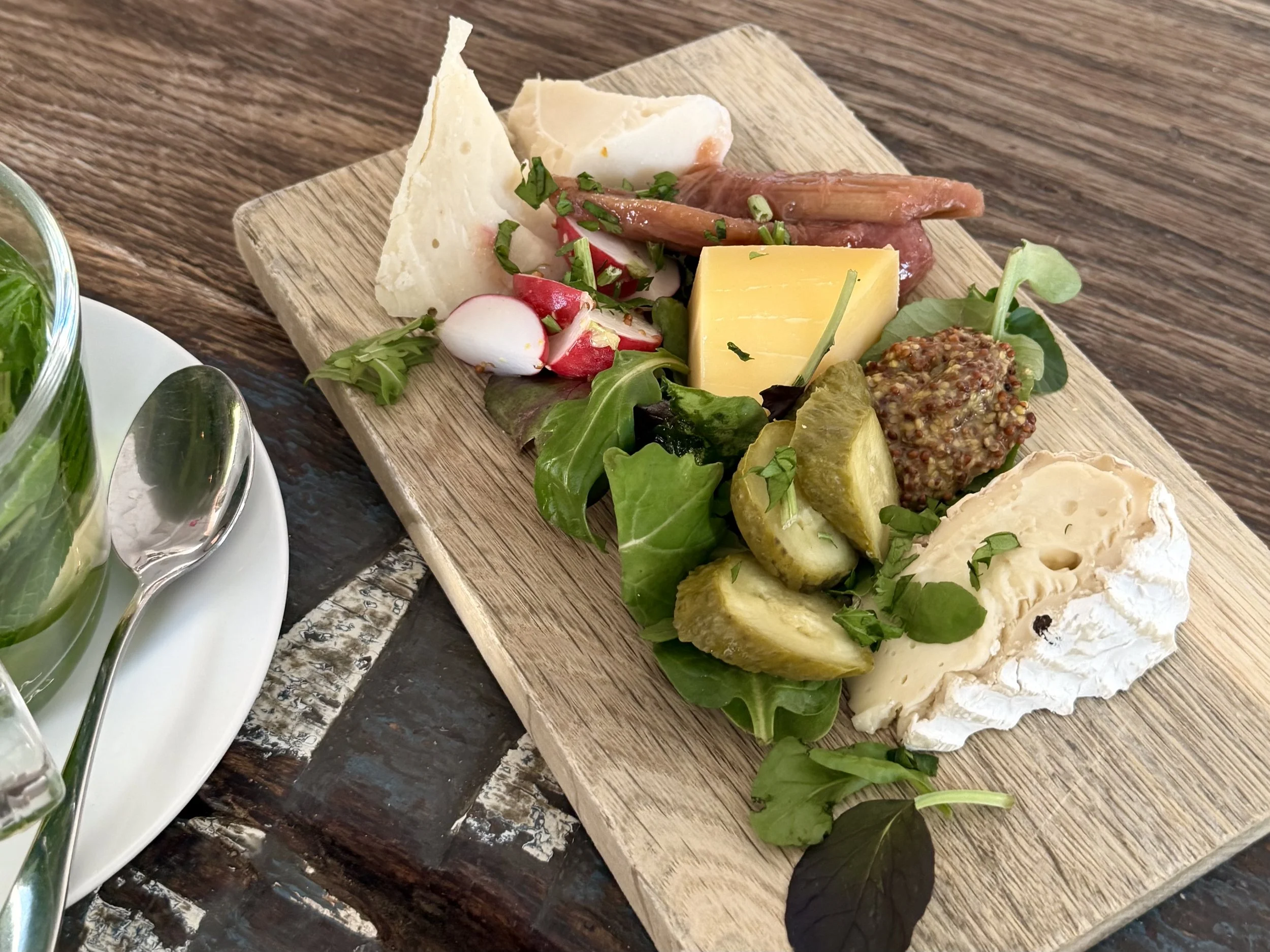
Cheese board At Lokal. Image credit MTotoe. Courtesy of FLO London
If you’re after a bit more mood and mystery, head to Shinju Japanese Kitchen. It’s calm, minimal and slightly tucked away in that very Berlin way where you feel like you’ve been let into a secret that isn’t really a secret. For a casual yet chic dinner, there’s Fleischerei Berlin. Think steak, schnitzel, and a raw, industrial-bistro interior that somehow still feels warm rather than cold. It opens from around 6pm and tends to have a buzzing atmosphere.
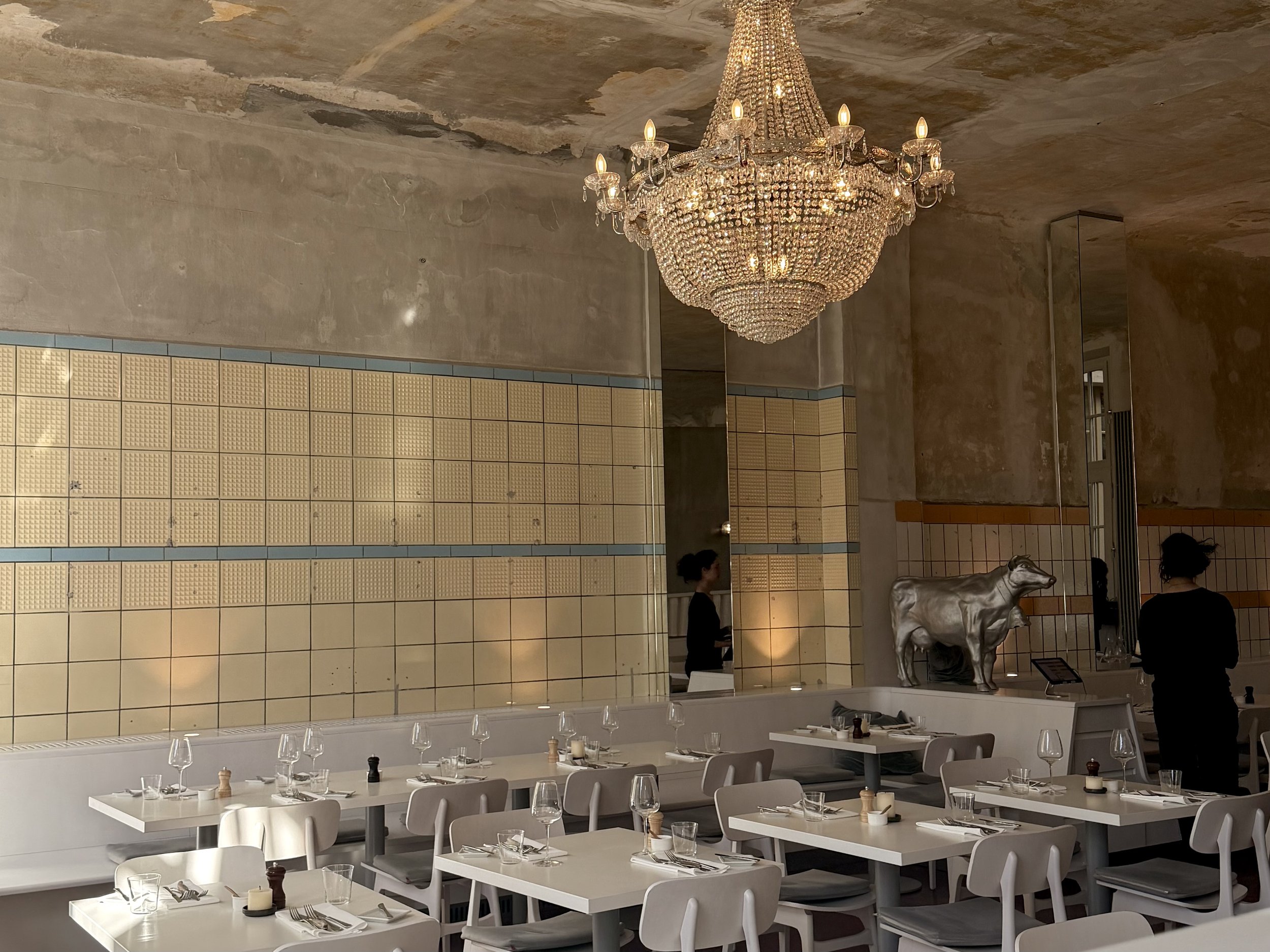
Fleischerei Berlin. Image credit MTotoe. Courtesy of FLO London.
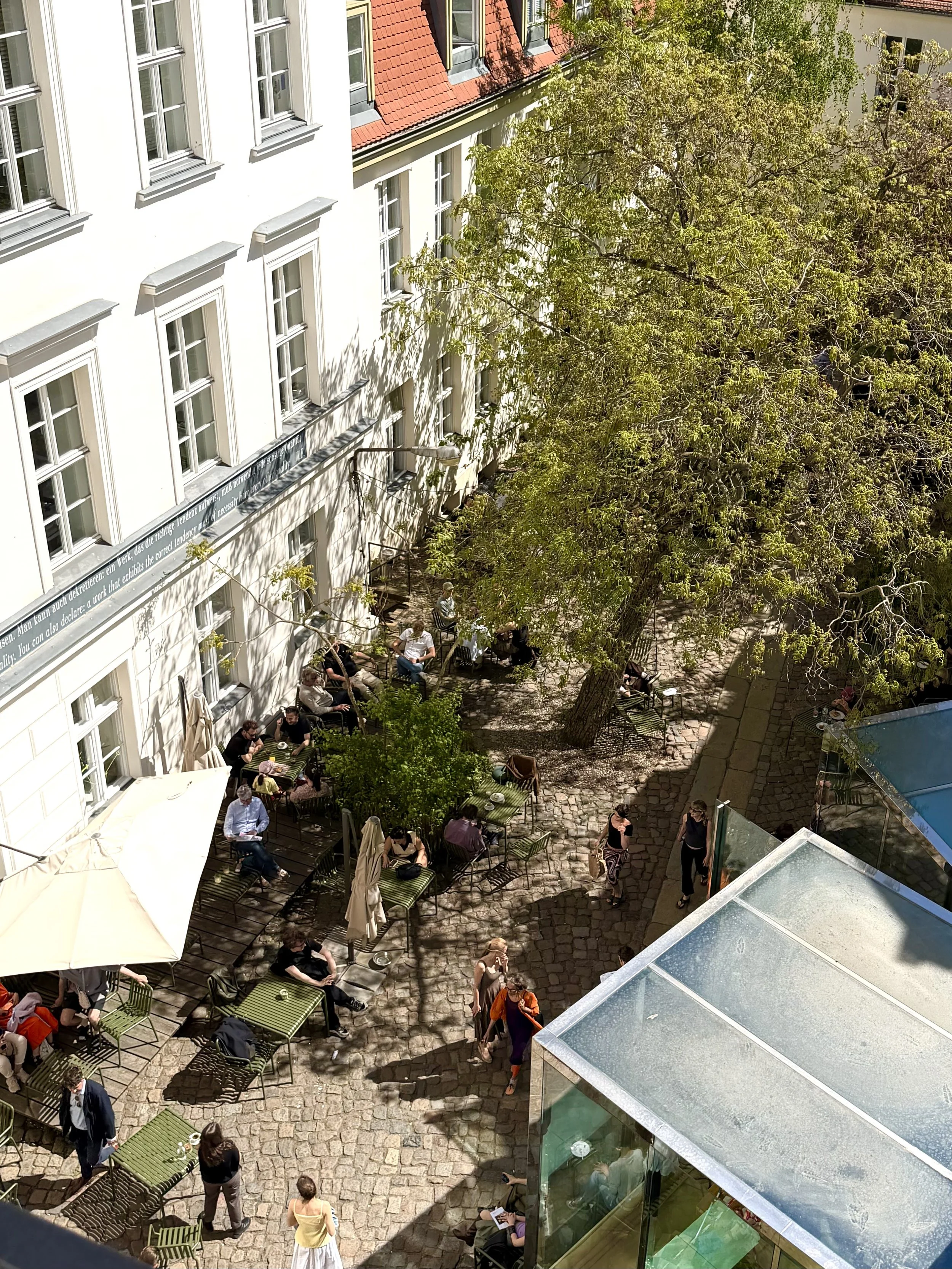
Bravo Café inside the KW Institute courtyard with Bravo Café. Image credit. Courtesy of FLO London.
For quick pit stops between shows, Bravo Café inside the KW Institute is a reliable favourite. It does exactly what you want from a gallery café, good coffee, light lunches and somewhere to briefly regroup before heading back out into the city. In summer, naturally, it gets very busy, and no surprises there, everyone has the same idea.
Top tips
If you plan on getting around the city quickly and don’t want to rely on Uber or taxis, we’d recommend hiring a bike. It is one of the most efficient ways to move between gallery neighbourhoods and actually experience Berlin as you go.
Another option is the Berlin WelcomeCard, which gives unlimited access to Berlin’s buses, trams and trains. It also includes discounts and free entry to select museums and landmarks, depending on the ticket type, useful if you want to include a bit of sightseeing between gallery stops.
Gallery Weekend Berlin typically takes place on the last weekend in April or the first in May. The official dates for 2027 have yet to be announced. Discover more at gallery-weekend-berlin.de
Click here to discover more gallery weekends to visit in Europe this year.
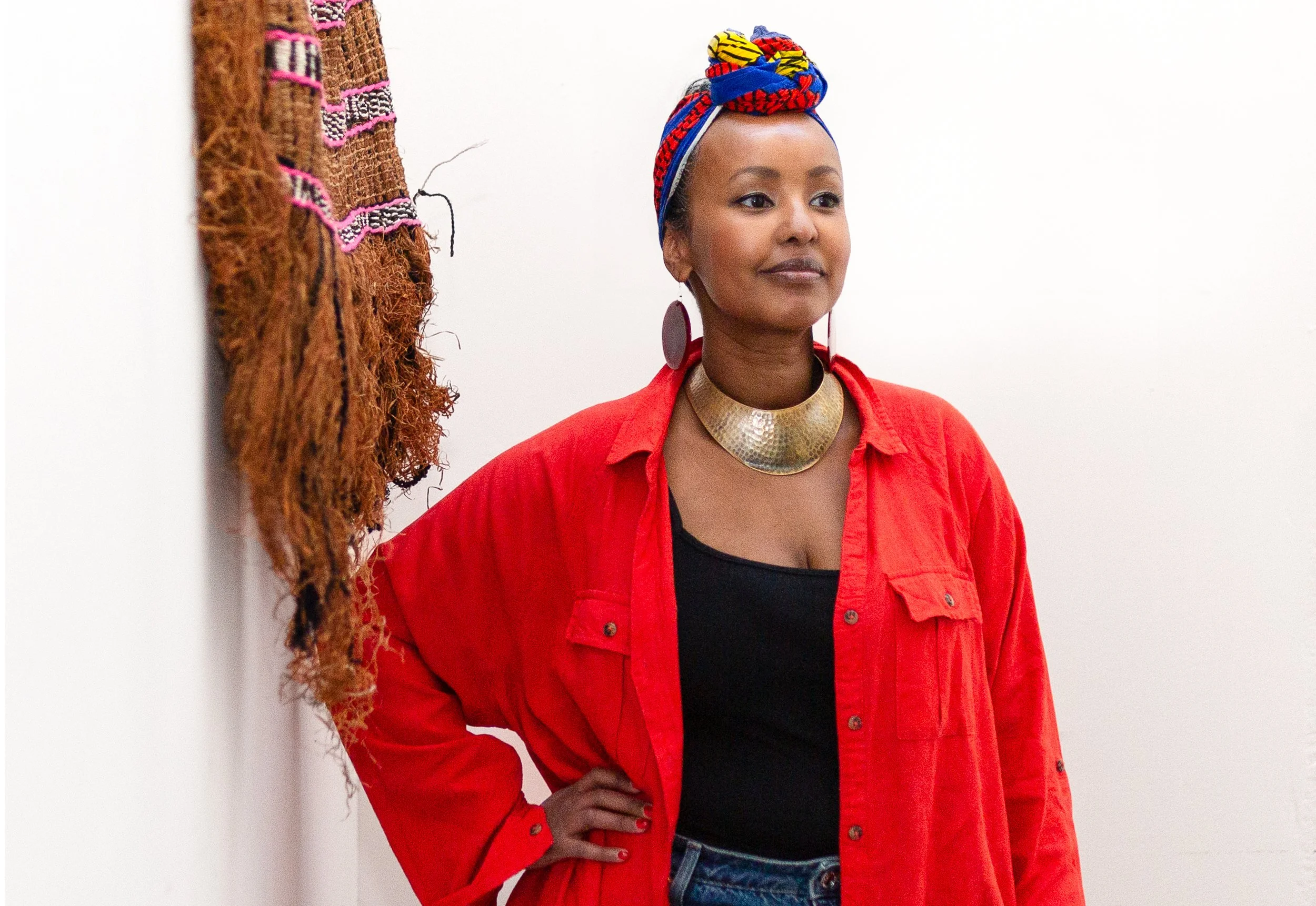
Guide by Maawura Totoe











Stand out this summer with this gorgeous Nsubra beach bag! Handmade in Ghana, this large tote bag is the perfect size for your sun cream, beach towel, purse and your latest book.