
In conversation with Helena Samarasinghe
“I want the exhibition in Camberwell Space to feel relaxed - a place to engage with the work and with each other.”
- Helena Samarasinghe
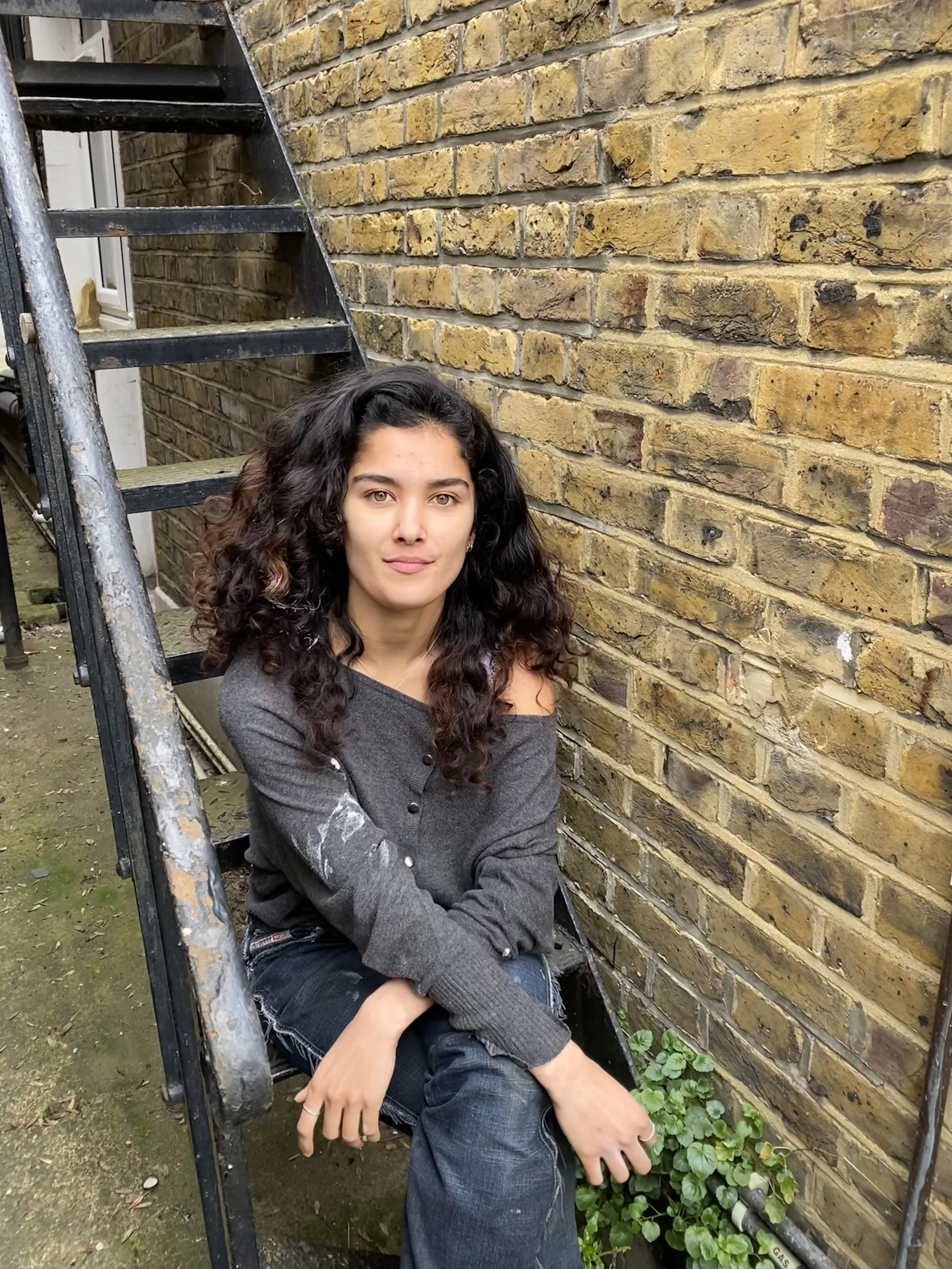
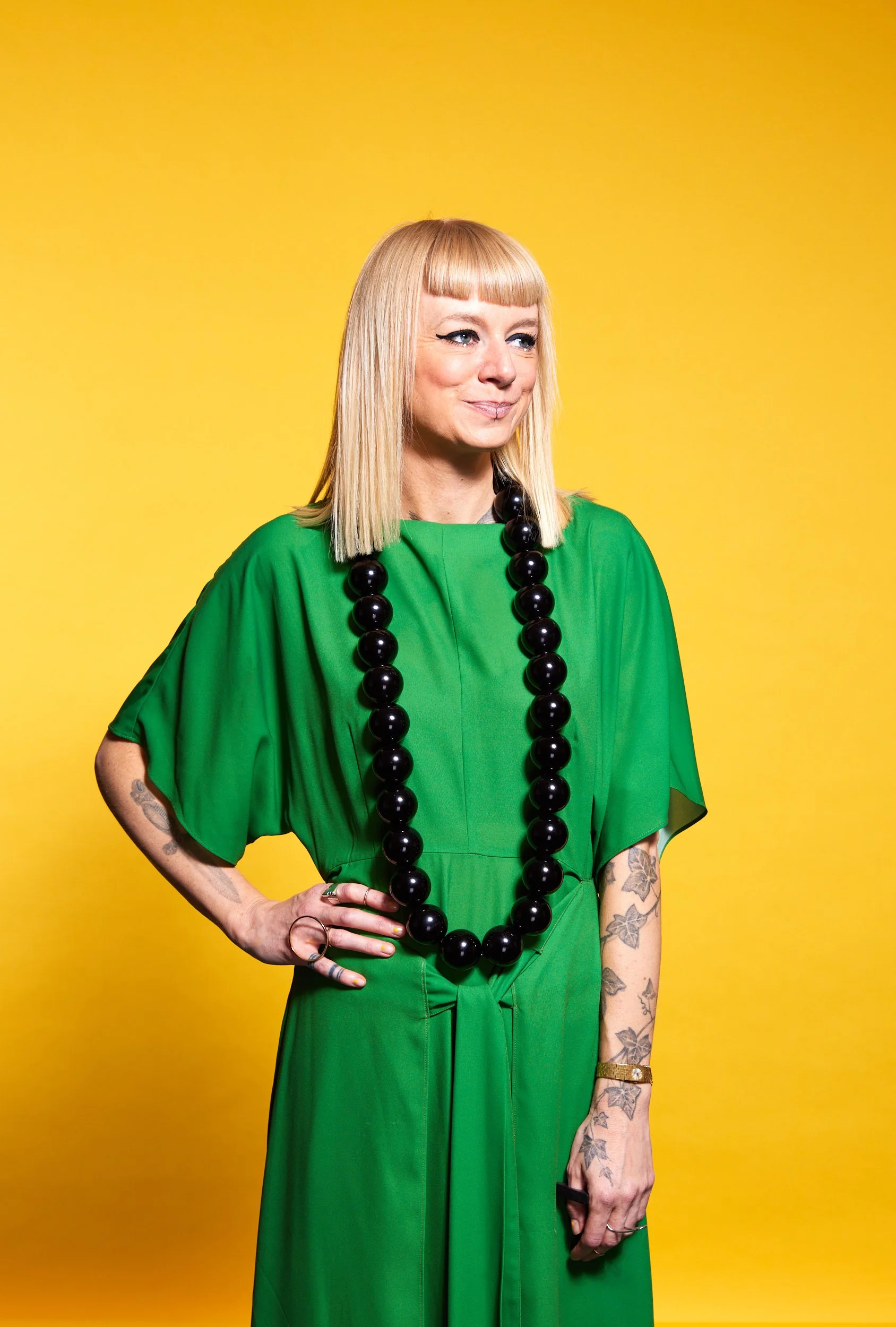
Helena Samarasinghe
British–South Asian interdisciplinary artist Helena Samarasinghe presents her debut solo exhibition Reaching, Touching, Shedding at Camberwell Space, Camberwell College of Arts (UAL), on view from 15 May to 17 July 2026. Developed during her Vanguard Prize residency, the exhibition brings together drawing, collage and installation rooted in movement, repetition and the physical intelligence of the body.
With a background as an athlete, Samarasinghe draws on sport as a framework for thinking through identity, effort and embodied experience. Her practice is shaped by rhythm, resistance and gesture, using drawing as a way to register tension, responsiveness and transformation. In this interview, she reflects on the processes behind the work, from repetition and “muscle memory” in her mark-making to her ongoing interest in visibility, connection and what it means to hold the body in motion through art.
Your work often explores sport, identity and belonging. How have your own experiences as an athlete shaped the way you approach your practice?
There’s a resilience from sport that I’ve naturally brought into my practice. My drawings emerge through a sustained period of trial and error - drawing, erasing, and drawing over again. It can be frustrating, even painful at times, but it’s also deeply rewarding.
My approach to making art is rooted in repetition and muscle memory. Working routinely with sweeping gestures of willow stick charcoal, the beginning of my process feels like a kind of mindfulness practice - a choreography that eases my body into a flow of movement and establishes a rhythm within the work.
From there, I move into a finer tuning of composition, detail, and colour, working with errors to see what might emerge. This navigation - dwelling within tension - is important and often pushes the work into unexpected places. I think this ability to sit with tension comes from sport: a trust that struggle can lead to the most rewarding outcomes.

Freestyle Wrestlers by Helena Samarasinghe, Camberwell College of Arts, UAL, Degree Show 2024
You developed your upcoming exhibition, Reaching, Touching, Shedding, during your Vanguard Prize residency. What did that period allow you to experiment with or understand differently in your work?
It took time to move from the work I made at Camberwell College of Arts, UAL, into this new series. It was important for me to adapt my earlier approach and push it forward. The work gradually emerged from reading and drawing in response to Erin Manning’s Politics of Touch, from which the title of the show is also drawn. Here, I began thinking about sport as an act of reaching towards one another, where shared responsiveness - to timing, rhythm, and weight - becomes a kind of embodied knowledge: a seamless choreography of the ball, a rhythm carried across the badminton court. I’m interested in felt connection, something that exists beneath language or image, in the space between bodies.
During the residency, I spent long periods collaging, cutting up smaller drawings, and letting them fall into new arrangements, searching for ways to hold the body in motion. The first drawings in the show came from rubbings on newsprint, building a reptilian-like skin, thinking about how skin sheds in encounters with others. This idea of shedding led me towards softer pastel, a medium that feels temporary, transitional, yet still able to hold weight in its luminosity.
There’s a strong sense of movement and physicality in your drawings and installations. What does your process look like in the studio, and how do you carry that energy into the work itself?
My process is messy. It starts with drawings on newsprint that are ripped up, cut out, and rearranged. These act as initial tests- a kind of training before I move into larger work.
Before I feel ready, I push myself to work at a larger scale, drawing with my whole body. I try not to be overly precious. I work quickly and boldly, especially with colour. I can’t work with fear - when I do, it disrupts the rhythm of the drawing.

Dynamism of One Touch by Helena Samarasinghe, Reaching, Touching, Shedding Exhibition at Camberwell Space, Camberwell College of Arts, UAL, 2026.
Your work challenges ideas around visibility and representation, particularly in relation to brown women. How do you navigate these themes?
I find it complex. My work engages with the visibility of brown women in sport and in art, thinking about the absence of South Asian women in UK professional and grassroots sporting contexts, as well as the ways the brown female body has historically been represented within the Western art canon- shaped through colonial collections such as Mughal miniatures, where the female body is often rendered as sexually submissive.
My work navigates this invisibility and hypervisibility. I think about how the body - once positioned as a site of disembodiment - can be reframed as a site of power and resistance. What matters to me is moving beyond representation. I am interested in what it means, and what it feels like, to be an athlete. Sport becomes a space where the body is felt in motion, where the boundaries of self and other are not fixed but formed through relation.
I think a lot about integrity in this space too. bell hooks writes about wholeness as the alignment of thought and action, something I feel is realised in the flow state of sport.
One of the works in the show is a portrait of Olympic athlete Dorsa Yavarifa, which came from a series of voice-note conversations we had on Instagram. Integrity felt central to her story - leaving Iran with her mother because of her religious beliefs and her commitment to competing in sport. I wanted to hold that sense of wholeness in the work: the integration of past movement into the present, where all these decisions form and align with the momentum of her rhythm on the badminton court.
You draw on influences ranging from Kalighat painting to contemporary sport and popular culture. How do you bring these references together while maintaining a distinct visual language?
My use of line is influenced by Kalighat painting - quick, gestural, and fluid. At the same time, I work back into these lines with close observation, focusing on pose, expression, and musculature. I draw from life, photographs, and magazine cuttings, working between spontaneity and observation.
Colour is important to me and a key part of my visual language. I often take inspiration from the textiles of Sri Lankan artist Barbara Sansoni. It is important that colour relates to the dynamism of the pose; rendering subjects who are boldly coloured with vitality.
Community and connection feel present in both sport and your work. How do those ideas shape what you’re making now?
I’m happy that sport - especially running - has become part of the cultural zeitgeist. But it was important for me to navigate sport away from what that shift has sometimes done: commercialising it and creating a hierarchy. That’s partly why I had to take a break from competitive running, because it started to feel quite isolating.
Since starting to play football with the club ‘Bend It Like Peckham’, I’ve rediscovered why I fell in love with sport in the first place. It’s a community sustained by voluntary action, shared commitment, and, at its root, pure joy. Playfulness is always favoured over rules, and it feels genuinely healing.
In my work, connection begins in the first stage of forming composition-collaging. Bodies combined, twisted, and reassembled, held within a field of gestural lines, binding them into a shared rhythm.
As part of the exhibition’s public programme, this workshop opens that process to participants. Individual drawings will be brought together into a collective composition, shaped through movement and exchange. Using the whole body to draw, participants move through space as much as across the page
I want the exhibition in Camberwell Space to feel relaxed - a place to engage with the work and with each other. Drawing and moving in the space opens things up, making room for conversation, response, and connection.

Scrum Half by Helena Samarasinghe, Reaching, Touching, Shedding Exhibition at Camberwell Space, Camberwell College of Arts, UAL, 2025.
The [Quick] #FLODown:
Best life advice?
Pain is temporary victory is forever! – it’s dramatic, but genuinely chant this in my head whenever I’m struggling or feel overwhelmed- lead with your heart and commit with your actions.
A book or text you return to for inspiration?
There’s a few… Sensual Excess by Amber Jamilla Musser, Belonging by bell hooks, and Erin Manning’s text on the Tango, have all formed the foundation of this series of work. I also repeatedly return to Rafia Zakaria’s Against White Feminism and the Sinhala children’s books by JB Disanayake for their irresistible illustrations.
Can’t live without?
My headphones - basic, but true. Digable Planets will always put a pep in my step, and Princess Nokia’s will always get me charged during a run.
Which artist, living or dead, would you most love to have a conversation with?
It would have to be Paula Rego. Her figurative work has so much impact, but also this real sensitivity, which is something I’m always trying to get to in my own practice. I’d have loved to spend time in her studio - see her still life setups, how she builds a scene - and just talk to her about how she pulls from so many different references to create a visual language that feels so personal, but still really accessible.
What should the art world be more of and less of?
The art world needs to be more accessible - moving beyond institutions and into public space. It also needs to be more honest. I want to hear artists speak more openly about the sacrifices it takes to sustain a practice.
There needs to be less emphasis on social media as a marker of value. Galleries shouldn’t be platforming artists based solely on visibility, or curating shows where everyone is at the same stage in their career. Women in Revolt! was transformative for me. It was the first time I saw work by South Asian women in the Tate, and what stayed with me was seeing lesser-known artists alongside more established names, without hierarchy.
Instagram: @helenasamarasinghe













Stand out this summer with this gorgeous Nsubra beach bag! Handmade in Ghana, this large tote bag is the perfect size for your sun cream, beach towel, purse and your latest book.