
Elegy by Gabrielle Goliath at Chiesa di Sant’Antonin, Venice, review
Elegy as mourning, elegy as song, and elegy as an act of defiance - this is what makes Elegy by Gabrielle Goliath, showing at Chiesa di Sant’Antonin in Venice, so powerful.
Goliath’s work was originally selected to represent South Africa at the Venice Biennale Arte 2026, before being cancelled by Minister Gayton McKenzie on the grounds that its content was deemed too “divisive”. In this iteration, references to the Israeli war on Palestine and the killing of Palestinian poet Heba Abunada are made, leading to the censorship of Elegy in the official South African pavilion. And yet… Elegy has made it to Venice, and is one of the best shows in the collateral programme, one you absolutely cannot miss.
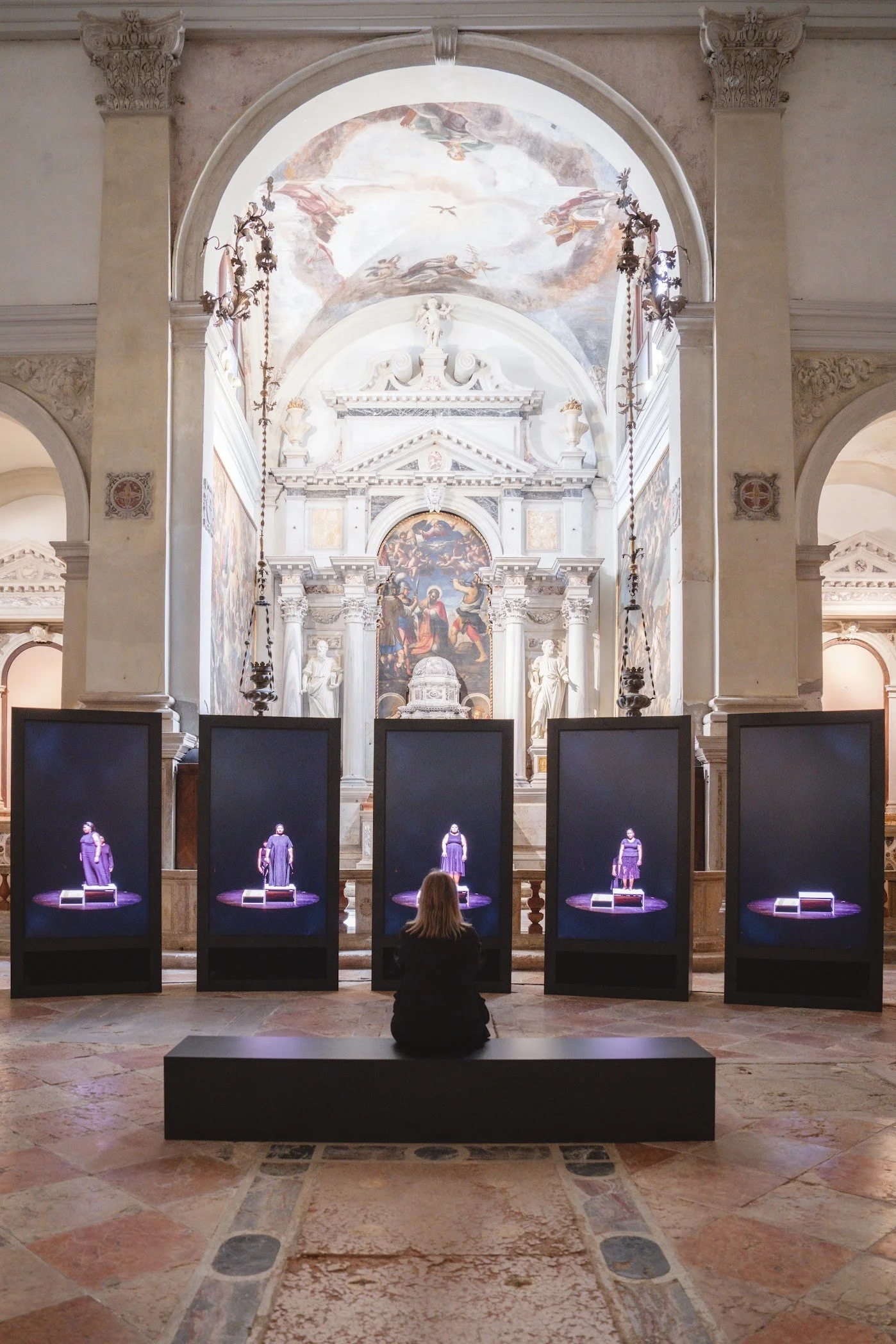
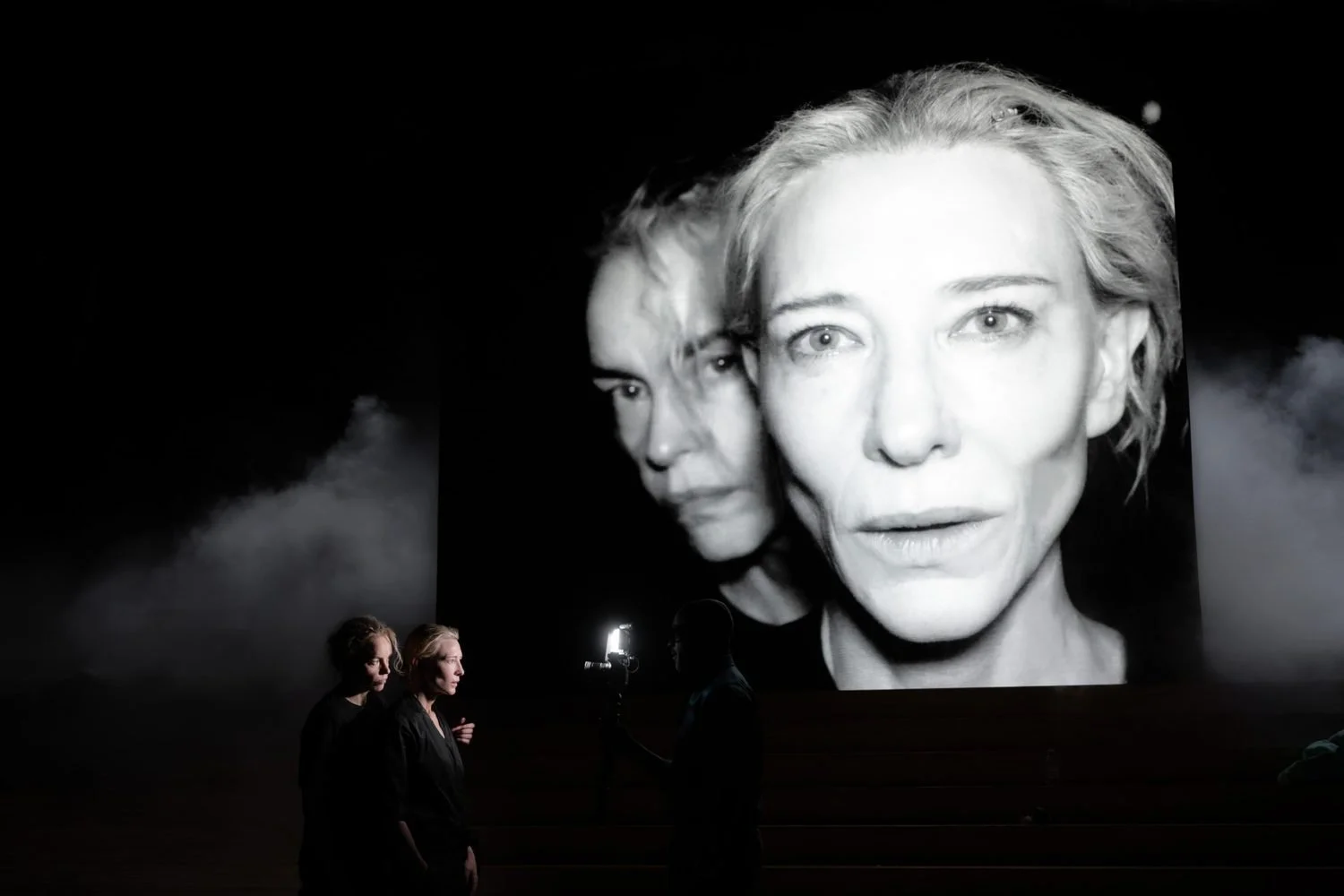
Elegy by Gabrielle Goliath at Chiesa di Sant’Antonin, Venice. Image credit Hannah Goldsmith @goldsmith_studio
The work has been running since 2015 and is now in its tenth year. Each iteration gathers seven opera singers who collectively enact a ritual of mourning, sustaining a single haunting tone between them over the course of an hour, sharing breath and voice until one falters and the next carries on. What changes between iterations is who is being mourned, as previous versions have addressed femicide and rape culture in South Africa and erasure of Ovaherero and Nama life-worlds in Namibia. This one reaches further, as aforementioned, including another iteration mourning Palestinian suffering.
When you walk into Chiesa di Sant’Antonin, Elegy is installed across eight vertical screens, formatted almost like pillars or partitions, filling the nave of the church (which, in itself, brings in incredibly layered undertones). On most of these screens, the singers rotate through their vigil. They step onto a raised platform while singing their haunted tone, to then step back into darkness as their breath runs out and the next singer moves forward. What was extremely noticeable, though, is that one screen holds only an empty platform, with neither singers nor sound. Whether it reads as an invitation for us to add our song, our mourning, or if it serves as a representation of irrecoverable absence, it is one of the most compelling parts of the installation.
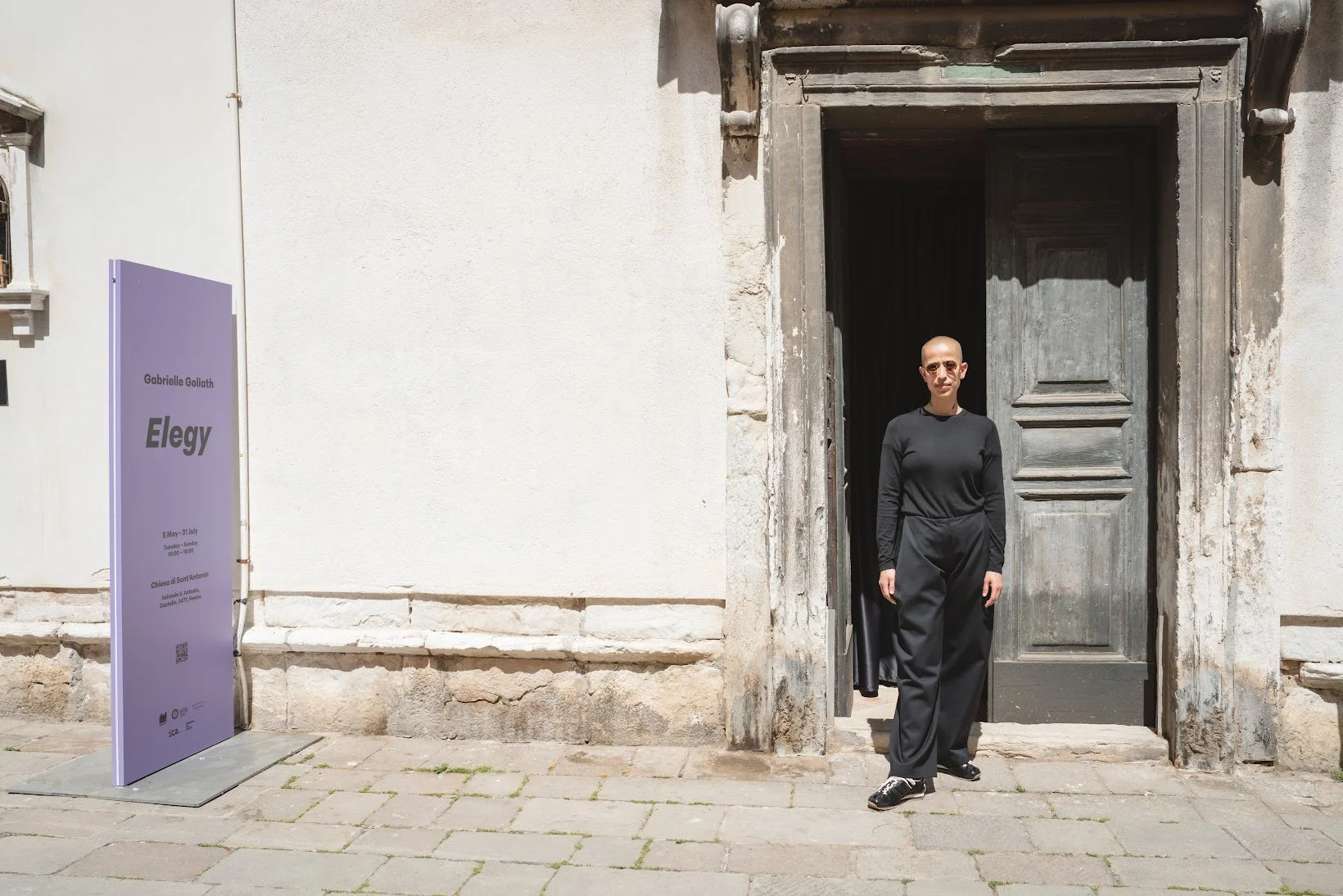
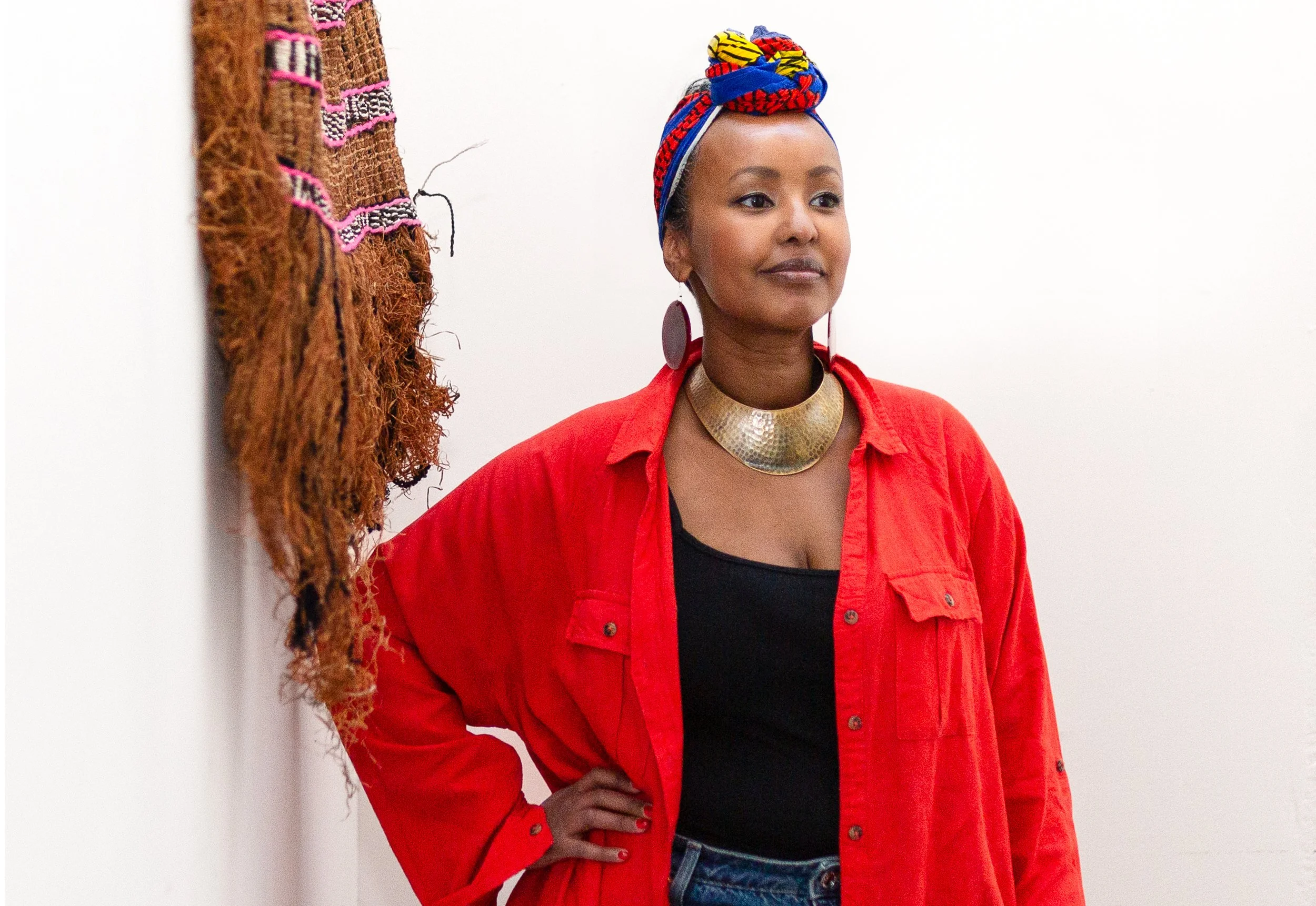
Gabrielle Goliath. Image credit Hannah Goldsmith @goldsmith_studio
There are various places to sit in the exhibition, and truth be told, moving around to each vantage point offers different combinations of tones and experiences. When I sat in the centre of the church, it was a combination of the sounds - the collective pain, the mourning for the state of our world - and, in this location specifically, the devastating confrontation of the schism in what we deem holy versus the unholy acts being committed in the name of faith.
Elegy serves not only as a space for contemplation and collective mourning, it also serves to educate, to shed light on those too often forgotten. In today’s age of the online twenty-four hour news cycle, we move on too quickly, we dismiss violence, especially against black, brown, queer, and trans lives. Acts of genocide become normalised as we see it proliferate across Ukraine and Palestine, and now the suffering in Iran, and it feels like we are constantly exposed to one violence after another - in the end, not being able to empathise fully with any victims anymore.
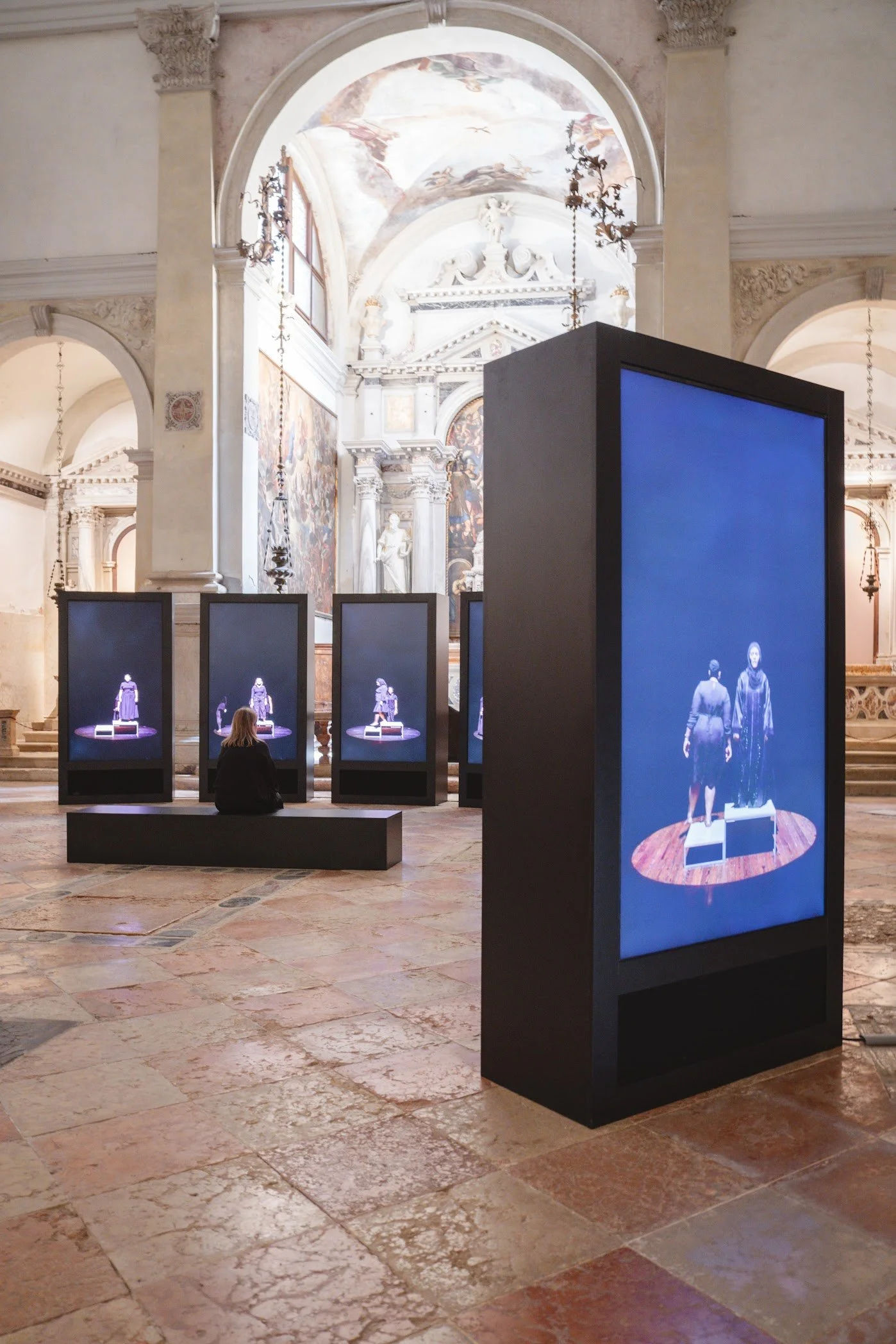
Elegy by Gabrielle Goliath at Chiesa di Sant’Antonin, Venice. Image credit Hannah Goldsmith @goldsmith_studio
When I sat for longer, I noticed the singers are dressed in dark neutrals, each in their own style: silk dresses, shirts with scarves, lace sleeves, an abaya and hijab, jeans. What I came to realise is that, although personal preference was brought into the presentation, there was an absence of performance - more specifically, a performance of femininity in the hypersexualised sense of today’s society. In a subtle way, I felt it functioned as an act of refusal to perform that which does not serve us. Other than the visual marker of clothing style, the work exists in a kind of liminal suspension, existing outside of time or space.
For over a decade, Goliath has staged these performances to tend to an entanglement of hurts, asserting conditions of hope and public declaration of love and care of black, brown, indigenous, femme, queer, and trans lives. Standing in the space as a woman, I felt both the solidarity of that insistence as well as a feeling of collective exhaustion. This world Goliath references, the world that Elegy mourns, is not at all historical - it is what we are living now, and it is unfortunate that this declaration, this avowal, was considered “too divisive” for the representing country to support in their pavilion. It is another attempt to determine whose grief is permissible, whose losses count as losses - but the incredible installation of Elegy will continue to be, with no need for the governmental support of the South African pavilion, and even less so when it travels to Ibraaz in London in October 2026.
Elegy is on view at Chiesa di Sant’Antonin, Castello, Venice, 5 May – 31 July 2026.
Review by Alexandra Steinacker-Clark











Handmade in Ghana, this beautiful green apron offers a unique design with a front pocket perfect for kitchen utensils or your phone and tie neck straps each made from recycled material. The perfect gift for any cooking enthusiasts!
Our aprons have been named after markets in Ghana. This apron has been named after Kintampo Market located in the Bono region of Ghana it is noted for their sales of yam tubers.