
In conversation with Jaemin Cha
“If visitors leave with a new sense of Korean ceramics, not as a fixed inheritance but as a living, evolving practice, and a moment of calm carried with them, then it has achieved what we hoped for.”
- Jaemin Cha
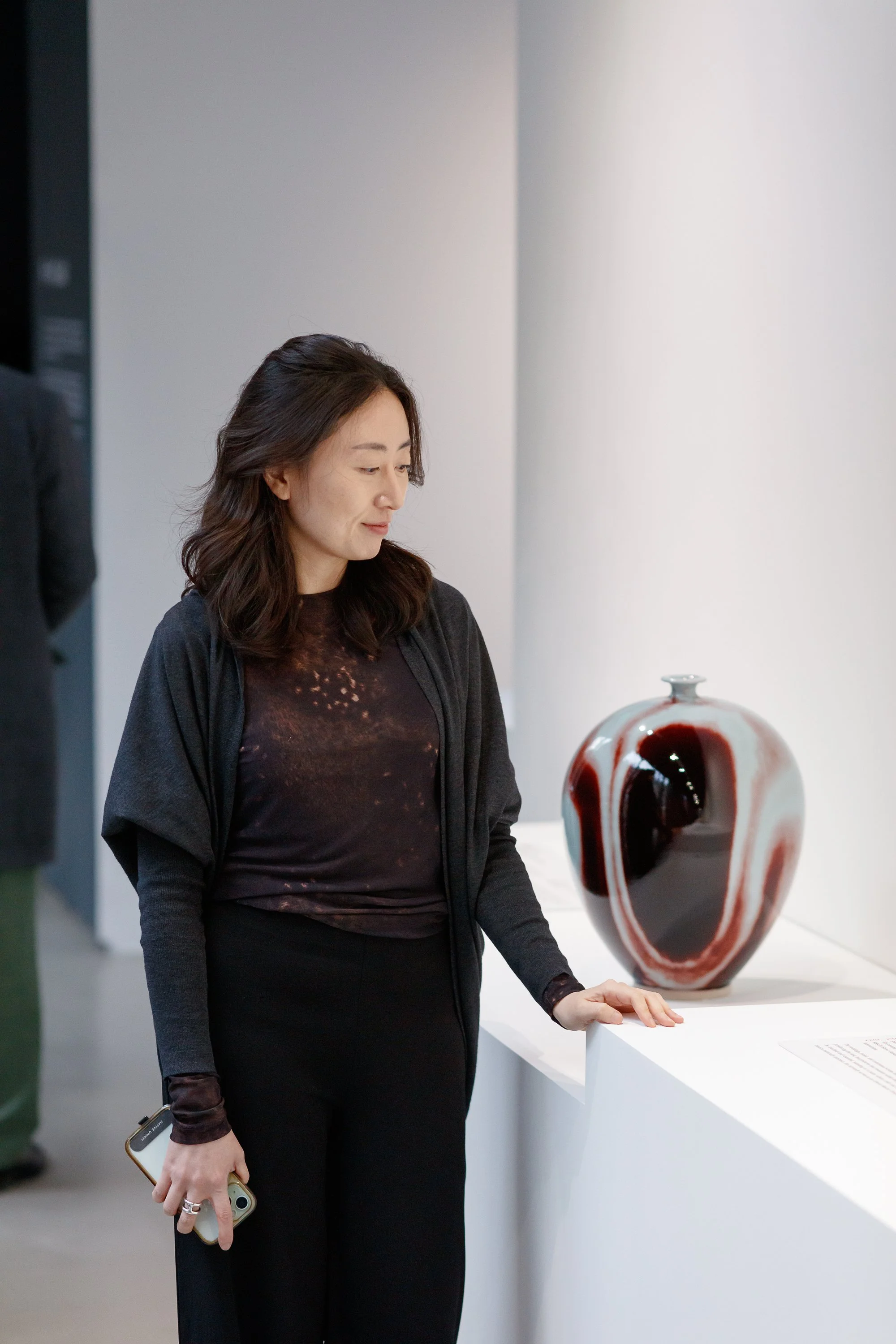
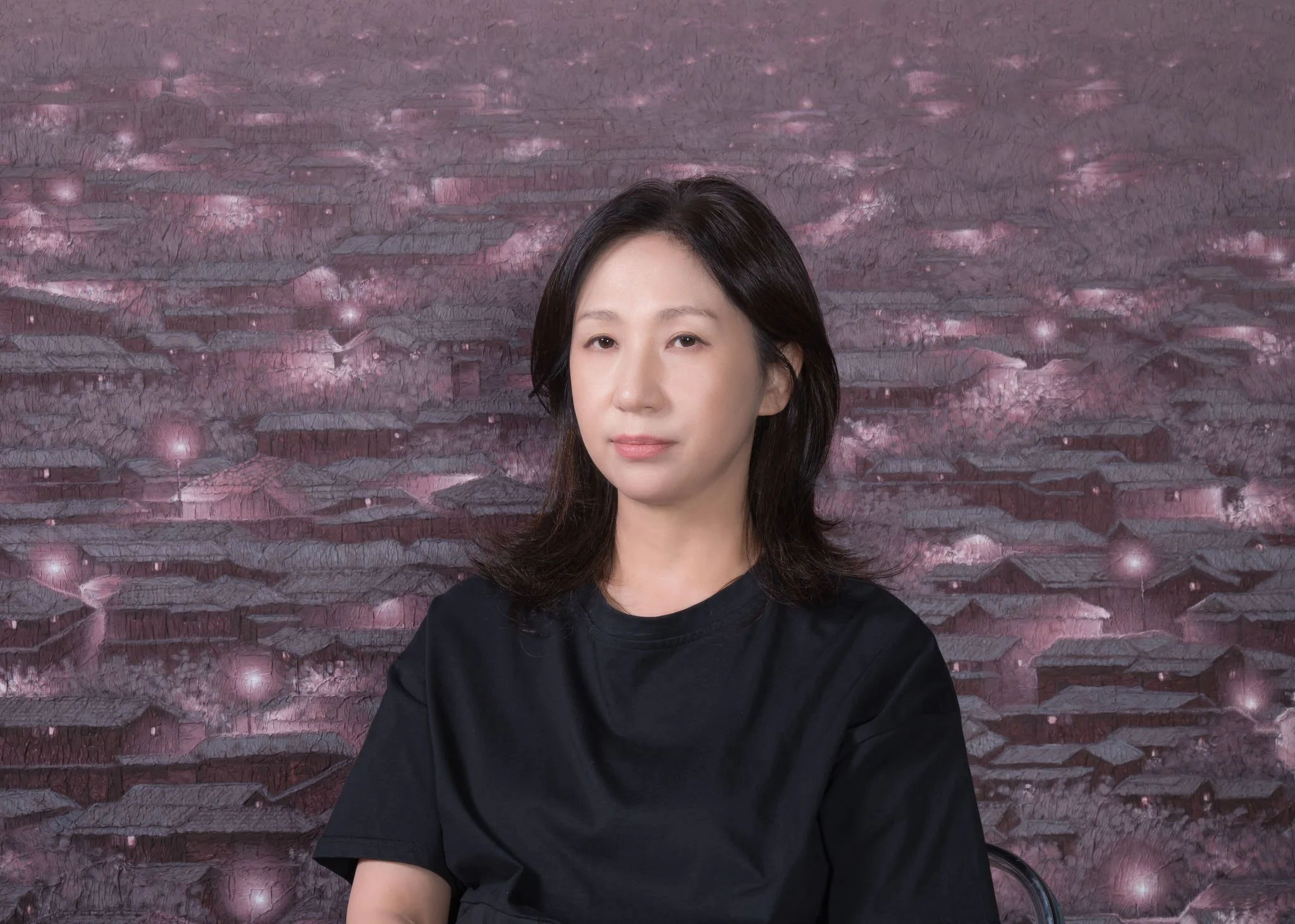
Jaemin Cha. Photograph by Dan Weill
The Korean Cultural Centre UK (KCCUK) presents Icheon and Beyond: The Space Within Form, an exhibition examining the philosophical and material foundations of Korean ceramics through the city of Icheon. The exhibition coincides with London Craft Week and runs until 5 June 2026. We speak with co-curator Jaemin Cha about her curatorial process, the development of Korean ceramics, and the importance of intercultural dialogue.
For the exhibition Icheon and Beyond: The Space Within Form, you have brought the work of 21 master ceramic artisans from Icheon to London. What drew you to focusing on this particular city?
Icheon has been at the heart of Korean ceramic production for centuries and the contemporary craft continues to evolve there. Communities of makers gradually gathered there in the 1960s after the Korean War and today, the city has a huge ecosystem of more than 400 kilns and studios, with festivals and workshops throughout the year. It is home to the Icheon World Ceramic Center, and it was designated a UNESCO Creative City of Crafts and Folk Art in 2010.
The city has also been doing a lot of work to bring its artists into international view. Icheon has participated in fairs like Collect and London Craft Week before, but this is the first institutional, curated exhibition presenting their masters in this way. All the works have been lent directly by the artists, and unlike at a fair where pieces need to be sold, here the masters have been able to present their most prestigious works.
We are very grateful to Icheon City Council, who supported the transportation of all the masters' works directly from Korea. Without that, an exhibition of this scale wouldn't have been possible.

Installation view, Icheon and Beyond: The Space Within Form (2026), Courtesy the artist and Korean Cultural Centre UK. Photograph by Dan Weill
The exhibition brings together 21 master ceramic artisans and 6 contemporary artists. How did you navigate the dialogue between these two groups in the curatorial process?
We began by thinking about the masters who best represent Korean ceramics and, as the exhibition developed, we felt that bringing in contemporary artists would be compelling for a London audience. We were interested in how younger Korean artists are exploring that lineage in their own ways.
Two principles guided our selection of the contemporary artists. First, each one needed a connection to the UK craft scene, either having studied here or being based here, meaning that the work speaks to both Korean heritage and an international context. Second, we deliberately chose artists working in very different ways from each other, in terms of the stories they tell as well as their materials and techniques. We were also interested in artists whose works engage with broader social and historical narratives, which can sometimes surprise audiences in the context of ceramics. Conventionally, people focus on the aesthetics or the technical balance of a vessel, and we wanted to push past that stereotype.
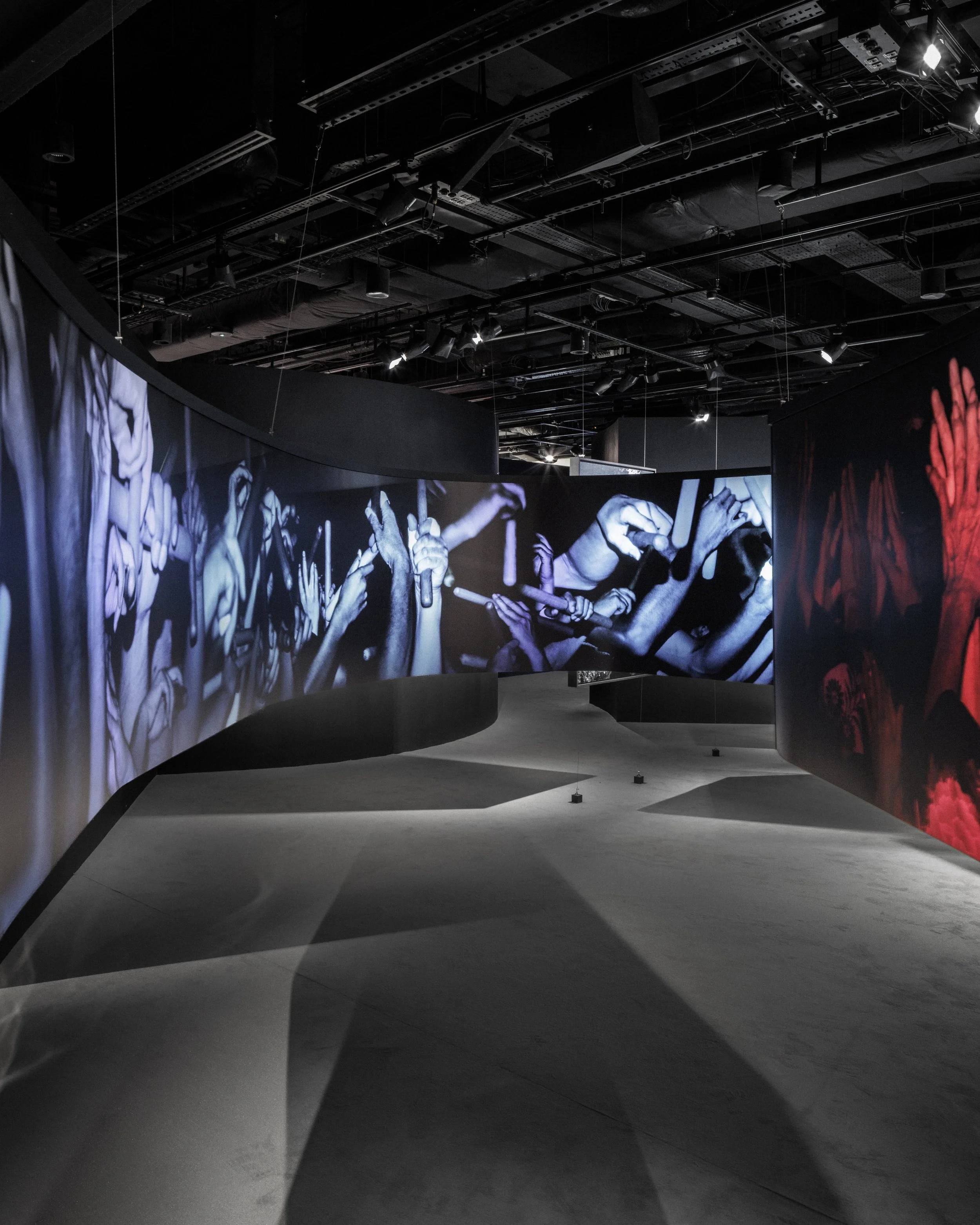
Rather than constructing a direct comparison between past and present, we preferred a fluid spatial arrangement. The numbers themselves, 21 and 6, don’t match, and that asymmetry was deliberate. This is reflected in the design of the exhibition space, led by my co-curators, the collective Byul.org (commissioned by Icheon City). They designed the plinths in varied heights and shapes to give the space a sense of fluctuation, and brought in projected video and an immersive audio composition. These elements encourage the audience to step into the exhibition and experience the works.
Are there particular works you would like to highlight?
Among the contemporary artists, Hwajeong Yeo, who studied at the RCA, makes work that does not match the typical image of ceramics at all. She uses glaze itself as her material rather than applying it to a vessel, producing a richly textured artwork. Exhibiting her work alongside the masters is an exciting example of how blurred the line between traditional and contemporary craft has become. This blurring can also be seen in the work of Liu Kim who takes the moon jar, an iconic form of Korean ceramics, and reinterprets it through thick layers and colours. It shows how there is not such a separation between the past and present, and artists are continuing to innovate.
Mimi Joung's piece looks like an almost collapsed silver vessel. It is intentionally unbalanced and contains the letters 'yes' and 'no', which can be interpreted as a protest against the traditional balance and symmetry in ceramics. Yusun Won’s tilted vessel also uses volcanic soil from Jeju Island, which carries rich histories of its own.
Among the masters, I would encourage visitors to look closely at Seyong Kim's flower vase. It is exactly the same as the one presented to Queen Elizabeth II for her 60th birthday during her visit to Korea. An important piece, it demonstrates how craft can be deeply embedded in social and political histories.

Installation view, Icheon and Beyond: The Space Within Form (2026), Courtesy the artist and Korean Cultural Centre UK. Photograph by Dan Weill
The exhibition is presented as part of London Craft Week. What conversations might be opened up between Korean and British craft traditions?
When I first started preparing this exhibition, my impression was that the UK and Korea had quite different relationships to craft. In Britain, ceramics have grown substantially through the work of individual studios and have thrived independently, while in Korea, the craft has been more visibly sustained by government support. The more in depth my research became, the more I realised that Korea also has a very robust ecosystem, with abundant natural resources like clay, an extensive network of kilns, and government and city-level support. It’s just less visible from the outside.
It therefore seems that the UK and Korea are following similar paths and interest in craft has been growing in both places, in part through the work of contemporary artists expanding the medium. When I visit London Craft Week and Collect, for example, I notice how the distinctions between traditional and contemporary are dissolving. You can no longer easily say whether something is a ceramic in the traditional sense or something else entirely, and I find that really exciting.
We wanted to explore that dialogue in this exhibition, and presenting it as part of London Craft Week gave us the right context to consider a Korean conversation about material and process, alongside a British one.
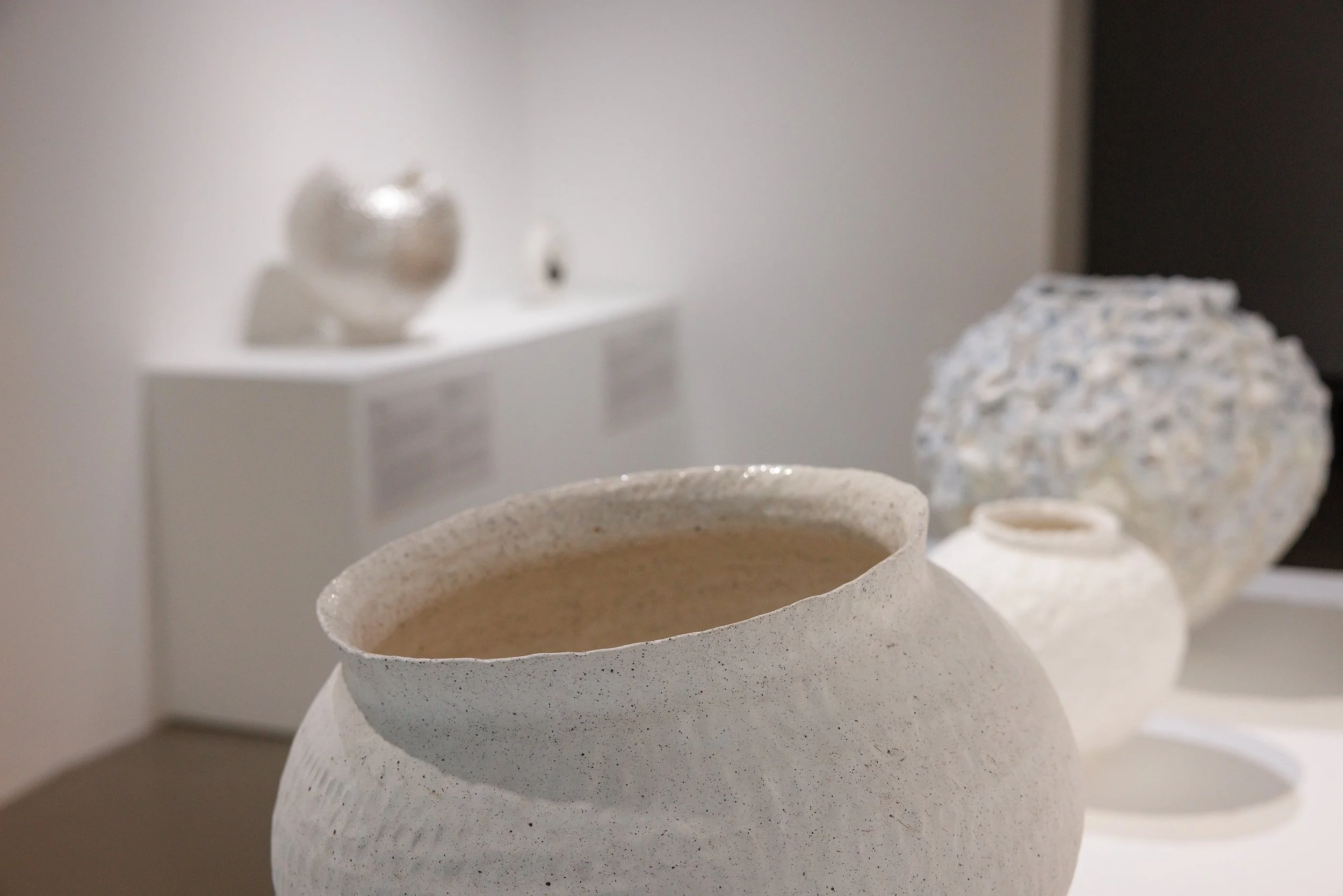
Installation view, Icheon and Beyond: The Space Within Form (2026), Courtesy the artist and Korean Cultural Centre UK. Photograph by Dan Weill
What do you hope visitors take away from the experience?
The title of the exhibition takes its cue from a Laozi quote: "we shape clay into a vessel, but it is the emptiness inside that holds whatever we want." East Asian ceramics are often described through the language of emptiness, but for me, what we are really trying to convey is calm and contemplation. It is not that the space is empty; it is that the space gives you somewhere to slow down and find your own rhythm within the work. That feeling is something we wanted the whole exhibition to reflect, including in the design of the space, the music composed for the show, the lighting and the projected video, all working together to create an atmosphere people can step into and enjoy.
I also wanted to move away from the conventional way ceramic exhibitions are often organised through categories and typologies. While those approaches are incredibly informative, we were more interested in creating a dialogue across forms, materials, and generations.
The KCCUK is a cultural centre and success for us is measured by whether audiences are genuinely engaged and curious. If visitors leave with a new sense of Korean ceramics, not as a fixed inheritance but as a living, evolving practice, and a moment of calm carried with them, then it has achieved what we hoped for.
Icheon and Beyond: The Space Within Form runs at the Korean Cultural Centre UK from 27 March to 5 June 2026. The exhibition is organised by the Korean Cultural Centre UK and the City of Icheon, with additional support from the Korea Tourism Organisation, and co-curated by Jaemin Cha (KCCUK) and Byul.org (commissioned by Icheon City). Presented as part of London Craft Week 2026.
Find out more:
Website: kccuk.org.uk
Instagram: @kccuk
Interview by Sofia Carreira-Wham
















Stand out this summer with this gorgeous Nsubra beach bag! Handmade in Ghana, this large tote bag is the perfect size for your sun cream, beach towel, purse and your latest book.