
Finding calm parks and walks in London for stressed students
London can feel loud, fast, and mentally crowded, especially during deadlines. When your brain is stuck in “always on” mode, a green space can act like a reset button. A short walk outdoors often lowers tension, improves focus, and makes studying feel less overwhelming.
This guide highlights peaceful parks and easy walking routes that suit busy university life. You will also find practical tips for planning quick study breaks, staying safe, and picking the right spot for your mood.
Why nature breaks help academic pressure
When coursework piles up, many students stay glued to a chair for hours, switching between tabs, notes, and deadlines. That nonstop pace can drain focus and make simple tasks feel heavier than they should, so taking a real break becomes essential; sometimes, choosing support from college essay writers for one assignment can free up time to breathe, reset, and protect your energy. Stepping outside for fresh air, daylight, and a short walk helps your mind slow down, easing mental fatigue and making it easier to return with steadier attention. Stress builds when you sit too long, stare at screens, and jump between tasks. A change of scenery helps your nervous system downshift. Fresh air, daylight, and gentle movement can reduce mental fatigue and improve attention span.
Small outdoor routines also support healthier study habits. A 20–40 minute walk can be enough to return to your desk with clearer thoughts. When you repeat the habit, it becomes a reliable coping strategy during exam season.
Choosing the right calm spot in London
Not every green space feels relaxing at every time of day. Some parks are quiet at sunrise, then busy by lunch. Others stay calm because they are larger, wilder, or less central.
What “calm” looks like for different moods
A stressed mind does not always need the same type of landscape. One day you might want open lawns and wide paths. Another day you may prefer woodland trails, water views, or a gentle uphill to burn off nervous energy.
Before you go, decide what you need most: silence, space, shade, or a scenic route. That quick check helps you pick a place that genuinely restores you.
Quick checklist before leaving campus
A short plan prevents you from wasting your break on logistics. These ideas keep the walk simple and low-effort.
water bottle and a light snack;
headphones for a calming playlist or no audio at all;
comfortable shoes and a warm layer;
offline map or a saved route;
a realistic time limit for your return;
a small notebook for anxious thoughts.
After you pack, set a timer for your return-to-study moment. That boundary makes the break feel guilt-free rather than like procrastination.
Calm parks in London that suit busy schedules
London has hundreds of green spaces, but a few stand out for quiet corners, long paths, and “reset” scenery. Each option below works for different parts of the city and different energy levels.
Hampstead Heath
Hampstead Heath feels like countryside inside Zone 2–3. Woodland trails, open meadows, and high viewpoints make it ideal for a longer decompression walk. The Pergola and Hill Garden can be especially soothing when you want slower pacing and visual beauty.
Try going early on weekdays for fewer crowds. If you need a simple goal, walk to Parliament Hill, pause for a wide skyline view, then loop back.
Richmond Park
Richmond Park offers long, natural-feeling routes and space to breathe. Wide tracks, trees, and open grassland can help you feel less boxed in by city life. It is great when you want an outdoor “mini-hike” without leaving London.
Because the park is large, it rarely feels cramped. Plan a circular walk and keep it gentle if you are low on energy.
Regent’s Park and Primrose Hill
Regent’s Park is a strong choice for central London learners who still want calm. Broad paths make it easy to walk without thinking, and the greenery softens the city noise. Primrose Hill adds a short climb and a rewarding view, which can feel motivating after hours of revision.
Go mid-morning or late afternoon for a quieter vibe. A slow loop around the lake area can be surprisingly restorative.
Hyde Park and Kensington Gardens
These are iconic, but they still offer pockets of peace when you choose the right corners. Kensington Gardens often feels calmer than the busier Hyde Park areas. The tree-lined paths and shaded sections work well for a mindful stroll.
Aim for weekdays outside peak tourist times. Walking near the Serpentine in off-hours can feel like a mental cleanse.
Greenwich Park
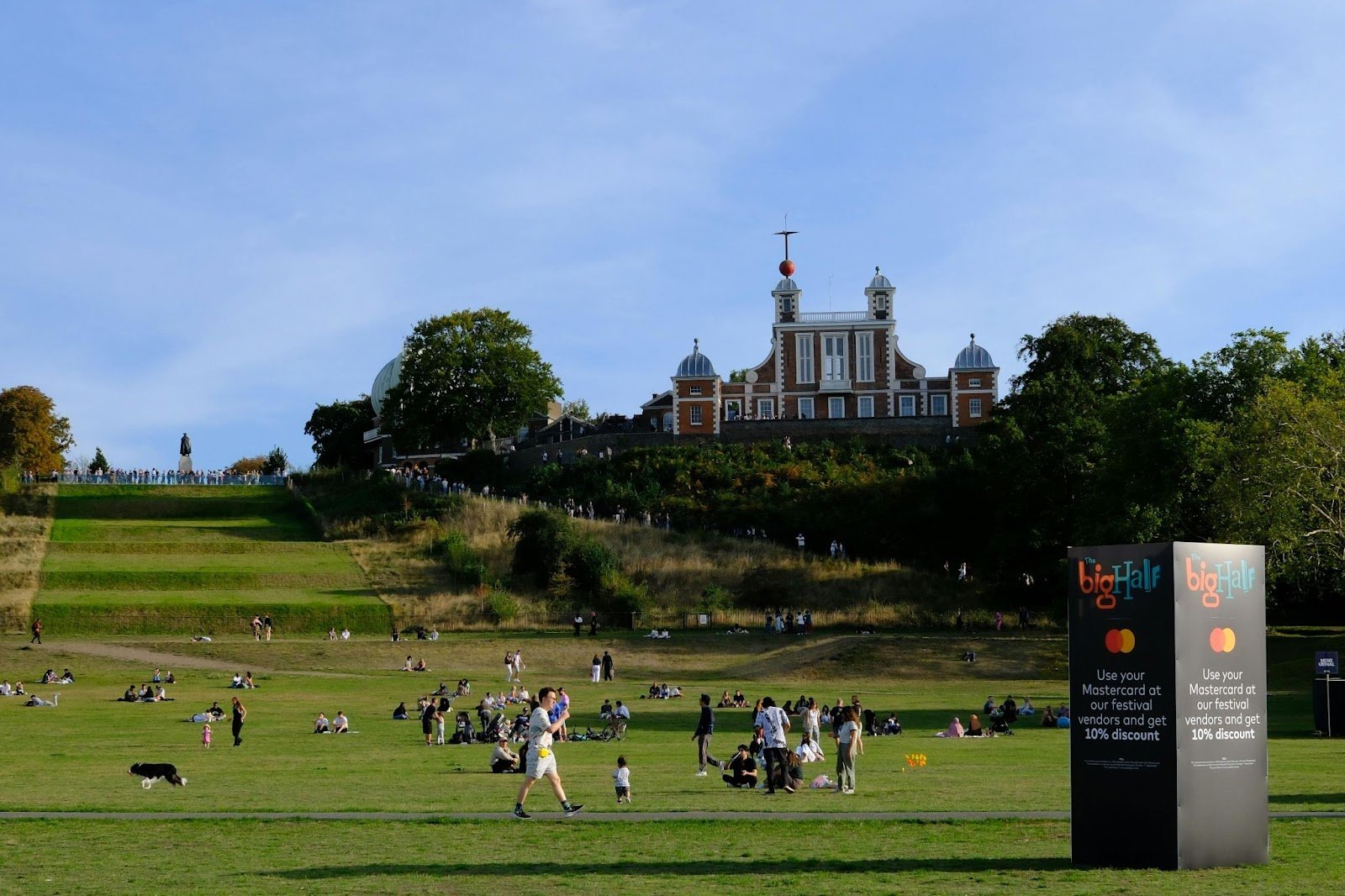
Greenwich Park combines open lawns, tree avenues, and viewpoints. The climb to the top is short but energising, which helps if you feel restless or anxious. The surrounding area also supports an easy “walk + coffee” routine.
If you need structure, set a goal to reach the viewpoint, breathe for two minutes, then walk down slowly. That simple rhythm can settle a racing mind.
Victoria Park
Victoria Park is a solid East London reset zone with wide paths and water features. It is big enough for longer loops and still convenient for quick breaks. The atmosphere can feel relaxed, especially on weekday mornings.
Use the lake loop for steady pacing. It works well for listening to lecture recordings while walking, if you prefer light multitasking.
Quiet walking routes that feel like a mini-escape
Parks are great, but routes can be even better when you want movement with direction. These London walks offer calmer corridors, water views, and long stretches without traffic stress.
Regent’s Canal and Little Venice
The canal paths create a slower pace that suits decompression. Water views, boats, and gentle movement make the mind wander in a healthy way. Start around Little Venice for a calmer vibe, then walk toward Regent’s Park or King’s Cross depending on time.
Keep your steps relaxed and notice small details like reflections and birds. That soft focus can reduce rumination.
The Thames Path
Sections of the Thames Path provide wide views and predictable walking surfaces. River scenery helps you feel grounded, and the route is easy to extend or shorten. Pick a stretch that matches your timetable, then turn back when your timer hits halfway.
This route works well for post-lecture breaks. A river walk can help you mentally close one task before starting the next.
Parkland Walk
Parkland Walk is a leafy, traffic-free path built on a former railway line. It feels enclosed by greenery, which helps if you want a quieter sensory environment. The route suits a steady pace and does not demand much navigation.
Because it is linear, it is easy to plan. Walk out for 15 minutes, turn around, and return without thinking.
A simple table to match parks to your stress level
Choosing a place is easier when you link it to your current state. Use this quick guide to decide where to go.
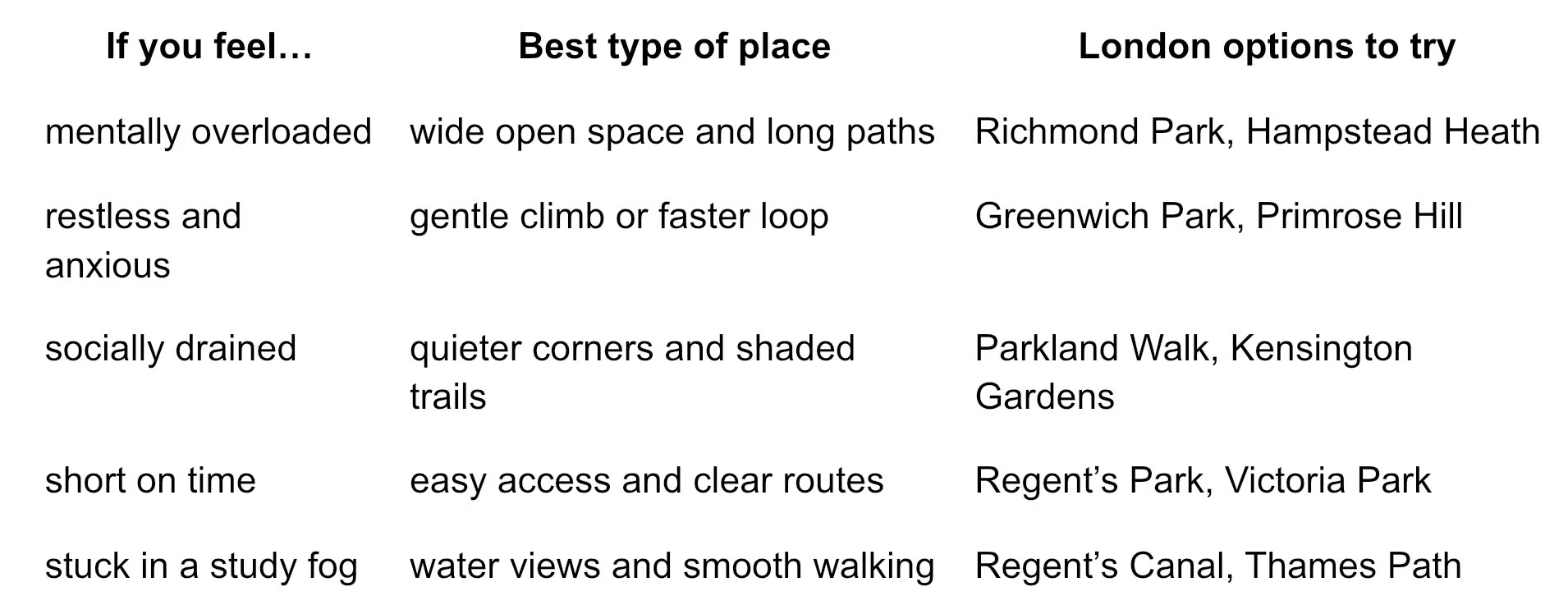
Once you match your mood, commit to just one option. Decision fatigue is real, and a simple choice helps you actually leave the desk.
How to make your walk a real stress reset
A walk becomes more effective when it has a purpose beyond “getting steps.” The goal is nervous system recovery, not a fitness target. These strategies keep the break restorative and student-friendly.
A short routine you can repeat all term
Use this method when deadlines stack up and your head feels noisy. It is structured enough to help, but flexible enough for any park.
Leave your study spot with a timer set.
Walk five minutes without checking your phone.
Breathe slowly and notice three sounds around you.
Choose a simple loop and keep an easy pace.
Stop once for a 60-second “look far away” eye break.
Return with two minutes for water and a quick plan.
After you come back, write one tiny next step for your assignment. That small action prevents the “break” from turning into avoidance.
Safety and comfort tips for solo walks
London is generally walkable, but calm should also feel secure. Stick to lit routes after dark, stay aware near water edges, and choose busier paths if you feel uneasy. Sharing your location with a friend can add peace of mind without adding stress.
Comfort matters too. If you are cold, hungry, or overdressed, you will not relax. Pack lightly, but don’t skip basics like water and a warm layer.
Final thoughts for overwhelmed uni life
When academic pressure spikes, you do not need a perfect wellness routine to feel better. A consistent park walk, even twice a week, can improve mood, focus, and resilience. London’s green spaces make it possible to find quiet without leaving the city.
Pick one park and one route from this article and try them this week. Notice which setting helps you breathe easier, then make it your go-to reset during the term.




































Handmade in Ghana, our aprons offer a unique design with a front pocket perfect for kitchen utensils or your phone and tie neck straps each made from recycled material. The perfect gift for any cooking enthusiasts!
Our aprons have been named after markets in Ghana and London. This apron has been named after street food hub Maltby Street Market.