
London leads Europe’s best destinations for a thrilling night out
One of the more revealing details in Gambling.com’s new Europe-wide casino ranking is not simply that London finished first. It is where the winning venue sits, and what that location allows. Grosvenor Casino, St Giles is planted in the middle of theatreland, where dinner plans, curtain calls, hotel check-ins, and post-midnight wandering overlap. That makes the result feel bigger than a single venue story.
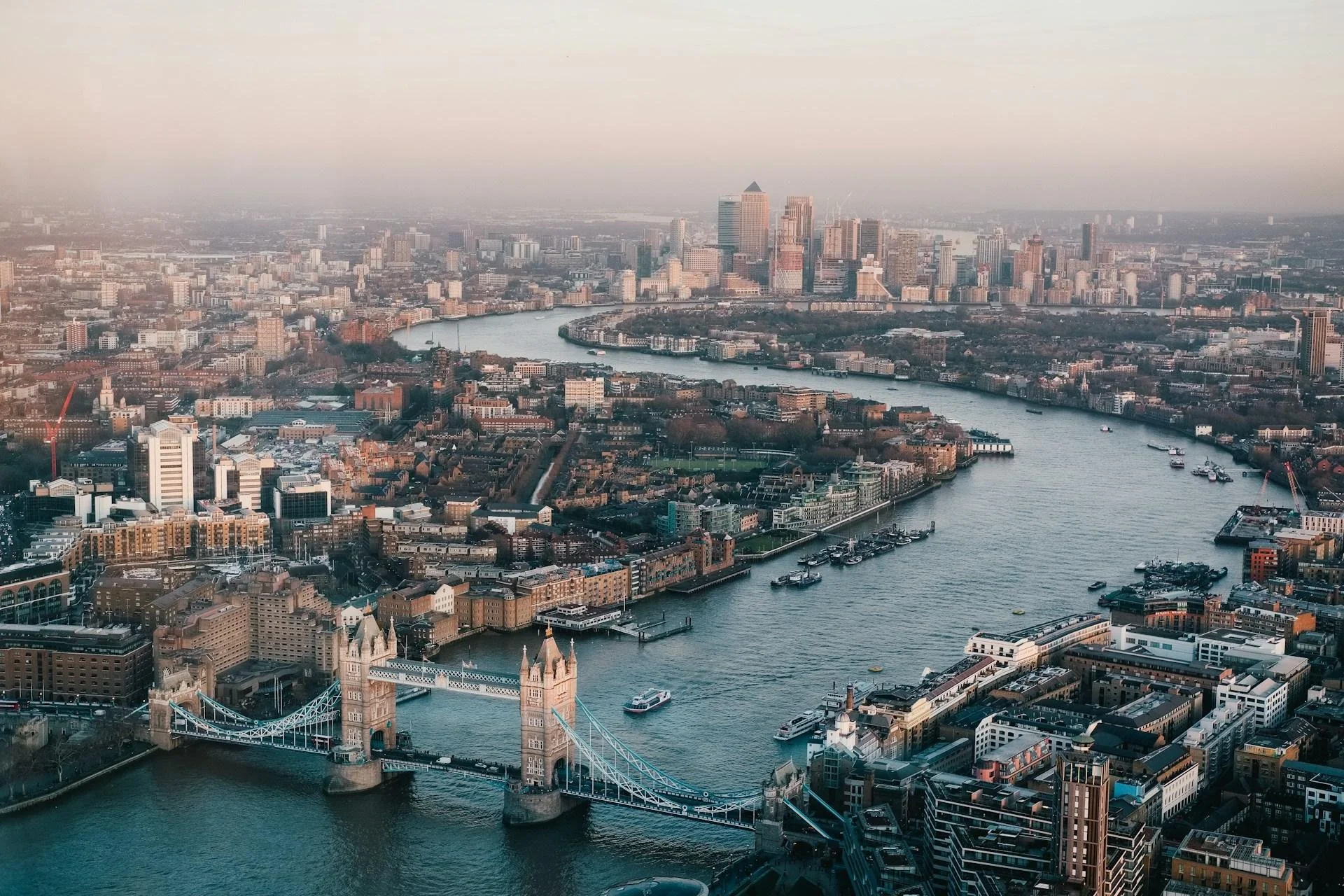
The more interesting takeaway is what the ranking says about London nightlife as a whole. Cities do not earn reputations for memorable evenings on interiors alone. They do it by making movement easy. A late restaurant booking can turn into a show, a show can spill into Soho, and the night still has somewhere else to go.
The release places London ahead of Paris and Vienna in a study of the highest-rated casino in each of Europe’s 10 most visited cities. Read narrowly, it is a gaming ranking. Read properly, it is a snapshot of how visitors judge an evening now: by the density, flexibility, and atmosphere around a venue, not only the venue itself.
What the ranking measured
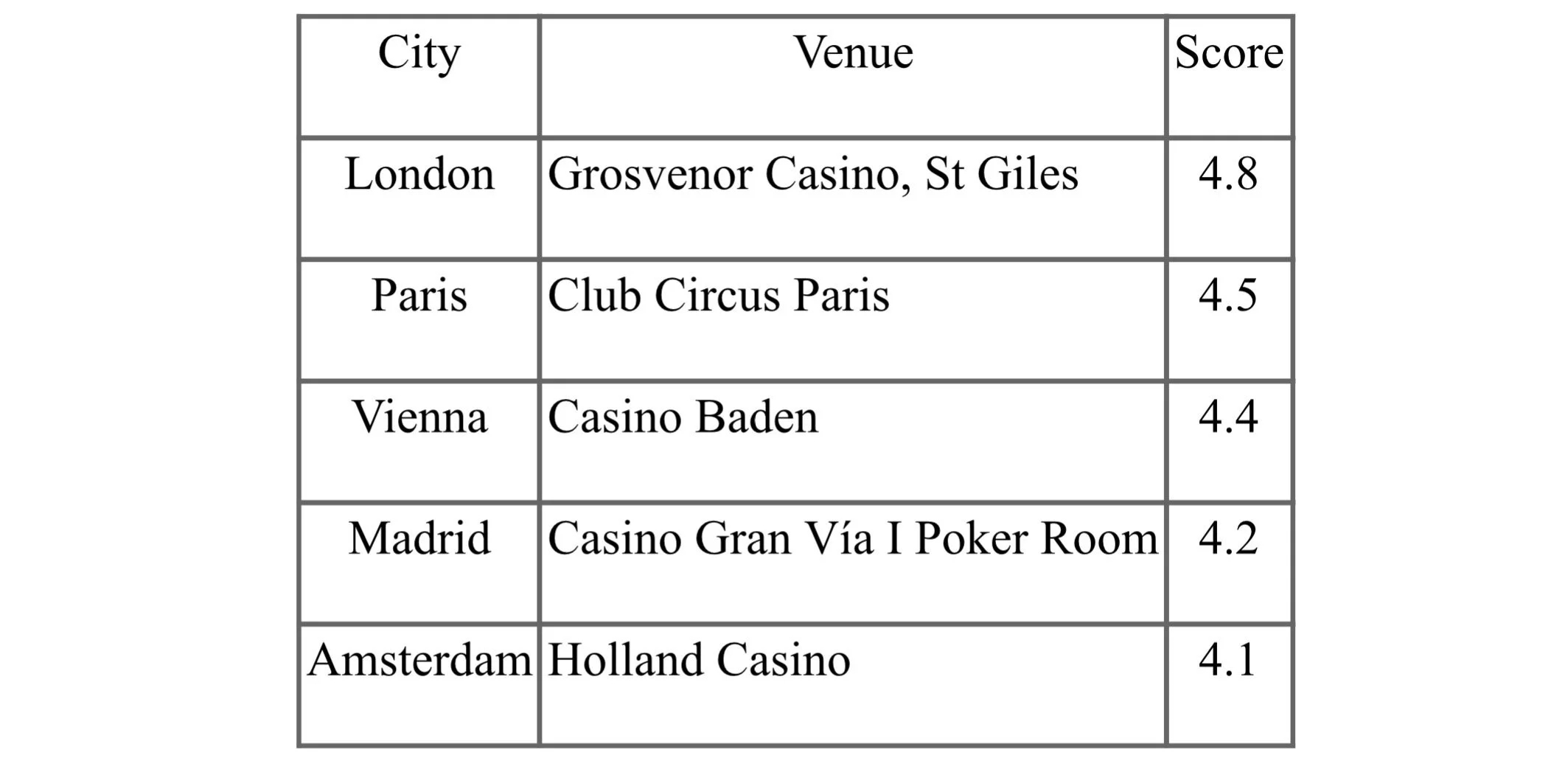
The research used Statista tourism data to identify Europe's 10 most visited cities, then matched each city with its highest-rated casino on Google Reviews. Istanbul was excluded because casinos are prohibited in Turkey. In the final list, London's Grosvenor Casino, St Giles scored 4.8, ahead of Club Circus Paris on 4.5 and Vienna's Casino Baden on 4.4. While some visitors may browse a list of new UK casino sites before planning their trip, this ranking focused on the established physical venues that help define each city's entertainment landscape.
Top five venues in the release:
No ranking like this can settle the wider debate about the best European nightlife destinations on its own. Review scores reward customer experience, not the full texture of a city after dark. Still, the study is useful because it measures a venue type that sits at the intersection of tourism, hospitality, and entertainment.
London’s advantage starts with proximity
St Giles benefits from something many cities spend years trying to engineer: proximity that feels natural rather than master-planned. Step outside, and central London is already doing the work. Tottenham Court Road, Soho, Covent Garden, and the wider West End are all within easy reach, so the venue is folded into an existing stream of people and activity.
That helps explain why a night out in London often feels less linear than in rival capitals. The city does not require visitors to commit to one entertainment lane and stay there. It allows an evening to keep changing shape, sometimes almost by accident, and that elasticity is a major part of its appeal.
Price remains the obvious counterpoint, and London is hardly a cheap city to explore after dark. Yet convenience still carries weight. When theatres, bars, hotels, late restaurants, and gaming venues sit close together, the city asks less of the person moving through it.
A city that lets the night evolve
What London sells well is not only choice, but sequence. People leave one setting and find the next without much effort, which gives West End nightlife a momentum that feels hard to fake. The city can look chaotic from the outside, but for visitors, that chaos often reads as possibility.
That is also why venues like St Giles matter beyond the gaming floor. They are part of the chain rather than the destination in isolation. In a district already charged with footfall and variety, the venue becomes one stop in a wider social circuit.
Why casinos still matter to the story
Casino rankings can sound niche at first glance, but they often expose broader truths about urban leisure. A strong review score is rarely about roulette tables alone. People respond to lighting, service, layout, food options, comfort, and the surrounding neighbourhood. In other words, they are scoring the experience of being there.
The audience is broader than the old high-roller stereotype, too. Some visitors may compare menus and opening hours, while others approach the evening with different priorities entirely, and plenty will never gamble at all. The common thread is curiosity about how leisure now moves between physical venues and digital discovery.
Paris and Vienna show the standard London beat
Paris finished second with Club Circus Paris, a venue the release describes as chic, well-equipped, and close to major sporting landmarks, including Parc des Princes and Roland-Garros. Vienna took third through Casino Baden, billed as historic, elegant, and one of the largest casinos in Europe.
What London appears to have beaten is not quality, but context. Paris offers polish. Vienna offers heritage. London offers motion. Its strongest districts make it easier for one plan to merge into another, which is often what travellers remember most.
The tourism backdrop makes the result stronger
The release also anchors the ranking in tourism demand. Paris, London, and Barcelona were identified as the three most visited European cities with a casino between 2019 and 2023, excluding the pandemic years. Paris and London each recorded more than 20 million inbound arrivals in 2019 and again in 2023.
That gives the top result extra weight. London is not topping a niche list built from thin visitor numbers. It is leading inside one of Europe’s most competitive tourism tiers, where expectations are high, and comparison comes easily.
It also sharpens the editorial value of the finding for anyone interested in casinos in London or the wider shape of the capital’s after-dark economy. Plenty of famous places attract visitors. Fewer keep the energy coherent once the sun goes down.
London’s lead says more than the headline
On paper, this is a casino story. In practice, it lands as evidence of how London still works at night. The city did not come out on top because it offered one glossy room in isolation. It scored highly because the winning venue sits inside an area already built for layered evenings, loose plans, and steady energy after dark.
That is the real takeaway. London’s edge lies in mix, proximity, and continuity, which are often the qualities that make a city feel genuinely alive after hours. The ranking puts a number beside something regular visitors, theatregoers, and late-night wanderers have been noticing for years.































Handmade in Ghana, our aprons offer a unique design with a front pocket perfect for kitchen utensils or your phone and tie neck straps each made from recycled material. The perfect gift for any cooking enthusiasts!
Our aprons have been named after markets in Ghana and London. This apron has been named after street food hub Maltby Street Market.