
In conversation with Gulja Holland
“Painting becomes a way of reordering what we think we know about the world.”
- Gulja Holland
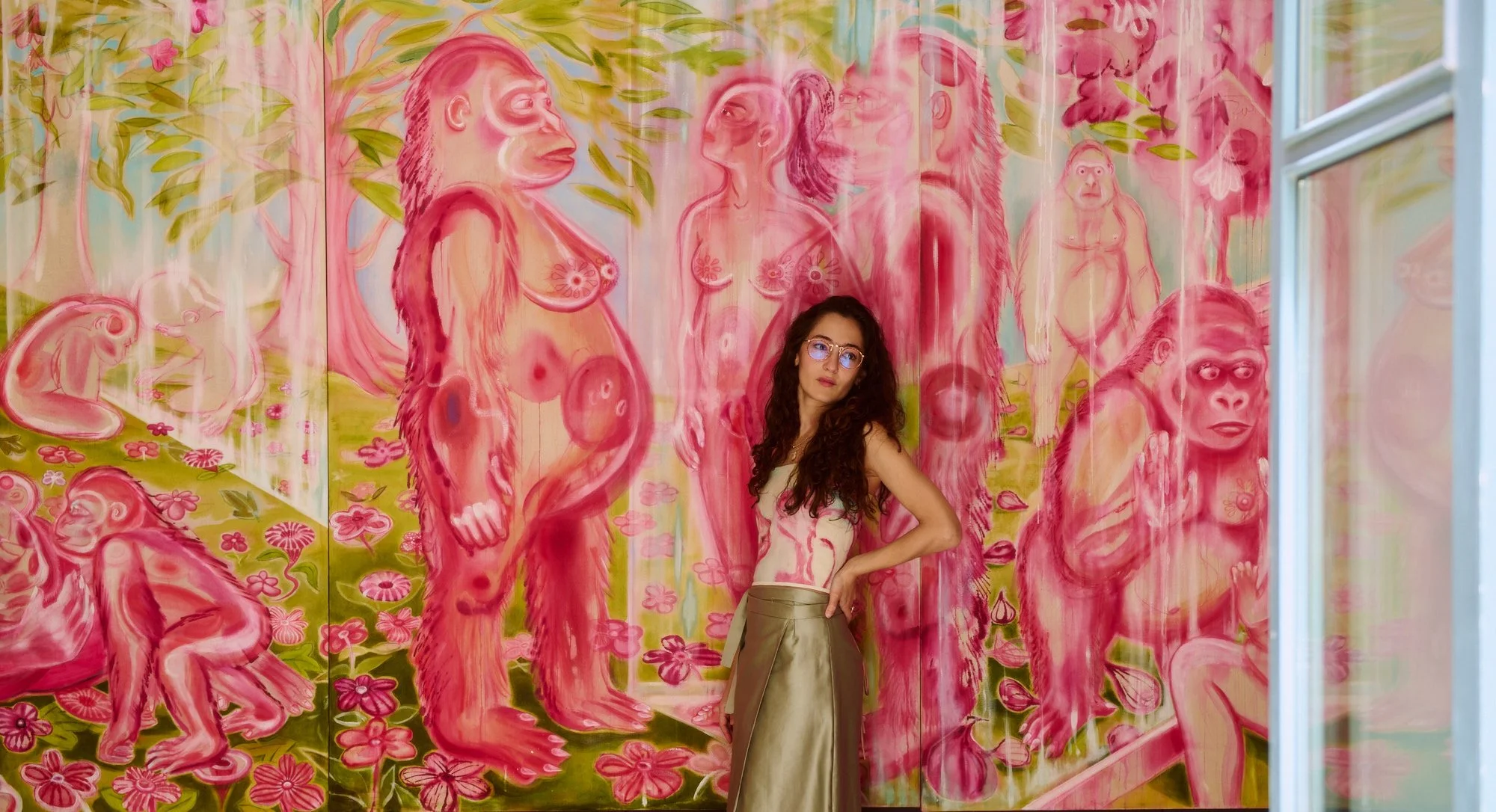
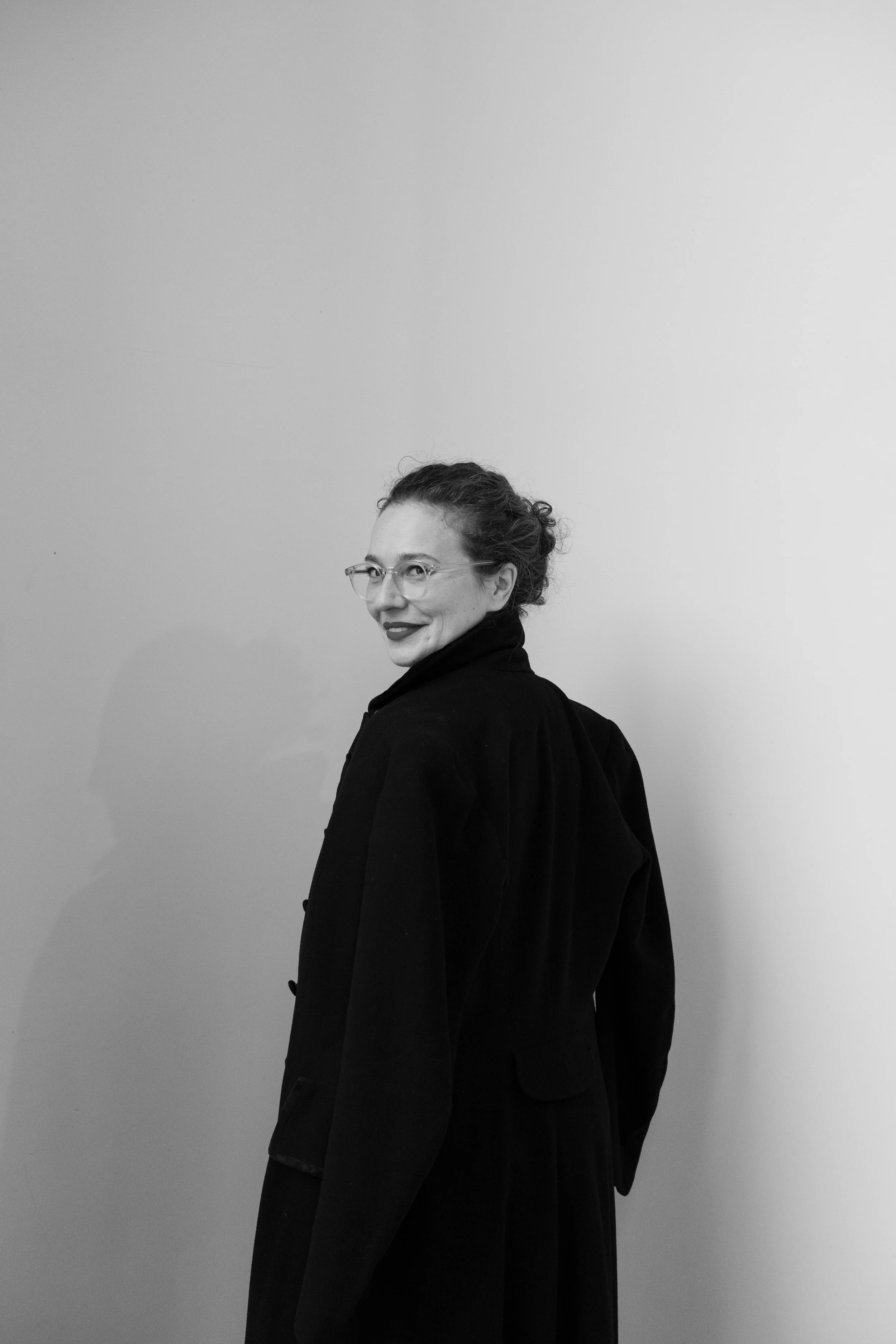
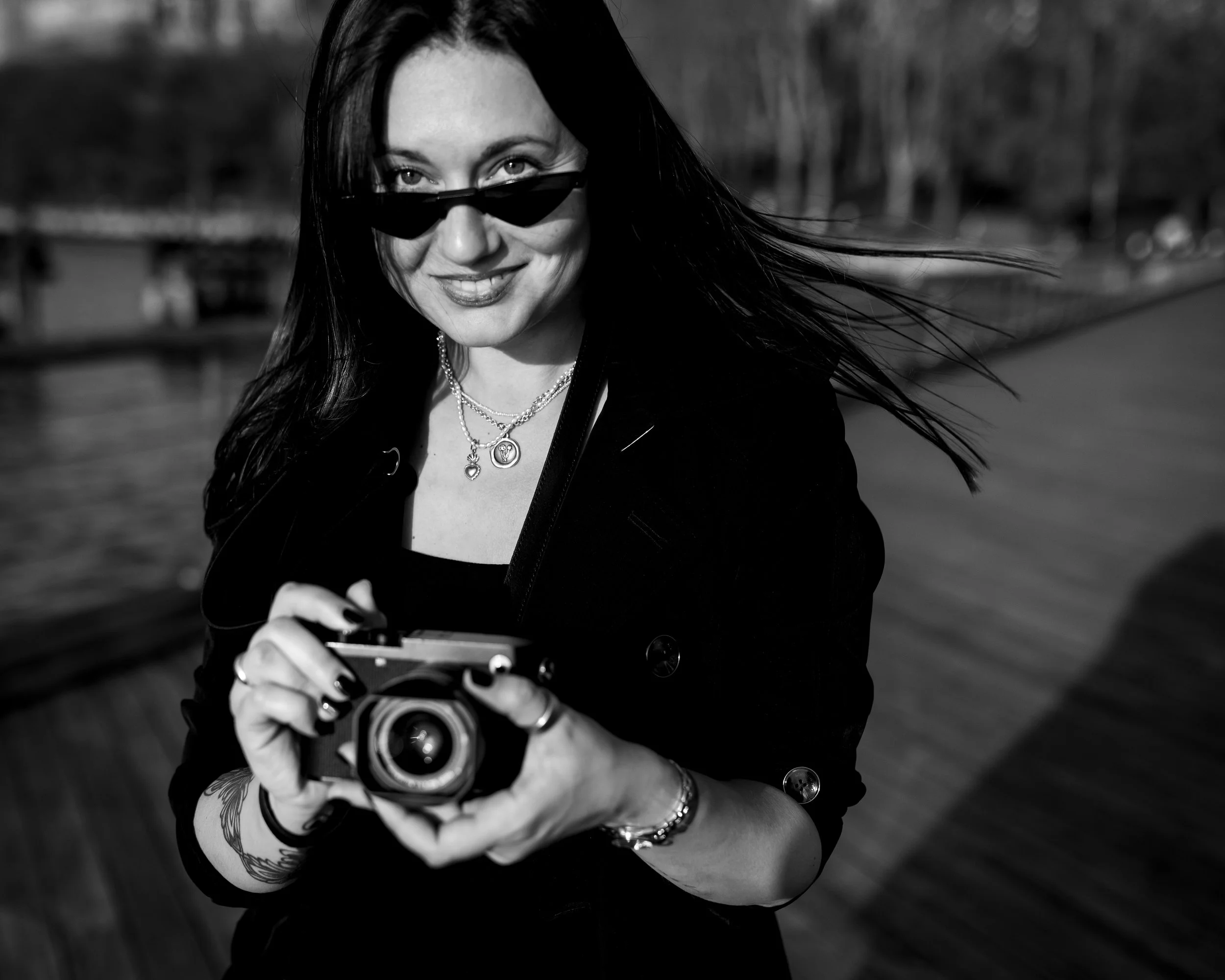
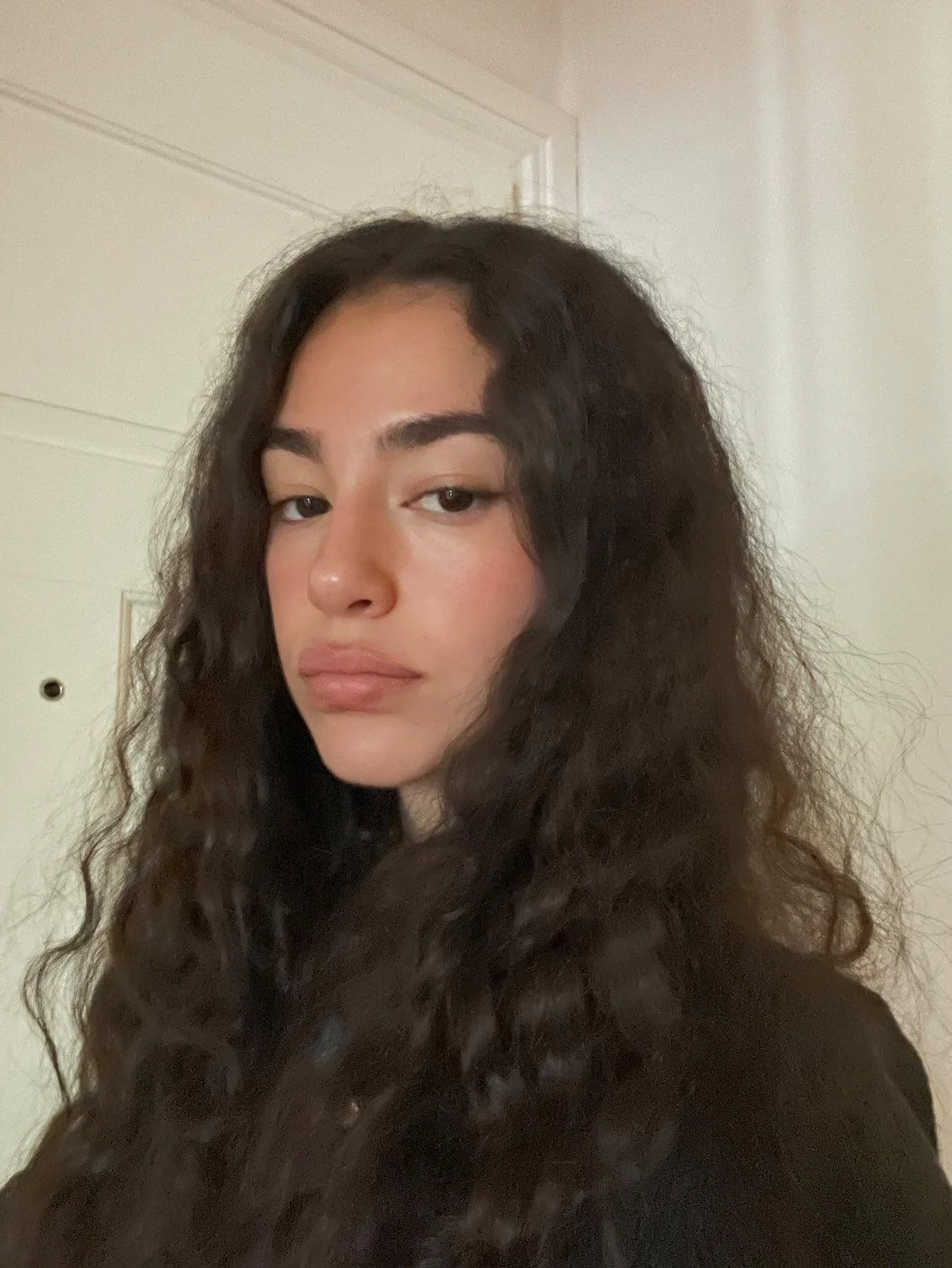
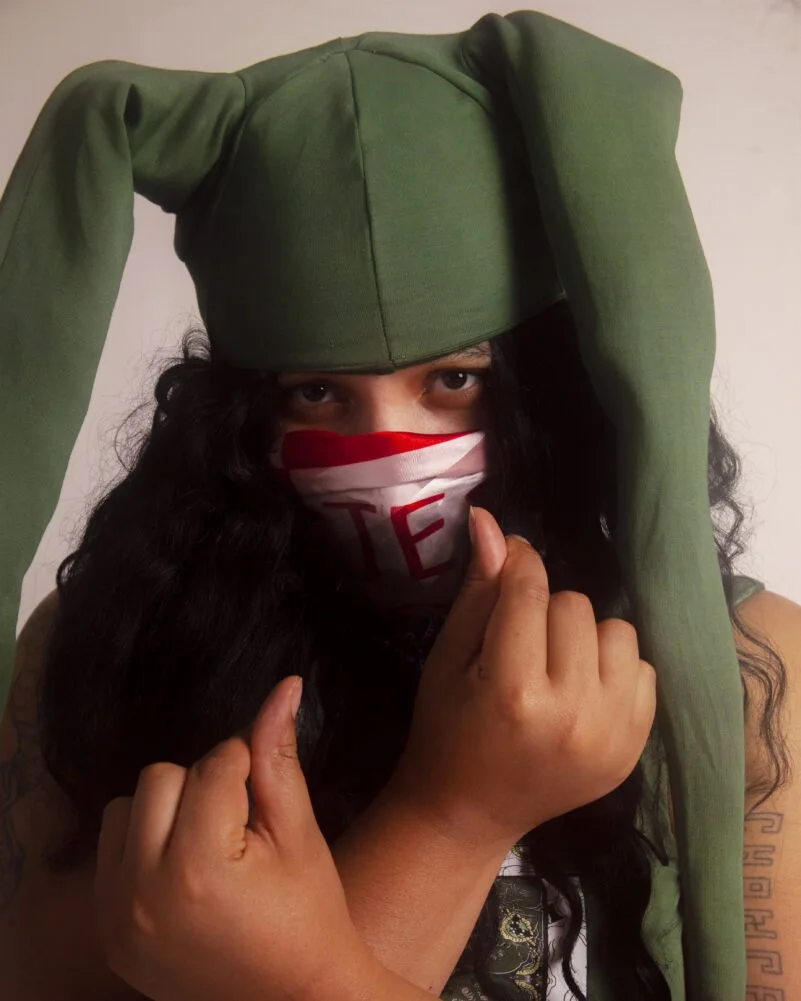
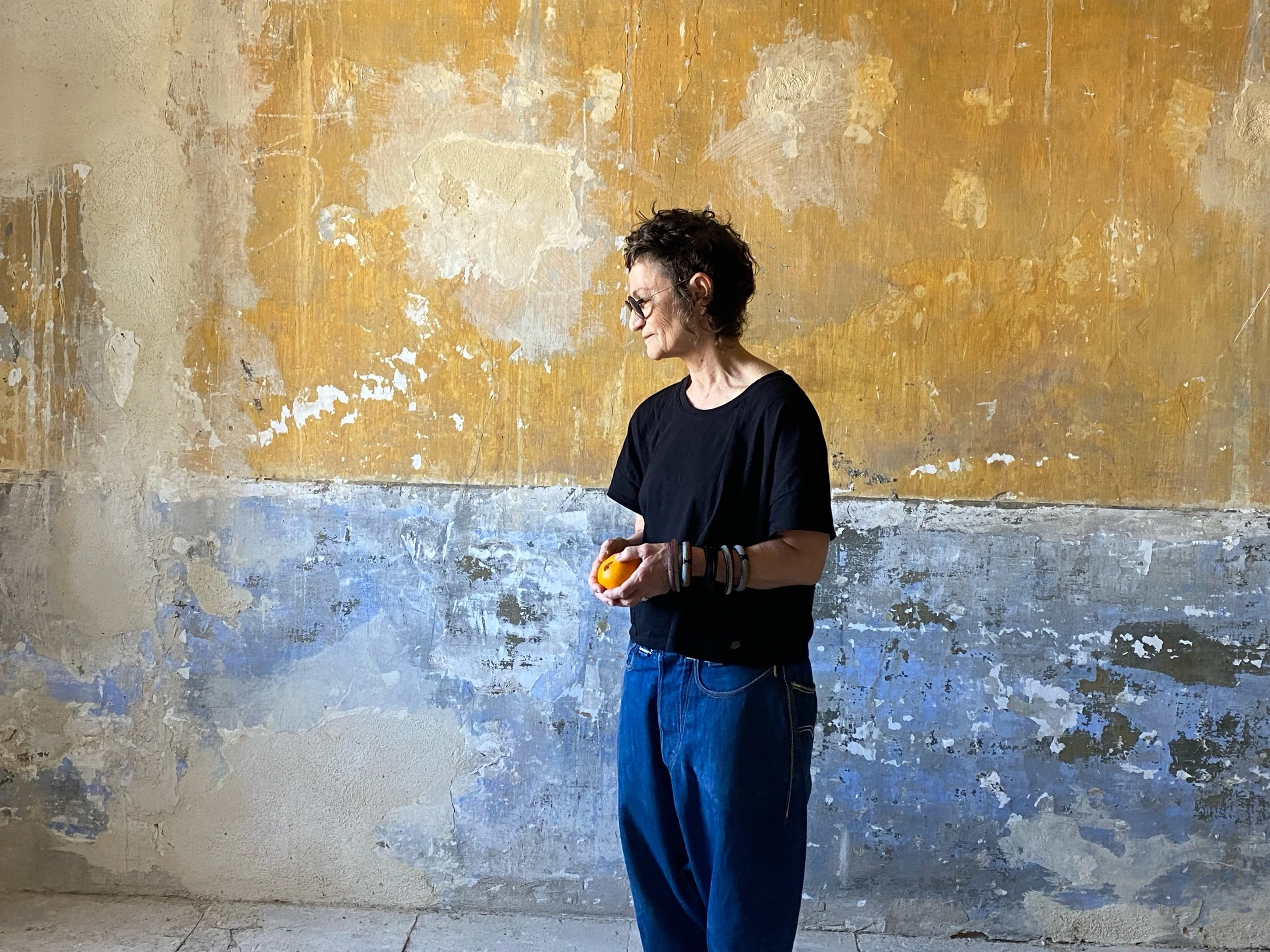
Artist Ġulja Holland wearing Maltese designer Zowij. Photograph by Stef Galea. Styling by Zoe Camilleri
When your work is shaped by movement between places, ideas, and states of being, rootedness begins to take on a different meaning. And in such a global world – and an increasingly global art world – visual languages have a tendency to unfold in surprising, intriguing and exciting ways. Artist Ġulja Holland, whose life and practice have unfolded between Malta and the UK, has developed a practice that moves fluidly across geographies and disciplines. In her practice, this sense of in between is not a limitation but a generative force.
Rather than anchoring herself to a single place or tradition, she constructs her own visual language, one that exists at the threshold between personal mythology and collective ecological memory. Her paintings conjure speculative worlds where humans, animals, and hybrid beings exist in states of tension, transformation, and collapse. Through shifts in scale and the inversion of human animal relationships, Holland challenges the idea of human centrality, instead imagining more fluid and interdependent modes of existence. “I am interested in capturing moments where ecological instability exposes how interconnected we actually are,” she says.
Since graduating with an MA in Painting from the Royal College of Art in 2021, following a BA from Leeds Arts University, Holland has exhibited internationally, with presentations at Compton Verney in the UK, Spazju Kreattiv in Malta EY Projects in Shanghai, Omnu Creative Houses in Portugal, and the Press Club in Brussels. Her work is currently on view as part of the Malta Pavilion at the Malta Biennale 2026 – which was the focus of our conversation.
How did you begin your journey into art?
My grandfather was a painter and art collector, and maybe my earliest point of reference. That presence stayed. More broadly, my family are all creatives and natural storytellers, and I think that shaped how I understand images, not just as visual forms but as narrative structures. There was always a sense that making things was a way of understanding the world as well as describing it.
How about your more formal art education?
I studied Fine Art at Leeds Arts University before completing an MA in Painting at the Royal College of Art in 2021. Moving to the UK was pivotal. It exposed me to a density of painting, historical and contemporary, that sharpened my understanding of the medium. Artists like Francis Bacon and Louise Bourgeois became important reference points, particularly in how they approach the body as both psychological and symbolic space.Since graduating, my practice has developed through a combination of exhibitions, residencies, and independent work, each shaping how I approach painting as both a material and conceptual process.
Tell us about your technique of diluted paint and how materiality participates in storytelling.
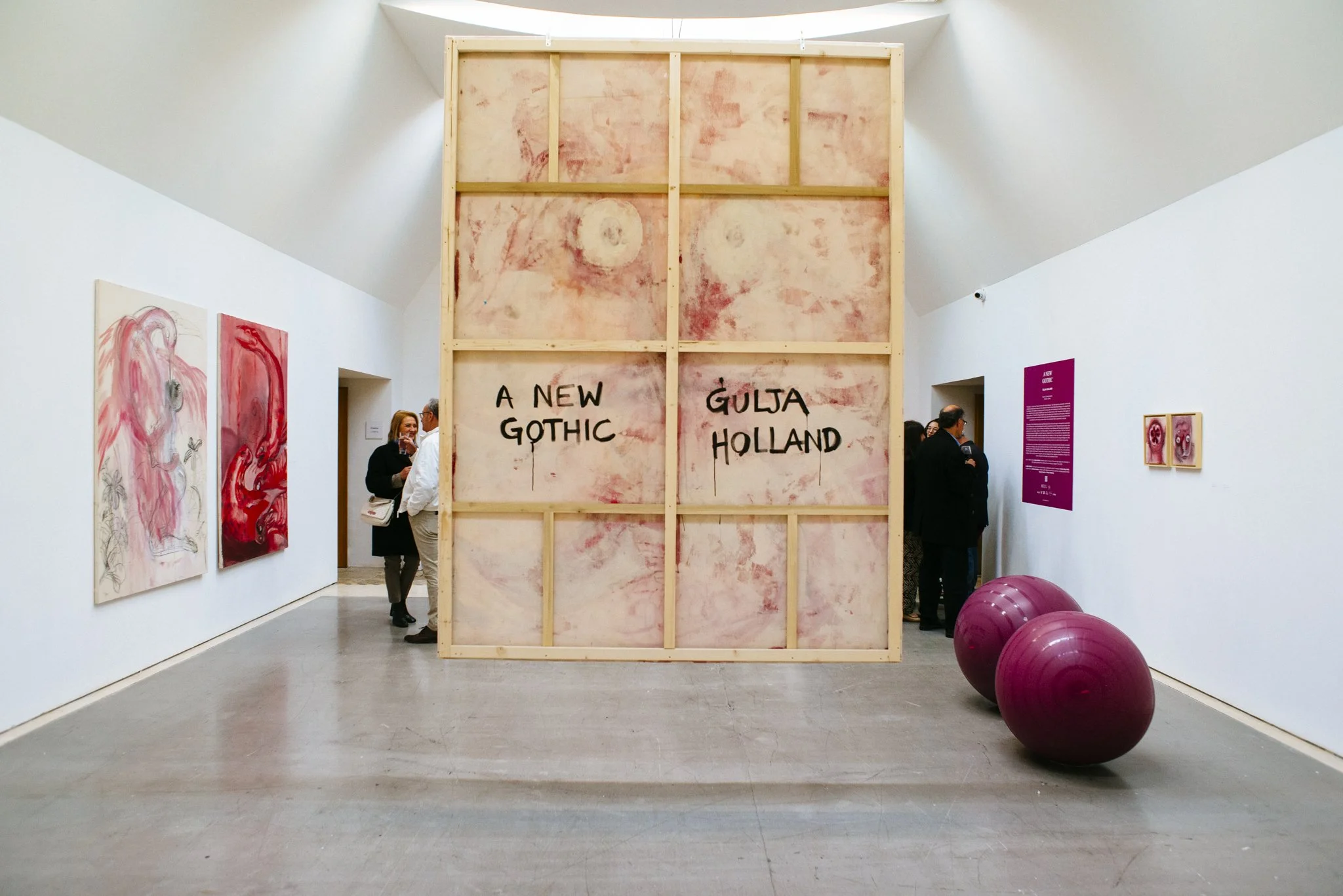
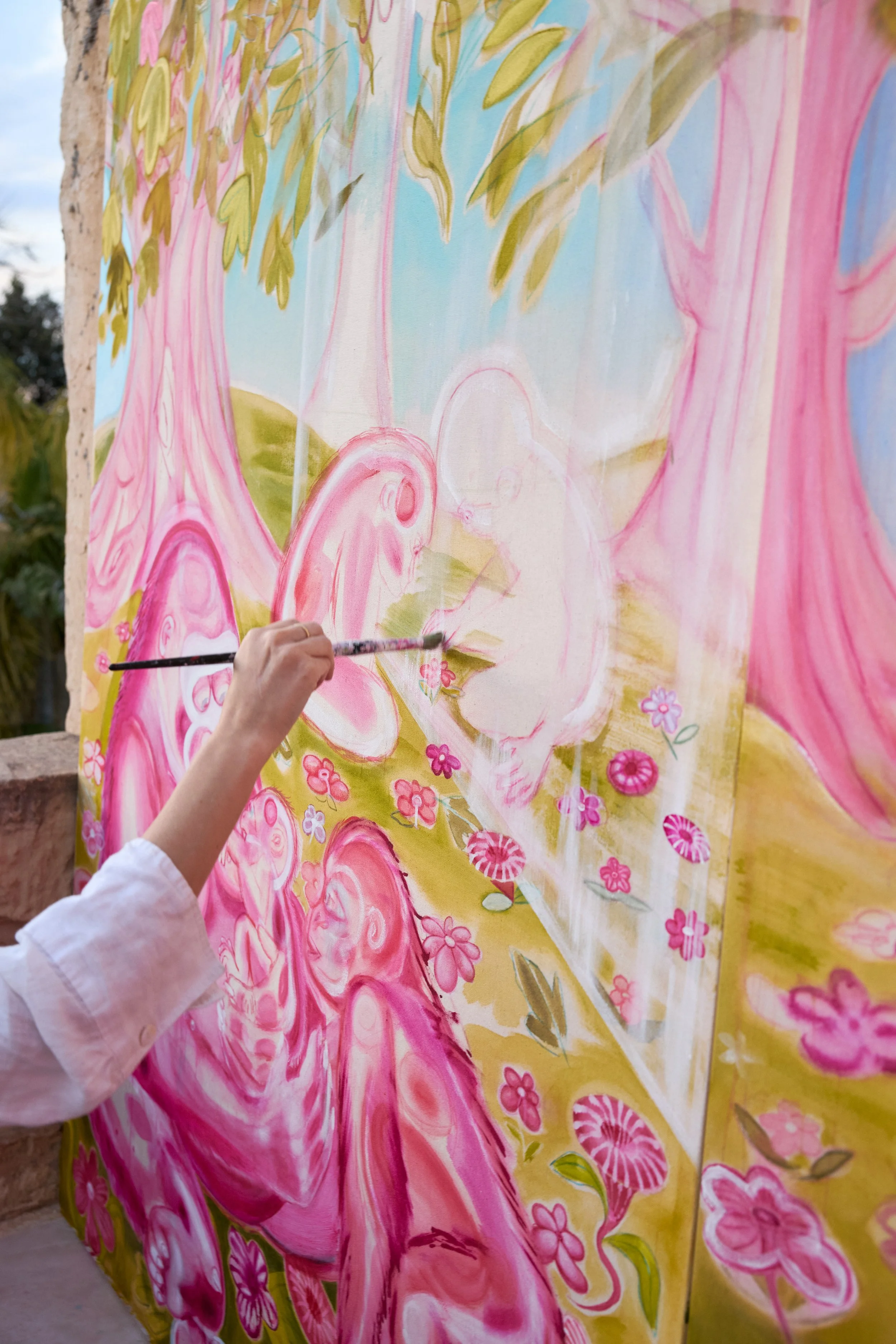
My painting style is primarily influenced by an aesthetic appreciation for translucency, the ability to see through things, both materially and conceptually. Early encounters with scientific imagery, microscopic cells, scans, and anatomical diagrams shifted how I understood the body. The surface dissolved, and with it, the idea of the human as something self-contained or central. That way of seeing continues to shape how I work. I build paintings through thin washes, erasures, and layering, allowing earlier marks to remain visible. The image is never fully fixed. It feels as though it is still forming or slipping away.
I am drawn to artists like Francis Bacon and Chaïm Soutine, where the body is unstable, and to Helen Frankenthaler’s use of fluid paint. But for me, materiality is not just aesthetic. It is structural. The painting holds its own history. It reveals its bones.
Through the Looking Glass. Is there a narrative?
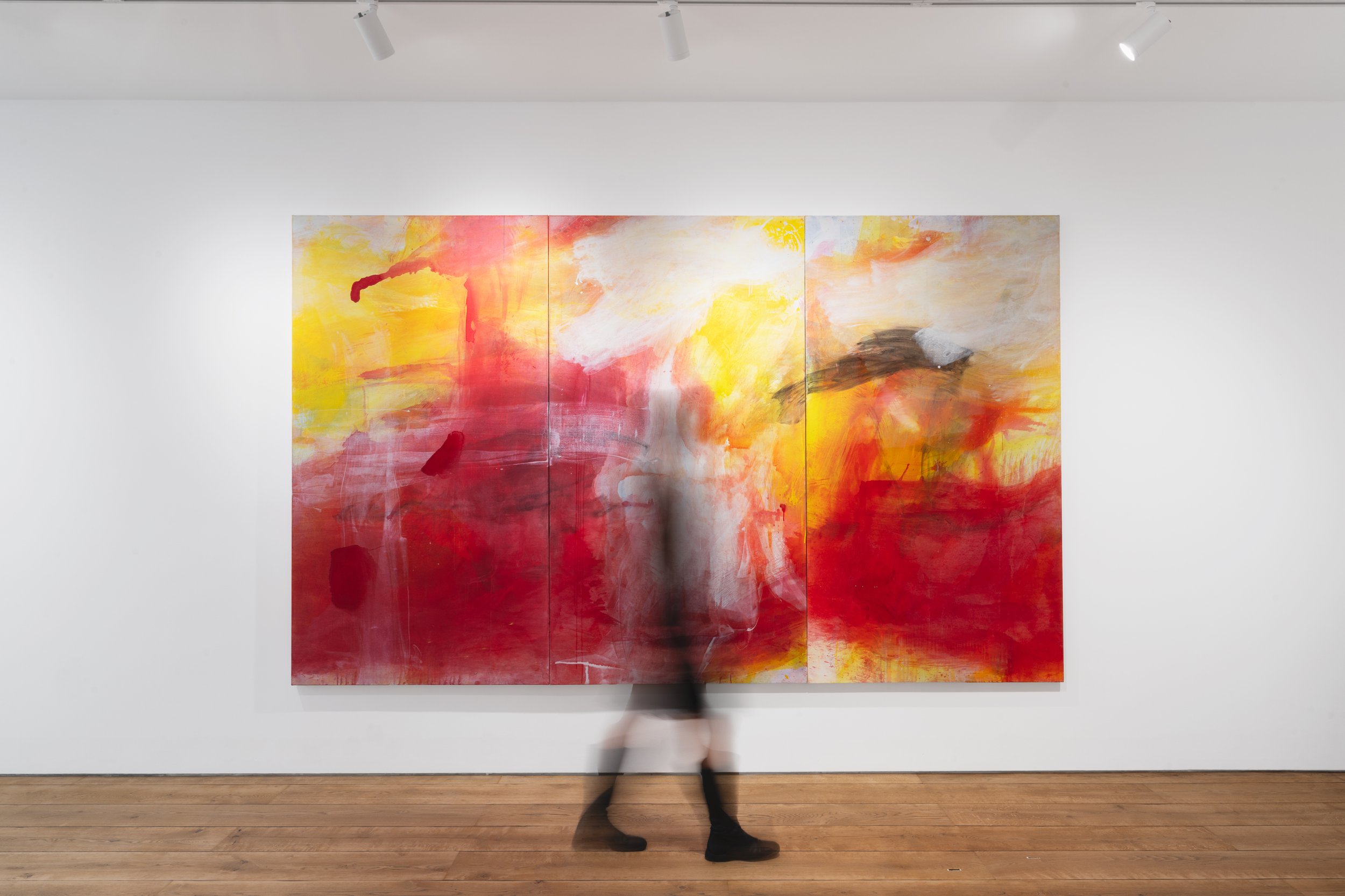
Yes. Through the Looking Glass began with questions around visibility, myth, and the politics of representation, conversations shaped in part by practices like the Guerrilla Girls. Compositionally, my life-size painting unfolds as a triptych of encounters between humans and gorillas, separated by glass. In my painting, glass became the motif/symbol for the chaos of our times: It's becoming increasingly pervasive both in our own private lives and in our interaction with others and with the natural world, simulating clarity while sometimes creating distances and distortions. I wanted to avoid a fixed narrative beyond this, though, and instead create something that turns back onto the viewer, making them aware of their own position within the act of looking. I chose gorillas for their psychological presence. They feel aware, almost confrontational. In the work, they become witnesses rather than subjects. The piece ultimately asks who is observing whom, and what that dynamic reveals.
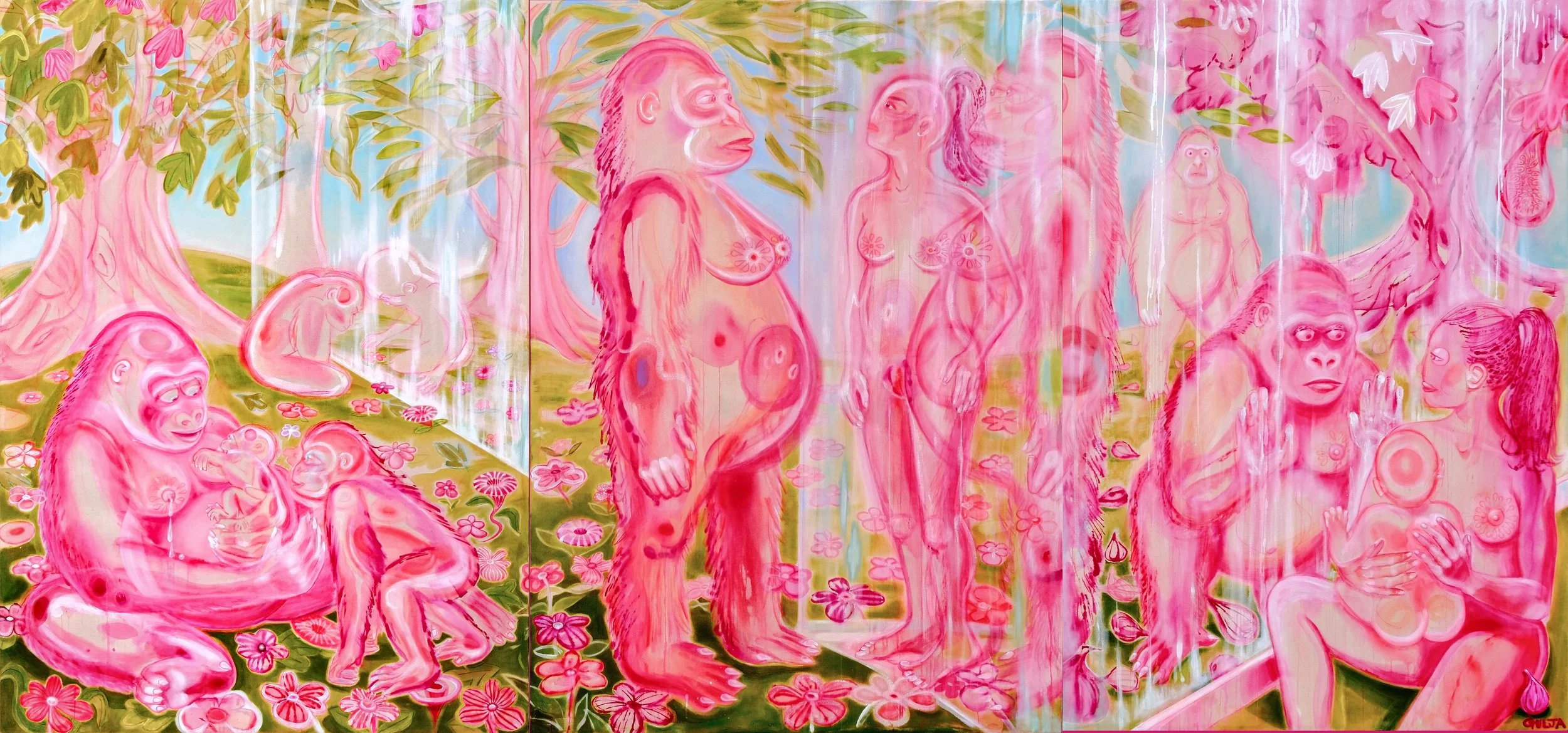
Through The Looking Glass, Acrylic, charcoal and oil on canvas, 180 × 390 cm : Triptych painting commissioned for the Malta Pavilion, Malta Biennale, 2026
You are showing as part of the Maltese Pavilion. How did that context shape the work?
The theme immediately resonated with my practice, and so I applied and got selected off the basis of my painting proposal.
The idea of inversion and distorted realities, drawn from Alice in Wonderland, aligns closely with my interest in destabilising hierarchies between human and non-human life. The curator, Katya Micallef, also introduced the idea of installing distorted mirrors opposite the painting. This created a physical extension of the work. Viewers encounter themselves through warped reflections while looking at the painting, reinforcing the idea that perception is never neutral.
That intervention was important because it allowed the concept to exist spatially.
As a Maltese artist working in Malta, how has the Biennale impacted you?
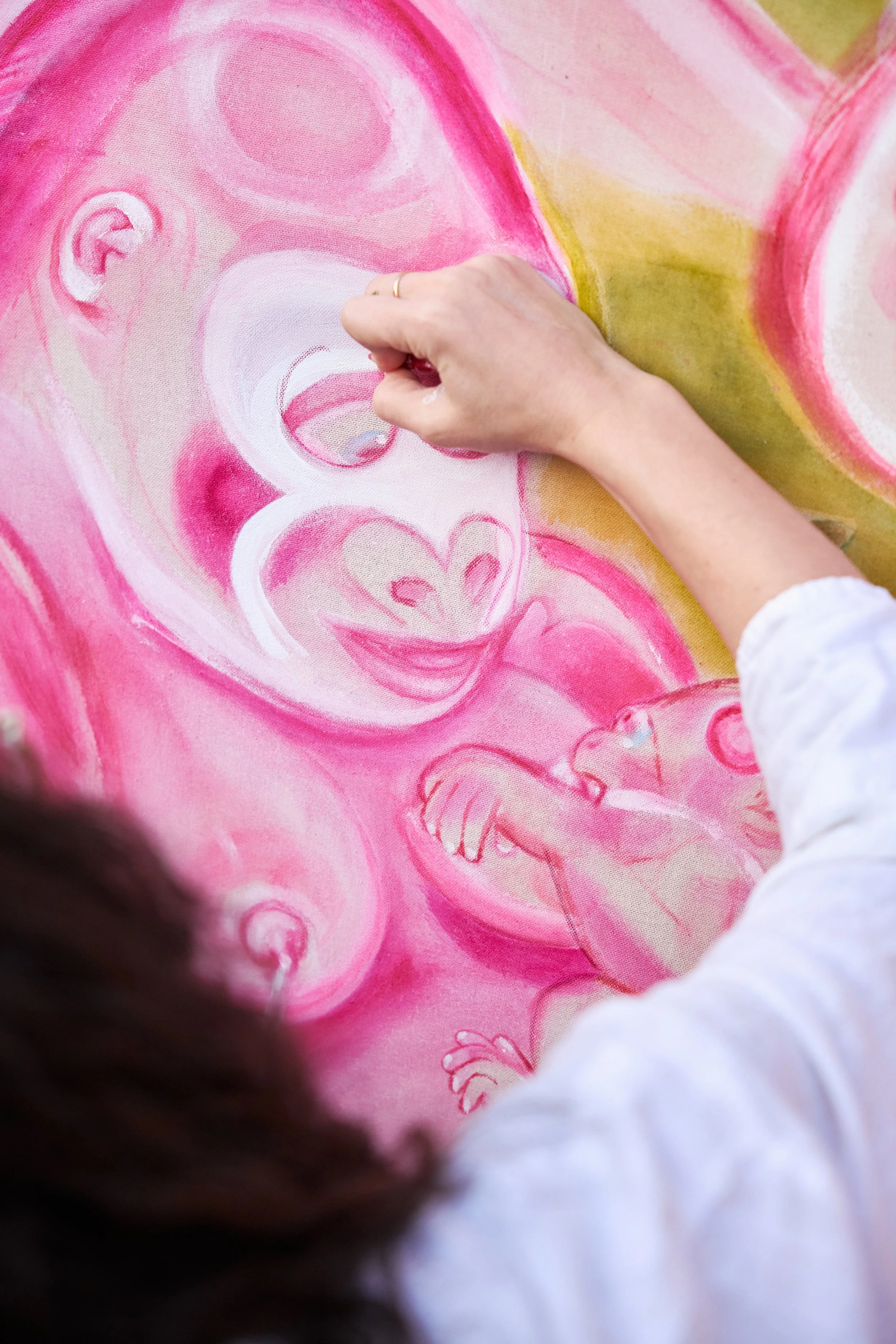
Honestly, I feel like it’s a turning point. Aside from the visibility and context that MUŻA provides as a space, showing with Malta's national pavilion has given me a newfound confidence. I was the only female artist in the pavilion, which was something I became more aware of once I was in it.
Being part of the Malta Biennale 2026 alongside artists like Maurizio Cattelan and the Guerrilla Girls felt significant, especially as they are figures I have long admired.
There is also something meaningful about being part of a biennale shaped by Rosa Martínez, whose history within the Venice Biennale carries real weight.
More than anything, it sharpened my sense of direction. It made me realise the work can hold its own within a larger conversation.
What feels exciting in Malta’s art landscape right now?
The opening of MICAS felt significant and very exciting. It signals a real investment in contemporary art and a willingness to engage internationally while maintaining a distinct local voice. The programming so far has been strong. The recent Milton Avery exhibition stayed with me, particularly in its sensitivity to scale and atmosphere.
What do you hope people take from the work?
I hope the work creates a shift in perception. An awareness of how we position ourselves in relation to other forms of life, and how narrow that positioning has been. The act of looking is never neutral. We bring assumptions with us, and the work tries to destabilise that.
What is next?
The Biennale has pushed my work in a new direction. I’ve started thinking more directly about zoos and about our increasingly staged encounters with the natural world. Spaces where everything is controlled but presented as natural. That contradiction feels important. I am developing a new body of work from this, extending the ideas around spectatorship and controlled environments. I will be working on it during my upcoming residency with Turps in London this summer. More broadly, I want to shift my focus back toward London. I would love for the next body of work to be shown there.
The Malta Biennale runs until May 29, with sites including the Grandmaster’s Palace and Fort St Elmo. The Malta Pavilion is located at MUŻA, Malta’s National Community Art Museum, and is open daily from 10am - 6pm.
Interview by Tani Burns












Stand out this summer with this gorgeous Nsubra beach bag! Handmade in Ghana, this large tote bag is the perfect size for your sun cream, beach towel, purse and your latest book.