
The six best exhibitions from Les Rencontres d’Arles 2026
Every summer, the charming city of Arles in south-west France becomes a mecca for photographers and photography-lovers. Lucien Clergue, Michel Tournier and Jean‑Maurice Rouquette founded the annual photography festival Les Rencontres de la photographie d'Arles in 1970 and it remains the largest in the world. There are over 50 official exhibitions on the agenda, as well as a thriving “off” program, and collateral collaborations in the nearby cities of Marseille and Aix en Provence. The impressive Frank Gehry-designed LUMA museum, a necessary stop in any visit to the region, also offers strong photography-led programming to coincide with the Rencontres.
A key factor in the festival’s longevity is its diversity of venues, from ancient Roman sites to deconsecrated churches, public parks and even a supermarket. While visiting them all is recommended, these six exhibitions are truly unmissable:
Lee Shulman and Omar Victor Diop: The Anonymous Project, Being There

Lee Shulman and Omar Victor Diop, Being There, 57, 2023. Courtesy of the artists.
At first glance, these photographs look like ordinary images of 1950s America: family celebrations, picnics, beach days, cosy domestic scenes, all easily dated by the furniture and the fashion. On closer inspection, each image contains a recurring character: Senegalese photographer Omar Victor Diop. The manner of insertion is always seamless, with Diop perfectly at ease in every scene, often engaging in conversation or merriment. Through this simple, repetitive act, Shulman and Diop achieve a startling effect. Without the need for overt commentary, the images are inherently political and radical, throwing the extent of racial segregation in this era into sharp relief. More broadly, The Anonymous Project reminds us that no image, however innocuous, is ever truly innocent. Photography is an act of selection, of inclusion, and of exclusion.
Location: Ancien collège Mistral. Discover more.
Lara Tabet et Yasmine Chemali: Le Corps Vitré

Artist Lara Tabet and curator Yasmine Chemali at the BMW ART MAKERS exhibition "Le corps vitré" (Vitreous body) at Les Rencontres d’Arles 2026. (c) BMW AG (07/2026).
One of the joys of exploring the Rencontres is visiting historical sites and finding them alive with artistic innovation. The best example of this synergy in the 2026 edition is Lara Tabet’s solo show in the Cloister of Saint-Trophime, a UNESCO world-heritage-listed building dating back to the 12th century. Tabet’s works are UV-printed onto glass and lit from within, creating a spiritual atmosphere. They were, however, created using one of the most experimental methods of the whole festival. Tabet is both an artist and a medical biologist, and this project was born from samples collected from bodies of water she has visited: ports, estuaries, artificial basins, etc. To create the works, she develops a bacteriographic protocol in which the aquatic microorganisms interact with photosensitive surfaces. The result is a hybrid: representational yet abstract, spiritual yet scientific. The show is a testament to the exploratory nature at the heart of photography and reminds us that we silo the arts and the sciences to our detriment.
Tabet and Chemali are the 2026 winners of the BMW Art Makers Program, an annual prize awarded to an artist-curator duo.
Location: Cloître Saint-Trophime. Discover more.
GHANA! Dreaming Independence 1957-1976

Carlos Idun-Tawiah, Many Reasons to Live Again, 2022. Courtesy of the artist and Galería Alta.
Among the abundance of solo shows at this year’s festival, this ambitious and well-researched group exhibition curated by Damarice Amao stands out. The story of Ghana’s independence from British rule is told through the works of eleven artists and a selection of key books, magazines and objects. Amao emphasises how photography did not play a passive or merely documentary role in the emancipation of Ghana, but shows how it shaped a new national self-image, from politics to architecture, fashion and the arts. Iconic images from James Barnor (b. 1929) capture a society in transition, while contemporary photographs by Carlos Idun-Tawiah (b. 1997) draw on personal and collective archives to portray empowering scenes of everyday life in Accra. The work of the Postbox Ghana collective was another highlight: for more than five years, they have been collecting and researching postcards that illustrate the development of infrastructure across the country, offering new insights into the proliferation of modernism and its implications for an independent Ghana. Expanding the range of mediums on show, a tapestry by Rita Mawuena Benissan (b. 1995) draws from an archival photograph of young girls dancing at a community gathering, reimagining the scene to highlight the importance of community traditions in the shaping of identity and belonging.
Location: Palais de l’Archevêché. Discover more.
Harry Gruyaert: A Sense of Place
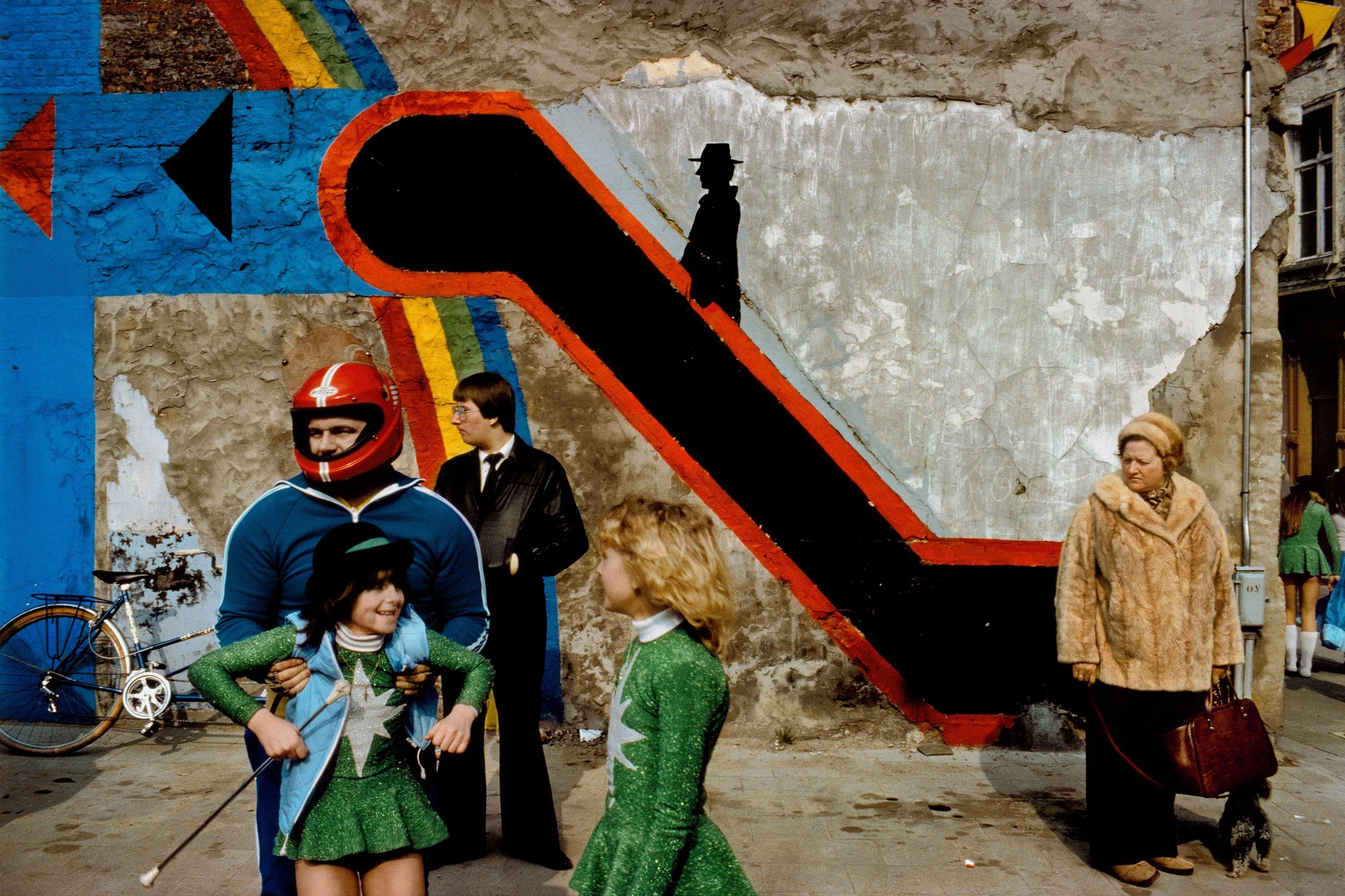
Harry Gruyaert, Carnival, Antwerp, Belgium, 1992. Courtesy of the artist and Gallery FIFTY ONE, Antwerp.
Harry Gruyaert, now 84, is a Magnum legend whose city shots have helped to define not only the art of street photography but how we visualise the world around us. In this exhibition, we are transported from New York to Paris to Moscow to Tokyo, to name a few. Thoughtfully curated by Géraldine Lay, the show mixes and matches its many locations, minimising the importance of geographic specificity in favour of, as the exhibition’s title suggests, a sense of place. Certain motifs, such as cars, bars and characterful women on pavements, recur, but each subject is treated with the same tenderness, attention and a touch of glamour. This exhibition proves once and for all that Gruyaert’s works are saturated, stylish, and a love letter to urban living.
Location: Chapelle Saint-Martin du Méjan. Discover more.
Paul Kodjo: Photoromance

Paul Kodjo, Notre enfant a sauvé notre amour [Our Child Saved Our Love], 1971
Paul Kodjo’s works document a thriving society in post-independence Côte d’Ivoire. Shot in public and domestic spaces, his black and white portraits focus on a young, well-heeled generation exuding festivity and aspiration. There are echoes of famed West African studio photographers such as Malick Sidibe and Seydou Keita, but Kodjo’s images have a unique and cinematic feel to them, perhaps due in part to his multifaceted career. In 1970, Kodjo established the avant-garde agency MAMEDIS (Mass Media Service) offering photography, cinema and publishing, and he also began to produce photo-novels. In this exhibition, a number of photographs from these novels are on display for the first time. There has been an extensive restoration process in recent years of the artist’s archive and many negatives have unfortunately been lost. Those that remain firmly cement Kodjo as one of the most important photographic voices of his generation.
Location: Croisiere. Discover more.
Rinko Kawauchi & Tokuko Ushioda: From Our Windows

Tokuko Ushioda, Setagaya, Tokyo, 1983, série ICE BOX [Réfrigérateur]. Avec l’aimable autorisation de l’artiste et de PGI.
Vague is a hybrid creative space in the heart of Arles which aims to connect Japan with the rest of the world. For the third year in a row, they are presenting an exhibition previously shown at the Japanese annual photography festival Kyotographie. The two artists, Kawauchi and Ushioda, offer refreshingly personal insights into their everyday lives and in so doing, capture the beauty that can be found in simplicity. Through these intimate and tender views of their immediate family members and humble living surroundings, a sense of quiet resilience and determination emerges. A particular highlight is Ushioda’s ICE BOX series, born from repeatedly photographing her own refrigerator, a clunky, barely-functional, second-hand item that became the beloved centrepiece of her one-room home. The series has expanded to feature the refrigerators of her friends and family, and yet Ushioda’s perspective remains, delightfully, the same.
Location: Vague. Discover more








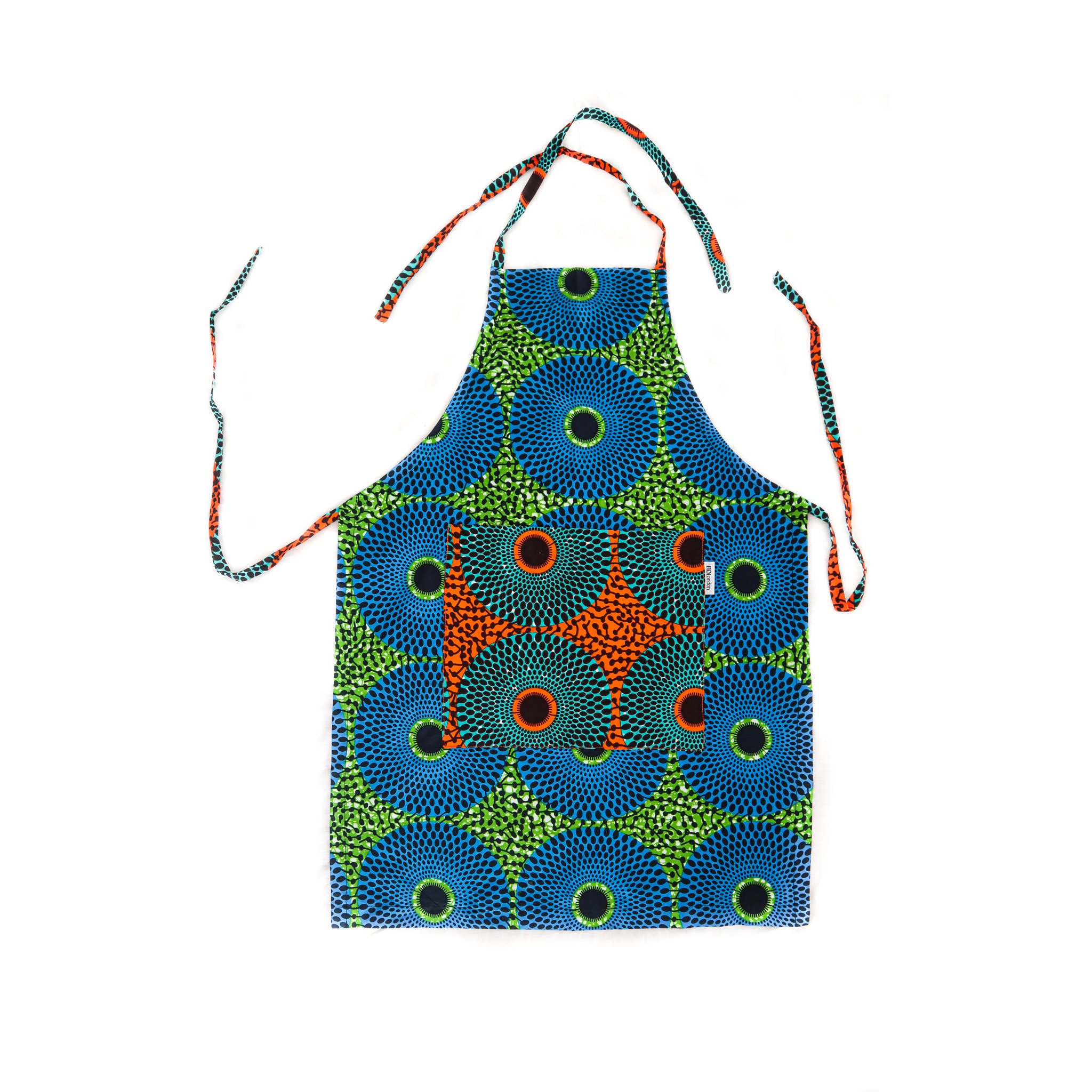


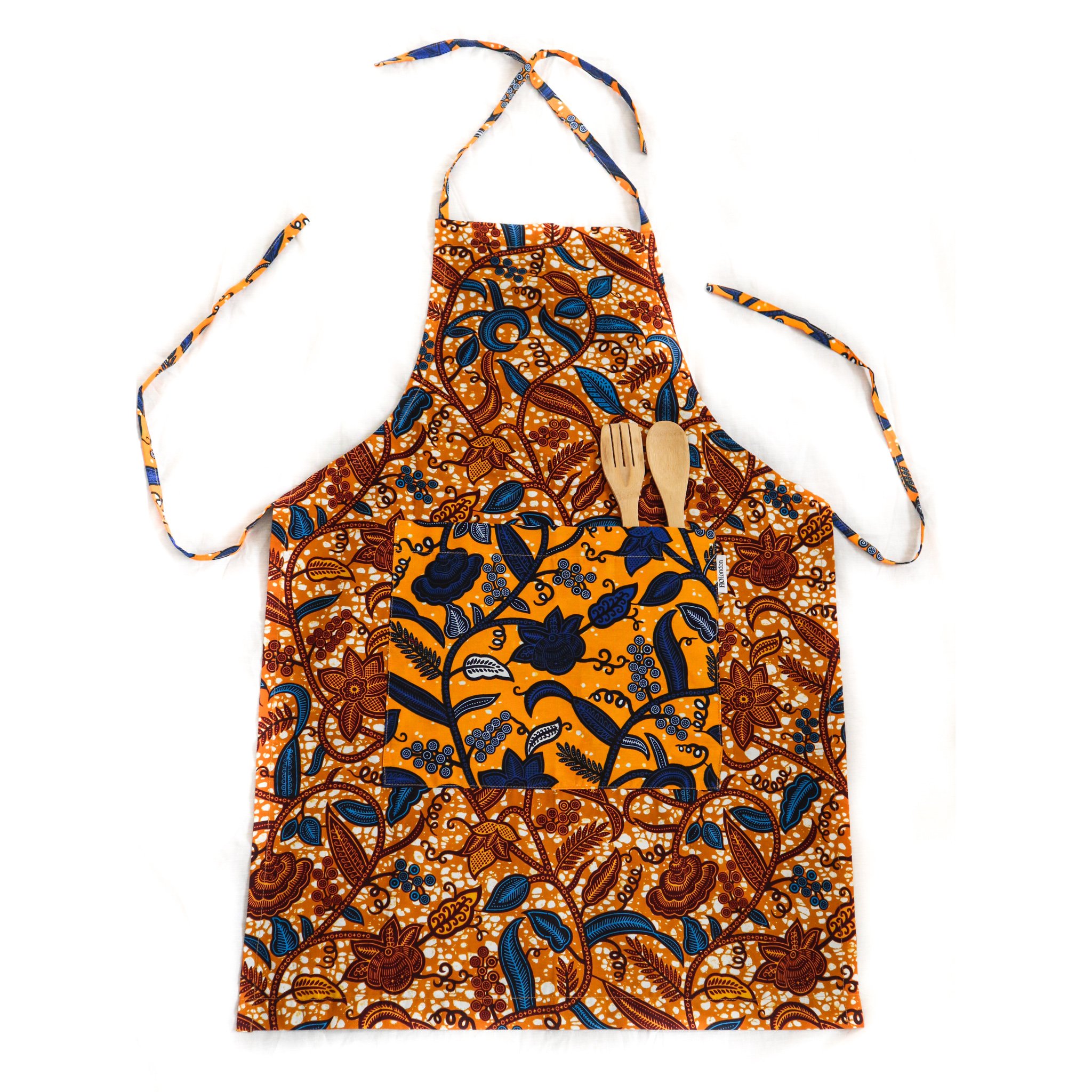


Handmade in Ghana, our aprons offer a unique design with a front pocket perfect for kitchen utensils or your phone and tie neck straps each made from recycled material. The perfect gift for any cooking enthusiasts!
Our aprons have been named after markets in Ghana and London. This apron has been named after street food hub Maltby Street Market.