
Top UK software development trends in 2026
Tech innovation in the UK in 2026 has become an active system. Underneath the noise of investments and successful releases, another process is unfolding. The market no longer revolves around a few well-known names. Instead, it is gradually shifting toward highly specialized companies redefining the concept of software development organizations.
These changes are driven by evolving client expectations, rapid progress in artificial intelligence, and frustration with slow, inefficient delivery models. Businesses are moving away from code mills in favour of partners who contribute ideas and strategic thinking. More often, this role is filled by a bespoke software development company, where solutions are built with precision to match specific business needs.

Image credit Jacob
In this guide, we break down the key trends shaping this transformation and what distinguishes the companies leading the way in 2026.
The Rise of Quiet Specialists
Conversations in London’s Shoreditch and Manchester’s tech corridors have shifted toward precision. Scale no longer dominates the narrative. Companies gaining traction in 2026 often focus on a narrow set of capabilities and execute them at a high level.
Instead of offering broad service portfolios, they concentrate on areas such as fintech infrastructure, AI-driven healthcare tools, or climate tech platforms. This focus enables faster delivery and clearer communication with clients. It also strengthens trust. Teams with deep knowledge of regulatory frameworks or domain-specific challenges operate as strategic partners rather than external vendors.
Key traits of these specialised firms include:
Deep domain expertise instead of generalist offerings
Faster decision-making due to smaller, focused teams
Strong alignment with industry-specific regulations and needs
Long-term partnerships built on trust and shared context
AI Integration in Development Processes
The field of artificial intelligence has gone beyond the experimental phase. By 2026, top companies in the UK no longer offer AI as an add-on service but integrate it straight into their work process. This model is widely adopted by a bespoke software development company, where smart tooling supports faster and more precise execution.
AI helps developers in writing code, conducting tests, and maintaining systems. All of these operations are standard practice for well-performing organizations. For developers, less time working on tedious routine means more time thinking about the system architecture and solving problems.
Evaluation criteria have changed along with them. An up-to-date software development business will be judged not only by its output but also by its effectiveness and intelligence.
Product-Oriented Delivery Models
There’s a definite shift happening in terms of moving from project-oriented delivery to product-oriented collaboration.
This old-fashioned process of build-deliver-disengage is becoming increasingly obsolete. Teams stay engaged post-launch, iterating products based on their performance metrics and changes in market dynamics.
This is reflective of processes that occur within successful startups, and what is now demanded of their partners. The end result is an iterative product development lifecycle.
Distributed Teams and Operational Alignment
Remote teamwork is now considered the norm. Companies from the UK leverage their local leadership and distribute their talent base in such a way that they have team members working across various regions.
Some of the key factors needed for success within this model include:
Well-written documentation as an alternative to oral tradition knowledge transfer
Communication processes in different time zones
Proper ownership of projects
A means of asynchronous collaboration that is seamless
Those companies that work on these elements will be able to remain aligned even when working remotely. Moreover, being able to access talent globally adds new perspectives to products.
Ethics and Sustainability as Core Considerations
Reputation in the year 2026 will be affected not only by the technical outputs but also by the company’s values. Consumers demand transparency about how data is used, how it affects infrastructure, and whether it is fair to design a computer system. The trend towards responsible development may be stated in the following way:
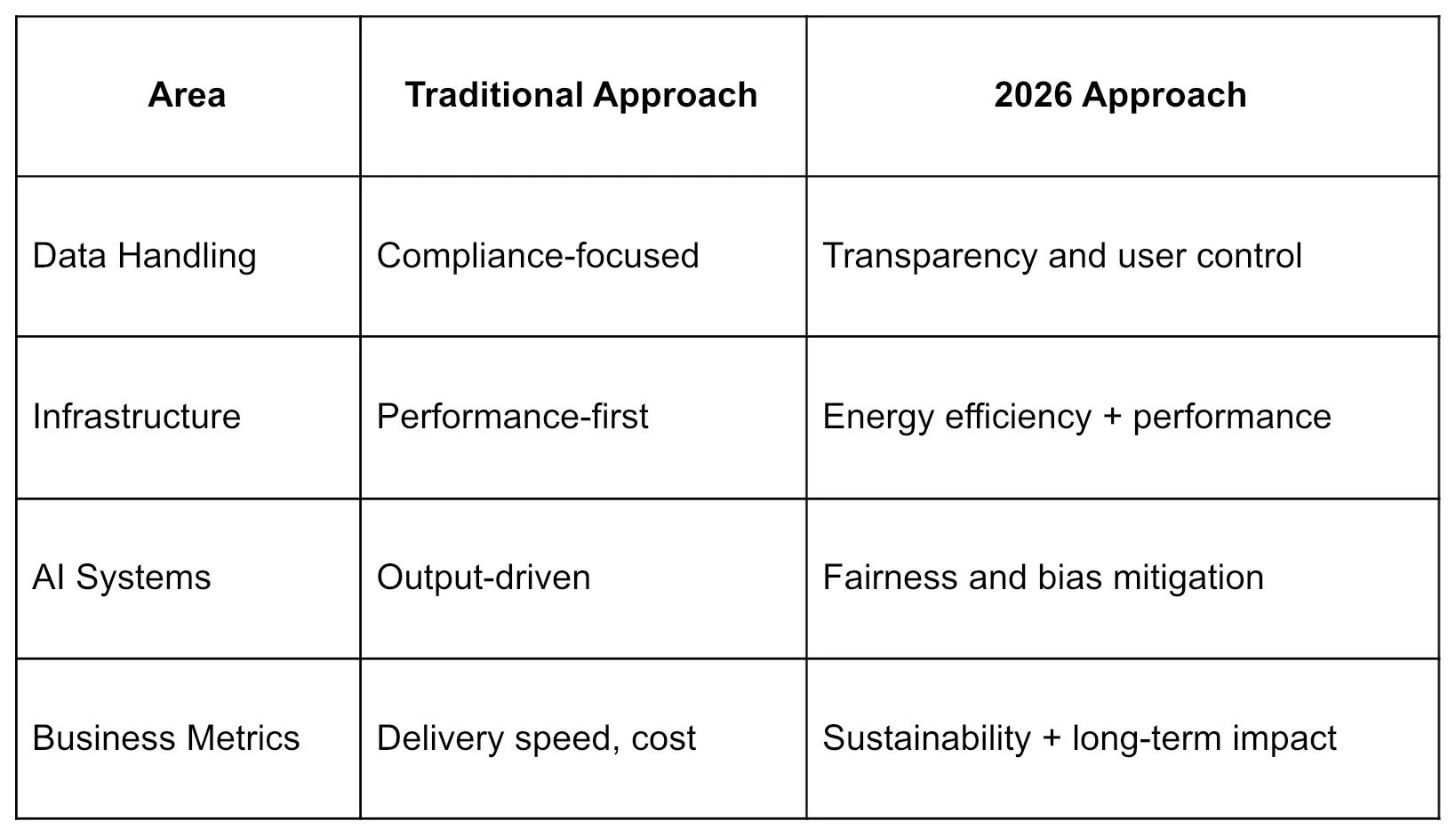
Businesses that respond to the growing demand for ethical development include ethics in their development process and use energy-efficient technologies.
Evolving Client Relationships
Models of client interaction are evolving to be more collaborative. Successful organisations practice open communication, challenge preconceptions, and provide strategic feedback during the entire product development process.
This allows for increased flexibility as the plans are updated via discussions throughout, rather than defined in advance. This method helps ensure that strategic objectives align with execution.
In doing so, it creates an engagement where success is achieved based on shared accountability rather than deliverable outcomes.
Outlook for 2026
Firms that catch the spotlight in 2026 are agile, technically-minded, and dedicated to their clients in the long run. They embrace technology wisely, build expertise, and favour cooperation.
The technology landscape in the United Kingdom keeps moving towards specialization and smaller scales. It indicates the trend of choosing accuracy and specialisation.
Nowadays, choosing a firm for software development requires comparing your vision, expertise, and style of cooperation. Successful cooperation is possible when technical skills go hand-in-hand with an understanding of the business environment.
Organisations leading this transformation influence not only what gets built, but how development itself is approached.




































Handmade in Ghana, our aprons offer a unique design with a front pocket perfect for kitchen utensils or your phone and tie neck straps each made from recycled material. The perfect gift for any cooking enthusiasts!
Our aprons have been named after markets in Ghana and London. This apron has been named after street food hub Maltby Street Market.