
Four essential works from The Face of Life: Modern Portraits at the Met
Nestled in the heart of New York, the Metropolitan Museum of Art’s current exhibition, The Face of Life: Modern Portraits, features 80 portraits that capture the rapid transformations and shifting identities of the 20th century. The exhibited artists include Marsden Hartley, Gino Severini, Otto Dix, Max Beckmann, Leonora Carrington, Elizabeth Catlett, Yasuo Kuniyoshi, René Magritte, Henri Matisse, Joan Miró, and others. The four paintings highlighted below were created between 1914 and 1949, and capture a range of personal, national and international perspectives on this pivotal era of global history.
Marsden Hartley, Portrait of a German Officer, 1914
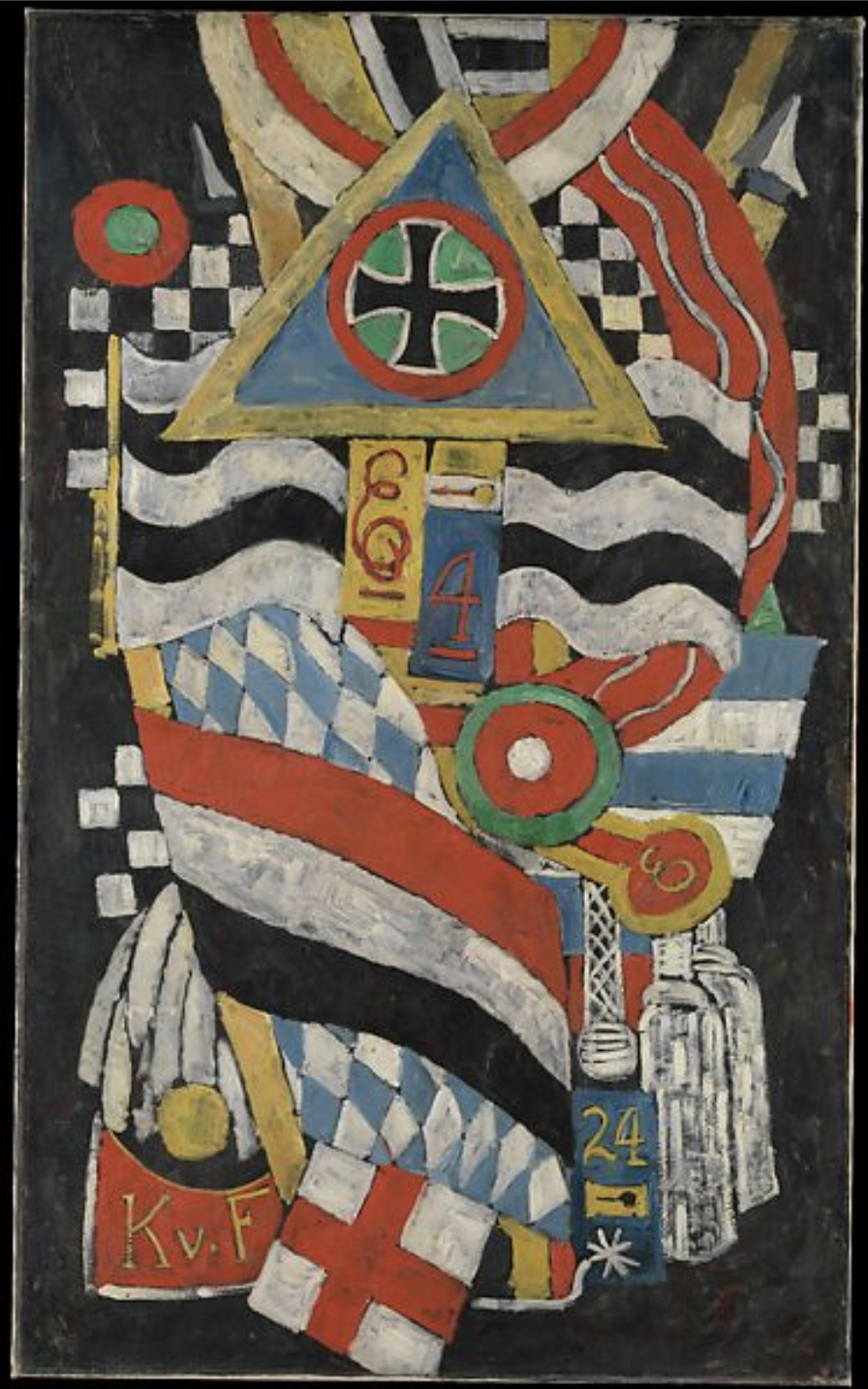
Portrait of a German Officer by Marsden Hartley (1914). Alfred Stieglitz Collection, 1949.
Marsden Hartley was an American modernist painter who lived in Berlin between 1913 and 1915, where he immersed himself in the vibrant avant-garde art scene, the pageantry of imperial Germany, and the city's uniquely liberal LGBTQ+ culture. While in Berlin, Hartley fell deeply in love with a German officer named Karl von Freyburg, who was later killed in combat. Freyburg’s traumatic death influenced Hartley’s famous “War Motifs” series. In this work, the early optimism of the war and the eagerness of young German soldiers is conveyed through the bright primary colours, while the black-and-white checkered background evokes the beginning of the war. Hartley’s unexpected choice to represent an officer through shapes and symbols rather than a traditional physical likeness allows the portrait to be a universal representation of who a German officer was in 1914.
Gino Severini, Dancer = Propeller = Sea, 1915
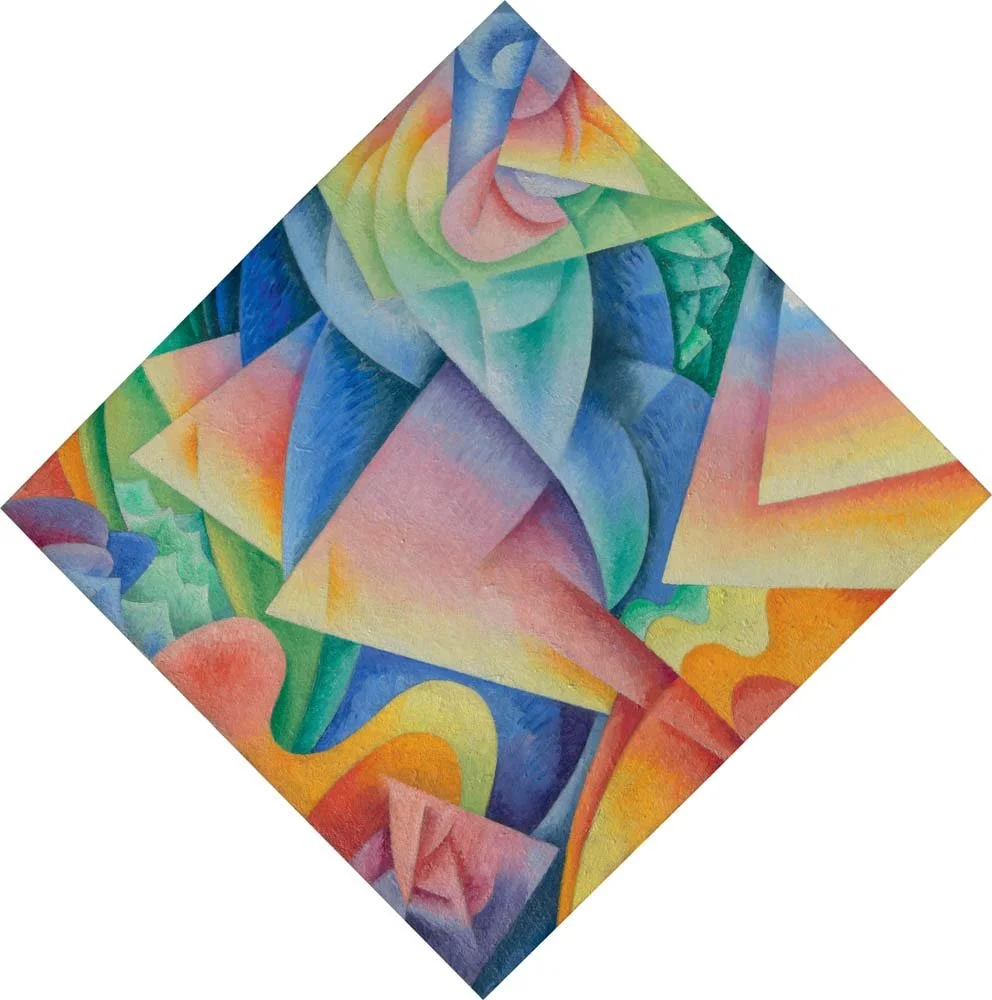
Dancer = Propeller = Sea by Gino Severini (1915). Alfred Stieglitz Collection, 1949.
Severini was part of the Italian artistic movement known as Futurism. Launched by Filippo Tommaso Marinetti in 1909, futurist artists glorified and upheld the modern world of machines, speed and technology, and rejected traditional art. Severini was particularly intrigued by motion. While the dancer, propeller, and sea of the artwork’s title might seem to have nothing in common, Severini connects them through their joint sense of movement. The dizzying shapes, angles and lines exemplify this, while the diamond-shaped frame and unusual hanging of the painting heightens its sense of disorientation.
The Businessman Max Roesberg, Dresden, Otto Dix, 1922
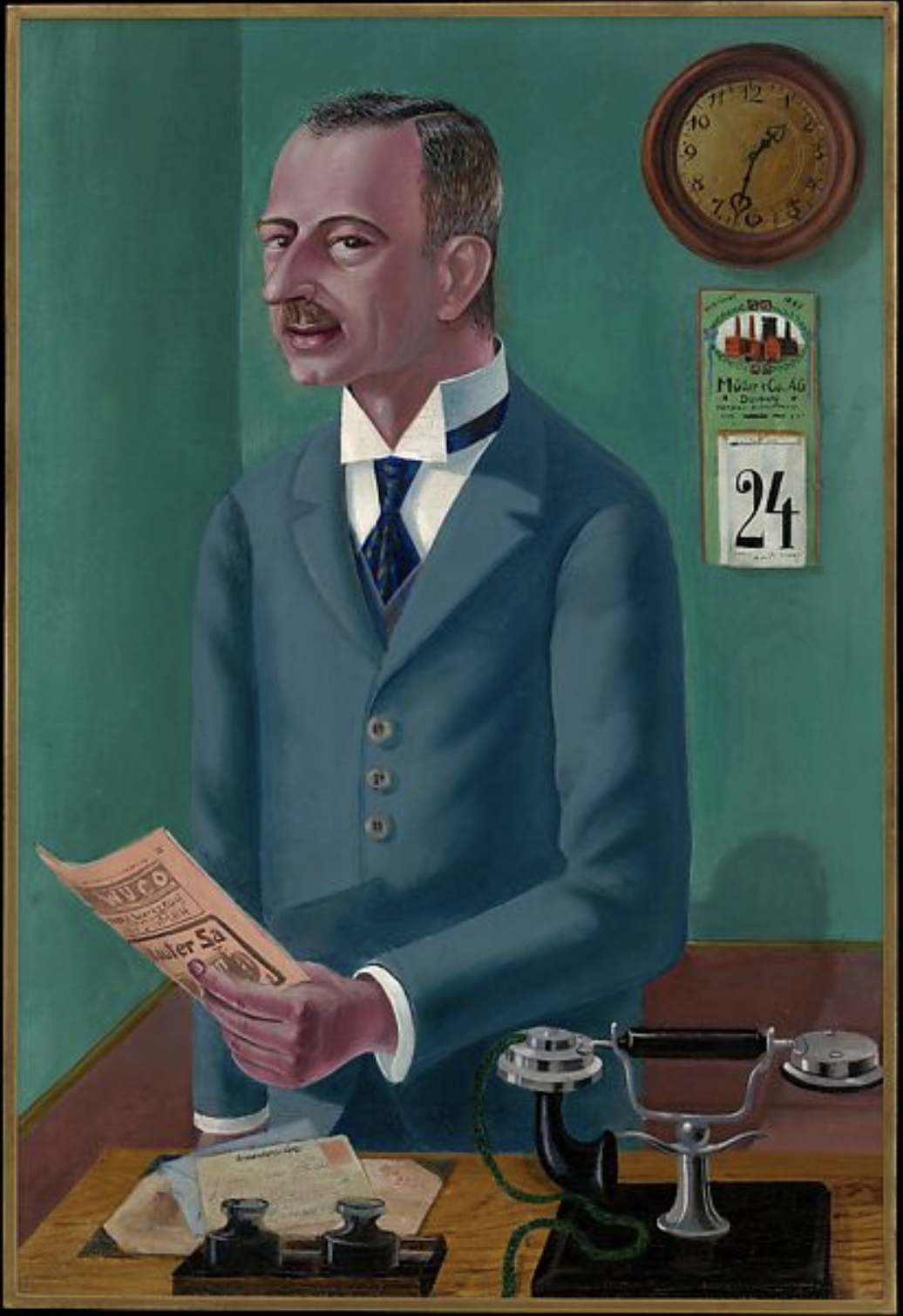
The Businessman Max Roesberg, Dresden by Otto Dix (1922). Purchase, Lila Acheson Wallace Gift, 1992.
Otto Dix was a leading figure in the Neue Sachlichkeit (New Objectivity) movement which prioritized harsh, realistic and satirical depictions of everyday life. Unlike Dix’s other harder-edged paintings, he represents his subject in a kinder light. Max Roesberg, once a prominent businessman, commissioned Dix to paint his portrait. Each element in the painting suggests professional success, from his crisp blue suit and emerald green backdrop to the items on his desk: telephone, newspaper, and ink, are emblematic of a productive work environment. Roesberg was a notable patron of young, avant-garde artists in Dresden, including Dix, which explains Dix’s flattering approach to his portrait. This flattery could be viewed cynically or as genuine admiration and appreciation from Dix, whose work often highlighted the struggles faced by WWI veterans such as himself in this period of the “roaring twenties”.
The Beginning, Max Beckmann, 1946-49
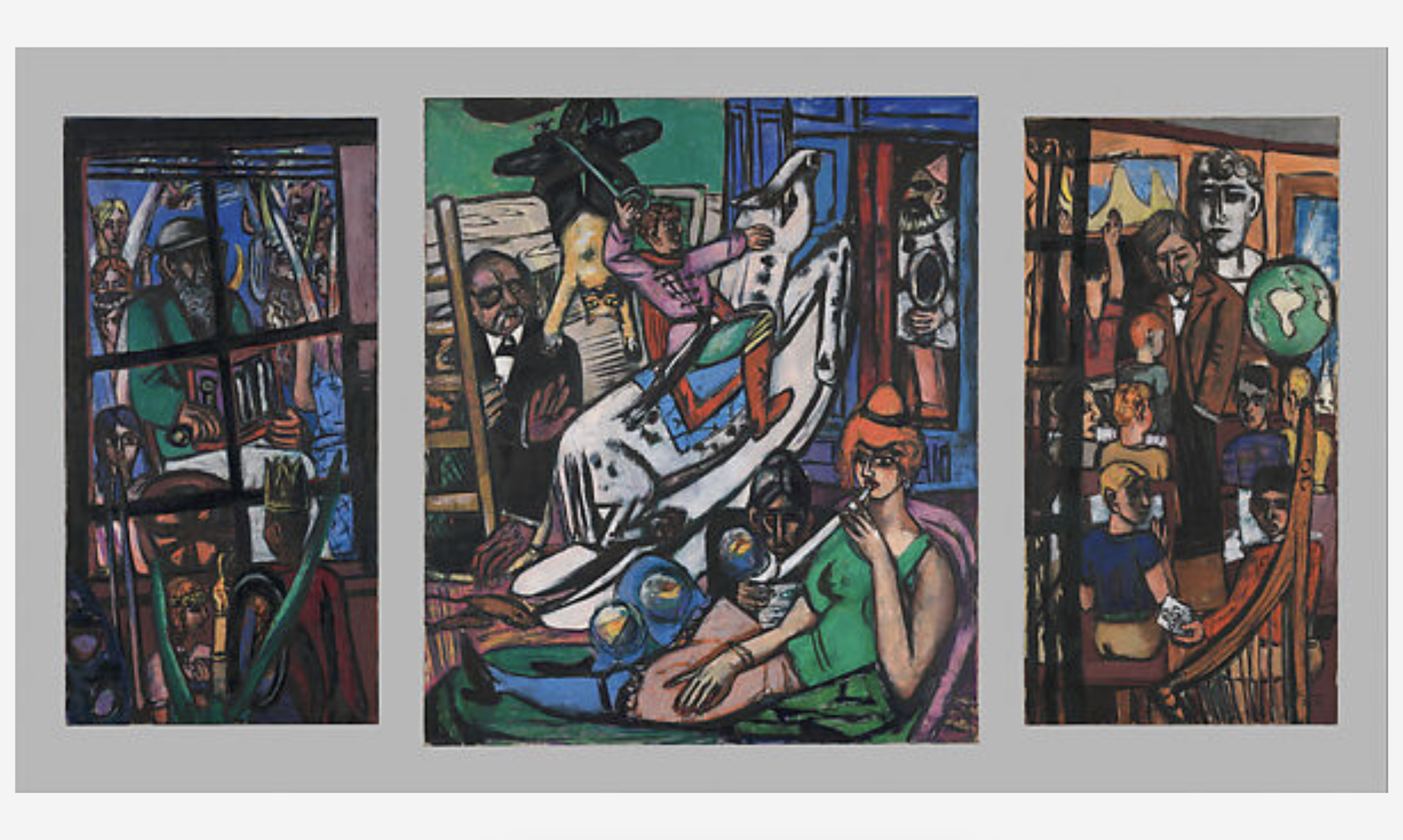
The Beginning by Max Beckmann (1946-1949). Bequest of Miss Adelaide Milton de Groot (1876–1967), 1967.
Painted in 1946-1949, Beckmann may have been processing the events of WWII through the lens of his early childhood. In the first panel, the artist depicts a scene with mythical creatures and a boy dressed as a king, perhaps representing the freedom of imagination children are born with. In the central panel, the presence of a rigid toy soldier and a dead cat in boots hanging from the ceiling emphasizes how a child’s environment, even in a playroom, can influence them. These two symbols show how militarism, nationalism, and blind aggression can be instilled in young boys from a very early age. Through his painting, Beckmann broadens the cliché question, “What in my childhood made me the way I am?”, to, “What in German society enabled Germans to have the capacity for evil?” Beckmann answers by mixing personal history with references to WWII history to show how children from an early age can be robbed of their innocence and indoctrinated with a nationalist agenda.
Throughout the entire exhibition, the paintings push the boundaries of what portraiture is. They demonstrate the expanding role portraits played in the 20th century, from capturing the influence and likeness of specific sitters to becoming a powerful form of social commentary. In the four highlighted paintings, the artists utilize the power of symbols and association to capture the mood and essence of their sitters, and they also testify to the diversity of artistic styles and movements that developed in this era. Portraits were able to capture emotions and moods that other mediums, like journalism or other forms of writing, often could not. In doing so, visitors to the exhibition are able to gain wider insight into history and society through the artists’ nuanced and often personal commentary.
The Face of Life: Modern Portraits is currently on view at The Met’s Fifth Avenue location. metmuseum.org
By Poppy Crowhurst












Handmade in Ghana, this beautiful green apron offers a unique design with a front pocket perfect for kitchen utensils or your phone and tie neck straps each made from recycled material. The perfect gift for any cooking enthusiasts!
Our aprons have been named after markets in Ghana. This apron has been named after Kintampo Market located in the Bono region of Ghana it is noted for their sales of yam tubers.