How cash house buyers can change the property selling process
Selling a property has traditionally followed a familiar route: choose an estate agent, prepare the home for viewings, wait for offers, negotiate, accept one, then hope the buyer’s mortgage, survey and chain all hold together. For many sellers, that process works perfectly well. But for others, especially those dealing with time pressure, uncertainty or a property that is difficult to sell, it can feel slow and unpredictable.
Cash house buyers have emerged as an alternative route. They are not a replacement for the open market in every situation, but they can change the selling experience quite significantly. The key is understanding how they work, where they add value, and what trade-offs sellers should weigh before making a decision.
Why the Traditional Selling Process Can Feel So Uncertain
A standard property sale involves several moving parts. Even when an offer is accepted quickly, the transaction can still take months to complete. Mortgage approvals, valuation reports, surveys, searches, legal checks and chain dependencies all introduce potential delays.
One of the biggest frustrations is that “sold subject to contract” does not mean sold. A buyer may reduce their offer after a survey, struggle to secure finance, or withdraw entirely. If they are part of a chain, their ability to proceed may depend on several other transactions completing at the same time.
For sellers with flexibility, this uncertainty may simply be inconvenient. But for others, it can become a real problem. Someone relocating for work, managing an inherited home, dealing with separation, or trying to avoid repossession may not have the luxury of waiting six months for the right buyer to appear.
What Makes Cash House Buyers Different?
Cash house buyers operate outside the usual mortgage-dependent model. Instead of relying on lender approval, they use available funds to purchase property directly. That one difference can remove several stages that often slow down or derail a sale.
Speed Comes from Simplicity
Because there is no mortgage application, the transaction can move much faster. In many cases, cash buyers can make an offer within days and complete in a matter of weeks, provided the legal work is straightforward. Some sellers may prefer a slightly longer timeline, and reputable buyers will usually work around that.
This speed does not come from cutting corners. The buyer still needs to carry out due diligence, and solicitors still need to complete legal checks. The difference is that fewer third parties are involved, and the buyer is not waiting for finance approval.
Fewer Chain-Related Risks
Property chains are one of the most common causes of failed or delayed sales. A cash buyer is typically not dependent on selling another home first, which can make the process more stable. For sellers who have already experienced a collapsed chain, this certainty can be particularly valuable.
This is where alternatives such as direct home buying services can become relevant. They offer a more streamlined route for homeowners who prioritise certainty and timescale over achieving the absolute highest open-market price. It is not about saying one method is universally better than the other; it is about matching the selling route to the seller’s circumstances.
When a Cash Buyer May Be a Practical Option
Cash house buyers tend to be most useful in situations where the standard market is either too slow, too uncertain, or unlikely to deliver the right result.
Common scenarios include:
A property needs significant repairs or modernisation
The seller is relocating and needs a firm completion date
An inherited property is becoming costly to maintain
A previous sale has fallen through late in the process
The owner is facing financial pressure or repossession risk
The property has unusual features that limit mortgageability
The seller wants to avoid repeated viewings and negotiations
A home in poor condition, for example, may struggle to attract buyers who need a mortgage. Lenders can be cautious if a property has structural issues, damp, missing kitchens or bathrooms, or other serious defects. A cash buyer may be more willing to take on the risk and cost of refurbishment.
Likewise, probate properties often present practical challenges. Family members may live far away, the house may be empty, and ongoing bills can quickly add up. A faster sale can help close the estate and reduce administrative pressure.
The Trade-Off: Price Versus Certainty
The main compromise with a cash house buyer is usually price. In most cases, sellers should expect an offer below full open-market value. That discount reflects the buyer’s speed, certainty, risk and likely onward costs, such as repairs, legal fees, finance costs or resale risk.
This is where sellers need to be honest about priorities. If time is not an issue and the property is likely to appeal to a broad range of buyers, listing with an estate agent may achieve a higher price. If certainty, convenience and speed matter more, a cash sale may be worth considering.
It can help to think in terms of net outcome rather than headline price. An open-market sale may bring a higher offer, but it can also involve months of mortgage payments, council tax, insurance, utilities, maintenance, estate agency fees, price renegotiations and the risk of collapse. In some cases, the gap between routes may be smaller than it first appears.
How to Assess a Cash House Buyer Properly
Not all cash buyers operate in the same way, so due diligence matters. A credible buyer should be transparent about how they value properties, how quickly they can proceed, and whether there are any fees or conditions attached.
Look for Proof and Clarity
Sellers should ask for proof of funds early in the conversation. This helps confirm the buyer can proceed without relying on external finance. It is also sensible to ask who will be handling the legal work, whether the offer is fixed, and under what circumstances it might change.
A professional buyer should not pressure you into making an immediate decision. They should give you space to review the offer, compare alternatives and seek legal advice. If the process feels rushed or unclear, that is a warning sign.
Understand the Valuation
A lower offer is not automatically unfair, but it should be explainable. The buyer should be able to outline the factors behind their figure, such as local comparable sales, property condition, refurbishment costs and resale expectations.
Sellers can protect themselves by getting an independent valuation or speaking to local estate agents before accepting any offer. Even if you ultimately choose a cash buyer, understanding the open-market value gives useful context.
How Cash Buyers Influence the Wider Market
The growth of cash buying reflects a broader shift in how people think about property transactions. Sellers increasingly want options. The traditional agent-led model remains important, but it does not suit every situation.
In a market shaped by higher borrowing costs, cautious lenders and affordability pressures, speed and certainty have become more valuable. Buyers with mortgage finance may take longer to proceed, and sellers are more aware of the risks attached to chains. Cash buyers fill a gap by offering liquidity in circumstances where the open market can feel slow or fragile.
That does not mean every homeowner should choose this route. Instead, it means sellers have more tools available. A well-informed seller can compare the open market, auctions, part-exchange options and direct cash sales, then choose the route that best fits their timeline and financial needs.
A More Flexible Way to Sell
Cash house buyers change the property selling process by reducing uncertainty. They simplify the transaction, remove mortgage-related delays, and give sellers more control over completion timescales. For some, that can be the difference between a stressful, drawn-out sale and a manageable transition.
The decision should still be made carefully. Price matters, and sellers should compare options before committing. But when speed, certainty and convenience are priorities, a cash buyer can offer a practical alternative to the traditional route.
Ultimately, the best selling method is not always the one that promises the highest figure on paper. It is the one that supports your real-world circumstances, your timescale and your tolerance for risk.
This week (7–13 September) London serves up everything from the Proms' star-studded finale and the Bayeux Tapestry's historic homecoming to underground garage nights, a Trafalgar Square unveiling, book festival talks, and a new Soho bao counter…
In Provence, there are wine estates, hotels and places you visit simply for the landscape. Château La Coste manages to be all three, and considerably more. Set among vineyards and woodland just outside Aix-en-Provence…
Following a quieter August, London’s autumn art season gets underway in September with an exciting and inventive mix of exhibitions, from major surveys and new commissions to ambitious presentations by some of the most influential artists working today…
The season gets under way in September with the London Design Festival and Totally Thames, before Frieze week brings galleries, collectors and artists to the capital in October. Alongside these major events, venues including the National Theatre, the Old Vic and the Design Museum will stage…
Here are the literary festivals in London worth putting in your diary for autumn 2026, including dates, locations, ticket prices and where to book…
Charlie Dilworth is the Head Chef at Silva, where he brings together seasonal, ingredient-led cooking with Mediterranean influences, while adding his own distinctive flair. Originally from Kent, Charlie’s route into professional kitchens was somewhat unexpected…
London is having a particularly good year for photography. Across the city, exhibitions are bringing together intimate portraits, vivid street photography, documentary images and bold new approaches to the medium…
London’s art scene comes back to life in September, with galleries and museums reopening their doors to a packed programme of exhibitions. The months ahead bring major shows exploring everything from the cultural energy of the 1990s to questions of identity, memory, politics and justice, alongside ambitious new commissions…
August is a great time to explore London’s dining scene, with new openings, seasonal menus and summer terraces offering plenty of reasons to book a table. From Georgian cuisine and Japanese handrolls to rooftop dining, Mediterranean-inspired barbecue and some of the city’s best seasonal British cooking, we’ve rounded up eight restaurants worth visiting this month…
Fozia Ismail is a British Somali artist, founder of Arawelo Eats, and co-founder of dhaqan collective. Working across food, sound, textiles and found objects, her practice explores migration, memory, climate, identity and diasporic knowledge…
Duchy is a Shoreditch restaurant which opened last year on the former site of Michelin-starred Leroy. The restaurant was founded by Alex Grant and chef Simon Shand who both previously worked at Leroy before opening the impossibly charming Duchy together…
Morchella (meaning ‘morel’ in Spanish) is a modern Mediterranean restaurant located just off Exmouth Market, surrounded by an abundance of dining options and just a stone’s throw from Sadler’s Wells. It’s a buzzing area loved by locals and well worth travelling to, yet surprisingly little known by tourists…
Heading to Europe this summer? Make time for its museums, too. Beyond the beaches and city breaks, there’s plenty to discover, from blockbuster retrospectives and ambitious new commissions to acclaimed touring exhibitions…
Some exhibitions are admired. Others are experienced. Beyond Bedlam belongs firmly to the latter. Richard Dadd’s story is one of the most tragic and compelling in British art. A gifted young painter, he travelled through Greece, Turkey, Syria and Egypt…
Nestled in the heart of New York, the Metropolitan Museum of Art’s current exhibition, The Face of Life: Modern Portraits, features 80 portraits that capture the rapid transformations and shifting identities of the 20th century. The exhibited artists include Marsden Hartley, Gino Severini, Otto Dix, Max Beckmann, Leonora Carrington, Elizabeth Catlett, Yasuo Kuniyoshi, René Magritte, Henri Matisse, Joan Miró, and others…
Pierre Huyghe at the Fondation Beyeler, Switzerland, is on view until 13 September 2026…
Hospital Rooms is celebrating its 10th anniversary by launching a special public sale of limited-edition contemporary art posters, with funds supporting the charity’s work transforming NHS mental health hospitals across the UK. The 10 Posters for 10 Years campaign features artwork created by some of the world’s leading contemporary artists, including Jeremy Deller, Antony Gormley, Beatriz Milhazes, Yinka Shonibare, Anish Kapoor, and Grayson Perry…
Jemma Appleby has been announced as the winner of the prestigious £35,000 Charles Wollaston Award at the Royal Academy of Arts’ Summer Exhibition 2026…
Gallery view of the Summer Exhibition at Royal Academy of Arts.Photo: © David Parry/ Royal Academy of Arts
FLO London spoke with Chris McCabe, Head of the National Poetry Library and the programmer behind many of the festival's events, to hear his thoughts on the evolution of poetry, platforming young poets, and celebrating the life and legacy of poet Benjamin Zephaniah.
With new openings and seasonal menus across the capital, July is the perfect time to explore London’s restaurant scene. From Italian favourites and Lebanese cooking to Japanese dining and neighbourhood wine bars, here are seven restaurants we think should be on your list this month…
Newly opened in Notting Hill, KINZ is quickly gaining attention for its warm Lebanese hospitality, striking setting in a restored former bank building and, well-executed cooking…
The neighbourhood of Queen’s Park gained a gem of a restaurant when Italian restaurant Casa Felicia opened in October 2025 on the bustling Salusbury Road, the main artery of this delightful neighbourhood.
Lucy Ash is a British-Canadian artist whose work is concerned with creating visibility and shifting perception of the LGBTIQ+ community. Lucy’s practice is to develop a series of paintings at a time, enabling an in-depth exploration around specific themes…
London enters a peak season of cultural activity in July , with festivals, live music, sport, exhibitions and outdoor events taking place across the capital…
A major exhibition of British sculptor Lynn Chadwick has opened at Houghton Hall in Norfolk. Presenting over 30 works, this is the largest show of the artist in over two decades. It has been curated by Pangolin London and we speak with Gallery Director Polly Bielecka to learn more…
The Courtauld Gallery, opens the first exhibition devoted to Barbara Hepworth’s lifelong fascination with colour. Alexandra reviews the landmark show…
James Turrell’s largest Skyspace ever created within a museum has opened at ARoS Aarhus Art Museum in Aarhus, Denmark…
Every summer, Shakespeare in the Squares embarks on a tour of London’s garden squares to bring one of the Bard’s iconic plays to life. Now in its tenth year, its 2026 production of ‘Love’s Labour’s Lost’ is a joyful celebration of music, storytelling and community…
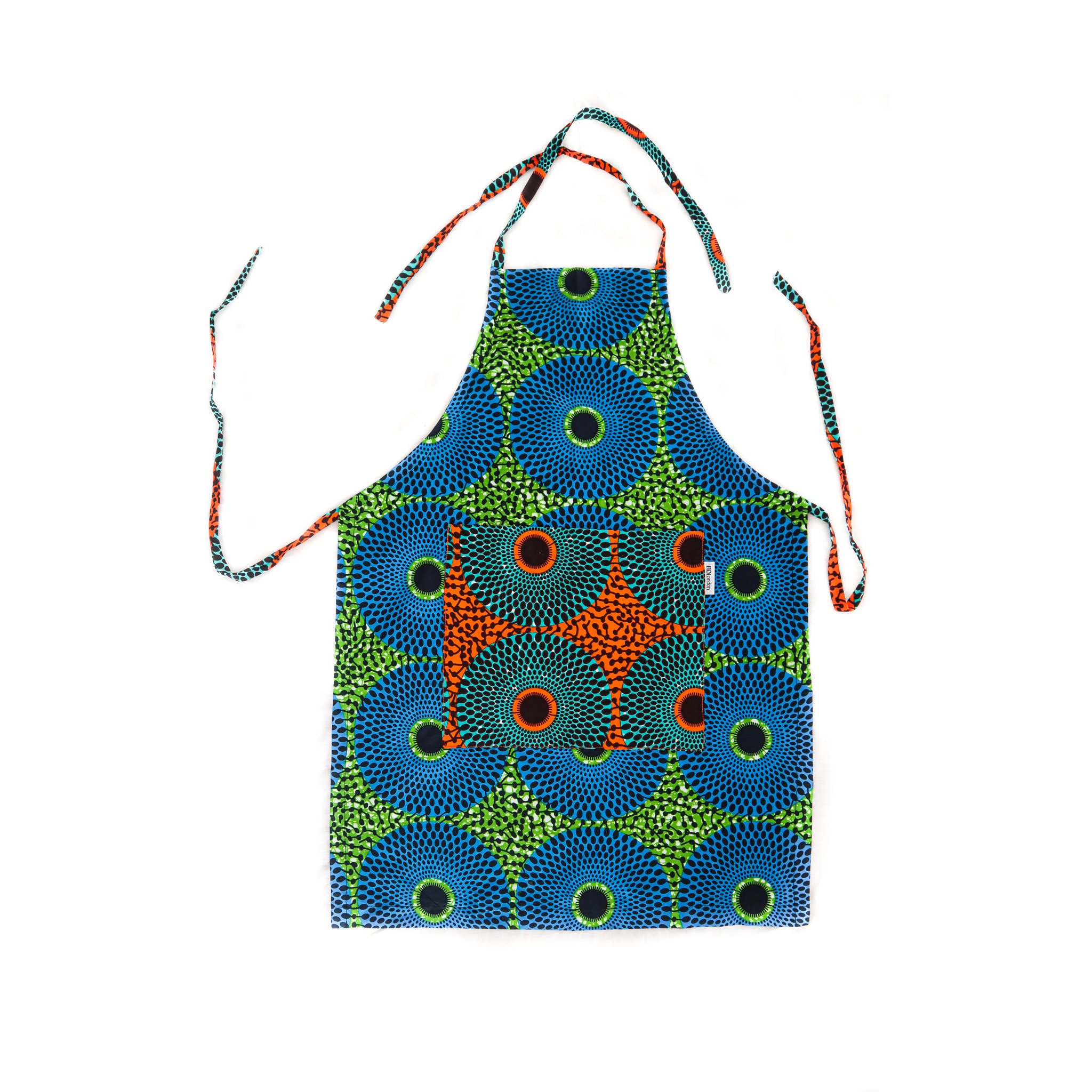
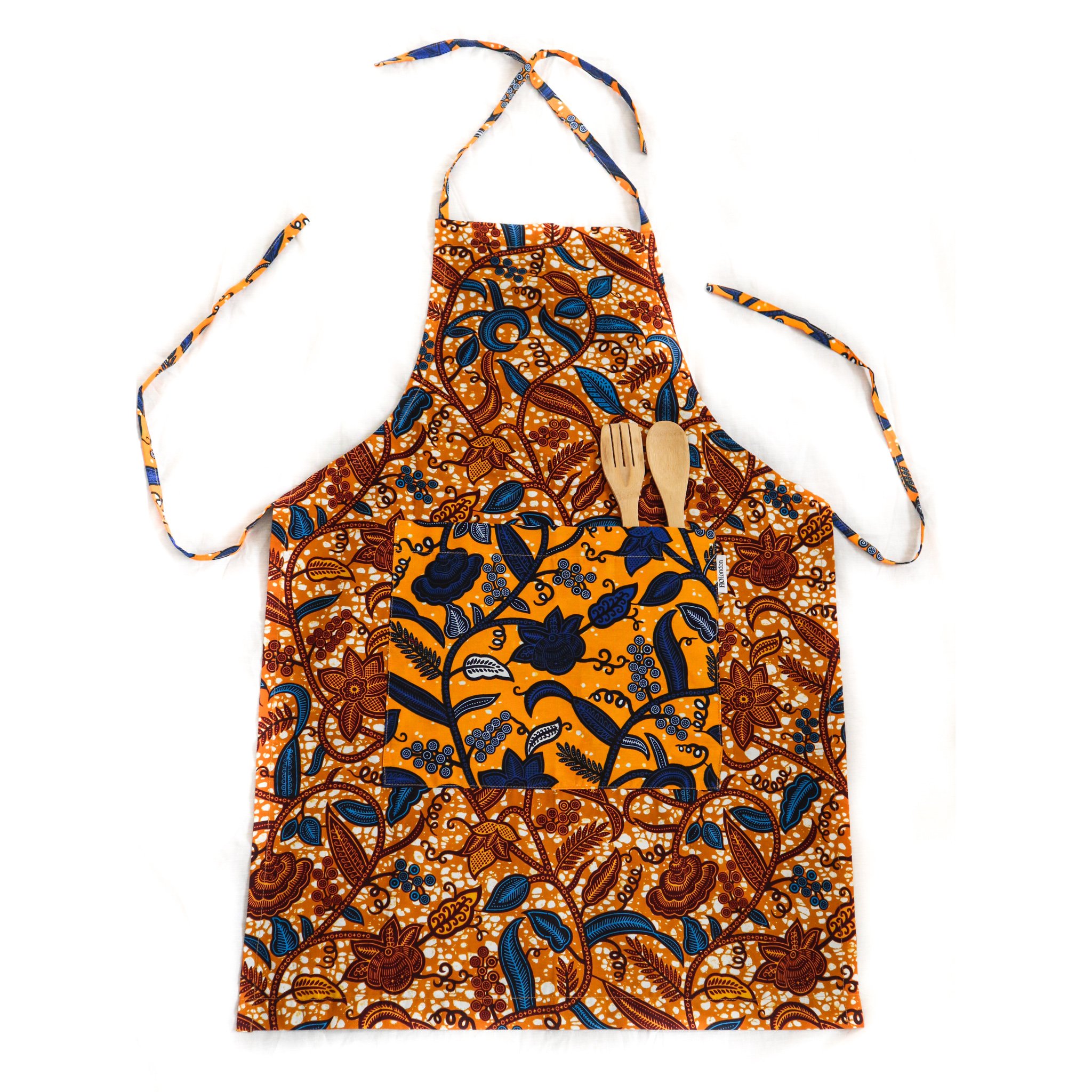
Handmade in Ghana, our aprons offer a unique design with a front pocket perfect for kitchen utensils or your phone and tie neck straps each made from recycled material. They make the perfect gift for any cooking enthusiasts.
Our aprons have been named after markets in Ghana. This apron has been named after Kantamanto market, Ghana's biggest second-hand clothes market.
Handmade in Ghana, our aprons offer a unique design with a front pocket perfect for kitchen utensils or your phone and tie neck straps each made from recycled material. The perfect gift for any cooking enthusiasts!
ur aprons have been named after markets in Ghana. This apron has been named after Kaneshie market, a popular market in Accra first built in the1970s.
Handmade in Ghana, our aprons offer a unique design with a front pocket perfect for kitchen utensils or your phone and tie neck straps each made from recycled material. The perfect gift for any cooking enthusiasts!
Our aprons have been named after markets in Ghana and London. This apron has been named after London’s famous Broadway Market.
Handmade in Ghana, our aprons offer a unique design with a front pocket perfect for kitchen utensils or your phone and tie neck straps each made from recycled material. The perfect gift for any cooking enthusiasts!
Our aprons have been named after markets in Ghana and London. This apron has been named after the iconic Borough Market. Located London Bridge. A hub for food lovers!
Handmade in Ghana, our aprons offer a unique design with a front pocket perfect for kitchen utensils or your phone and tie neck straps each made from recycled material. The perfect gift for any cooking enthusiasts!
Our aprons have been named after markets in Ghana. This apron has been named after Asesewa Market. Located in the Eastern region of Ghana, it was once considered one of the largest markets in Ghana.
Handmade in Ghana, this beautiful green apron offers a unique design with a front pocket perfect for kitchen utensils or your phone and tie neck straps each made from recycled material. The perfect gift for any cooking enthusiasts!
Our aprons have been named after markets in Ghana. This apron has been named after Kintampo Market located in the Bono region of Ghana it is noted for their sales of yam tubers.
Handmade in Ghana, our aprons offer a unique design with a front pocket perfect for kitchen utensils or your phone and tie neck straps each made from recycled material. The perfect gift for any cooking enthusiasts!
Our aprons have been named after markets in Ghana. This apron has been named after Mankessim Market. A market located in the Central region of Ghana. It is considered as one of the biggest markets in Ghana.
Handmade in Ghana, our aprons offer a unique design with a front pocket perfect for kitchen utensils or your phone and tie neck straps each made from recycled material. The perfect gift for any cooking enthusiasts!
Our aprons have been named after markets in Ghana. This apron has been named after Koforidua Market. A market located in the Eastern region of Ghana, it is known to be a beads and craft market.
Handmade in Ghana, our aprons offer a unique design with a front pocket perfect for kitchen utensils or your phone and tie neck straps each made from recycled material. The perfect gift for any cooking enthusiasts!
Our aprons have been named after markets in Ghana. This apron has been named after Adabraka Market, the third market established in the Greater- Accra Region.
Our bright Makola apron adds a touch of elegance to your kitchen. Handmade in Ghana from Ahwenepa Nkasa fabric, with a necktie made from recycled material, the body and bib pocket is made from two different yet equally vibrant Ahwenepa Nkasa fabrics. It is also ideal for use in a workshop, studio or gardening.
Handmade in Ghana, our aprons offer a unique design with a front pocket perfect for kitchen utensils or your phone and tie neck straps each made from recycled material. The perfect gift for any cooking enthusiasts!
Our aprons have been named after markets in Ghana. This apron has been named after Kejetia market, also known as Kumasi Central market, is considered the largest open-air market in West Africa.
Handmade in Ghana, our aprons offer a unique design with a front pocket perfect for kitchen utensils or your phone and tie neck straps each made from recycled material. The perfect gift for any cooking enthusiasts!
Our aprons have been named after markets in Ghana. This apron has been named after Madina market, an all purpose market located in the Accra region.
Handmade in Ghana, our aprons offer a unique design with a front pocket perfect for kitchen utensils or your phone and tie neck straps each made from recycled material. The perfect gift for any cooking enthusiasts!
Our aprons have been named after markets in Ghana. This limited edition apron has been named after Agbogbloshie, one of the largest food markets in Accra.
Handmade in Ghana, our aprons offer a unique design with a front pocket perfect for kitchen utensils or your phone and tie neck straps each made from recycled material. The perfect gift for any cooking enthusiasts!
Our aprons have been named after markets in Ghana. This apron has been named after Asafo market located in the Kumasi region. The market is widely known for making traditions slippers called Ahenema.
Handmade in Ghana, our aprons offer a unique design with a front pocket perfect for kitchen utensils or your phone and tie neck straps each made from recycled material. The perfect gift for any cooking enthusiasts!
Our aprons have been named after markets in Ghana. This apron has been named after Bantama market located in the Kumasi region. The market is known to be a place people can get their affordable plantain fix early in the morning.
Handmade in Ghana, our aprons offer a unique design with a front pocket perfect for kitchen utensils or your phone and tie neck straps each made from recycled material. The perfect gift for any cooking enthusiasts!
Our aprons have been named after markets in Ghana. This apron has been named after Kintampo market, a popular market in the Brong-Ahafo region.
Handmade in Ghana, our aprons offer a unique design with a front pocket perfect for kitchen utensils or your phone and tie neck straps each made from recycled material. The perfect gift for any cooking enthusiasts!
Our aprons have been named after markets in Ghana. This apron has been named after Tafo market located in the Kumasi region. This all purpose market sells items from ingredients for foods to electrical gadgets.
Handmade in Ghana, our aprons offer a unique design with a front pocket perfect for kitchen utensils or your phone and tie neck straps each made from recycled material. The perfect gift for any cooking enthusiasts!
Our aprons have been named after markets in Ghana and London. This apron has been named after street food hub Maltby Street Market.