
In conversation with Lucy Ash
“I don’t paint historical figures; I paint people from history who have come alive for me through extensive research and living with the art they left behind.”
- Lucy Ash
Lucy Ash. Photo credit Justin Piperger
Lucy Ash is a British-Canadian artist whose work is concerned with creating visibility and shifting perception of the LGBTIQ+ community. Lucy’s practice is to develop a series of paintings at a time, enabling an in-depth exploration around specific themes. Her paintings have been the subject of numerous solo exhibitions in the UK, in New York and Amsterdam. Her painting Iris 02 was acquired by Southampton City Art Gallery in 2018 for its permanent collection.
Your exhibition brings together historical figures, personal memory, and political history. How did you decide which lives to include, and what shaped those decisions?
When I was preparing for Invisible Portraits initially, at Southampton City Art Gallery, I had a long list of people I wanted to paint. Through my research, I discovered that it was more about marrying the best work in the Southampton collection with artists I admire whose stories go to the heart of the exhibition’s themes.
Here at Canada Gallery, I chose to add two Canadian poets, Elsa Gidlow and John McCrae. Gidlow was a profound freethinker who dared to be an outsider. Her poetry expresses both same sex desire and love’s universality. McCrae served in WWI, and his most famous poem ‘In Flanders Fields’, speaks to the futility of war through his own sense of profound personal loss.

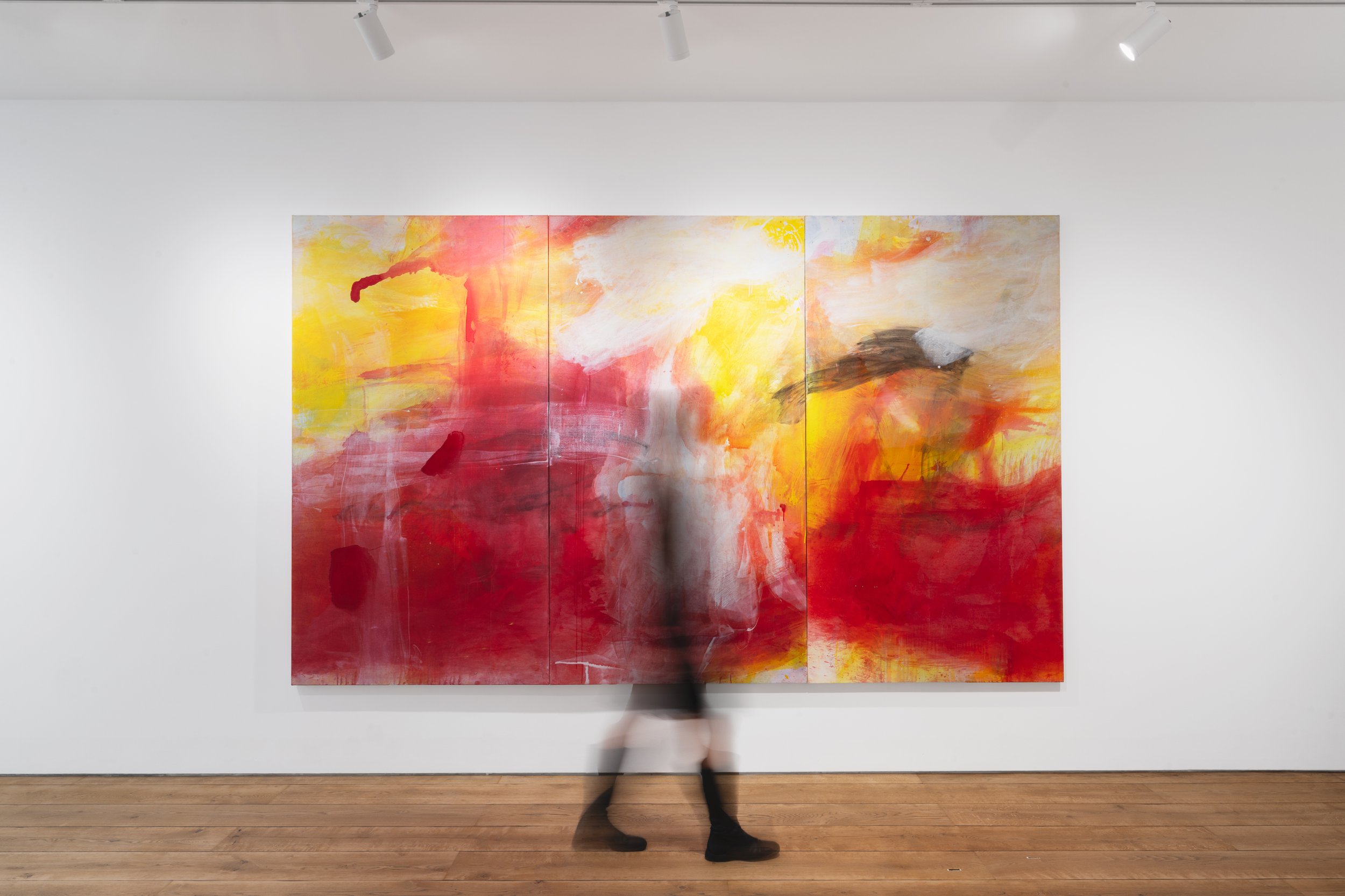
Lucy Ash, Portraits of Inspiration, Panel 01 (2020-22). Photo Joe Low Photography
Figures such as Wilfred Owen, Derek Jarman and Simeon Solomon appear alongside works connected to Ian Baynham. How do you balance historical portraiture with personal testimony without one overshadowing the other?
I don’t paint historical figures; I paint people from history who have come alive for me through extensive research and living with the art they left behind. In the Canada Gallery hang, neither the historical nor the personal overshadows the other. Death overshadows them all. In addition, the public persona and the private person are very much in conversation. A common thread – the meaningless sacrifice of human life – connects all four of these men whose lives were destroyed by homophobia.
Many of the individuals you depict lived under pressure to conceal their identities. When working with subjects whose lives were partially hidden or coded, how do you negotiate interpretation versus historical accuracy?
I’m obsessed with truly understanding the person I’m painting and the times in which they lived. It’s a process of connecting the dots between the inner being and the historical context. Once I have embodied their lived experience, I am free to interpret and respond to what I’ve come to understand about what has shaped their character.
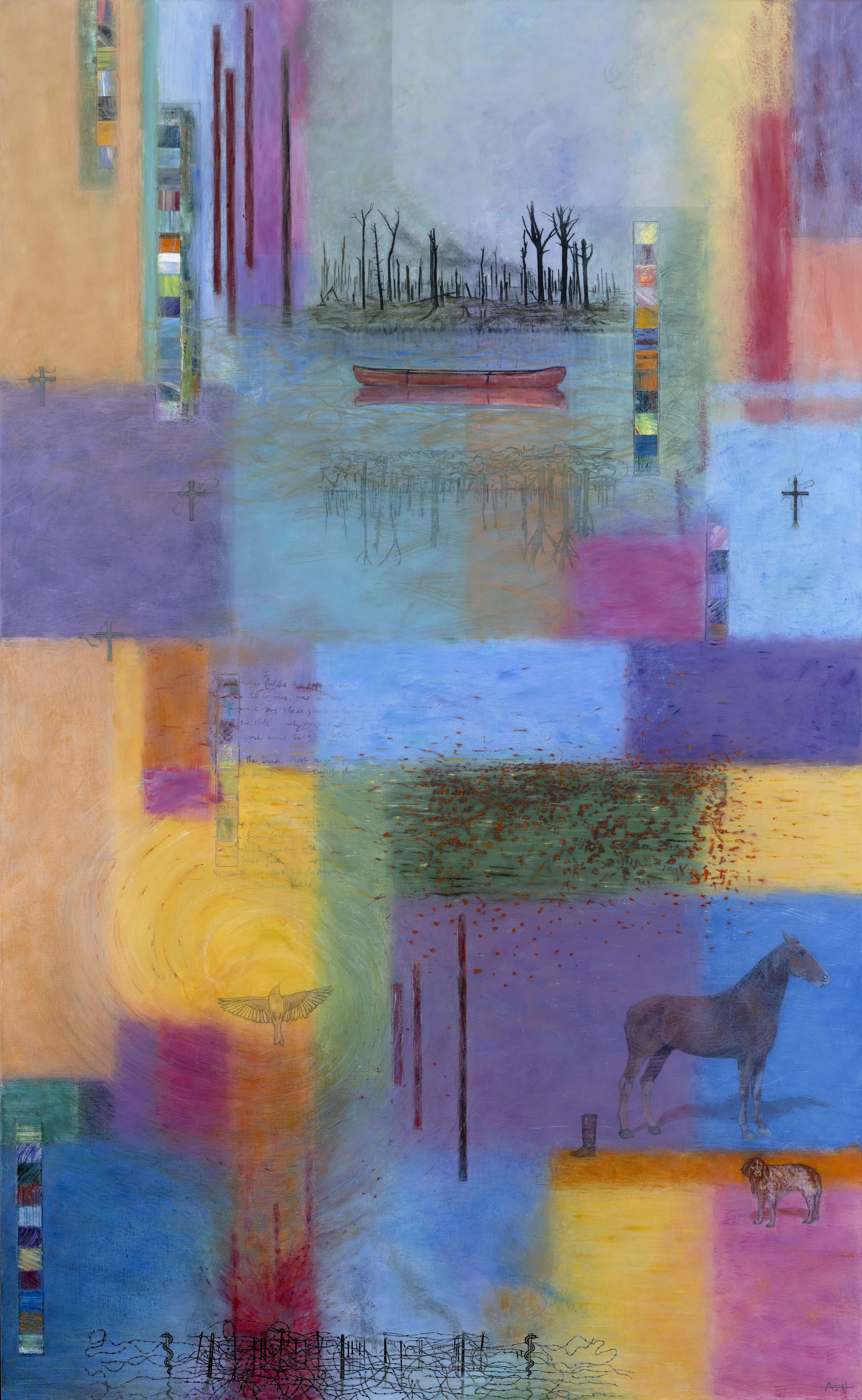
Lucy Ash, The Consciousness of Death, 2026
The exhibition uses painting, film and sound. What drives your decision to give different stories different forms, and how do you determine which medium best carries a particular subject?
Most of what I do is oil or mixed media on linen. There are times when I cannot capture what I want to say in this way. Because Jen [Baynham] was living in my home at the time of her brother’s death, she entrusted me to reveal her story as filmed testimony.
To have an actor reading the WWI poetry of Sassoon and Owen offers people the chance to hear and feel for themselves the rhythms and words that informed my portraits of these two British poets.
Having the contributors in Turn Up the Volume tell their stories in their own words adds immediacy to the themes I’m exploring. I chose these eight people because they inspire me and my hope is that they will be a source of strength to others. In this way Turn Up the Volume links directly to the two panels of the collaborative community project, Portraits of Inspirations, on loan from Southampton City Art Gallery.
Given the exhibition’s location in Trafalgar Square, close to where Ian Baynham was attacked, how does the site itself shape the work, and do you see the gallery space as part of the narrative rather than a neutral backdrop?
Absolutely Canada Gallery is part of the narrative. It is featured in one of the photographs I took to piece together what happened on the night of 25th September 2009. What I notice when I look again at that photograph is the direct line connecting the tree where Ian lost consciousness and Canada Gallery on the opposite side of Trafalgar Square.
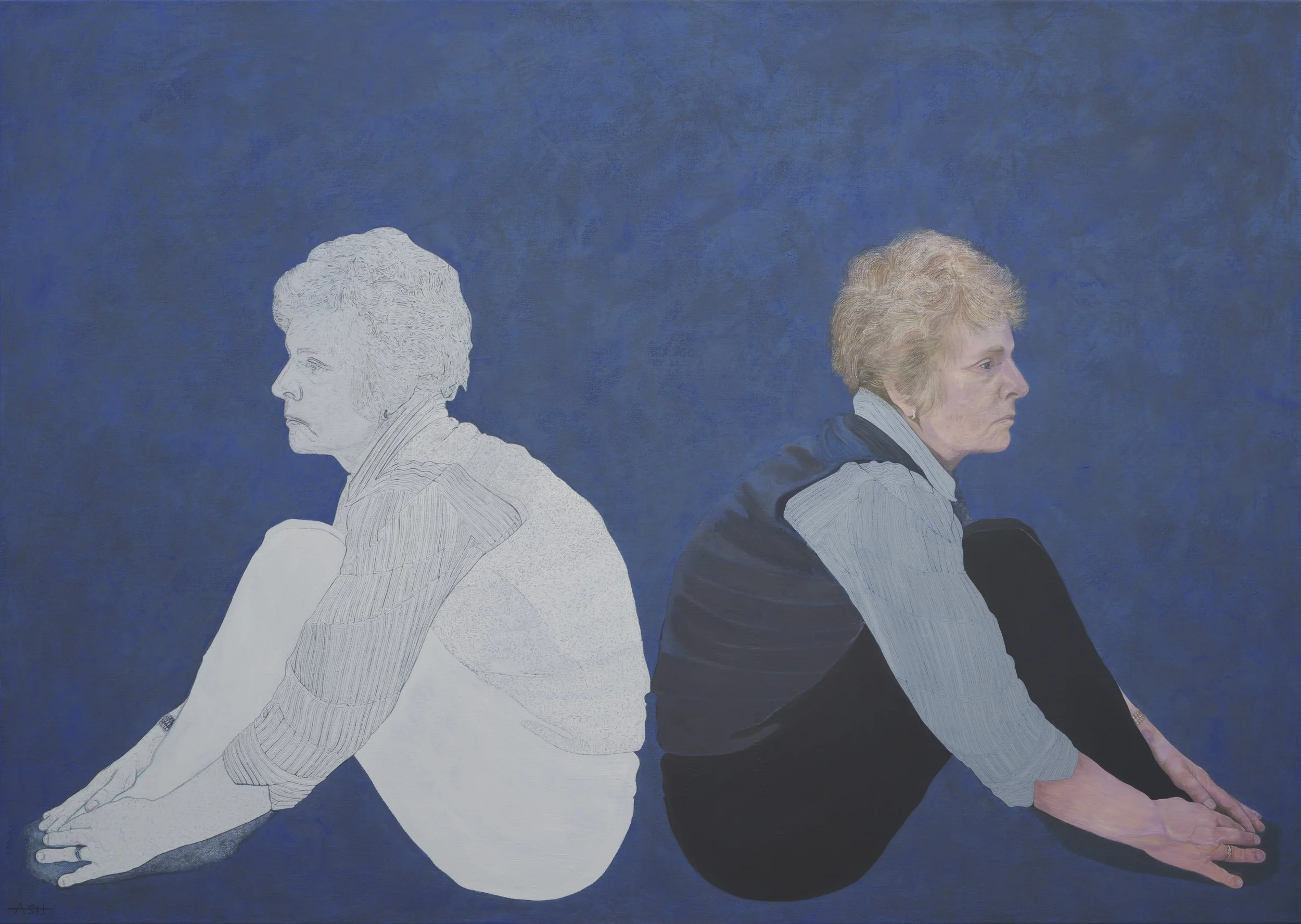
Lucy Ash, 13.10.2009 (2022)
The [Quick] #FLODown:
Best piece of life advice you’ve received, or would now give yourself?
Don’t chase the money. Be your authentic self, find what matters to you, and focus on that.
Is there a book, text, or piece of writing you return to for inspiration in your practice?
Before I started painting, I wanted to be a poet, and the discipline of poetry, choosing and distilling, scraping away and discarding, relates directly to my practice as a painter. My choice of poet depends on what I’m thinking and feeling. At this time of year, the Liverpool poet Brian Patten’s final questions in ‘The Minister for Exams’ come to mind: ‘How large is a child’s imagination? How shallow is the soul of the Minister for Exams.’
What is one thing you can’t live or work without in the studio?
Good oil paint.
Which artist, living or dead, would you most like to sit down and have a conversation with, and why?
More and more, it’s Monet. I’d be curious to hear his response to my sense that his work foreshadows abstraction. His work is about themes and variations, going back to what’s right there in front of him and looking at it again. In my own work, I’m moving away from linear narratives of time towards the cyclical, as in nature. I’d love to walk round the garden at Giverny with Monet across all four seasons and discuss his practice in relation to themes of social and climate justice.
In your view, what should the art world be doing more of right now, and what should it be doing less of?
Less celebrity, more integrity.
Invisible Portraits by Lucy Ash runs 4 June to 3 October at Canada Gallery, SW1Y 5BJ. Free entry.
Website: culturecanada.co.uk;lucyash.com
Instagram: @LucyAsh_ @CanadaInTheUK
LinkedIn: hccanuk












Stand out this summer with this gorgeous Nsubra beach bag! Handmade in Ghana, this large tote bag is the perfect size for your sun cream, beach towel, purse and your latest book.