
Review: Pierre Huyghe at the Fondation Beyeler, Switzerland
Sweltering heat hits me, the sun beats down on the top of my head, my hair feels like a wooly hat I would like to rip off - I just stepped off the air-conditioned tram in Basel, Switzerland, walking towards the pond in front of Fondation Beyeler.

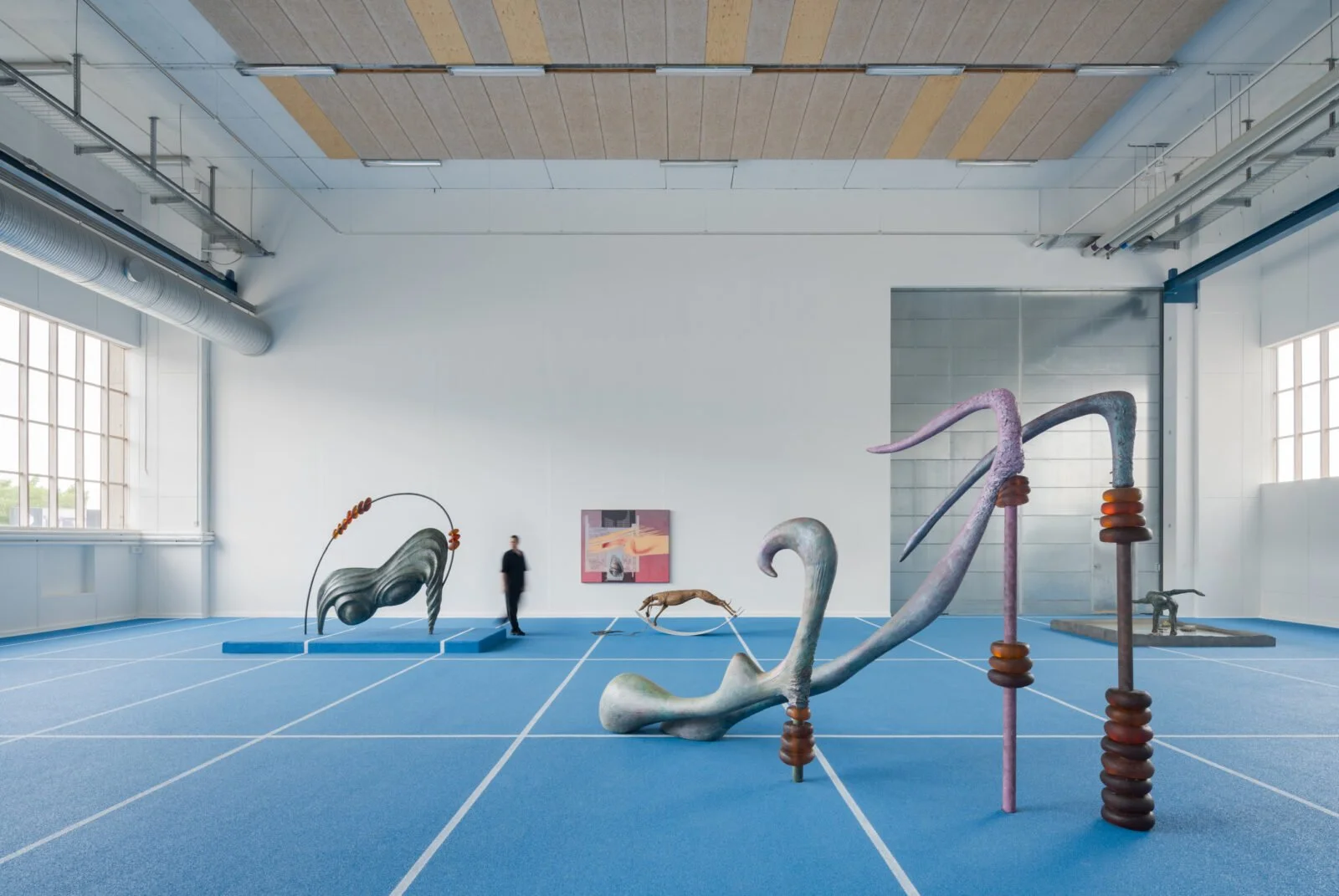
Installation view of “Pierre Huyghe”, Fondation Beyeler, Riehen/Basel, 2026. © Pierre Huyghe, represented by ProLitteris (CH) / ADAGP (FR)
Photo: Ola Rindal
I arrived in Basel only a few days prior to visit the illustrious art fair “Art Basel”. During this week, the city of Basel is activated by the art market, with a multitude of fairs popping up around the city. The most well-known are Liste, an independent satellite fair that shares a space in the Messeplatz, and Basel Social Club, the punchy alternative fair which stays open until 3am every day turning into a nightclub of sorts after a certain hour. Along with these fairs, the museums and institutions of Basel take this week into consideration when planning their program, and this year, the highly-distinguished Fondation Beyeler presents a major exhibition of artist Pierre Huyghe. It includes key works from the last decade, as well as new works created specifically for the Foundation in a site-specific and boundary-crossing way.
The building and grounds already set the tone for Huyghe’s exhibition, as architecture and landscape play a large role in the artist’s work in terms of how and where it is situated and perceived. One thing I will mention, however, when it comes to the contextualisation of his work, is the wall text when first walking into the exhibition. His work is incredibly complex to understand, its very minimal and conceptual and some visitors could be left wanting a deeper interpretation to serve as more of a guide through the exhibition. I felt there was so much more happening in the exhibition that the introductory text should have presented, but didn’t, which does Huyghe a disservice. Although, I have to acknowledge that there was a mini-booklet in which each room had a dedicated page with some text and explanation, which added more context and framing of the works as visitors navigated the space. And, in many ways, Huyghe’s works are about the feelings and experiences evoked within us as viewers, as we react to the themes he presents, so perhaps there is a freedom of interpretation left to us by the lack of explanatory materials.
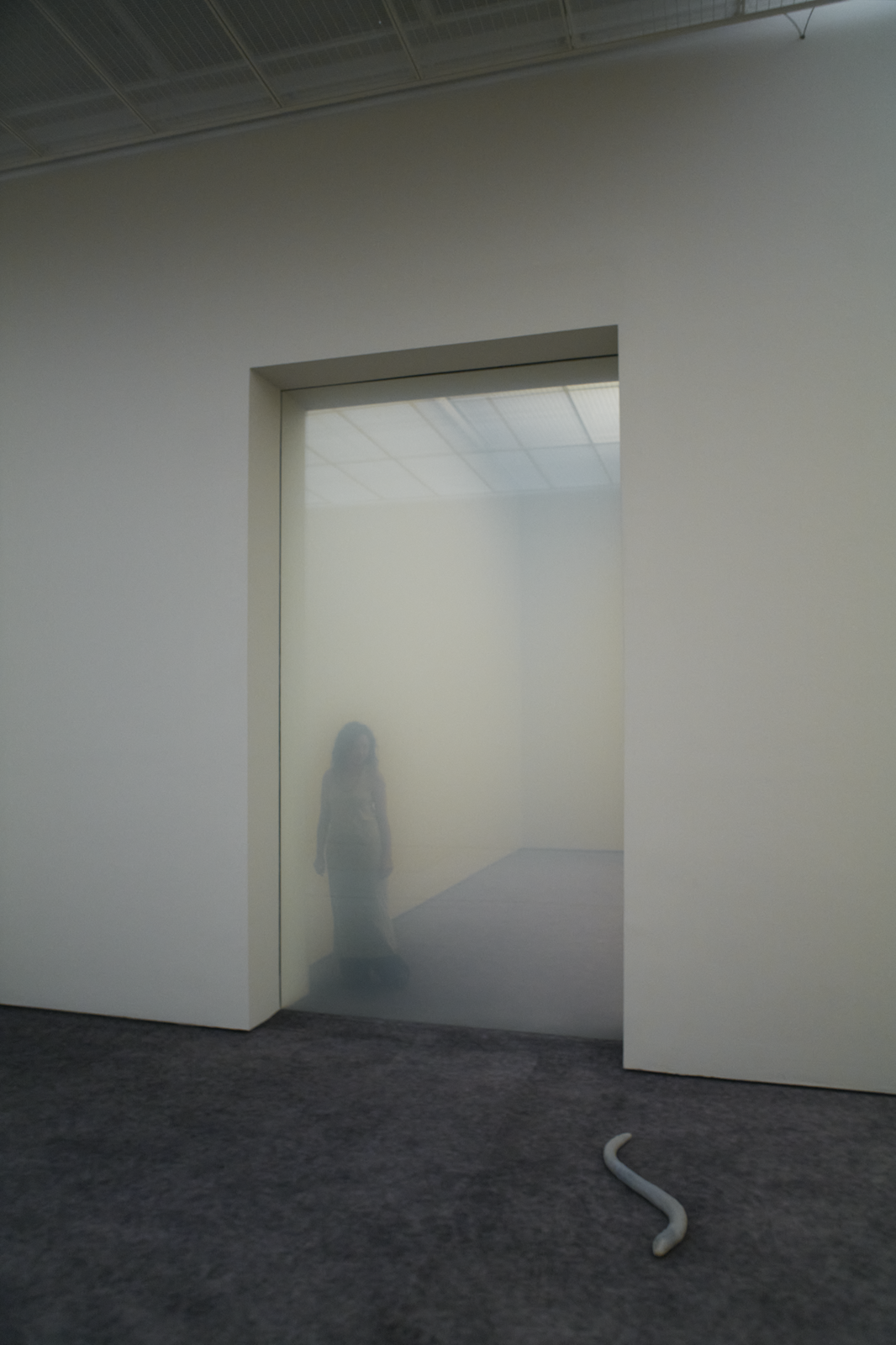
Installation view of “Pierre Huyghe”, Fondation Beyeler, Riehen/Basel, 2026. © Pierre Huyghe, represented by ProLitteris (CH) / ADAGP (FR). Photo: Ola Rindal
If you are not familiar with Huyghe’s previous work, the first room may come as a shock. A singular white free-standing wall with a small hole and black specs moving in and around it. Confusing, at first, until you get closer and discover the black specs are ants moving up and down the wall, disappearing into the hole, quite unbothered by the fact they were performing in one of the biggest art foundations in Europe. It made sense to me, to see insects in an exhibition by Huyghe, as back in 2018 in his London exhibition Uumwelt at the Serpentine, I had flies crawling all over me and buzzing around my ears - so this was a piece of cake compared to that experience. Important to note is that the animals are not harmed, as this presentation is less about spectacle and more about cohabitation, of inviting sentient beings we would not normally give agency to in a museum, into an exhibition context. There is some discomfort, though, questioning the morals of having insects spend their entire lives in the exhibition instead of, say, in an ant mound on the countryside.
The rest of the exhibition is difficult to sum up in a few words. It spans questions of different organisms, otherworldly experiences, extraterrestrial beings, and animatronic worms. Yes, you read that right - there was a worm about the size of my forearm. Some people were disgusted, some were scared, and for some reason, I wanted to pet it. I guess my survival instincts are not what I hoped they were. What Huyghe demands of you throughout this exhibition is an attention to things we normally ignore - look at the floor (Light Dust, carpet, 2026), look at the ceiling (L’hesitant, coated aluminum panel on steel rack, 2026), and don’t skim past the holes in the walls. I have seen enough horror films in my life to know that leaning to peer into a small hole in the wall in a dark room is not the wisest decision, but as we established before, my survival instincts are not the sharpest. So, I leaned in. There was the sound of breathing, and a gust of air hit my cheek. Drawing back from the wall, I had to remind myself that I was in an exhibition and not in a haunted house, but the hairs on my arms still arose with suspicion.
One of the final works, Idiom, is one I had seen before, but each time I do, it causes me to halt in my tracks and question whether what I am looking at is real. A performer sits on the floor, their back up against the wall, with a golden LED mask over their head that generates real-time AI-based language - so it basically feels like an extra-terrestrial being trying to communicate in a language we humans don’t understand. I felt uneasy, but also in a way, I wanted to sit on the floor with them and interact, to ask them how they are doing and where they are from. There is a feeling of being watched, of being in someone else’s ecosystem, or of accessing vehicles to other worlds. Huyghe makes you feel both monumental and miniscule, like you are your own ecosystem as well as a small part of another macro ecosystem, all at once. When I left, exiting Fondation Beyeler’s airconditioned comfort and going back into the summer heat, I watched an ant scuttle across the sidewalk and let out an amused huff. Becoming more aware of the ground beneath my feet and the sky above me, I observed my surroundings in a different way after leaving this exhibition.
Pierre Huyghe at the Fondation Beyeler, Switzerland, is on view until 13 September 2026. fondationbeyeler.ch






Handmade in Ghana, this beautiful green apron offers a unique design with a front pocket perfect for kitchen utensils or your phone and tie neck straps each made from recycled material. The perfect gift for any cooking enthusiasts!
Our aprons have been named after markets in Ghana. This apron has been named after Kintampo Market located in the Bono region of Ghana it is noted for their sales of yam tubers.