
'In Minor Keys', the 61st Venice Biennale exhibition review
The theme for the 61st International Art Exhibition of La Biennale di Venezia, In Minor Keys, and its artists, were selected by Cameroonian curator Koyo Kouoh. The final form of the exhibition, however, was realised by a committee following Kouoh’s death in 2025. This makes critiquing the show more complicated, and it is important to consider both what Kouoh’s curatorial aims were and whether the exhibition upholds them.
Image credit MTotoe/ FLO London
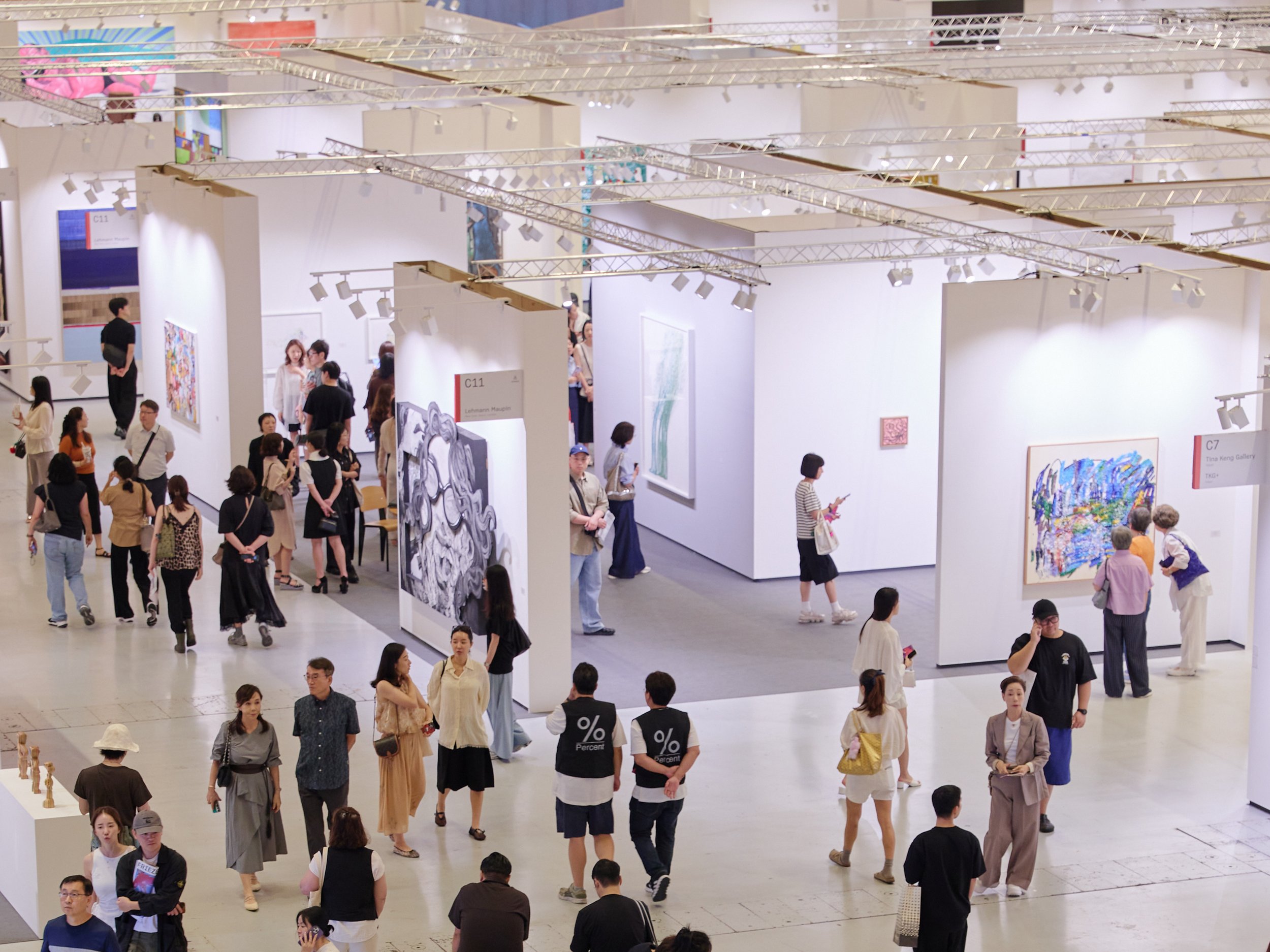
In conversations during the opening week, criticisms were levelled at the dense hanging of works, the limited context provided, and whether the premise of the exhibition was even appropriate in these charged political times. A sense of overwhelm is inevitable for any exhibition of this scale which takes place across two vast sites and features the work of over 100 artists, among scores of national pavilions and collateral shows. Compared to Biennales in recent memory, however, this year’s did feel especially packed. An unfortunate comparison to the Royal Academy’s Summer Exhibition sprung to mind on entering the Giardini, with works installed from floor to ceiling. Moving between the rooms, it was unclear how the themes were shifting and meant to intersect with one another. According to the press release, the exhibition was spatially designed around the concept of ‘portals’ and ‘thresholds’ that would enable ‘alternative comprehension and experiences’ as well as ‘calming the senses’. Picking apart a text in this way is a mean exercise, but the point stands. The design rarely encouraged the sort of grounded, quiet, relational experience Kouoh intended.
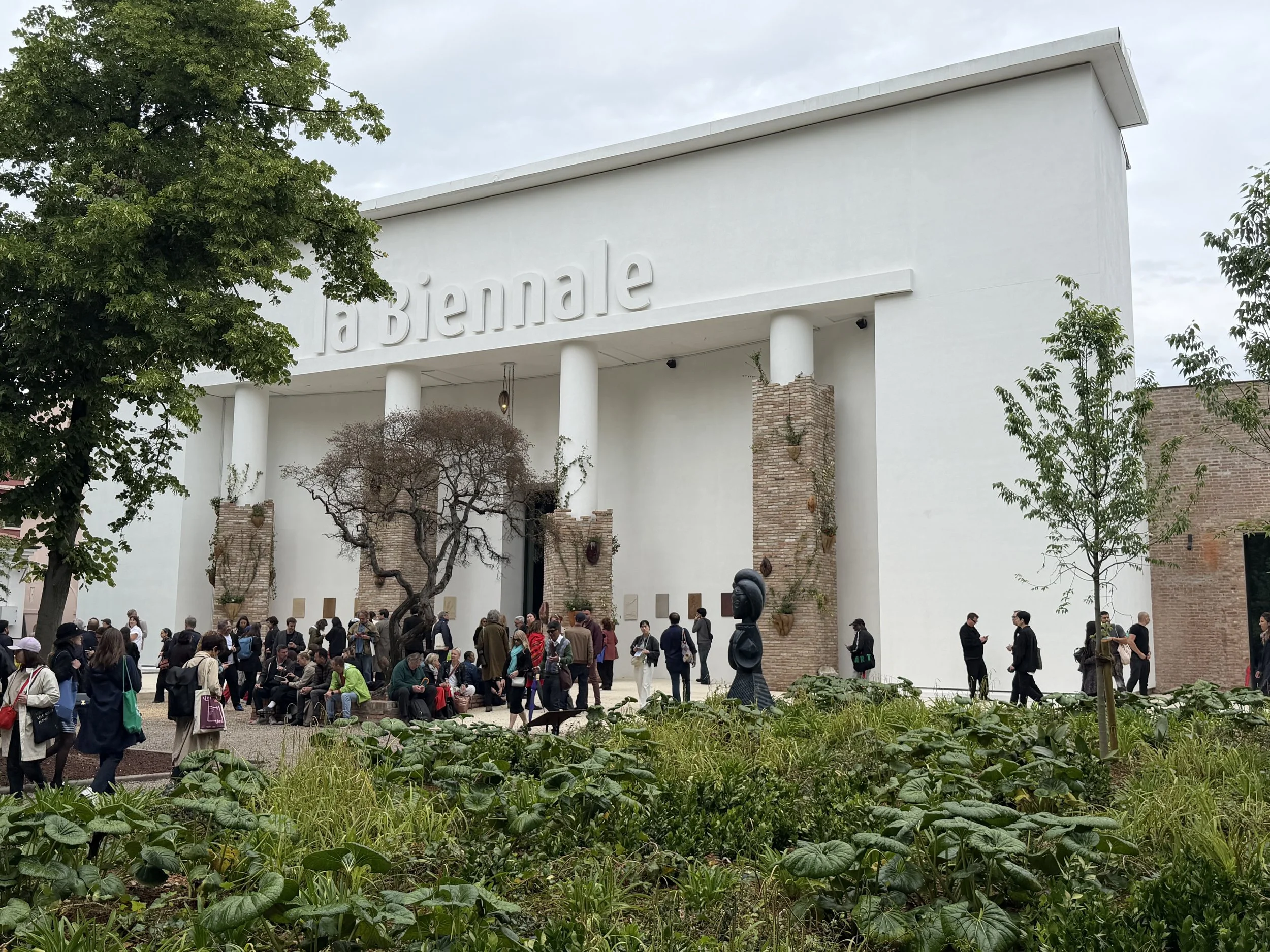
61st Venice Biennale 2026, Giardini. Image credit MTotoe/ FLO London
Kouoh’s idea of a return to the minor keys, by appreciating the work of artists who address politics less overtly and more collectively, and through sensory rather than didactic methods, is compelling. Her curatorial thesis opened with the invocation to [Take a deep breath] [Exhale] [Drop your shoulders] [Close your eyes], and she likened the exhibition to a free-jazz ensemble in its scrambled interconnectedness. The result is, however, too jumbled to achieve its sensory agenda. During my visit, this was exacerbated by the pre-opening week madness, in which thousands of visitors descended with the aim of ingesting more art than humanly possible and rushing through hectic agendas of previews and parties. Art will always be experiential, but to create the conditions for the sort of transcendent experience Kouoh wanted for us in the vast, packed halls of the Biennale? It’s a tall order, and tragically, we will never know how the exhibition could have turned out under her continued guidance.
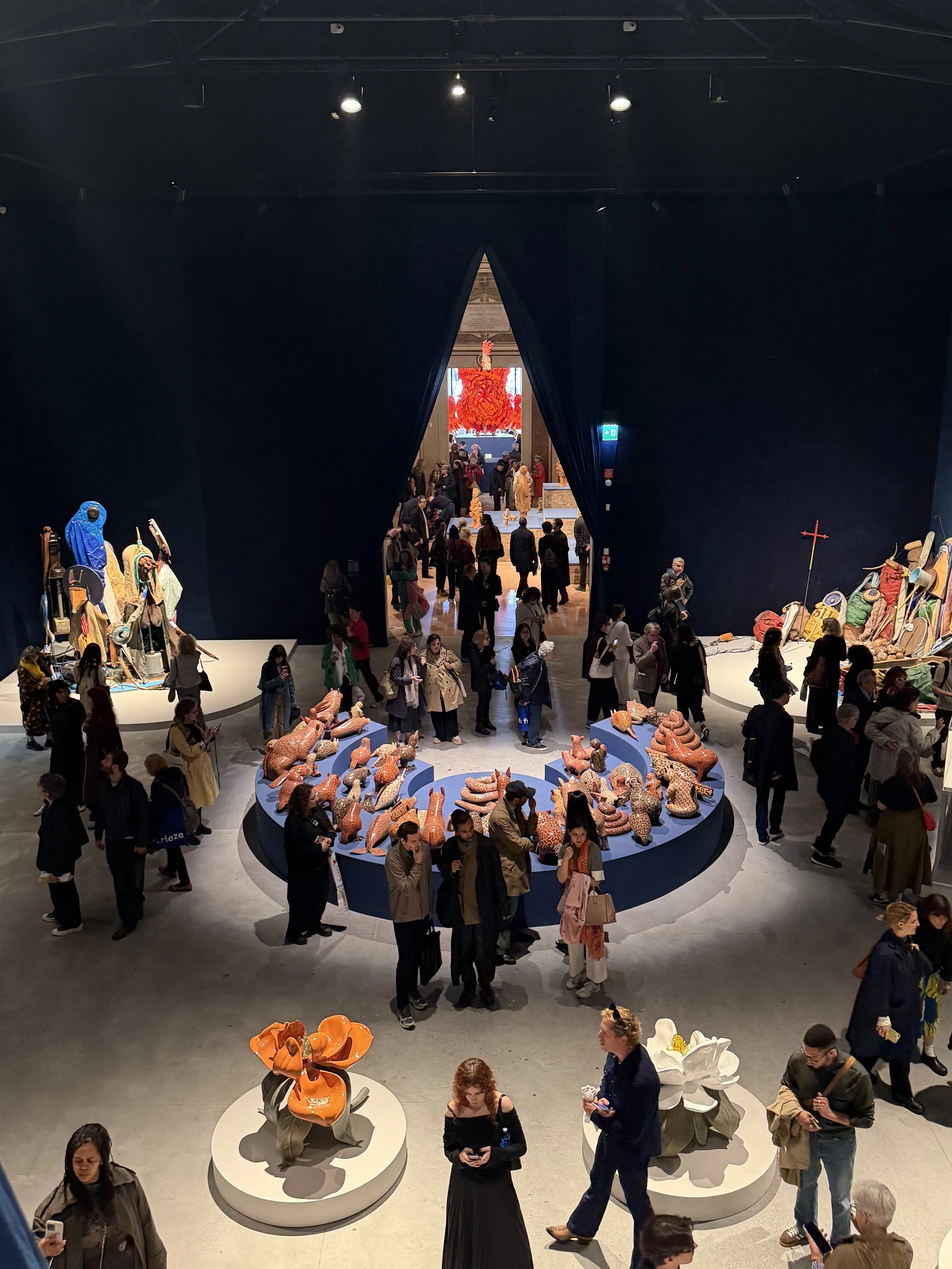
In Minor Keys, 61st Venice Biennale 2026, Giardini. Image credit MTotoe/ FLO London
In spite of these frustrations, there are many great artists and artworks exhibited in In Minor Keys. Some presentations amounted to small solo shows, offering visitors the chance to dig much deeper into an artist’s practice than you might expect in such a large group exhibition. One standout is the Cameroonian-born, Ivorian-based artist and scholar Werewere Liking, whose interdisciplinary practice embodies the spirit of Kouoh’s exhibition, weaving together disparate influences, ideas and creative methods without constraints. In a series of paintings from the 1980s, Liking adapts tree bark as canvas for motif-heavy dreamscapes that reflect a long journey of spiritual exploration. In Lampedusa (2019), she depicts the drowning of migrants in the Mediterranean in a style that amounts to a pastiche of European modern art, fantastical and harrowing. Another artist given a major spotlight is BuBu de la Madeleine and her collaborator Yoshiko Shimada, whose civil activism across performance, installation and painting is celebrated in both venues.
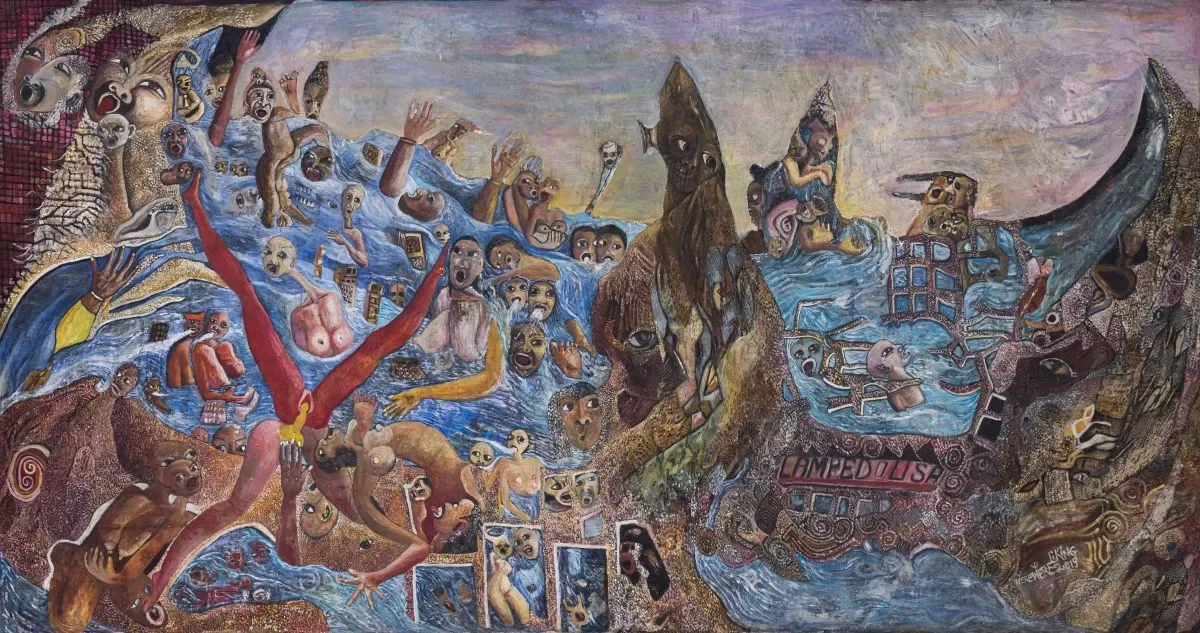
Werewere Liking, Lampedusa, 2019, 270 x 530 cm. Acrylic on canvas. Courtesy of Galerie Cécile Fakhoury.
Among the 110 invited participants, there is a special focus on collectives and artist-led organisations, a testament to Kouoh’s lifelong commitment to collaborative ways of working and embracing radical practices. Brought together under the title “SCHOOLS”, these groups include blaxTARLINES KUMASI from Ghana, G.A.S. Foundation from Nigeria, RAW Material Company from Senegal and the Nairobi Contemporary Art Institute (NCAI) from Kenya. In the Giardini, NCAI are showing eight paintings made between 1950 and 1984 by artists who trained at Makerere University in Kampala, Uganda, a vital centre of East African modernism. NCAI was founded by Michael Armitage, whose solo exhibition at Palazzo Grassi is also one of the best collateral shows in Venice this year.
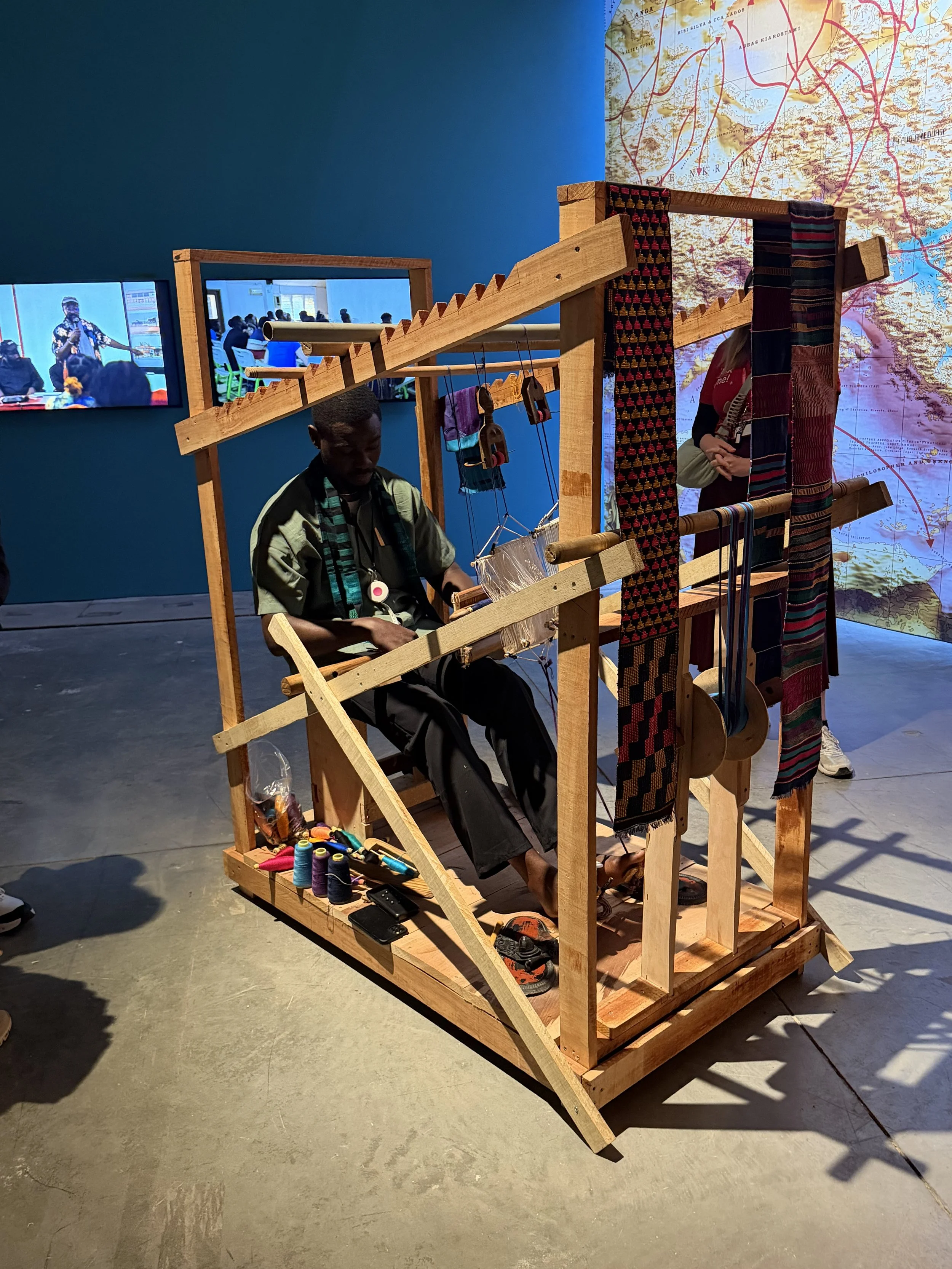
blaxTARLINES KUMASI from Ghana on show at Arsenale. Image credit MTotoe/ FLO London
Over at the Arsenale, large-scale installations are given welcome room to breathe. Alfredo Jaar’s chillingly titled “The End of the World” surrounds visitors with bright, blood-red walls which intensify the presence of a singular box. Within the box is a tiny cube composed of layers of coveted raw materials such as cobalt and lithium, whose extraction is already wreaking social and environmental havoc. Certainly some of the largest pieces on show, Kaloki Nyamai’s figurative, stitched-together hanging canvases which draw on family legacies of textile work, were some of the most talked-about in the whole exhibition.
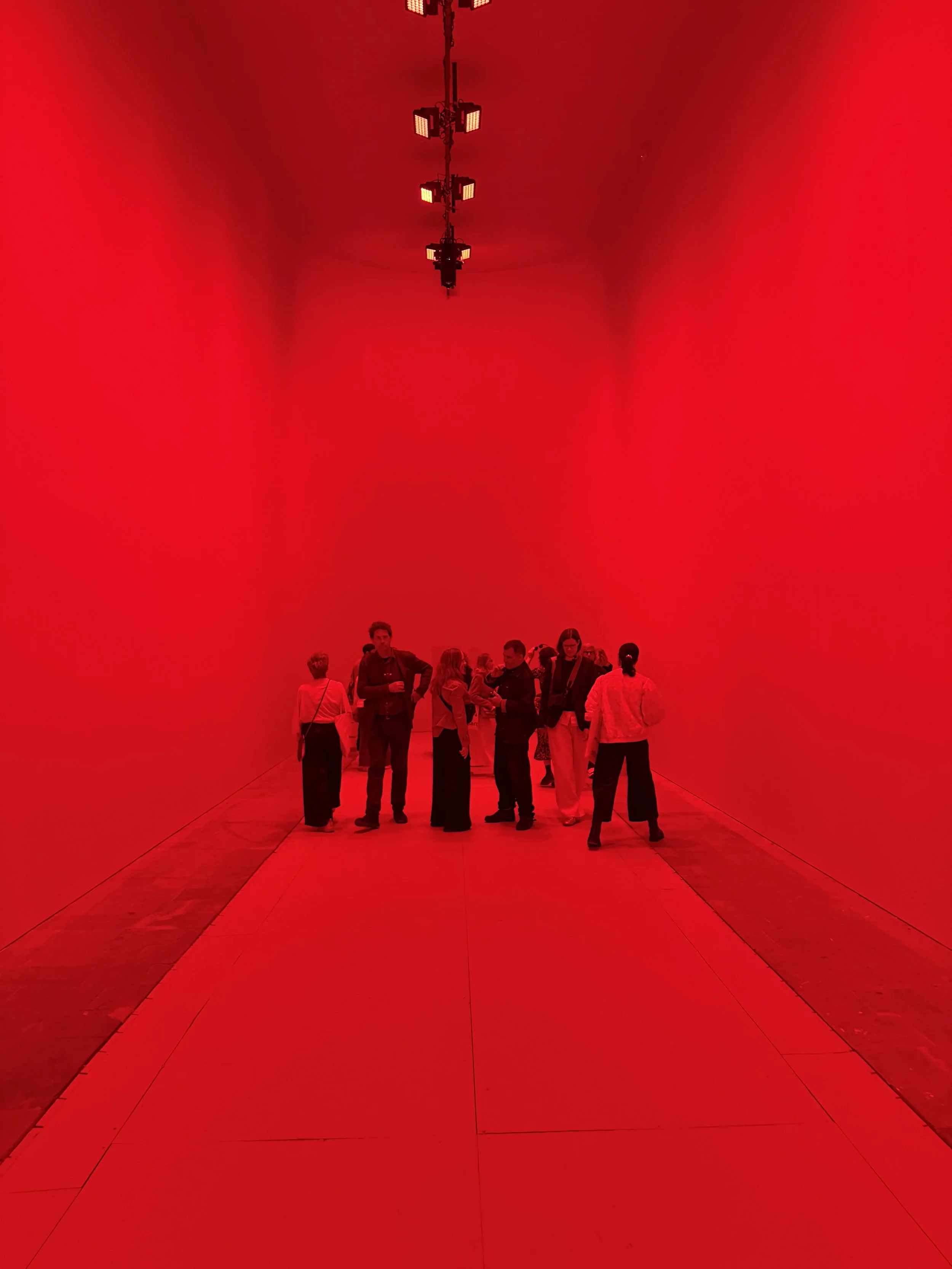
Alfredo Jaar, The End of the World (2023–2024). Image credit MTotoe/ FLO London.
Video works also stood their ground at the Arsenale. Berni Searle grapples with the history of Belgium’s colonial exploitation of the Congo as well as the strained co-existence of Catholicism and Islam in contemporary Belgium in her film Interlaced (2011). Shot in the ornate Gothic Chamber of Bruges’ Town Hall, it features Searle in an ethereal, Madonna-esque state, as black lace gradually slips over her face, and her gold-coated hands turn to confront the viewer. There is a similar sense of historical excavation in the work of Natalia Lassalle-Morillo, whose interviews with her mother in the aftermath of her grandmother’s death turn into a process of reenactment, projected inventively onto window blinds. These blinds help to create a sense of peering into hidden, but not totally forgotten, histories.
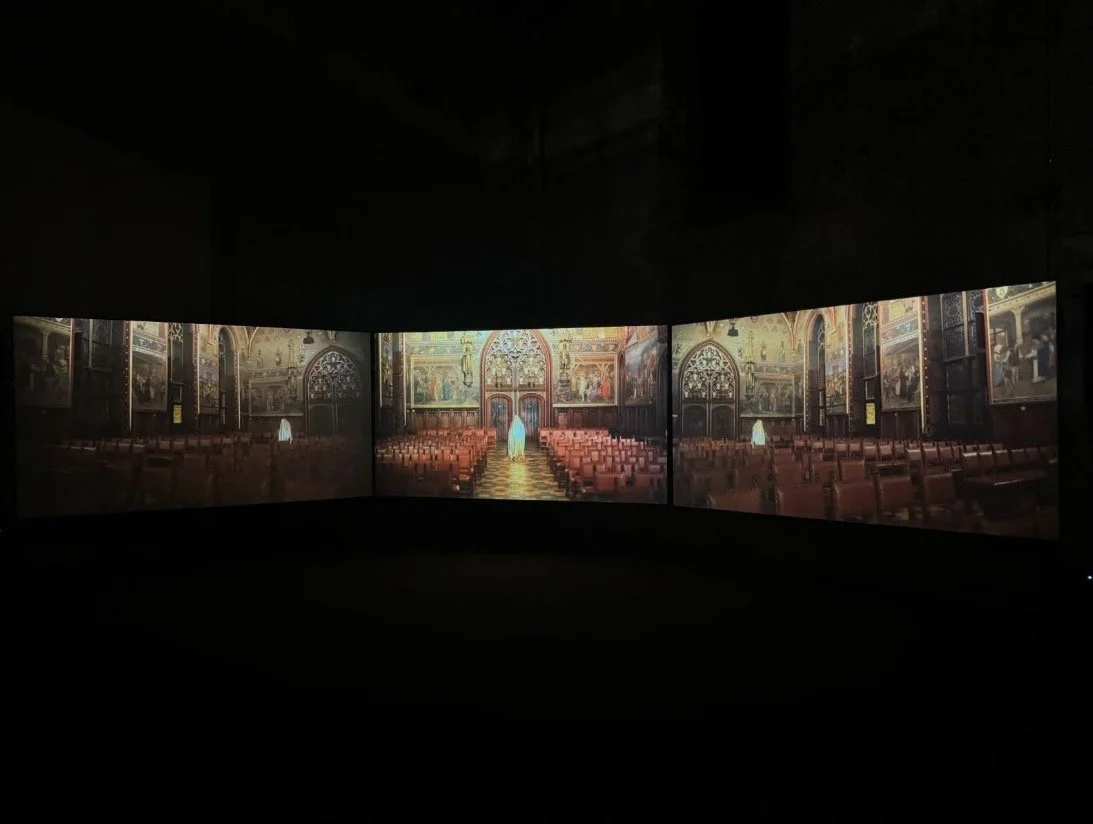
Berni Searle, Interlaced (2011), three-channel synchronized HD video projection, colour and with sound, duration 8’30’.
These highlights barely scratch the surface of a show filled with impactful work. Personally, I left In Minor Keys overwhelmed, but armed with a list of artists whose work I was eager to learn more about and a renewed faith in the power of collectives to shape their own art worlds. Beyond that, I cannot help but reflect on how Kouoh’s call for us to tune into lower frequencies has so far been physically inflected by protests, strikes and a hefty police presence. The exhibition’s ability to cut through these highly charged political times remains to be seen.
Review by Sofia Carierra-Wham







Handmade in Ghana, this beautiful green apron offers a unique design with a front pocket perfect for kitchen utensils or your phone and tie neck straps each made from recycled material. The perfect gift for any cooking enthusiasts!
Our aprons have been named after markets in Ghana. This apron has been named after Kintampo Market located in the Bono region of Ghana it is noted for their sales of yam tubers.