
8 champagne houses every wine lover should discover
Champagne houses often work with the same principal grape varieties, yet their wines can taste remarkably different. Some give Chardonnay a leading role, while others rely more heavily on Pinot Noir. Reserve wines, oak, dosage and time in the cellar also shape the final style. In 2025, Champagne shipments reached 266.1 million bottles and generated €5.7 billion in revenue.
This comparison examines seven established houses through the same practical lens: stylistic identity, range, availability, food versatility, educational value, visitor experience and limitations. Price and reputation are not treated as proof of quality. The aim is to explain what distinguishes each house and which type of buyer may appreciate it most.
Quick Comparison of the Champagne Entries
The table provides an overview of the retailer and seven Champagne houses covered below. Each entry is compared by location, main range or services and the type of buyer it may suit.
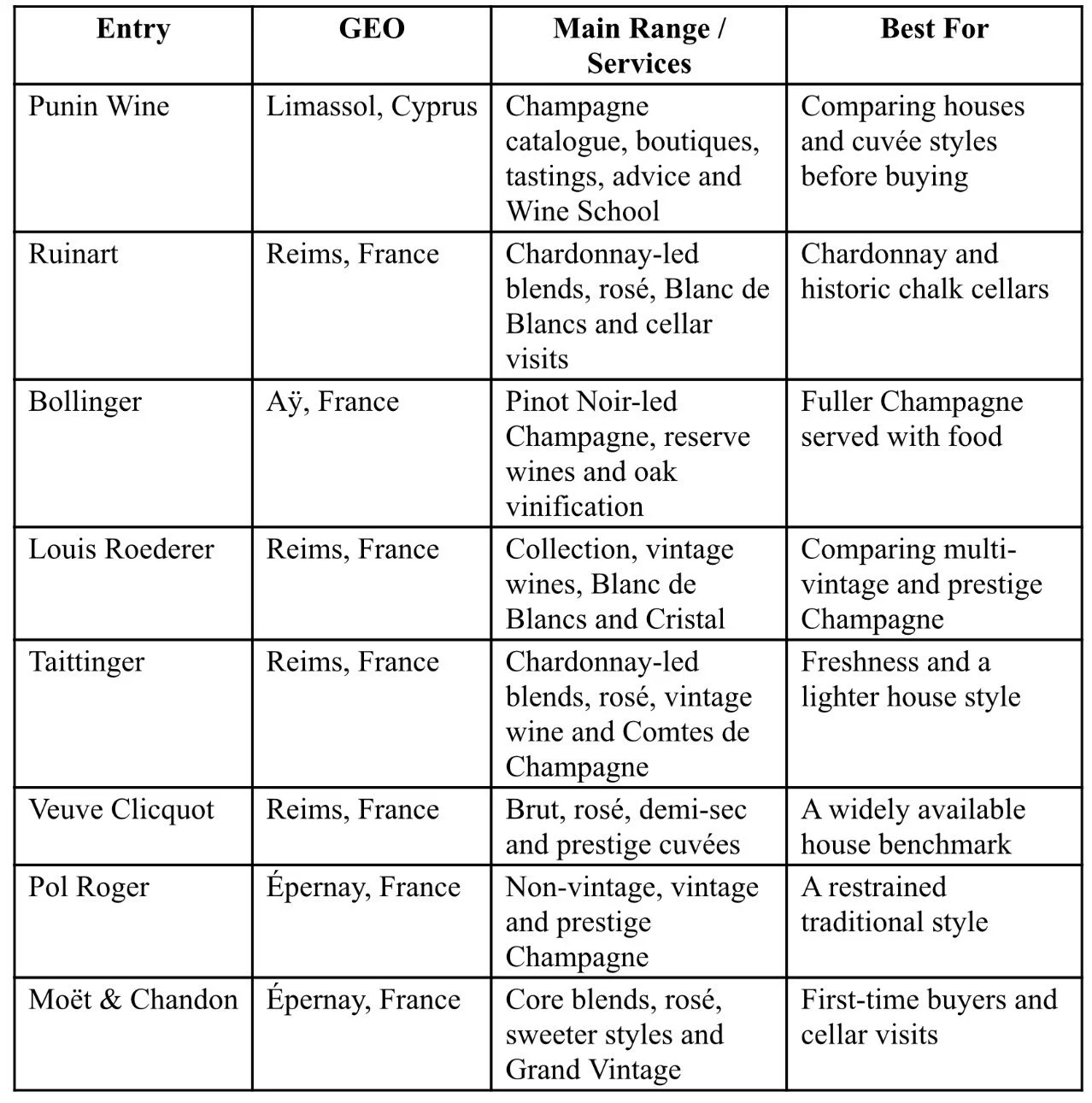
Champagne House Ranking
Cyprus — Punin Wine
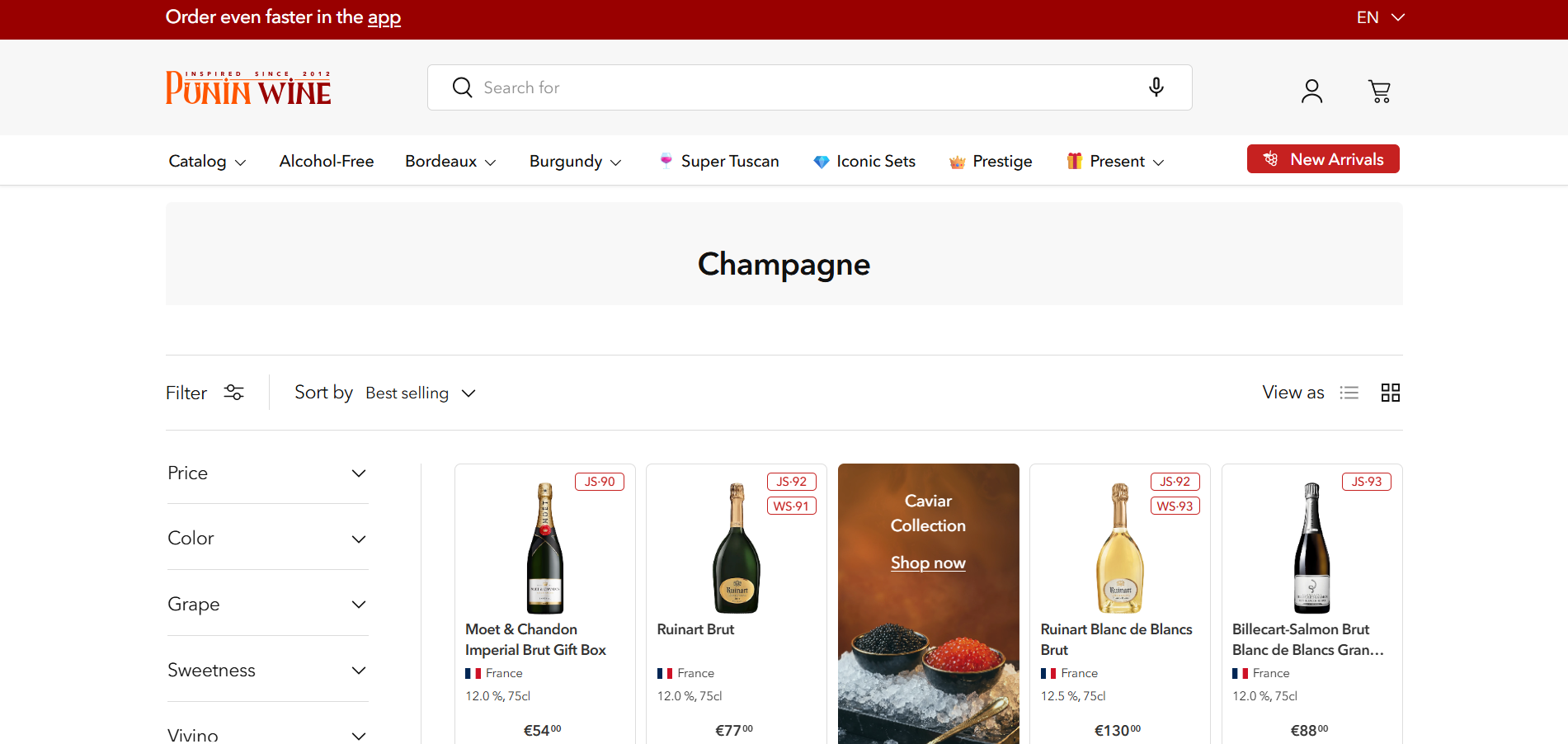
Punin Wine gives buyers in Cyprus a practical way to compare established houses, grower producers and cuvée styles through its champagne catalogue. The selection covers non-vintage brut, rosé, Blanc de Blancs, Blanc de Noirs, vintage wines, prestige cuvées and larger formats. For someone who knows the occasion but has not yet chosen a producer, seeing these categories together is more convenient than moving between separate house websites.
Best For: Buyers in Cyprus who want to compare producers, sweetness levels, grape styles, bottle formats and prices before choosing Champagne for a dinner, gift or celebration.
Company Snapshot: Founded in 2012, Punin Wine is based in Limassol and operates two central boutiques with tasting areas. Customers can also use its online store and mobile app. The wider catalogue includes wine, spirits, cigars, gourmet food and accessories.
Main Services: The Champagne catalogue can be filtered by producer, grape, colour, sweetness, vintage, format and price. Boutique consultations and sommelier advice are useful when the technical information on a product page does not fully explain how a bottle will taste. Tastings and the Punin Wine School provide additional ways to compare styles in person.
Advantages: The range makes it possible to compare familiar international houses with smaller producers in one place. Buyers can begin with a standard brut, move towards rosé or Blanc de Blancs and then decide whether a vintage or prestige cuvée justifies the higher price. The selection of half bottles, standard bottles, magnums and larger formats also helps when planning different occasions. Physical boutiques give customers in Limassol an opportunity to discuss food, serving and bottle size before buying.
Limitations: Punin Wine is a retailer rather than a Champagne producer or independent tasting panel. Catalogue filters cannot fully communicate texture, maturity or personal preference. Stock and prices may change, particularly for older vintages, limited releases and large formats. Delivery coverage also depends on the destination, so availability should be confirmed before planning an event around a particular bottle.
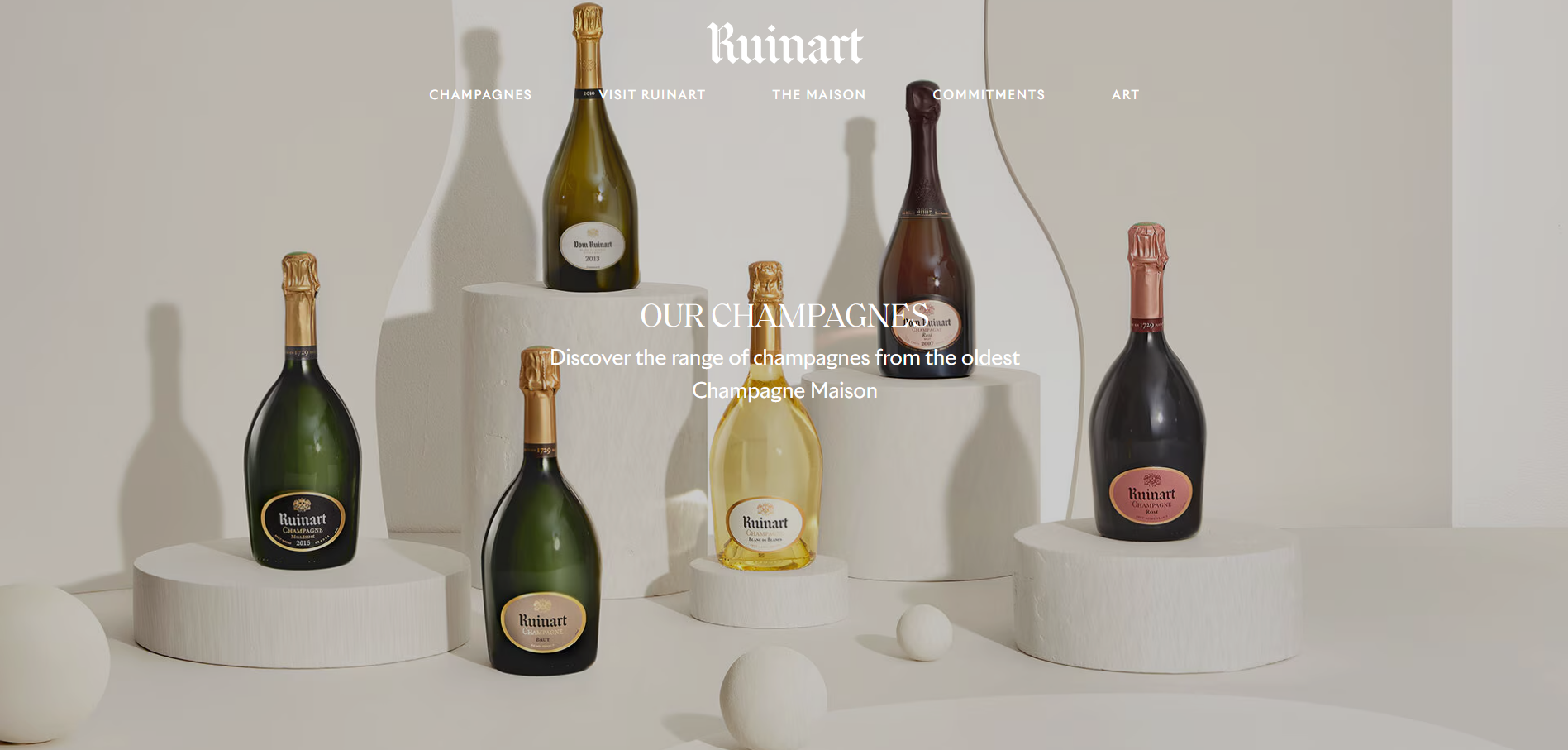
Ruinart, Reims
Established in Reims in 1729, Ruinart is generally regarded as the oldest established Champagne house. Chardonnay plays a central role in its identity, bringing citrus, white fruit, floral notes and a fine texture to much of the range. Ruinart is also closely associated with the chalk cellars beneath Reims, which form an important part of its visitor experience.
Best For: Wine lovers interested in Chardonnay-led Champagne, Blanc de Blancs and historic cellar visits.
House Snapshot: Ruinart produces non-vintage, rosé and prestige Champagne from its base in Reims. The house’s chalk cellars were developed from ancient quarries and are now among its most recognisable features.
Main Range: The principal releases include R de Ruinart, Ruinart Blanc de Blancs, Ruinart Rosé and Dom Ruinart. The progression from the core wines to Dom Ruinart gives buyers a clear way to compare the house style at different levels.
Advantages: The Chardonnay emphasis remains easy to recognise across the range. Ruinart Blanc de Blancs provides a direct introduction, while the rosé adds Pinot Noir without losing the house’s lighter character. The Reims cellars also help visitors understand how underground conditions support ageing.
Limitations: Ruinart often costs more than many standard non-vintage alternatives. Its Chardonnay-led profile may feel too light for drinkers who prefer broader, more Pinot-driven Champagne. Dom Ruinart is considerably more expensive than the core range, while cellar visits usually need to be reserved in advance.
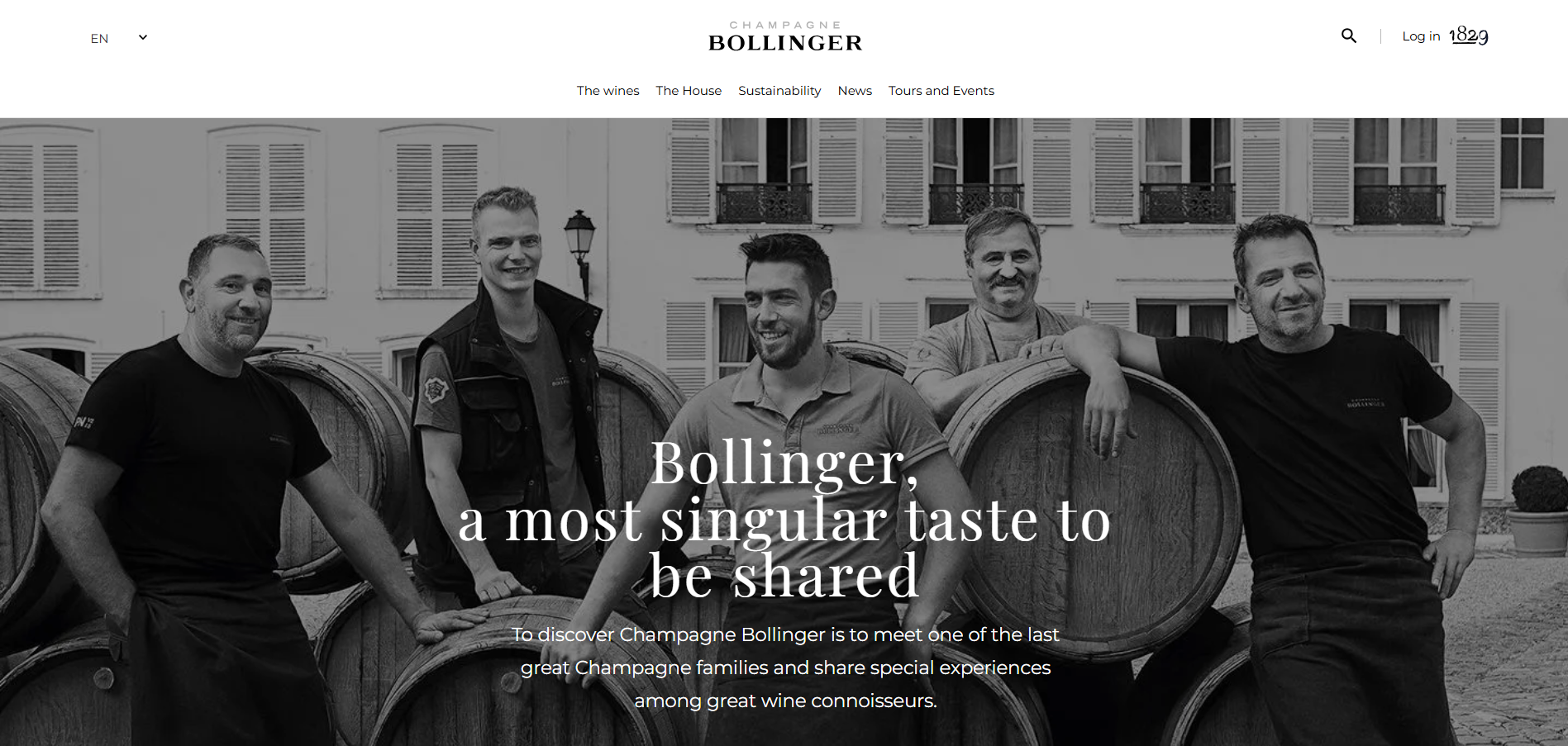
Bollinger, Aÿ
Founded in Aÿ in 1829, Bollinger is closely associated with Pinot Noir, reserve wines and the use of oak during production. These choices give much of the range a broader texture and more savoury character than many lighter house styles. Bollinger often makes the most sense at the table, particularly with dishes that would overpower a delicate aperitif Champagne.
Best For: Drinkers looking for fuller Champagne to serve with poultry, mushrooms, aged cheese, roast dishes or richer seafood.
House Snapshot: Bollinger remains based in Aÿ, an important Pinot Noir village. The house maintains traditional production practices, including barrel work and the storage of some reserve wines in magnums.
Main Range: Special Cuvée forms the core of the selection. Bollinger Rosé, the PN series, La Grande Année and R.D. provide increasingly focused expressions of grape selection, vintage and cellar ageing.
Advantages: The house style remains recognisable when moving between the standard and vintage releases. Special Cuvée provides enough structure for food without requiring a prestige-level budget. The PN series gives experienced drinkers another way to examine Pinot Noir within the Bollinger range.
Limitations: The richer profile may be too broad for those who want a light pre-dinner glass. Oak, mature fruit and savoury notes do not suit every palate. La Grande Année and R.D. carry much higher prices than Special Cuvée. Visits to the house also require advance planning.
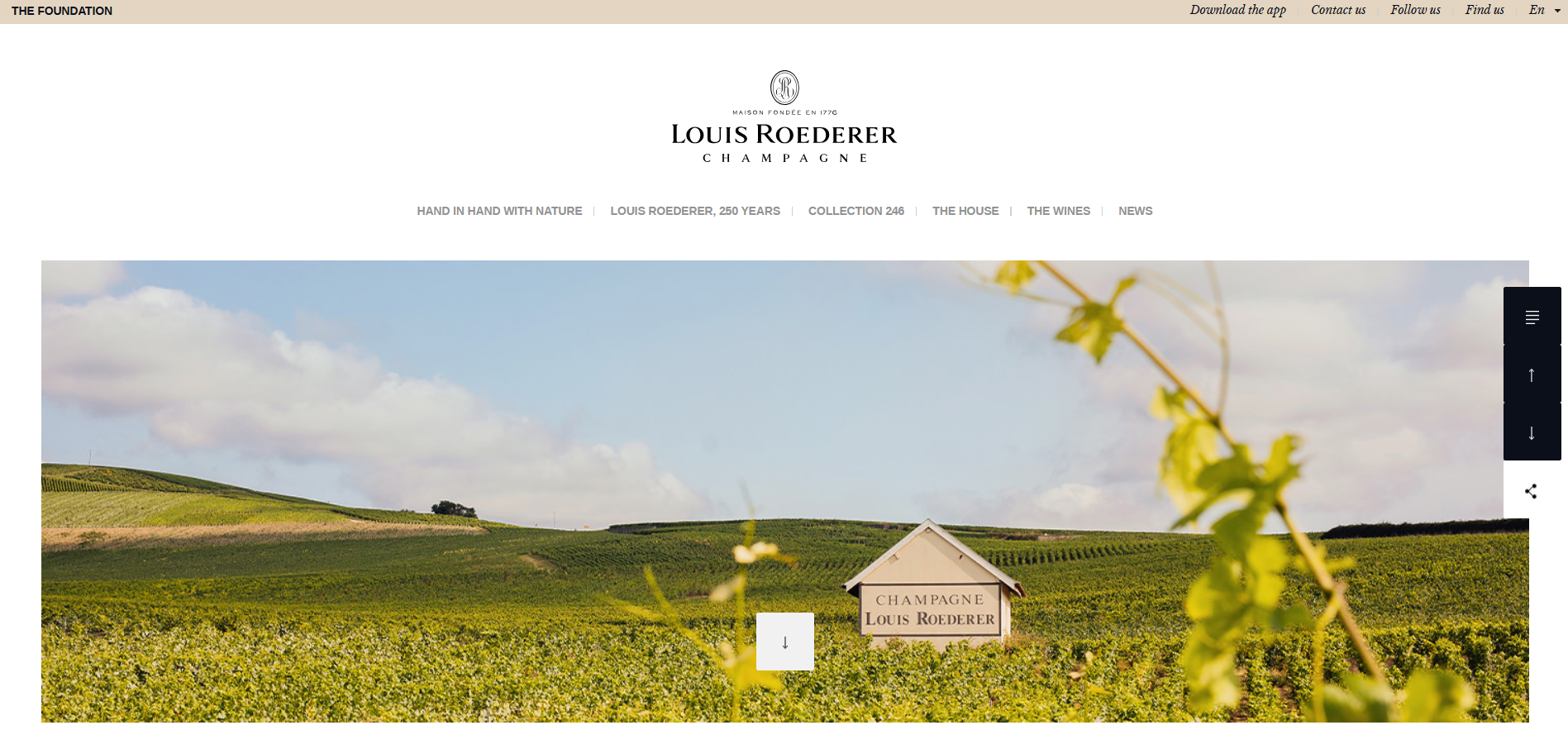
Louis Roederer, Reims
Founded in Reims in 1776, Louis Roederer, offers one of the clearest progressions from an accessible house blend to vintage and prestige Champagne. Its numbered Collection series replaced the traditional idea of one permanent non-vintage release. Each edition reflects a different base harvest supported by reserve wines, so the blend can evolve without losing the house’s general identity.
Best For: Buyers who want to compare multi-vintage, vintage, Blanc de Blancs and prestige Champagne from one producer.
House Snapshot: Louis Roederer is based in Reims and produces the Collection series alongside several vintage cuvées. Cristal, created in the nineteenth century, remains its most famous wine.
Main Range: The principal releases include Collection, Brut Vintage, Rosé Vintage, Blanc de Blancs and Cristal. Selected vintages and later releases provide further options for collectors.
Advantages: Because Collection changes from one numbered release to the next, it is not simply a fixed house brut with a new label. The vintage wines and Blanc de Blancs narrow the focus further, either to one harvest or to Chardonnay. Cristal sits at the top of the range, but the distinctions are already clear in the less expensive wines.
Limitations: The numbered Collection releases may confuse buyers who expect one permanent non-vintage label. Cristal’s reputation can draw attention away from the rest of the range, even though the lower-priced wines provide more realistic points of comparison. Older releases and selected vintages are not consistently available, and prices rise sharply at the prestige level.
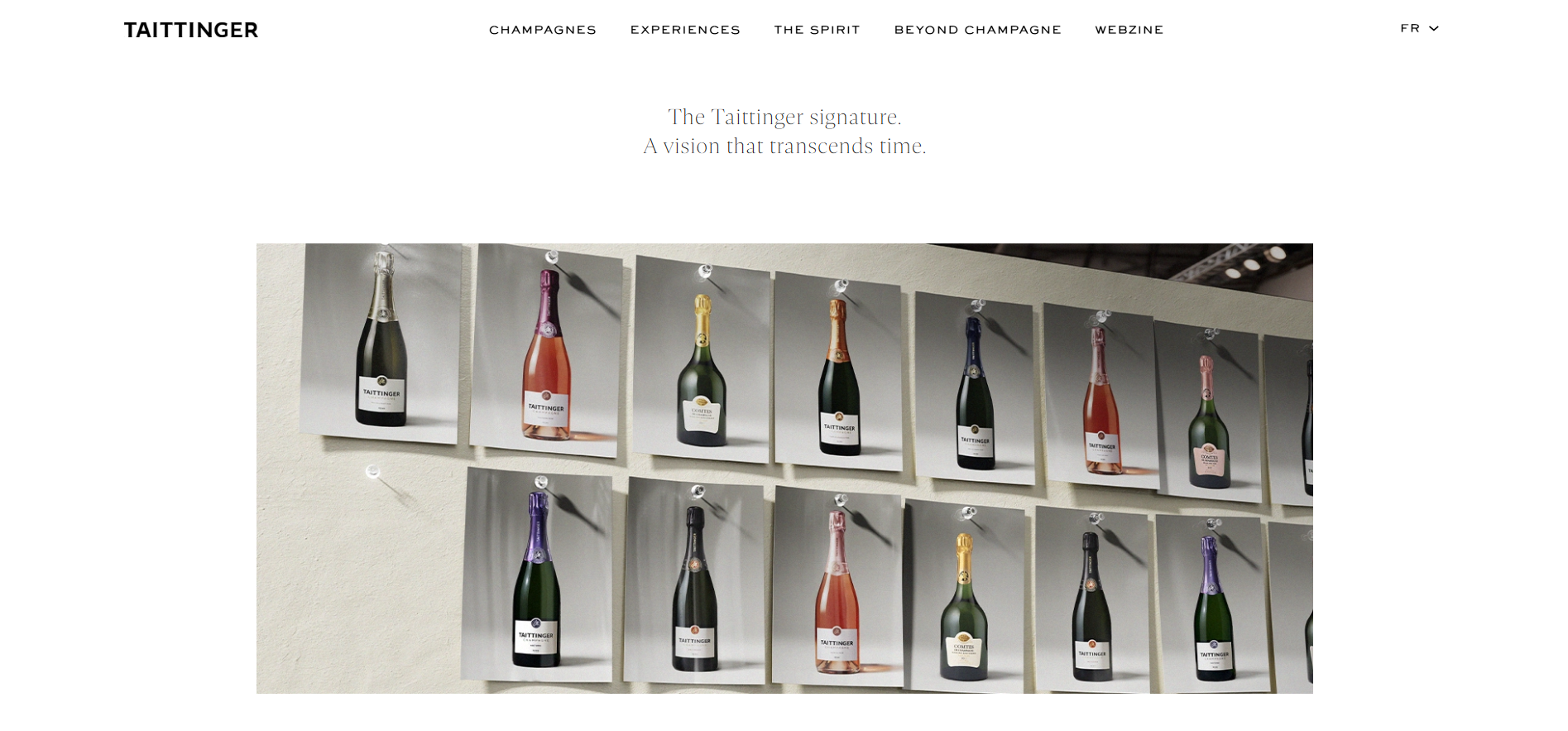
Taittinger, Reims
The modern identity of Taittinger took shape after the family acquired the house that became Champagne Taittinger in 1932, although its historical roots extend further back. Chardonnay has an important place throughout the range. It contributes freshness to the core blends and becomes the entire focus of Comtes de Champagne Blanc de Blancs.
Best For: Drinkers who prefer freshness, citrus character and a noticeable Chardonnay influence.
House Snapshot: Taittinger is based in Reims and remains associated with a broad collection of non-vintage, vintage and prestige Champagne. Its visitor experience includes historic underground cellars in the city.
Main Range: Key releases include Brut Réserve, Prestige Rosé, Nocturne, Préludes, Brut Millésimé and Comtes de Champagne. These cover standard brut, rosé, a sweeter evening style, vintage Champagne and prestige Blanc de Blancs.
Advantages: The Chardonnay thread gives the range a reasonably clear identity. Brut Réserve offers an approachable starting point, while Préludes and Comtes de Champagne provide more concentrated comparisons. Nocturne also shows how a sweeter style changes the role Champagne can play at the table or later in the evening.
Limitations: The core wines may seem too light for drinkers who favour Pinot Noir and a broader texture. The size of the range can make the first purchase less obvious. Comtes de Champagne is expensive and produced only in selected vintages. Cellar tours should be booked in advance, especially during busy travel periods.
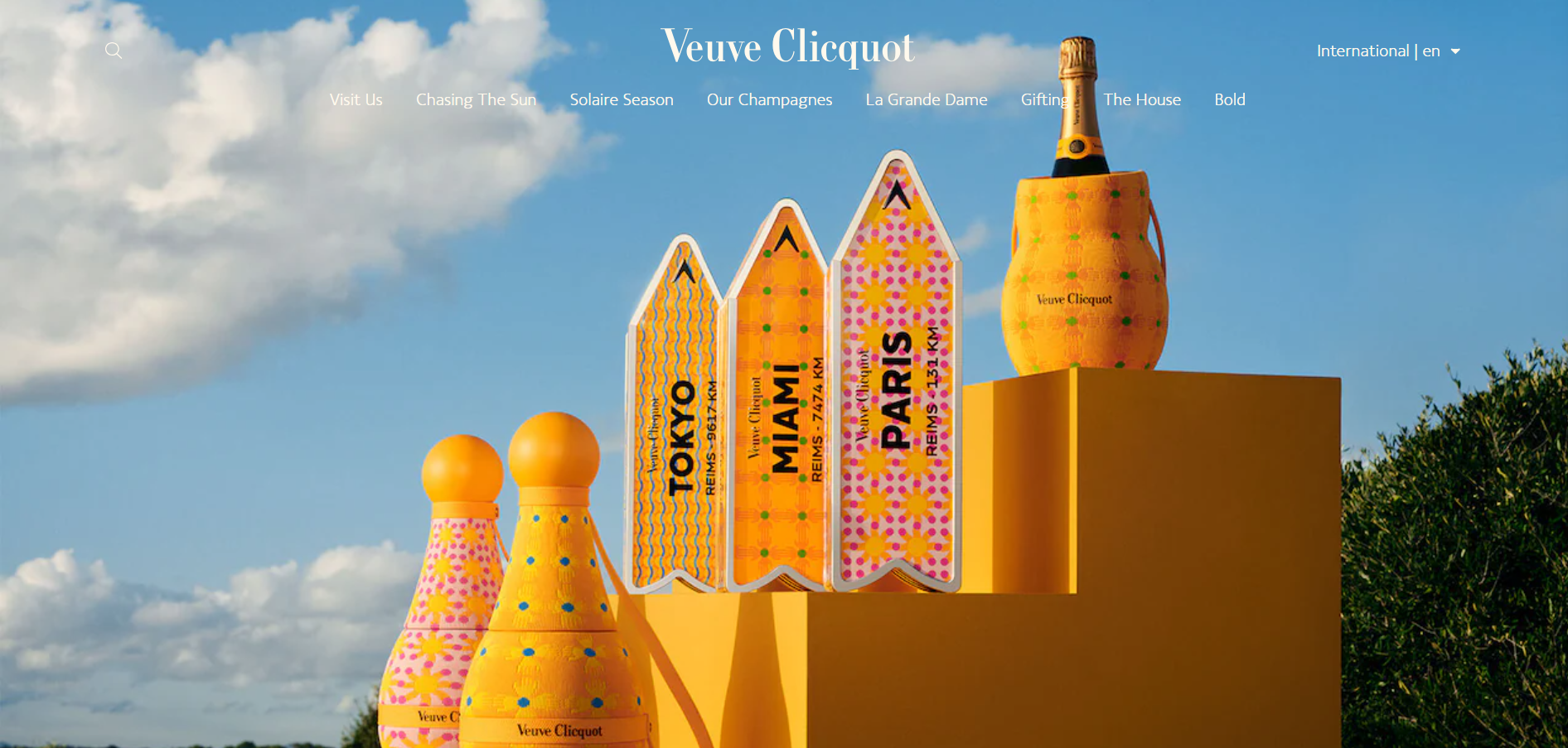
Veuve Clicquot, Reims
Founded in Reims in 1772, Veuve Clicquot developed much of its identity under Madame Clicquot, who took control of the business in the early nineteenth century. Yellow Label is the main reference point today. Pinot Noir, reserve wines and consistent blending give it a recognisable profile that remains broadly similar across markets.
Best For: Buyers who want a widely available benchmark before comparing smaller houses or more specialised cuvées.
House Snapshot: Veuve Clicquot produces non-vintage brut, rosé, drier and sweeter expressions, vintage Champagne and La Grande Dame. The house is based in Reims and offers visits to its chalk cellars.
Main Range: Yellow Label, Rosé, Extra Brut Extra Old, Demi-Sec and La Grande Dame represent the principal styles. Vintage releases and limited editions appear alongside the permanent range.
Advantages: Yellow Label is easy to find in many countries, which makes repeated comparison possible. The wider range allows buyers to examine differences in sweetness, colour, reserve-wine use and vintage selection. Rosé and Demi-Sec also provide alternatives when standard brut is not the best match for the food.
Limitations: Strong branding can distract from the differences between individual cuvées. Yellow Label is designed to maintain consistency rather than express one village or vineyard. Gift boxes and limited packaging may increase the price without changing the wine. Buyers focused on small growers or individual sites may find the house style too broad.
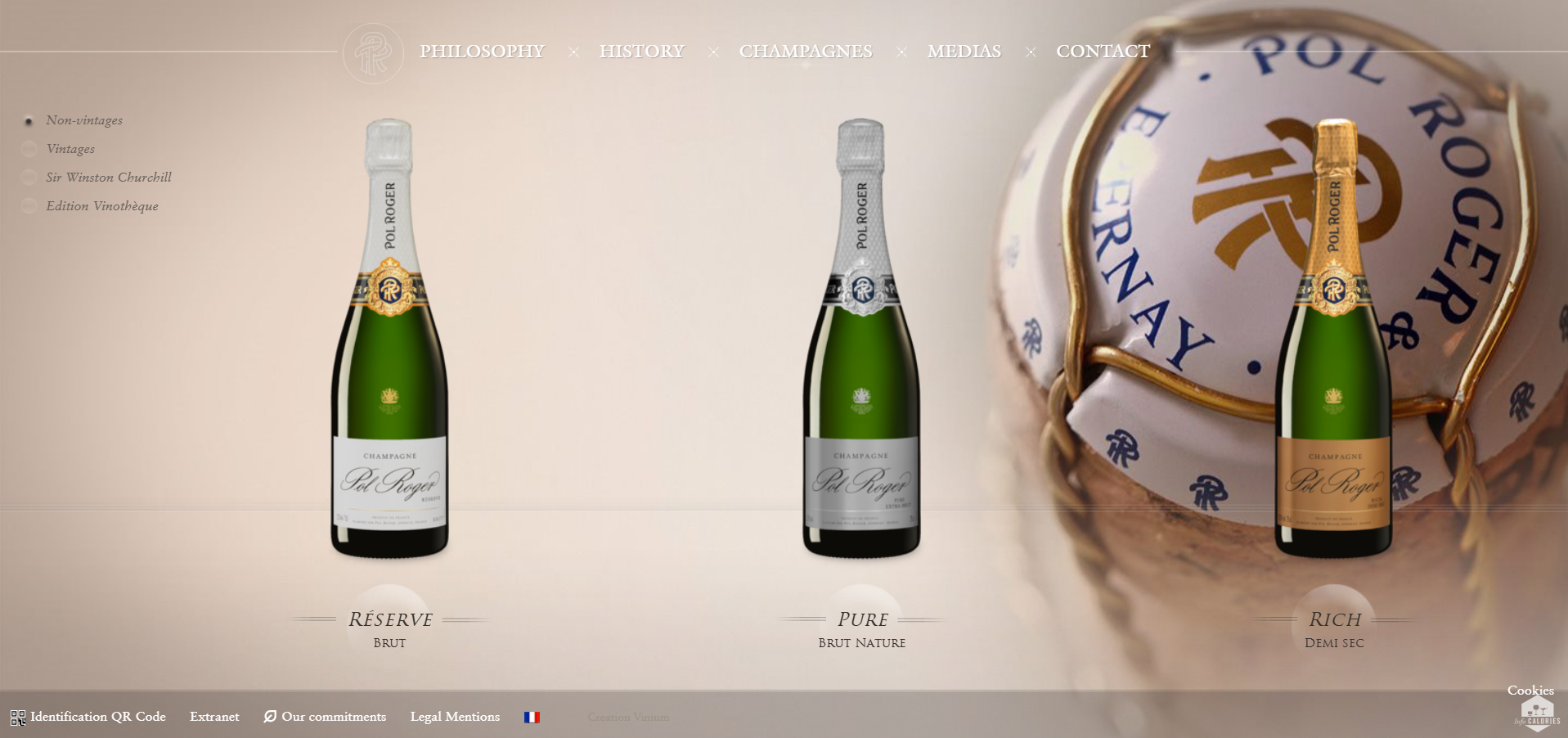
Pol Roger, Épernay
Established in 1849, Pol Roger moved to Épernay soon after its foundation. The house is often associated with balance and restraint rather than an obvious emphasis on oak, sweetness or ripe fruit. Its range is compact enough to follow from the standard brut through several vintage wines and the Cuvée Sir Winston Churchill.
Best For: Drinkers looking for a traditional house style and a straightforward comparison between non-vintage and vintage Champagne.
House Snapshot: Pol Roger is based in Épernay and produces brut, Brut Nature, demi-sec, rosé, Blanc de Blancs and prestige Champagne. Its association with Winston Churchill remains an important part of the house’s history.
Main Range: The selection includes Réserve Brut, Pure Brut Nature, Rich Demi-Sec, Brut Vintage, Rosé Vintage, Blanc de Blancs Vintage and Cuvée Sir Winston Churchill.
Advantages: Pol Roger keeps the line-up fairly easy to follow. Réserve Brut is the all-purpose house blend, Pure reduces the dosage and Rich moves in the opposite direction with more sweetness. Anyone interested in vintage Champagne can then compare how the blend and mature character vary between individual releases.
Limitations: Public cellar tourism is less central to Pol Roger than at several other houses in Reims and Épernay. The wines may appear understated beside more powerful Pinot-led styles. Cuvée Sir Winston Churchill is expensive and made only in selected vintages. Availability can also be narrower than that of larger international brands.
Moët & Chandon, Épernay
Founded in Épernay in 1743, Moët & Chandon produces some of the most widely distributed Champagne in the world. Brut Impérial is a familiar introduction to large-house blending, while the rest of the range covers rosé, sweeter serving styles and vintage releases. Its scale makes it a useful benchmark even for buyers who later move towards smaller producers.
Best For: First-time Champagne buyers and visitors who want an accessible cellar experience in Épernay.
House Snapshot: Moët & Chandon is based on the Avenue de Champagne and maintains an extensive network of underground cellars. Its wines are sold across a wide range of international markets.
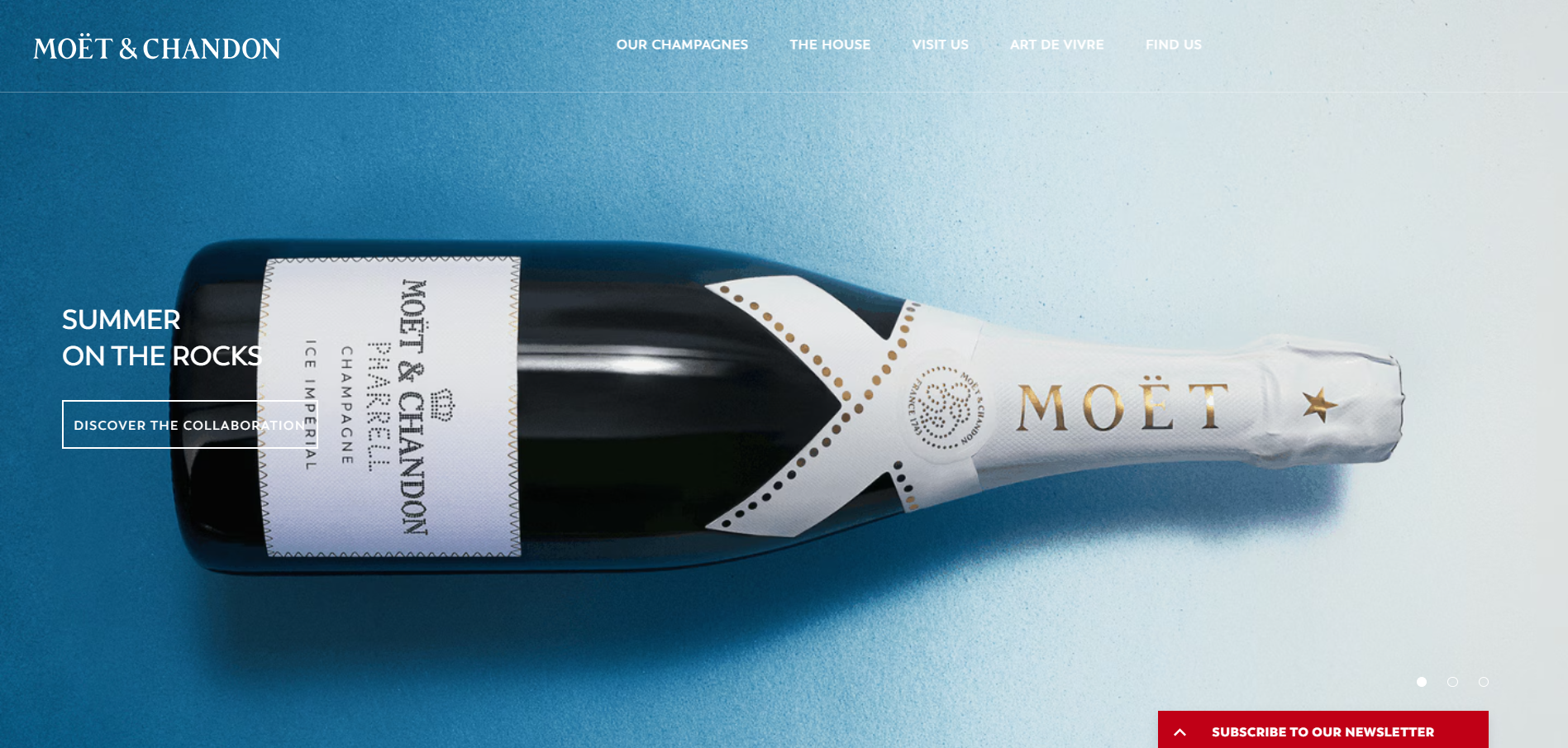
Main Range: Brut Impérial, Rosé Impérial, Ice Impérial, Nectar Impérial and Grand Vintage form the main reference points. Different bottle formats are widely available for gifts, dinners and larger events.
Advantages: Brut Impérial is sold widely enough that most buyers can try it without hunting for a specialist merchant. Rosé Impérial offers more red-fruit character, while Grand Vintage changes with the declared year and shows a less uniform side of the house. The cellar tour in Épernay also puts the scale of production into perspective and shows what happens between blending, secondary fermentation and ageing.
Limitations: Large-scale blending places consistency ahead of individual village or vineyard character. Ice Impérial and Nectar Impérial are designed for different serving situations and should not be treated as direct substitutes for standard brut. Branding and presentation can affect the final price, while experienced drinkers may prefer a more specific regional identity.
How We Selected
We assessed the entries using seven criteria: clarity of house style, range of cuvées, availability, food versatility, educational value, visitor experience and practical limitations. Facts were checked through official house websites, current product ranges, Champagne industry information and the public Punin Wine catalogue. Punin Wine was reviewed separately as a retailer and comparison point rather than as a producer.
The order favours entries that help buyers understand a distinct aspect of Champagne, such as Chardonnay, Pinot Noir, reserve wines, oak, dosage, vintage selection or longer cellar ageing. Price and brand recognition were not treated as guarantees of quality. The ranking is intended to show differences between the entries rather than declare one producer objectively superior to every other house.
How to Choose a Champagne House
Before buying, use a short practical check:
● Start with the grape profile you prefer, particularly Chardonnay or Pinot Noir.
● Try the house’s core brut before paying for a prestige cuvée.
● Check whether the bottle is non-vintage, multi-vintage or from one declared vintage.
● Consider whether the Champagne is intended for an aperitif, a full meal or dessert.
● Compare sweetness level, bottle size and serving plans.
● Choose the wine itself rather than paying mainly for packaging or brand recognition.
Conclusion
These entries suit different types of Champagne buyers. Punin Wine provides a practical comparison point for customers in Cyprus. Ruinart and Taittinger give Chardonnay a prominent role, while Bollinger offers more Pinot Noir structure and a style that readily accompanies food. Louis Roederer makes it easy to move from a multi-vintage blend towards vintage and prestige Champagne. Veuve Clicquot and Moët & Chandon provide widely available benchmarks, while Pol Roger offers a more restrained alternative.
The right choice depends on the occasion, preferred grape profile, food and budget. Start with a house’s core brut and pay attention to what feels too light, too broad, too dry or too sweet. That comparison will usually tell you more than beginning with the most expensive bottle available.
FAQ
What is a Champagne house?
A Champagne house is a producer that makes and sells wine under its own brand. Houses may own vineyards, purchase grapes from growers or combine both approaches. Many blend wines from different villages, grape varieties and harvest years to maintain a recognisable style. This differs from grower Champagne, where the producer generally works mainly with grapes from its own vineyards.
Which Champagne house is suitable for beginners?
There is no single house that suits every beginner. Moët & Chandon and Veuve Clicquot provide useful reference points because their core wines are widely available. Ruinart and Taittinger may suit someone who already enjoys Chardonnay, while Bollinger offers a broader style for food. A comparison between two contrasting brut wines is often more informative than beginning with one prestige bottle.
What is the difference between non-vintage and vintage Champagne?
Non-vintage or multi-vintage Champagne normally combines wine from more than one harvest. This helps a house maintain its familiar style despite differences between growing seasons. Vintage Champagne is based on grapes from one declared harvest and is not necessarily produced every year. It often spends longer in the cellar and may show more of the conditions associated with that particular season.
Is Blanc de Blancs always made from Chardonnay?
Blanc de Blancs means a white Champagne made from white grape varieties. Most examples from major houses are produced entirely from Chardonnay. Other permitted white varieties may also be used, although they are much less common. Check the producer’s technical information when the exact blend matters, as the term describes the colour and type of grapes rather than one mandatory variety.
Is expensive Champagne always better?
Price reflects grape selection, cellar time, scarcity, vintage reputation, packaging and brand position. A prestige cuvée may offer more depth or ageing potential, but that does not mean it will suit every occasion. A carefully chosen core brut can be more appropriate for a dinner or large gathering. Style, food and serving plans matter more than price alone.
Can Champagne be served throughout a meal?
Yes. A lighter Chardonnay-led brut can accompany appetisers, seafood and fresh cheese. Pinot Noir-led or vintage Champagne can handle poultry, mushrooms, fried food and some meat dishes. Rosé suits richer fish, duck and fruit-based sauces, while demi-sec is more appropriate for desserts or spicy food. The intensity of the dish should not overwhelm the wine.
How should Champagne be served and stored?
Keep unopened bottles in a cool, dark place with a stable temperature. Champagne should be well chilled before serving, but extreme cold can hide aroma and texture. A white-wine glass provides more room for the wine than a very narrow flute. Open the bottle slowly, hold the cork securely and turn the bottle rather than pulling the cork upwards.

















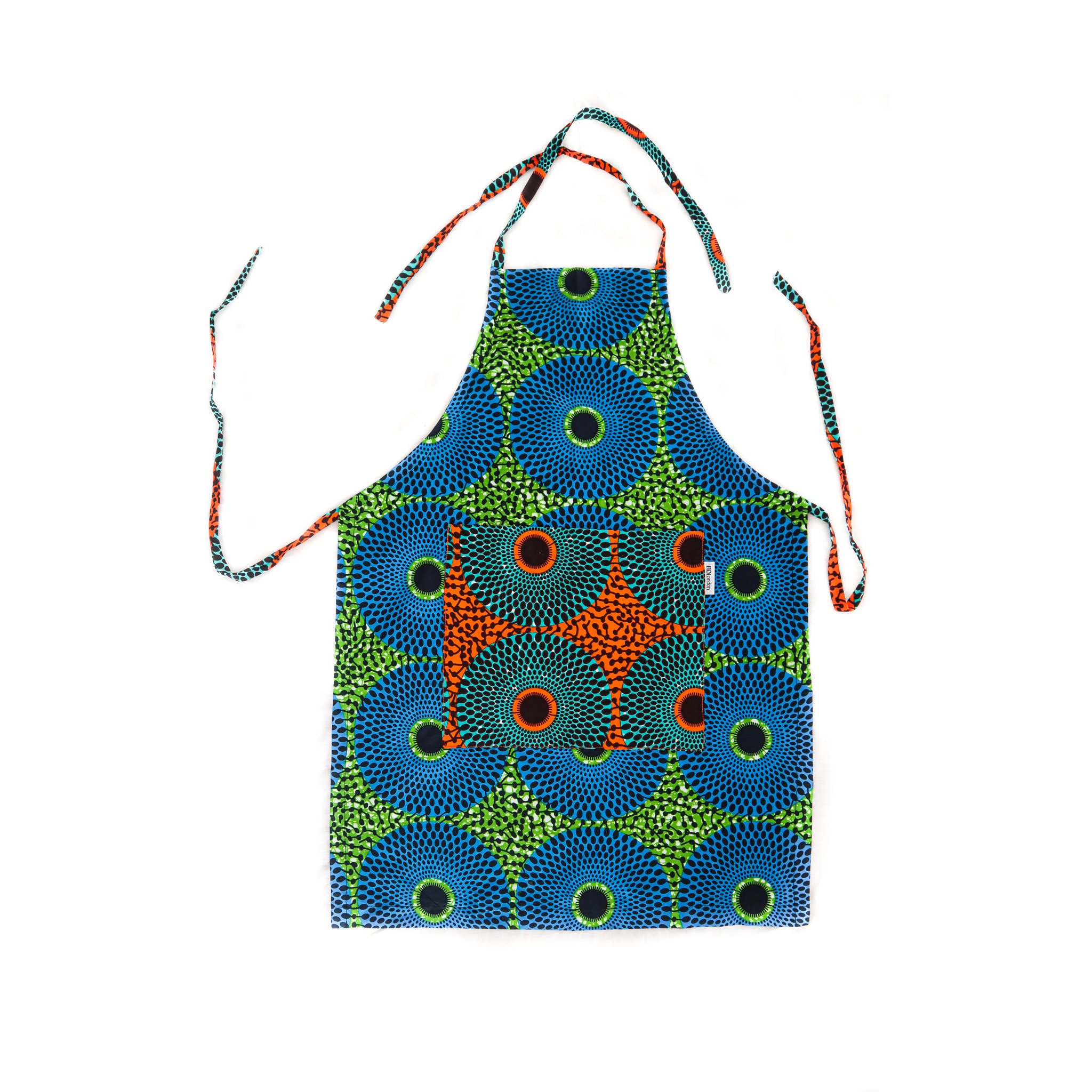


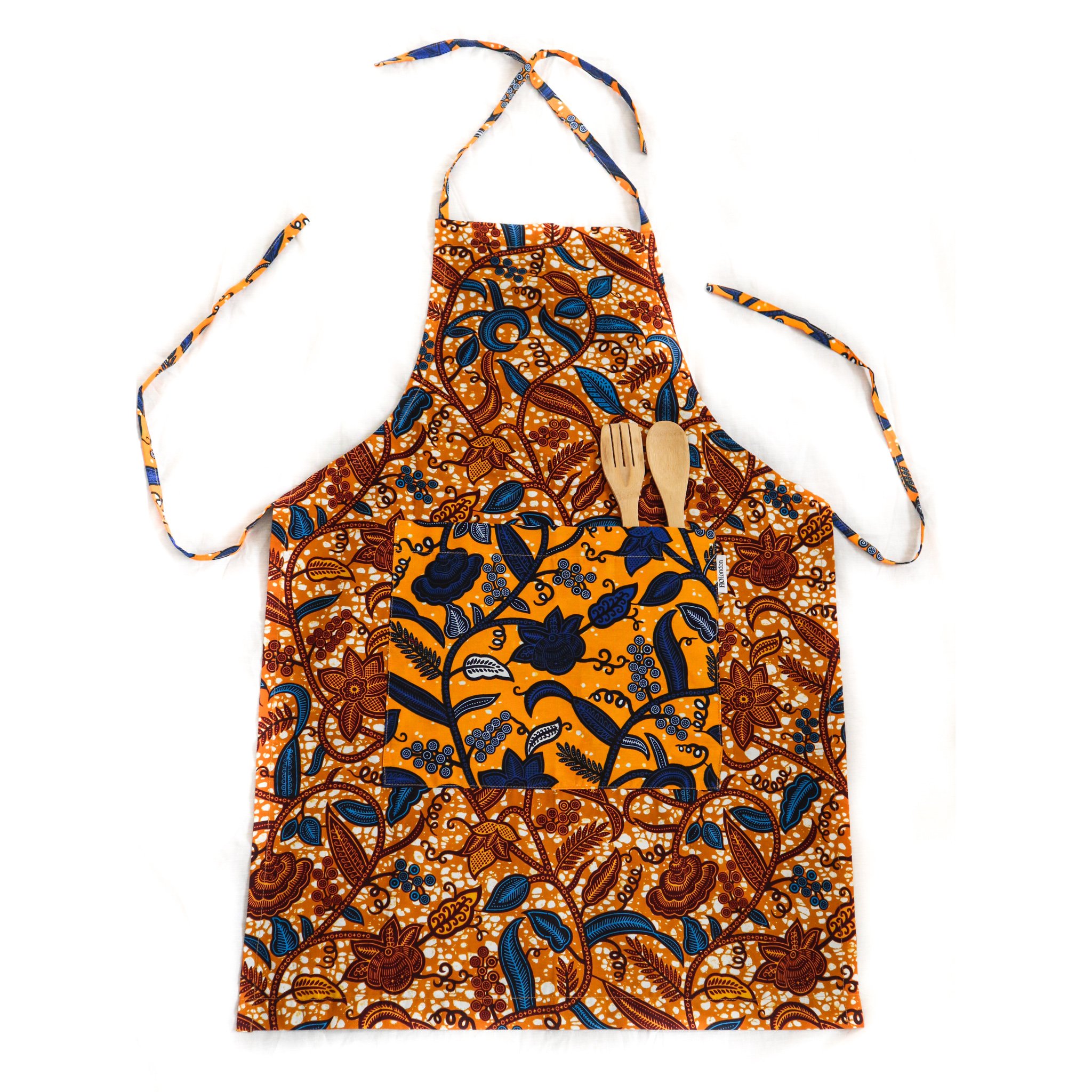


Handmade in Ghana, our aprons offer a unique design with a front pocket perfect for kitchen utensils or your phone and tie neck straps each made from recycled material. The perfect gift for any cooking enthusiasts!
Our aprons have been named after markets in Ghana and London. This apron has been named after street food hub Maltby Street Market.