
Top 5 national pavilions to see at the Venice Biennale 2026
The 61st Venice Biennale opened on 9 May 2026 in Venice, with this year’s edition shaped around In Minor Keys, a curatorial theme conceived by the late Koyo Kouoh. Borrowing from musical language, the concept encourages a slower, more attentive way of looking at the world, tuned to quieter registers of feeling, memory and experience. The Biennale once again transforms Venice into a sprawling international exhibition, with more than 80 national pavilions taking over the Giardini, the Arsenale and sites across the city. Sofia, our arts contributor, picks her five standout national pavilions from this year’s edition.
Spain
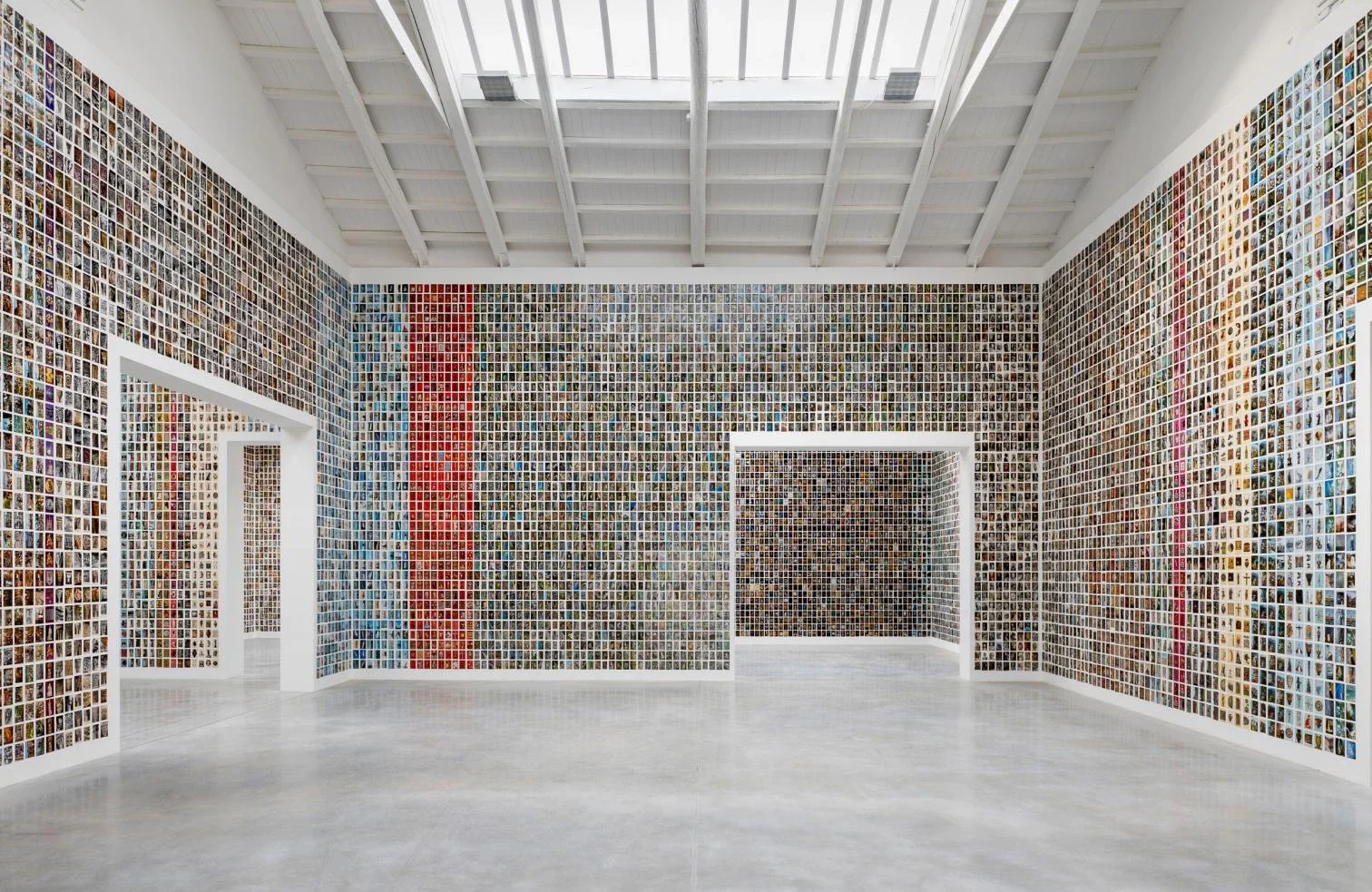
“The Remains”, Spanish Pavilion at the 2026 Venice Art Biennale © Roberto Ruiz
Oriol Vilanova’s exhibition Los Restos has a great concept and even better execution. The walls of the Spanish pavilion have been coated from top to bottom with postcards collected by the artist for over twenty years at flea markets and second-hand shops across Europe, Latin America and the Middle East. This is an obsessive practice which most of us can relate to, and one in which the items individually have minimal financial or art-historical value. However, once these postcards have been categorised according to subject and colour, and painstakingly installed across the vast walls of the pavilion, they transform. From a distance, the details of the postcards are reduced to their colours and this creates the effect of abstract wall paintings. At close quarters, you find yourself diving into one surprising theme after another, as if changing channels on a television. One minute you’re in a sea of sunsets and daffodils, and the next you’re comparing historic monuments, cute cats, the British royal family and religious relics. Walking through this pavilion feels like a choose-your-own-adventure experience, but it also provokes deeper reflection on what we choose to preserve and why.
Location: Giardini della Biennale. Website: accioncultural.es; Instagram: @oriolvilanova
Congo (Democratic Republic of)
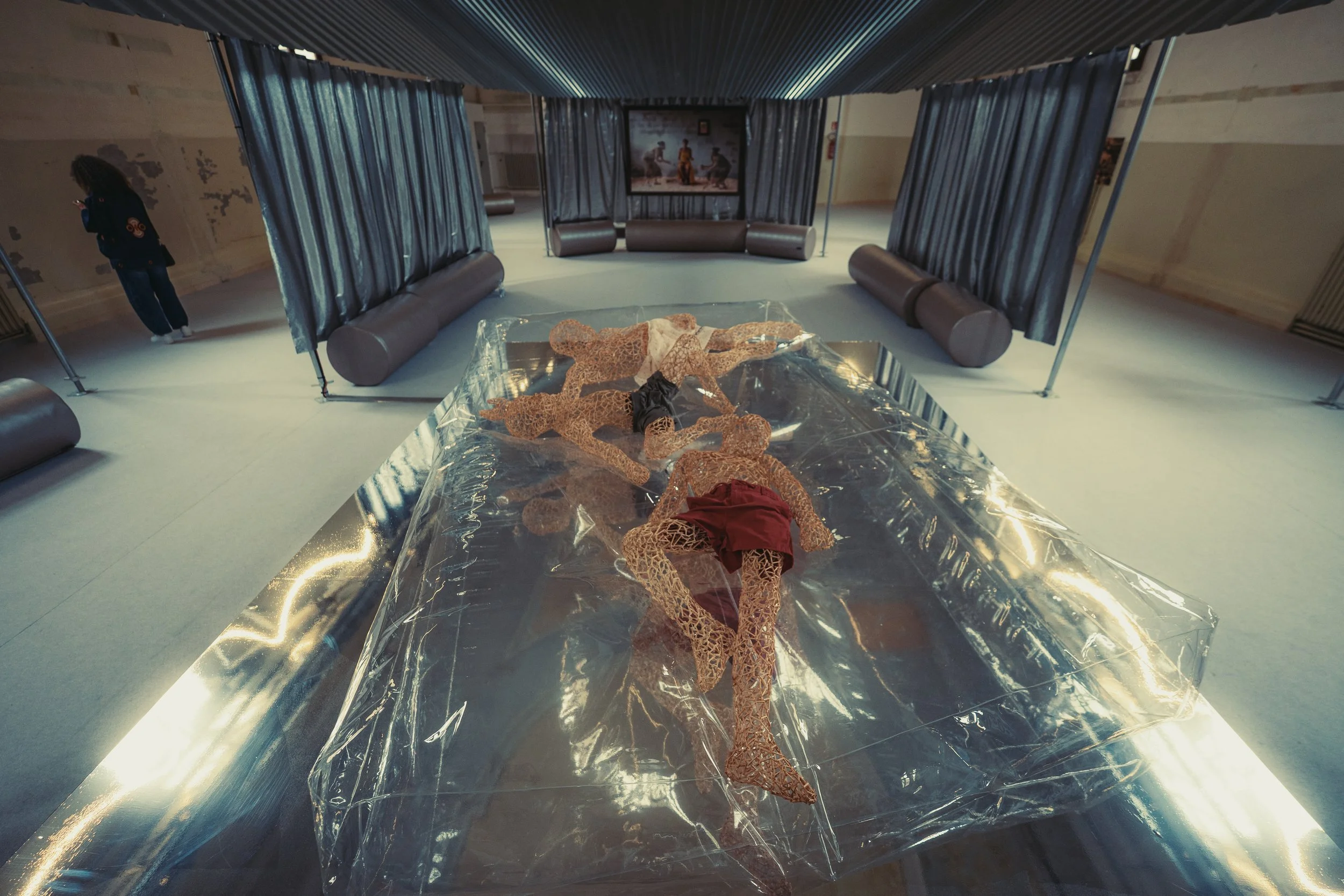
Installation view Congo (Democratic Republic of) national pavilion. Installation by Antoine Assumani.
Congo’s national pavilion brings together nine Congolese artists in an installation titled Simba moto! Seize the Fire! Saisis le feu. Curated by Nadia Yala Kisukidi and MOKO Collective, this exhibition is conceived as a forge for our imagination, inspired by the poet Matala Mukadi’s invocation to ‘Wake up, your nest is of flames’. To be of flames means to carry a powerful force, and this is a responsibility that these Congolese artists do not take lightly. The exhibited artists work across sculpture, installation, photography, video and painting, demonstrating a breadth of contemporary creative practice while all responding to the central theme. Géraldine Tobe uses fire and smoke in her monochromatic paintings to spectral effect, while Nelson Makengo’s video piece captures everyday resilience in spite of electrical instability, flooding and power cuts. Sammy Baloji, who also features in Koyo Kouoh’s central exhibition In Minor Keys, captures overlooked human stories within wider narratives of resource extraction, and Aimé Mpane’s central installation le souffle makes magical use of ephemeral materials: matchsticks and air. This pavilion even has an official playlist, paying tribute to musical inspirations from Congolese classics to contemporary diasporic tracks. Listen here.
Location: Antico Refettorio - Scuola Grande di San Marco, Castello 6777. Website: pavillonrdc.com; Instagram: @rdcongopavillon
Canada
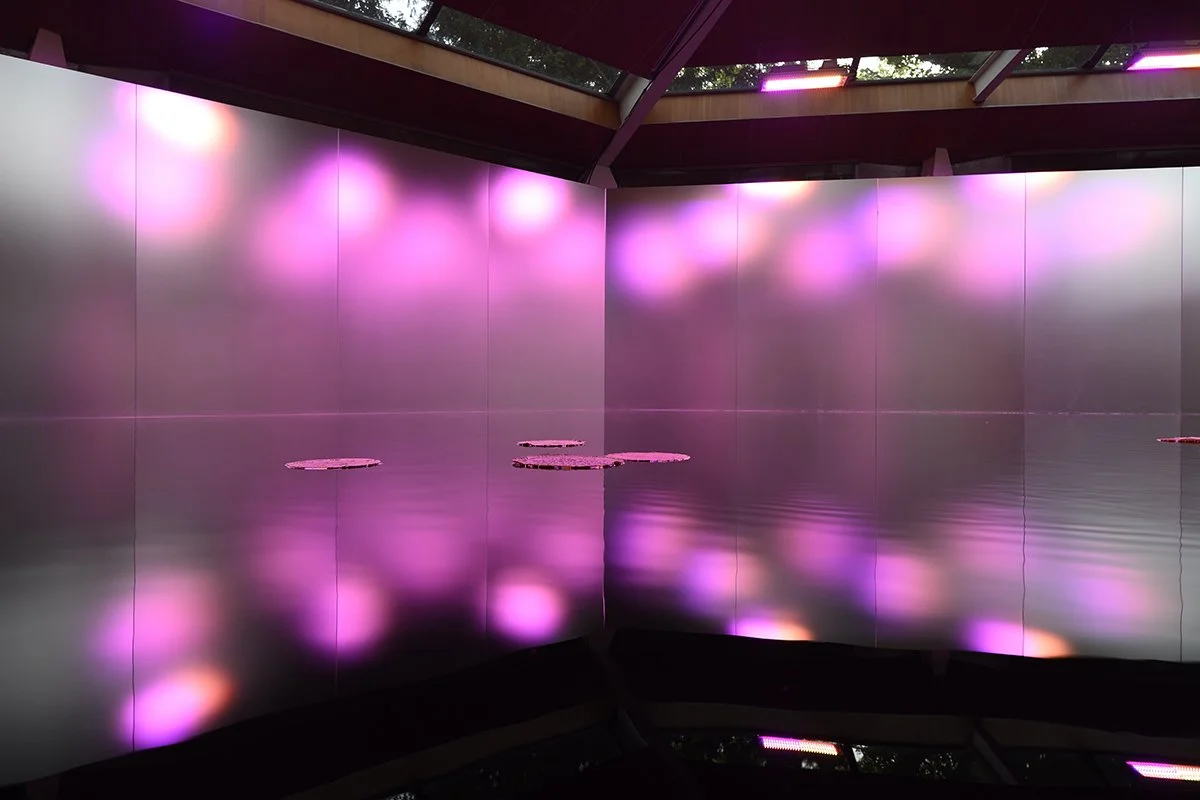
Installation view, Abbas Akhavan: Entre chien et loup, 2026, Canada Pavilion, 61st International Art Exhibition – La Biennale di Venezia. Commissioned by the National Gallery of Canada and presented in partnership with the National Gallery of Canada Foundation and the Canada Council for the Arts. © Abbas Akhavan. Photo: Francesco Barasciutti
Canada presents Entre chien et loup by Tehran-born, Montreal-based artist Abbas Akhavan. This pavilion packs an immediate impact, as visitors are encased in hot, humid air upon entry to an enormous glass container. Akhavan has created a large-scale version of the 19th-century Wardian cases designed to transport plants, of which roughly a third is taken up by a pool of water. During the opening week, a few lily pads floated across the surface, but they will blossom and multiply throughout the course of the Biennale. Beyond the unique visitor experience, Akhavan’s project sheds light on multiple overlooked areas of botanical history. These are “Victoria” water lilies, a flower which originated more than 100 million years ago in the Amazon, extracted and renamed after a British monarch, and since cultivated in European botanical gardens. The seeds Akhavan has planted in Venice were selected from Kew Gardens in London and germinated in the oldest botanical garden in the world: the Orto Botanico di Padova in Italy. The staggering length of the plant’s history offers an unusual perspective on the era of colonial empires, while demonstrating how their legacies of power and control have seeped into all aspects of the world around us.
Location: Giardini della Biennale. Website: gallery.ca. Instagram: @abbasakhavan
Japan / Denmark
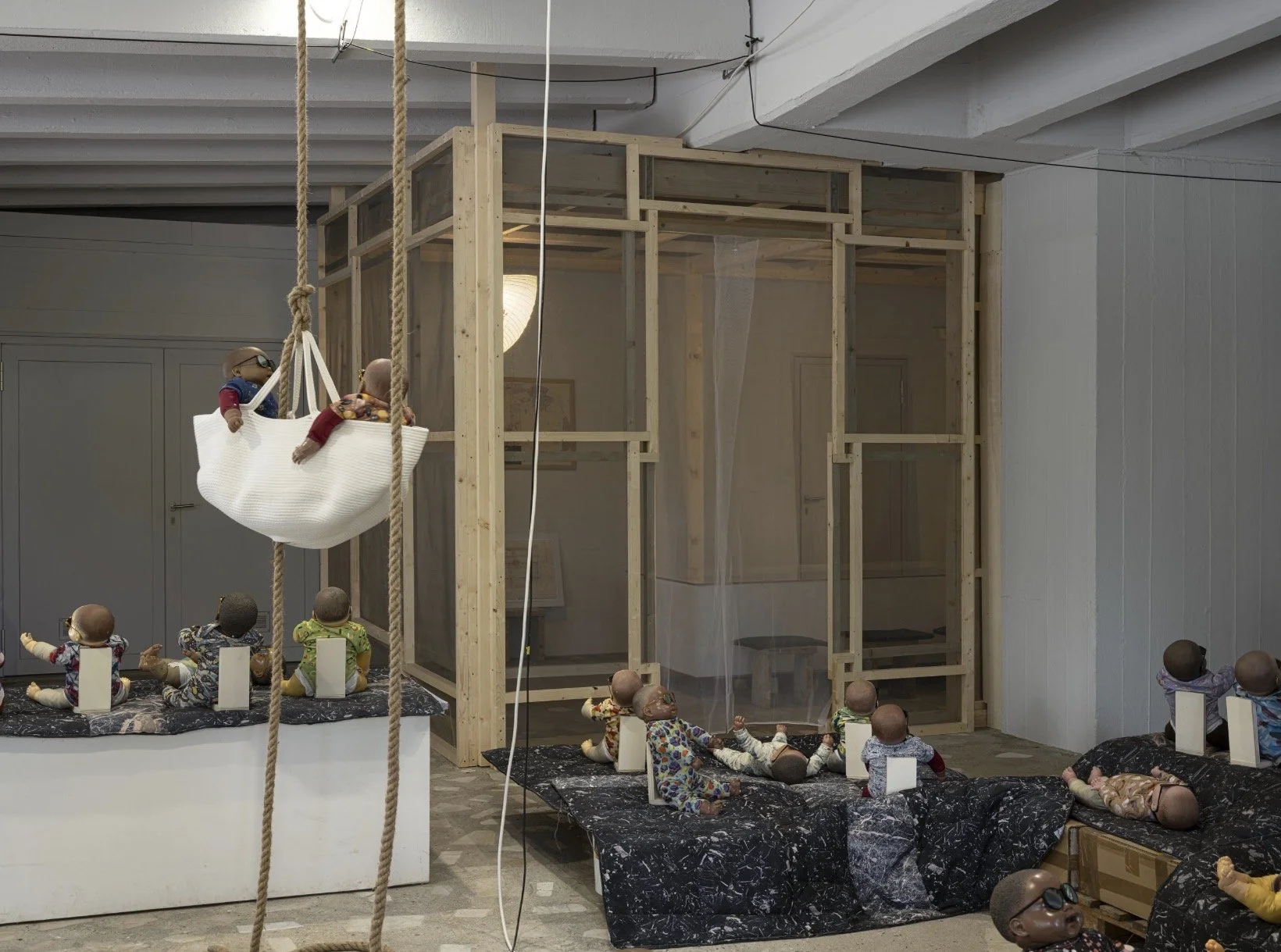
Japan Pavilion 61st Venice Biennale by artist Ei Arakawa-Nash. Image credit Uli Holz
This is a joint entry because these pavilions share a common theme, and I highly recommend visiting them back to back. That theme is declining birth rates and population decrease, which, surprisingly, led to some of the most engaging exhibitions of the entire Biennale. Japanese-American artist Ei Arakawa-Nash has covered the ground floor of his pavilion with 208 immaculately styled babies sporting sunglasses and bright rompers. Visitors are invited to pick one up and wander around, leading to humorous scenes and enjoyable exchanges with fellow ‘parents’. The babies weigh a very heavy 6kg, apparently the average for a 6-month-old. Upstairs, you are supposed to open the baby’s nappy and scan a QR code which generates a poem. I thought the poems were a superfluous touch, but I had also accidentally selected a baby without a nappy to change so I’m biased.
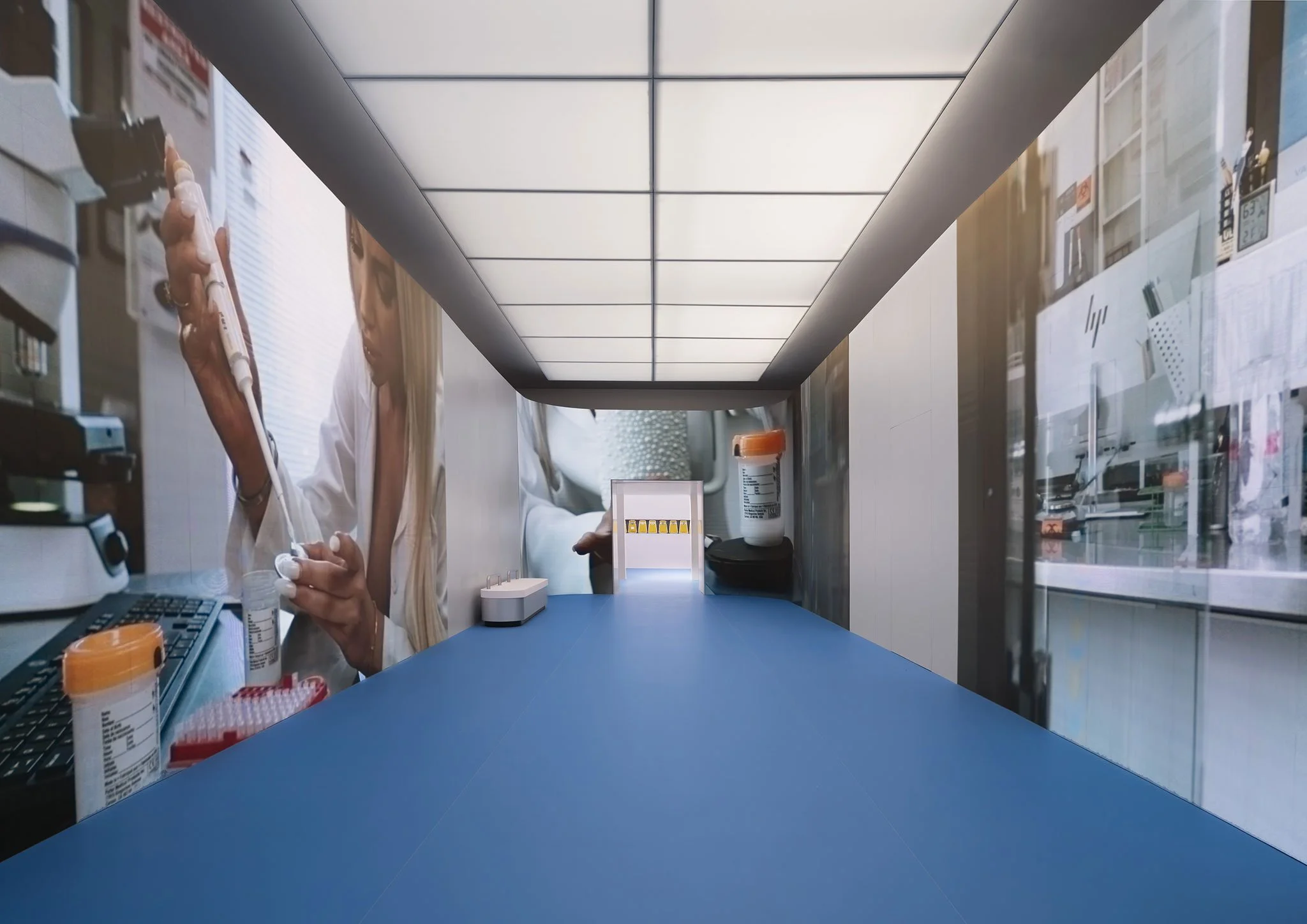
Things to Come, Danish Pavilion at the Venice Art Biennale by Maja Malou Lyse and Common Accounts. Image credit by Ugo Carmeni.
Annual births have fallen roughly 30% over the past decade in Japan, and Denmark faces similar challenges with a fertility rate of 1.5 children per woman (2.1 are required to maintain population size). Over at the Danish pavilion, Maja Malou Lyse takes an entirely different approach to this issue, setting out “to give the biennale some sex appeal”. The main gallery presents a video installation featuring porn star Nicolette Shea playing the role of a scientist in a sperm bank in the year 2045. The footage plays out in a curved format that surrounds visitors, amplifying its provocation: “could pornography rescue the human species?”. The reference to the “human” species in this context has a special irony. The Giardini is an homage to a colonial, imperial world order, in which grand national pavilions now lament their own decline, in direct contrast to the fast-growing populations of the global South who may be mostly “off-site” at the Biennale but are certainly the future of humankind.
Location: Giardini della Biennale.
Japan - Website: venezia-biennale-japan.jpf.go.jp. Instagram: @japan_pavilion_vb2026
Denmark - Instagram: @danishpavilion; @habitual_body_monitoring2
The 61st Venice Biennale runs from 9 May to 22 November 2026 and takes place mainly at the Giardini and Arsenale, but also spreads across collateral exhibitions in palaces, churches, and other venues throughout Venice. Tickets are available online via the official Biennale website labiennale.org
Review by Sofia Carierra-Wham








Handmade in Ghana, this beautiful green apron offers a unique design with a front pocket perfect for kitchen utensils or your phone and tie neck straps each made from recycled material. The perfect gift for any cooking enthusiasts!
Our aprons have been named after markets in Ghana. This apron has been named after Kintampo Market located in the Bono region of Ghana it is noted for their sales of yam tubers.